
Wall-Mounted Bike Racks That Free Up Space and Create Order
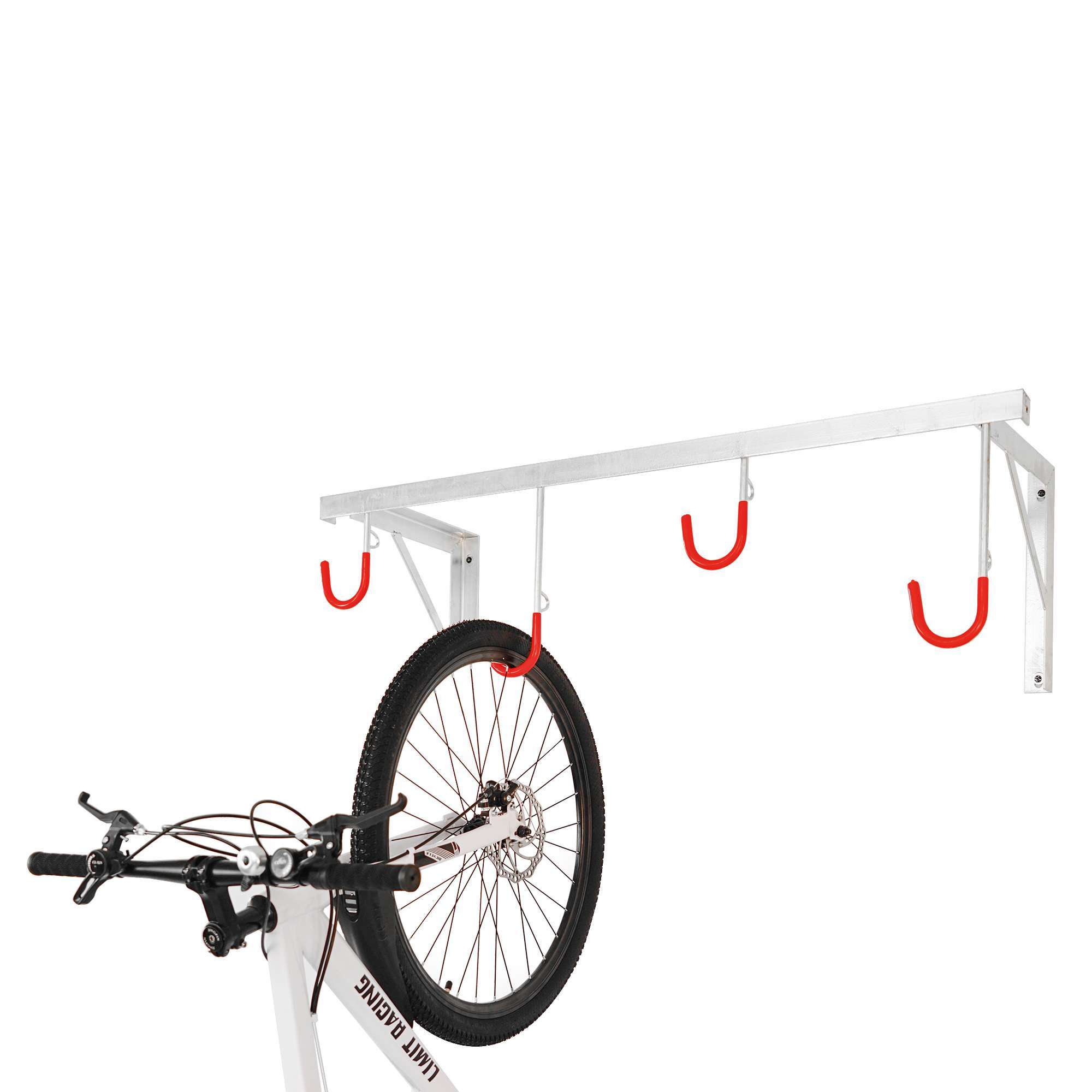
A wall-mounted bike rack is often the smartest way to turn a cramped, cluttered space into a truly functional bike parking area. Moving bikes up off the floor frees up space, makes cleaning easier and reduces the risk of damage – crucial advantages for property owners and housing cooperatives struggling with limited space.
Free up floor space and create order with the right bike rack
As more people choose to ride, the challenge of finding smart, secure storage solutions grows too. Sound familiar? Cramped bike rooms, overcrowded basement corridors and a jumble of bikes by the entrance quickly cause frustration and make a property less pleasant. A wall-mounted bike rack is therefore more than just a product; it is a strategic investment in order that solves a real problem.
By using the walls – the vertical space – you free up valuable floor space right away. That means not only room for more bikes, but also much easier upkeep such as cleaning and snow removal. The result is a more welcoming and practical environment for everyone on the property.
Benefits of wall-mounted bike storage
Installing a bike rack on the wall delivers several immediate benefits that both simplify property management and keep residents happier. The solution is especially valuable in urban settings where every square meter really counts.
Here are the key benefits at a glance:
- Optimized space: You can store more bikes in a smaller area, perfect for bike rooms, garages and narrow passageways.
- Better organization: Bikes hang neatly and in order, putting an end to the clutter of bikes leaning against walls or lying on the floor.
- Reduced risk of damage: Keeping bikes apart reduces the risk of scratches, dents and other damage that easily occurs when they are crammed together.
- Easier maintenance: With clear floors, cleaning and keeping the area tidy is a breeze.
The shift to vertical storage has proven remarkably effective. In the Stockholm region alone, more than 4,500 wall racks have been installed since 2020. Why? Because they can free up to 60 percent more floor space compared with traditional floor-standing racks.
A smart investment for the future
Choosing the right bike parking is about meeting needs both today and tomorrow. With more and more e-bikes and cargo bikes, there are entirely new demands for robust, flexible solutions. Well-planned bike parking with wall-mounted racks shows that you take cyclists’ needs seriously and are investing in sustainable transportation.
This guide gives you the tools you need to plan, choose and install a solution that lasts. Read on to explore our complete range of bike racks.
Not sure which solution is best for your particular space? Our experts are happy to help you assess your conditions and recommend the optimal wall-mounted bike rack. Contact us today for free advice and a customized quote.
Choosing the right model and material for your needs
Choosing the right wall-mounted bike rack is about finding a model that suits both the location and the bikes. There is no one-size-fits-all solution; the key is understanding the conditions at your property. A poorly chosen model easily leads to overcrowding, bikes that are hard to handle and, at worst, damage to both bikes and walls.
To avoid these problems, you first need to assess your needs. What types of bikes are most common? How much space is actually available? Will the rack be installed indoors in a heated garage or outdoors on a façade exposed to wind and weather? The answers to these questions will point you in the right direction, both in terms of model and material.
Find the right model for your space
The market for wall-mounted bike racks is broad, and each model has its own strengths. Understanding the differences is the first step toward an installation that truly works in practice.
- Vertical bike racks: Extremely space-efficient and perfect for narrow corridors or cramped bike rooms. The bike hangs upright by its front wheel, minimizing how far it protrudes from the wall.
- Horizontal bike racks: Here the bike rests along the wall instead. This model is ideal for heavier bikes such as e-bikes, since they don’t need to be lifted as high.
- Swivel models: A smart evolution of the vertical rack. Once the bike is in place, you can fold the entire rack in toward the wall, much like the pages of a book. This is an excellent solution for passageways where you need maximum clearance.
- Two-tier systems (double-decker bike racks): Got high ceilings? Then a two-tier system is the ultimate way to maximize capacity. By parking bikes on two levels, you can nearly double the number of spaces in the same area.
Choosing a model that can handle heavy e-bikes is a must today. Sales have exploded, and the average e-bike weighs between 20–25 kg. That places entirely different demands on both the rack’s construction and how it is anchored to the wall.
The choice of material determines service life
The material affects not only how the bike rack looks, but above all how long it lasts. In our Nordic climate with rain, snow and salt, this is a particularly important factor to consider.
Hot-dip galvanized steel is by far the most robust choice for outdoor use. In this process, the entire structure is dipped in molten zinc, creating a thick, self-healing protective layer against rust. A hot-dip galvanized rack withstands weather and road salt year after year with minimal maintenance, making it a truly smart long-term investment.
Powder-coated steel offers an excellent combination of protection and aesthetics. The coating creates a durable, even surface that protects against corrosion and is available in a wide range of colors. This lets you match the racks to the building’s architecture or use color to create a distinct visual identity. If the bike rack will be fully exposed outdoors, it is wise to consider a solution that combines a durable material with extra weather protection. You can learn more about the benefits of covered bike racks in our separate article.
Below is a selection of our wall-mounted bike racks showing the breadth of our range, from simple vertical models to more advanced systems.
The choice between materials comes down to location and requirements. For an exposed façade, hot-dip galvanized is unbeatable, while a powder-coated rack can be the perfect choice for a sheltered bike room or garage.
Not sure which model or material is best for your needs? Our experts are ready to help you assess your space and recommend the best solution. Contact us today for personalized advice and a free quote.
Secure mounting adapted to different wall types
A robust wall-mounted bike rack is only half the solution – the other half is secure, correct mounting. Even the best-built bike rack becomes a safety hazard if it isn’t anchored rock-solid to the wall. The safety of both bikes and people depends entirely on the anchoring being properly sized for the wall’s material and load-bearing capacity.
A sloppy installation can have unfortunate consequences, from fallen bikes and façade damage to, at worst, personal injury. That’s why it is essential to understand the difference between mounting in concrete, brick, aerated concrete or wood. Each material has its own requirements for both method and fasteners.
Preparing for a safe installation
Before you drill a single hole, thorough preparation is essential. Cutting corners here is a classic mistake that can prove costly in the long run. A quick inspection of the wall can reveal hidden problems and ensure you choose the right approach from the start.
Use this checklist to make sure you’re ready:
- Identify the wall material: Is it solid concrete, porous brick or a wood-framed wall? If you’re unsure, drill a small test hole. The drill dust often reveals the material – gray for concrete, red for brick and light-colored dust for wood or drywall.
- Check the wall’s condition: Look for cracks, moisture damage or signs that the material is porous and crumbling. A damaged wall has reduced load-bearing capacity and may need reinforcement before you mount anything.
- Locate hidden utilities: Use a stud finder to locate electrical wiring, water pipes and ventilation ducts. Drilling into hidden utilities is both dangerous and costly to repair.
- Plan the placement: Measure carefully and mark exactly where the bike rack will go. Remember to leave enough space around the rack so bikes can be hung up and taken down easily without hitting each other or the wall.
The visualization clearly shows how the choice of location, application and material work together to create an optimal solution.
The right fasteners for every wall
The choice of fasteners is by far the most important factor for secure mounting. Gambling on an ordinary plastic wall plug in a concrete wall for a heavy bike rack is asking for trouble. Different materials require entirely different types of anchoring to achieve maximum load-bearing capacity.
Concrete and solid brick
These are the easiest materials to anchor into and offer by far the best load-bearing capacity. Here, expansion bolts are an excellent choice. As the bolt is tightened, a sleeve expands and locks firmly into the material, creating an extremely strong anchor.
Porous brick and aerated concrete
In these more porous and brittle materials, expansion bolts perform poorly because they risk cracking or crushing the material. Here, chemical anchors are the superior solution. A chemical anchor consists of a threaded rod and an adhesive cartridge that is injected into the drill hole. The adhesive cures and creates a chemical bond with the wall that distributes the load over a larger area. The result is an incredibly strong, vibration-resistant anchor. If you need a reliable solution, you can learn more about our complete composite anchor kit with adhesive cartridge here.
Wood walls
When mounting on wood walls, you must anchor into the load-bearing studs behind the surface layer – never just into drywall or wood paneling. Use a stud finder to locate the studs, then fasten the bike rack with heavy-duty lag screws. The screws must be long enough to pass through the surface layer and deep into the stud to ensure holding strength.
A common mistake is underestimating the total load. A bike rack for five e-bikes may need to carry a weight of over 125 kg. Add to that the dynamic load when the bikes are handled. The anchoring must be sized to handle this with a good safety margin.
Anchoring guide for different wall types
Here is an overview of recommended fasteners and methods for the most common wall materials. Choosing correctly from the start saves both time and money while ensuring a safe solution.
| Wall material | Recommended fastener | Important to keep in mind |
|---|---|---|
| Concrete | Expansion bolt or chemical anchor | Use the correct drill diameter and make sure the hole is free of dust. |
| Solid brick | Expansion bolt or chemical anchor | Avoid drilling too close to the edges of the brick. |
| Aerated concrete/Hollow brick | Chemical anchor | An expansion bolt can crack the material. A chemical anchor is a must. |
| Wood stud wall | Lag screw | Always anchor into the load-bearing stud, never just into the surface layer such as drywall. |
Ensuring correct mounting is absolutely essential for bike parking that is safe and durable in the long term.
If you feel even slightly unsure about the wall’s condition or what anchoring is required, it’s always best to play it safe. Contact us for expertise and advice. Our specialists can help you assess your conditions and recommend a safe installation solution.
Planning bike parking for safety and accessibility
Installing a wall-mounted bike rack in a shared space is so much more than drilling a few holes. For it to truly work in practice – both for the property owner and for cyclists – it takes some forethought. Safety, ease of use and accessibility must be the focus. This is especially important for municipalities, housing cooperatives and property owners who are responsible for creating safe, functional bike parking.
Poorly planned bike parking quickly becomes a source of irritation. Bikes end up all over the place, block the way and become almost impossible to get out. To avoid that chaos, you need to consider everything from theft protection and maneuvering space to lighting and the types of bikes that actually need to fit.
Prioritize theft protection and ease of use
The most important requirement for public bike parking is minimizing the risk of theft. A good bike rack must make it easy to lock both the bike’s frame and at least one wheel with a sturdy U-lock. This is fundamental and deters most opportunistic thieves, giving cyclists much-needed peace of mind.
But ease of use is just as important. If parking is too awkward or cramped, people simply won’t use the racks. Keep this in mind:
- Give people room: Make sure to leave at least 60–70 cm between each bike space if they are at the same height. This provides enough room to handle your bike without knocking over your neighbor’s.
- Vary the height: A smart trick is to mount the racks alternately high and low. This lets you fit more bikes into the same area without crowding, since handlebars and pedals don’t collide.
- Think about all bikes: Not all bikes are lightweight road bikes. Make sure there are options for different models. Consider combining vertical wall racks with floor-mounted solutions for heavy e-bikes or bulky box bikes that are a nightmare to lift.
Optimize the space with smart planning
How you lay out the space directly affects how well the bike parking works. A well-organized plan creates a natural flow and makes it easy for everyone to find an open spot. Industry standards make it clear that good planning is essential to maximizing capacity.
According to expert recommendations, wall-mounted racks are often the best way to save floor space in multi-family buildings. Koucky’s bike parking guide, for example, recommends 0.1 bike spaces per apartment near the entrance and 0.5 per apartment for visitors. It estimates that a wall rack requires about 2 m² per bike, including the space needed for maneuvering. Read more about efficient solutions for wall-mounted bike racks at nordguard.se.
One thing that is often overlooked but absolutely crucial is lighting. A well-lit bike room not only feels safer – it also reduces the risk of vandalism and theft. Good lighting also makes it much easier to fiddle with locks and bags, especially on dark winter evenings.
Create a solution that lasts
Truly successful bike parking is the result of a thorough needs assessment and a plan that works both today and tomorrow. By combining different types of bike racks, making sure there is plenty of space and prioritizing safety measures such as theft protection and lighting, you create a facility that people will appreciate and use often.
Below is a selection of products from related categories that can be combined to create versatile, functional bike parking.
Planning an entire bike parking facility can feel like a big project, but a well-thought-out effort quickly pays off in the form of a safe, efficient and appreciated facility.
Feeling overwhelmed? Need help assessing your space and putting together a customized plan? Our experts have extensive experience optimizing everything from small bike rooms to large public areas. Contact us today and we’ll help you with professional advice and a free quote.
Maintenance that extends the life of your investment
A high-quality wall-mounted bike rack is an investment in order and safety that should last for many years. But like anything exposed to wind, weather and daily wear, it needs a little care to keep its function and appearance. With a few simple tips, you can significantly extend its service life and ensure the rack remains a safe, reliable solution for everyone who uses it.
Neglecting maintenance can lead to rust, weakened anchors and, at worst, damage to both bikes and people. By being a little proactive, you not only protect your investment but also reduce the risk of unnecessary and costly repairs down the road.
Care tips for our climate
Our Nordic climate with moisture, snow and road salt places high demands on materials. Road salt in particular is aggressive and can cause even the most robust surfaces to fail prematurely if it is left on.
- Hot-dip galvanized steel: This material has extremely strong protection against rust. Usually, rinsing the rack with water a couple of times a year, especially after winter, is enough to remove salt and dirt. Little more is ever needed.
- Powder-coated steel: The coating is durable, but it isn’t immune to knocks from bike pedals or heavy locks. Make a habit of checking the surface for scratches. If you find damage where the steel is exposed, it’s smart to touch it up with paint right away. This keeps rust from creeping under the coating and causing bigger problems.
A simple wash with a mild detergent and water makes a big difference for both types of material. It not only keeps the rack looking good, but also removes substances that break down the surface protection.
Regular inspections for increased safety
Safety depends entirely on the bike rack being securely anchored to the wall and all parts being intact. A quick but thorough check a few times a year is very inexpensive insurance against accidents.
Regularly checking the anchors is by far the most important maintenance task. Vibrations and the constant load from bikes being hung up and taken down can, over time, cause even the best anchors to loosen slightly.
Here is a simple checklist to follow:
- Check the anchors: Make sure all screws and bolts holding the rack to the wall are rock-solid. Tighten anything that feels loose.
- Look for wear: Watch for signs of material fatigue, such as small cracks in welds or bent parts. This is especially important for racks that frequently carry heavy e-bikes.
- Test the function: If you have a swivel model or other moving parts, check that they move smoothly and don’t stick.
Here you’ll find accessories you may need for maintenance and repairs.
Having spare parts on hand lets you quickly resolve any problems that arise. Replacing a worn hook or a damaged bolt is a simple fix that extends the life of the entire product and keeps safety at its best.
Need help with maintenance, inspection or spare parts for your bike rack? Our team has the expertise to make sure your investment lasts for many years to come. Get in touch for professional service and sound advice.
From idea to finished bike parking – how we help you
Creating really good bike parking can feel like a big project. Which wall-mounted bike rack is best? How do you make sure everything is mounted securely? Lots of questions come up. But don’t worry – with the right partner by your side, the process is both smooth and efficient. At Nordguard, we’re with you all the way, from the first idea to a finished, working solution.
Our process is designed to give you peace of mind and an end result you’ll be happy with. It all starts with us listening to you and understanding exactly what you need.
Step 1: We start with your needs
All good work starts with understanding the challenge. Together we review your space, calculate how many bike spaces are needed and what types of bikes need to fit. Maybe it’s a mix of regular bikes, e-bikes and cargo bikes? The result is a clear list of requirements that forms the foundation of the entire project.
Based on this assessment, we produce customized drawings and proposals. This makes it clear how different wall-mounted bike racks can free up floor space, improve flow and make parking easy for everyone in your particular setting.
Step 2: The right product for the job
With a crystal-clear plan, it’s time to choose products. We help you find the right items in our range so you get bike racks that meet your requirements for function, material and design. An important part of this is choosing products that truly last and meet all safety requirements.
By choosing CE-marked products directly from the manufacturer, you not only secure quality but also make a more sustainable choice. For us at Nordguard, as a supplier of CE-marked wall racks, it’s a way to help everyone from warehouses to residential areas build smart, sustainable environments – and we even offset our CO2 emissions. Read more about our wall-mounted bike racks at nordguard.se.
Choosing a complete solution from a single supplier means fewer contacts to keep track of, faster deliveries and a partner who takes responsibility for making sure everything works – from the first sketch to the last screw.
Step 3: Delivery and long-term peace of mind
Once you’ve chosen your products, we make sure they arrive quickly and smoothly. But our job doesn’t end there. We also offer service, maintenance and spare parts so your investment lasts and works trouble-free. The goal is simple: you should feel confident in your bike parking for many years to come.
Below is a selection of our most popular products for creating complete, functional bike parking.
Whether your project is big or small, our team of experts is here to help. Get in touch today for personalized advice and a customized quote. Let’s bring your vision of perfect bike parking to life together.
Frequently asked questions about wall-mounted bike racks
When buying and mounting wall-mounted bike racks, a number of questions almost always come up. Here we’ve gathered the most common ones and give straight, honest answers to help you avoid the classic pitfalls.
How much weight can a wall-mounted bike rack actually hold?
This is a two-part question. It’s partly about the bike rack itself and partly about the wall it’s mounted on. Our racks are built to handle heavy e-bikes, which can easily weigh 25 kg or more. So the construction itself is not a problem.
But – and this is important – the weakest link is always the anchoring in the wall. A solid concrete wall with the right fasteners, such as our complete composite anchor kit with adhesive cartridge, provides enormous load-bearing capacity – it’s by far the safest solution. If, on the other hand, you’re mounting on a drywall wall, it is an absolute requirement that you anchor the rack into the wood studs behind the drywall. Anything else is a safety hazard.
Do these racks work for all types of bikes?
Most modern wall racks are designed to be fairly flexible. Vertical models, where you hang the bike by its front wheel, work perfectly for regular standard bikes, mountain bikes and road bikes.
However, if you have extra-heavy e-bikes or bikes with really wide tires, such as fat bikes, there are specially designed models. They often have a sturdier construction and wider holders to match the bike’s unique dimensions. Always check the specifications in our range of wall-mounted bike racks at nordguard.se carefully so you know the rack can handle the bikes that will be hung on it.
What should we as a housing cooperative consider before installing?
For a housing cooperative, a successful installation comes down to doing your homework properly. Follow these steps and you’ll get a solution that both works and is appreciated by members:
- Start with the need: How many bikes are we talking about? What types of bikes do residents have? A quick inventory gives you a solid foundation.
- Measure and sketch: Get out the measuring tape and measure the space. Don’t forget to plan for enough maneuvering room between bikes. It should be easy to both hang up and take down your bike without having to move three others.
- Check the wall (the most important step!): Find out what the wall is made of and how much load it can take. If you’re even slightly unsure, bring in a professional who can assess it. It’s a small cost to avoid big problems.
- Choose the right product: Invest in a sturdy, theft-resistant wall-mounted bike rack. Shared spaces are subject to heavy wear, so choose something built to last.
By involving residents and choosing a durable solution, you create bike parking that actually gets used and works in everyday life.
Need help choosing the right wall-mounted bike rack or have questions about installation? Our experts at Nordguard have extensive experience creating smart solutions for everything from small housing cooperatives to large public facilities. Get in touch and we’ll talk through your needs and put together a free proposal.
Read more and contact us at: https://nordguard.eu
Ready to take the next step?
We help you develop solutions tailored to your needs. At Nordguard, we strive to make the ordering process as smooth as possible. By offering support and guidance throughout the entire purchasing experience, we make sure you feel confident and satisfied with your choice of protection products.+46 10 153 90 50
[email protected]