
A Complete Guide to Covered Bike Racks
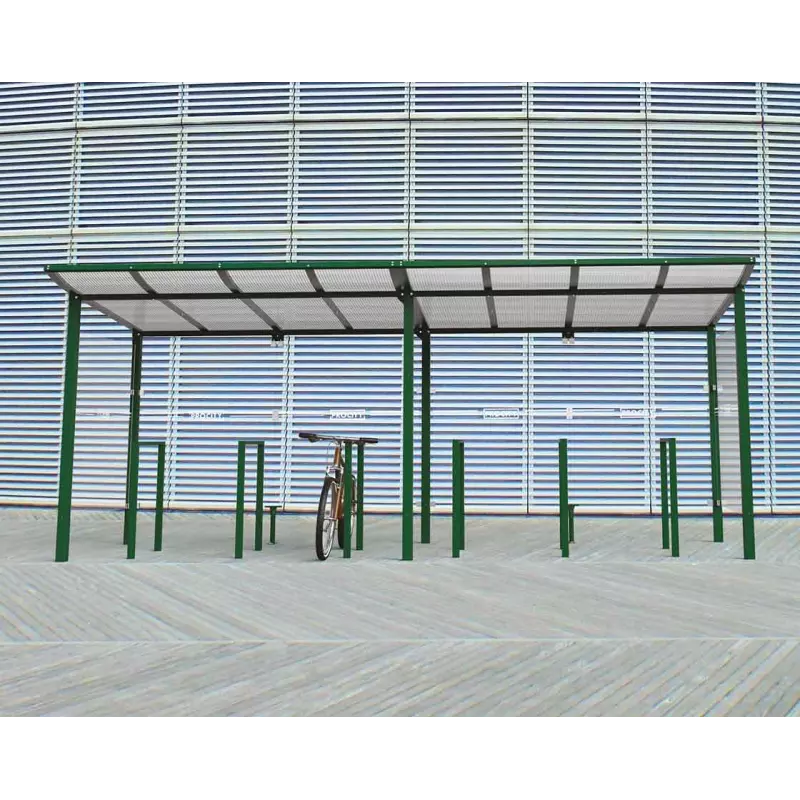
A rusty, stolen or vandalized bike is unfortunately an all-too-common sight that frustrates residents and commuters alike. A covered bike rack is by far the best way to protect bikes from both the weather and theft. Put simply, it is an investment that creates a safer, more functional outdoor environment while also increasing the value of the property.
From everyday problem to smart solution
Unprotected bike parking quickly becomes a source of irritation and unnecessary costs. Bikes left out in the rain and snow start to rust, leading to expensive repairs and a shorter service life. At the same time, they become easy targets for thieves and vandals, creating a sense of insecurity. For a housing cooperative or property owner, a clutter of abandoned bikes can also give a neglected impression that drags down both residents’ satisfaction and the property’s appeal.
A well-planned covered bike rack solves all of these problems at once. It is about so much more than just putting a roof over a few bikes. It is about creating a dedicated, secure and weather-protected area that actually encourages more sustainable travel. By providing a secure place to park, you show as a property owner or municipality that you care about the belongings of residents and visitors.
More than just a roof
Well-designed bike parking also contributes to a more organized and pleasant outdoor environment. Instead of bikes leaning against facades or lying on lawns, you get a neat and functional area. This lifts the impression of the entire neighborhood and can ultimately increase the property value.
An investment in a covered bike rack is a direct investment in security, order and sustainability. It demonstrates a long-term commitment that both residents and visitors appreciate, strengthening the property’s reputation and appeal.
Choosing the right solution can feel like navigating a jungle, though. Do you need a simple bike shelter roof, a complete bike shelter structure with walls, or perhaps a space-saving two-tier solution? There are many factors to weigh, from ground conditions and capacity requirements to design and budget.
Navigating all the models, materials and installation requirements takes expertise. As your expert partner, we at Nordguard can guide you through the entire process, from the initial idea to a finished, fully functional installation. We make sure you get a solution that not only solves today’s problems but also stands strong for many years to come.
Need help planning your project and finding the right covered bike rack for your unique needs? Contact us for expertise and advice.
Find the right model for your needs
Choosing a covered bike rack is not just a purchase. It is a long-term investment in function and order for a specific environment. After all, every project has its own conditions – a cramped courtyard has completely different requirements than a large commuter parking lot or a school.
The key is to first analyze what you really need. Once you understand the challenges on site, it becomes much easier to choose a solution that not only solves today’s problems but also works tomorrow.
Think in scenarios – choose right from the start
Let’s look at a couple of common situations to see how different models can solve specific problems.
For the housing cooperative that’s short on space:
Lack of space is an everyday reality for many housing cooperatives. A standard single-sided bike rack is rarely enough. The problem quickly becomes twofold: too few spaces, and a bulky solution that blocks walkways or takes up valuable green space.
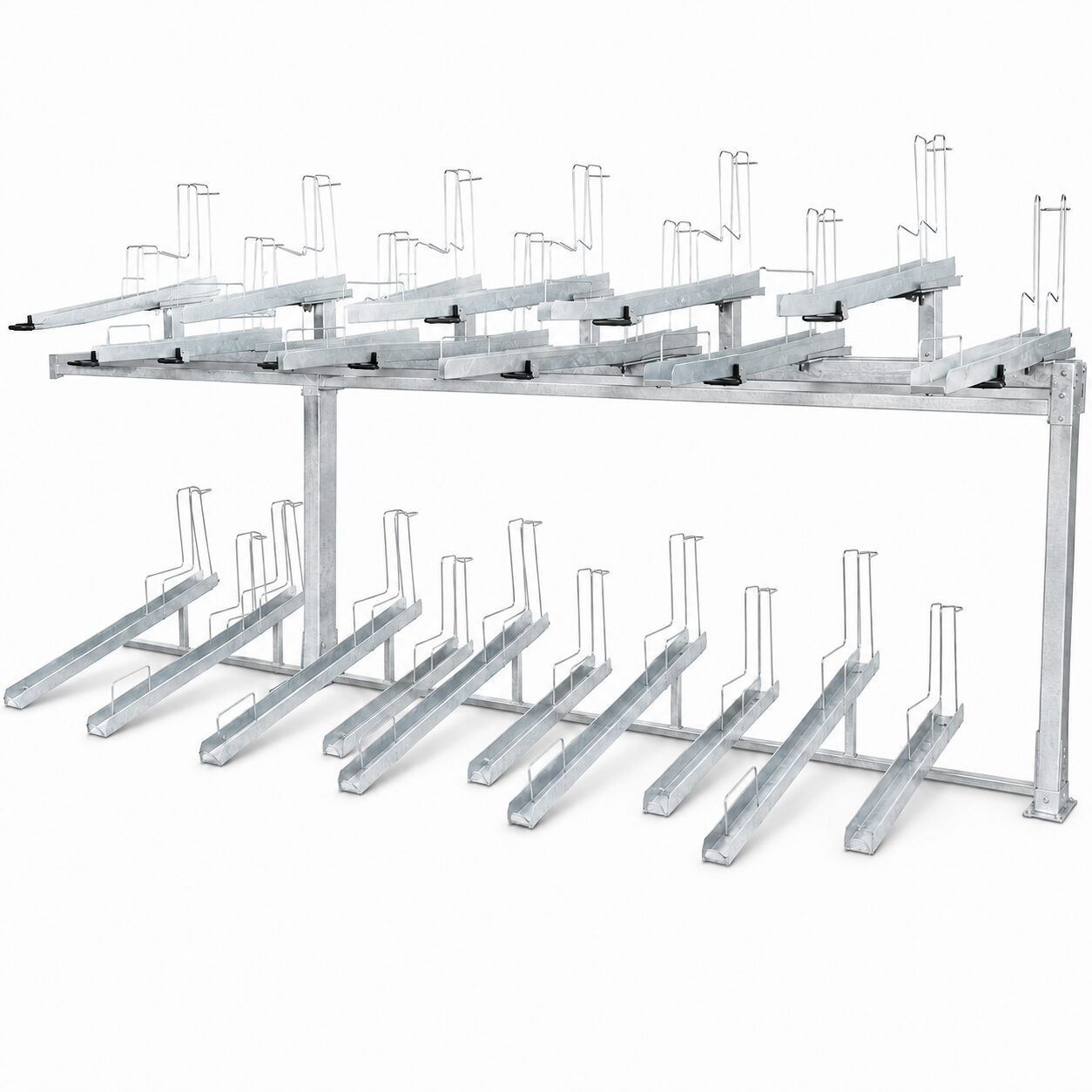
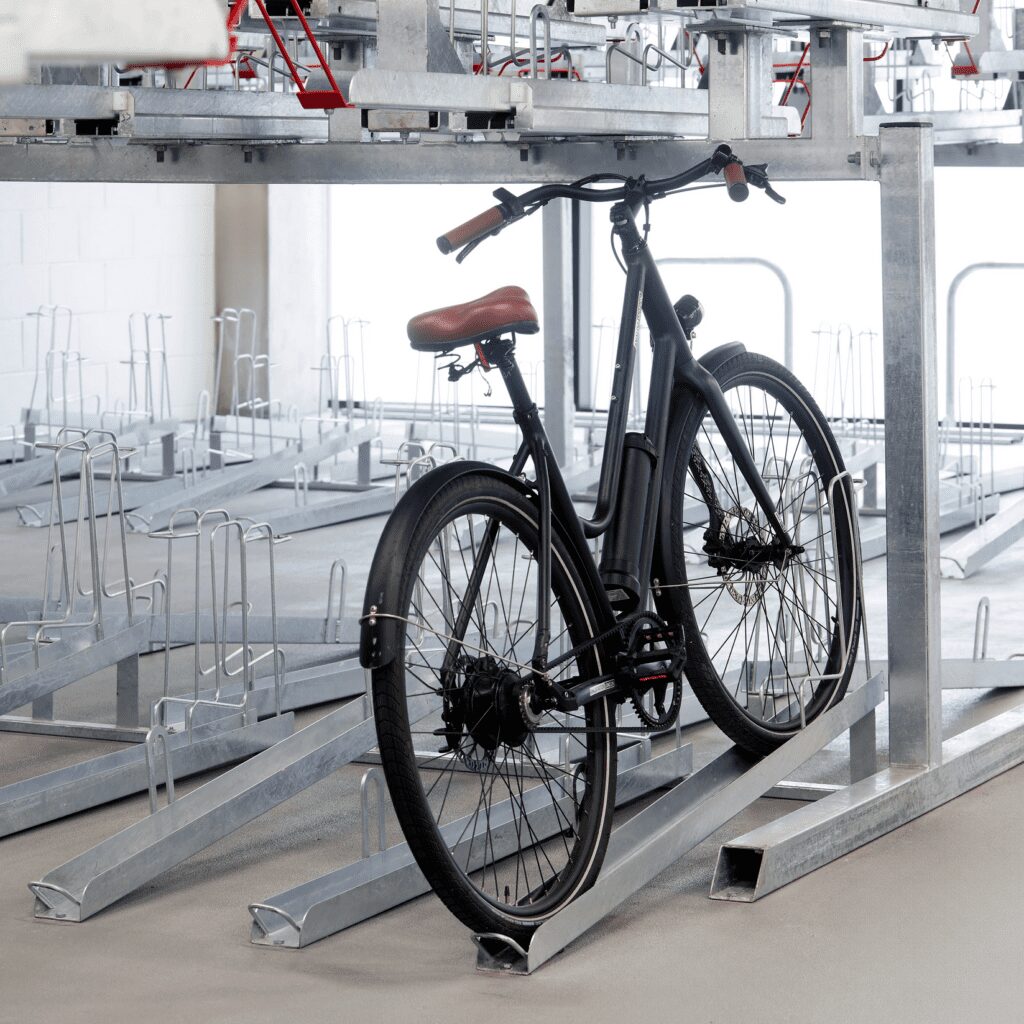
- The solution: A covered two-tier bike rack is almost always the smartest choice here. By building upward, you can easily double the number of parking spaces without using a single extra square meter of ground. Today’s systems with smooth gas springs also make it easy for everyone to lift their bike up to the upper tier.
For the municipality planning a bike hub at the train station:
Commuter parking is a whole different ballgame. Here, everything comes down to durability, security and room to grow. The facility must withstand intense daily wear and be expandable as more people choose to commute by bike.
- The solution: Modular and robust systems are the obvious choice. That way, the bike parking can grow section by section as demand increases. Go for a sturdy hot-dip galvanized steel structure that can handle our climate and a roof made of impact-resistant polycarbonate or sheet metal. Security is paramount, so make sure the racks allow users to lock the frame to the rack, not just the wheel.
The infographic below summarizes the three main benefits of investing in a well-designed covered bike rack.
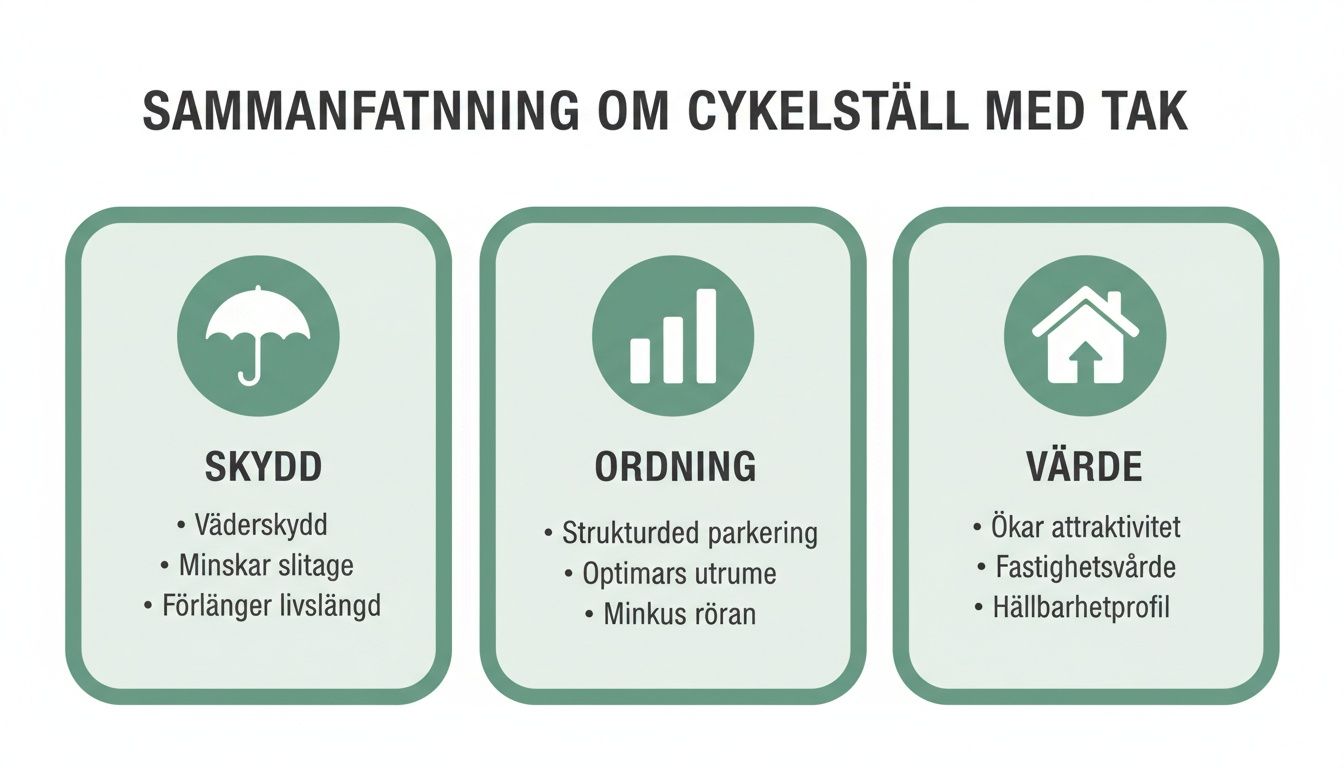
The image clearly shows how a good solution creates value on several levels: it protects bikes from rain and bad weather, brings order to the outdoor environment and ultimately increases the value of the entire property or area.
Comparison of different covered bike racks
To give you a quick overview of the basic models available and what they are best suited for, we have put together a simple comparison table. Use it as a starting point for finding the right option in our range.
A quick overview of different models, their ideal applications, benefits and capacity to make your choice easier.
| Model type | Best suited for | Capacity (example) | Main benefit |
|---|---|---|---|
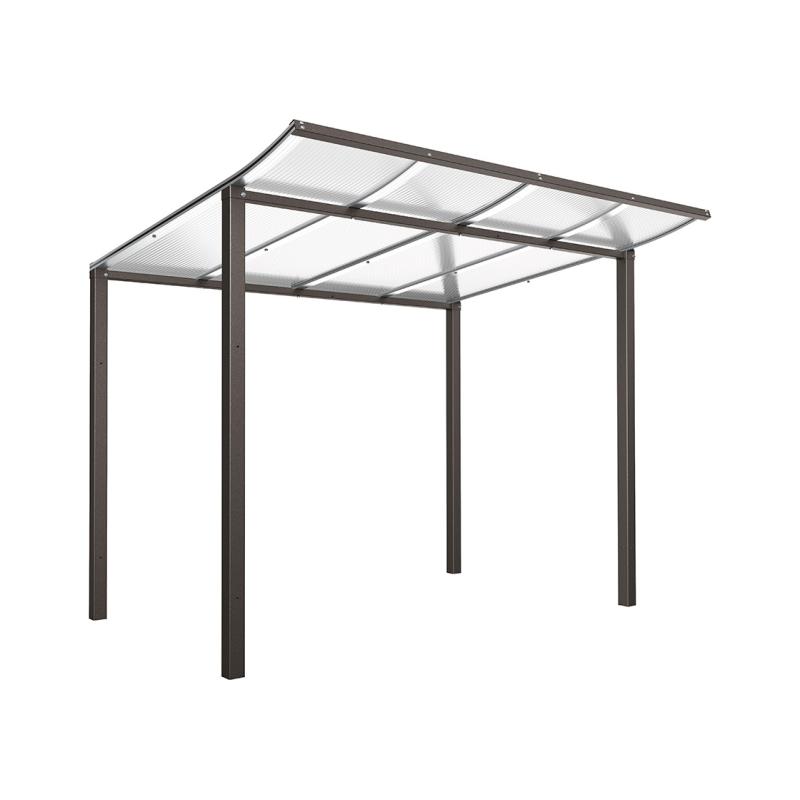
| Single-sided bike shelter roof | Smaller housing cooperatives, schools, stores | 4–10 spaces/section | Cost-effective and simple |
| Double-sided bike shelter roof | Workplaces, sports facilities | 10–20 spaces/section | High capacity, space-efficient |
| Covered two-tier bike rack | Densely built areas, train stations | 16–32 spaces/section | Maximum space efficiency |
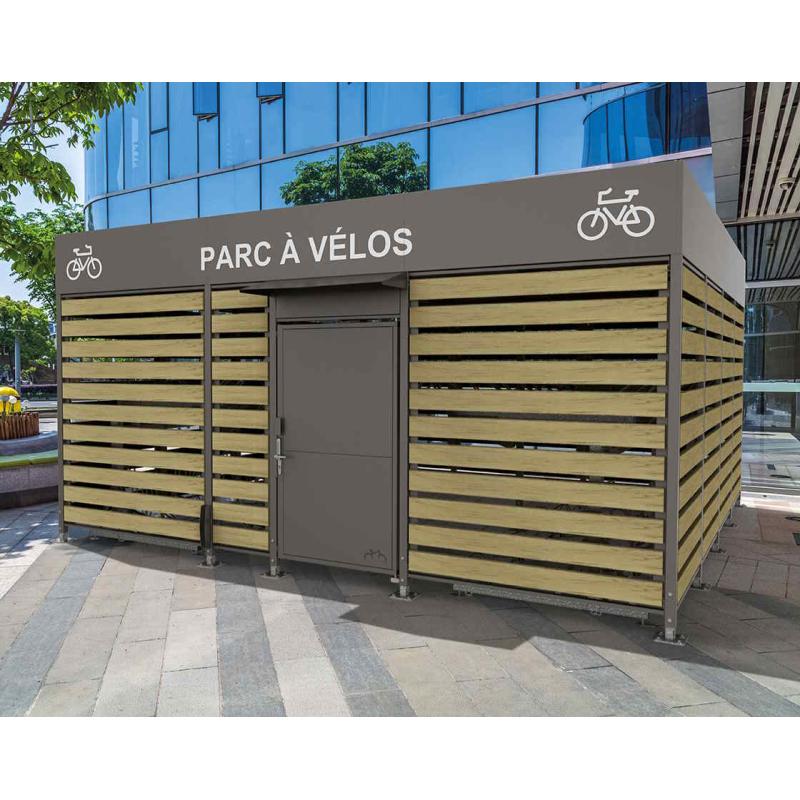
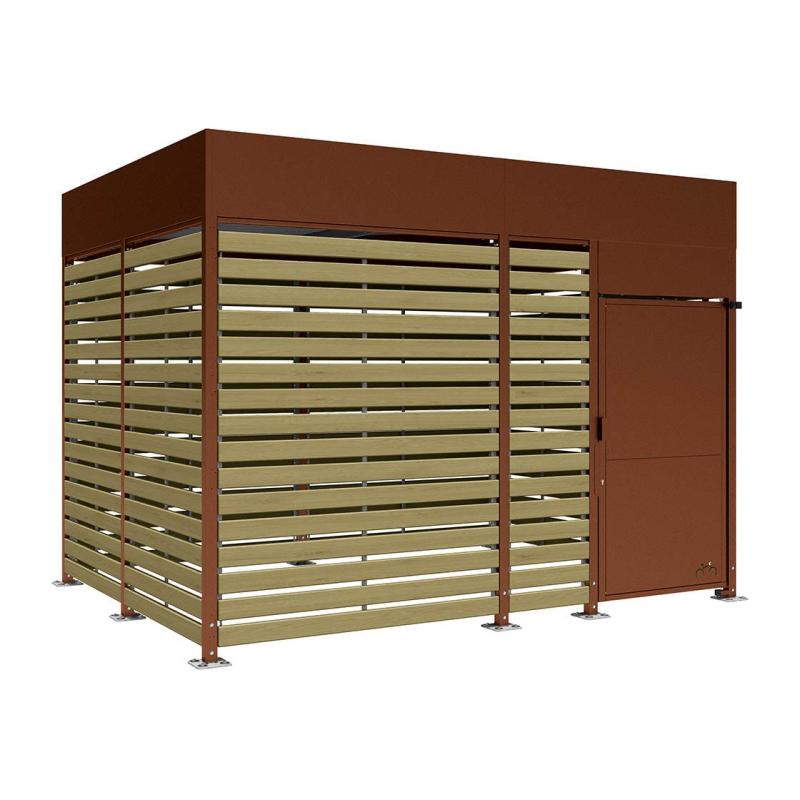
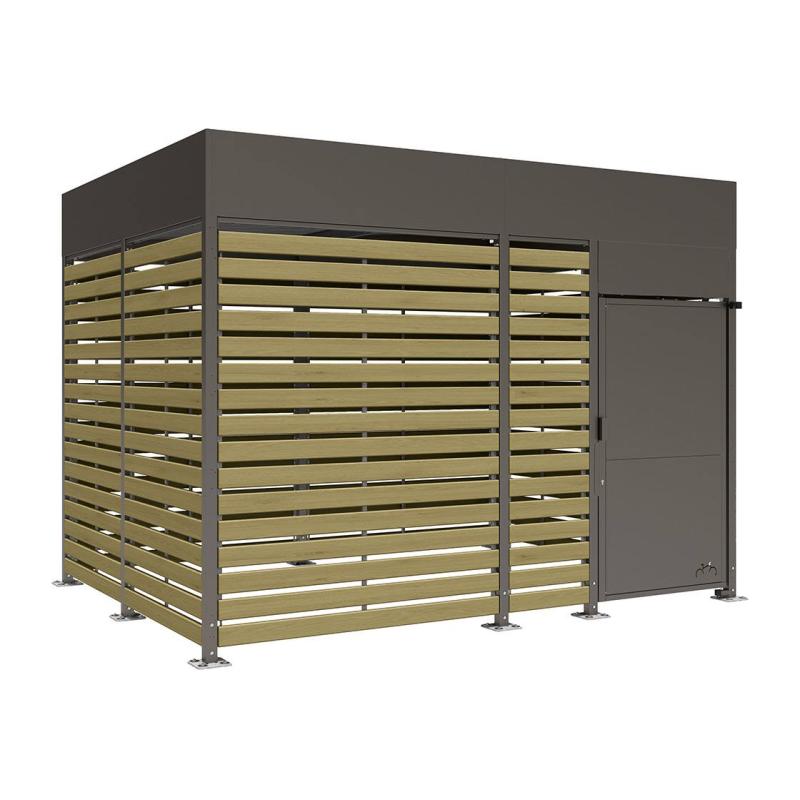
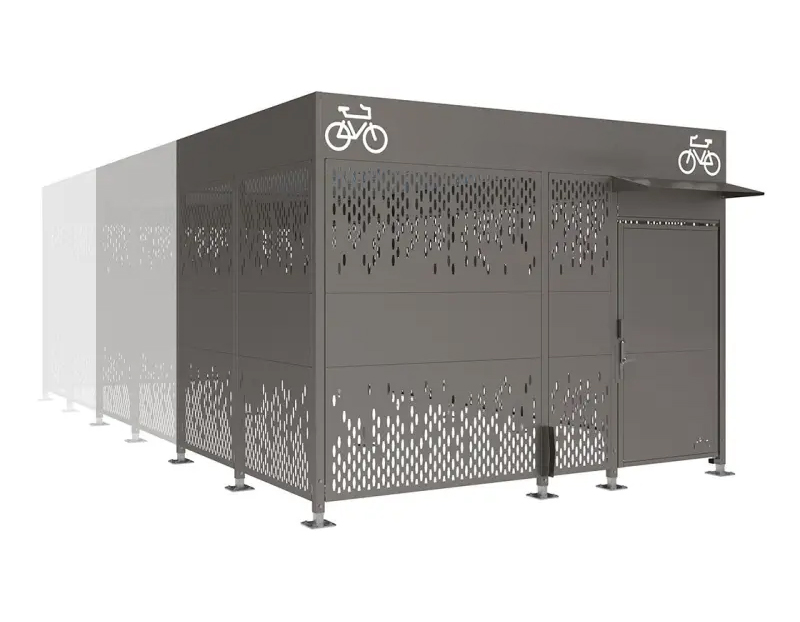
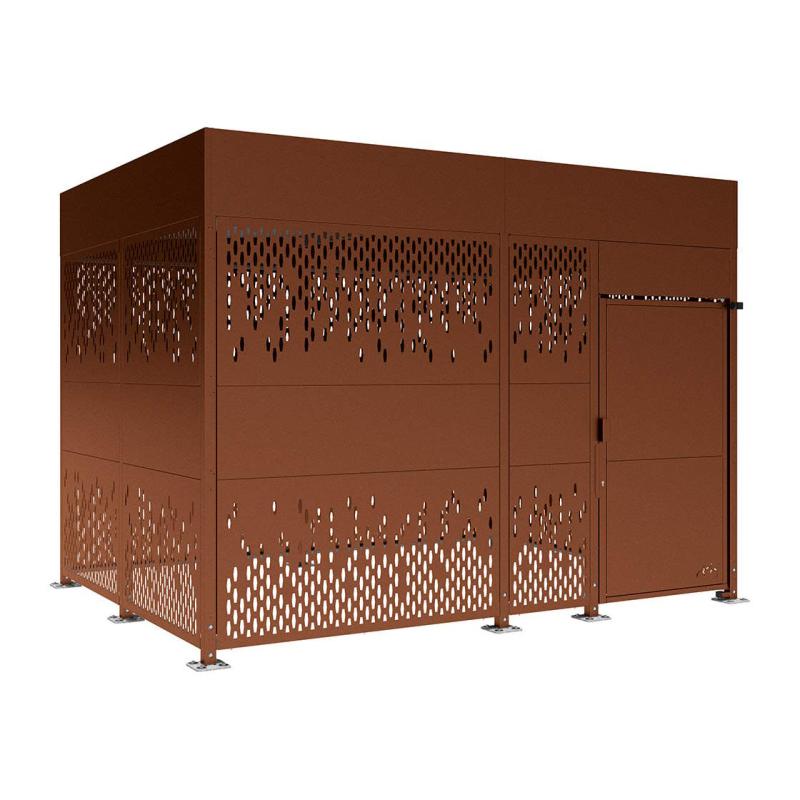
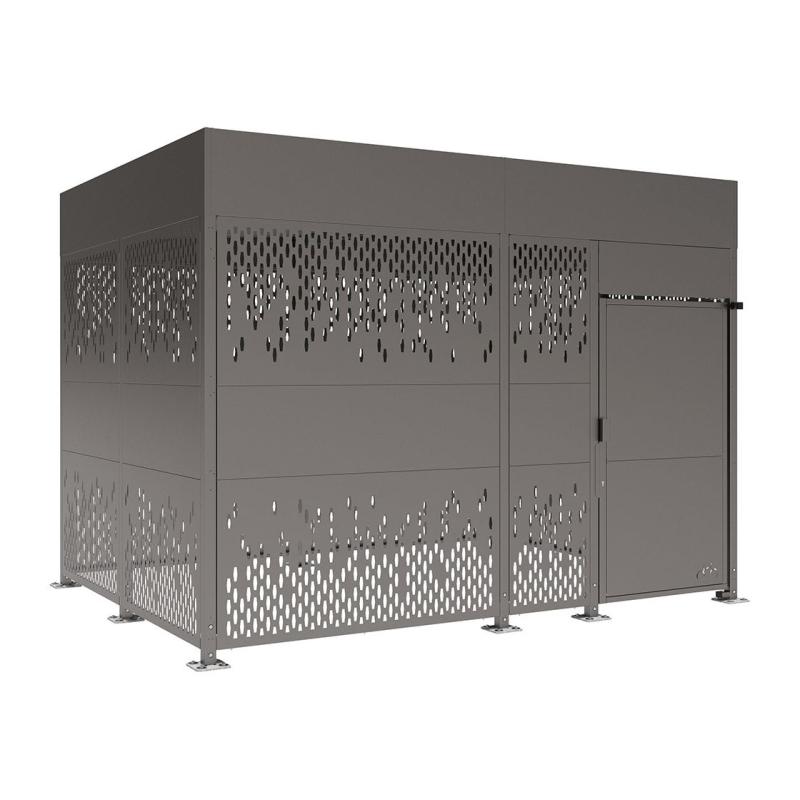
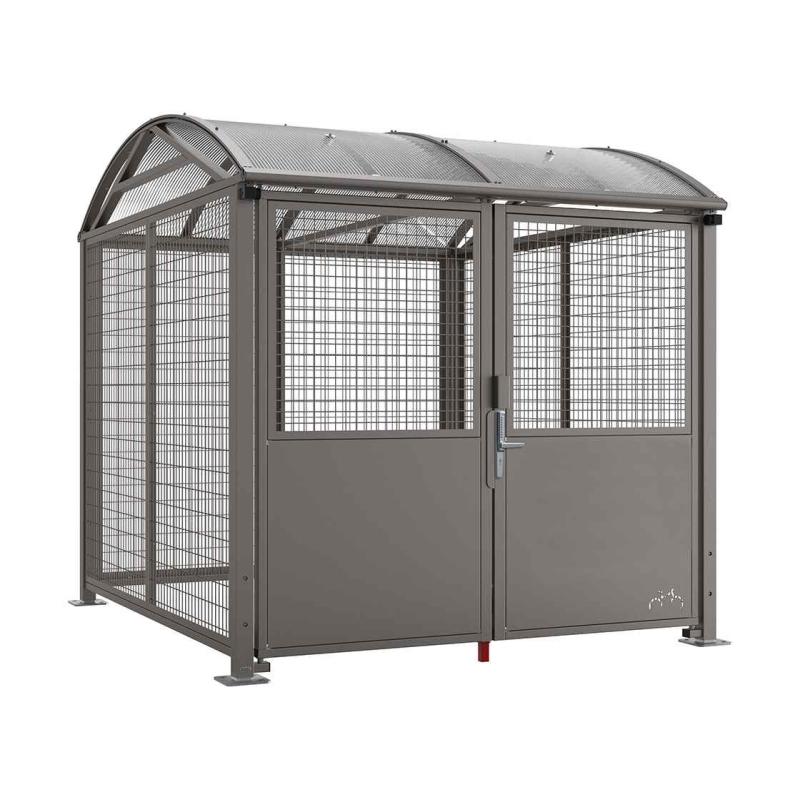
| Bike shelter (with walls) | Long-term parking, e-bikes | Customizable | Highest security & weather protection |
The table provides a good foundation, but remember that every project is unique. Sometimes the best solution is to combine different models or to adapt a design so it blends in with a particular architecture. Feel free to browse our wide range of bike racks for more inspiration.
Choosing the right model is about finding the balance between function, appearance and budget. A modern steel and glass structure may be a perfect fit in a newly built area, while a bike rack with wood details blends in beautifully in a park or next to an older building.
Finding it hard to know which model is best for you? Get in touch. We are happy to help analyze your needs and put together a proposal that is a perfect fit for your project.
Materials and construction for a Nordic climate
A covered bike rack in Sweden has to withstand everything our climate can throw at it. We’re talking driving rain, heavy wet snow and relentless summer UV radiation. Choosing the right material and construction is therefore no minor detail – it is the very foundation for making the investment last and stay safe over time.
It is simply a matter of looking beyond the initial price tag and focusing instead on service life and minimal maintenance. A cheap bike rack that starts rusting after a couple of winters or buckles under heavy snow quickly becomes an expensive and dangerous headache.
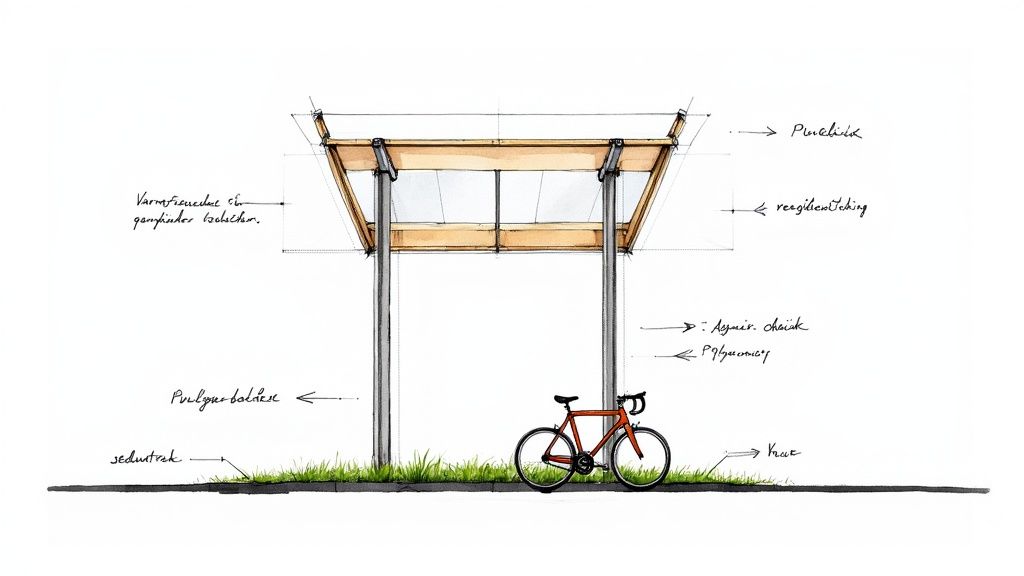
The frame – the backbone of strength and durability
The frame is the skeleton of the bike rack and must be built to last. In our Nordic climate, there is really only one obvious choice if you want a robust and virtually maintenance-free structure.
Hot-dip galvanized steel is the industry standard for good reason. The entire steel structure is dipped in a bath of molten zinc, creating a thick, protective layer that reaches into every nook and cranny. The result is superior corrosion protection that withstands the elements for decades, even in salty coastal environments.
For projects where appearance is just as important as function, a powder coating can be added on top of the galvanizing. This not only lets you match the color to the surroundings but also adds an extra layer of protection against scratches and wear. A smart combination of durability and design.
A critical safety issue is making sure the frame is correctly dimensioned for Swedish snow and wind loads. An under-dimensioned structure can collapse during the winter, posing a serious risk to both people and property. Always make sure your supplier can guarantee that the product meets the applicable Eurocodes for loads.
Roofing materials – a balance between function and aesthetics
The roof is what protects the bikes from rain, snow and the sun’s fading rays. The choice of material here affects everything from light transmission and maintenance needs to the visual impression of the entire installation.
- Impact-resistant polycarbonate: A very popular choice that is both durable and lets in pleasant light. Unlike regular glass, it does not shatter, making it a safe option in public spaces. Available in both clear and smoked versions.
- Robust sheet metal: A classic and extremely durable material that provides complete protection. Profiled sheet metal is incredibly strong and requires minimal maintenance, making it a cost-effective choice over time.
- Sedum roofs (green roofs): An option that is becoming increasingly common in sustainable projects. Sedum roofs absorb rainwater, promote biodiversity and create a unique, living look. However, they place higher demands on the structure’s load-bearing capacity and require some upkeep.
- High-pressure laminate (HPL): Often used for walls but also works excellently as roofing. HPL is extremely scratch-resistant, UV-resistant and easy to clean of graffiti, giving a modern and sleek look. For a solution that combines maximum durability with design, a bike shelter roof with HPL walls is a spot-on choice.
Certification and safety requirements
A CE-marked bike rack carries a fundamental seal of quality. The marking is the manufacturer’s declaration that the product meets EU requirements for safety, health and the environment. For load-bearing structures such as a bike shelter roof, this is especially important, as it ensures that calculations for things like snow load have been carried out in accordance with applicable standards (usually EN 1090).
When comparing different suppliers, ask to see the documentation for the CE marking. It is your assurance that you are investing in a safe, tested product built to stand the test of time.
The choice of material and construction is absolutely crucial for making your covered bike rack a long-term asset rather than a future problem. Unsure which materials are best suited for your project? Get in touch with us at Nordguard, and we will help you find your way through the jungle of options and land on the best solution for your needs.
Plan placement and sizing for maximum benefit
A first-class covered bike rack that nobody uses is, unfortunately, a completely wasted investment. Even the most robust and weather-protected model loses its purpose if it is in the wrong place. That is exactly why placement and sizing are absolutely crucial for your bike parking to become the success you are hoping for.
A cyclist almost always chooses the easiest and fastest route. If the bike rack is placed in a dark corner far from the entrance, the bikes will end up leaning against the facade anyway. The goal is to make the right choice – using the bike rack – the most obvious and convenient option.
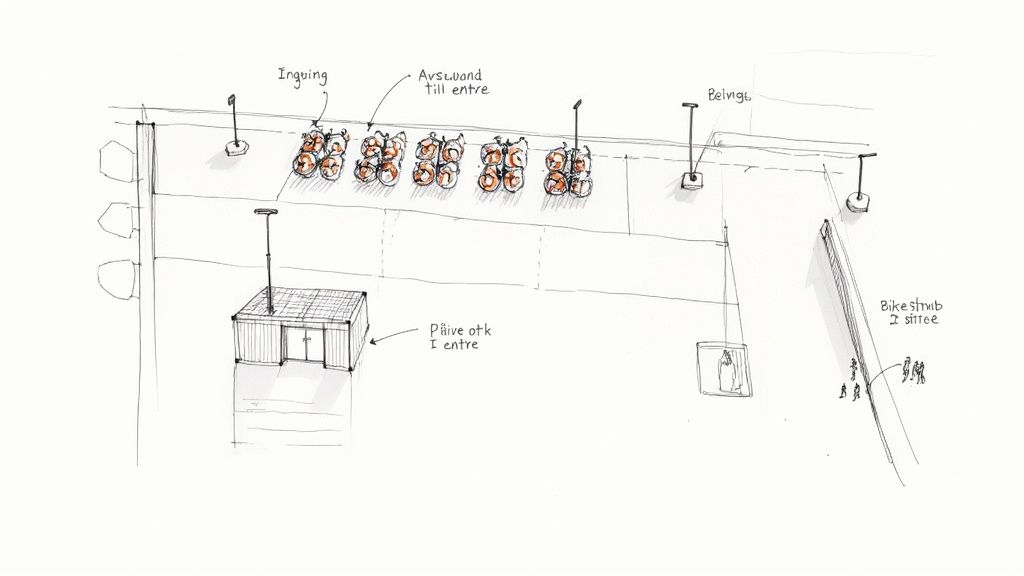
Strategic placement for security and usage
To really get the maximum benefit, a covered bike rack must be placed where people naturally move around. It is about creating a sense of social security and sheer convenience.
Well-placed bike parking usually meets several of these criteria:
- Proximity to the entrance: The parking should be as close to the main entrance as possible, ideally within 25 meters. This minimizes effort for the user and makes the rack the most logical choice.
- Good lighting: The area must be well lit, especially during the dark hours. Good lighting deters theft and vandalism and creates a safer environment for everyone.
- Visibility and natural surveillance: Avoid hidden locations behind bushes or buildings. An open, visible location means more people see the parking, which in itself reduces the risk of crime.
Think of the bike parking as part of the property’s welcome. A well-lit and tidy facility near the entrance signals order, security and care – just like a well-kept entrance.
By following these simple principles, you ensure that the investment actually gets used. It all comes down to understanding and respecting cyclists’ behavior.
Calculate the actual number of spaces needed
So, how many spaces do you really need? Guessing can lead either to a shortage of spaces and disorder or to an oversized and unnecessarily expensive facility. A thorough needs assessment is therefore an important first step.
For a housing cooperative, a common recommendation is to plan for 1.5 to 2 bike spaces per apartment. This covers not only the residents’ current needs but also creates a buffer for the future and for visitors.
For public spaces or workplaces, the calculation is instead based on expected visitor flows and the number of employees who commute by bike. Try to analyze how many people visit the site daily and what share might arrive by bike.
Optimize the space with smart solutions
In dense urban environments, ground space is often in short supply. Fortunately, there are space-efficient solutions that maximize capacity without requiring more room. Two-tier bike racks are an excellent example. They optimize space by offering parking on two levels, providing twice as many spaces per square meter – up to 32 spaces in double-sided models.
The system requires a height of at least 2750 mm and, according to the City of Gothenburg’s 2019 guide, has become a strong recommendation for property owners. Since they reduce the ground area needed by a full 50 percent, it becomes easier to meet the requirement of 1–2 spaces per apartment.
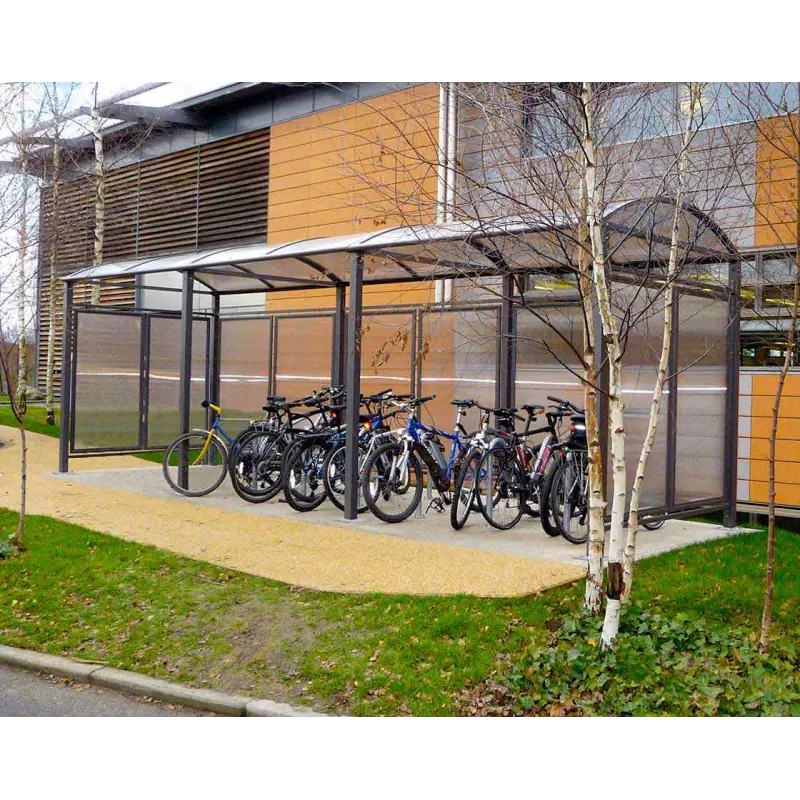
For projects that require even greater security and protection, where e-bike charging may also be needed, a complete bike shelter may be the best solution. They offer full protection against both the weather and theft and can be customized to specific needs.
Checklist for ground preparation and foundations
A stable and correct installation is essential for the bike rack’s service life and safety. Improperly prepared surfaces can cause the structure to settle or, in the worst case, become unstable over time.
Here is a checklist to ensure a good result:
- Ground survey: Check that the ground is stable and free of utility lines, pipes and cables exactly where the foundations are to be cast.
- Level, paved surface: The surface where the bike rack will stand must be level and paved, usually with asphalt, concrete slabs or paving stones.
- Correct foundations: Make sure the foundations are cast according to the supplier’s specifications. Depth and size must be adapted to the ground conditions and the weight of the structure.
- Drainage: Plan for good drainage so that water does not collect around the foundations or inside the bike rack.
Need help planning placement, calculating capacity or understanding the technical requirements for installation? Contact us at Nordguard for expert advice and we will help you create bike parking that truly makes a difference.
How does the investment pay off in the long run?
The price tag for a new covered bike rack is only the beginning of the story. To truly understand the value of the investment, you need to look at the bigger picture and consider the total cost of ownership over time. A high-quality solution may feel more expensive to buy, but it almost always proves to be the smartest and most profitable deal in the long run.
A cheaper solution with inferior materials or a flimsy structure easily becomes a source of constant expenses. The costs of repairing rust damage, replacing broken parts and, in the worst case, scrapping the entire installation after just a few years quickly eat up those initial savings – and then some.
Total cost versus real return
To make a fair assessment, you need to weigh the total expenses against the actual return the investment generates. This approach provides a solid, fact-based foundation for justifying the project internally and demonstrating its value.
Cost items to include in the calculation:
- Purchase: The cost of the covered bike rack itself.
- Groundwork: Preparing the surface, such as asphalting, laying pavers or leveling the ground.
- Installation: The work of assembling the structure and casting the foundations.
- Future maintenance: Budget for the minimal maintenance required, such as cleaning and an annual inspection.
Real return over time:
- Fewer bike thefts: Secure, weather-protected parking significantly reduces the risk of theft.
- Higher property value: A well-organized, safe and functional outdoor environment is highly valued.
- Happier tenants and employees: An appreciated amenity that increases satisfaction and makes everyday life easier.
- Reduced repair costs: Bikes protected from rain, snow and wind simply last longer.
When you look at the investment through this lens, it transforms from a pure expense into a strategic asset. An asset that delivers measurable returns, year after year. It is about investing in security, sustainability and long-term value.
Real-world lessons
An excellent example of long-term thinking comes from Härnösand. There, the municipality invested in a sturdy covered bike rack on Stora Torget. The initial cost of SEK 498,000 sparked some debate but was justified by an estimated service life of at least 20 years and minimal maintenance needs. It shows an understanding that quality pays off. You can read more about the Härnösand project on sverigesradio.se.
This type of investment also delivers direct financial gains. In Sweden, around 66,000 bike thefts are reported every year, and every theft that can be prevented is value saved. Studies have shown that investments in more secure bike parking can reduce the number of thefts by up to 30 percent, making the financial case even stronger.
To create an outdoor environment that is both safe and welcoming, you can also complement it with other products from our range. Combining bike racks with clearly marked walkways using park & street furniture creates a cohesive and functional whole.
 Silver gray
 Green
Green
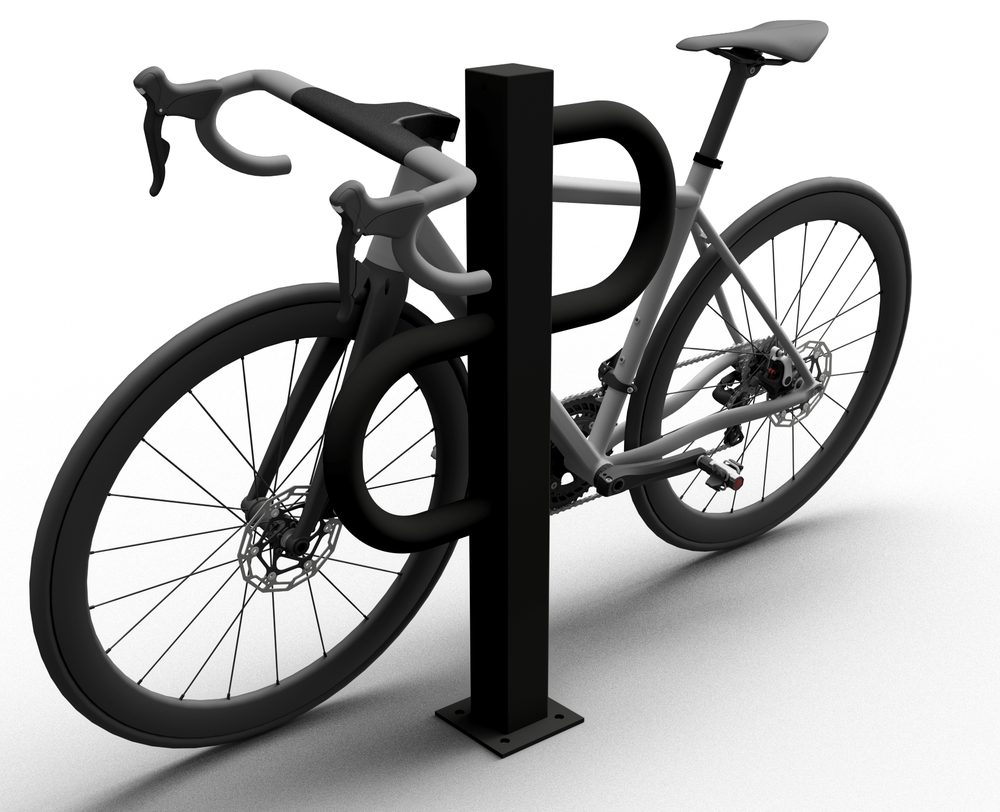
 Black
Black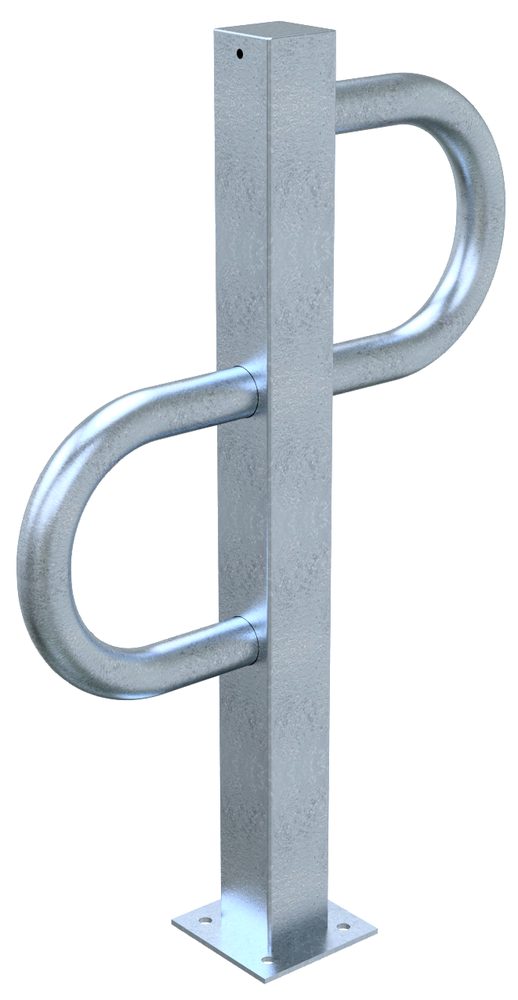 Silver gray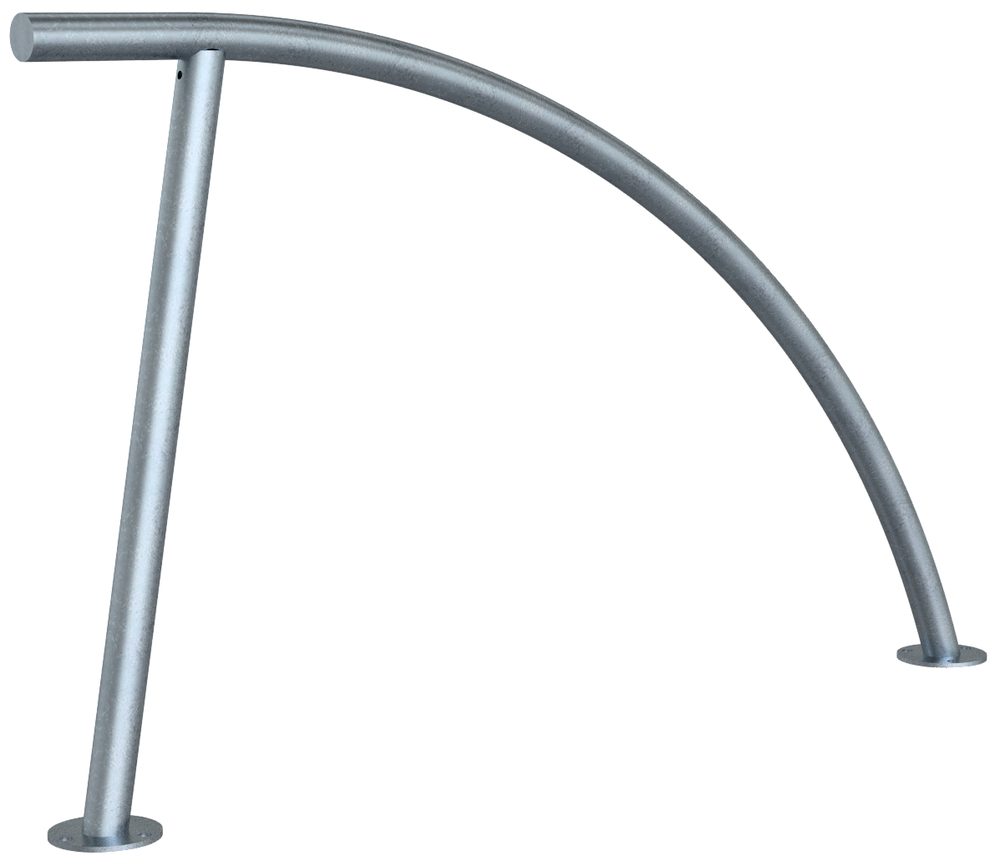
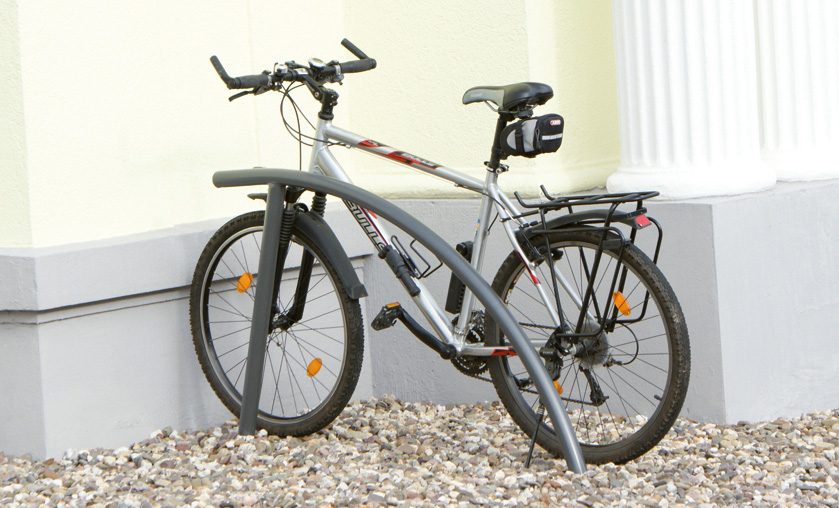
 Anthracite
 Silver gray
Finding it hard to run the numbers for your project? Or would you like help putting together decision-making documentation that clearly shows the long-term profitability? Get in touch with us at Nordguard. We will help you analyze the costs and expected return so you can make a well-founded and financially smart decision.
How we help you succeed with your project
Launching a project for new covered bike racks can feel overwhelming. There are many parts to keep track of – from analyzing the actual need and choosing the right model to understanding building permits and planning the installation. But you don’t need to know all of this. That’s our job.
Think of us at Nordguard as your partner and advisor throughout the entire journey, not just a supplier. We help you turn an initial idea into a finished, functional and durable installation that truly enhances your outdoor environment. Whether you have just started thinking about it or already have a finished plan, we are here to support you.
From initial idea to finished installation
Our process is designed to make things easy for you. We help you navigate everything from technical specifications and groundwork to municipal guidelines and regulations.
Our support can include, for example:
- Analyzing the need: We help you determine how many spaces you actually need and which solution best suits your particular site and budget.
- Choosing the right product: Based on the analysis, we guide you to the right model – whether it is a space-efficient two-tier bike rack, a robust bike shelter roof or a complete bike shelter structure.
- Handling regulations and permits: We know the regulations and can help you interpret local rules and assist in the dialogue around a possible building permit.
- Planning the project: Together, we draw up a sensible plan for groundwork and installation so that everything runs smoothly and without surprises.
Bike theft is a huge problem in Sweden, with around 66,000 reported cases every year. Experience from cities like Gothenburg shows that covered bike racks can reduce thefts by up to 40 percent. The City of Gothenburg’s 2019 bike parking guide states that covered parking is key to protecting against both weather and theft, since as much as 70 percent of thefts occur at unprotected outdoor locations.
Our goal is to make it easier to get started. By offering expertise and guidance at every step, we make sure your project is both cost-effective and successful, without unnecessary obstacles along the way.
Take the next step with us
It doesn’t matter where you are in the process. Get in touch for a no-obligation discussion. We can bounce ideas around, give concrete advice and put together a tailored proposal that meets your specific needs. Let us help you create safer, more attractive and more functional bike parking.
Explore our range of robust, weather-protected solutions below.
 Corten steel
 Gray
Gray
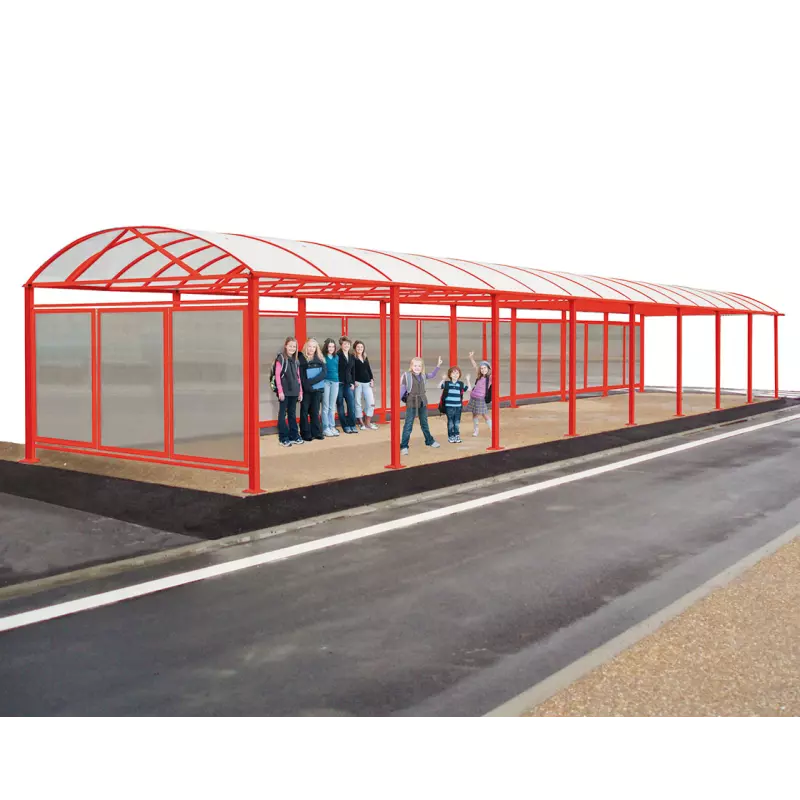
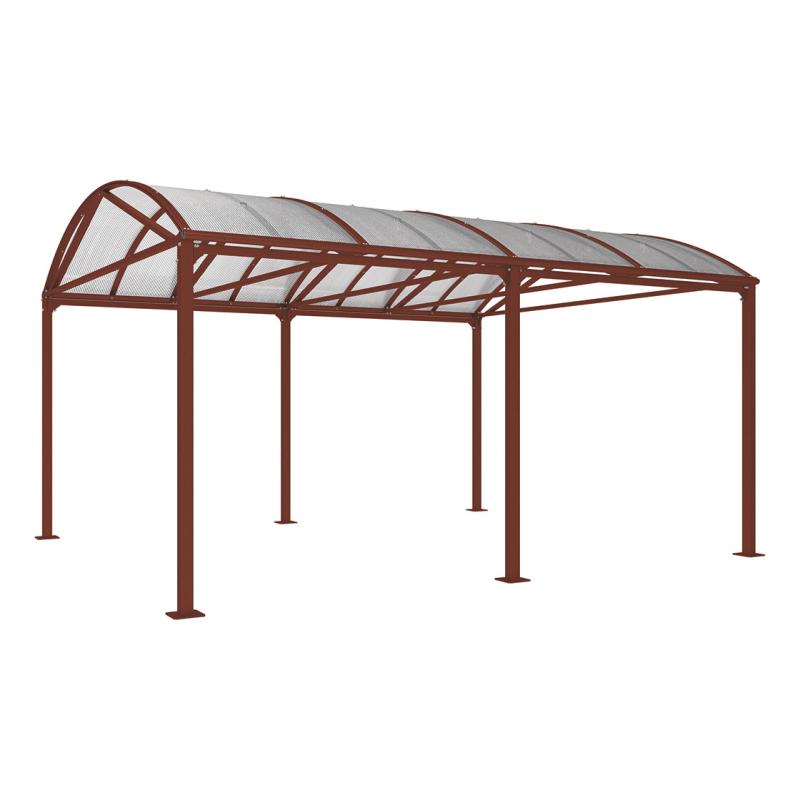 Corten steel
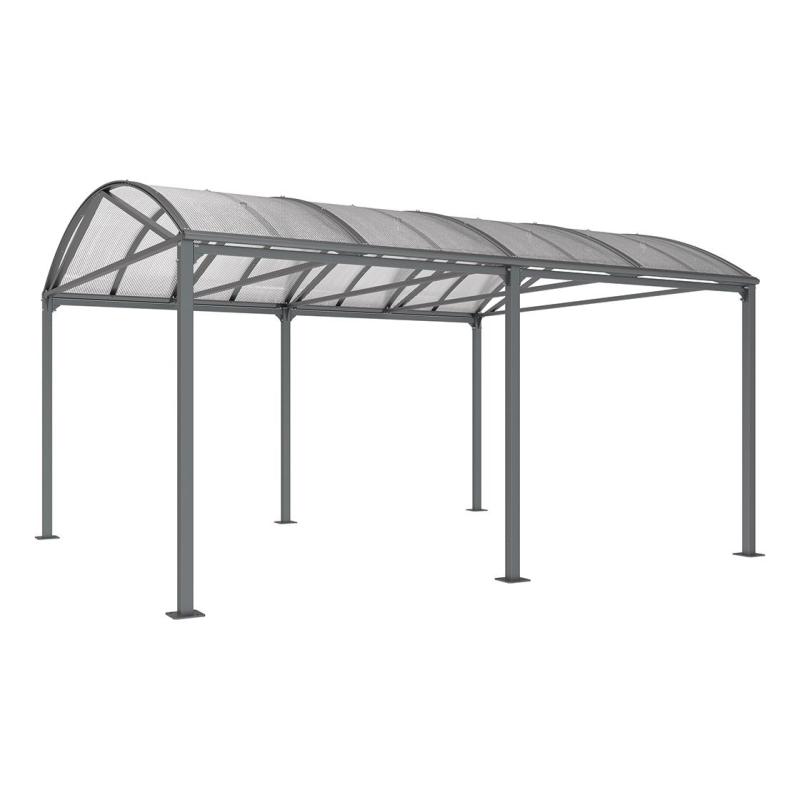 Gray
Gray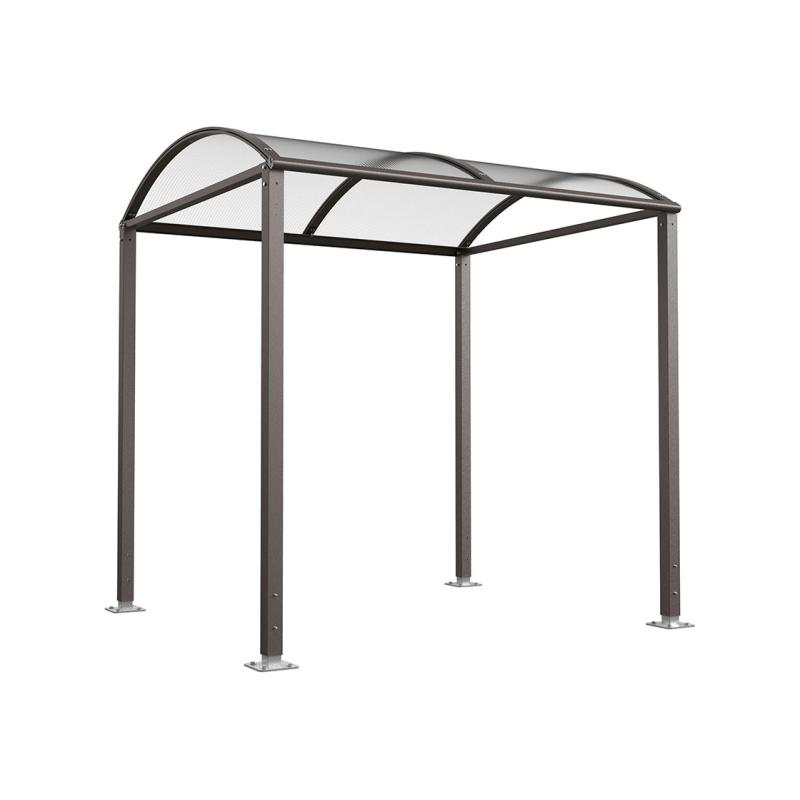
 Corten steel
 Gray
Gray
 Corten steel
 Gray
Gray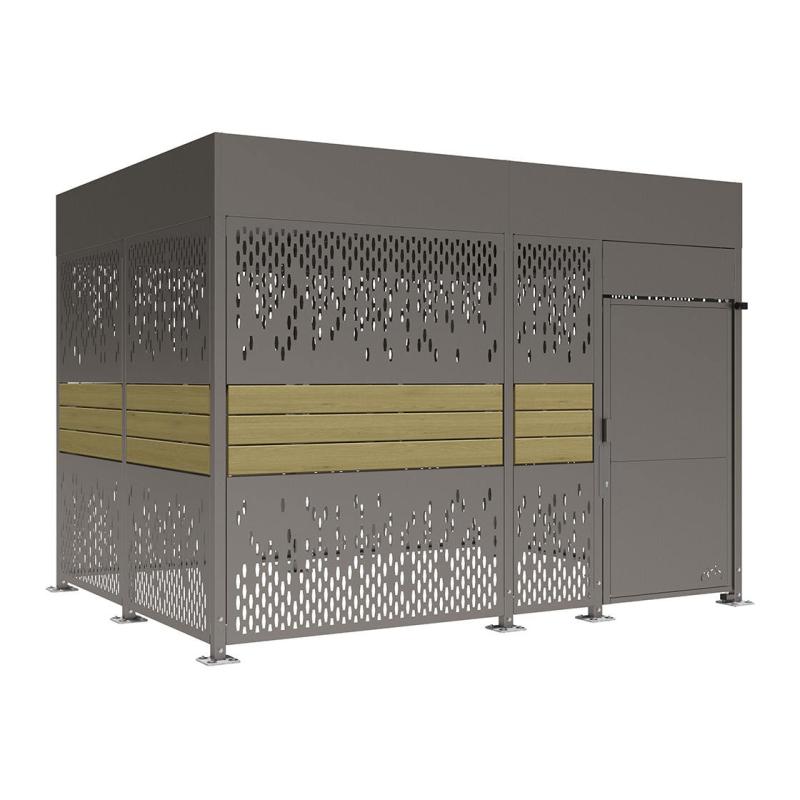
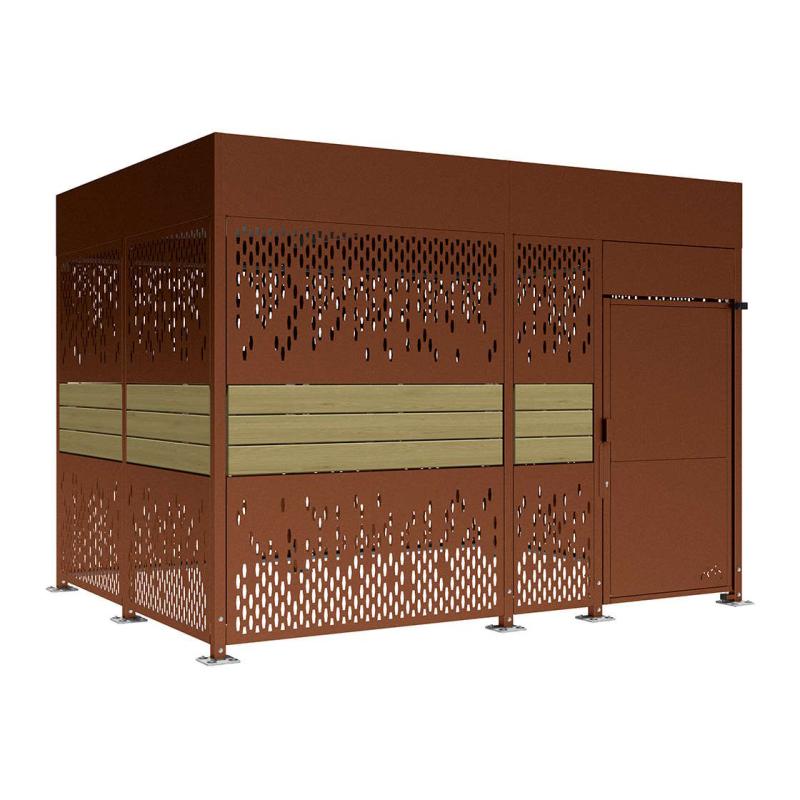 Corten steel
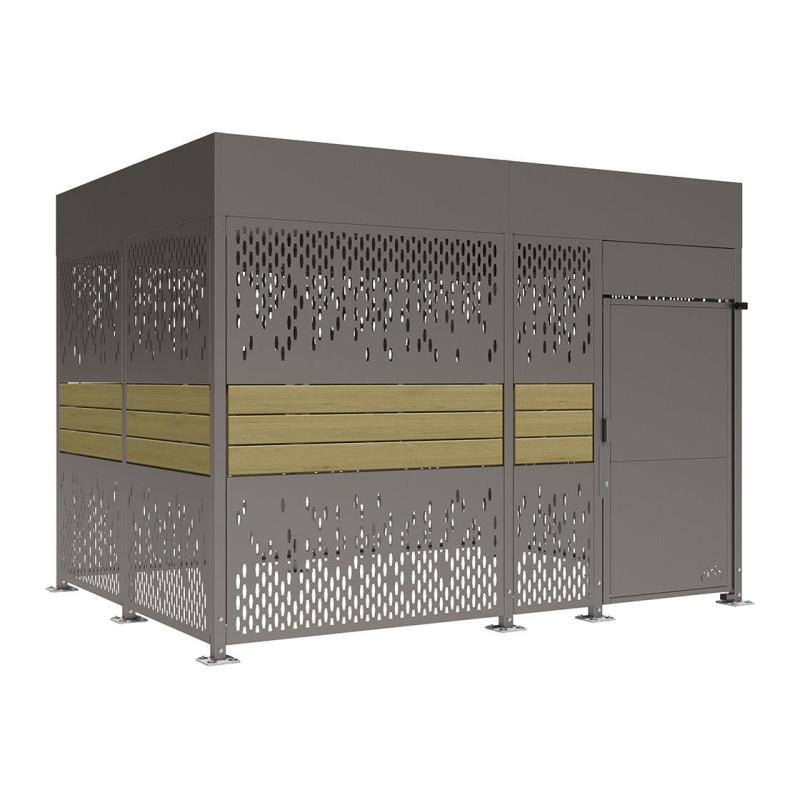 Gray
Gray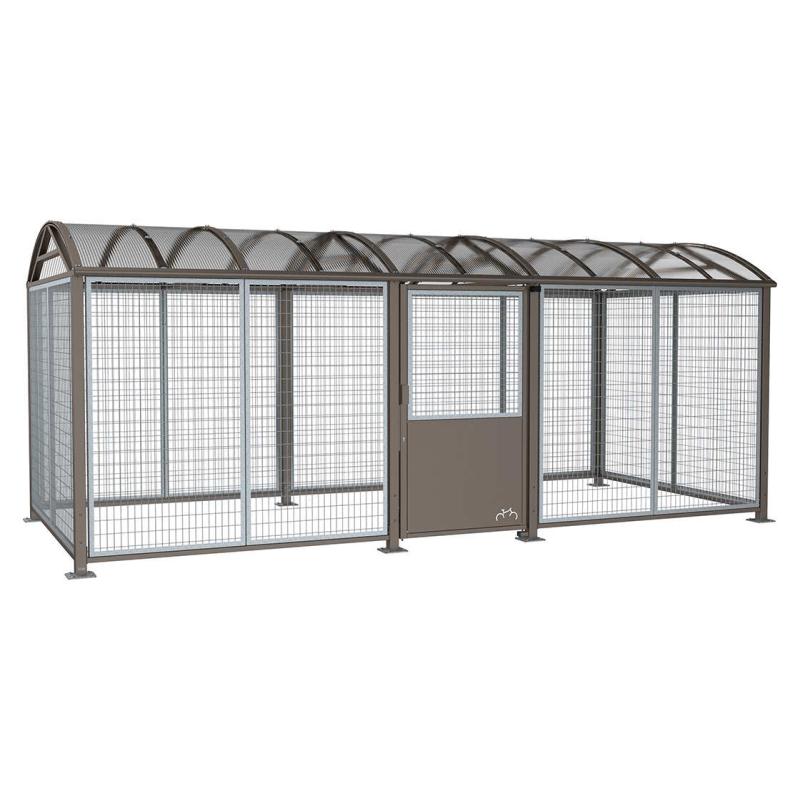
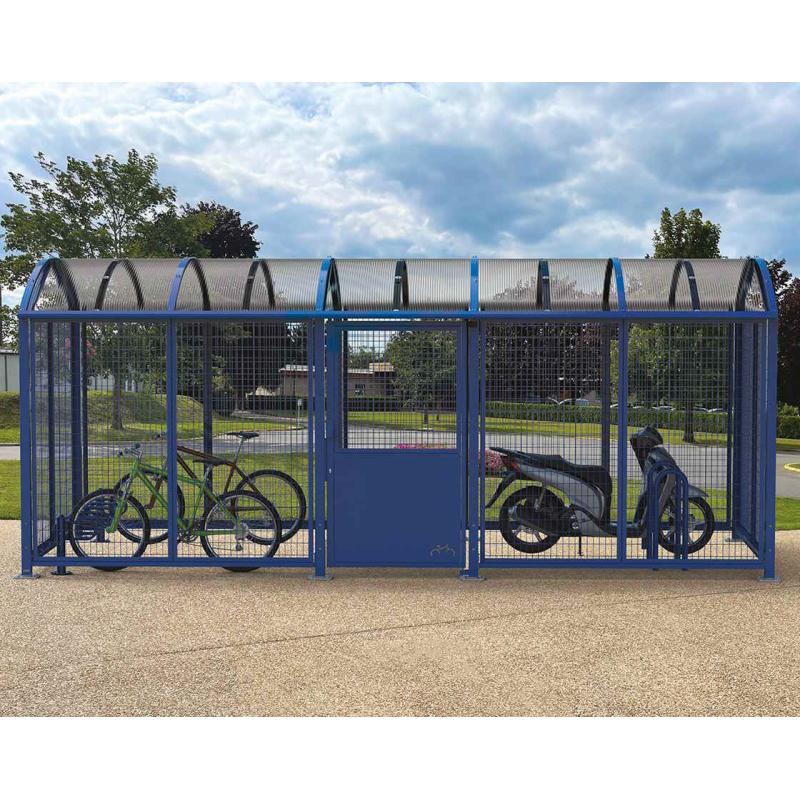
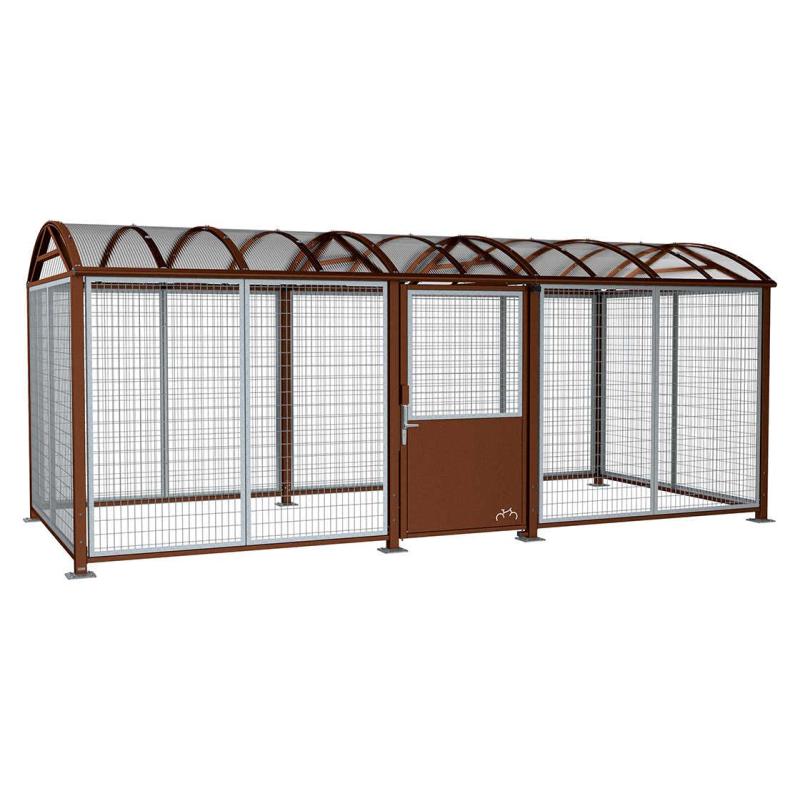 Corten steel
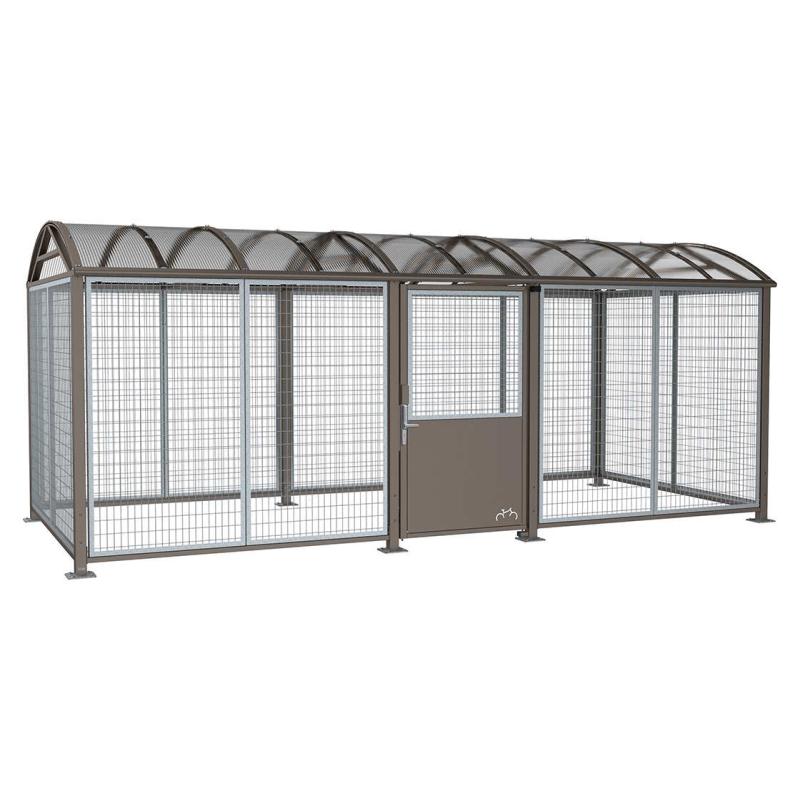 Gray
Gray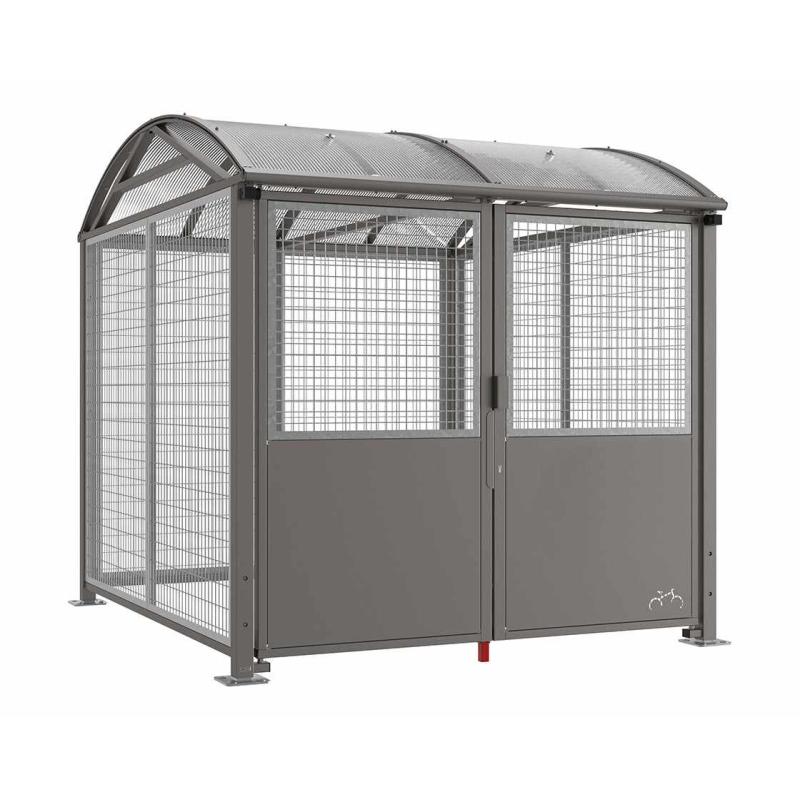
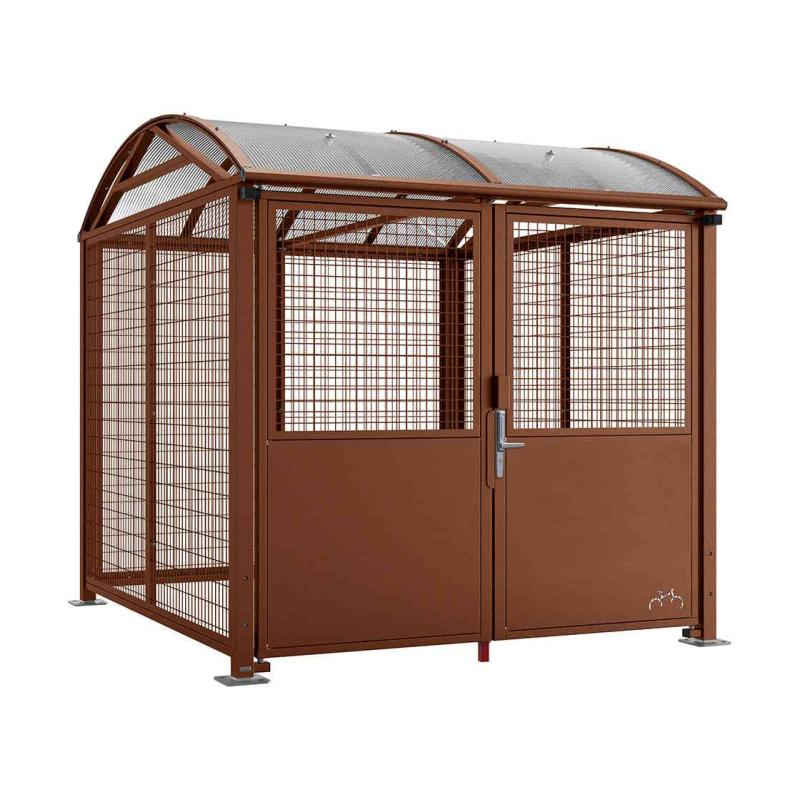 Corten steel
 Gray
Gray
 Corten steel
 Gray
GrayFrequently asked questions
Here we have gathered some of the most common questions that tend to come up when planning a covered bike rack. Think of this as a quick guide to help move your project forward.
Do you need a building permit to install a covered bike rack?
The short answer is: it depends. Size, placement and what the zoning plan says for your particular lot are absolutely decisive. A small, simple bike shed can sometimes fall under the same rules as a small permit-exempt outbuilding and not require a building permit. But as soon as larger structures are involved, a building permit is almost always required.
To be on the safe side – and avoid problems later on – the smartest thing is to talk early with the building committee in your municipality. We at Nordguard have been through this process many times and are happy to help you figure out what applies. We can also produce the drawings and documentation needed for any application.
How many bike spaces does a housing cooperative really need?
A good rule of thumb that works in most cases is to aim for 1.5 to 2 bike spaces per apartment. That way you cover not only today’s needs but also build in an important buffer for the future and for visiting guests.
Want a more precise figure? Then we can help you carry out a more in-depth analysis. By looking at factors such as apartment sizes, the number of residents and the character of the area, we can arrive at a figure perfectly tailored to your property.
Why choose a two-tier bike rack?
By far the biggest benefit is space efficiency. It is an incredibly smart way to fit more bikes into a limited area. By building upward, you can simply double the number of parking spaces without needing a single extra square meter of ground.
This is a perfect solution in dense urban environments or on property lots where every bit of space counts. Today’s modern two-tier bike racks are also designed with smart gas springs, making them surprisingly easy for virtually anyone to use.
Do you have more questions, or would you like to bounce ideas around about your specific project? Get in touch with us at Nordguard and you’ll talk to someone who really knows this stuff. Read more and find our contact details at https://nordguard.eu.
Ready to take the next step?
We help you develop solutions tailored to your needs. At Nordguard, we strive to make the ordering process as smooth as possible. By offering support and guidance throughout the entire purchasing experience, we make sure you feel confident and satisfied with your choice of protection products.+46 10 153 90 50
[email protected]