
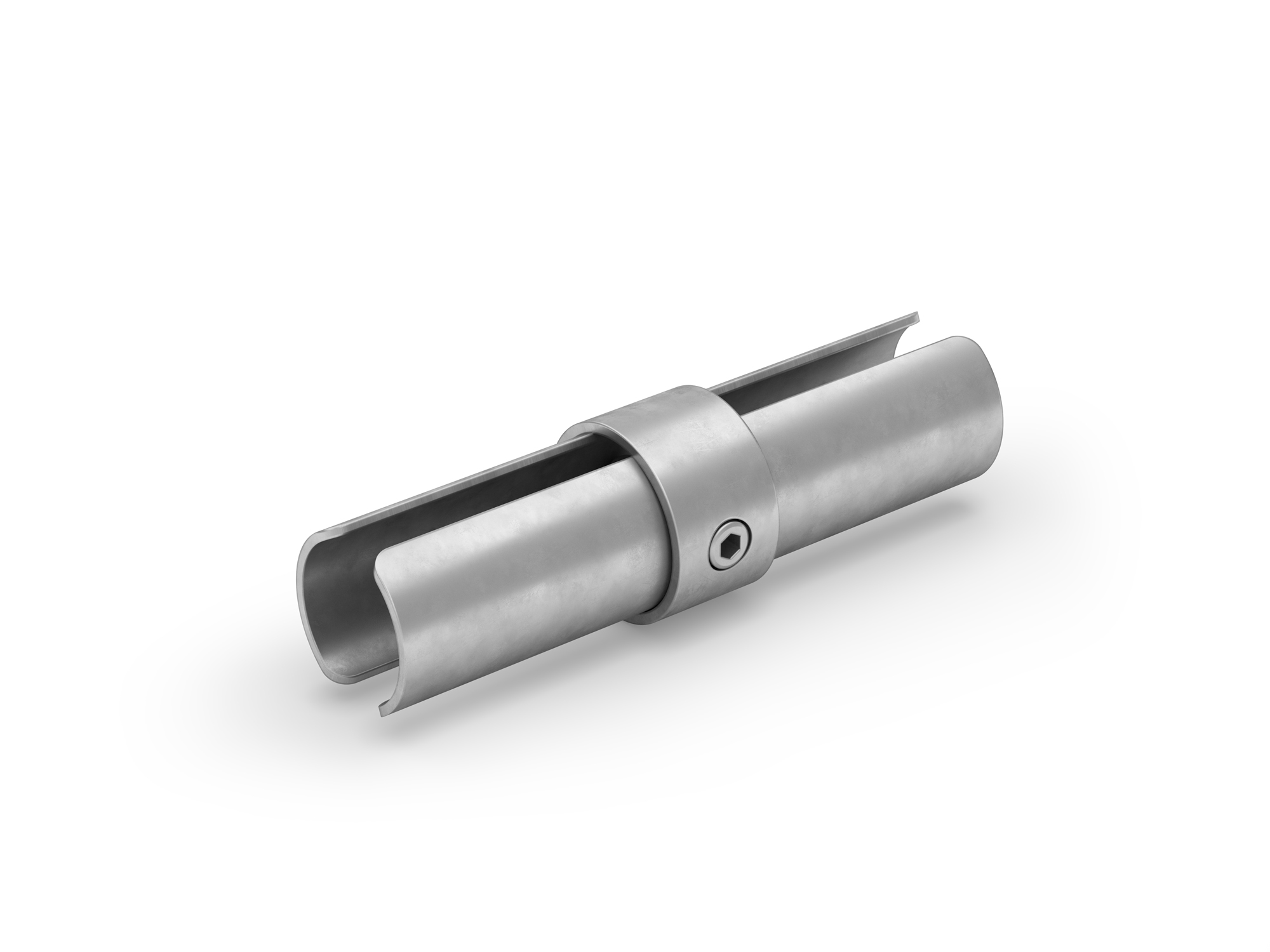
 Pipe Splice Kit 42mm HDG
 Everything About Bike Racks for 5 Bikes – Your Complete Guide
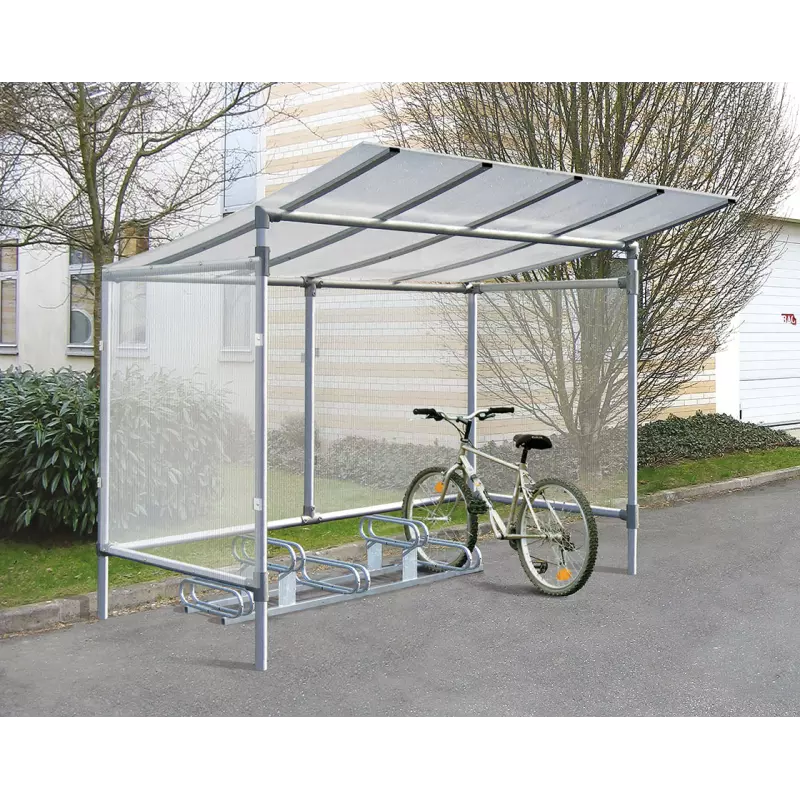
A bike rack for 5 bikes is more than a practical detail – it is a smart move that improves both order and security around a property. This size offers the perfect balance between capacity and footprint, making it an excellent choice for housing cooperatives, businesses and public spaces where space is at a premium but the need for secure bike parking is high.
Why a good bike rack is essential for your property
Investing in the right bike parking is about much more than just keeping bikes organized. It is an investment in a safer, more functional and more pleasant environment for everyone who moves through the area. For property owners, municipalities and housing cooperatives, a well-designed bike rack is a long-term solution that pays off on several levels.
A well-organized space reduces clutter, keeps walkways clear and creates a more welcoming impression. Instead of bikes lying around, blocking entrances or creating tripping hazards, a dedicated rack provides a clear and simple structure that everyone can follow.
Improved security and fewer thefts
One of the biggest concerns for every cyclist is the risk of theft. A poor bike rack, or none at all, is an open invitation to thieves. A sturdy, well-anchored solution makes the job considerably harder. By providing a secure spot where both the frame and wheels can be locked, you actively help protect valuable property.
And it works. Better parking solutions have a proven effect on reducing bike thefts. According to the Swedish National Council for Crime Prevention (Brå), 54,844 bike thefts were reported in 2024. That is a dramatic drop from over 115,000 reports in 2004 – nearly cut in half in 20 years, largely thanks to more secure parking. The figures clearly show how investing in a high-quality bike rack actually creates a safer local environment. Read more about the statistics at Brå.
An investment in sustainability and well-being
When parking a bike is easy and secure, more people choose to cycle. This not only leads to less car traffic and better public health, but also sends a clear signal: we value a sustainable lifestyle here. For a housing cooperative, this can increase the property’s value and help residents feel more at home.
A well-planned bike rack is not a cost – it is a service that adds value to your property and shows that you care about the people who live and work there.
To make a smart and sustainable choice, you need the right information. This guide gives you the tools you need – from placement and material selection for our Nordic climate to how proper mounting ensures functionality for many years to come.
Quick guide to choosing a bike rack for 5 bikes
| Aspect | Key considerations | Our recommendation |
|---|---|---|
| Placement | Proximity to entrance, weather protection, lighting and natural surveillance. | Place the rack in a visible spot close to main entrances, ideally under a roof. Good lighting deters thieves. |
| Material | Resistance to rust and wear. Galvanized or stainless steel is most common. | Hot-dip galvanized steel is a robust standard for the Swedish climate. Powder coating adds extra protection and color options. |
| Anchoring | Must be suited to the surface (asphalt, concrete, pavers). | A concrete foundation is the most stable. For asphalt, use expansion bolts and make sure the surface is thick enough. |
| Security | Ability to lock the frame, not just the wheel. Hoops or bollards are more secure. | Choose a design where the bike frame can easily be locked with a U-lock. Avoid racks that only hold the front wheel. |
| Ease of use | Clear spacing between bikes, easy access in and out. | A center-to-center spacing of at least 60 cm between spaces is recommended to avoid tangled handlebars and pedals. |
The table above is a good starting point. Every property has unique conditions, so use the guide as a checklist to make sure you cover all the key aspects.
Not sure which solution is best for your property? Contact us at Nordguard for expert advice. We will help you find a bike rack that is both functional and built to last.
Plan the placement for maximum functionality and accessibility
Successful bike parking starts long before ground is broken. The smartest investment in a bike rack for 5 bikes is actually the time you spend planning where it will go. A poorly placed solution will at best be ignored, and at worst become a safety hazard that blocks walkways or emergency exits.
The goal is simple: create parking that feels so obvious and convenient that it becomes the natural first choice for every cyclist. It is about finding the perfect balance between proximity, security and accessibility – even when all five spaces are full.
Basic dimensions and clearances
To avoid tangles, scratched frames and bent wheels, the right spacing is absolutely essential. A good rule of thumb is to think not just about the rack itself, but about the maneuvering space around it.
- Distance from wall: Leave at least 60 cm between the bike rack and a parallel wall. This gives enough room to wheel the bike in and out without scraping the wall with the handlebars.
- Clear passage: Make sure there is a clear passage of at least 1.5 meters in front of the bike rack. This is critical so that pedestrians, strollers and wheelchairs can pass unobstructed.
- Distance between racks: If you place several racks in a row, plan for at least 1.2 meters between them. This creates a comfortable and safe passage for everyone.
These dimensions are more than just recommendations; they are the key to an inclusive and safe environment. Cramped, hard-to-navigate parking almost always leads to bikes being left just about anywhere, which defeats the whole purpose.
Choosing the right model for your space
Every space is different. A cramped courtyard at a housing cooperative has completely different conditions than an open area outside a municipal building. The choice of model – ground-mounted, wall-mounted or perhaps a flexible modular system – therefore depends entirely on the unique character of the site.
As you can see, it comes down to a mix of practical needs such as space and security. By considering these questions from the start, you can prioritize the right features right away.
Optimizing a small space is not about compromising, but about choosing a smarter solution. A wall-mounted rack, for example, can free up valuable floor space and turn an unused wall into functional bike parking.
Ground-mounted models are often the most robust choice for open areas where the risk of theft is high, since they can be cast in place for maximum security. In extremely tight spaces, such as basement corridors or narrow passageways, wall-mounted bike racks are often the only solution that actually works in practice. Modular systems, on the other hand, offer fantastic flexibility to expand capacity over time – perfect for growing residential areas or businesses.
Real-world examples
-
The housing cooperative courtyard: Space is often limited and shared by many. A double-sided, ground-mounted bike rack can be incredibly space-efficient. Place it a short distance from the facade so no handlebars hit the windows, and make sure the lighting is good to increase safety in the evening.
-
Outside an office building: Here, both aesthetics and function often play a major role. A sleek stainless steel bike rack, placed near the main entrance and ideally under a roof, sends a clear signal that the employer encourages sustainable commuting.
By carefully analyzing the site and the users’ needs, you can create safe, functional and appreciated bike parking that actually gets used. If you are facing a tricky placement or are unsure which model best optimizes your space, don’t hesitate to contact us for personalized advice. Our experts will be happy to help you find a solution that truly works.
Choosing the right material for a bike rack that can handle our Nordic climate
The real cost of a bike rack is rarely visible on the price tag. The true investment lies in how long it lasts, how well it withstands our harsh climate and how little maintenance it requires over the years. Choosing the right material is therefore one of the most important decisions you make when buying a bike rack for 5 bikes.
The Swedish climate is, as we all know, fairly unforgiving. Large temperature swings, moisture, snow and not least road salt place extreme demands on everything that stands outdoors. A material that is not made for these conditions will quickly give up – it starts to rust, the paint flakes and the entire structure weakens. This often ends in costly repairs or having to replace everything prematurely.
By understanding the differences between materials and finishes, you as a buyer can make a smart and economical choice. A choice that guarantees a low total cost and a product that looks good and works as it should, year after year.
Hot-dip galvanized steel – the self-healing protection
For outdoor use here in Sweden, hot-dip galvanized steel is almost always the most cost-effective and durable choice. The entire steel structure is dipped in a bath of molten zinc, creating an incredibly strong metallurgical bond between the zinc and the steel. You could say the protection becomes part of the material itself.
The result is complete, extremely durable corrosion protection that reaches everywhere – even into corners and other hard-to-reach areas. The most unique thing about hot-dip galvanizing is its “self-healing” ability. If the surface gets a scratch or a stone chip, the surrounding zinc sacrifices itself to protect the exposed steel through a clever electrochemical process. Rust is simply stopped before it even starts.
Hot-dip galvanizing is not just a finish; it is protection integrated into the steel. This results in a virtually maintenance-free product that can last 30-50 years or even longer, even in highly exposed environments.
Powder coating – when appearance matters too
Want to combine durability with a specific color? Then powder coating is an excellent option. The process produces a hard-wearing, even and impact-resistant surface in any RAL color you want. Perfect for matching the bike rack to a building’s facade color or a municipality’s visual identity.
For the very best results, powder coating should be applied to steel that is already hot-dip galvanized. This dual treatment, often called a duplex system, truly gives you the best of both worlds: the unbeatable corrosion protection of hot-dip galvanizing underneath and the attractive, protective powder-coated surface on top.
Stainless steel – the premium choice for design-conscious environments
Stainless steel provides an exclusive, modern look that is hard to beat. The material is inherently rust-resistant and requires no additional finish. It is a perfect choice for environments where design and a high-quality impression are everything, such as the entrance to a modern office or a revitalized city center.
However, it is good to know that stainless steel is somewhat more prone to scratches and usually has a higher upfront price than hot-dip galvanized alternatives.
Comparison of materials and finishes
To make the choice a little easier, we have put together a table that clearly compares the most common materials for bike racks. Think of it as a quick guide to finding the right solution for your specific needs.
| Material/Finish | Advantages | Disadvantages | Best suited for |
|---|---|---|---|
| Hot-dip galvanized steel | Unbeatable corrosion protection, self-healing, maintenance-free, low life-cycle cost. | The industrial gray look doesn’t suit every setting. | Most outdoor environments, especially where durability and low maintenance matter most. |
| Powder-coated steel | Wide range of colors, hard-wearing surface, extra protective layer. Can be combined with galvanizing. | Can be damaged by impacts, requiring maintenance to prevent rust. | Public spaces, businesses and housing cooperatives that want to match a specific color scheme. |
| Stainless steel | Very attractive and modern, corrosion-resistant. | Higher purchase price, can be prone to surface scratches. | Prestige projects and design-conscious environments where appearance is the top priority. |
The choice of material affects not only service life but also the total cost of ownership. A cheaper option up front can quickly become expensive if it requires constant maintenance or has to be replaced after just a few years.
A concrete example of a well-designed product is the KODA 5 model, which is made of hot-dip galvanized steel. It has a center-to-center spacing of 300 mm between each space and holders at different heights, allowing five bikes to be parked efficiently without handlebars getting tangled. This makes it an ideal solution for property owners and municipalities looking for CE-marked, space-efficient products. Read more about smart bike parking solutions at hitsa.se.
Choosing the right material is an investment in the future. Still finding it hard to know what suits you best? Contact us at Nordguard for free expert advice. We will make sure you get a bike rack that stands up to both weather and time.
Secure mounting on different types of surfaces
A bike rack is never more secure than its anchoring. It doesn’t matter how sturdy the rack is if it can be lifted away. A poorly executed installation can lead to the worst nightmare of all: the thief taking the entire rack, including all five bikes.
But it is not just about theft. An unstable bike rack is also a genuine safety hazard for everyone nearby, not least children at play.
For your bike rack for 5 bikes to stand firm and secure for many years to come, the mounting method must be adapted to the surface. Conditions are completely different depending on whether you are mounting on hard concrete, porous asphalt, shifting pavers or soft grass. Here we walk you through how to do it right from the start.
Hard surfaces – concrete and asphalt
Concrete and asphalt are the most common and easiest surfaces to work with, but they require completely different methods for the anchoring to really hold.
For concrete surfaces:
Here, expansion bolts are by far the most common and effective method. The process is fairly straightforward: drill holes in the concrete, make sure to clean them thoroughly of dust and then drive in the expansion bolt. When you tighten the nut, a sleeve at the bottom expands and locks the bolt in place with tremendous force. It is a quick and extremely strong solution.
For asphalt surfaces:
Asphalt is considerably softer and more sensitive to temperature than concrete. Fastening a bike rack with standard expansion bolts directly into asphalt is rarely a good idea. The material moves in heat and cold, which means the bolts can lose their grip over time. For truly secure mounting in asphalt, we therefore recommend cast-in-place concrete foundations. This means digging holes, casting small foundations and then fastening the rack to them. This gives you stable anchoring that is not affected by the movement of the asphalt.
A properly cast foundation is the best insurance against both theft and wear. It is a small extra effort at the start that pays for itself many times over in increased security and minimal maintenance over time.
Soft and shifting surfaces – pavers and grass
Mounting a bike rack on pavers or grass requires a bit more thought and preparation, since these surfaces are inherently unstable.
For paver surfaces:
Never try to drill directly into the pavers. The stones can easily crack, and since they simply rest loosely on a sand bed, they provide no stable anchoring at all. The right method is instead to lift out the pavers where the bike rack’s feet will stand. Then dig and cast concrete foundations in place in the holes. Once the concrete has cured, you can relay the pavers, neatly cut around the foundations, and then mount the rack.
For grass and gravel surfaces:
On soft surfaces, casting in place is the only method we recommend for a permanent and secure installation. For simpler or more temporary needs, ground anchors can be an option. These are screwed or driven deep into the ground to create resistance, but they offer nowhere near the same security as a cast foundation.
Will the rack be mounted indoors in a bike room? Then wall mounting may sometimes be an option. For this, there are purpose-built kits, such as our mounting kit for suspended installation, which ensure the rack stays rock-solid even on vertical surfaces.
Comparison of mounting methods
| Surface | Recommended method | Advantages | Important to consider |
|---|---|---|---|
| Concrete | Expansion bolt | Fast, strong and cost-effective. | Drill holes of the correct size and clean them extremely thoroughly before mounting. |
| Asphalt | Cast-in-place | Extremely stable and durable. Not affected by temperature fluctuations. | Requires more preparation and time for curing. |
| Pavers | Cast-in-place | Provides stable anchoring beneath the pavers and a neat result. | Take care when cutting the pavers for a tight, neat fit. |
| Grass/Gravel | Cast-in-place / Ground anchor | Casting in place provides permanent security. Ground anchors are a simpler solution. | Ground anchors offer significantly weaker theft protection. |
Choosing the right method from the start is absolutely essential. An incorrect installation can not only void the product warranty but also create serious safety risks.
Not sure what kind of surface you have or which method is best for your property? Contact us at Nordguard. Our experts will provide professional advice to ensure a safe and durable installation.
Design that protects the bike and simplifies everyday life
A truly good bike rack should do more than just hold a bike in place. It must protect it from damage, make it incredibly easy to lock it securely and be so convenient to use that it becomes a natural part of everyday life. It is thoughtful design that determines whether bike parking is appreciated or simply a source of frustration.
An important mark of quality to look out for is the CE marking. It serves as a guarantee that the product has been tested and approved according to the EU’s strict requirements for safety, health and the environment. For you as a buyer of bike racks, it means peace of mind – you know the rack is built to last and poses no danger to users.
The details that put an end to tangles and damage
Have you ever tried to squeeze your bike into a full rack where handlebars and pedals inevitably catch on each other? It is a classic problem rooted in poor design. A high-quality bike rack for 5 bikes solves this with a few clever tricks.
One of the most effective solutions is to place the wheel holders at alternating heights. By alternating high and low spaces, a natural gap is created between the handlebars, completely eliminating the risk of tangling. This not only makes parking easier, but also reduces wear on both the bikes and the rack itself.
A user-friendly bike rack reduces frustration, minimizes the risk of damage to bikes and actually encourages more cycling.
Another critical detail is the spacing between each bike space. Generous center-to-center spacing gives enough room to comfortably wheel the bike in and out without bumping into the neighboring one. This is especially important today, as more and more bikes with wider handlebars, such as mountain bikes and e-bikes, are becoming common.
Lock both the frame and the wheel – for real
One of the biggest weaknesses of basic bike racks is that they only let you lock the front wheel. That is a completely inadequate solution that invites theft. A modern, secure design must make it easy to lock the bike frame, which is, after all, the most valuable part.
Look for models with sturdy hoops or frames that run alongside the bike. This provides a solid anchor point where a U-lock or chain can easily be threaded through both the frame and a wheel. That is the type of design that maximizes theft protection and creates a genuinely secure parking environment.
For a safer and more active everyday life
Secure, well-planned bike parking plays an increasingly important role in urban planning. E-bike sales are rising, and with 30 cyclist fatalities in 2023, promoting safe commuting between work and home has become crucial. According to the Swedish Transport Administration (Trafikverket), seven out of ten Swedes had access to a bike and satisfaction with bike paths was as high as 75 percent, showing how central the bike is for many people. A good parking spot is a fundamental part of that infrastructure. Read more about the development of cycling in Trafikverket’s summary.
When the parking solution is both secure and sheltered from the elements, choosing the bike becomes easier. For complete protection, you can read more about the benefits of a bike rack with a roof in our guide.
Below you will find some of our most popular and well-designed solutions, built to meet high demands for both function and security.
Smart design is simply an investment that pays off in happier users and less damage. Need help finding a model with the right details for your specific needs? Contact us at Nordguard for expert help and advice.
Frequently asked questions about bike racks for 5 bikes
When planning and buying a bike rack for 5 bikes, a number of questions often come up. Here we have gathered the most common ones and given straightforward, practical answers to help you choose the right solution for your property.
How much space is needed for a bike rack for 5 bikes?
The rack itself is rarely the issue; it is the area around it that determines whether the parking is usable or just an obstacle. The model naturally plays a part, but a good rule of thumb is to allow a length of about 2–2.5 meters for the bike rack itself.
But the most important thing is the maneuvering space. For it to work in practice, and be accessible to everyone, we recommend planning for the following clearances:
- Clear passage in front: Make sure to have at least 1.5 meters of clear space in front of the rack. This is absolutely essential so that pedestrians, strollers and wheelchairs can pass without problems.
- Distance to wall: If you place the rack along a wall, leave a gap of at least 60 cm. That way, handlebars won’t hit and damage the wall.
What is the best anchoring for asphalt?
Asphalt is a tricky surface. Since it is softer than concrete and moves with temperature changes, it is rarely a good idea to fasten the rack with standard expansion bolts. They are almost guaranteed to come loose over time.
The safest and most durable method for asphalt is to cast concrete foundations in place. It may sound complicated, but it simply means digging a few holes, casting small foundations and then anchoring the bike rack to them. The result is rock-solid mounting that lasts for decades.
Does the bike rack have to be CE-marked?
Yes, if you want to be sure you are buying a product that truly measures up, CE marking is essential. It serves as a guarantee that the bike rack has been tested and meets the EU’s essential requirements for safety, function and quality.
For public procurement and housing cooperatives, this is almost always a basic requirement. The marking ensures that the structure is safe for users and can withstand the stresses it will be exposed to.
Have more questions or need personalized advice? Don’t hesitate to get in touch. Our team is ready to help you plan secure, functional bike parking that suits your specific conditions. Contact us at Nordguard today.
Need expert help choosing and planning your bike parking? Contact Nordguard for personalized advice and a free quote. We will help you find a durable and secure solution. Read more at nordguard.se.
Ready to take the next step?
We help you develop solutions tailored to your needs. At Nordguard, we strive to make the ordering process as smooth as possible. By offering support and guidance throughout the entire purchasing experience, we make sure you feel confident and satisfied with your choice of protection products.+46 10 153 90 50
[email protected]