Buying Speed Bumps: How to Choose the Right Model and Installation
Buying speed bumps is an investment in safety. The very first step is understanding why and where they are needed. Most often, it comes down to protecting vulnerable road users in mixed-traffic areas, where a small reduction in speed can be the difference between a minor incident and a serious accident.
A well-planned solution, such as the right rubber speed bumps or circular speed humps, creates a safer everyday environment for everyone, from children playing in a residential neighborhood to staff on an industrial site.
Why speed bumps are more than just a bump in the road
Excessive speed in the wrong environment is one of the most common causes of traffic accidents. Property owners, housing cooperatives (BRFs) and municipalities carry a major responsibility for creating safe crossings and traffic flows. Actively working with traffic calming measures is not just a recommendation – it is a fundamental part of responsible property management and community planning.
A speed bump physically forces drivers to slow down and pay closer attention. It delivers an immediate and lasting effect that a traffic sign alone can rarely match.
Identify the risk areas – where are measures needed?
The problems may look different depending on the environment, but the solution is often the same: bring speeds down in a controlled way. By identifying the specific risks in your area, it becomes clear how a speed bump can make a real difference.
Some classic scenarios where a speed bump is the most effective solution:
Residential areas and housing cooperatives: Streets where children play, neighbors take walks and cyclists share the road with cars. Here, a rubber speed bump lowers speeds and dramatically reduces the risk of accidents.
Near schools and preschools: This is where the concentration of children is highest. A well-designed speed bump keeps traffic moving slowly and safely during the most critical hours of the day.
Industrial and warehouse areas: Heavy vehicles such as forklifts and trucks often operate in the same areas as staff on foot. Robust cable protectors & speed bumps for heavy traffic protect personnel and reduce the risk of costly collisions.
Parking lots and garages: On large, open surfaces, speeds can easily creep up. Speed bumps force drivers to slow down and protect pedestrians walking between parked cars.
A national priority for safer roads
Investing in speed bumps is fully in line with Sweden’s national road safety goals. Traffic calming measures have become a central part of the work to create safer roads. The Swedish Transport Administration’s action plan for safe road traffic 2022-2025 includes over 250 concrete measures to bring down speeds and accidents, and speed bumps play a key role.
This underscores how important it is for everyone involved – from municipalities to housing cooperatives – to choose CE-marked products from reliable suppliers to build durable and safe solutions. Read more about the Swedish Transport Administration’s action plan for safer roads.
A speed bump is not about stopping traffic, but about guiding it safely. It is a proactive measure that creates a safer everyday environment for everyone in the area.
Not sure which type of speed bump is best for your particular environment? Our experts will help you assess your needs and find the optimal solution. Contact us today for free expert advice and a customized quote.
Compare materials and types of speed bumps
When it is time to buy speed bumps, the range of options can feel overwhelming. But choosing the right material is crucial – it affects everything from how effectively speeds are reduced to service life, maintenance and how drivers experience crossing it. You can compare it to choosing tires for a car: different rubber compounds and tread patterns suit different road conditions, and in the same way, different speed bumps are optimized for specific traffic environments.
The choice is not just about stopping speeders. It also affects how much noise and vibration spreads to the surroundings and how gentle the bump is on passing vehicles. To make a good decision, you need to know the most common materials and their unique features.
Rubber – the quiet and flexible option
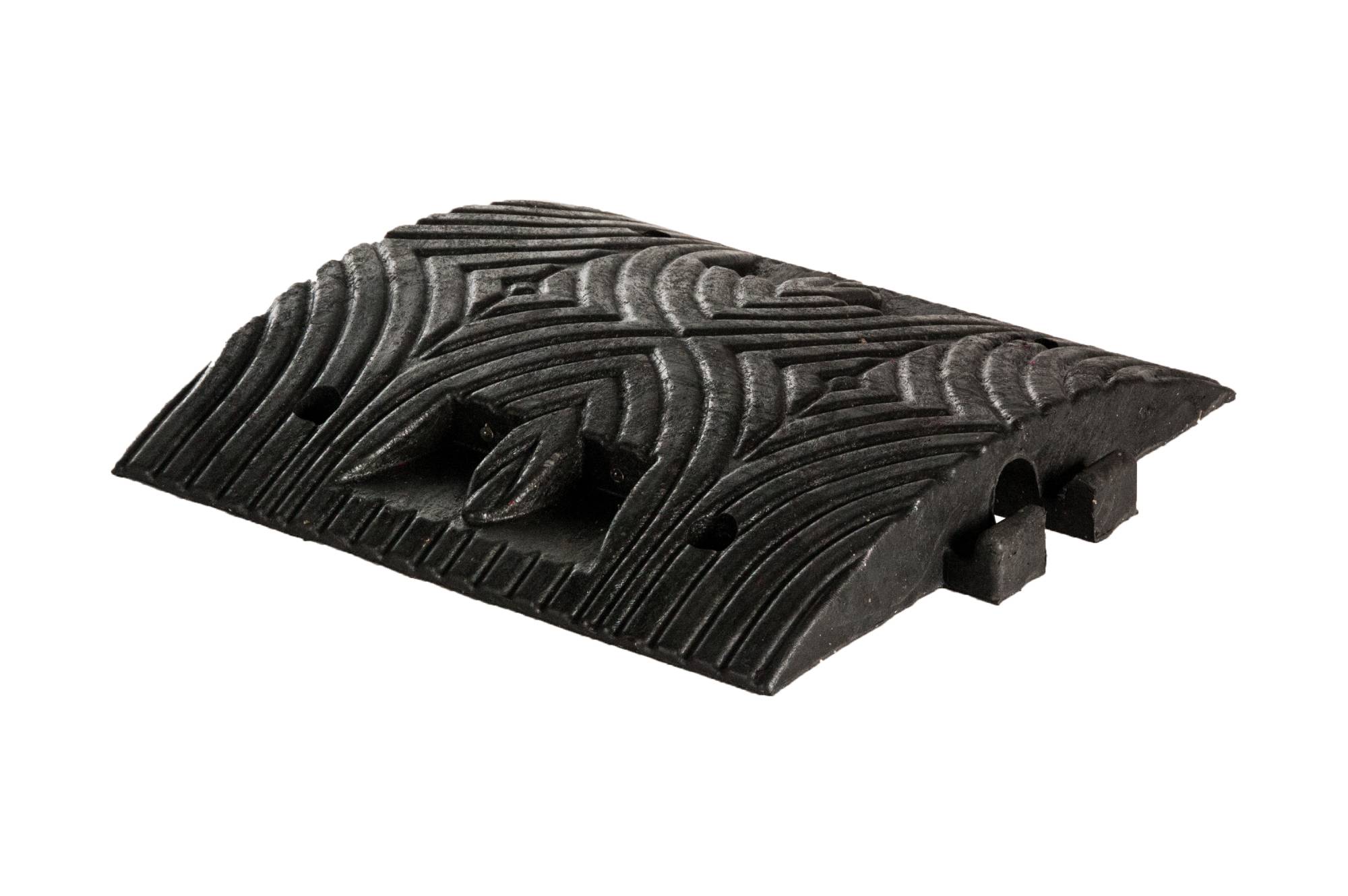
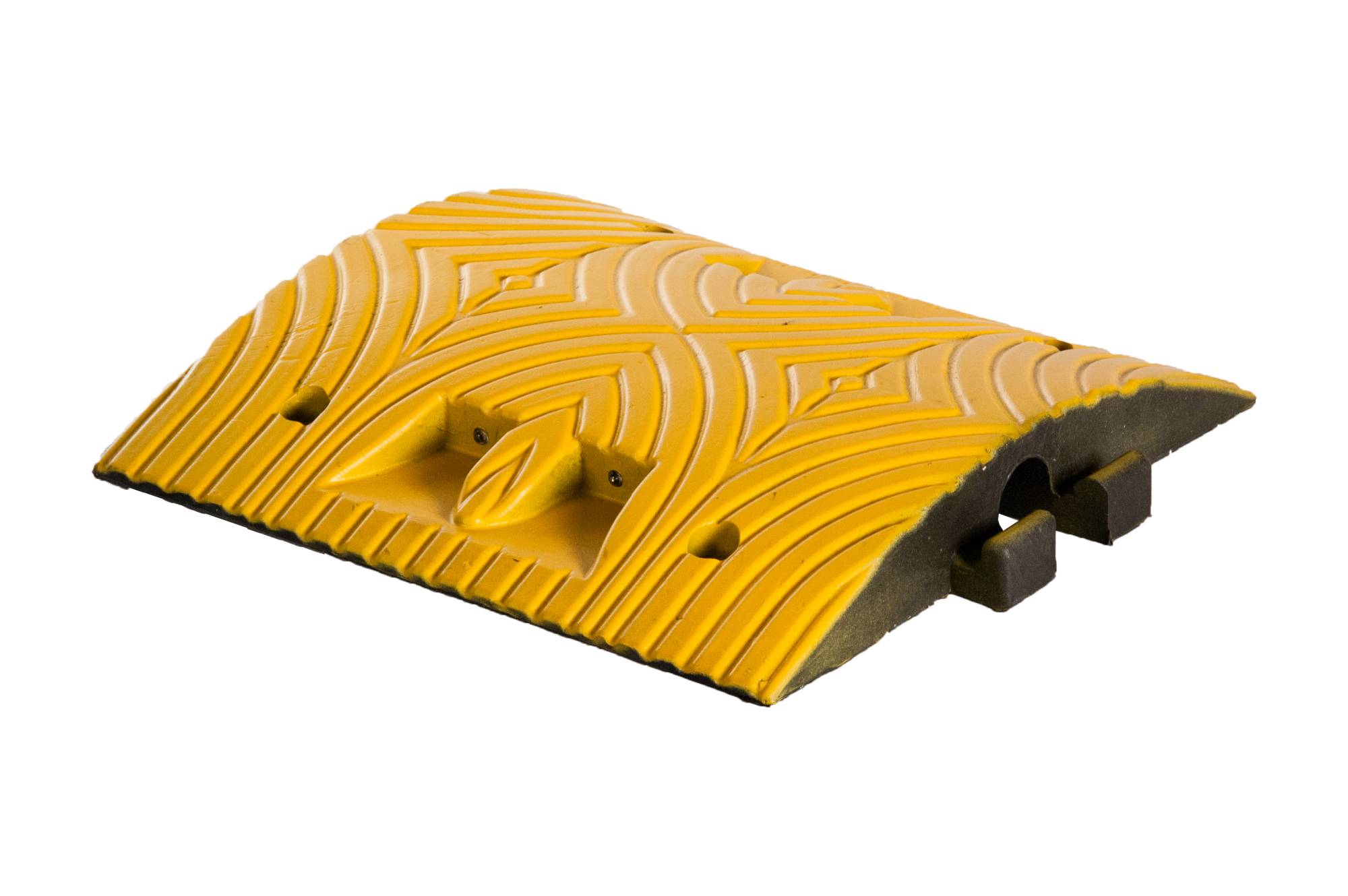
For residential areas, schools and other sensitive locations, rubber speed bumps are almost always the best choice. They are made from recycled or virgin rubber and are outstanding at being both flexible and durable. The material absorbs much of the impact when a vehicle drives over it, resulting in a significantly lower noise level than harder materials such as plastic or concrete.
Their flexibility also makes them easier on vehicle suspensions, something both drivers and passengers appreciate. Another practical advantage is that rubber conforms to minor irregularities in the road surface, which makes installation easier and keeps the bump stable and secure. Want to learn more? Explore our complete range of rubber speed bumps.
Plastic – the lightweight choice for temporary needs
When low weight and easy handling are top priorities, plastic speed bumps are a smart option. They are usually made from durable polyethylene and weigh significantly less than their rubber or concrete counterparts. This makes them perfect for temporary installations, such as road work, events or other situations where you need to redirect traffic quickly.
They often feature a modular design with “puzzle-piece” connections, so they can be assembled and taken down in no time without special tools. Even though they may be somewhat noisier than rubber when cars drive over them, this is offset by their versatility and the fact that they are a cost-effective solution for short-term projects.
Modular systems for a custom fit
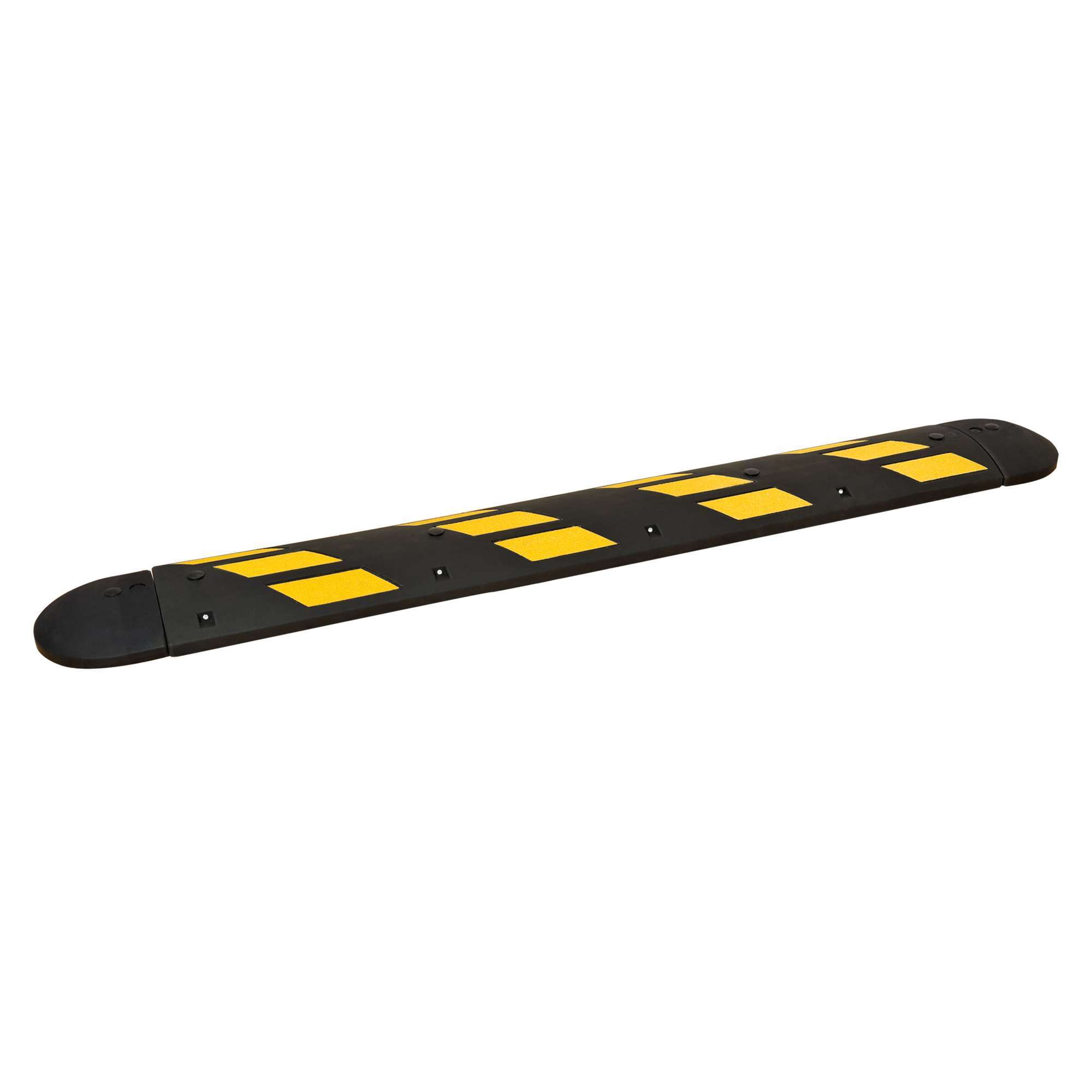
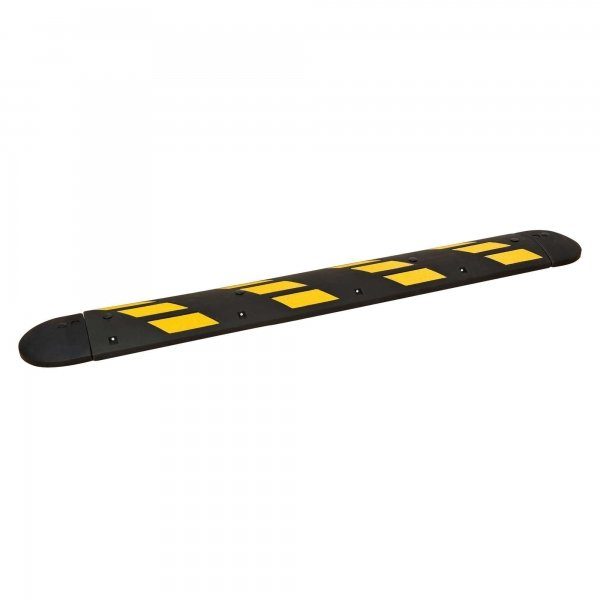
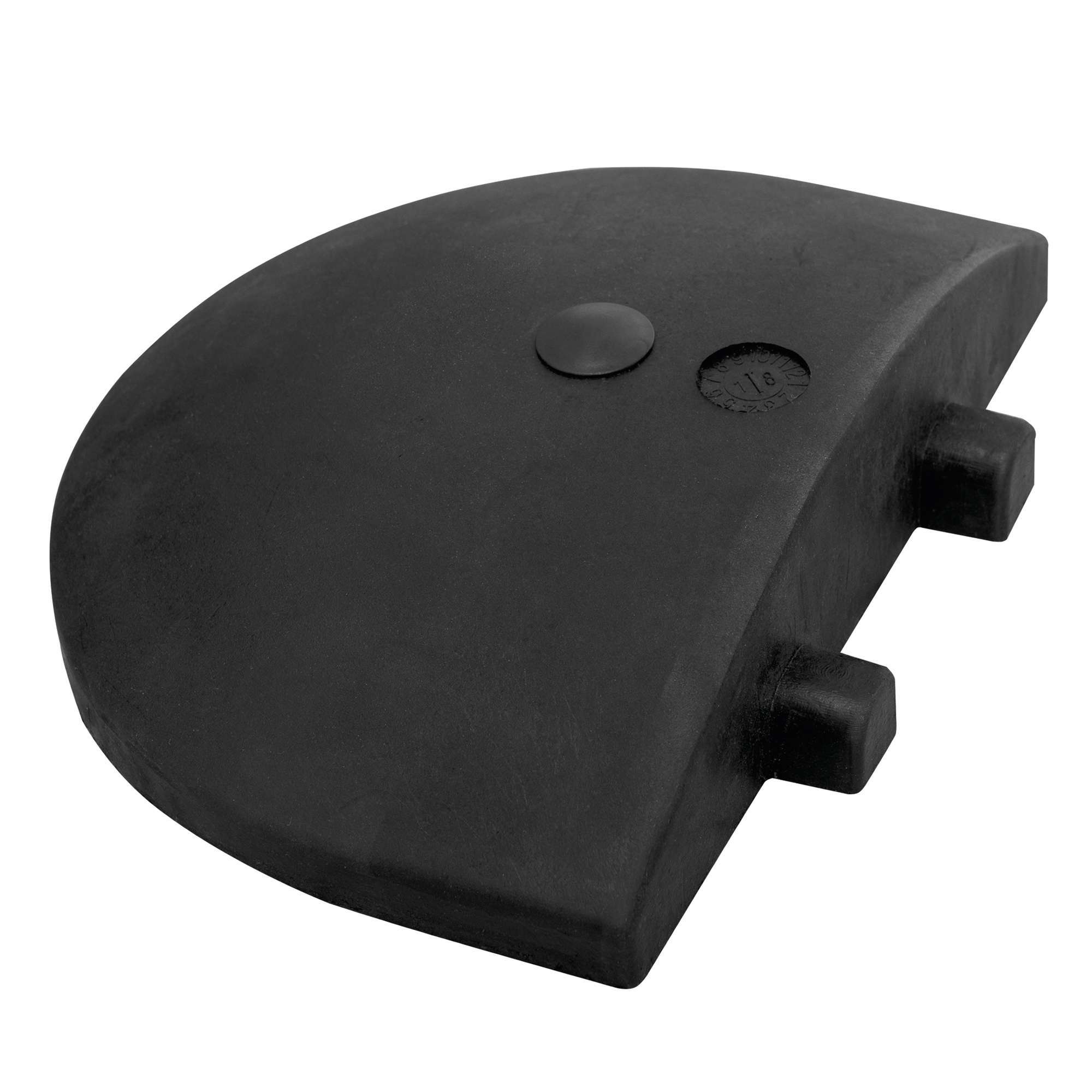
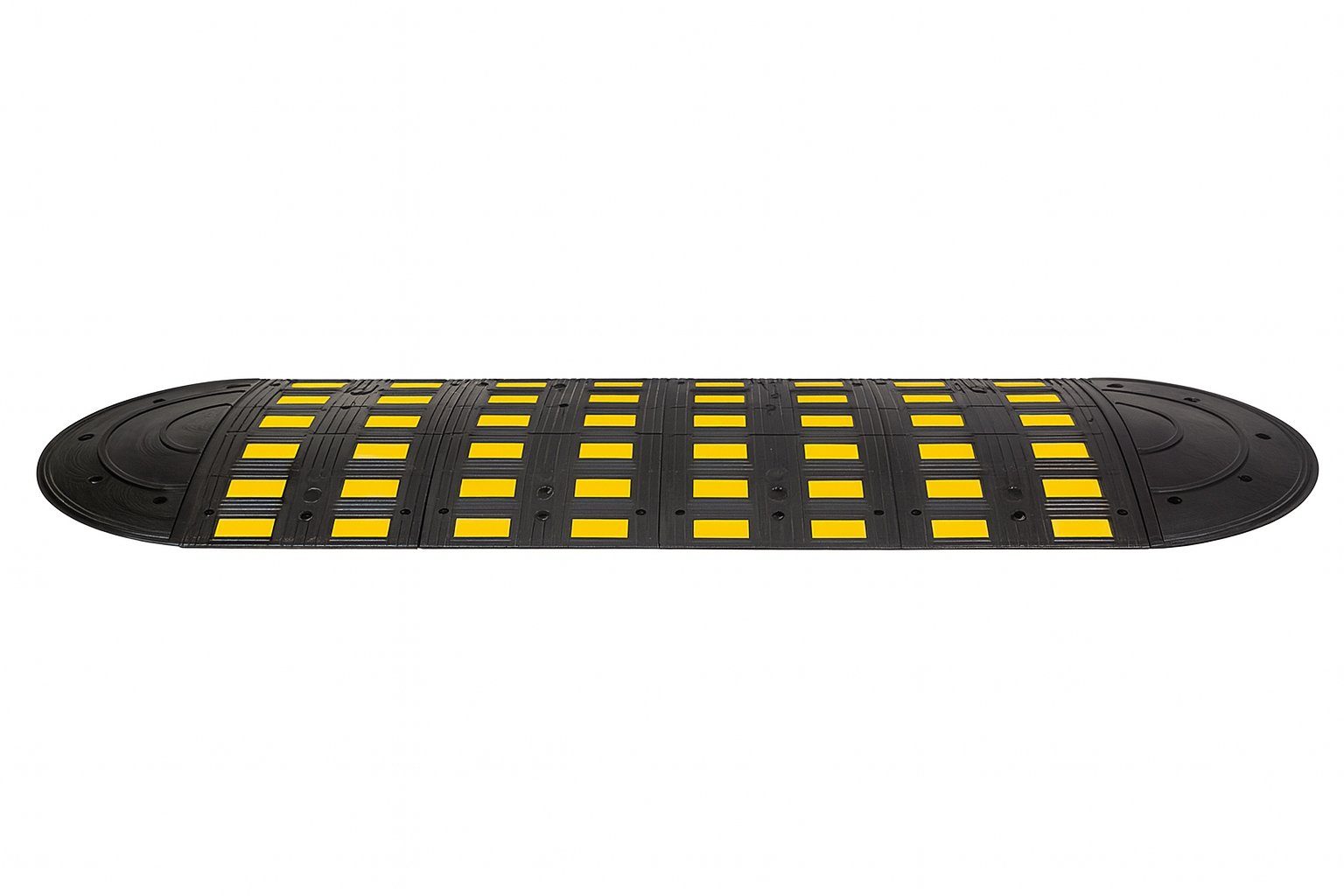
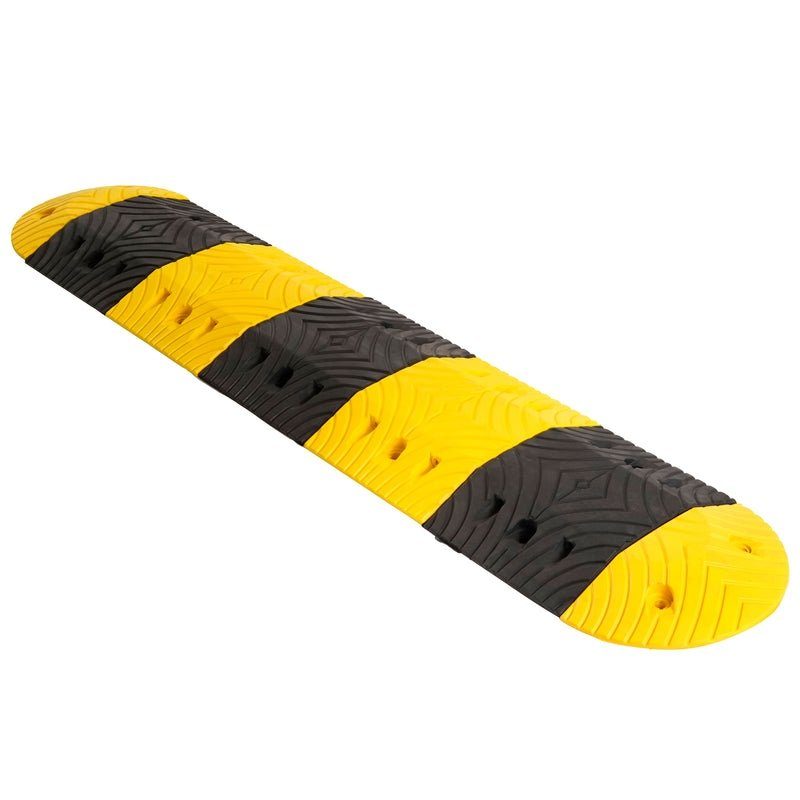
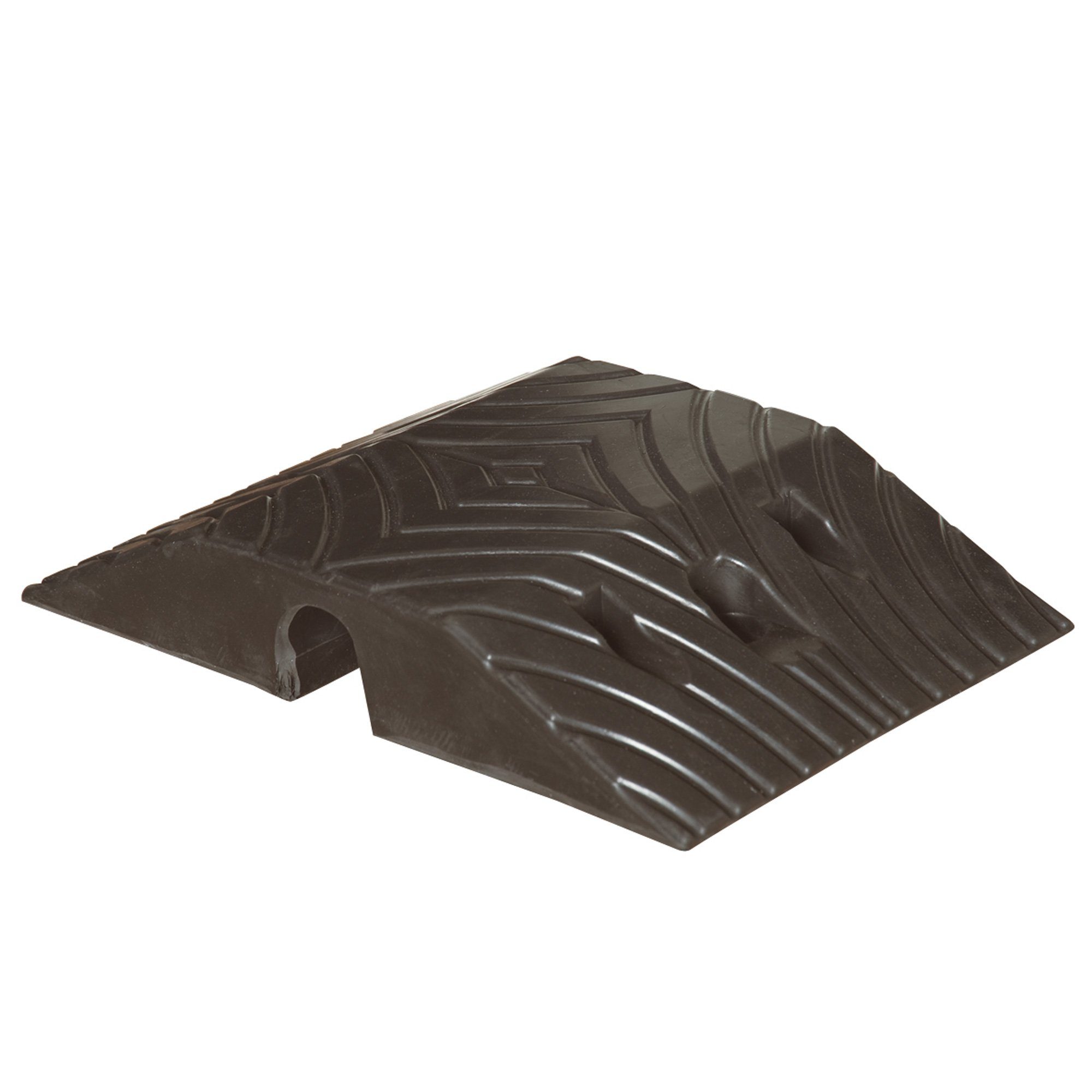
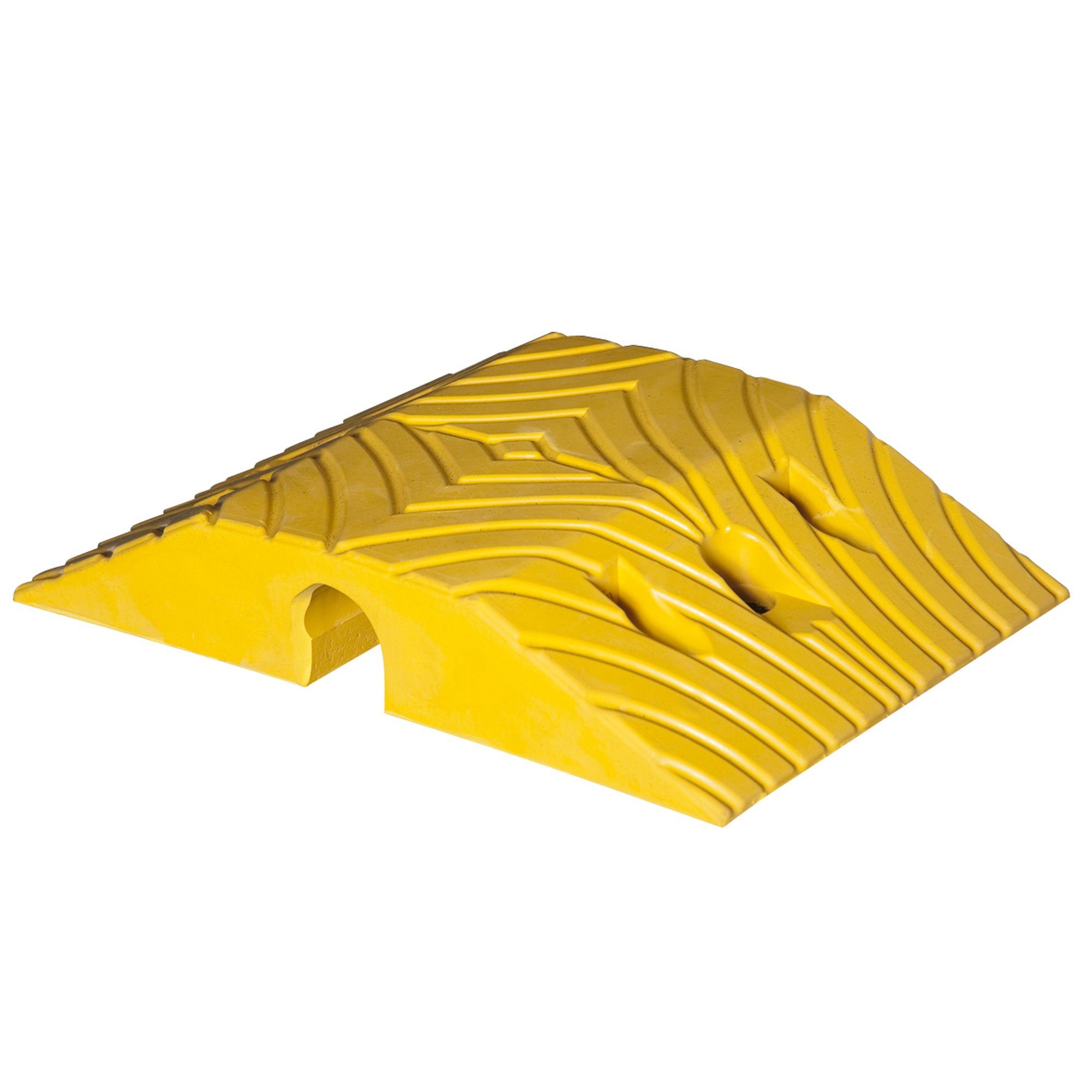
Modular speed bumps are not actually a material in themselves, but a smart design principle that offers unbeatable flexibility. The systems consist of middle and end sections that you fit together to create a speed bump that matches the width of the road perfectly. Whether made of rubber or plastic, they eliminate the temptation for drivers to go around the bump.
This is especially important on wider roads or in industrial areas where you want to be sure that all traffic – from passenger cars to heavy trucks – actually slows down. Built-in reflectors and high-visibility colors (usually yellow and black) make them easy to see around the clock.
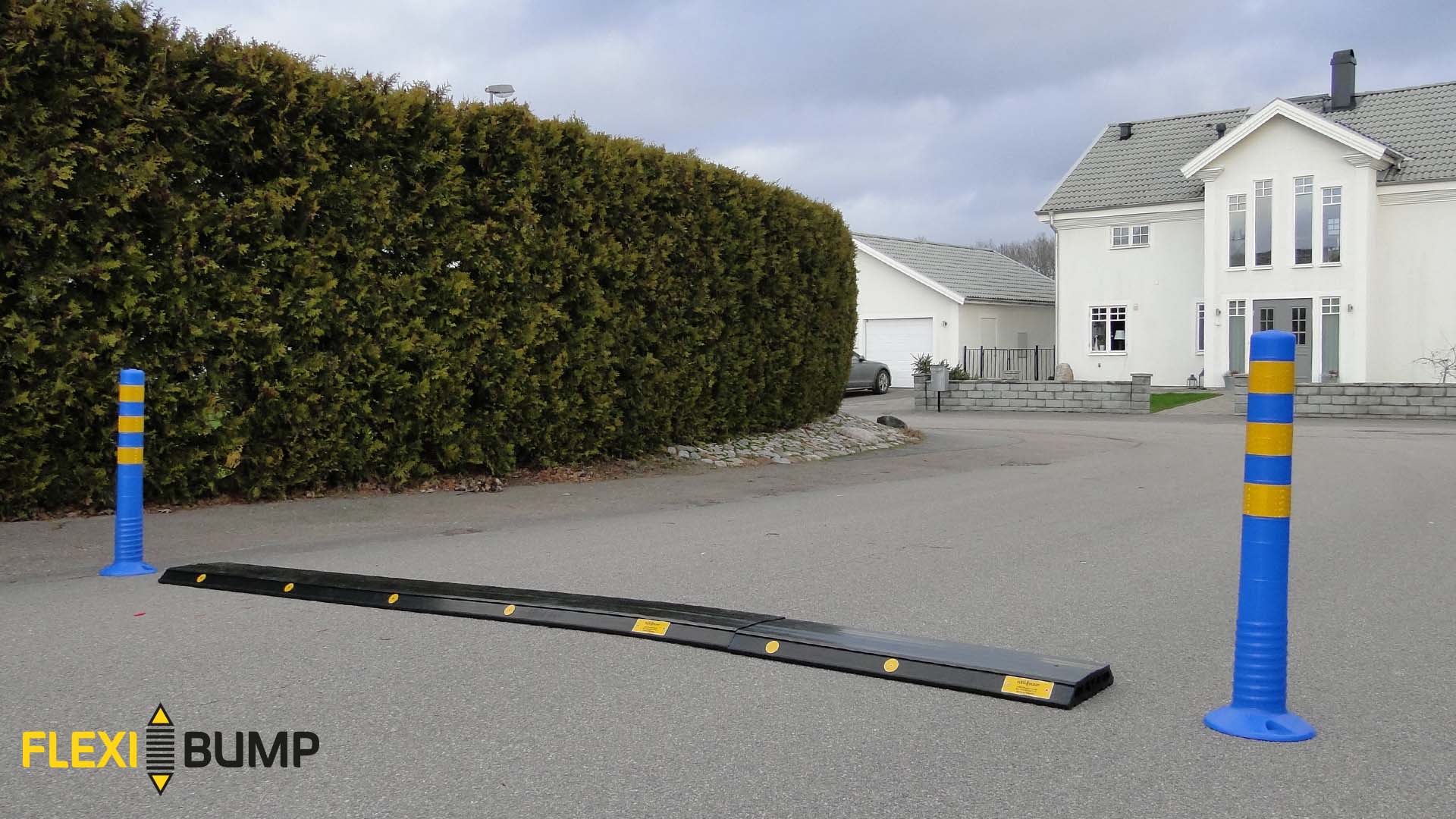
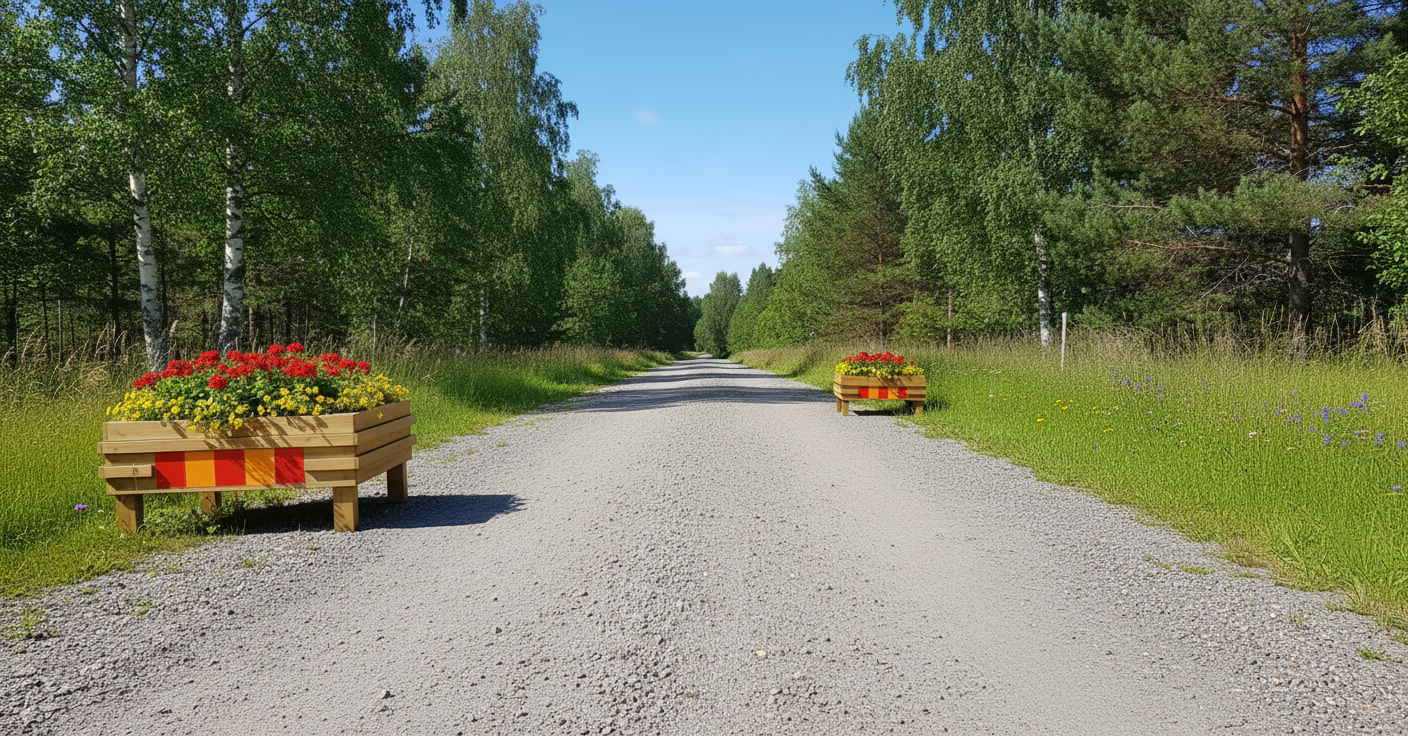
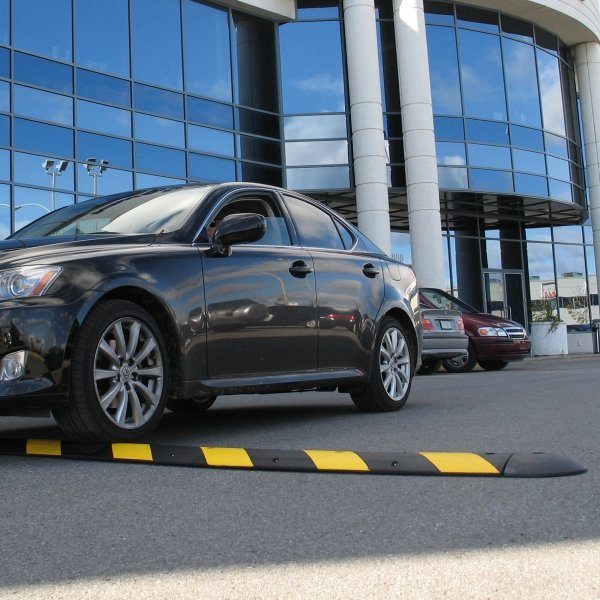
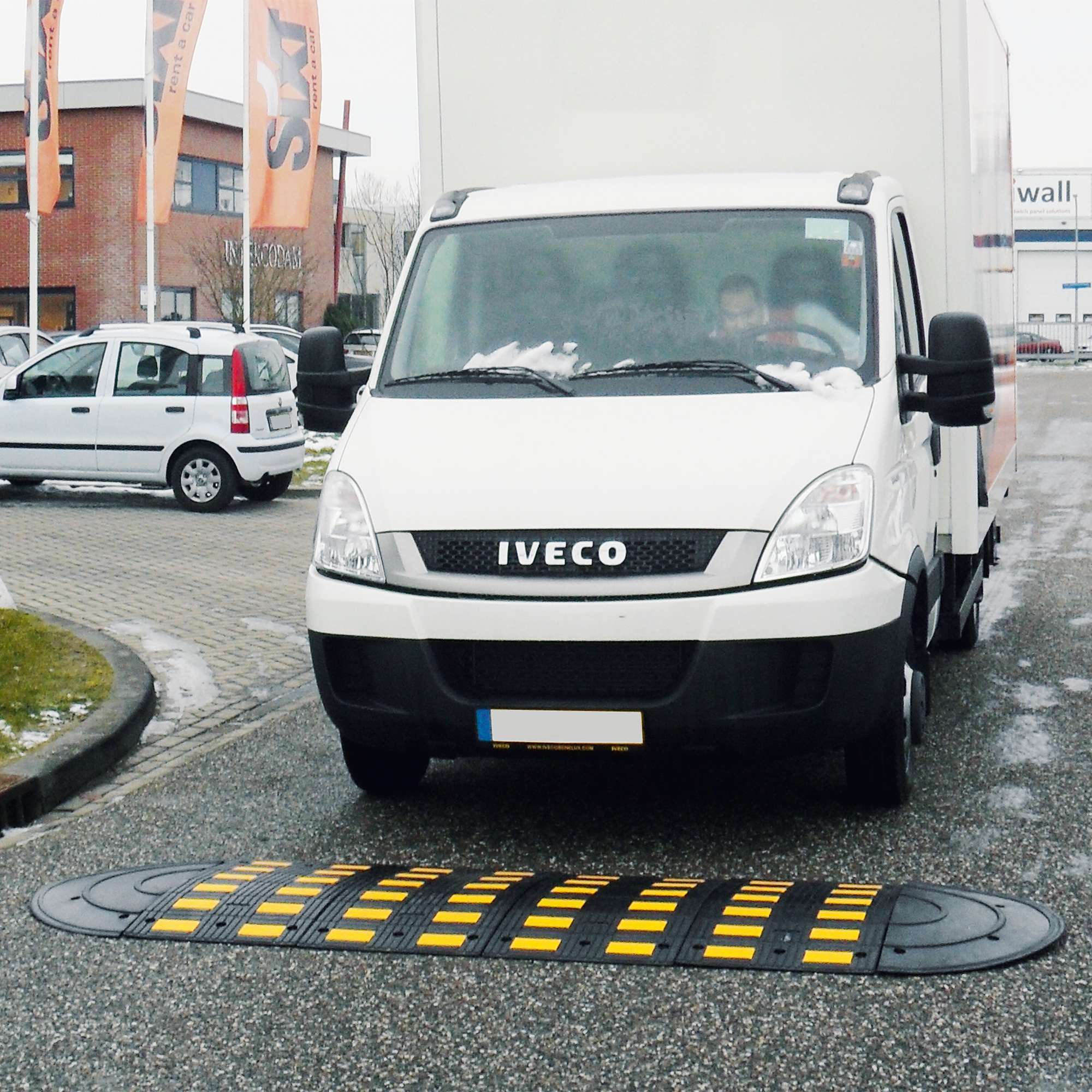
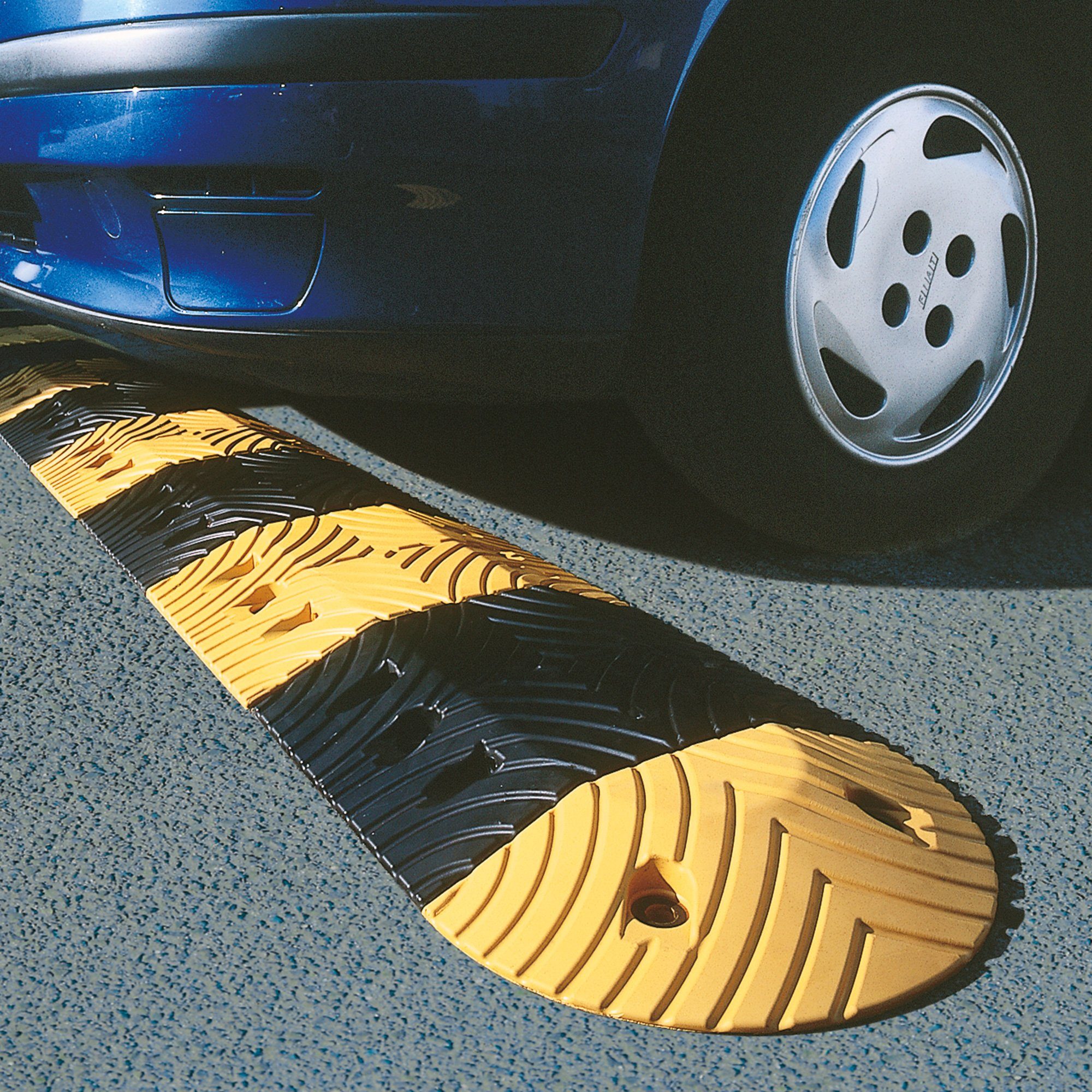
As the image shows, speed bumps are often the most direct solution in sensitive environments such as residential streets, near schools or in industrial areas where speed is a critical safety factor.
To make the choice even easier, we have put together a comparison table summarizing the key differences between the materials.
Comparison of speed bump materials
An overview to help you choose the right material based on features, applications and maintenance requirements.
Material
Advantages
Disadvantages
Best suited for
Rubber
Quiet, flexible, gentle on vehicles, durable, good grip.
Lightweight, easy to install, often modular, cost-effective.
Can be noisier, less durable under heavy traffic.
Temporary barriers, events, road work.
Concrete/Asphalt
Extremely durable, permanent solution, integrated into the road.
Expensive to install/remove, rigid and noisy, requires groundwork.
Municipal roads, industrial areas with very heavy traffic.
Choosing the right speed bump is an important step toward creating a safer traffic environment. Still unsure which material or model best suits your needs? Our experts are here to help with personalized advice. Contact us and we will talk through your project and find the best solution.
How height and design affect speed
The real power of a speed bump lies in its geometry. Understanding how height, length and shape work together is crucial when you buy speed bumps, because it is the design that determines how fast cars will actually drive. Think of it as directing traffic – every detail is there to make the driver act in a certain way.
It is about finding the perfect balance between reducing speed effectively and making sure crossing feels reasonable for road users. A poorly designed solution can backfire completely. At worst, drivers ignore it entirely, or it forces sudden hard braking that can damage vehicles and cause unnecessary frustration.
Height is what controls speed
Height is by far the most important factor in how much a speed bump slows traffic. A simple rule of thumb: the higher the bump, the slower you have to drive for it to be comfortable.
High bumps (50–75 mm): These are designed to force speeds down to as low as 5–15 km/h. They are perfect for locations where safety is the top priority, such as crosswalks, schools or areas with many pedestrians and cyclists. Their sharp profile simply makes them too uncomfortable to cross quickly.
Lower bumps (30–50 mm): These are used to bring speeds down to around 25–30 km/h. They are a smart choice for through roads in residential areas or in larger parking lots where traffic needs to keep moving, but at a calm and controlled pace.
Length provides a smoother ride
The length of the speed bump (that is, its width in the direction of travel) has a major impact on how it feels to drive over. This is where you really see the difference between a short “bump” and a longer “hump.” Length simply determines whether crossing it is a jarring jolt or a smoother motion for the vehicle’s suspension.
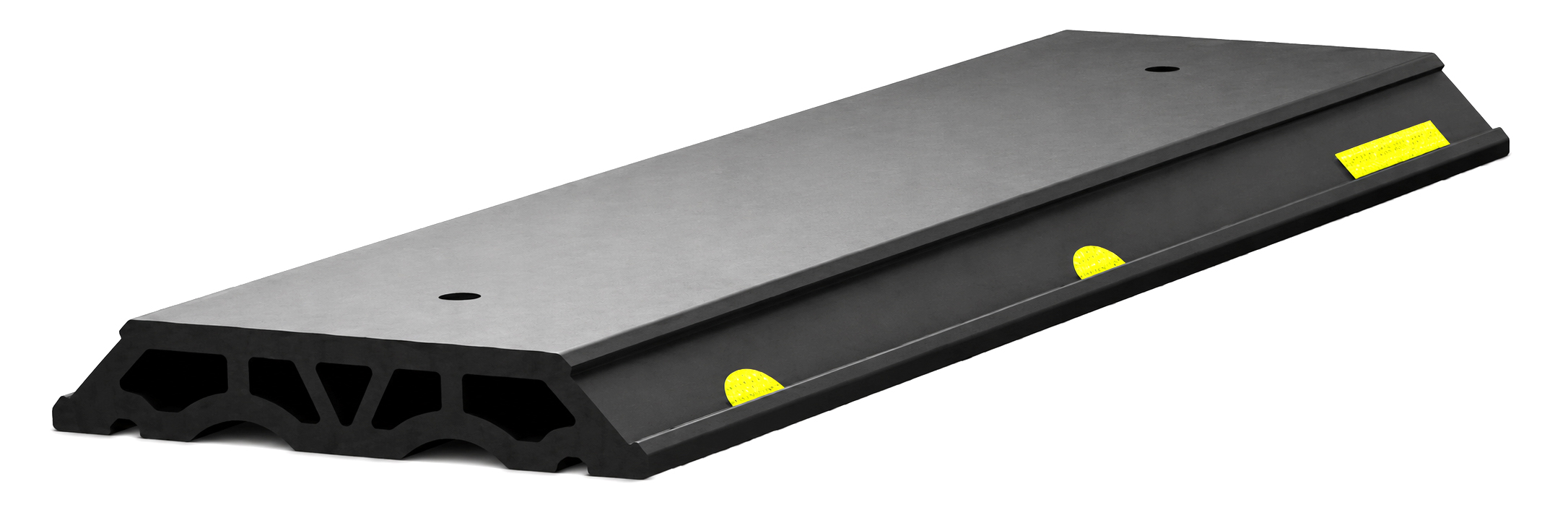
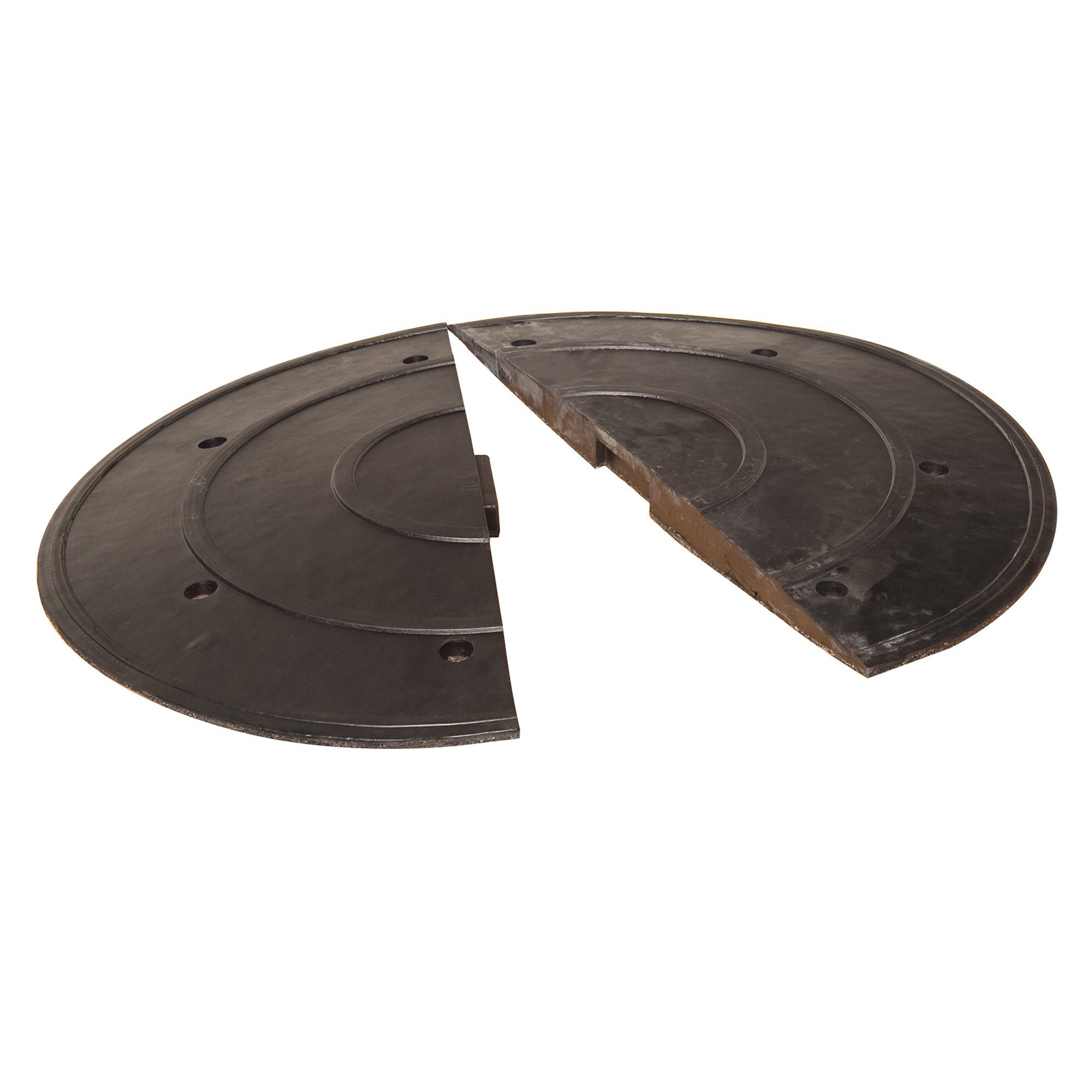
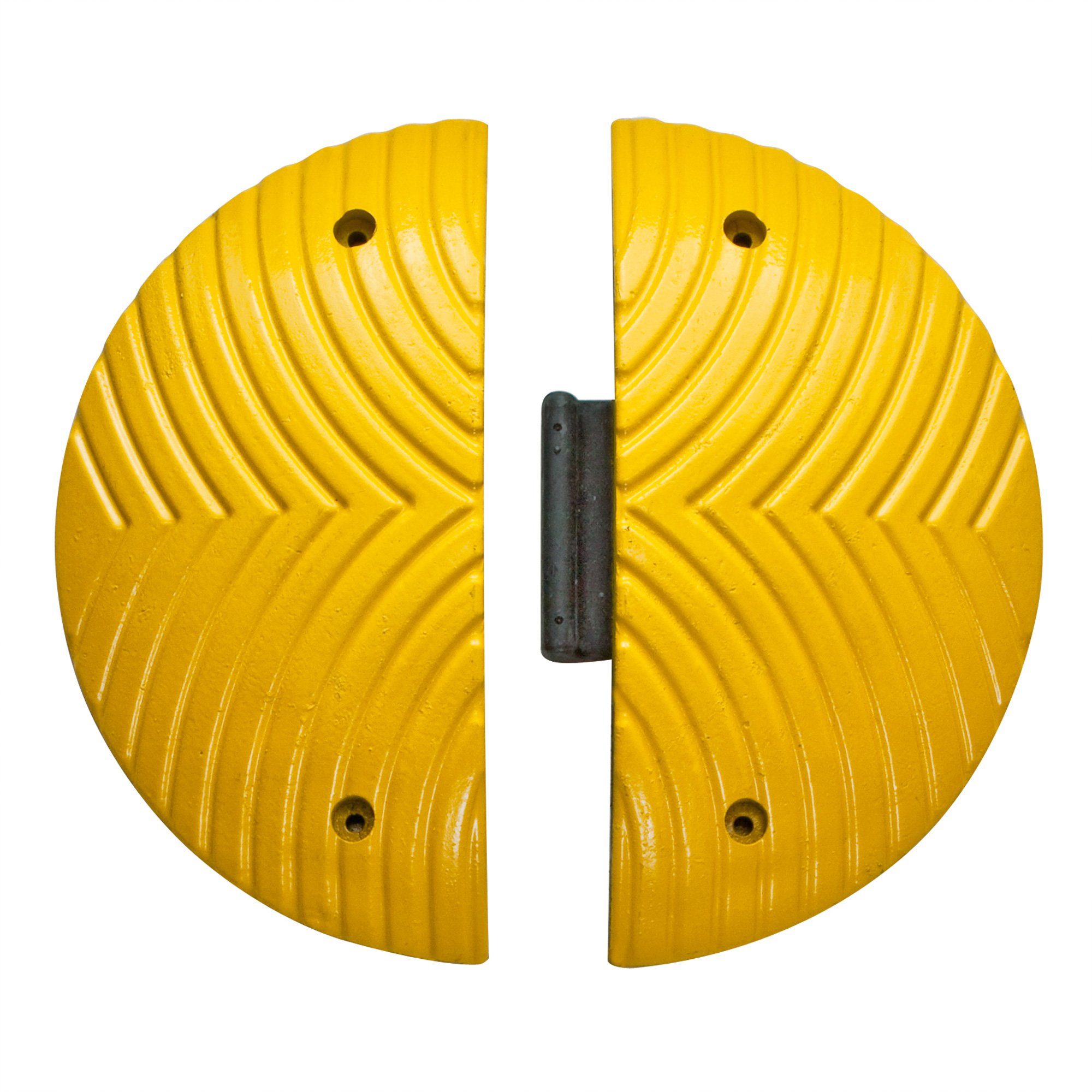
A short, aggressive bump delivers a hard jolt, while a longer, gentler design, such as a circular speed hump, creates a more rolling and comfortable feel.
Driving over a speed bump should not feel like a punishment. A well-designed solution is perceived as a natural part of the road and encourages calmer, safer driving.
Adapt the design for different vehicles
When you plan to buy speed bumps, you also need to consider what types of vehicles will pass over them. The design needs to work for everything from small passenger cars to heavy trucks and buses.
Speed tables: These are long, raised surfaces designed so that buses and emergency vehicles can pass comfortably at about 30 km/h. Their length allows the entire vehicle to get up onto the plateau before driving down, which reduces rocking.
Speed cushions: These are narrower bumps positioned so that passenger cars have to drive over them, while buses and emergency vehicles with a wider wheelbase can pass with their wheels on either side. A smart solution for streets where public transit should not be slowed down.
Modular speed bumps: Whichever type you choose, modular systems are almost always the best option. They can be adapted exactly to the width of the road, which effectively stops drivers from trying to sneak around the side.
By carefully considering the interplay between height, length and design, you ensure that you choose a speed bump that not only reduces speed but is also accepted by the people who actually use the road.
Avoid the classic installation and mounting mistakes
A first-class speed bump is only half the job. If it is not installed correctly, product quality matters less – installation is the critical link that ensures function and durability year after year. Careless installation almost always leads to problems, from loose parts that become traffic hazards to damage to both the bump and the road surface.
Think of it like building a house foundation. If the foundation is poor, it doesn’t matter how nice the walls are; sooner or later, everything will give way. The same logic applies to speed bumps. Precision from the start is essential.
Prepare the surface for lasting results
It all starts with the ground. One of the most common mistakes is mounting the speed bump directly on an uneven, cracked or dirty surface. This immediately creates stress in the material and is an almost guaranteed way for the anchoring to come loose over time.
Follow these basic steps for an installation that holds up:
Clean the surface thoroughly: Make sure the asphalt or concrete is completely free of gravel, dust, oil and other dirt. A broom is rarely enough – use a stiff brush or a pressure washer.
Check that it is level: The surface must be even. Any potholes or larger cracks must be repaired before you start installing.
Make sure the surface is dry: Moisture is the enemy, especially if you use chemical anchoring. It can prevent the anchor from curing and bonding properly.
A well-prepared surface gives the speed bump a stable base. It distributes the load evenly across the entire surface and significantly maximizes service life.
Choose the right anchors for asphalt and concrete
The choice of bolts and anchors is just as critical as the speed bump itself. Asphalt and concrete behave completely differently and therefore require completely different solutions. Taking a chance with the wrong type of bolt is a shortcut that quickly turns into a costly detour.
For asphalt: Here, asphalt screws or special expansion bolts are the way to go. They are designed to grip the porous material. It is extremely important that the drill hole has the correct dimensions and that the bolt is tightened to the torque recommended by the manufacturer.
For concrete: On concrete surfaces, concrete expansion anchors or chemical anchoring is the right choice. Chemical anchoring, or “chemical anchors,” creates an extremely strong and vibration-free attachment and is perfect for surfaces with very heavy traffic.
A classic pitfall is tightening the bolts too much or too little. If they are too loose, the speed bump will move and slowly but surely wear down both the anchoring and the surface. If you overtighten them, you risk damaging the speed bump or cracking the material underneath.
Don’t forget drainage and placement
Another common pitfall is completely overlooking water runoff. A poorly placed speed bump can act like a small dam and prevent rainwater from draining away. The result is large puddles that freeze into dangerous patches of ice in winter.
Before you start drilling, take a look at the slope of the road. Make sure the speed bump does not block natural drainage paths. Many modern rubber speed bumps have smart built-in channels on the underside specifically to drain water away. It is a small detail that makes a big difference – look out for it when you buy speed bumps.
Avoiding these mistakes comes down to precision and the right know-how. The reward is a safe and durable traffic solution that does its job, trouble-free, for many years to come.
Feeling unsure, or want to make sure everything is done right from the start? Contact us at Nordguard. Our experts will help you with everything from assessing the surface to choosing the right anchors for your specific project.
Understanding CE marking and safety requirements
When you buy speed bumps, a low price can be tempting, but it is a dangerous trap. The true cost of a product that does not meet basic safety requirements can be astronomical, both financially and, at worst, in human suffering.
That is exactly why CE marking is your most important guide in the purchasing process. It is not a marketing symbol, but a legal declaration from the manufacturer that the product has been tested and approved according to the EU’s strict requirements for safety, health and environmental protection. It is your assurance that the speed bump actually works as intended – without becoming a hazard itself.
More than just a sticker
A CE-marked speed bump offers several concrete benefits. The marking confirms that the material is durable enough to withstand our harsh Nordic climate, with everything that entails in terms of large temperature swings, snowplowing and road salt.
It also ensures that the design is well thought out to minimize risks for all road users, from heavy trucks to cyclists and pedestrians.
CE marking is a seal of quality showing that the product not only reduces speed, but does so in a safe and responsible way. Choosing a non-certified product means knowingly taking an unnecessary risk.
Opting out of CE marking can also have serious legal consequences. If an accident occurs and it turns out that the speed bump does not meet applicable standards, you as a property owner, housing cooperative board or contractor can be held liable. It is a risk that is never worth taking.
Critical safety details beyond the marking
CE marking is the foundation, but there are more safety aspects to consider. These details work together to create a complete solution that is both effective and safe for everyone in the area.
Here are some important points to check off:
Visibility around the clock: The speed bump must be clearly visible in all weather and lighting conditions. Integrated reflectors, usually white or yellow, are an absolute must to prevent drivers from spotting it too late in darkness or fog.
Anti-slip surface: The surface must have a pattern or texture that provides good tire grip, even in rain or snow. A slippery surface can create life-threatening situations, especially for motorcycles and mopeds.
Correct signage: A speed bump should always be accompanied by the warning sign A9, “Warning: Speed Bump”. The sign must be placed well ahead of the bump to give drivers a reasonable chance to adjust their speed.
These requirements are not recommendations – they are essential to fulfilling the responsibility that comes with installing a traffic calming measure. If you want to dig deeper into the subject, there is a lot to learn about regulations and standards for impact protection and other safety equipment.
Unsure which requirements apply to your project? Our experts can guide you through the entire process, from choosing the right CE-marked product to correct signage and installation. Contact us today to ensure a safe and responsible choice.
A smart investment in a safer traffic environment
Purchasing speed bumps can feel like a complicated process. Which material is best? How should it be installed? What do the regulations say? It is more than just a purchase – it is a long-term investment in safety that has to work, year in and year out.
That is why it is crucial to have a partner who can do more than just sell a product. You need someone who understands the big picture, from the first sketch to a finished result that can withstand both traffic and our Nordic climate. At Nordguard, we see ourselves as exactly that partner – your expert resource throughout the entire project.
From needs assessment to finished solution
We have designed a process that makes it easy for you, whether you represent a municipality, a housing cooperative or are a contractor. The goal is to make your journey from idea to reality as smooth as possible, with every step quality-assured.
Here is how it works when we team up:
Free needs assessment: It all starts with us listening. We help you pinpoint the real needs at the site. What vehicles drive here? What speed do we want to achieve? Are there specific accessibility or safety requirements? This is where we lay the groundwork for finding the very best solution.
Planning and quote: Based on the assessment, we put together a concrete proposal. You receive a clear and transparent quote that specifies everything, from product selection and materials to recommended anchoring for your specific surface.
Fast and reliable delivery: Thanks to well-established logistics, we make sure the right products arrive at the right place, at the right time. Directly to the job site or project address, just as it should be.
This comprehensive approach ensures that you are not just buying a speed bump, but investing in a solution optimized for maximum effect and long service life.
The benefits of a full-service partner
Choosing Nordguard gives you more than just access to high-quality, CE-marked products. It gives you the peace of mind of having an expert who thinks about the details you might otherwise miss.
A successful traffic safety solution is built not only on good products, but on expert knowledge of how they should be used, installed and maintained to provide the best possible protection over time.
We make sure you get:
Durable materials: We only sell products made from materials proven to withstand tough conditions and the Swedish climate, from tough recycled rubber to durable plastic and concrete.
Correct installation: Our expertise ensures you get the right installation guidance. It helps you avoid common mistakes that can cause the speed bump to wear out prematurely.
Access to spare parts: If a section is damaged, for example by a snowplow, you don’t need to replace everything. We stock spare parts that extend the life of your investment and keep maintenance costs down.
For you as a customer, this means a simpler process and a guarantee of a traffic solution that does its job, both today and in the future. Below is a selection of our most popular speed bumps.
Ready to take the next step toward a safer and more secure local environment? Contact our experts today. We are happy to discuss your project and prepare a customized quote with no obligation.
Frequently asked questions about buying speed bumps
When it is time to buy and install speed bumps, a number of questions often come up. We have gathered the most common ones here and give you straight answers, so you can feel confident in your decisions.
Do I need a building permit to install speed bumps?
On private land, such as an industrial area, a housing cooperative parking lot or a jointly owned private road, a building permit is generally not required. But remember that as the property owner or responsible party, you are always responsible for ensuring that the installation is safe for traffic.
In practice, this means the speed bump must be clearly marked with the correct warning signs and must not create new hazards for road users. However, if you plan to install anything on a public road, you must always have permission from the road authority, which is almost always the municipality.
How do speed bumps work with snow removal in winter?
A classic and highly relevant question in our Nordic climate. A well-designed and correctly installed speed bump poses no problem for normal snow removal. The trick is to choose a model with a softer, more forgiving design.
Here are a few things to keep in mind:
Choose the right material: Rubber speed bumps are usually tougher and withstand impacts from snowplows better than hard plastic.
Consider the edges: Models with beveled or rounded end pieces reduce the risk of the plow blade catching and damaging both the bump and the plow.
Visibility is essential: Make sure the speed bump is clearly visible in winter too, so the snowplow driver has time to adjust.
What is the expected service life of a speed bump?
This depends entirely on three things: material, quality and how heavy the traffic is. A high-quality, CE-marked rubber speed bump that is correctly installed on a road used mostly by passenger cars can easily last 10–15 years, sometimes even longer.
In locations with really heavy traffic, such as a logistics terminal, wear is naturally tougher and service life shorter. Plastic speed bumps generally have a somewhat shorter service life, especially if exposed to heavy wear. Correct installation and keeping an eye on them are the most important keys to getting maximum service life.
It can be tempting to buy a cheaper, non-certified speed bump to save a little money. But if it has to be replaced after just a couple of years, the total cost ends up significantly higher. A quality investment from the start always pays off in the long run.
Choosing the right speed bump means knowing a bit about both the products and the regulations. With these answers in hand, you are better equipped to make a sound decision that leads to a safe, long-term traffic solution.
Have more questions or want to bounce around ideas for your project? At Nordguard, you get access to experts who will help you through the entire process, from product selection to installation advice. Contact us today for free advice and a customized quote.
Ready to take the next step?
We help you develop solutions tailored to your needs.
At Nordguard, we strive to make the ordering process as smooth as possible. By offering support and guidance throughout the entire purchasing experience, we make sure you feel confident and satisfied with your choice of protection products.

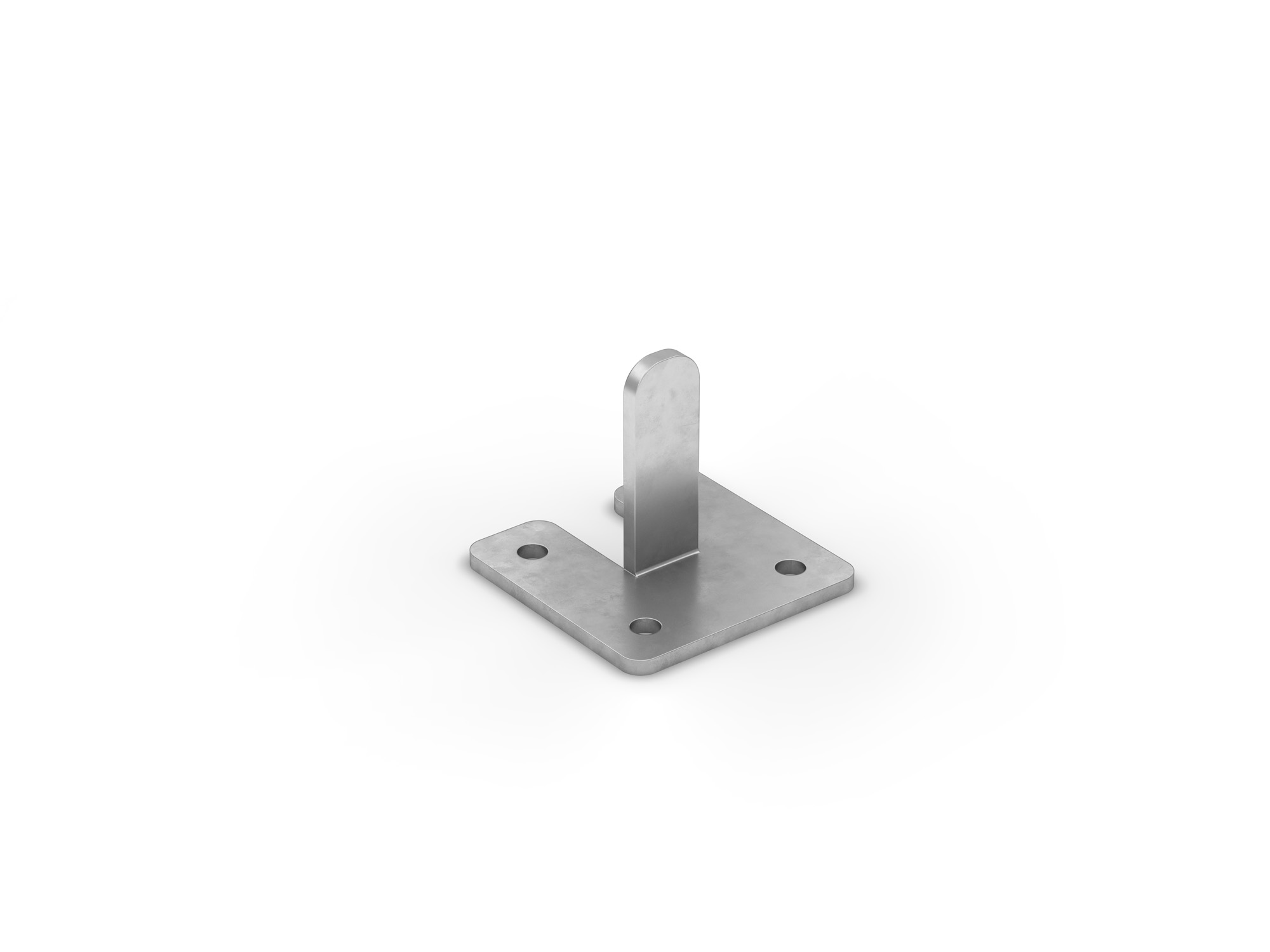 Floor Bracket for Universal Guard Rail - Single 42mm HDG
20 €
Floor Bracket for Universal Guard Rail - Single 42mm HDG
20 €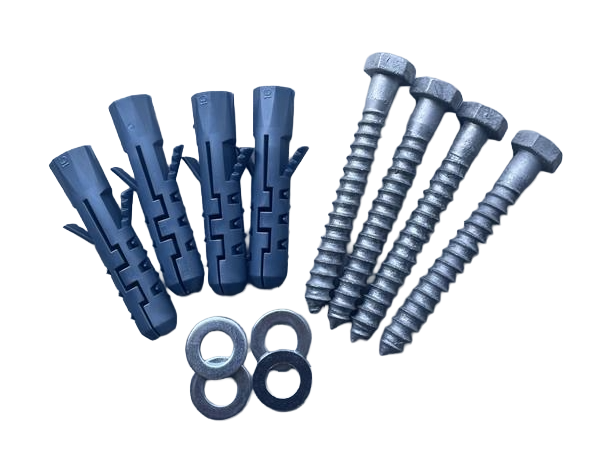 Screw Kit for Minigupp - 4 Screws, Washers and Anchors
10 €
Screw Kit for Minigupp - 4 Screws, Washers and Anchors
10 € Floor Paint - 5 liters - Stone Gray
200 €
Floor Paint - 5 liters - Stone Gray
200 €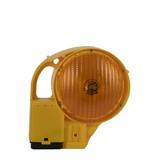 Warning Light Yellow - 200 mm
100 €
Warning Light Yellow - 200 mm
100 €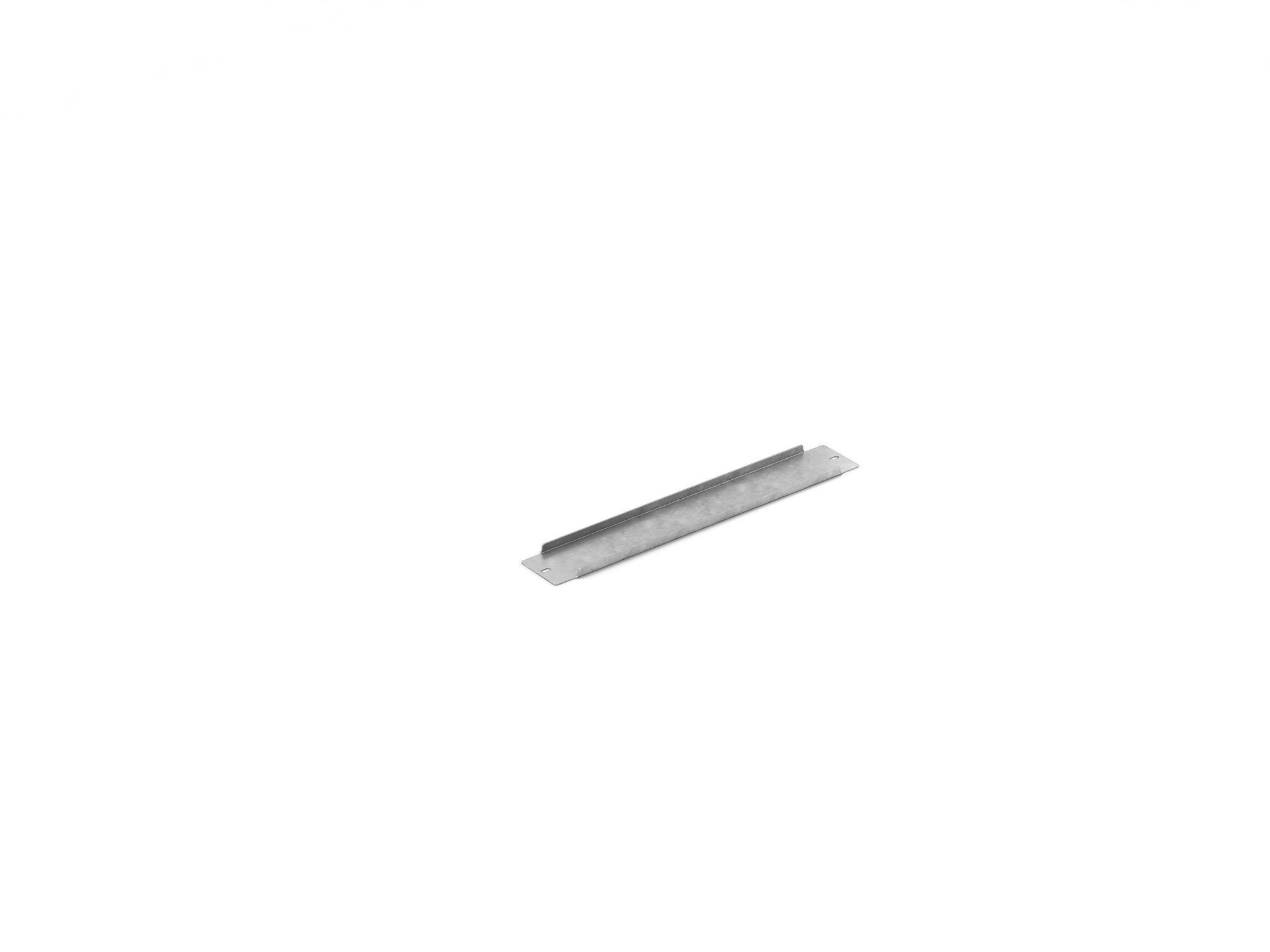 Railing Kick Plate 700x100mm zm
93 €
Railing Kick Plate 700x100mm zm
93 €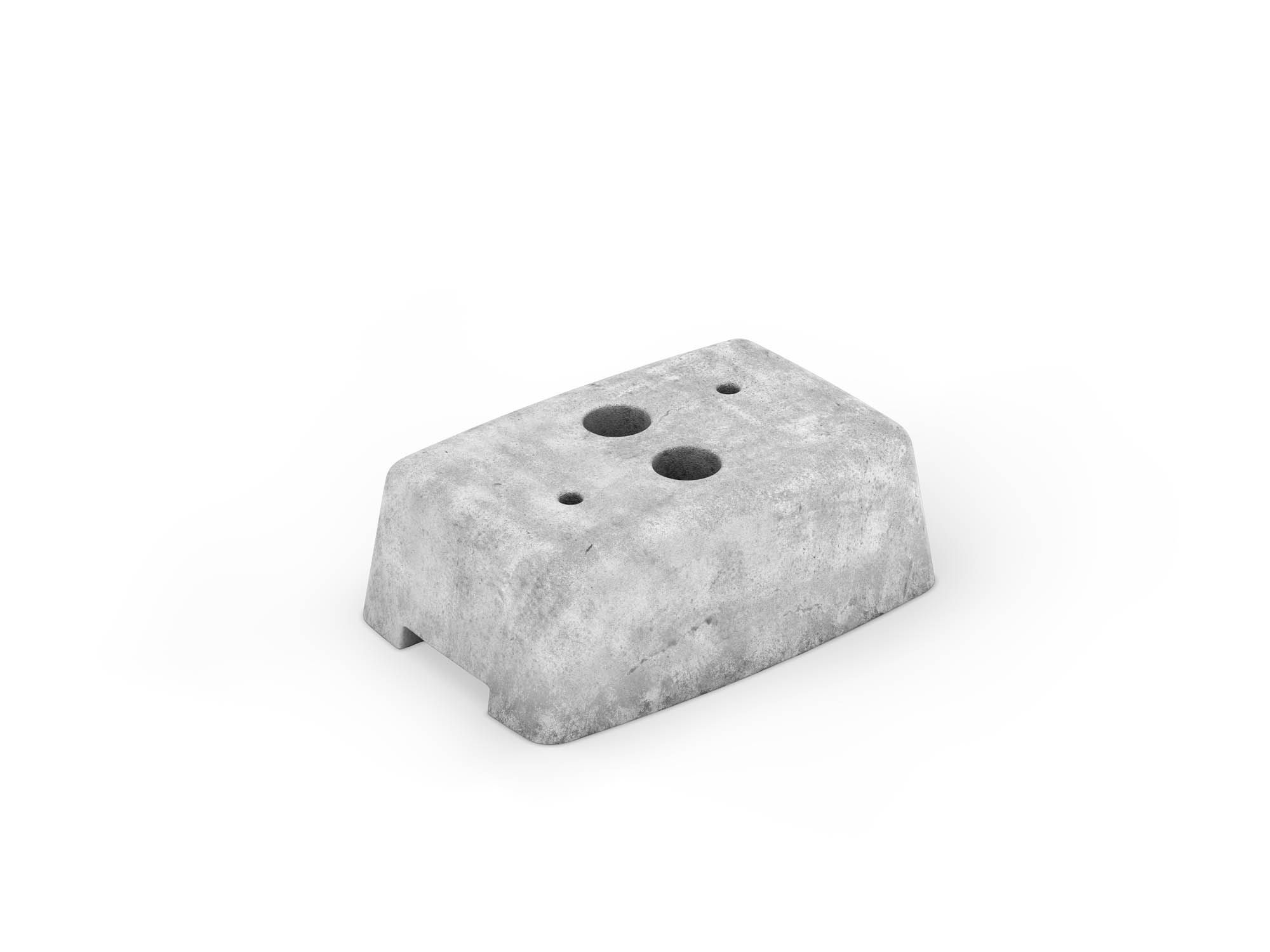 Concrete Foundation for Freestanding Railings - 350 x 240 mm
87 €
Concrete Foundation for Freestanding Railings - 350 x 240 mm
87 €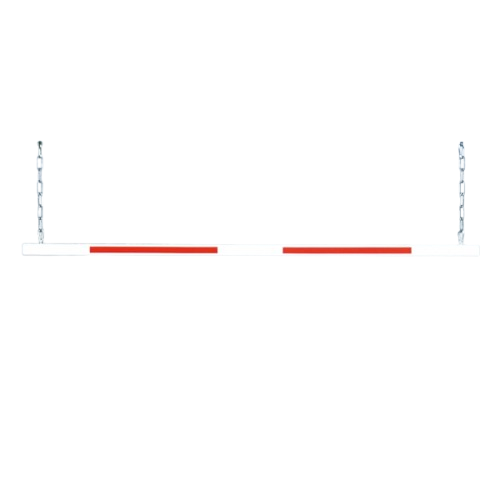 Height Restrictor - Nudge Bar for COMPACT Height Restrictor - Width: 2000mm
130 €
Height Restrictor - Nudge Bar for COMPACT Height Restrictor - Width: 2000mm
130 €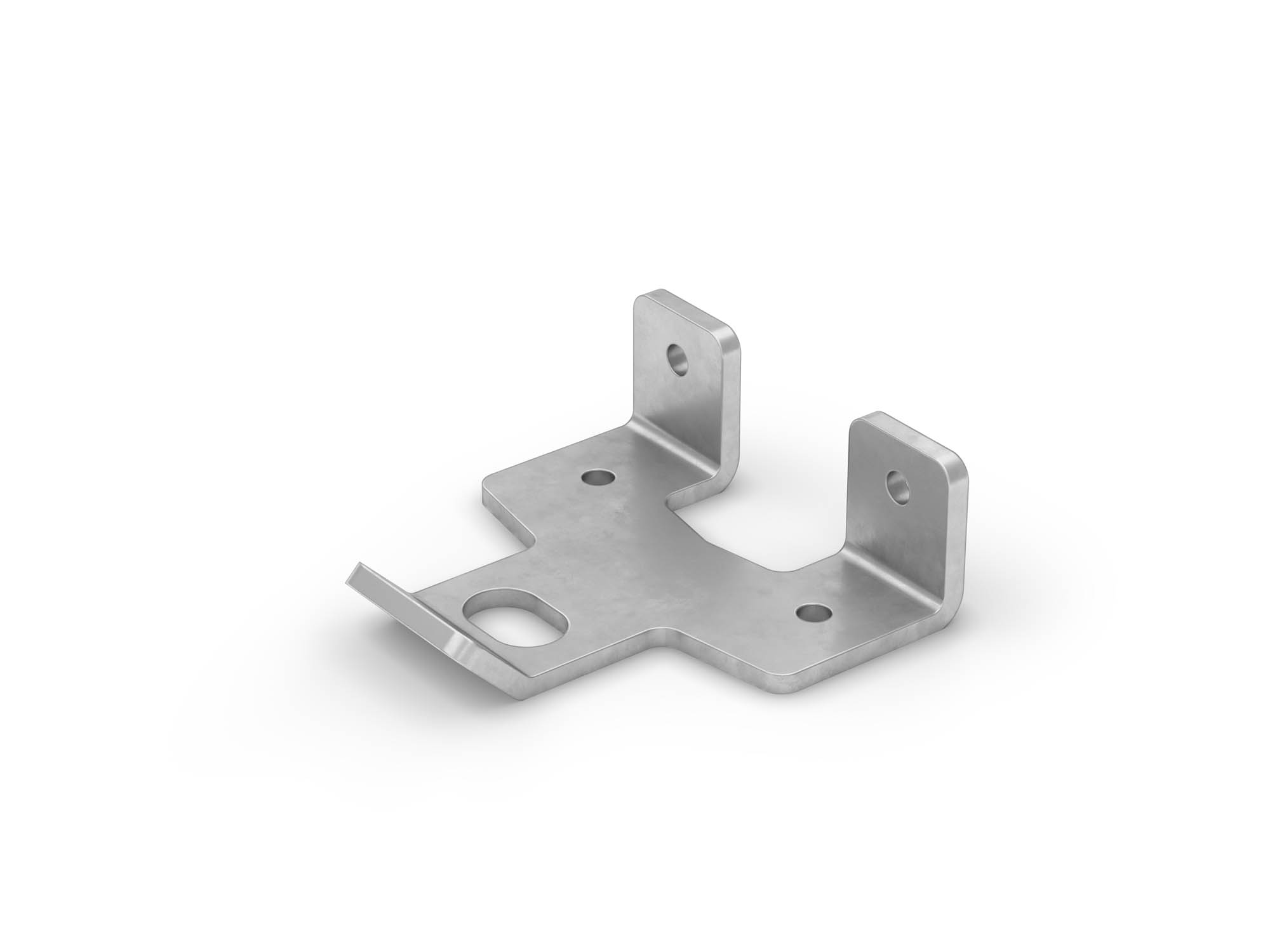 Gate Stop Lock Plate 42mm HDG
37 €
Gate Stop Lock Plate 42mm HDG
37 €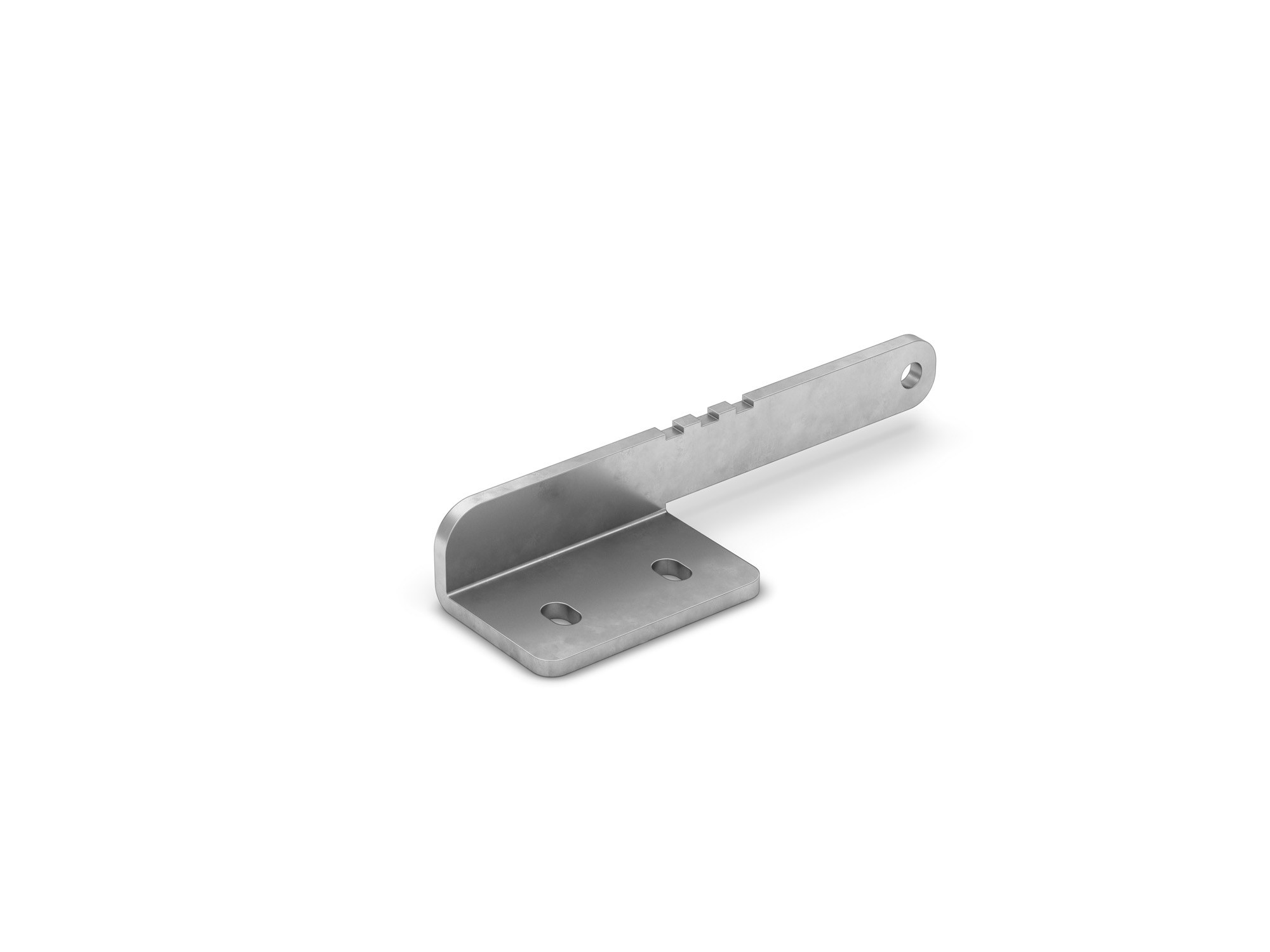 Side Bracket for Universal Guard Rail - Single 42mm Left HDG
40 €
Side Bracket for Universal Guard Rail - Single 42mm Left HDG
40 €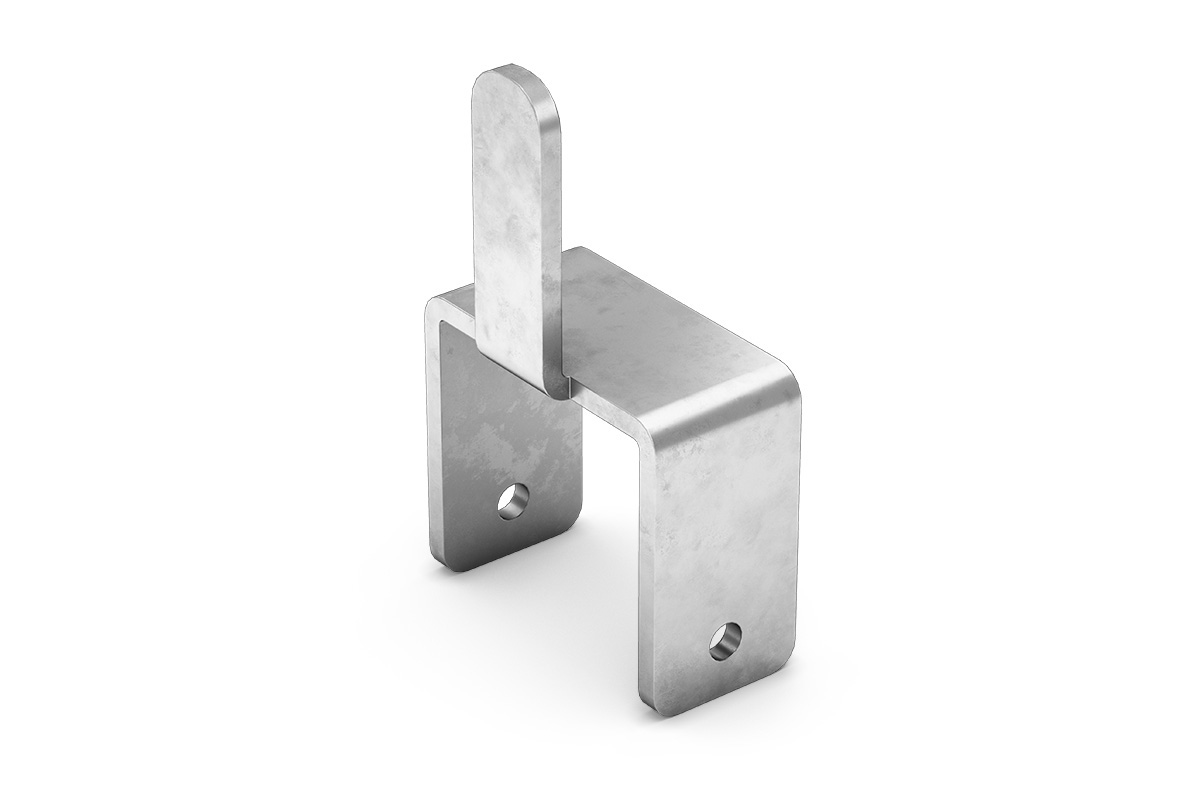 Retaining Wall Mount for Universal Guard Rail - Single L-Bracket 100mm
68 €
Retaining Wall Mount for Universal Guard Rail - Single L-Bracket 100mm
68 €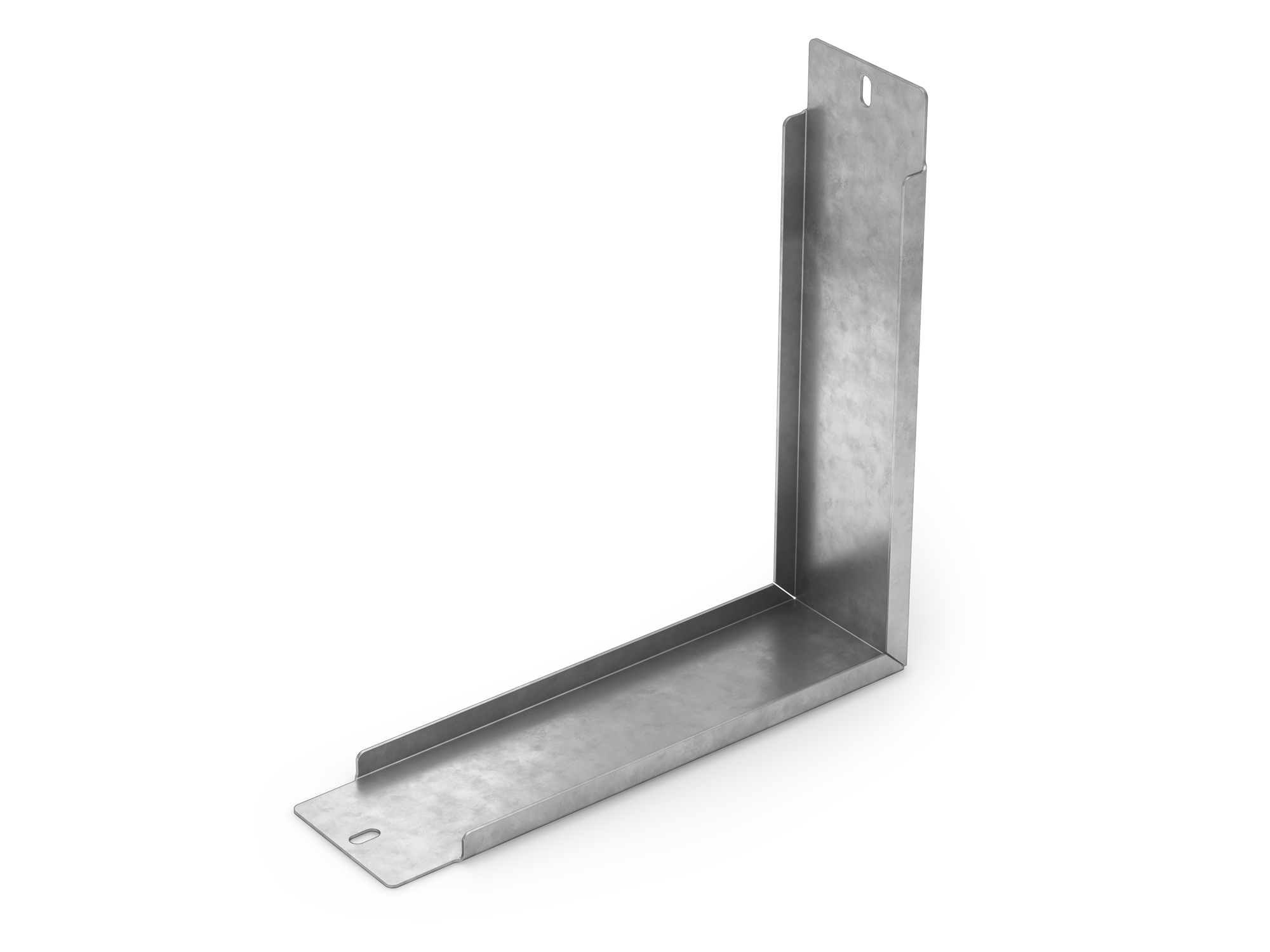 Kick Plate Inside Corner 400x400mm zm
104 €
Kick Plate Inside Corner 400x400mm zm
104 €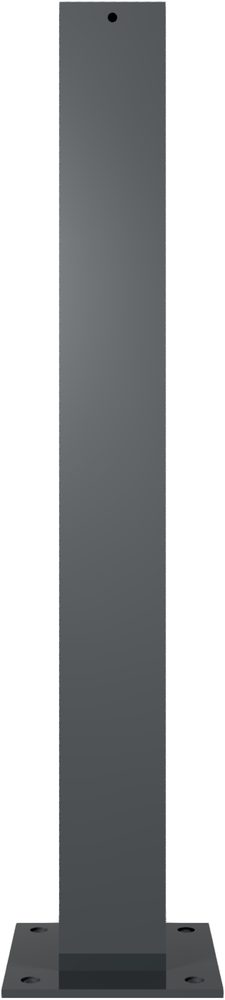 Bollard - 100 x 100 mm - Bolt-Down
240 €
Bollard - 100 x 100 mm - Bolt-Down
240 €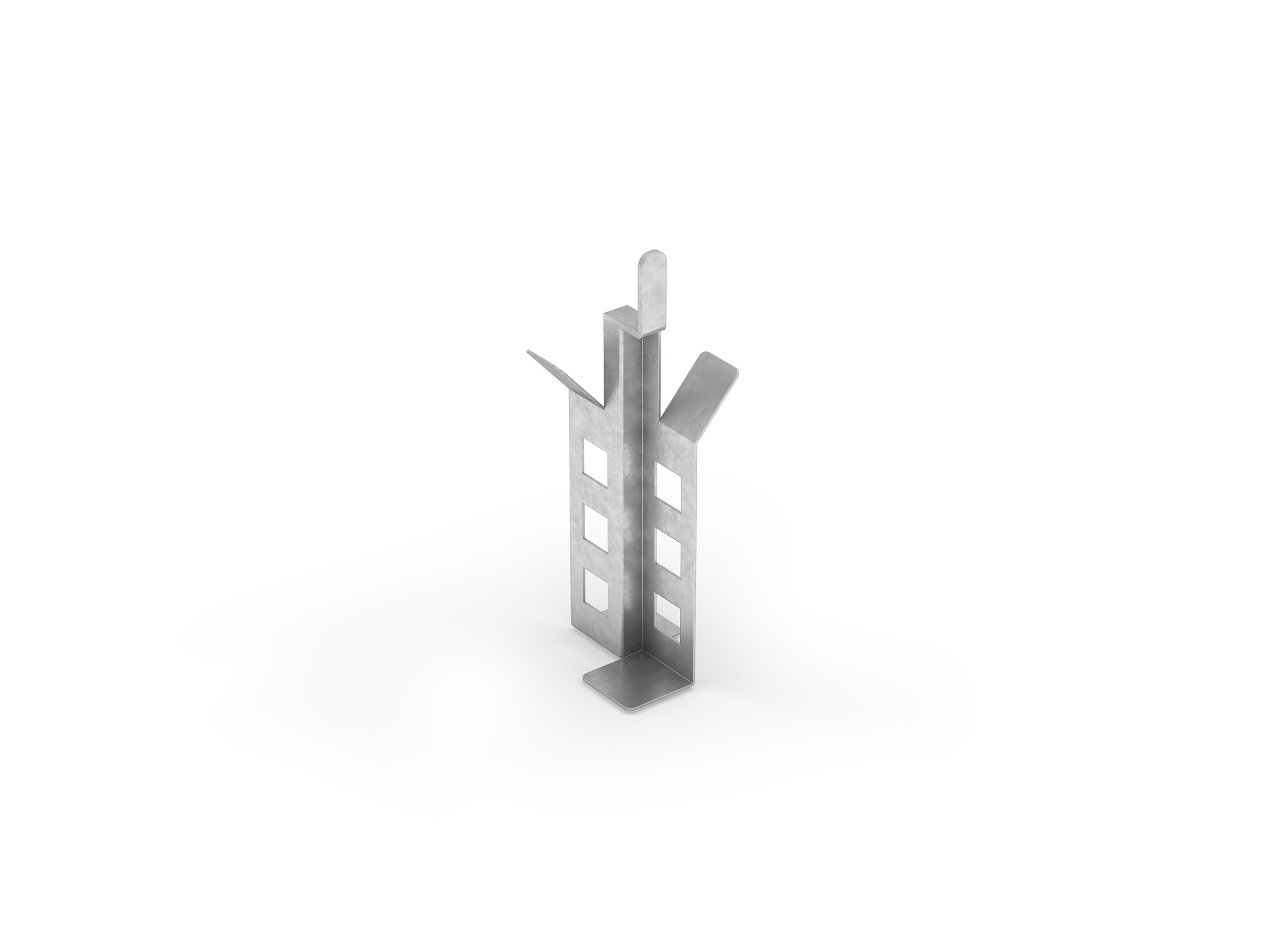 Floor Bracket for Universal Guard Rail - Single 42mm HDG
57 €
Floor Bracket for Universal Guard Rail - Single 42mm HDG
57 €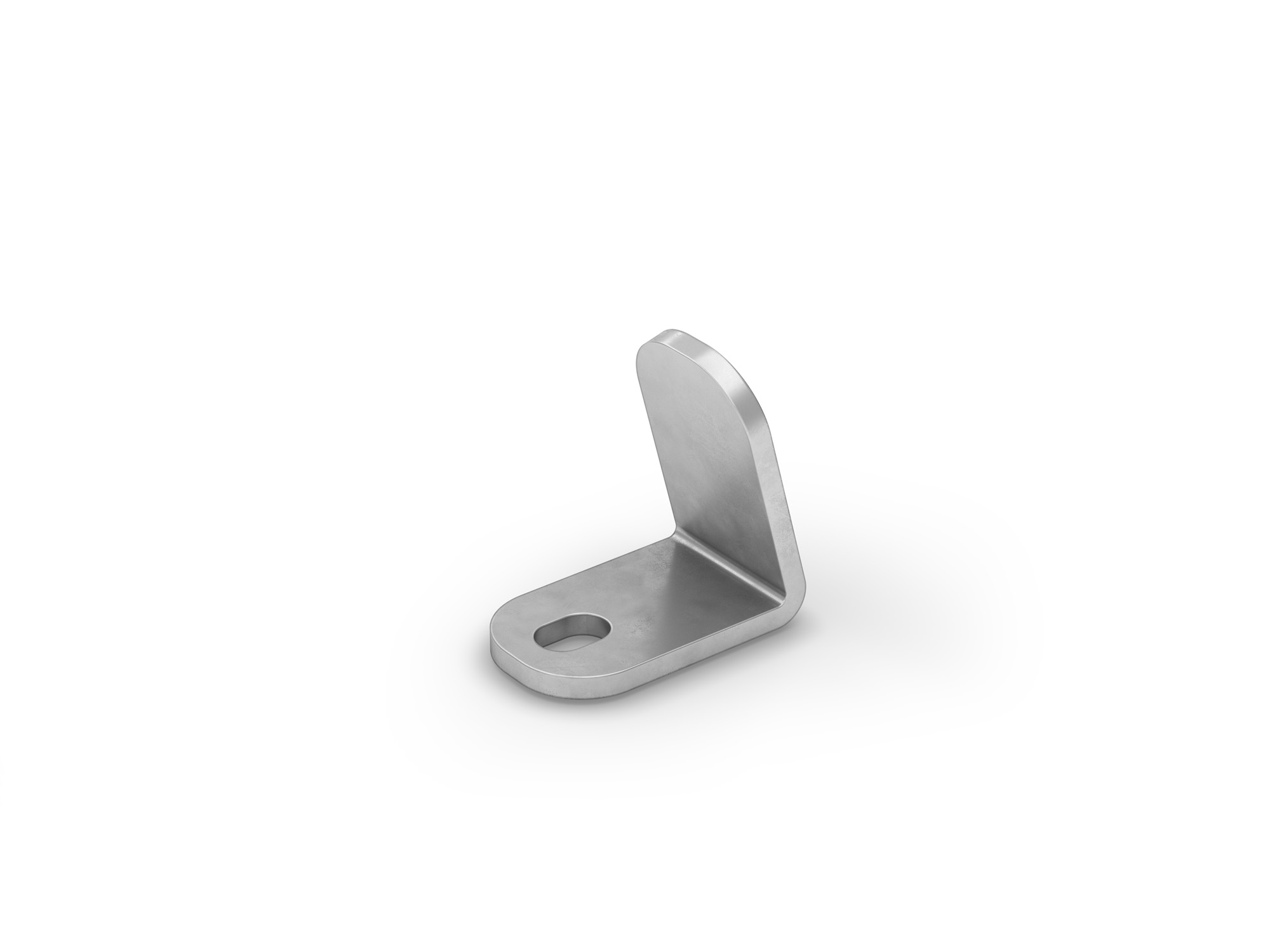 Wall Bracket for Railing Tube 42mm HDG
20 €
Wall Bracket for Railing Tube 42mm HDG
20 €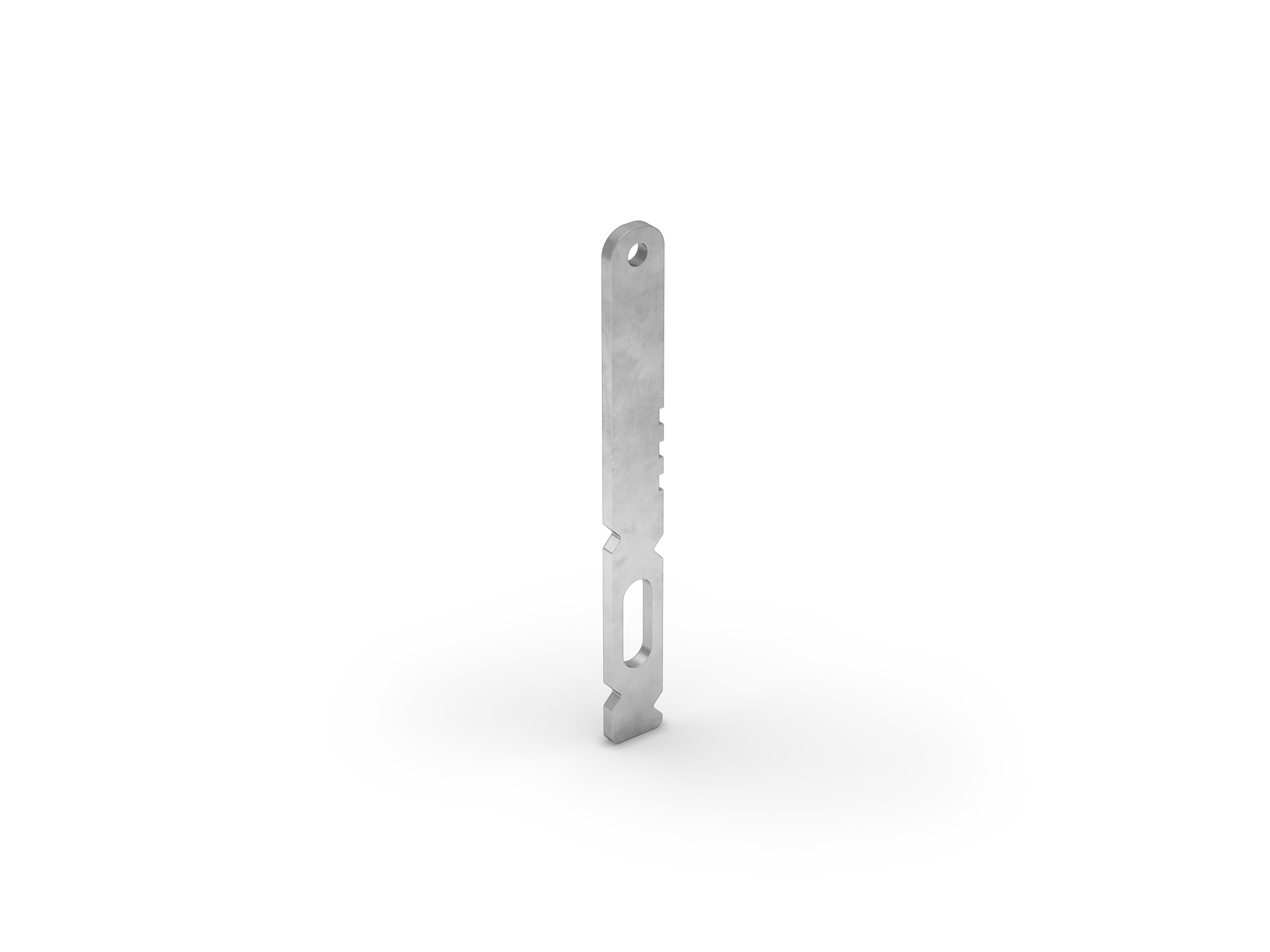 Cast-in Universal Guard Rail - Internal Spigot Length 310 mm HDG
32 €
Cast-in Universal Guard Rail - Internal Spigot Length 310 mm HDG
32 €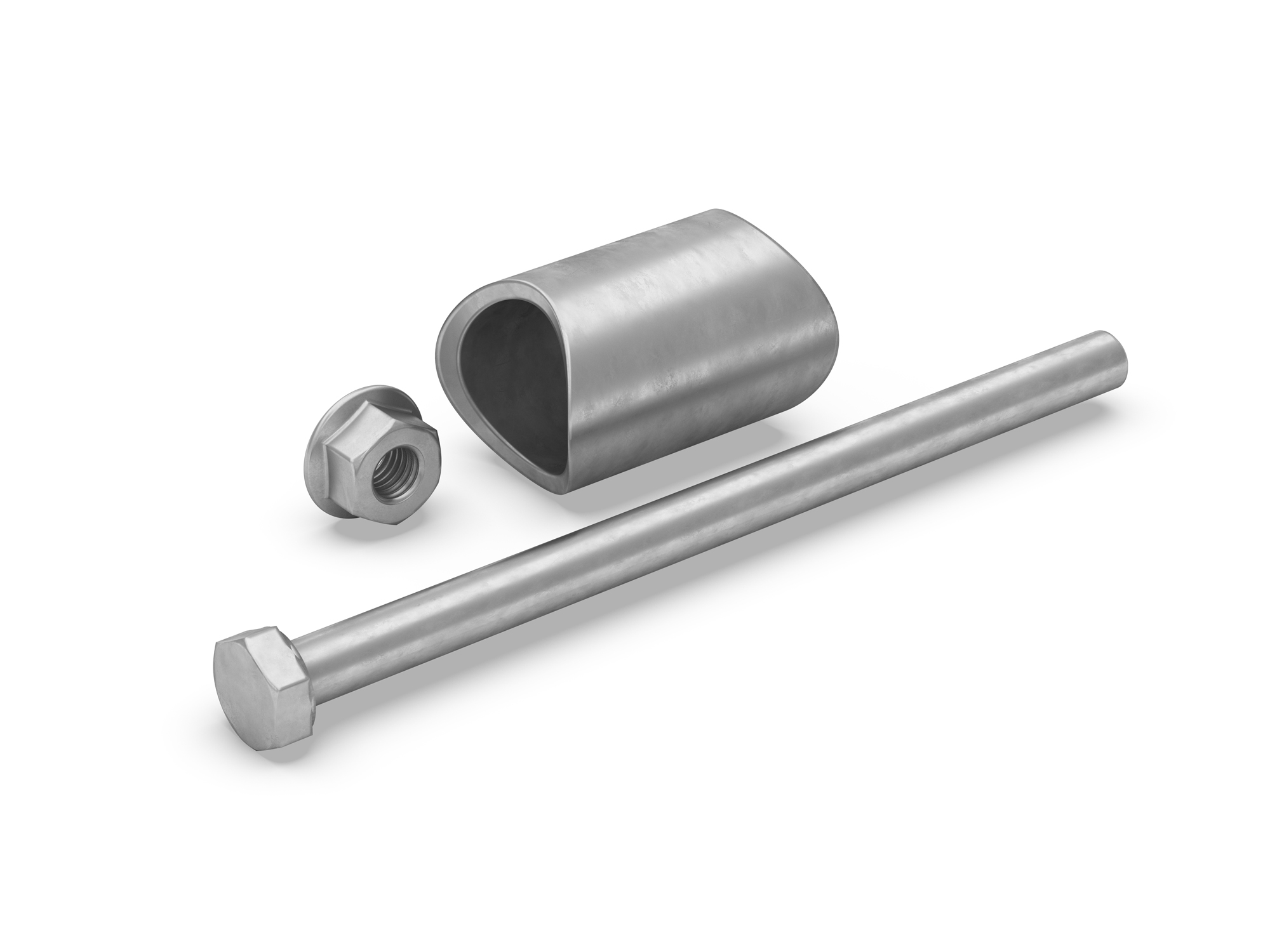 Tube Coupler 42mm c/c 77mm HDG
16 €
Tube Coupler 42mm c/c 77mm HDG
16 €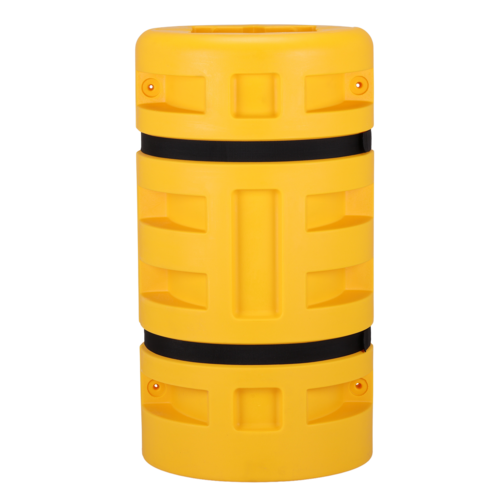 Round Column Protector for 320×320 mm Columns
700 €
Round Column Protector for 320×320 mm Columns
700 €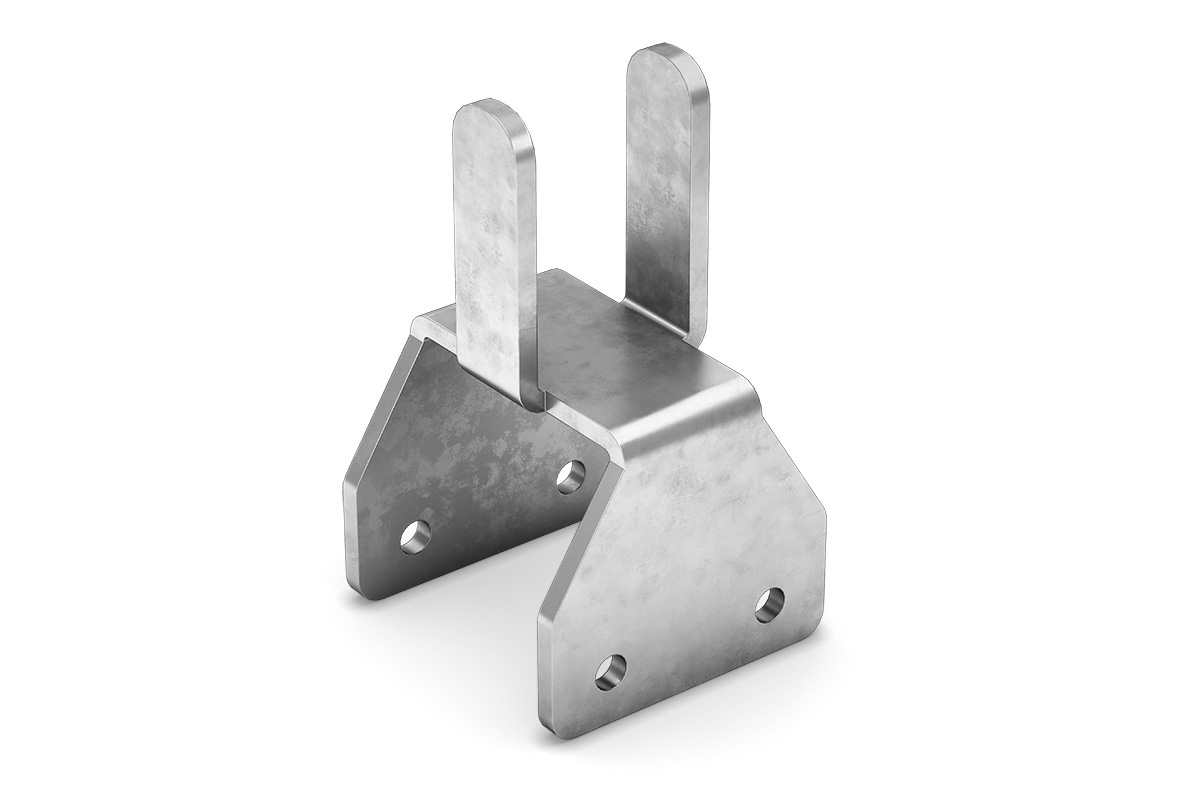 Retaining Wall Mount for Universal Guard Rail - Double L-Bracket 100mm
104 €
Retaining Wall Mount for Universal Guard Rail - Double L-Bracket 100mm
104 €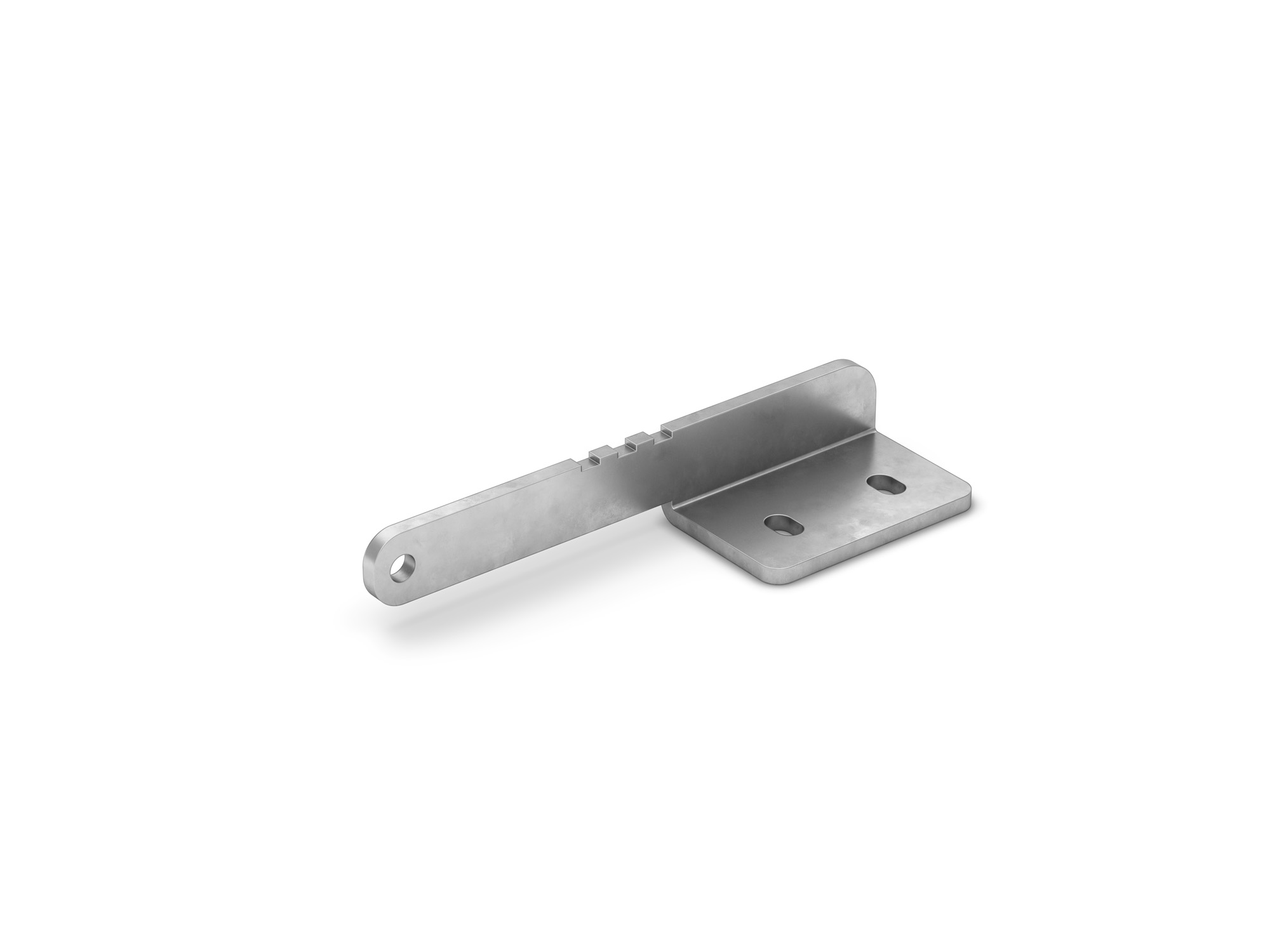 Side Bracket for Universal Guard Rail - Single 42mm Right HDG
20 €
Side Bracket for Universal Guard Rail - Single 42mm Right HDG
20 €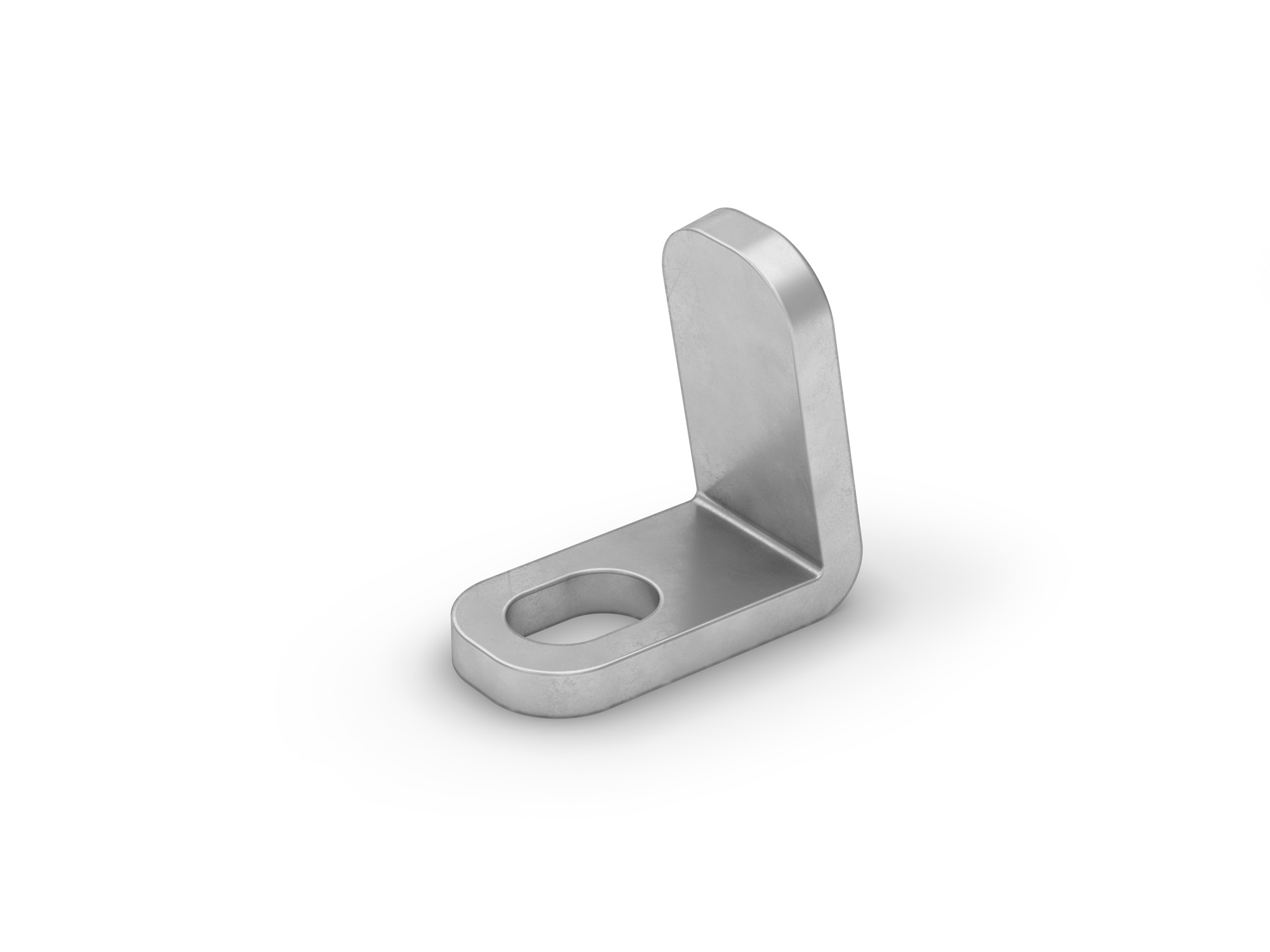 Wall Bracket for 27mm Railing Tube, Hot-Dip Galvanized
20 €
Wall Bracket for 27mm Railing Tube, Hot-Dip Galvanized
20 €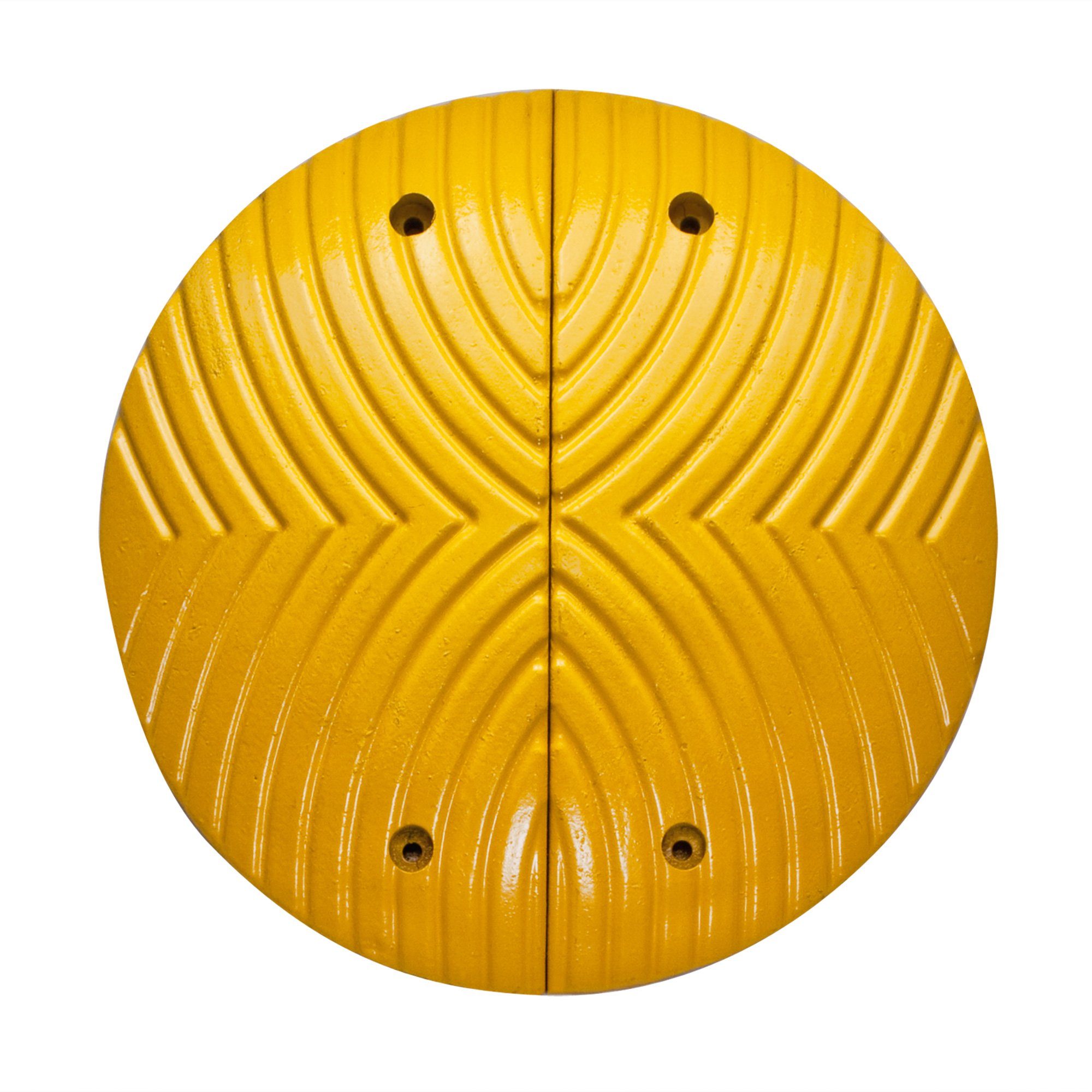 Speed Bump - Ø500mm - 70mm High
100 €
Speed Bump - Ø500mm - 70mm High
100 €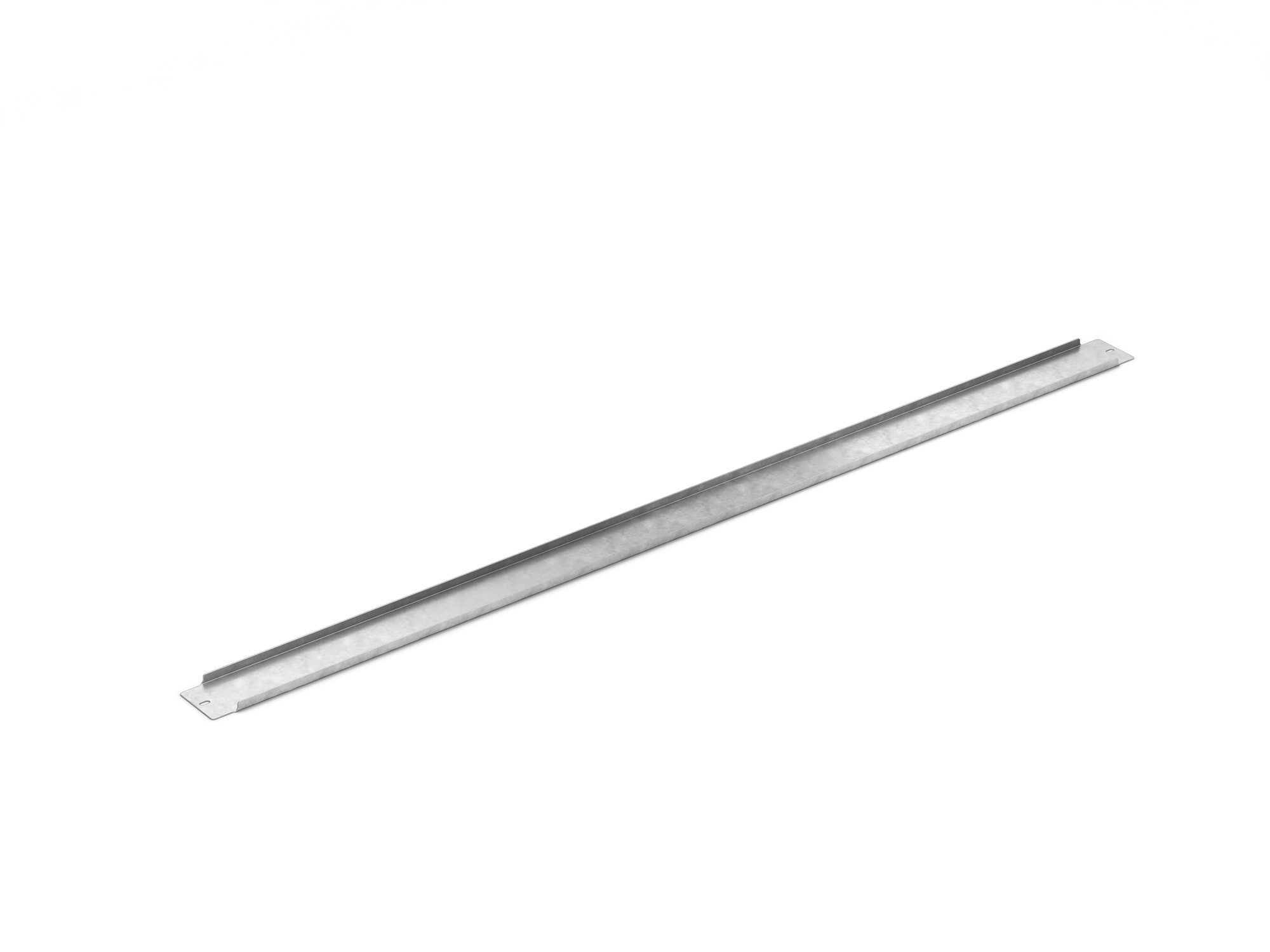 Railing Kick Plate 2000x100mm zm
49 €
Railing Kick Plate 2000x100mm zm
49 €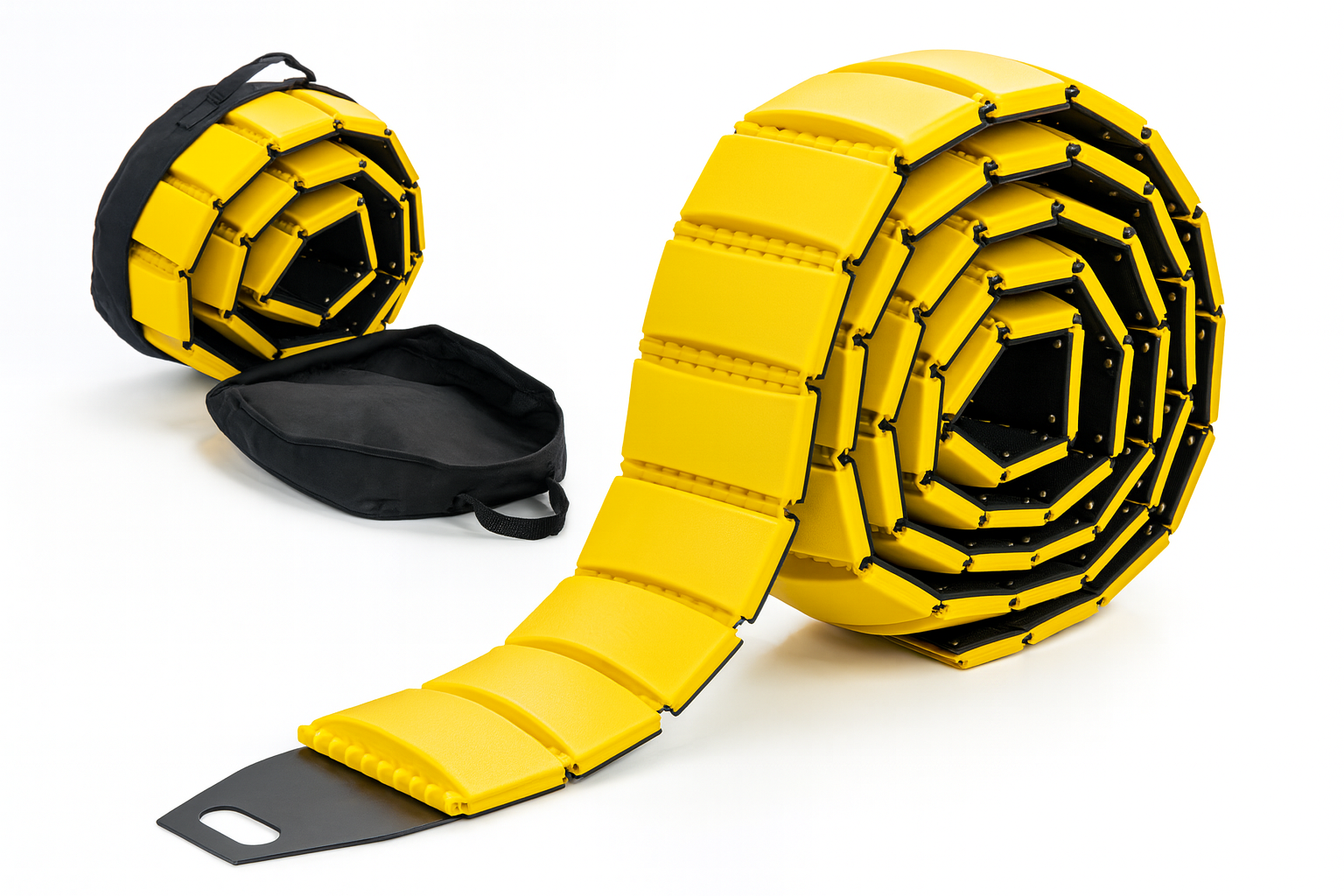 Collapsible Portable Speed Bump - "Snoken" - 3 meter
275 €
Collapsible Portable Speed Bump - "Snoken" - 3 meter
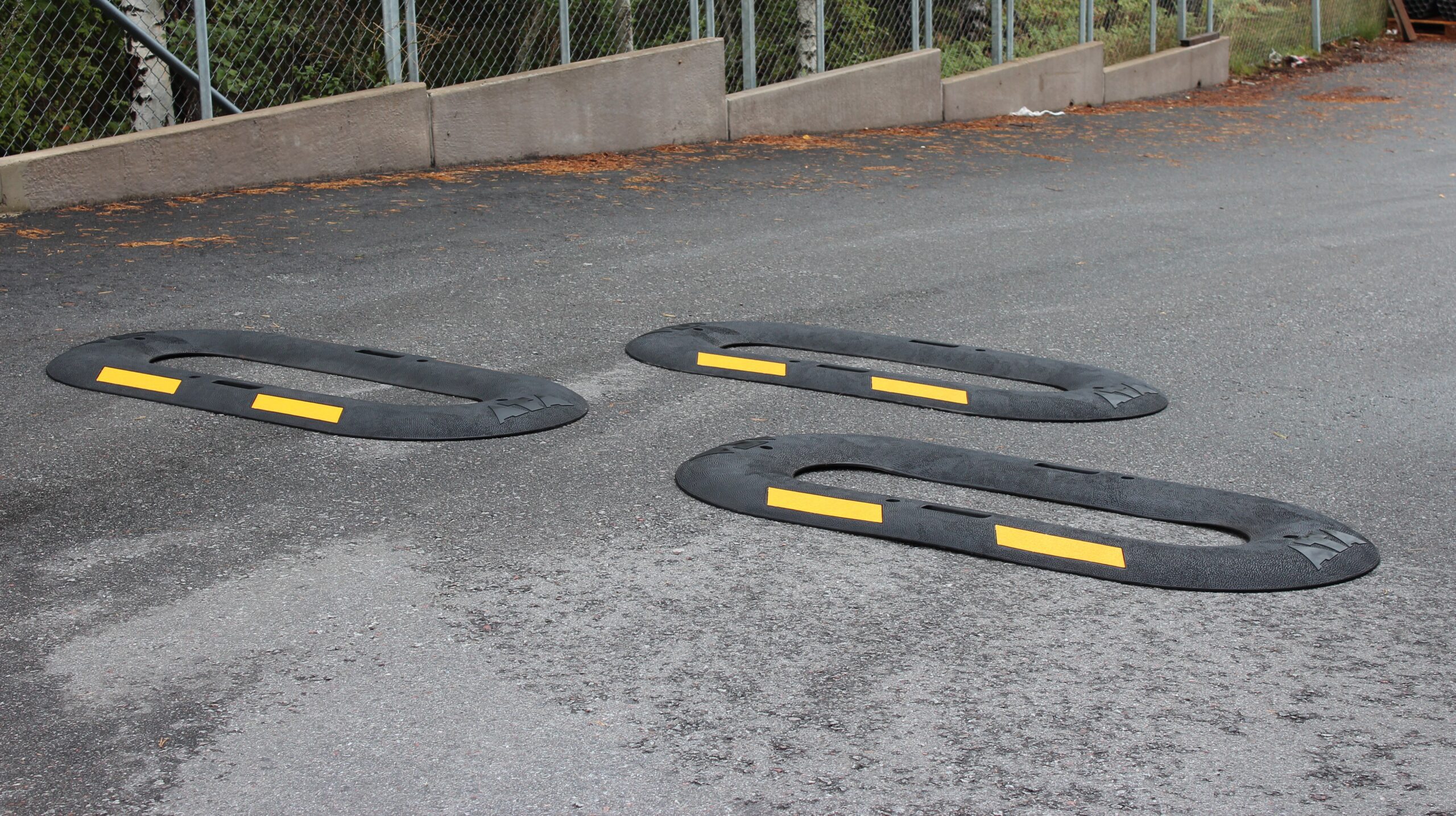
275 €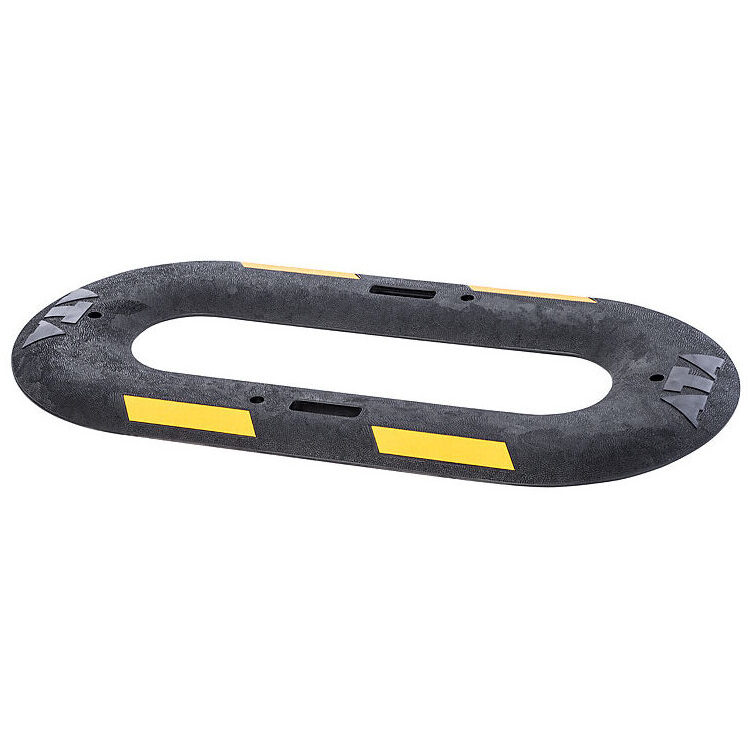 Minigupp - Oval Natural Rubber Speed Bump - 1500x750x38 mm
180 € 180 € excl. VAT180 € 180 € incl. VAT
Minigupp - Oval Natural Rubber Speed Bump - 1500x750x38 mm
180 € 180 € excl. VAT180 € 180 € incl. VAT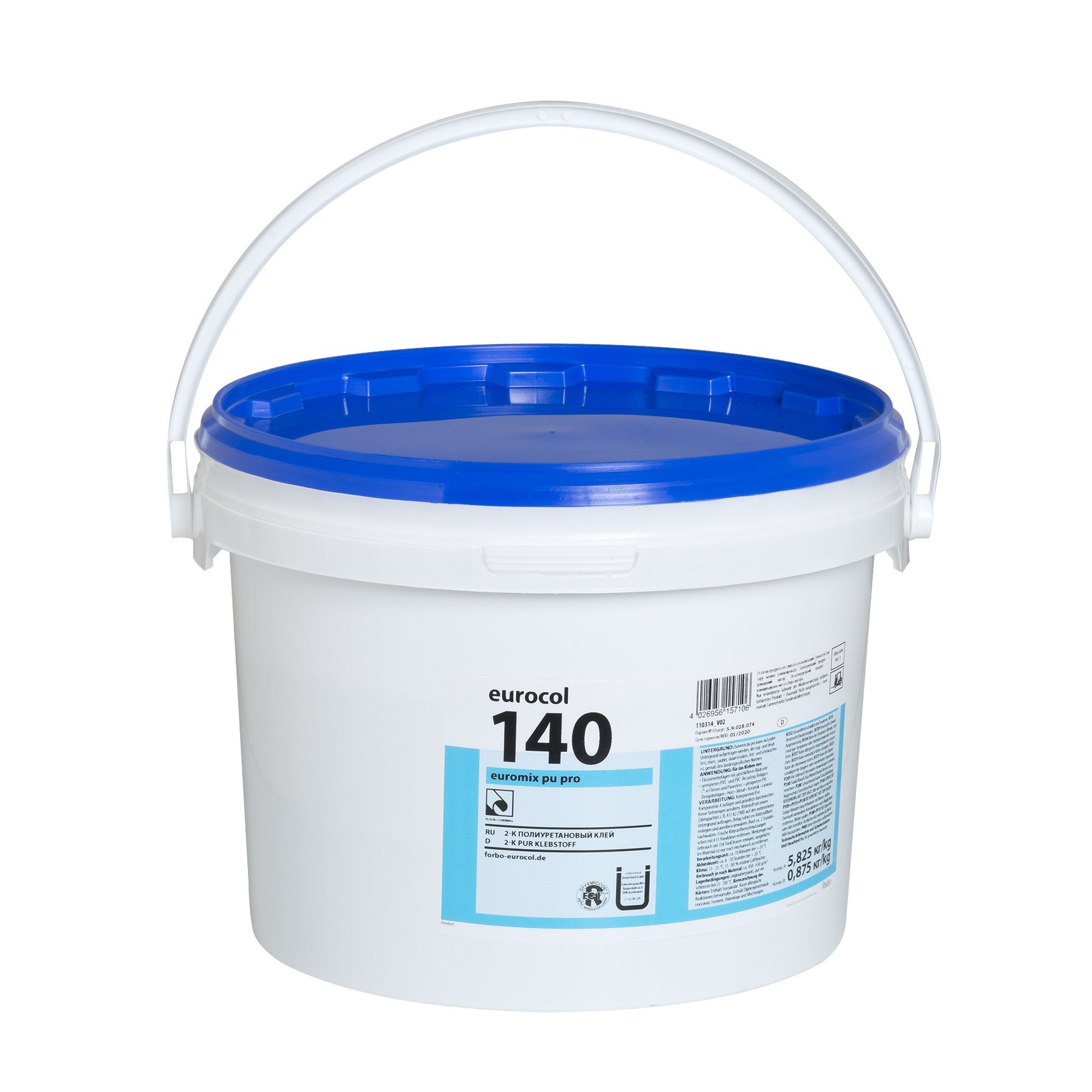 2-Component Adhesive 13.8kg - For Permanent Mounting of Elements on Traffic Areas
290 € 290 € excl. VAT290 € 290 € incl. VAT
2-Component Adhesive 13.8kg - For Permanent Mounting of Elements on Traffic Areas
290 € 290 € excl. VAT290 € 290 € incl. VAT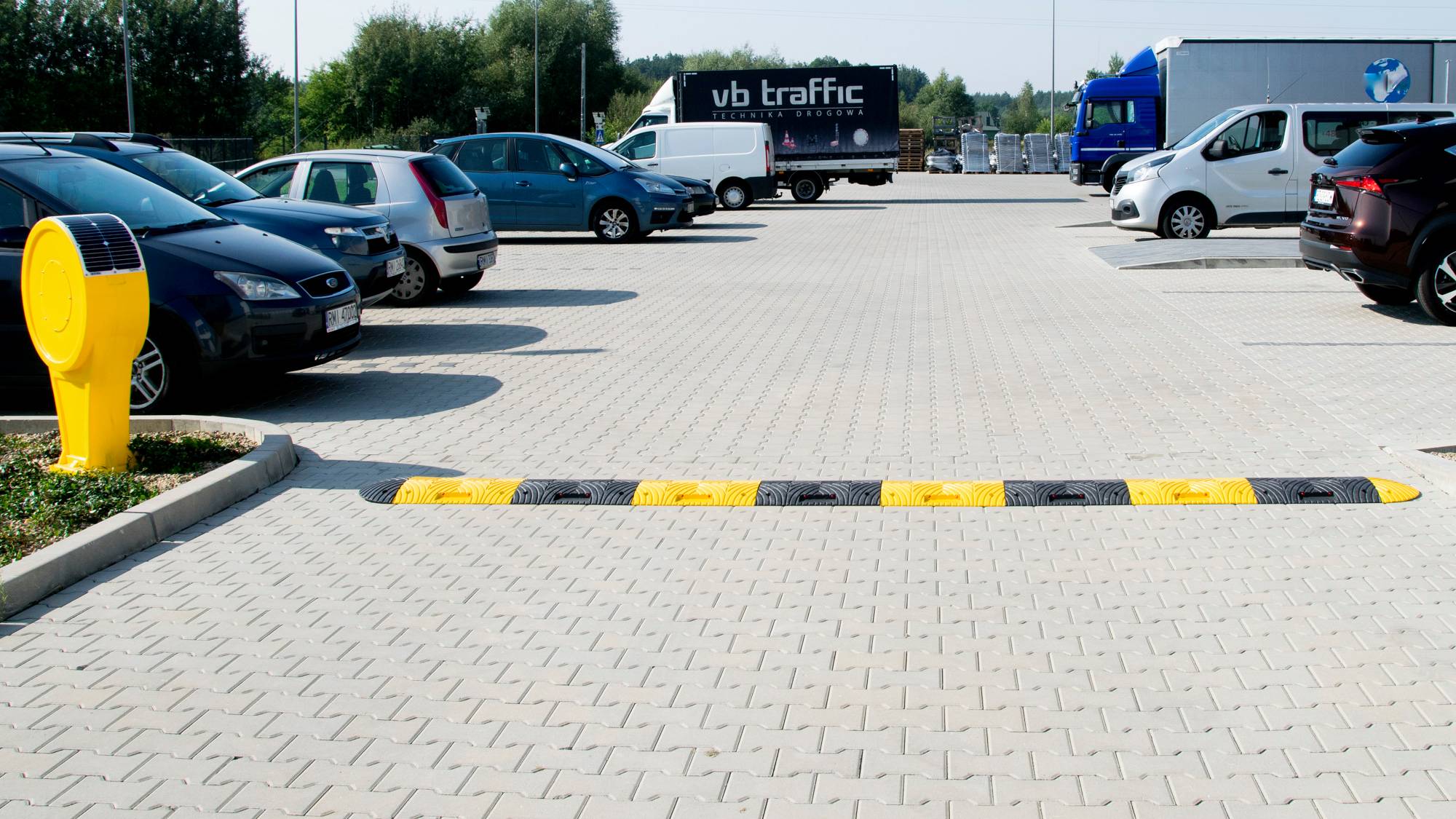

Ready to take the next step?
We help you develop solutions tailored to your needs. At Nordguard, we strive to make the ordering process as smooth as possible. By offering support and guidance throughout the entire purchasing experience, we make sure you feel confident and satisfied with your choice of protection products.+46 10 153 90 50
[email protected]