
Traffic Islands: A Complete Guide to Design, Function and Safety
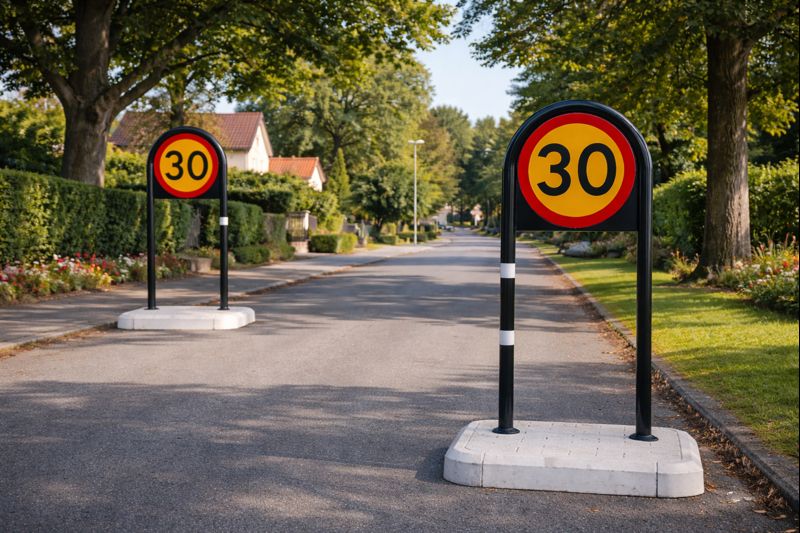
A traffic island is much more than a raised area in the roadway. Think of it as a strategic sentry that creates order and safety where traffic is at its most complex. Picture an unprotected crosswalk where cars drive far too fast – a common and potentially deadly problem. By installing a traffic island, often called a pedestrian refuge, you force vehicles to slow down while giving pedestrians a safe zone to catch their breath.
A smart investment in safety and traffic flow
A well-planned traffic island is a fundamental building block for safer and more functional urban environments. Its main job is to solve concrete problems such as high speeds, unclear lanes and hazardous intersections by physically separating and guiding traffic flows. For municipalities, civil contractors and property owners, this is not a cost but a direct investment in residents’ safety and a smoother traffic system.
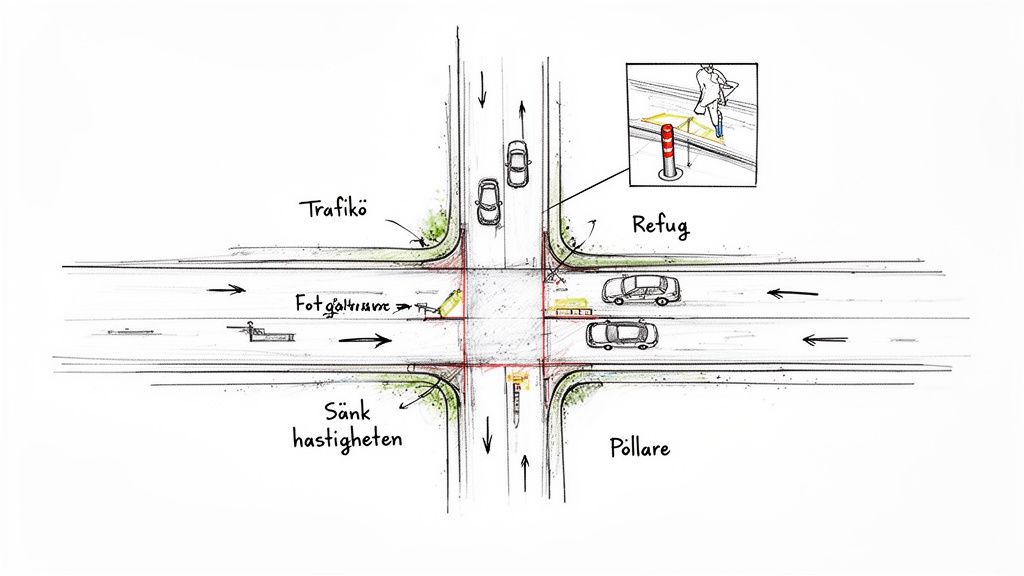
A traffic island can be adapted for a wide range of purposes, which makes it an incredibly flexible tool in urban planning. By understanding the most common types and their functions, you can make better decisions for your specific project.
- Reduce speed: Narrowing the lane forces drivers to slow down, which is especially important near schools, in residential areas and at crosswalks.
- Protect vulnerable road users: Refuge islands give pedestrians and cyclists a protected place to stop when crossing a wide or busy street.
- Separate traffic flows: At chaotic intersections, a traffic island can prevent dangerous left turns and guide vehicles correctly, reducing the risk of collisions.
- Define lanes: It creates clear boundaries and structure in traffic, improving accessibility and reducing driver uncertainty.
Maximize protection with the right accessories
For a traffic island to be effective and last over time, it takes more than curbs and asphalt. Without the right protection, it quickly gets hit and damaged, leading to costly repairs and reduced safety. This is a common but expensive mistake.
An unprotected traffic island is a vulnerable traffic island. By integrating impact protection and bollards from the start, you not only ensure its service life but also maximize its protective effect for all road users.
By planning for robust accessories such as fixed bollards or heavy-duty impact protection from the outset, the traffic island becomes a resilient barrier that can withstand the harsh urban environment. These products protect not only the structure itself but also signs, light poles and, most importantly, the people moving through the area. Do you have a project where safety and durability are critical? Then the right protective products make the difference between a temporary fix and a long-term solution.
Not sure which products will best secure your traffic environment? Contact us and we’ll help you find a solution that fits your specific needs.
Different types of traffic islands for specific needs
Every traffic environment is unique and requires its own solutions. A traffic island is not a “one-size-fits-all” product, but rather a flexible tool that must be adapted to the specific problem to be solved. Understanding the different types is essential to achieving the desired effect, whether the goal is to reduce speeds, protect pedestrians or bring order to a chaotic intersection.
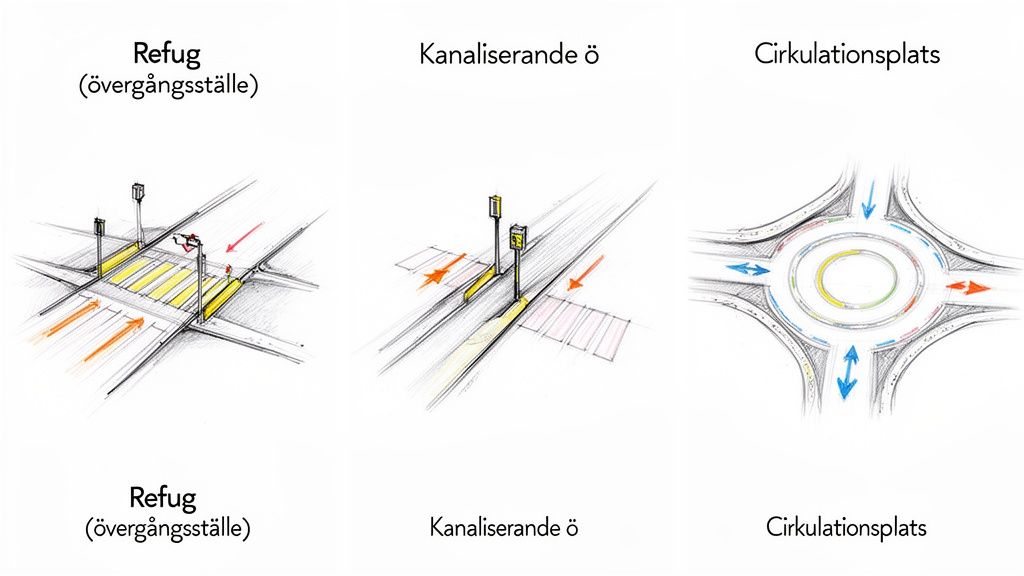
For contractors and municipal planners, this is where knowledge becomes business-critical. The choice between a simple refuge island and a more complex channelizing island can be the difference between a successful safety measure and an ineffective – or, at worst, dangerous – installation.
Refuge islands create safe crossings
Perhaps the most common type of traffic island is the pedestrian refuge island. Its primary purpose is to solve the problem of crossing wide, busy streets. By placing a raised area in the middle of the road, pedestrians and cyclists can cross in two stages. This is especially important in places where it can be nearly impossible to find a gap to cross the entire road at once.
A well-placed refuge island outside a school or in a residential area not only provides a physical safety zone but also acts as a natural speed bump. The lane is narrowed, sending a clear signal to drivers to slow down.
The statistics speak for themselves. According to Tidningen Proffs, vulnerable road users are one of the most exposed groups in traffic. A refuge island is a concrete measure to protect them.
Channelizing islands for law and order
At complex or confusing intersections, the channelizing island is an incredibly powerful tool for directing traffic correctly. Its main purpose is to prevent unwanted and risky driving patterns, such as dangerous left turns or vehicles cutting across oncoming lanes.
Unlike a refuge island, a channelizing island often has a more irregular shape, tailored to intuitively guide vehicles into the correct lane.
- Prevents collisions: By physically separating opposing or crossing traffic flows, it dramatically reduces the risk of head-on and side-impact collisions.
- Makes things easier for drivers: These islands create a clearer and more predictable traffic environment, reducing driver stress and hesitation.
- Adapted for heavy vehicles: At entrances to logistics centers or industrial areas, they can be designed to safely guide trucks and other heavy vehicles.
These islands are often more exposed to vehicle strikes, which places high demands on curbs and any impact protection. Without robust protection, they risk being damaged quickly and losing their function.
Roundabouts for efficient traffic flow
A roundabout is essentially a large, central traffic island built to handle traffic from several connecting roads. This solution is extremely effective at both improving traffic flow and increasing safety compared to a traditional four-way intersection.
Roundabouts significantly reduce the number of conflict points between vehicles. Instead of the 32 potential conflict points at a conventional intersection, a roundabout has only 8, drastically lowering the risk of serious accidents.
By forcing speeds down and replacing dangerous left turns with a circulating movement, the most hazardous situations are minimized. However, their effectiveness depends on a clear design with the right road markings, signage and sometimes even speed bumps on the approach roads.
To strengthen the protection of both the roundabout itself and road users, impact protection and barrier posts can be integrated into the design to great advantage. Need expert help determining which solution will best secure your project? Contact us and we’ll help you analyze your needs and find the most effective products.
Understanding regulations and safety requirements
Building a traffic island is about much more than pouring some concrete and setting curbs. Every detail, from height and width to the placement of a road sign, is governed by a complex set of regulations. The goal is simple: to guarantee safety for everyone.
If you work for a municipality, as a contractor or as a property owner, these are not just recommendations – they are strict requirements.
Taking chances or interpreting the rules a little too freely can be an expensive lesson. A traffic island placed slightly wrong can suddenly block a cyclist’s view or force a truck into a dangerous maneuver. And if accessibility for people with disabilities is overlooked, everything may have to be redone. An unnecessary and costly ordeal.
VGU and BBR – the rules of the game
In Sweden, there are two main documents you need to be familiar with: the Swedish Transport Administration’s Vägar och gators utformning (VGU) design guidelines for roads and streets, and the Swedish building regulations from Boverket (BBR). These are no light paperbacks, but technical, detailed documents with specific requirements that must be met. Period.
VGU focuses on everything related to the traffic environment itself:
- Measurements and dimensions: Specifies the minimum width of a refuge island for it to actually provide protection.
- Visibility and reflectors: Requires the traffic island to be clearly visible, day and night.
- Placement and design: Provides concrete guidance on how the island should be designed to achieve its purpose.
BBR adds accessibility requirements. This is about making sure the traffic environment works for everyone, regardless of ability – no tripping edges, and properly designed guidance paths and ramps.
Why CE marking is your best friend
To be sure that every part of the traffic island meets European safety and quality standards, CE marking is essential. Think of it as a seal of quality that guarantees the product has been tested and approved according to EU regulations.
Gambling on uncertified materials is like playing Russian roulette with both the project budget and the safety of road users. A CE-marked bollard or approved impact protection is not an extra cost – it is basic insurance.
When you select materials, from curbs and concrete elements to light poles and bollards, you need to check that they carry the marking. It not only guarantees that the product delivers what it promises but is also a legal requirement in most public procurements. If you use products without the marking, you risk having the entire installation rejected at inspection.
Navigating this jungle of rules and standards is a challenge. Need help making sure your project meets all the requirements? Our experts can guide you, from choosing CE-marked products to interpreting the requirements in VGU and BBR. Contact us and we’ll make sure your traffic island is safe, durable and fully by the book.
See our range of robust cast iron and steel bollards that meet demanding requirements for public environments.
Choosing the right material and design for durability
A traffic island’s service life and future maintenance needs are determined almost entirely at the drawing board. The choice of material and design is much more than a question of appearance – it is a strategic investment that directly affects safety, durability and total cost over time. A hasty decision here can easily lead to constant repairs and unexpected expenses down the road.
At its core, it’s about building something that can withstand everything from heavy vehicles and road salt to our Nordic climate. Getting it right from the start is therefore by far the most cost-effective strategy for making sure your traffic island does its job, year after year.
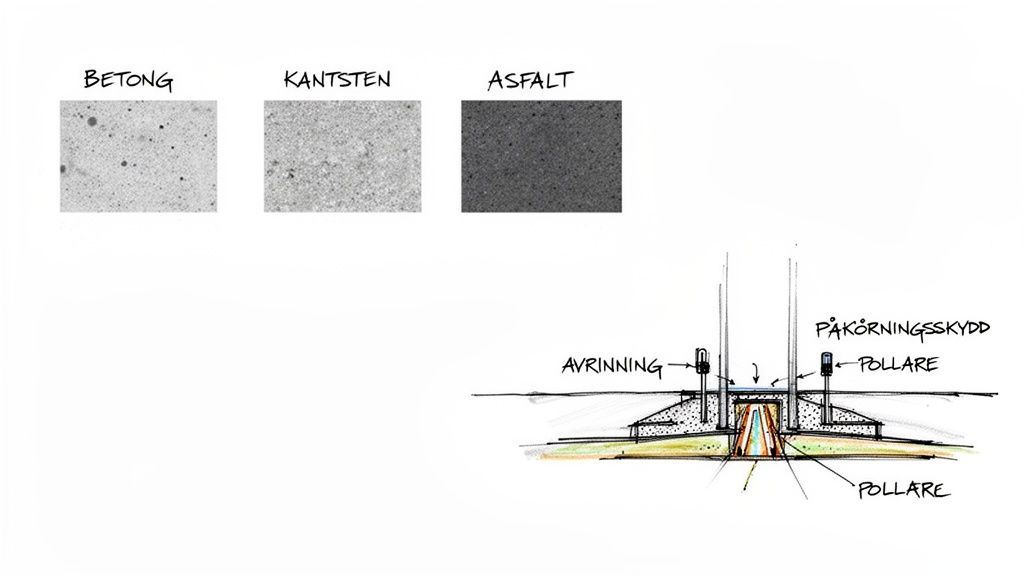
Comparison of common materials
Each material comes with its own strengths and weaknesses. To make a smart choice, you need to weigh durability against installation cost and the visual impression you want to achieve.
| Material | Durability | Maintenance | Initial cost |
|---|---|---|---|
| Cast-in-place concrete | Very high | Low | High |
| Precast concrete | High | Very low | Medium-High |
| Asphalt w. curbs | Medium | Medium | Low-Medium |
| Stone/Granite | High | Low | High |
The table clearly shows that the cheapest installation is rarely the most cost-effective solution in the long run.
Design that prevents problems
Smart design is just as important as the choice of material. A traffic island must be designed to actively counteract common problems that could otherwise impair both safety and function.
- Proper drainage: A critical detail. A traffic island with poor drainage collects puddles that quickly turn into dangerous patches of ice in winter.
- Shape adapted for snow removal: A well-thought-out design with soft angles and no sharp edges reduces the risk of damage to both the island and plow blades.
- Visibility and markings: The design must guide road users correctly. Using durable thermoplastic road marking is essential for lines and symbols to remain clearly visible, even after a long, harsh winter. Read more about the benefits of thermoplastic road marking in our guide.
Integrate protection from the start
Waiting to install impact protection and bollards is a common but costly mistake. When an unprotected traffic island is hit, the damage can be extensive, leading to expensive and disruptive repairs. By building protection into the design from the start, you create a solution that is both functional and attractive.
By choosing the right impact protection or barrier posts, you ensure that the installation can handle the heavy demands of traffic. Not sure what level of protection your project requires? Contact us and we’ll help you develop a robust, safe solution that lasts.
Planning for installation and maintenance
Building a traffic island is one thing, but making sure it works as intended year after year is something else entirely. A successful traffic island requires planning that extends far beyond the actual pouring and mounting. The real value lies in a well-thought-out process for both installation and long-term maintenance. Cutting corners here is a common mistake that quickly leads to higher costs and reduced safety.
Right from the start, a number of practical challenges must be addressed. What are the ground conditions like? Are there utility lines or manholes below the surface? How do we handle temporary traffic detours smoothly? A well-planned installation minimizes disruption and lays the foundation for a solution that lasts.
The hidden cost nobody wants to talk about
Once the traffic island is in place, the real work begins. Regular maintenance is not optional – it is absolutely essential for the installation to retain its function and safety. Without upkeep, it deteriorates quickly and, in the worst case, can create new hazards instead of preventing them.
Common, and absolutely necessary, maintenance tasks include:
- Seasonal maintenance: Snow removal that doesn’t crack curbs or run over bollards, along with effective anti-icing measures.
- Damage repair: Prompt action after vehicle strikes, both on the island itself and on the protective equipment around it.
- Equipment inspection: Regular inspections of lighting, signs and reflectors to ensure 100 % visibility.
- Cleaning: Keeping surfaces and drainage systems free of debris, leaves and vegetation that can cause problems.
Each point is an important piece of the puzzle. Together, they make sure the investment actually pays off in the form of increased safety.
Think life-cycle cost, not just purchase price
This is where it’s time to talk about life-cycle cost (LCC). It is a calculation that includes all costs over an installation’s entire service life – not just the price tag at the time of purchase. A material that seems cheap at first can quickly turn into an expensive headache if it requires constant repairs and has to be replaced prematurely.
Investing in high-quality materials and robust protection from day one is not an extra expense – it is the smartest financial strategy. You minimize future maintenance and get a low total cost of ownership over time.
A traffic island built with inferior concrete or fitted with flimsy protection is guaranteed to be damaged. Every repair means costs for materials, labor and traffic detours. By choosing durable solutions instead, such as a heavy concrete barrier block or impact-resistant bollards, you build resilience directly into the structure.
A particularly important aspect is protecting the traffic environment against risky behavior. Statistics from the Swedish Transport Administration’s analysis of alcohol and drugs in traffic show that alcohol and drugs are a contributing factor in a large share of all traffic fatalities. The figure underscores why municipalities and logistics companies must invest in permanent safety solutions. Traffic islands with sturdy impact protection, mirrors and clear markings reduce the risks posed by impaired drivers and protect vulnerable road users.
Ready to plan a traffic solution that lasts? Contact us to discuss how we can future-proof your project.
How to choose the right solution for your project
Choosing the right traffic island – and, equally important, the right supplier – is crucial to the success of your project. A solution that looks good on paper can quickly become an expensive, ineffective ordeal if it doesn’t solve the actual problem on site. The process is much more than pointing to a product in a catalog; it requires really digging into the specific needs.
Before you even start looking at different models or materials, you need to pinpoint the core of the problem. This is exactly where things often go wrong – people fall for a solution before fully understanding the challenge. A simple checklist is by far the best first step to make sure you’re on the right track and can set clear requirements for your supplier.
Define your needs with a simple checklist
Start by asking a few basic questions. The answers will shape the entire project and ultimately lead you to the most effective and sensible solution.
- What specific problem needs to be solved? Is the main purpose to reduce speed, protect pedestrians at a crosswalk, or perhaps prevent dangerous left turns at an intersection?
- Which road users should be prioritized? Is it mainly about making the route to school safer for children, guiding heavy trucks at a logistics terminal, or making things easier for cyclists?
- What unique conditions apply at the site? Don’t forget to factor in the road width, visibility, existing lighting and how snow removal is handled.
This flowchart shows the basic thought process, from identifying the problem to having a finished maintenance plan.
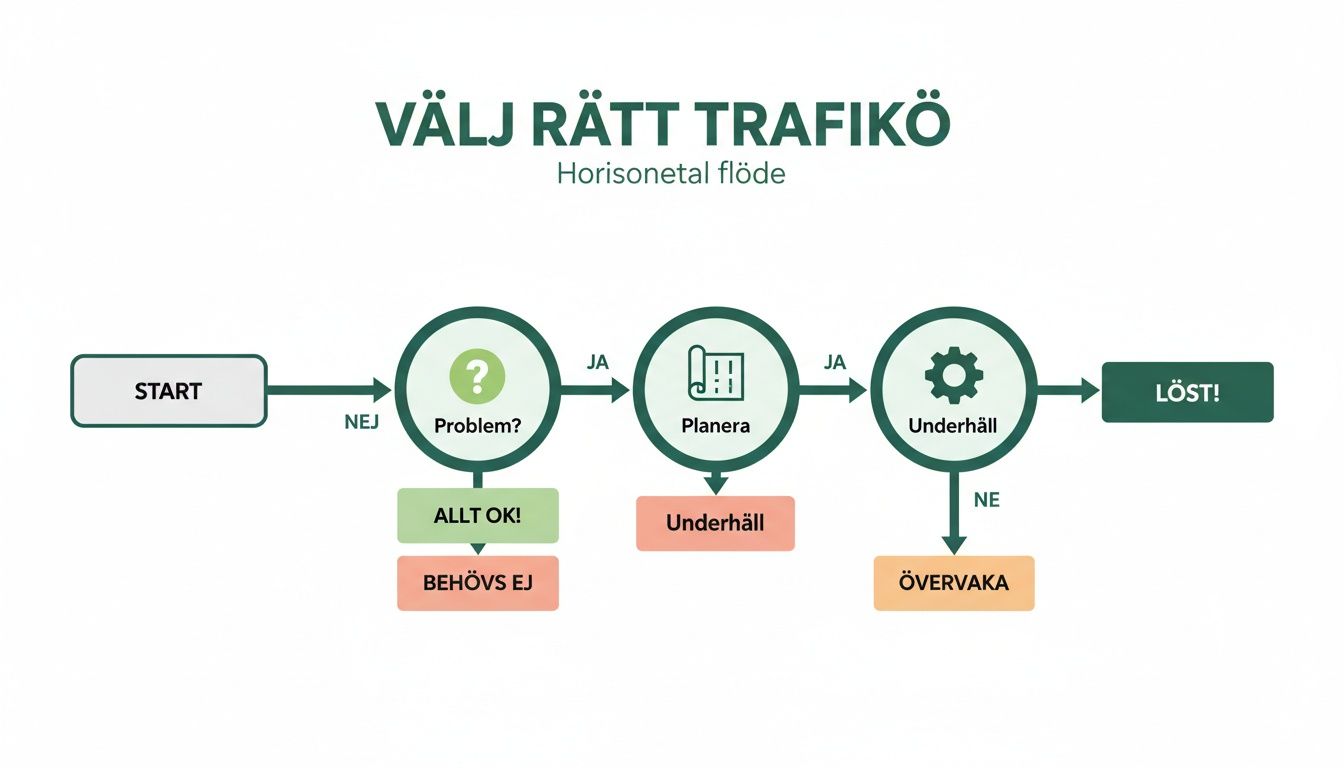
As you can see, a successful installation is based on a structured method where each step builds on the previous one.
Choose a partner, not just a supplier
Once you have a clear picture of what you need, it’s time to look at suppliers. It’s easy to get stuck comparing price tags, but a true partner offers much more than just a product. A reputable supplier acts as your expert and advisor throughout the entire journey.
A good supplier sells you a product. An excellent partner helps you solve a problem. It’s about expertise, help with the needs analysis, project support and the peace of mind that service and spare parts will be available in the future.
At Nordguard, we don’t see ourselves as just a box on a warehouse shelf. We are your partner from the first sketch to the finished installation and beyond. We help you analyze your specific needs, select the most durable and effective products – such as the right bollards or impact protection – and make sure you get a safe, cost-effective solution that truly stands the test of time.
Facing a complex traffic project and need a sounding board to make the right choices from the start? Contact us for a free consultation. We’ll help you turn your challenges into safe and functional traffic environments.
Frequently asked questions about traffic islands
When it’s time to plan a new traffic island, a lot of practical questions often come up. Here we’ve collected and answered some of the most common questions from municipalities, civil contractors and property owners to give you quick, concrete help along the way.
How long does it take to install a traffic island?
The time required to install a traffic island can vary considerably – anywhere from a couple of days to several weeks. It all depends on the size of the project, the ground conditions at the site and the type of island you choose.
A precast concrete model, for example, is much faster to put in place than one cast in place from scratch. Careful planning is key, especially when it comes to temporary traffic detours. It is essential for the work to run smoothly and cause as little disruption as possible.
How much does a traffic island cost?
There is no fixed price tag. The cost depends on a number of factors, with size, material and site conditions being the most important. Additional equipment such as lighting or bollards also plays a role, of course.
Some of the most common cost drivers are:
- Material: Cast-in-place concrete, precast elements, or asphalt and curbs?
- Size and complexity: A simple, small refuge island is cheaper than a large channelizing island.
- Additional equipment: Lighting, signs, road markings and robust impact protection affect the final total.
But the most important thing is to look beyond the initial cost and focus on the total life-cycle cost instead. A slightly higher investment in durable materials and proper protection almost always pays off in the long run through significantly lower maintenance needs over time.
Can a traffic island be installed on an existing road?
Absolutely – in fact, that’s the most common scenario. Retrofitting a traffic island to solve a safety problem that has arisen is one of the most common measures taken by Swedish municipalities.
However, it does require a thorough site analysis. The new traffic island must, after all, blend safely and functionally into the existing environment. An expert can help assess everything from sight lines and vehicle turning radii to how best to manage traffic flow during construction to ensure a successful and safe result.
Need expert guidance to plan, design and equip your next traffic island? Nordguard offers a complete solution with durable, CE-marked products that secure your investment for the future. Visit https://nordguard.eu to see our range and contact us for a free consultation.
Ready to take the next step?
We help you develop solutions tailored to your needs. At Nordguard, we strive to make the ordering process as smooth as possible. By offering support and guidance throughout the entire purchasing experience, we make sure you feel confident and satisfied with your choice of protection products.+46 10 153 90 50
[email protected]