
How to Choose the Right Inspection Mirror for Your Project
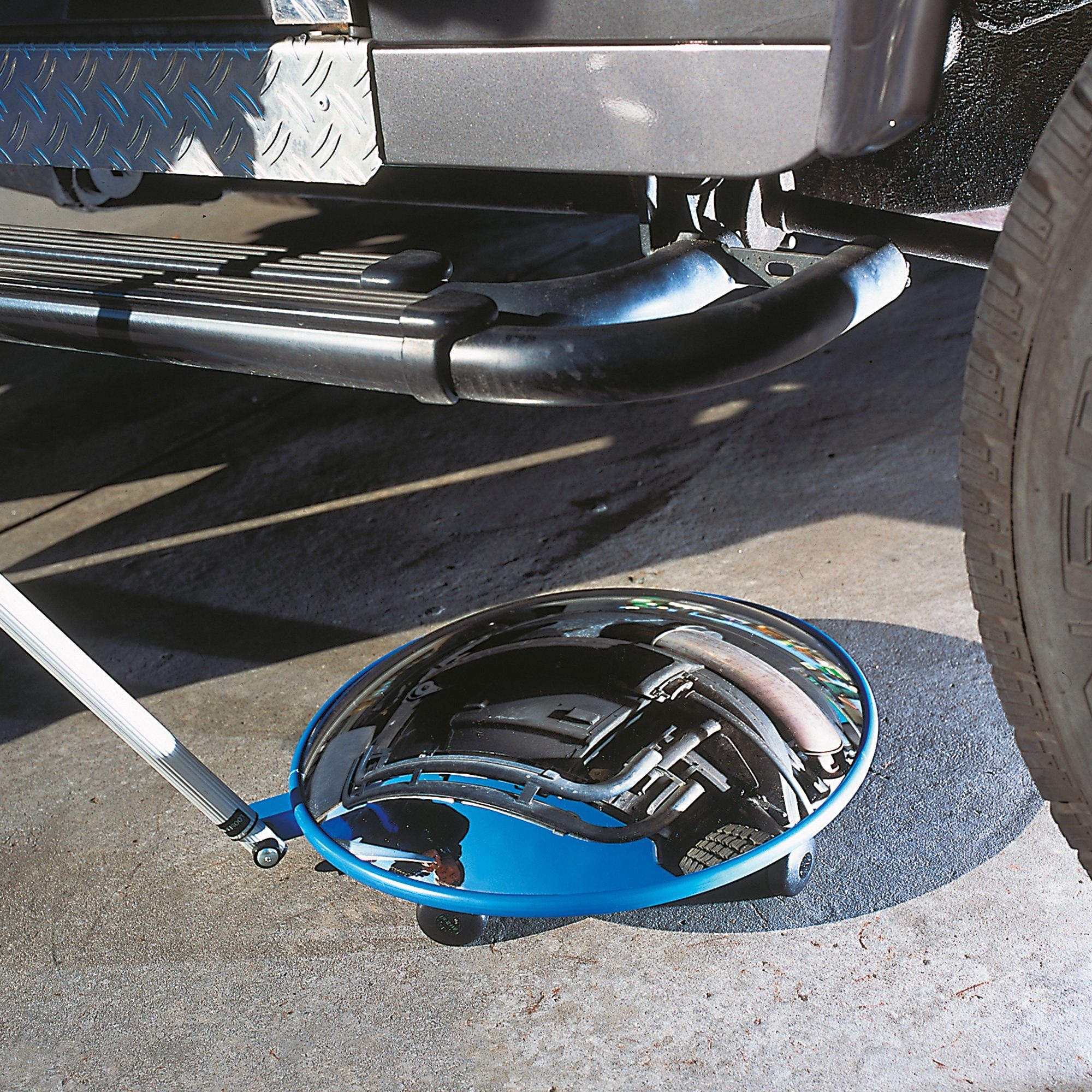
An inspection mirror is more than just a mirror on a stick. It’s a specialized tool that works as an extension of your eyes, letting you see into hidden, cramped and hazardous spaces without having to crawl, climb or needlessly dismantle equipment. By revealing problems before they escalate, the mirror becomes a key component of safety and maintenance.
It’s used to quickly and safely detect everything from leaks and damage to unauthorized objects – problems that would otherwise remain invisible and potentially costly.
Why is an inspection mirror so important in practice?
Imagine you need to find the source of an oil leak under a heavy truck. Or inspect a roof structure several meters up in the air. Maybe check a ventilation shaft without tearing down half the wall? In these situations, an inspection mirror isn’t just a clever tool – it’s absolutely essential. It turns guesswork into facts and can prevent both accidents and costly downtime.
The function is simple but incredibly powerful: the mirror gives you a clear, direct view of areas that would otherwise be completely impossible to see. That makes it an indispensable part of everyday work for a wide range of professions.
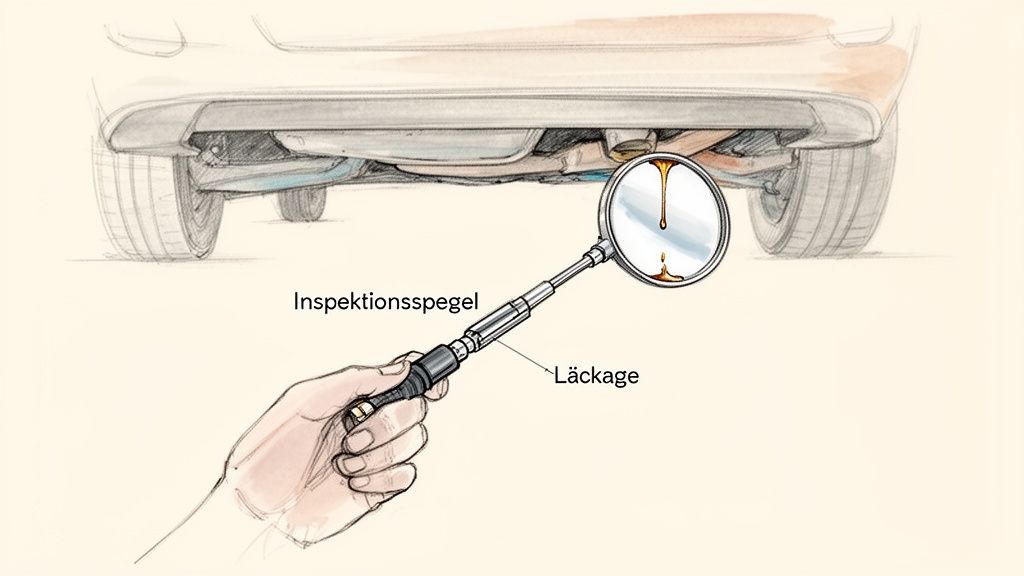
Solving real-world problems every day
The problems an inspection mirror solves are often critical for both safety and the bottom line. Instead of only reacting once the damage is done, the mirror lets you work proactively with maintenance and inspection. Do you have a specific problem you need to solve? Our experts can guide you to the right solution.
Here are some concrete examples:
- Security checks: Security personnel use wheeled mirrors to quickly scan vehicle undercarriages at entrances. It’s an effective way to prevent unauthorized or dangerous objects from being brought onto a site.
- Preventive maintenance: A building maintenance technician can spot a small water leak in a pipe system behind a wall early on, preventing extensive and extremely expensive water damage.
- More efficient work: A mechanic can quickly inspect an engine or chassis without having to raise the entire vehicle on the lift. That saves valuable time in the shop.
- Quality assurance: A contractor can easily verify that pipes and cables are correctly installed in narrow shafts, ensuring the work is up to standard.
A well-chosen inspection mirror is more than just a tool. It’s an investment in safety, efficiency and long-term profitability. By making the invisible visible, you gain full control.
Who relies on inspection mirrors?
From large industrial facilities to public buildings – the needs vary, but the goal is the same: maintaining a safe and functional environment.
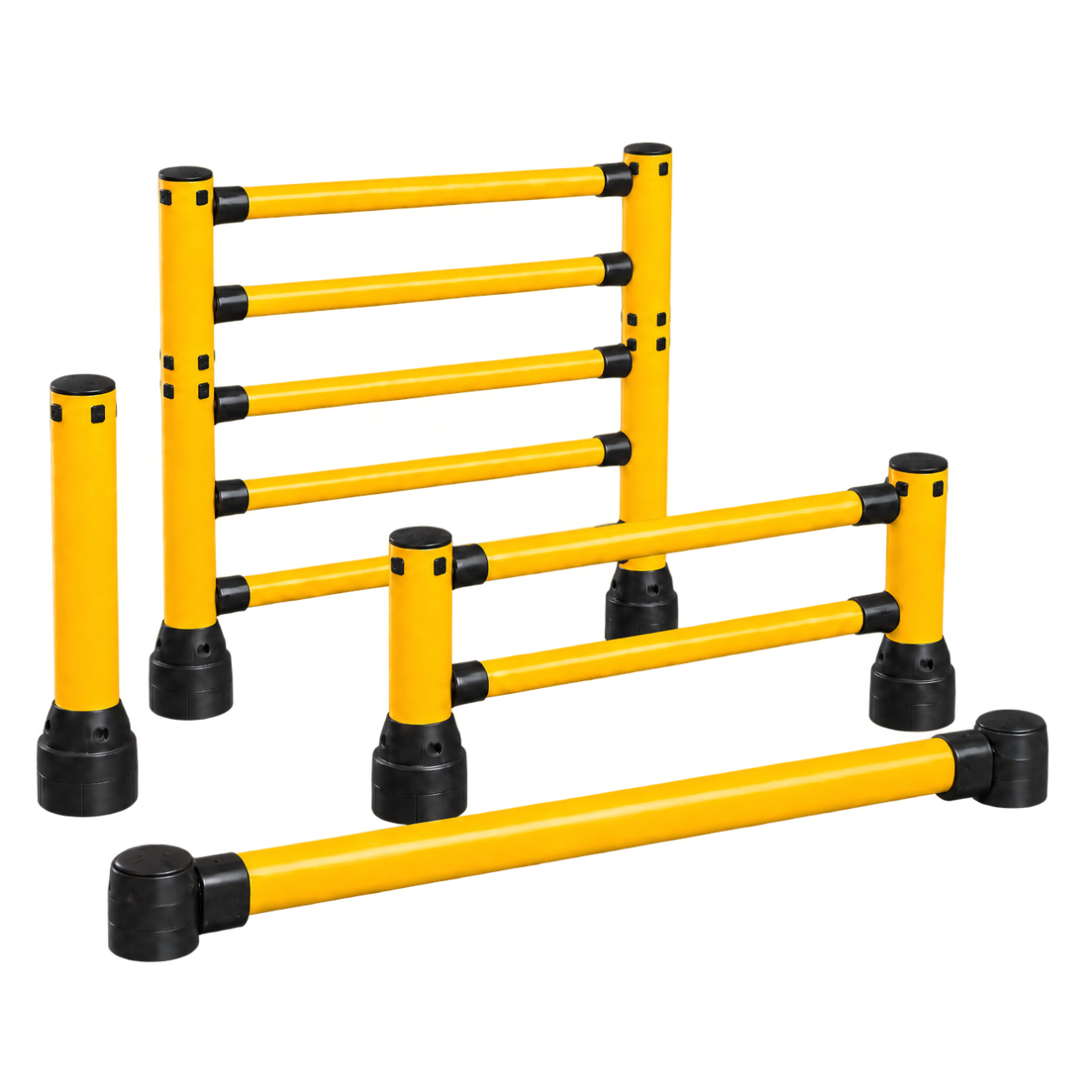
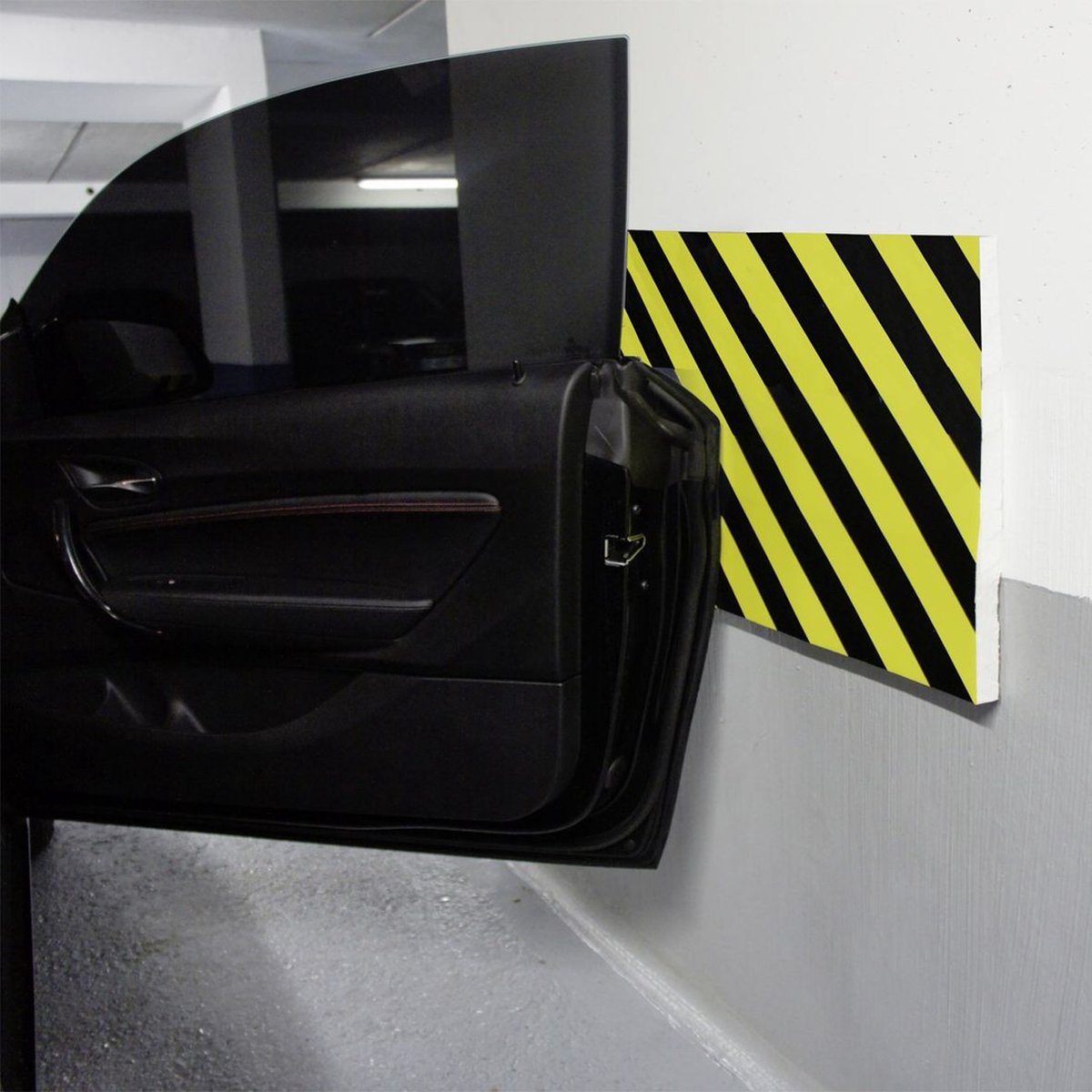
Warehouse managers and logistics managers use mirrors to inspect high storage racks and the undercarriages of forklifts. This reduces the risk of both accidents and damaged goods. To further secure the warehouse environment, sturdy impact protection is a natural complement that protects both staff and property.
Facility managers and plumbing and HVAC technicians often need compact, flexible mirrors, ideally with built-in lighting, to troubleshoot in dark and cramped spaces.
Security personnel and event organizers rely on larger, wheeled models that streamline security screening of thousands of vehicles at entry points.
Construction and civil engineering contractors use telescopic mirrors to inspect everything from bridges and culverts to other hard-to-reach structures.
Choosing a quality-assured, CE-marked inspection mirror is essential for it to be reliable and last over time. Not sure which model best suits your particular challenges? Contact us at Nordguard. Our experts will help you find a solution that protects your business.
Explore our range of protective products to create a complete safety solution.


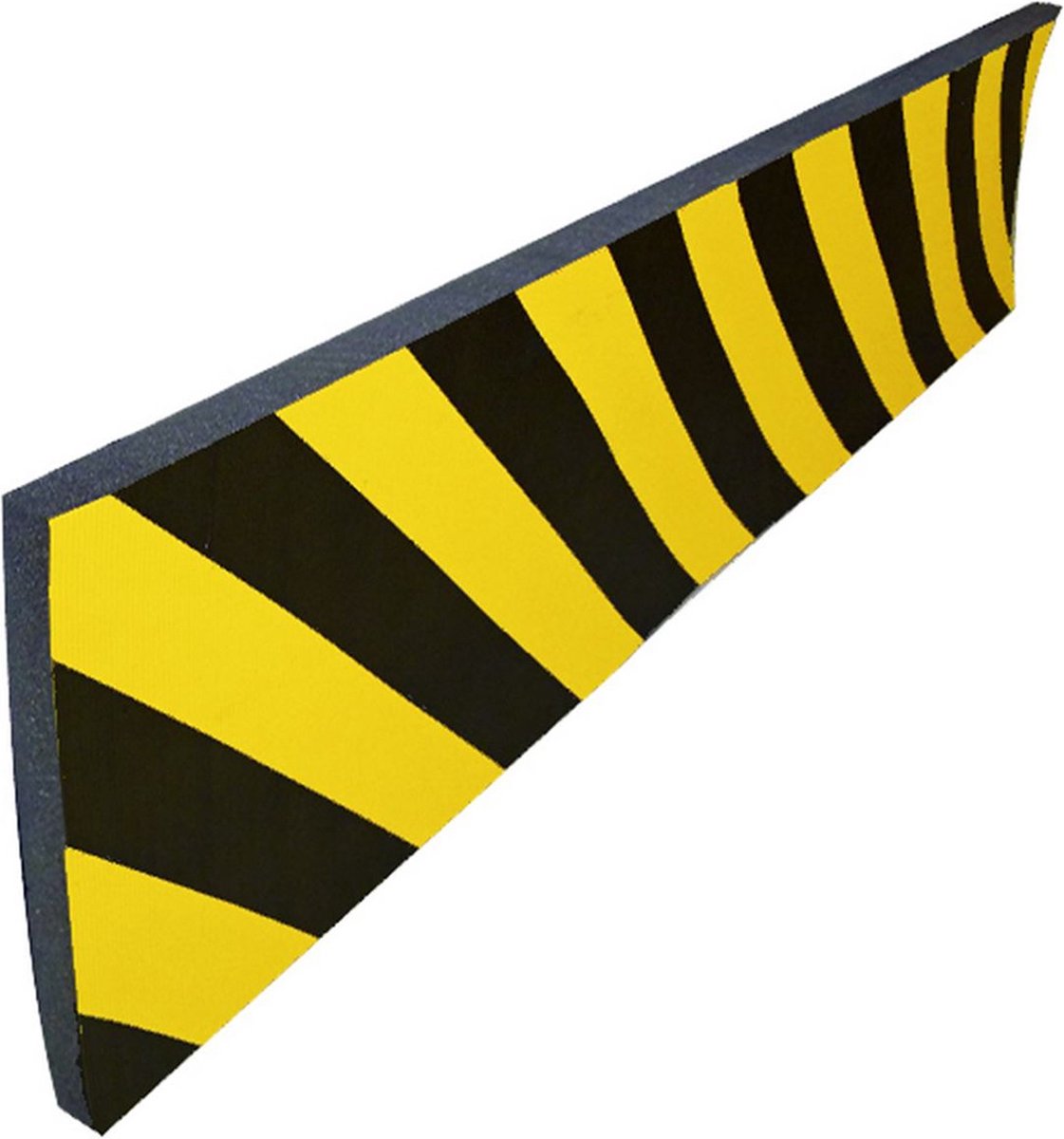
 Black/Yellow



Which inspection mirror is best for the job? A comparison
Choosing the right inspection mirror isn’t about finding a one-size-fits-all solution, but about matching the tool to the specific challenge you’re facing. Different work environments place completely different demands on reach, flexibility and function. The choice between a telescopic mirror and a wheeled one can be the difference between a quick, safe job and one that’s both cumbersome and time-consuming.
By understanding the unique strengths of each model, you can be sure you’re investing in a tool that actually solves problems instead of creating new ones. Let’s break down the most common types and see where they really shine.
Telescopic mirrors – when you need unbeatable reach
When you need to see places that are high up or far in, a telescopic inspection mirror is absolutely indispensable. It works as an extension of your own vision, so you don’t have to balance on ladders or come up with other unsafe workarounds.
Picture a contractor who needs to inspect load-bearing foundations under a bridge or check roof trusses in a tall warehouse building. With a telescopic arm that extends several meters, the job becomes not only safer but also significantly more efficient. The models are designed to be lightweight yet stable when fully extended, giving you a clear, steady view.
Wheeled mirrors for efficient vehicle inspection
For fast, ergonomic inspection of vehicle undercarriages, there’s no better solution than a mirror mounted on wheels. It’s no coincidence that this design is standard for security checks at airports, logistics facilities and event venues.
A logistics manager can easily roll the mirror under incoming trucks to quickly make sure no unauthorized objects are attached to the chassis. The wheels let the mirror glide smoothly over the ground, and the long handle reduces the physical strain on staff. This is a tool built for frequent use where both speed and accuracy are critical. For a complete safety solution, these mirrors can be combined with other essential tools – read more in our guide to industrial mirrors.
Flexible mirrors for really tight spaces
In environments such as engine compartments, plumbing shafts or inside complex machinery, space is often extremely limited. This is where handheld models with flexible or bendable arms really come into their own. They let you angle and turn the mirror to see around corners and behind obstacles where a rigid arm could never reach.
These models are often smaller and more compact, making them perfect for detailed inspections. In Swedish industry, this type of mirror plays a key role in quality control; as many as 78% of weld inspections use models with a bendable joint and magnetic base. For Nordguard’s customers in logistics, these tools reduce downtime by an average of 27%.
Many modern mirrors are more than just a reflective surface. Features like built-in LED lighting turn dark nooks into fully visible areas, while a magnetic base can be used both to attach the mirror and to pick up dropped metal objects.
To give you a quick overview and help you find the right tool, we’ve put together a comparison table.
Inspection mirror comparison
This table gives you a clear overview to help you choose the right mirror for your specific situation.
| Mirror type | Primary application | Key features | Ideal for |
|---|---|---|---|
| Telescopic | Inspections at height, long distances | Long retractable arm, low weight | Contractors, property managers |
| Wheeled | Vehicle undercarriages, security checks | Wheels, long handle, large mirror surface | Security personnel, logistics managers |
| Handheld/Flexible | Tight spaces, detailed inspection | Bendable arm, compact size, LED | Mechanics, plumbing and HVAC technicians |
Understanding these differences is the first step toward a smarter, safer way of working. Still unsure which model best meets your requirements? Don’t hesitate to contact our experts at Nordguard for personalized advice. We’ll help you find the perfect solution.
How to choose the right inspection mirror – a step-by-step guide
Buying the right tool from the start is one of the smartest investments you can make. A poorly chosen inspection mirror quickly ends up gathering dust in the storeroom, but a model tailored to your needs becomes a natural part of everyday work.
In this guide, we break the choice down into simple, logical steps. The goal is for you to feel confident in your decision and know exactly what suits your business.
Step 1: What exactly will you be looking at?
It all starts with a simple question: what is the primary purpose of the mirror? The answer drives almost every other choice you’ll make, from size and shape to material.
Consider the following:
- What will you be inspecting? Large surfaces, like the undercarriage of a truck, or small details deep inside a machine?
- How often will the mirror be used? Daily use places completely different demands on ergonomics and durability than occasional checks.
- What are you looking for? Is it about detecting major issues like leaks and damage, or do you need to see tiny cracks that require perfect optical clarity?
Once you’ve answered these questions, you’ll have a clear list of requirements that makes the rest of the process much easier.
Step 2: Analyze your work environment
An inspection mirror that’s perfect in a clean workshop can be completely useless on a dusty construction site or in a damp shaft. Every environment has its own demands.
Think through these factors:
- Lighting conditions: Do you often work in dark or poorly lit spaces? Then a model with built-in LED lighting is practically a must.
- Space: Do you have plenty of room, or do you need to maneuver through narrow, hard-to-reach passages? That determines the length and flexibility the arm needs to have.
- Stresses: Is there a risk of impacts, moisture, chemicals or extreme temperatures? The material of both the mirror and the handle must be able to withstand the environment it will be used in.
A quick analysis of the work environment helps you choose a mirror that not only works well but also lasts a long time.
Step 3: Choose the right material and size
Now that you know what you’ll be inspecting and where, it’s time to look at the mirror’s physical properties. The two most common materials for the mirror surface itself are acrylic and glass, and they have very different advantages.
Acrylic is extremely impact-resistant, making it the obvious choice for tough environments like construction sites and warehouses. Glass, on the other hand, offers unbeatable optical clarity and is more scratch-resistant, which is perfect for precision work.
The size of the mirror and the length of the arm are just as important. A small, compact mirror is excellent for checking engines or pipe systems. If, however, you need to inspect high storage racks or the underside of a bridge, you’ll need a telescopic arm with several meters of reach.
This decision tree gives a good visual overview of which type of tool suits various common inspection locations.
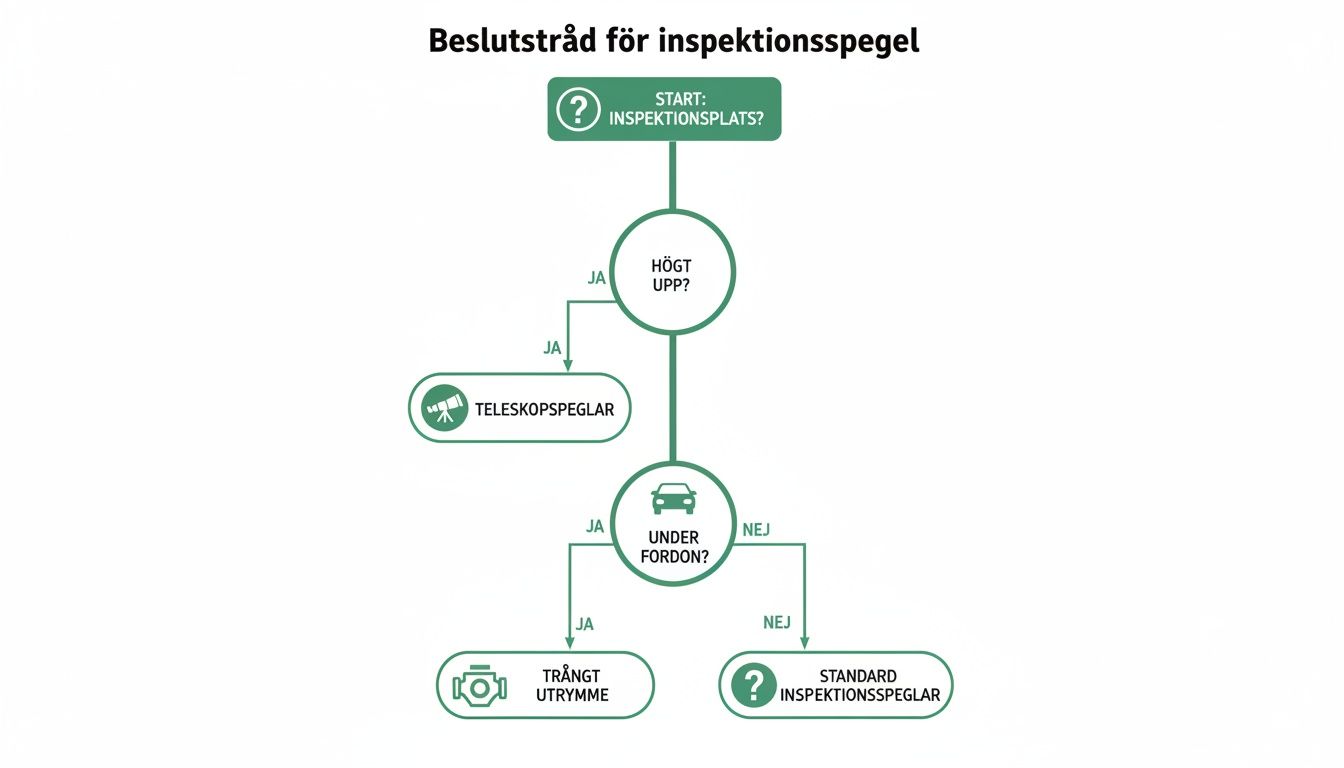
As the image shows, the inspection location – whether it’s high up, under a vehicle or in a tight space – points directly to a specific type of inspection mirror.
Step 4: Don’t forget ergonomics and safety
Ergonomics is easy to overlook, but for anyone who uses the mirror often, it’s crucial. A poorly designed inspection mirror can lead to unnecessary strain injuries. So look for lightweight materials, easy-grip handles and a design that feels well balanced.
Choosing the right tool is also a safety issue. According to statistics from the Swedish Work Environment Authority (Arbetsmiljöverket), 28% of more than 45,000 workplace inspections involved checking hard-to-reach areas. In addition, figures from the Swedish Construction Federation (Byggföretagen) show that 62% of groundwork contractors use telescopic inspection mirrors, which can reduce the risk of accidents by as much as 35%. You can read more about the research behind workplace inspections and safety.
Want a broader picture of how different mirrors can improve safety in your workplace? Feel free to explore our full range of observation mirrors.
Still finding it hard to choose? Our team at Nordguard has extensive experience and is happy to provide personalized advice. Contact us, and we’ll find the perfect solution for your specific challenges.
Practical applications from warehousing and logistics to the public sector
Theory is all well and good, but it’s in everyday work that a tool’s real value shows. To give a concrete picture of how an inspection mirror turns problems into practical solutions, let’s look at a few scenarios straight from our customers’ work environments. Each example highlights a specific challenge and shows how the right equipment makes the job both safer and more cost-effective.
An inspection mirror is more than just a mirror; it’s an extension of your eyes, an instrument that enables preventive maintenance and thorough safety checks. From busy warehouse floors to cramped building shafts, it solves problems that would otherwise require significantly more time, resources and sometimes even risky work steps.
Warehousing and logistics – prevent accidents and downtime
In a bustling logistics terminal, time is money and safety is everything. A warehouse manager faces two constant challenges: making sure tall storage racks are undamaged and that the forklift fleet is in top shape. Having to climb up to inspect a beam eight meters off the ground is both inefficient and dangerous.
Instead, the manager uses a lightweight telescopic inspection mirror. In just a few minutes, entire rows of racking can be checked from floor level. Small dents from collisions or signs of material fatigue are detected early, long before a rack risks collapsing and causing a disaster.
At the same time, a wheeled mirror is used for the daily inspection round of the forklifts. Instead of each operator having to crawl on the floor looking for leaks or damage under the vehicle, the mirror is quickly rolled under each machine. This small step, which takes less than a minute per forklift, can detect an oil leak before it leads to a costly engine failure and unplanned downtime.
By making the inspection mirror part of the daily routine, you move from reactive maintenance to a proactive safety culture. That reduces both the risk of accidents and financial losses.
Municipal operations – more efficient infrastructure inspection
For a contractor working on behalf of a municipality, infrastructure maintenance is a core task. Inspecting hard-to-reach places such as road culverts, bridge abutments and utility tunnels has traditionally been time-consuming and required special equipment or even road closures.
With a sturdy telescopic mirror, the situation changes completely. The contractor can now stand safely on the road shoulder and extend the mirror into a culvert to check for blockages or cracks. The same principle applies when inspecting the undersides of bridges; instead of ordering an expensive aerial work platform, an initial assessment can be made quickly and easily from the ground. This not only saves large sums in rental costs but also minimizes traffic disruption.
Property management – precision in plumbing and ventilation
In property management, the worst problems are often the hidden ones. A facility manager receives an alert about a suspected water leak in an apartment. Tearing open walls on a hunch is both expensive and frustrating for residents.
This is where a compact, handheld inspection mirror with a bendable arm and built-in LED lighting becomes invaluable. Through a small access hatch, the technician can insert the mirror, light up the area and see exactly where the leak is. That means only a small area needs to be opened for repair, dramatically reducing the scope, time and cost of the work. The same tool is perfect for checking ventilation ducts for dirt and obstructions, ensuring a healthy indoor environment.
Security checks – fast and thorough screening
At events, ports and facilities with high security requirements, vehicle screening is both critical and time-consuming. Every second counts, but thoroughness can never be compromised.
Security personnel use a large, wheeled inspection mirror to quickly and efficiently search the undercarriage of cars and trucks. The large mirror surface provides a complete overview in a single sweeping motion. This makes it possible to quickly identify foreign objects or tampered parts without unnecessarily slowing the flow of traffic. It’s a simple, non-invasive and extremely effective way to significantly raise the level of security.
Each scenario shows how a well-chosen inspection mirror solves a specific, real-world problem. If you’re facing similar challenges and want help finding the right solution, contact our experts at Nordguard. We’ll help you secure your operations.
Explore our range of mirrors to improve both safety and visibility in your environment.






How to maintain your inspection mirror for maximum service life
An inspection mirror isn’t a disposable product but a long-term investment in both safety and efficiency. But just like any professional tool, it needs a little care to perform at its best, year after year. By spending a few minutes on simple maintenance, you make sure the mirror always gives you a crystal-clear, reliable view when it really matters.
A well-maintained tool is one you can trust. Dust, dirt or a sticking telescopic arm can be the difference between finding a critical fault in time and missing it entirely. That’s why maintenance is a natural part of a proactive safety culture.
Cleaning the mirror surface – do it right
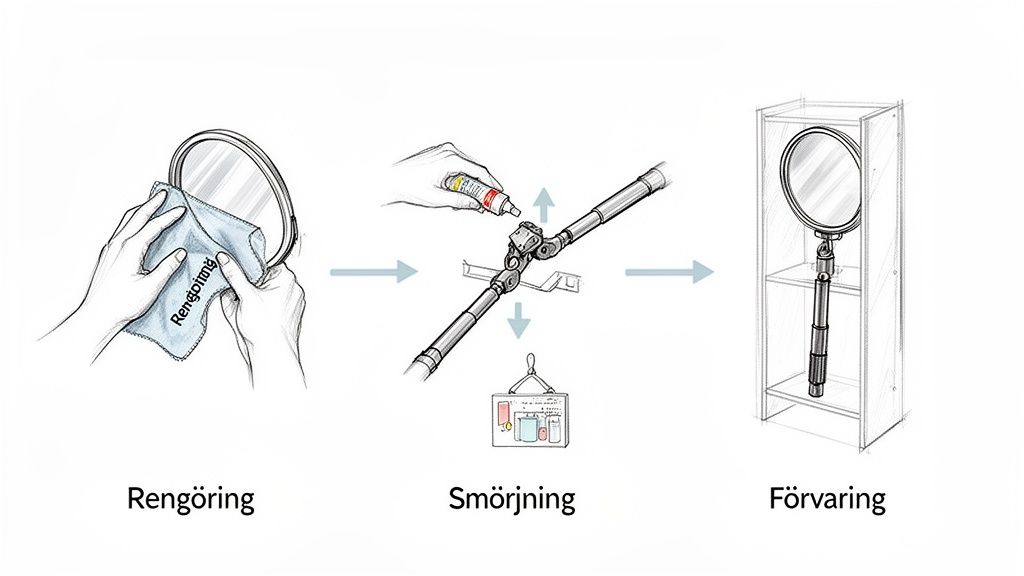
The mirror surface is the heart of the tool, and how you clean it depends entirely on the material. If you use the wrong method, you risk permanent scratches that ruin visibility for good.
- Acrylic mirrors: These are highly impact-resistant but also prone to scratching. Never use paper towels or harsh chemicals. Instead, spray a mild soap solution or a dedicated plastic cleaner on the surface and wipe gently with a soft, clean microfiber cloth.
- Glass mirrors: Glass is more scratch-resistant but can still be damaged by grit and dirt. Blow or brush away loose dust first. After that, you can use ordinary glass cleaner and wipe dry with a clean, lint-free cloth to avoid annoying streaks.
Care for the moving parts and store it smartly
An inspection mirror is more than just the mirror. Telescopic arms, wheels and joints also need a little attention to work smoothly and safely.
A telescopic arm that gets stuck is frustrating and can be a safety risk. Make sure to wipe the arm regularly to remove dirt that can work its way in between the sections. If it starts to move stiffly, apply a little silicone spray to a cloth and run it along the arm so it slides easily again. Also remember to check that the wheels on wheeled models are clean and spin freely.
Storage is just as important as cleaning. When you’re not using the mirror, place it in a protective case or somewhere it won’t be exposed to impacts, scratches or excessive moisture. This not only protects the mirror but also ensures it’s ready to use right away next time.
Why CE marking is your guarantee of quality
Beyond practical maintenance, choosing a quality-assured product is absolutely critical for service life and safety. The CE marking on an inspection mirror isn’t just a logo – it’s an assurance that the product meets the EU’s strict health, safety and environmental requirements. For public procurement officers and companies with high safety requirements, this is an absolute must.
Choosing a CE-marked product from Nordguard means you’re investing in a tool that is tested and approved for professional use. It gives you peace of mind knowing your equipment is up to the task when you need it most. To make it even more useful in dark spaces, you can add a handy clip-on inspection light that attaches easily to the arm.
Do you have questions about maintenance or need help choosing the right CE-marked inspection mirror? Contact us at Nordguard and our experts will help you find a durable, safe solution that suits you.
Frequently asked questions about inspection mirrors
Here we’ve gathered the most common questions that come up when it’s time to choose an inspection mirror. Our goal is to give you straightforward, clear answers so you can feel confident in your decision.
Which material is best, acrylic or glass?
The simple answer: it depends entirely on where you’ll use it. Acrylic is incredibly impact-resistant and lighter in weight, making it the clear winner in tough environments. Think construction sites, warehouses and other places where knocks and bumps are part of everyday life.
Glass, on the other hand, offers unbeatable optical clarity and resists scratches much better. That makes glass the perfect choice for detailed inspections in more controlled environments, such as inside an auto repair shop or for thorough quality control on a production line.
Do I really need a model with lighting?
If you often work in dark, hard-to-reach spaces, the answer is a resounding yes. Built-in LED lighting is worth its weight in gold when you need to peek into engine compartments, down plumbing shafts or under a vehicle in a poorly lit garage.
You don’t have to fumble with a separate flashlight, you get a hand free, and you can be sure you see every detail. A clip-on inspection light is a perfect accessory that solves this problem conveniently.
Adding lighting to the mirror is a small extra cost that pays for itself many times over – both in time saved and improved precision in dark environments.
How long a telescopic arm should I choose?
The length of the arm depends entirely on what you most often need to reach. For most inspections of vehicles and machinery at ground level, an arm that extends to 1–2 meters is perfectly adequate.
But if the job requires you to inspect things at height – such as roofs, ventilation systems or the tops of storage racks – you should look at a model that reaches 3–5 meters or more. Base your choice on the trickiest places you regularly need to access.
Can an inspection mirror be used for security checks?
Absolutely. The wheeled mirrors are in fact specially designed for exactly this purpose. They enable fast, safe and ergonomic inspection of vehicle undercarriages.
This is a standard tool for security personnel worldwide at entry checkpoints for everything from industrial facilities and events to other high-security areas. If you’re unsure which model suits your facility, don’t hesitate to ask us.
Ready to find the right inspection mirror, or do you have more questions? Our team at Nordguard has the hands-on experience needed to help you navigate all the options. We’ll make sure you get the right tool to make the invisible visible.
Ready to take the next step?
We help you develop solutions tailored to your needs. At Nordguard, we strive to make the ordering process as smooth as possible. By offering support and guidance throughout the entire purchasing experience, we make sure you feel confident and satisfied with your choice of protection products.+46 10 153 90 50
[email protected]