
A Practical Guide to Pipe Protectors for Industry and Warehouses
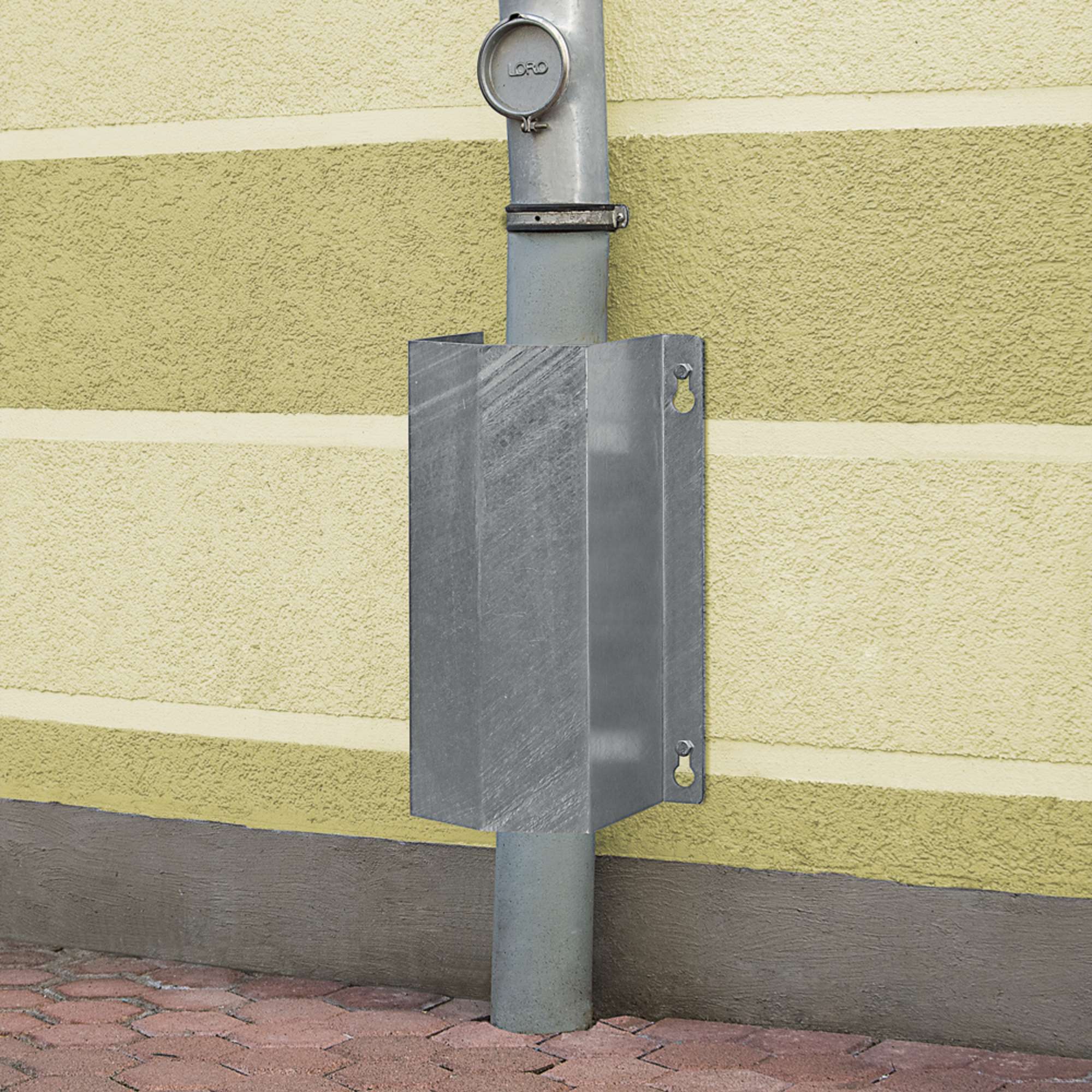
Simply put, a pipe protector is a heavy-duty barrier installed to physically protect exposed piping systems. Most are made of steel or some form of impact-resistant plastic and act as a shield against collisions and impacts.
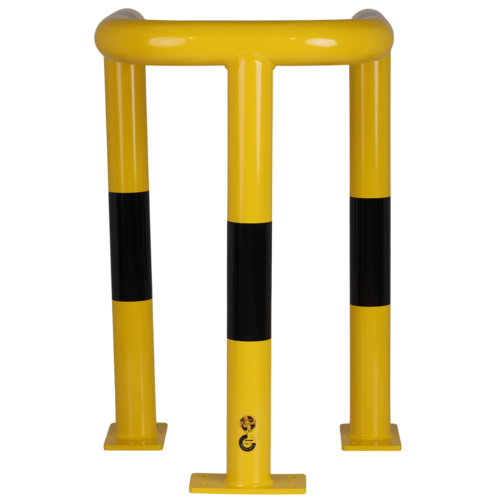
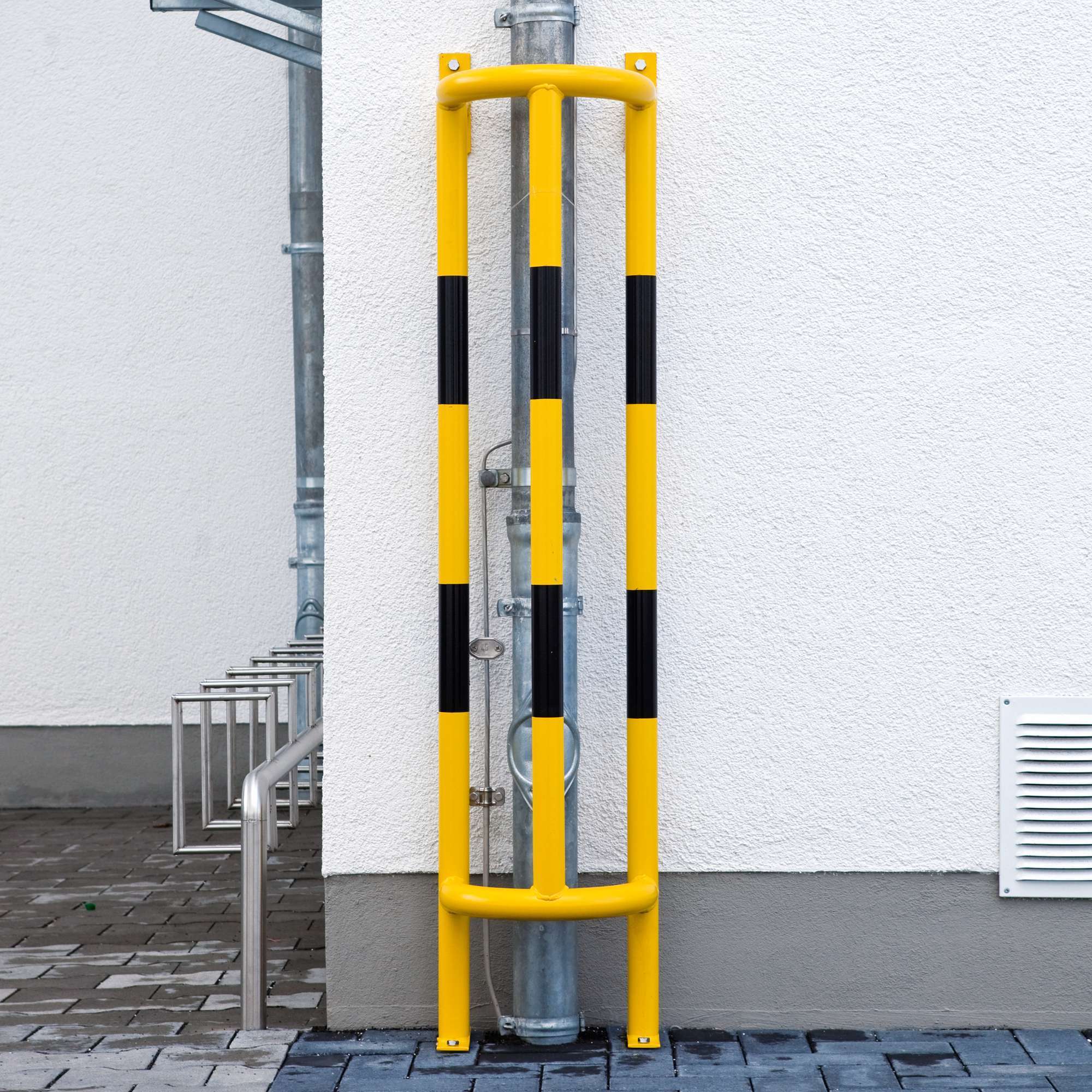
Think of it as low-cost insurance against the expensive, time-consuming downtime that can easily result when a forklift, truck or other vehicle accidentally hits critical infrastructure. Our impact protection for pipes is one example of such a robust solution.
Why are pipe protectors such an important investment?
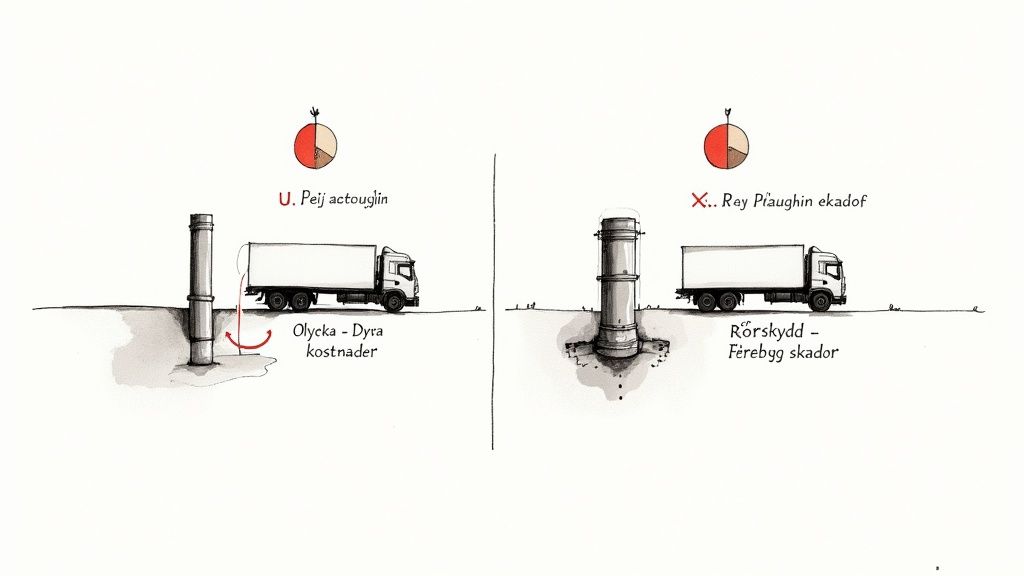
Picture a scenario that happens somewhere in Sweden every day: a forklift driver is in a bit too much of a hurry at the loading dock and backs into a downspout. What first looks like a small dent quickly turns into water damage seeping into the facade. Suddenly you are facing unplanned downtime, cleanup costs and expensive repairs.
This is a completely unnecessary risk that many businesses take, often without even thinking about it. A pipe protector is so much more than just a piece of metal. It is a small but smart investment that secures the most vulnerable points of your facility. Downspouts, water lines, gas pipes or cable conduits – they are all critical parts of the building’s circulatory system. A single impact can set off a whole chain reaction of problems.
The real cost of taking chances
Viewing impact protection for pipes as a pure expense rather than an investment is short-term thinking that can become incredibly costly. The actual costs of an accident are almost always far higher than just repairing the pipe itself.
Here are some of the consequences you avoid with the right protection in place:
- Direct repair costs: Replacing a damaged pipe and restoring a wall or fixing electrical faults can quickly become expensive and require several different contractors.
- Production and operational downtime: The biggest cost by far is often lost time. A production stoppage or a closed loading dock means lost revenue for every hour that passes.
- Consequential damage: A water pipe that gets hit can cause extensive water damage to stored goods, machinery and the building itself.
- Safety risks: Damage to a pipe carrying gas or chemicals is a direct hazard to staff and, in the worst case, can lead to very serious accidents.
Proactively securing your facility is not just about following regulations. It is a fundamental part of running a responsible and efficient business. The small investment in a pipe protector minimizes the risk of unforeseen expenses that can be hundreds of times higher.
Understanding which rules apply is another important piece of the puzzle. Feel free to read our guide to regulations and standards for impact protection to get a better grasp of the requirements.
By installing the right type of pipe protector, you not only protect your property but, above all, your business’s ability to keep running without interruption. If you are unsure where the risks are in your facility, or which type of protection is the best fit, don’t hesitate to get in touch. Our experts will be happy to help you with a risk assessment and develop a solution that protects your business in the long run.
 Yellow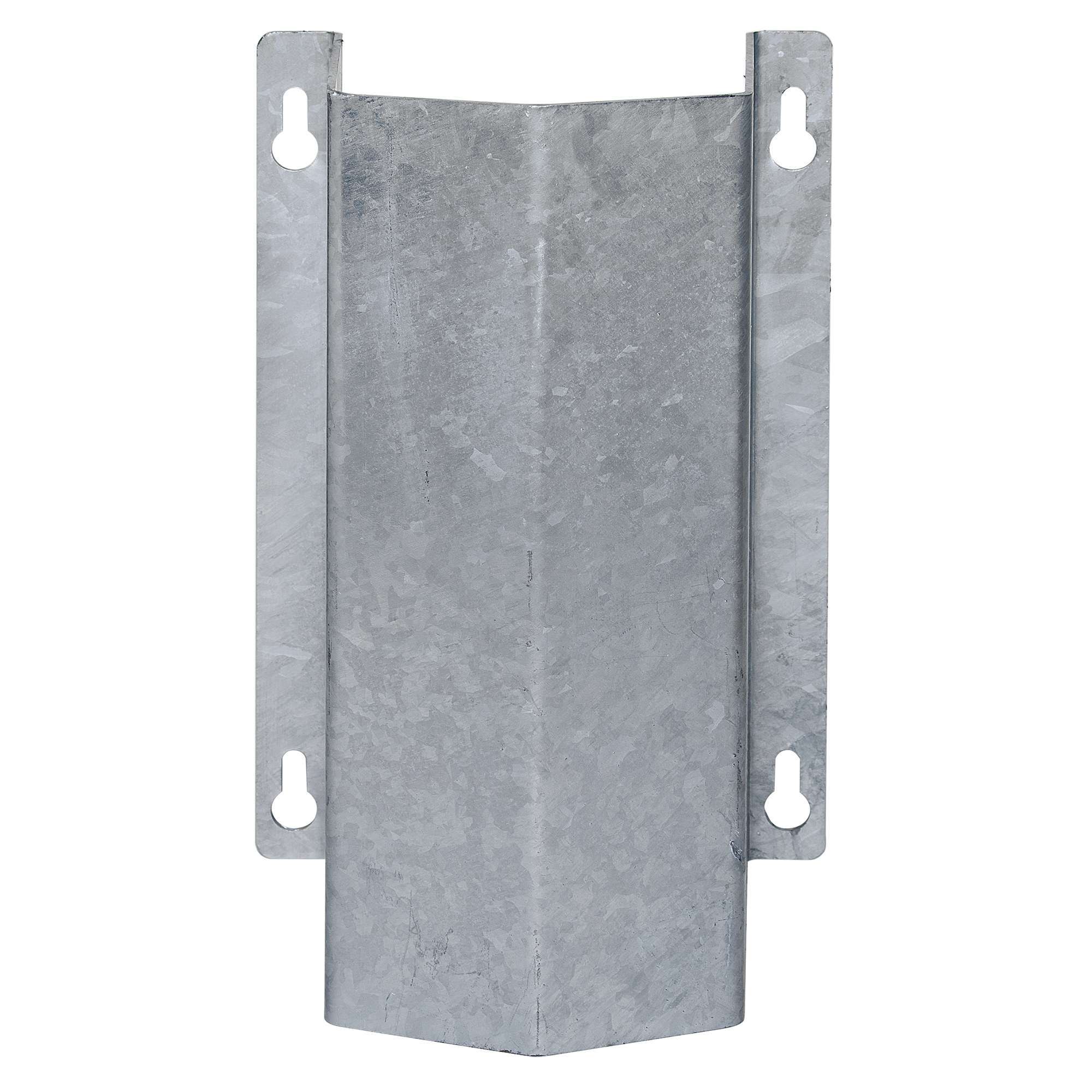
 Silver gray
 Yellow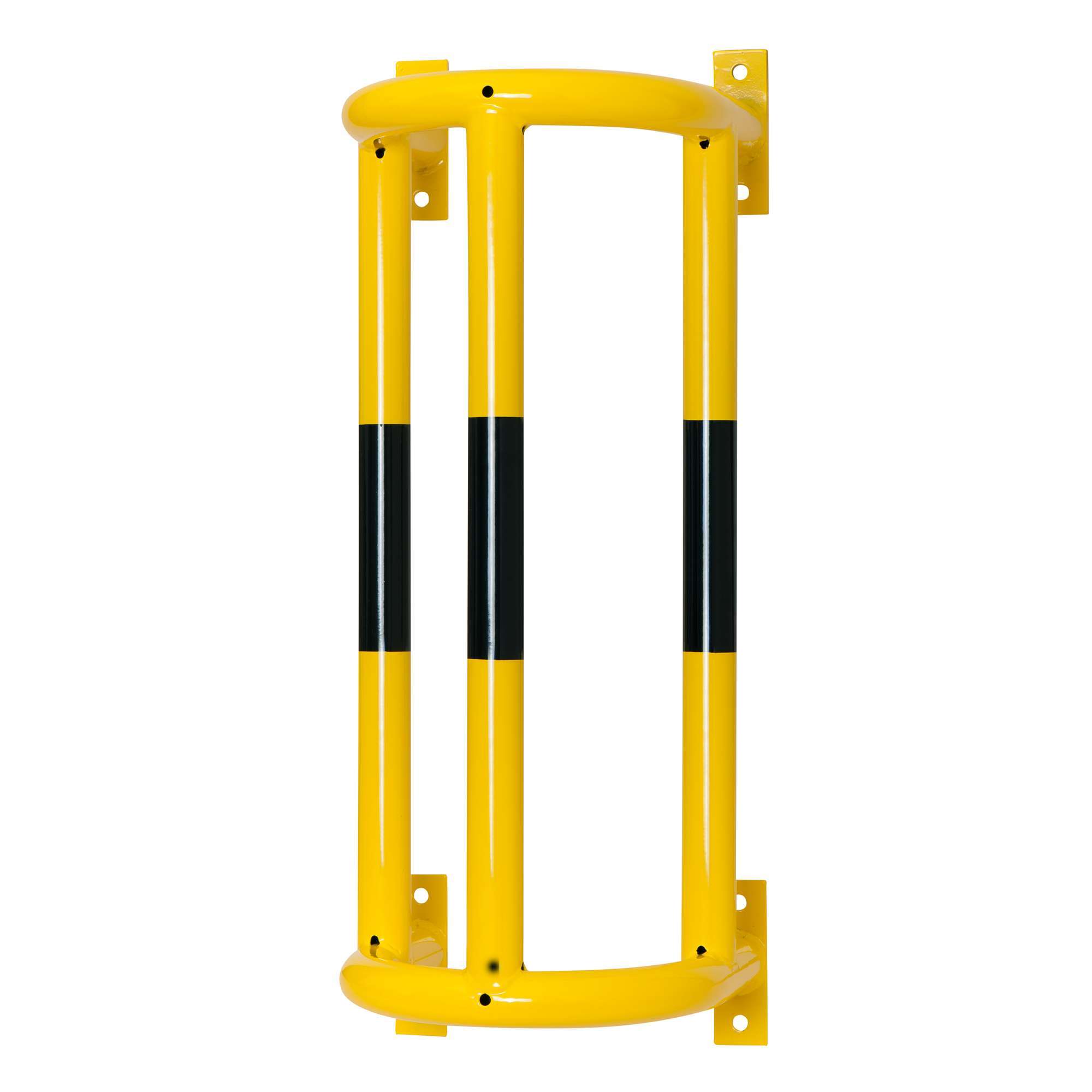
 Yellow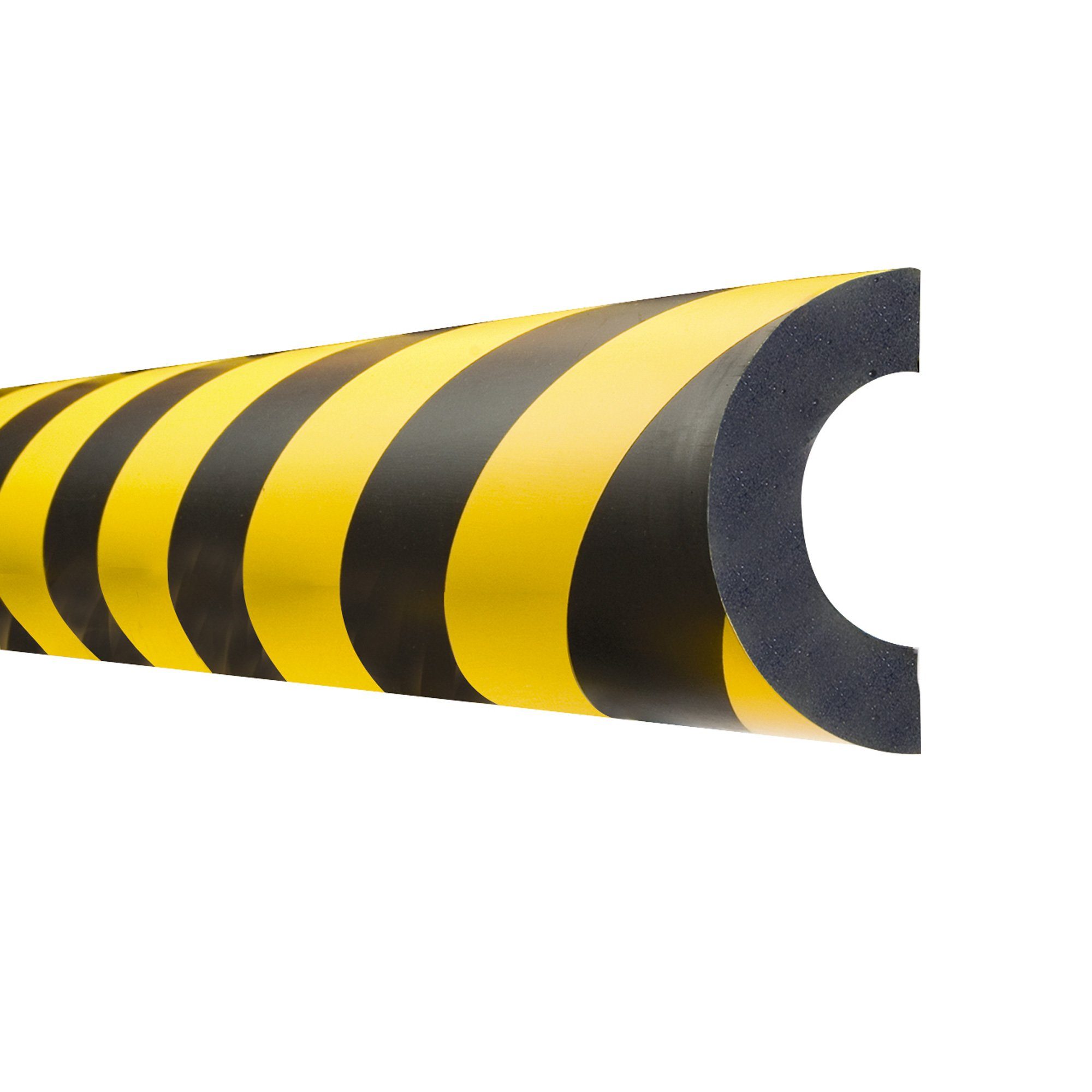
 Black/Yellow
Understanding the differences between types of pipe protectors
It’s easy to think that a pipe protector is just a piece of steel, but in reality it’s much more complex than that. The market is full of different materials and designs, each tailored to specific hazards and environments. Understanding these differences is essential for your investment to deliver the best possible protection and value for money.
Basically, it comes down to matching the protector’s features to the risks in your particular facility. Our standard range, such as our impact protection for pipes and the larger impact protection, covers most needs.
Choosing the material is the first step
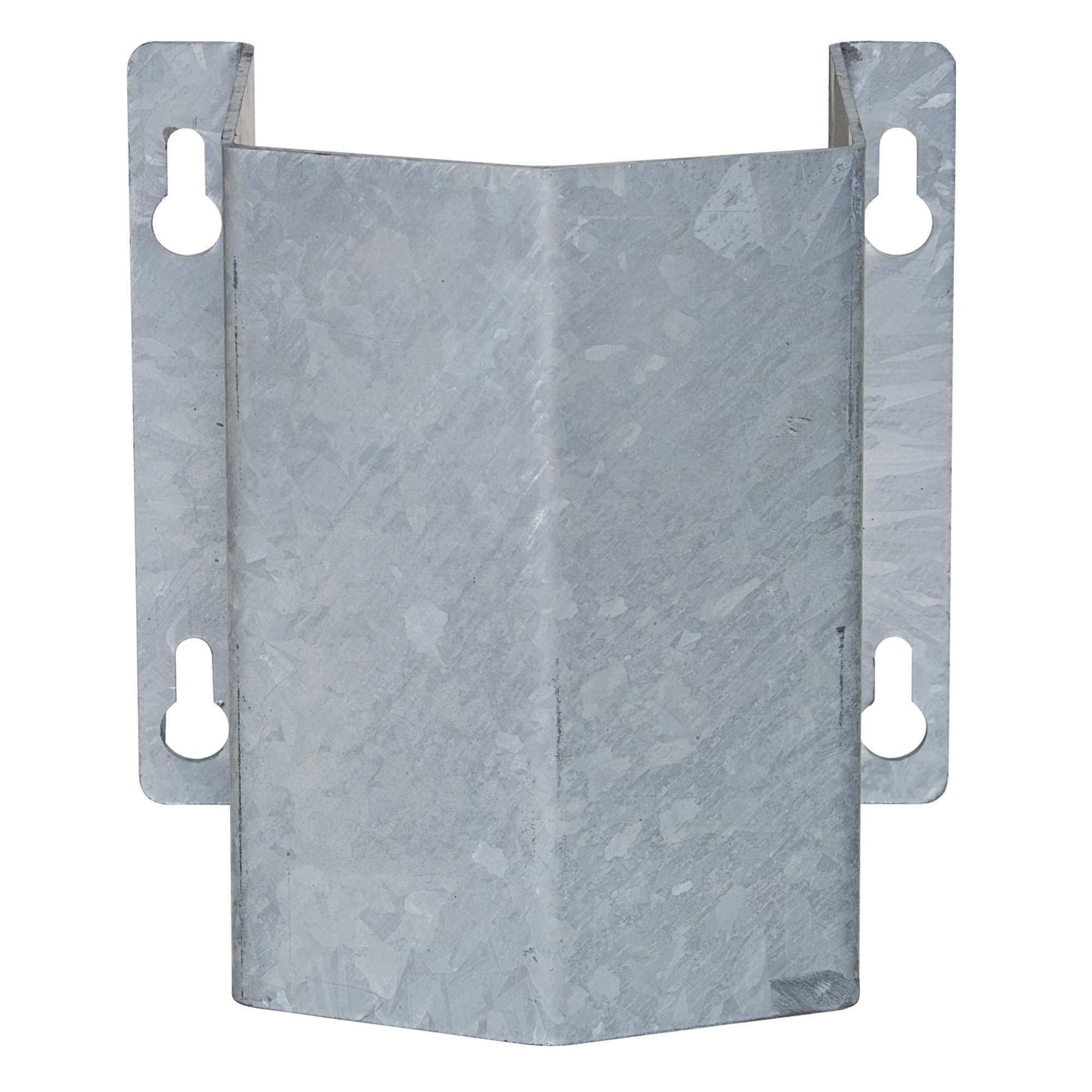
By far the most common and robust material for pipe protectors is steel. Picture a heavy-duty, U-shaped pipe protector in hot-dip galvanized steel. It acts as an unshakable bodyguard for a downspout at a loading dock, built to absorb and withstand heavy hits from trucks and forklifts. Its primary job is to stop the vehicle and protect whatever is behind it.
Another option is pipe protectors in stainless steel. They offer the same strength as regular steel but provide superior corrosion protection. That makes them perfect for environments with strict hygiene requirements, such as the food industry, or outdoors where road salt and moisture constantly attack metal.
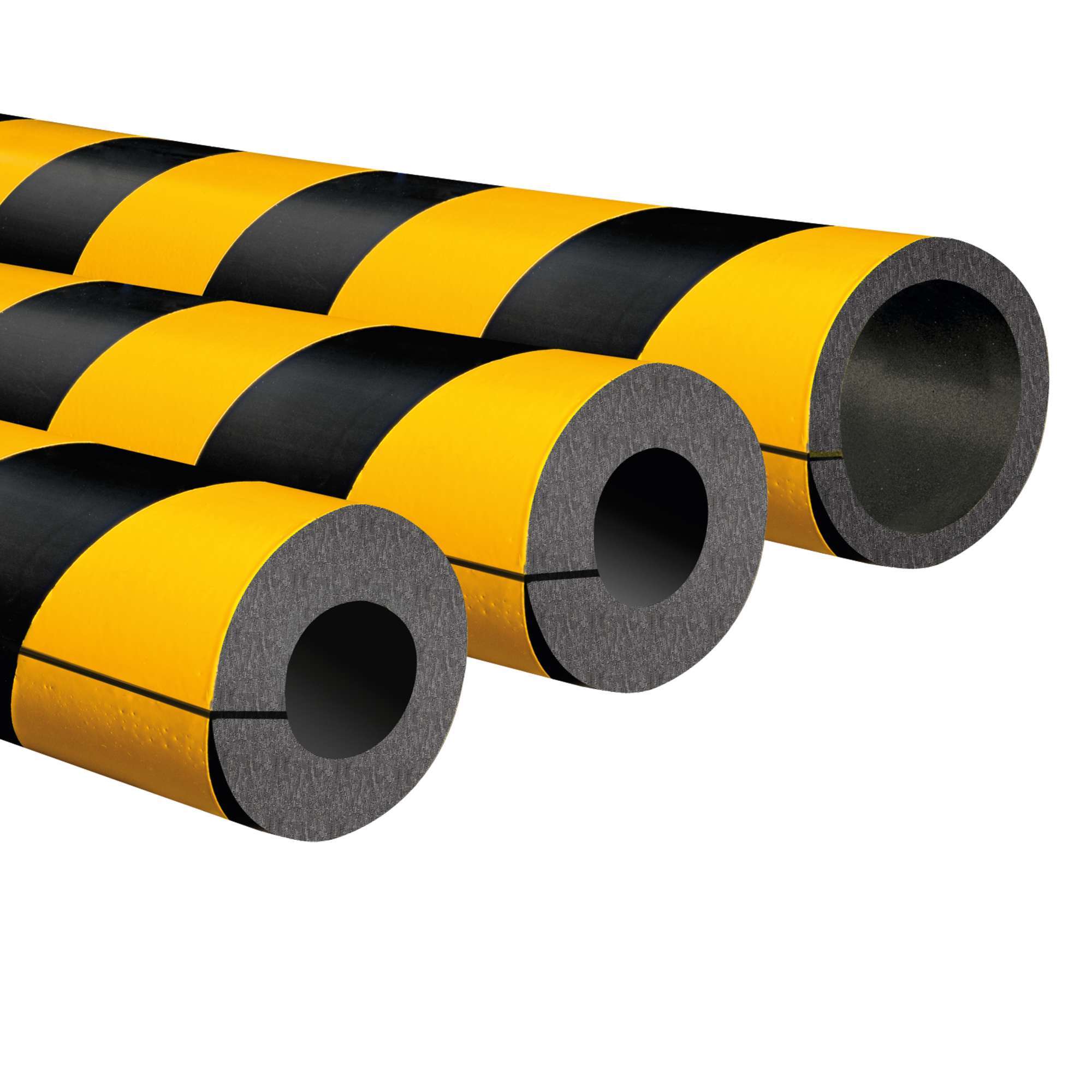
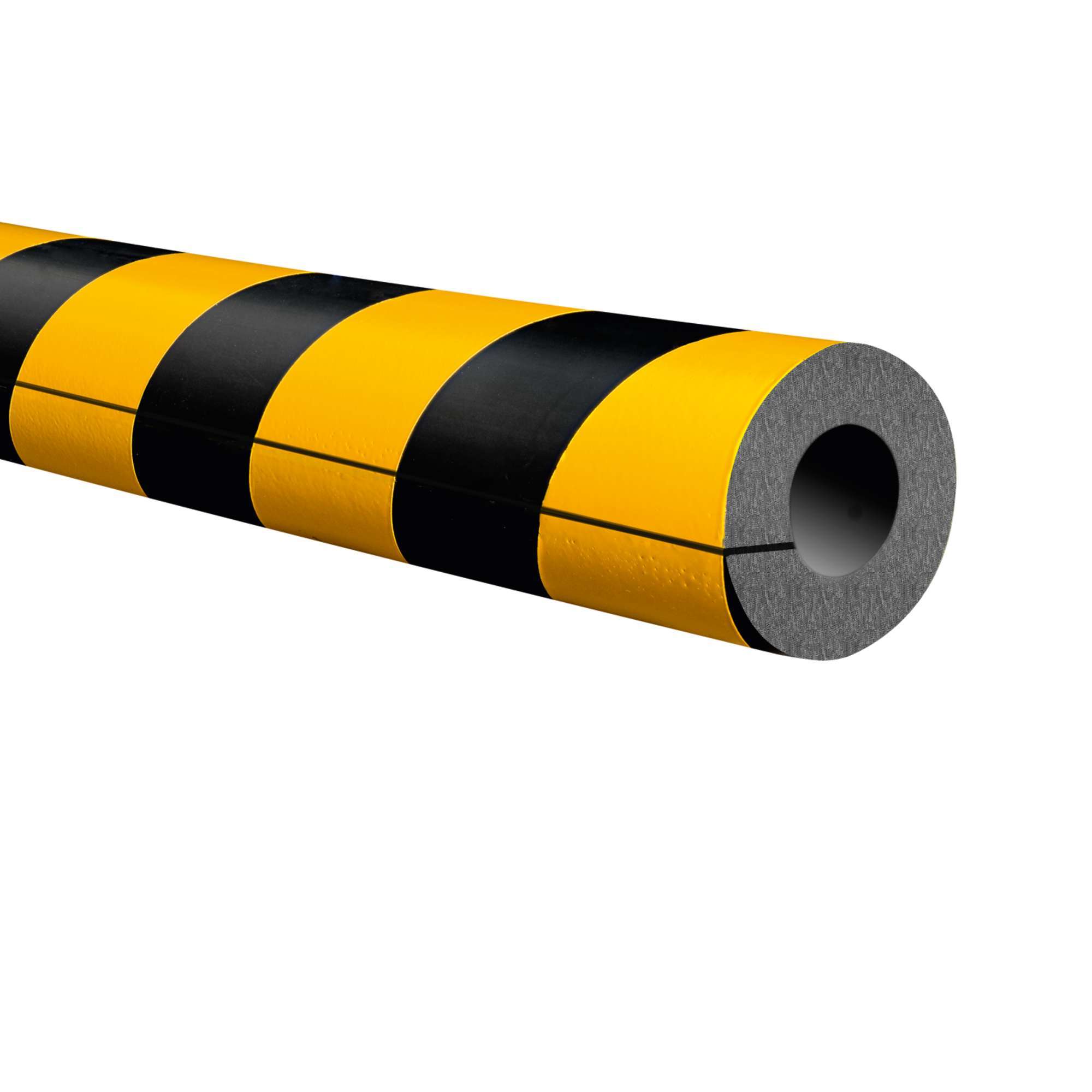
At the other end of the spectrum are flexible pipe protectors, usually made of impact-resistant plastic such as polyethylene. These act more like a nimble judo practitioner in a narrow warehouse aisle. Instead of simply stopping the force, they absorb the energy from lighter collisions – from a pallet jack, for example – and then return to their original shape. This protects both the pipe and the vehicle from damage in minor incidents. For a more in-depth look, we recommend our guide to choosing the right impact protection for warehouse and logistics buildings.
Comparison of materials for pipe protectors
To make your choice easier, we have put together a quick overview to help you choose the right material based on the environment and type of hazard.
| Material | Impact resistance | Corrosion resistance | Ideal environment | Cost level |
|---|---|---|---|---|
| Hot-dip galvanized steel | Very high | Good | Outdoor, industrial, loading docks | Medium |
| Stainless steel | Very high | Excellent | Food industry, chemical environments | High |
| Flexible plastic (Polymer) | Medium | Excellent | Warehouse aisles, tight spaces | Medium |
The table is a good rule of thumb, but remember that every facility is unique. The right choice always depends on an analysis of your specific conditions.
Shapes and mounting methods
Besides the material, the protector’s shape and how it is anchored play a huge role. The most common shapes are U-shaped protective hoops and L-shaped corner guards.
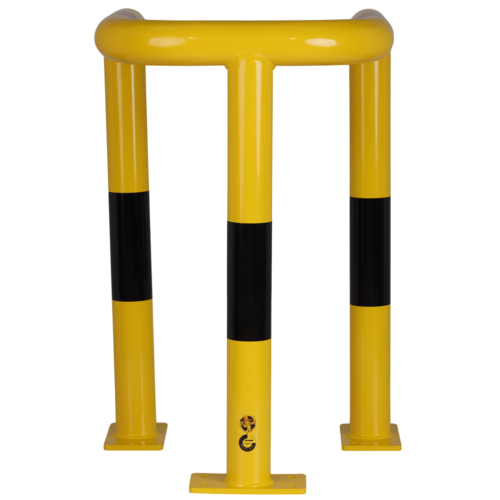
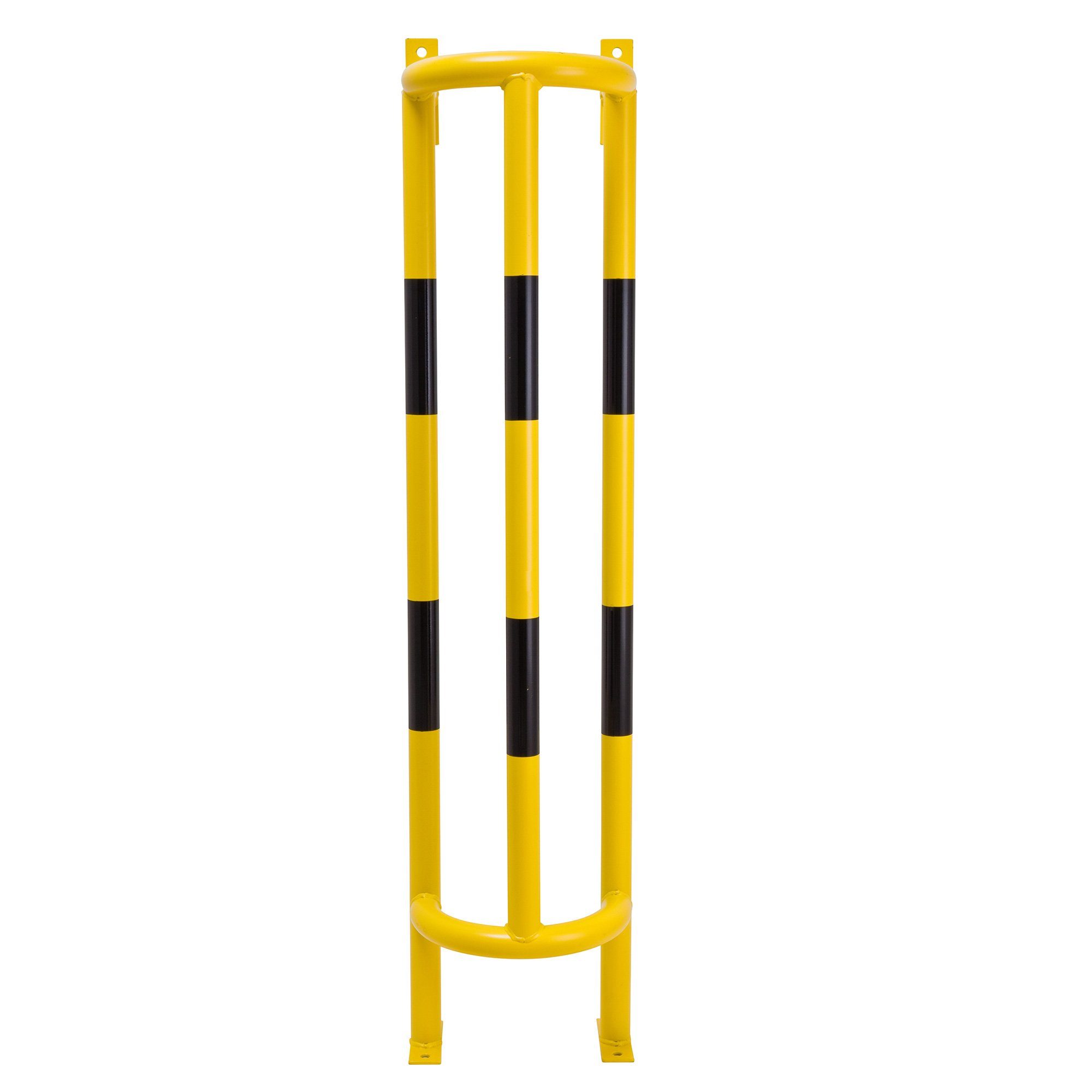
- U-shaped pipe protectors: Provide full coverage from three sides. Perfect for freestanding pipes such as downspouts or lines running along a wall.
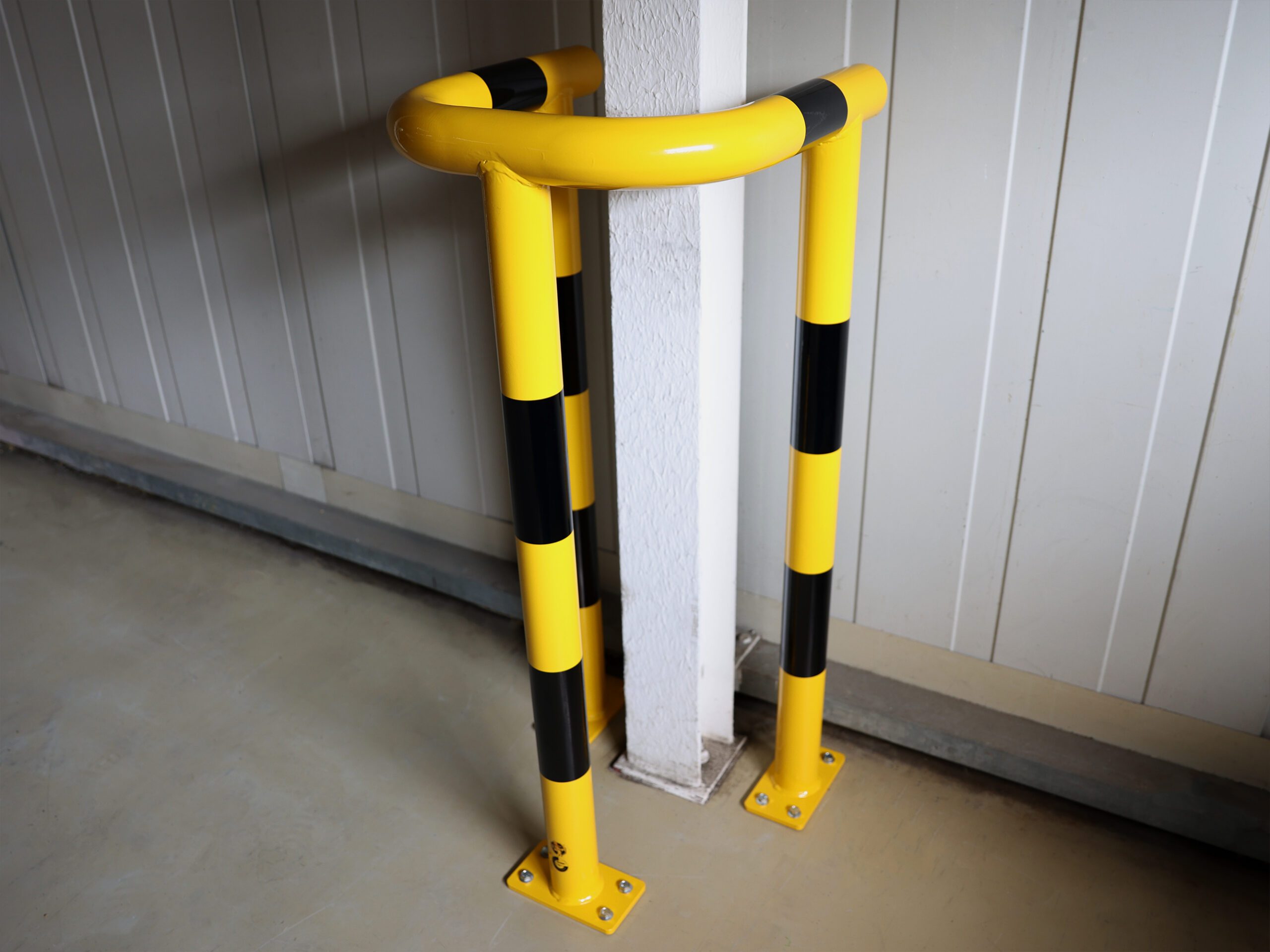
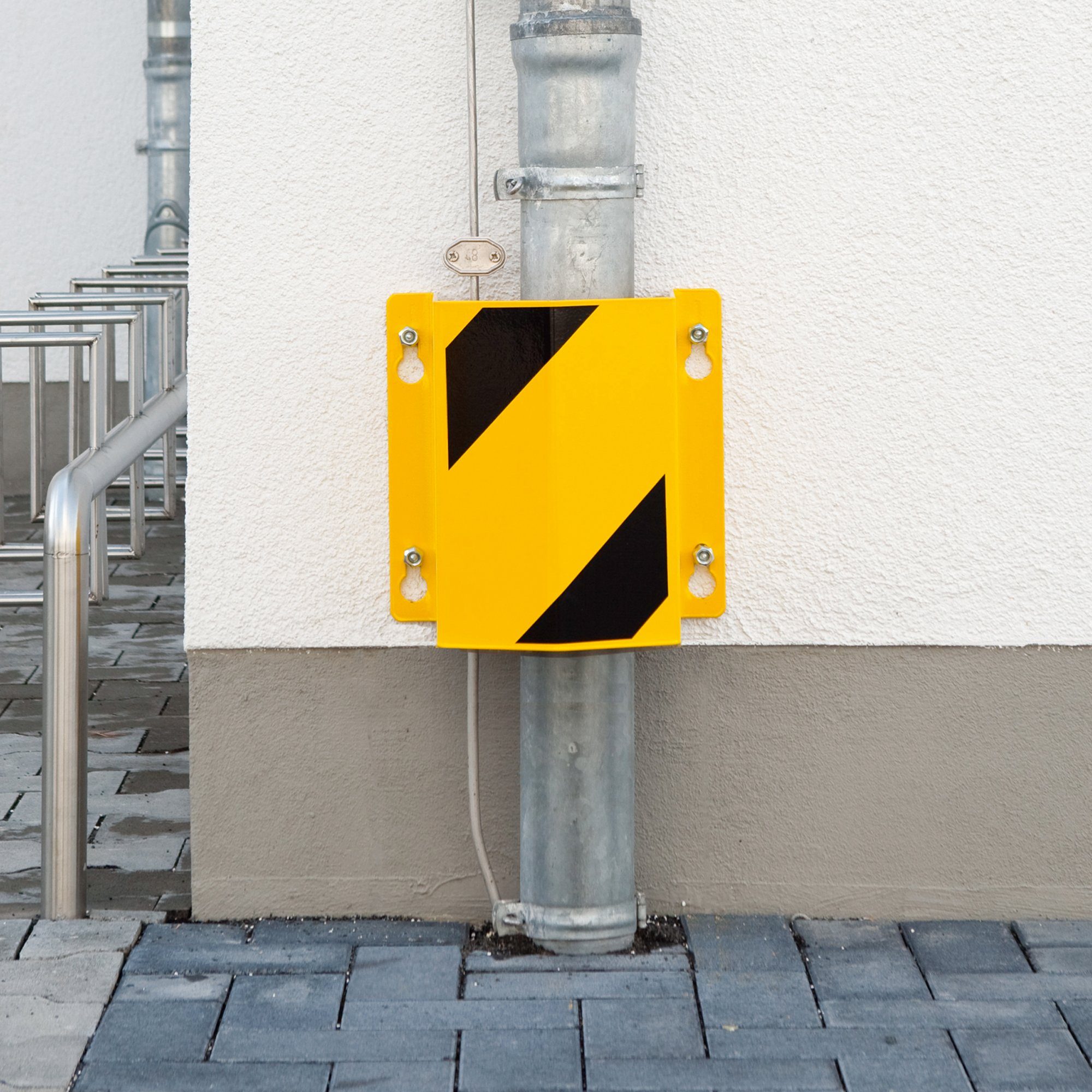
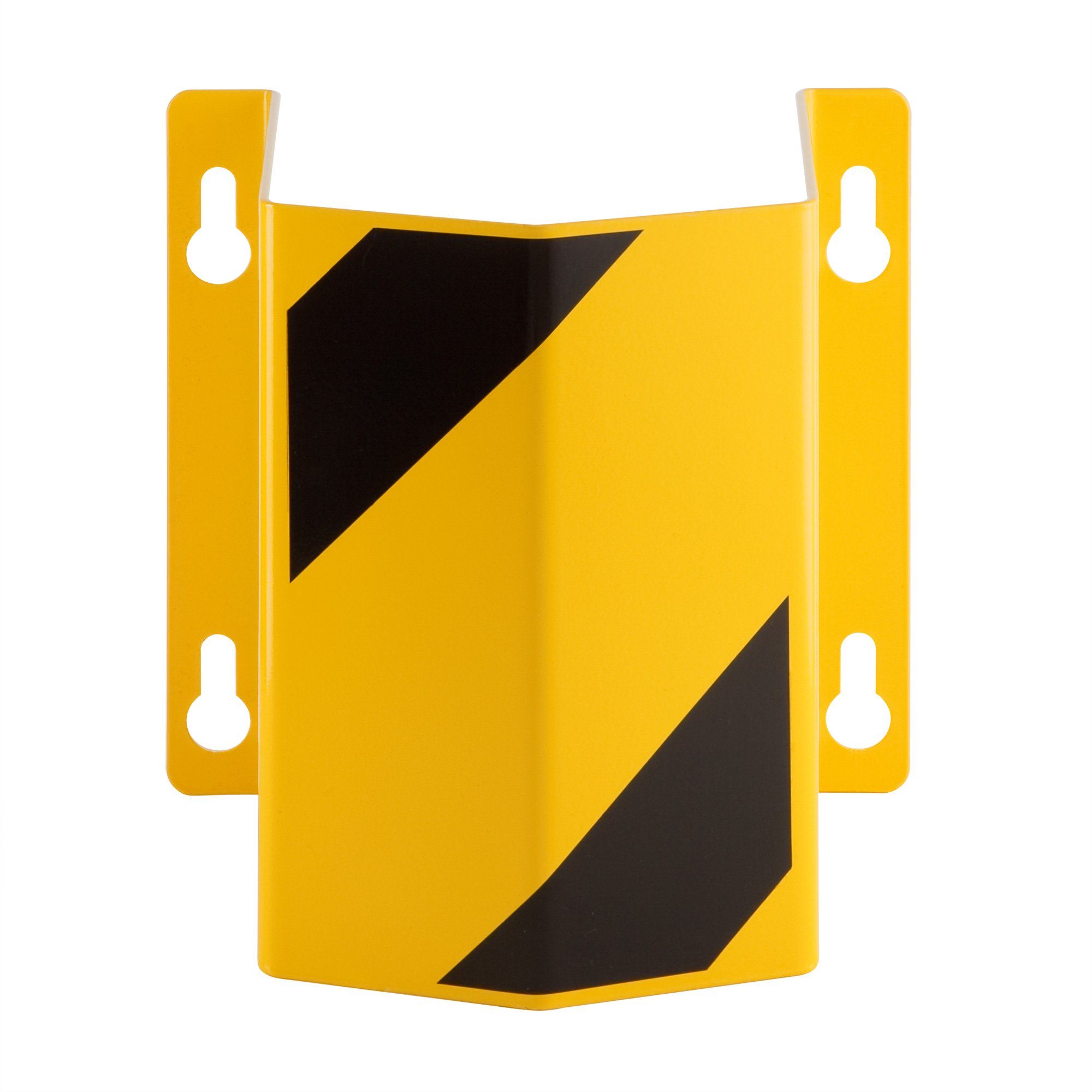
- L-shaped corner guards: Used to protect pipes located in corners, where the risk of impact is often greatest.
A pipe protector is only as strong as its weakest link, which is almost always the anchoring. Choosing the right protector but installing it incorrectly creates a false sense of security.
Anchoring is everything. For the protector to do its job, most pipe protectors are installed with heavy-duty expansion bolts directly into the concrete floor. This ensures the protector is firmly secured and can transfer the force of a collision down into the ground instead of into the protected pipe.
Not sure which material, shape or mounting method best suits your needs? Our experts can help you assess the risks and recommend a solution that ensures the safety of your facility. Contact us for a free consultation.
Yellow
Silver grayYellow
Yellow
Black/YellowHow to choose the right pipe protector for your facility
Choosing pipe protectors is about more than just bolting down a piece of steel. It is an on-site risk assessment, and the wrong choice can create a false sense of security that proves costly when an accident does happen.
To find a protector that actually does its job, you need to understand the risks in your particular environment. The process really boils down to three key steps. Follow them and you’ll make sure the investment is right from the start.
The very first and most important step is to analyze the traffic. What types of vehicles actually move around the pipes? Are they heavy forklifts and trucks backing up to a loading dock? Or are we talking about smaller pallet jacks and cars in a parking garage?
Weights and speeds are absolutely decisive for what type of pipe protector is required. A light bump from a pallet jack places entirely different demands on the protector than a direct hit from a loaded forklift.
Assess the environment and its impact
The next step is to look at the surrounding environment. It determines not only how much wear the protector will be exposed to, but also which material is most suitable. An outdoor downspout bombarded with road salt and moisture requires robust corrosion protection. In that case, hot-dip galvanized steel is the obvious choice.
Indoors, in a sterile environment with strict hygiene requirements such as the food industry, stainless steel is often the only option. The material must withstand aggressive cleaning agents without any risk of rust. If you want to dig deeper into how different materials perform, read our complete guide to choosing materials for impact protection.
This simple guide quickly shows you which material is the best fit based on the most common type of traffic at your site.
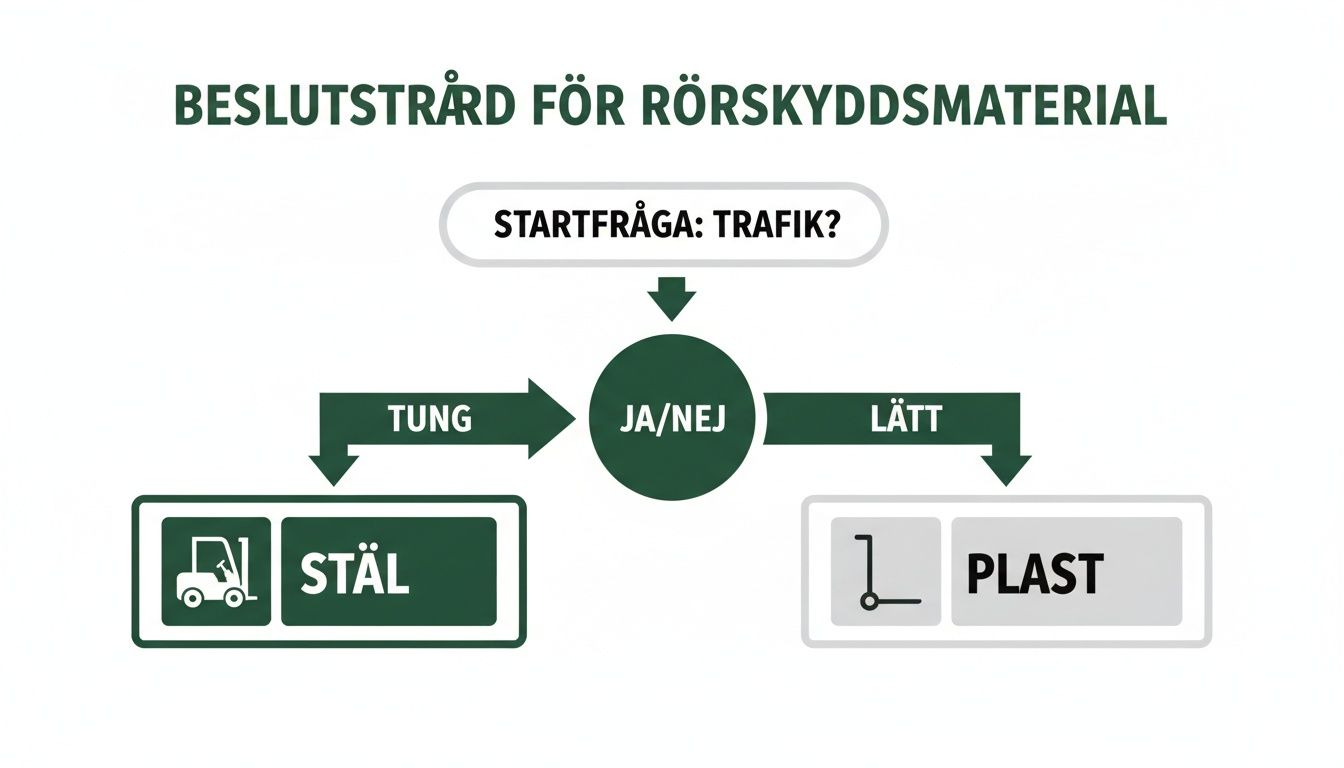
The principle is simple: where the risk of heavy collisions is high, steel is superior, while flexible materials can be a smarter choice in areas with lighter traffic.
Measure and adapt the protection
The final step is to get out the tape measure. A protector that is too low or too narrow is almost as bad as no protection at all. Measure both the pipe diameter and the total height that needs protecting.
A classic mistake is to protect only the bottom meter of a pipe. But raised forklift forks or a truck mirror can easily strike higher up if the protector is too short.
Think through different scenarios and risks:
- Parking garages: Here you need robust, hazard-marked protectors that can withstand hits from cars. Yellow and black stripes are essential, especially in poorly lit areas.
- Chemical storage: Here the consequences of a pipe rupture can be catastrophic. Stainless steel pipe protectors that can withstand both impacts and potential spills are an absolute necessity.
- Warehouse aisles: In tight spaces where pallet jacks and smaller forklifts move around, a flexible plastic protector can be perfect. It protects the pipe without damaging the vehicles in minor bumps.
Choosing the right protection is about creating a solution adapted to real-world conditions. By systematically working through traffic, environment and dimensions, you ensure your investment delivers maximum safety – for real.
Unsure about your risk assessment, or want to discuss different models such as our larger impact protection? Don’t hesitate to get in touch. Our experts have extensive experience making facilities safer and will be happy to help you find the most reliable and cost-effective solution for your specific needs.
Correct installation for maximum protection
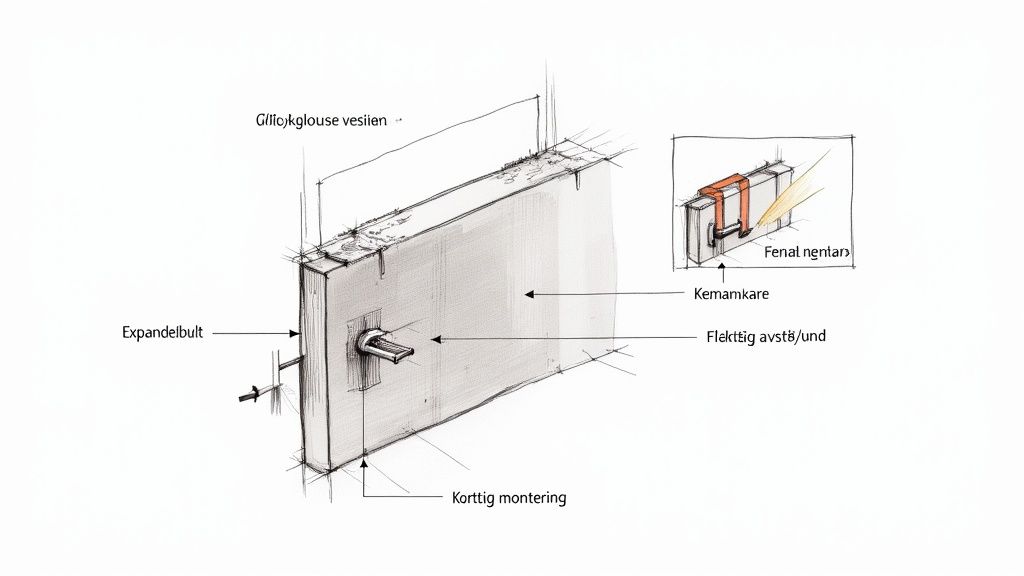
Even the most robust and well-chosen pipe protector is practically useless if it is not installed correctly. Think of it as an advanced airbag that never deploys in a collision – the protection is there, but it doesn’t function at all.
Correct mounting is absolutely essential for the protector to take the hit and distribute the force of an impact the way it was designed to. A poorly anchored protector can, in the worst case, break loose and cause even greater damage. Simply put, the installation is just as critical as the product itself.
Anchoring is everything
The foundation of a safe installation lies in the choice of anchoring method. It is about creating anchoring so strong that the protector stays rock solid, even under extreme loads.
For mounting in concrete floors, there are two main methods: expansion bolts or chemical anchors.
- Expansion bolts: This is the most common and usually the simplest method. A bolt with an expanding sleeve is inserted into a pre-drilled hole. When the bolt is tightened, the sleeve expands and grips the walls of the hole. Fast and effective in solid, good-quality concrete.
- Chemical anchors: This method uses a threaded rod secured with a two-component resin. The resin cures and creates an extremely strong, stress-free bond. Chemical anchors are the obvious choice when the concrete is porous, of poorer quality or at risk of cracking.
Choosing the anchoring is not a matter of taste but a technical assessment of the substrate. An expansion bolt in cracked concrete is a ticking time bomb – it provides a false sense of security that can fail when you need it most.
The choice comes down to understanding the conditions on site. If you are the least bit unsure, always choose the safer method.
Common mistakes that undermine protection
Even with the right material, things can go wrong. A sloppy installation can completely defeat the protector’s function. Here are some of the most common mistakes to watch out for:
- Bolt too short: A bolt that doesn’t reach deep enough into the concrete won’t get a proper grip and can be torn out in a heavy collision.
- Incorrect tightening torque: Both too loose and too tight are problems. A loosely tightened bolt won’t hold, while an overtightened one can damage the concrete and weaken the anchor point.
- No clearance from the pipe: A critical mistake is mounting the protector too close to, or in direct contact with, the pipe. The whole point of a pipe protector is to take the hit. If the protector is pushed in during a collision and strikes the pipe, the force is transferred directly and the damage is done. Always leave a safety margin.
Below is a simple table showing which anchoring is generally recommended for different substrates.
| Substrate type | Recommended Anchoring | Comment |
|---|---|---|
| Solid concrete | Expansion bolt | Fast and reliable. Check that the concrete is free of cracks. |
| Cracked concrete | Chemical anchor | Creates a stress-free and very strong anchoring. |
| Porous concrete | Chemical anchor | Distributes the load over a larger area and provides a more secure hold. |
| Asphalt | Special anchor | Requires longer, purpose-made anchors for a secure hold. |
Installation is the final, decisive step in making sure your investment provides real protection. Whether you do the job yourself or hire an installer, make sure it’s done right from the ground up.
Do you have questions about installation or need help choosing the right anchoring for your conditions? Contact us and our experts will help you secure your facility the right way.
Yellow
Silver grayYellow
Yellow
Black/YellowMaintenance that extends the service life of your protectors
A pipe protector is built to take a beating – that’s the whole point. But that doesn’t mean it’s maintenance-free. Think of it like the brakes on a car – you need to be able to trust that they work 100 % when an accident does happen.
By introducing a simple inspection routine, you not only maximize the service life of your investment. Above all, you make sure the protector actually does its job. It’s a small effort that makes a big difference to the long-term safety of your facility.
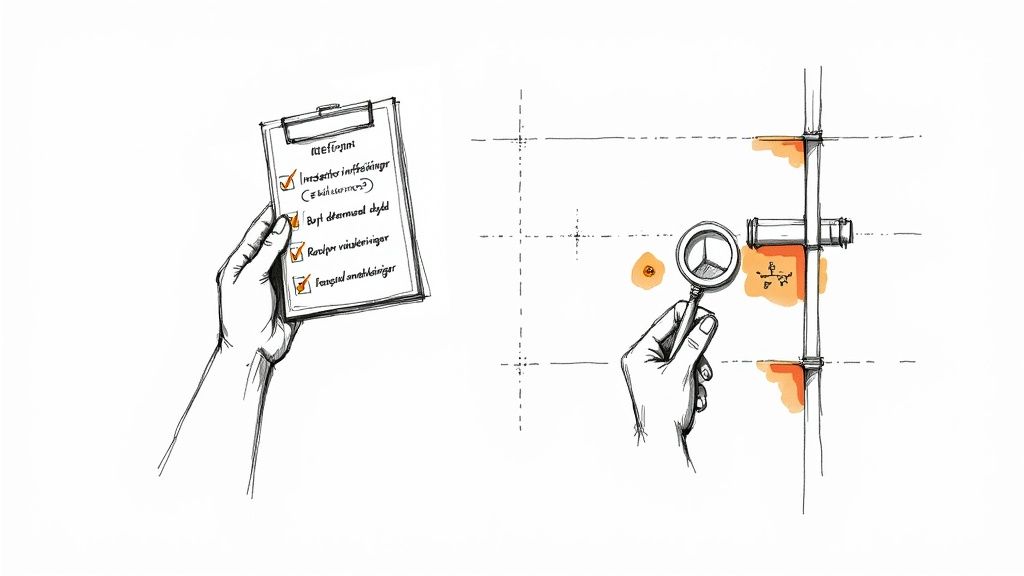
A simple checklist for your inspections
Regular checks don’t have to be complicated. Add these points to your regular safety rounds and you’ll spot problems long before they become a safety risk.
- Check the anchoring: This is by far the most important point. Make sure the protector is firmly secured and that no bolts have come loose. Loose anchoring can render the entire protector useless in a collision.
- Look for deformation: Does the protector have visible dents, cracks or bends? Every deformation is proof that the protector has taken a hit and may have been weakened.
- Inspect for rust: Keep an extra close eye in outdoor environments or where the protector is exposed to moisture and chemicals. Surface rust may be cosmetic, but deeper corrosion eats away at the steel’s strength from the inside.
- Ensure visibility: Are the hazard markings, such as the classic yellow and black stripes, clean and clearly visible? Dirt and wear make the protector harder to see, which ironically increases the risk of more collisions.
An important principle to remember: a dented steel pipe protector has done its job, but it has also lost its structural integrity. Even if it appears to “still work,” its ability to withstand the next hit is greatly reduced.
When is it time to replace a pipe protector?
Trying to repair a deformed protective hoop is rarely a good idea, either for safety or for your wallet. Hammering out a dent does not restore the steel’s original strength. That’s why it’s crystal clear when a protector needs to be replaced.
Always replace a pipe protector if:
- It has a visible dent or deformation after an impact.
- There are cracks in the welds or in the material itself.
- The anchor points in the floor or wall are damaged.
- Rust has penetrated and weakened the structure.
Replacing a damaged protector is not an unnecessary cost – it restores safety. A new, robust impact protection for pipes is low-cost insurance that guarantees your installations stay protected. For larger pipes or high-risk areas, a larger impact protection may be needed to restore the right level of protection.
If you find damage and are unsure whether a protector needs replacing, don’t hesitate to get in touch. We’ll help you assess the situation and can quickly deliver replacement products so your facility stays safe.
Frequently asked questions about pipe protectors
Here we have gathered some of the most common questions we come across regarding pipe protectors. The goal is to give you straight, clear answers without the hassle. Can’t find what you’re looking for? Don’t hesitate to get in touch and we’ll help you personally.
What is the main advantage of a steel pipe protector?
Strength, quite simply. Steel is unbeatable when it comes to sheer impact resistance. A correctly installed pipe protector in hot-dip galvanized steel, like our popular impact protection for pipes, is built to physically stop heavy vehicles. It acts as a robust shield and prevents damage that could otherwise be catastrophic for your infrastructure, especially in high-risk environments such as loading docks and industrial areas.
How do I know what height to choose for the protector?
A good rule of thumb is that the protector must be taller than the highest point a vehicle could hit. Don’t focus only on the bumper. Raised forklift forks, a truck bed backing in or even a truck mirror can cause damage well above the ground. Take a look at which vehicles operate in the area and choose a protector that covers all potential risk zones. Our larger impact protection is an excellent option when height is a critical factor.
Are chemical anchors always required for installation?
No, not necessarily. Expansion bolts work perfectly well and are often easier to install if you have a substrate of solid, sound concrete. Chemical anchors, however, become essential when the concrete is of poorer quality – for example porous, cracked or old. The chemical anchor creates an incredibly strong, stress-free anchoring that distributes the force over a larger area, which is critical for maximum safety in an uncertain substrate.
Why is it so important to leave a gap between the protector and the pipe?
It’s an absolutely critical safety detail. If you mount the pipe protector flush against the pipe, or too close to it, the full force of a collision will be transferred straight into what you are actually trying to protect. Then the whole point of the protector is lost. By leaving a safety margin, you ensure the protector can deform and absorb the energy without even touching the pipe behind it.
Did you know that the idea of protecting critical infrastructure has deep roots in Sweden? During the Cold War, thousands of civil defense shelters were built with room for more than 7 million people. The same proactive mindset lives on today, but now the principles are applied to protecting pipes and lines against modern threats such as vehicle impacts. Want to learn more? Read about Sweden’s historical civil protection efforts here.
Yellow
Silver grayYellow
Yellow
Black/YellowDo you need help choosing and installing the right protection for your facility? We at Nordguard offer a complete solution, from needs assessment to fully installed product. Contact us today and we’ll help you with a free consultation and a tailored quote.
Ready to take the next step?
We help you develop solutions tailored to your needs. At Nordguard, we strive to make the ordering process as smooth as possible. By offering support and guidance throughout the entire purchasing experience, we make sure you feel confident and satisfied with your choice of protection products.+46 10 153 90 50
[email protected]