
A Complete Guide to Pallet Rack Impact Protection
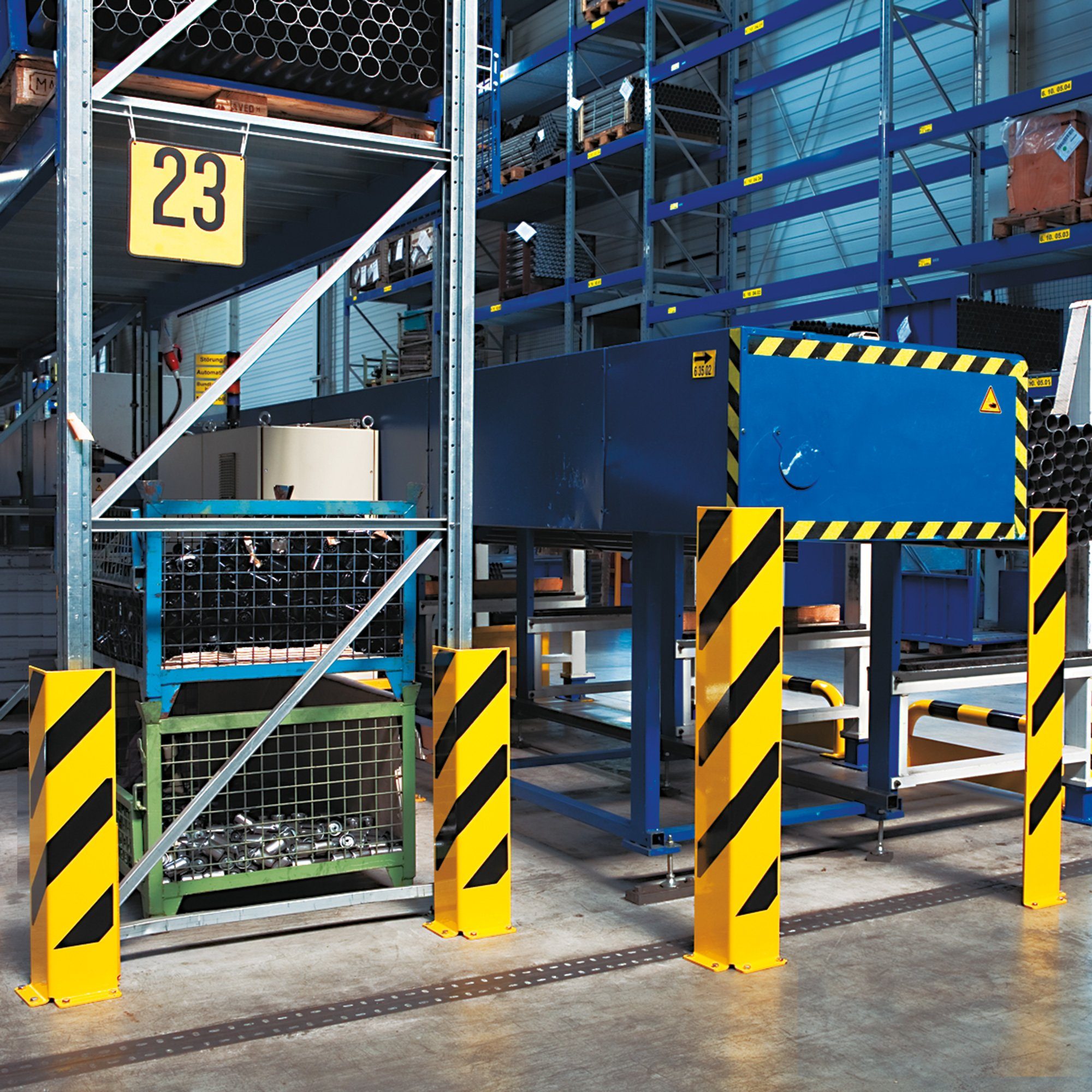
Watching a pallet rack collapse after a collision is every warehouse manager’s worst nightmare. But pallet rack impact protection isn’t just an extra expense – it’s basic insurance. Insurance that protects your people, your goods and, ultimately, the profitability of your entire operation.
Simply put, it’s a necessary investment to avoid the kind of costly mistakes that can paralyze your entire logistics chain.
More Than Just Steel and Bolts
The thought of a completely collapsed rack is frightening, of course. But the real consequences of a collision extend far beyond the immediate chaos. Without robust protection, like our heavy-duty steel impact protection, you invite a chain reaction of problems that ripple through the entire company.
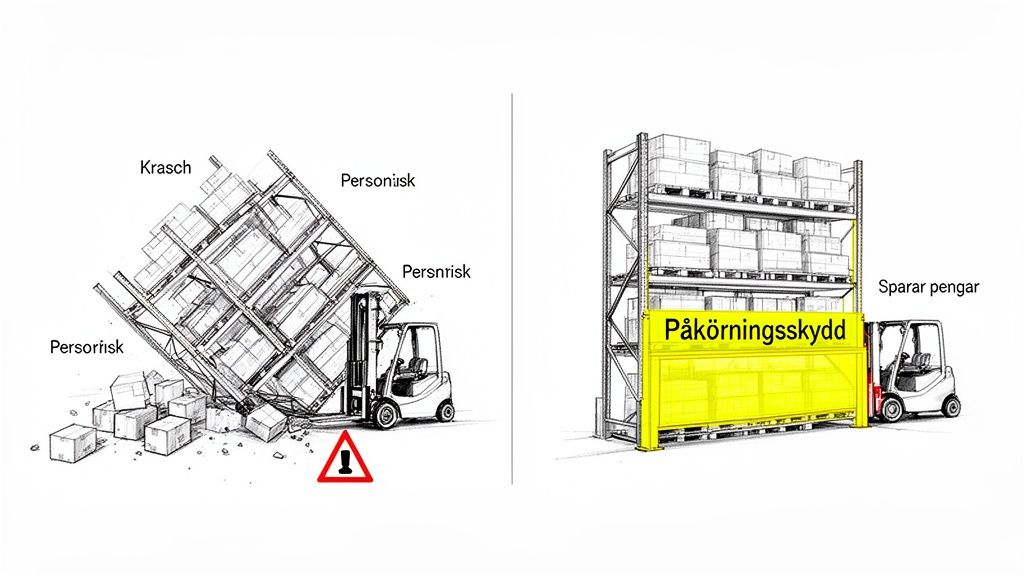
Every incident, even a minor bump, is more than just a dent. It’s a disruption that ripples through the operation and leads to costs that quickly spiral out of control.
The Hidden Costs of an Accident
When a forklift runs into an unprotected rack, a costly process begins. And no, it’s not just about repairing the rack or replacing damaged goods. The consequences are often far more extensive:
- Unplanned downtime: Entire aisles may need to be closed off for investigation and repair. The flow of goods stops immediately.
- Heavy administration: Time has to be spent on damage reports, insurance claims and replanning logistics.
- Lost efficiency: Staff have to drop their usual tasks to help with cleanup and inventory.
These factors create a domino effect in which deliveries are delayed, customer relationships take a hit and the company’s reputation suffers. Understanding the most common damage prevented by impact protection is the first step toward a safer, more profitable warehouse.
People Are Your Most Important Asset
The most important aspect of all, however, is the human one. A pallet rack collapse can lead to life-threatening situations. Every year, nearly 800 people in Sweden are injured so seriously in forklift-related accidents that they have to go on sick leave. A single damaged post can cause the entire structure to give way.
By installing the right rack end protectors and post protectors, you can reduce the risk of serious injury by up to 70–80 percent in high-risk areas. If you want to see more of the underlying data, the statistics are available from the Swedish Work Environment Authority.
Proactive safety work with the right pallet rack impact protection creates a safe workplace. An environment where employees can do their jobs without worry. It not only boosts morale, but also shows that the company takes its responsibilities seriously.
Not sure where the risk zones are in your warehouse? We at Nordguard help you identify the weak points and develop a complete solution that guarantees both safety and efficiency. Contact us for an expert consultation, and we’ll make sure you get the right protection in the right place.
Understanding Laws and Standards for Pallet Rack Safety
Getting to grips with warehouse safety regulations can feel overwhelming. But when it comes to pallet rack impact protection, the Swedish Work Environment Authority’s regulations and European standards are crystal clear – and mandatory. They exist for one reason only: to prevent accidents that can have catastrophic consequences.
As an employer, you always bear ultimate responsibility for a safe work environment. This means you must actively identify and address risks, and unprotected pallet racks are one of the most obvious hazards in a warehouse.
Where Impact Protection Is an Absolute Requirement
The law is very specific about where protection must be in place. These aren’t recommendations, but absolute requirements to protect the most vulnerable points of your racking. A single damaged post can weaken an entire section and, in the worst case, trigger a collapse.
Here are the critical zones you need to secure:
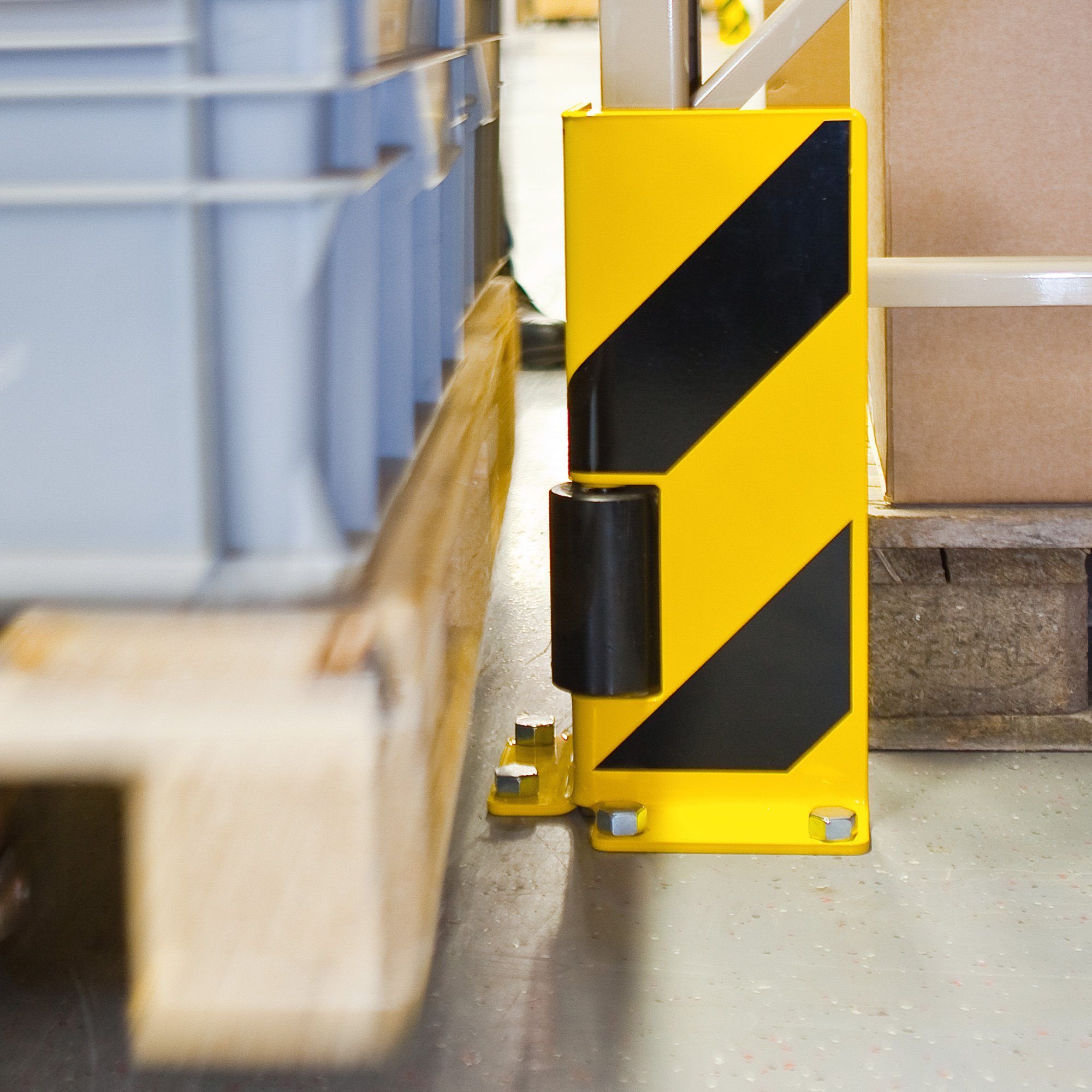
- Rack ends: The outer ends of a rack run are extremely exposed, especially where forklift aisles end and turns are tight. A sturdy rack end protector distributes the force of any impact.
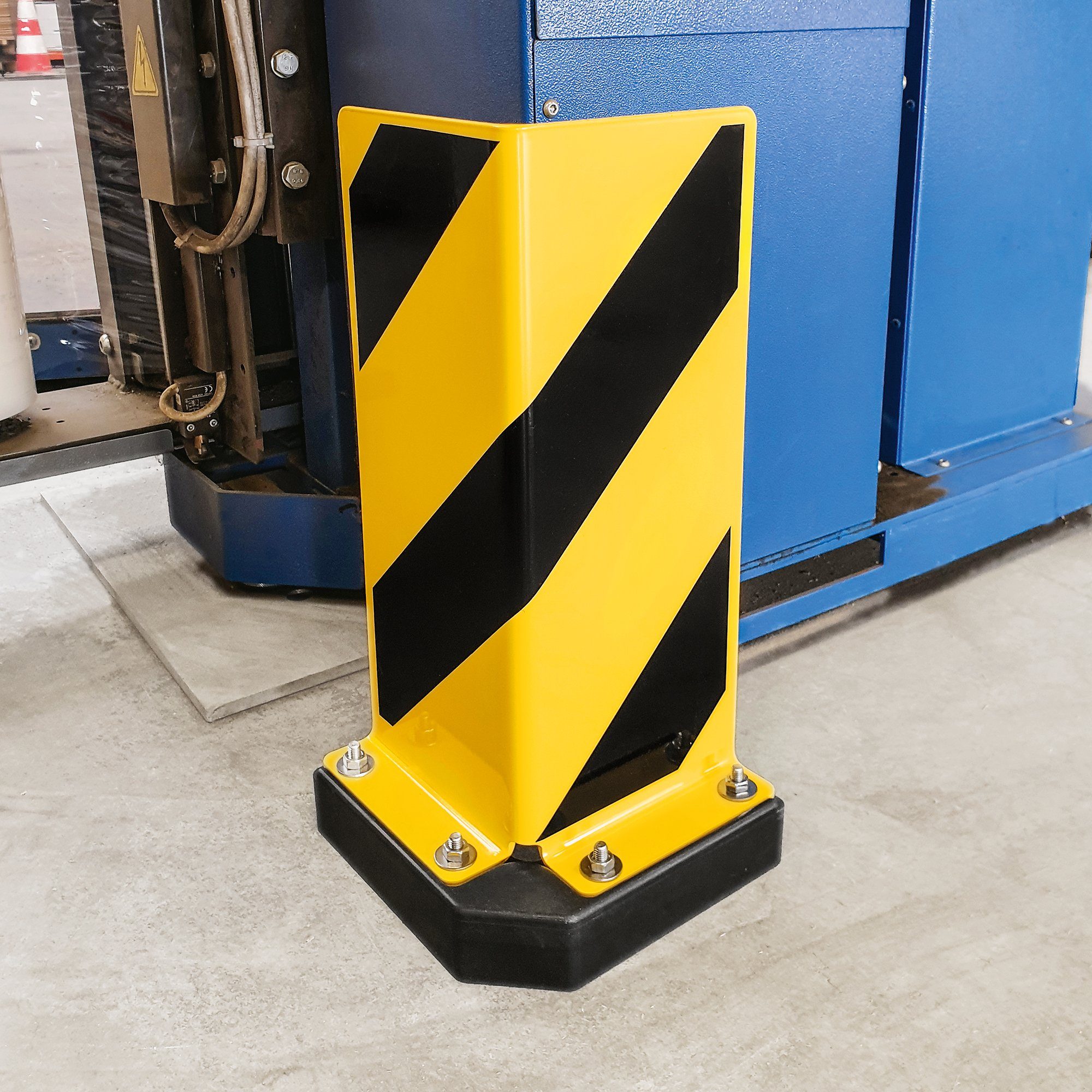
- Corners and pass-throughs: Posts at corners or where forklift aisles intersect are at much higher risk of being hit. Heavy-duty post or corner protectors are needed here.
- High-traffic forklift aisles: In busy aisles where both forklifts and staff move around, every post facing the aisle must be protected.
Ignoring these requirements is playing Russian roulette with both staff safety and the company’s finances. An inspection that reveals deficiencies leads to immediate demands for corrective action, and if an accident occurs, the legal liability can be very heavy.
SS-EN 15635 – The Standard You Need to Know
In addition to the Swedish Work Environment Authority’s basic requirements, there’s the European standard SS-EN 15635. This standard governs everything related to the operation, maintenance and, above all, the mandatory annual inspection of pallet racking. Think of it as a checklist to ensure your warehouse meets safety requirements.
Following SS-EN 15635 isn’t just about passing the inspection. It’s a systematic approach to building a safer workplace while extending the service life of your racking.
The standard requires a technically competent person to inspect the racking at least once every twelve months. Reports from these inspections paint a rather bleak picture: over 40 percent of Swedish warehouses lack adequate impact protection at the time of inspection. That’s alarming, since damage to unprotected racks is one of the most common causes of expensive repairs, often in the range of SEK 50,000–100,000 per major incident.
In other words, the risk of not having the right protection in place is significant. For a deeper understanding, we recommend reading our guide on regulations and standards for impact protection.
The Importance of CE-Marked Products
So how do you know the protection you buy actually measures up? The answer is simple: always choose CE-marked products.
The CE marking is the manufacturer’s guarantee that the product meets the EU’s essential health, environmental and safety requirements. It’s a seal of quality proving that the protection has been tested and approved for its intended purpose.
We at Nordguard sell only CE-marked, type-approved solutions, such as our bollards and impact protection, that help you meet all legal requirements. Not sure what applies to your warehouse? Contact us for advice. We’ll help you put a system in place that guarantees a passed inspection and a safe work environment for everyone.
 Black/Yellow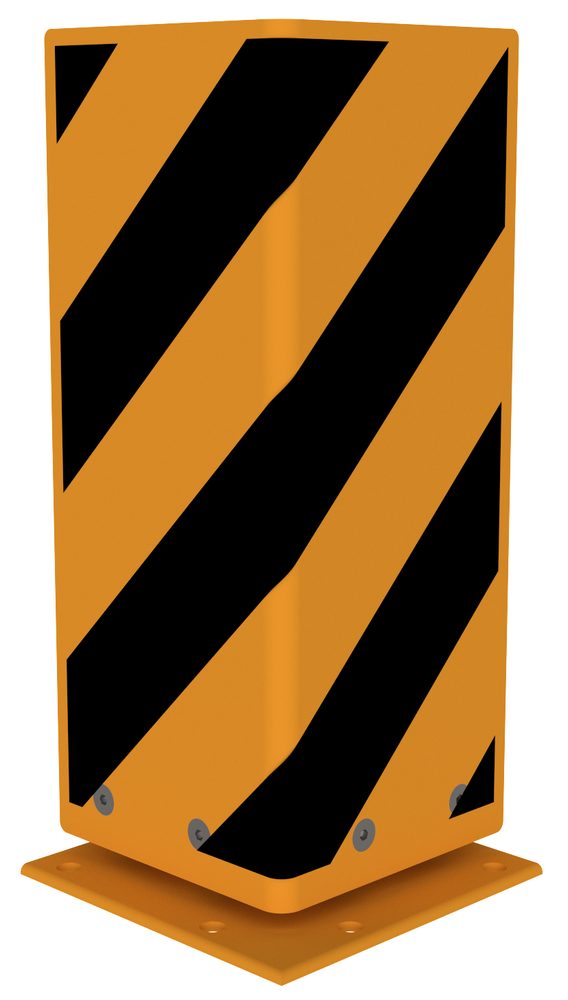
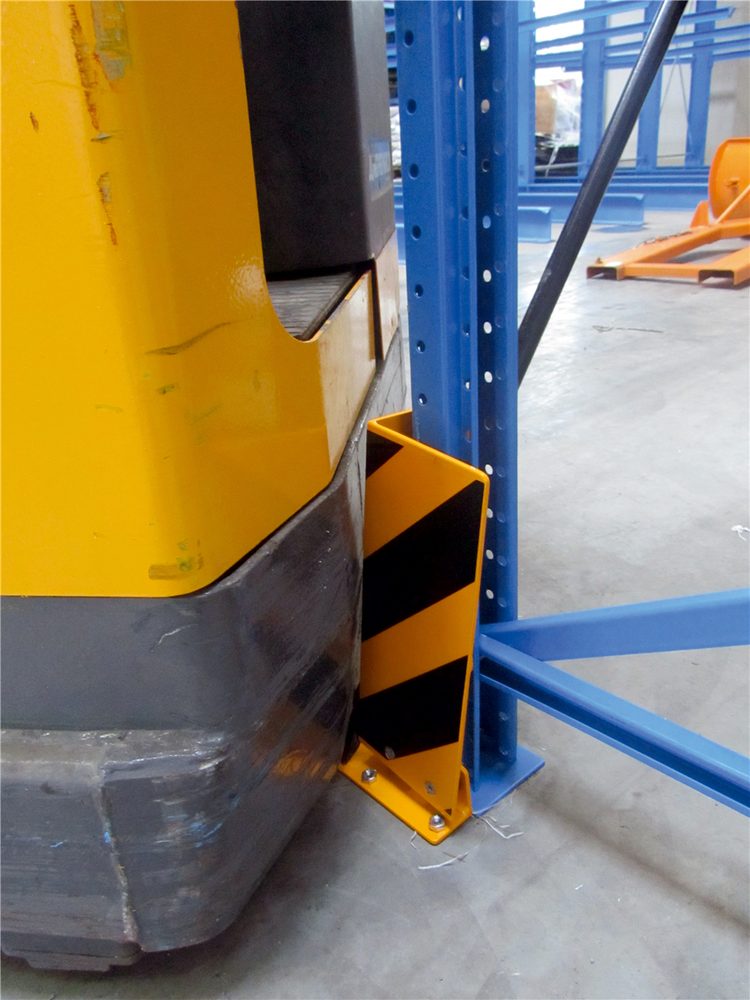
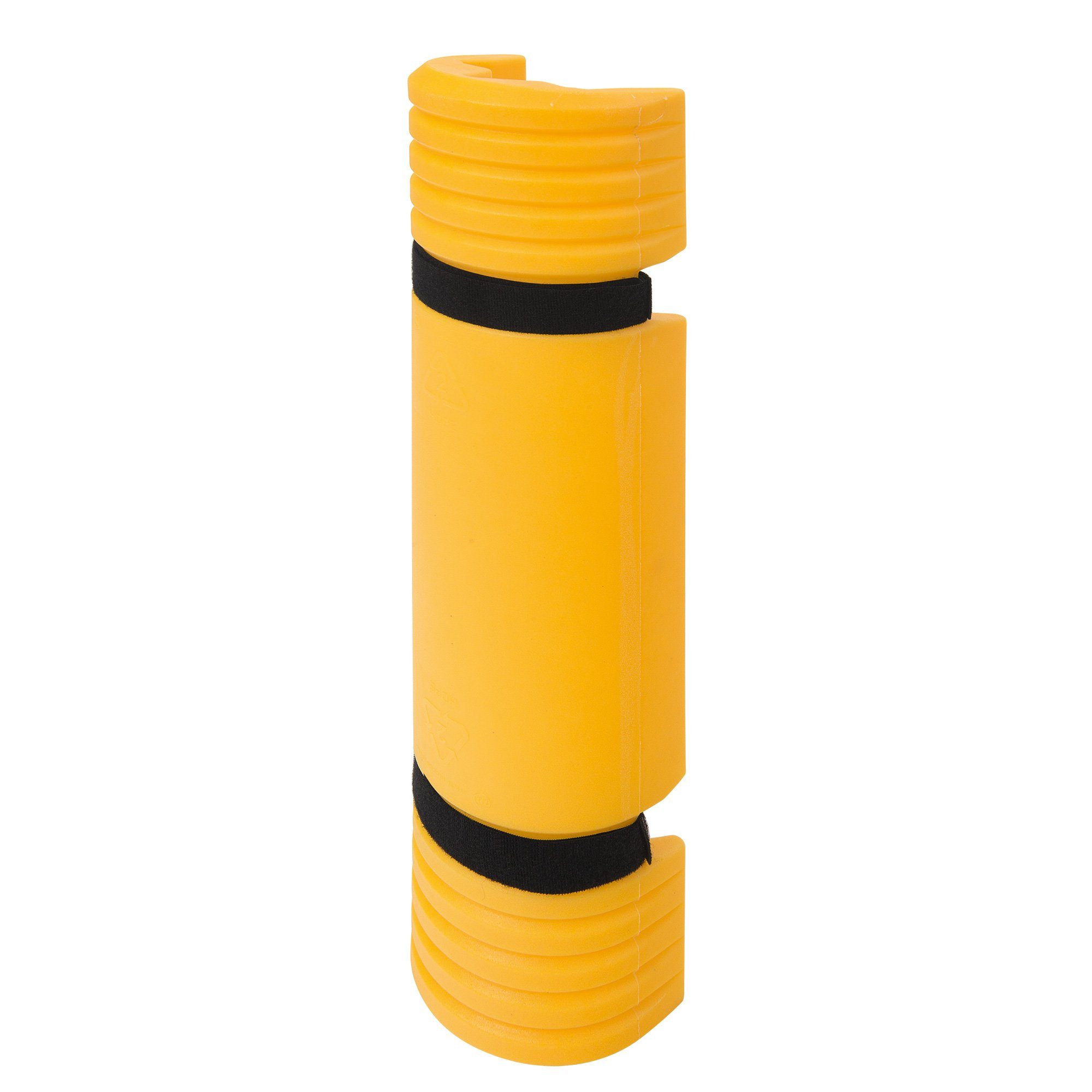
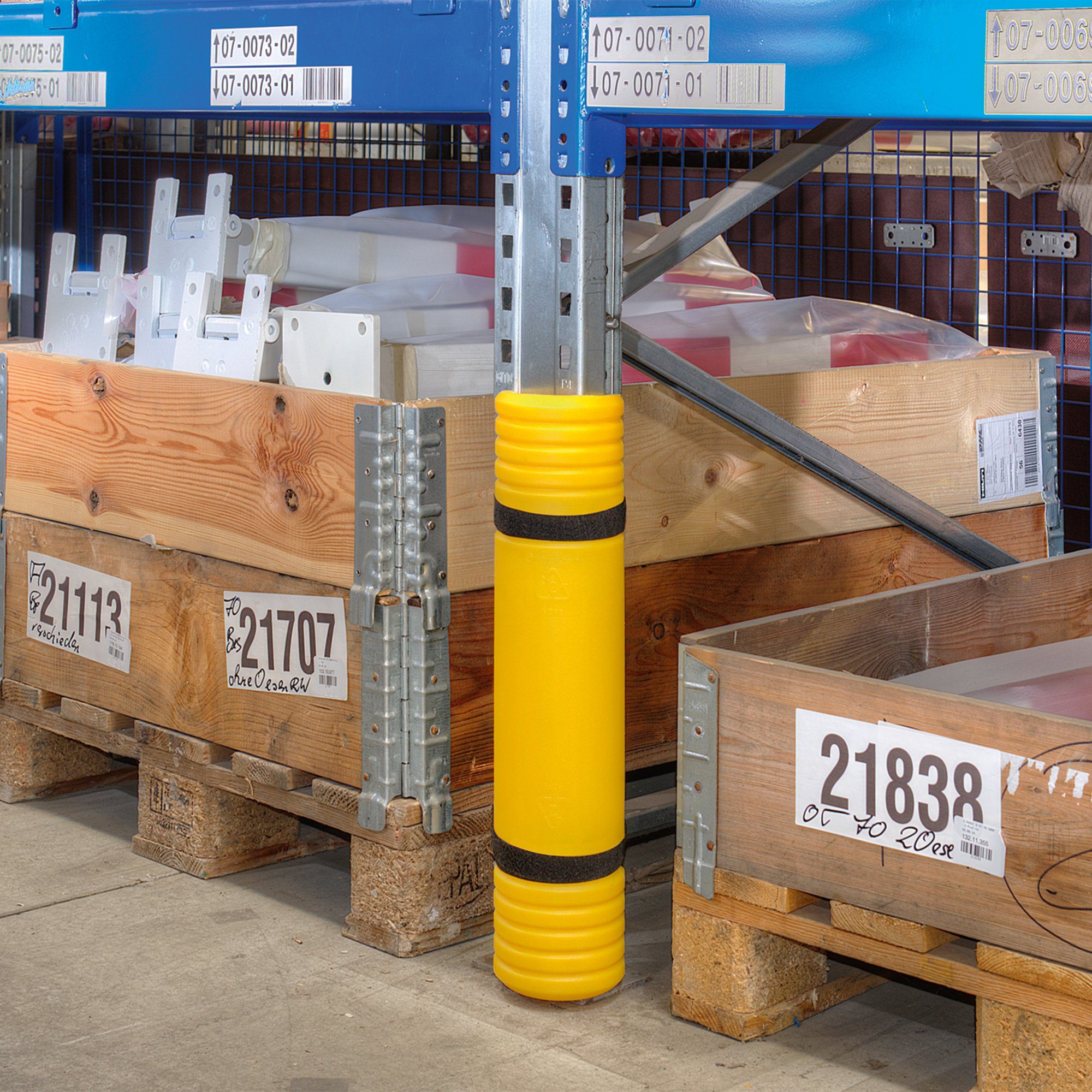
 Yellow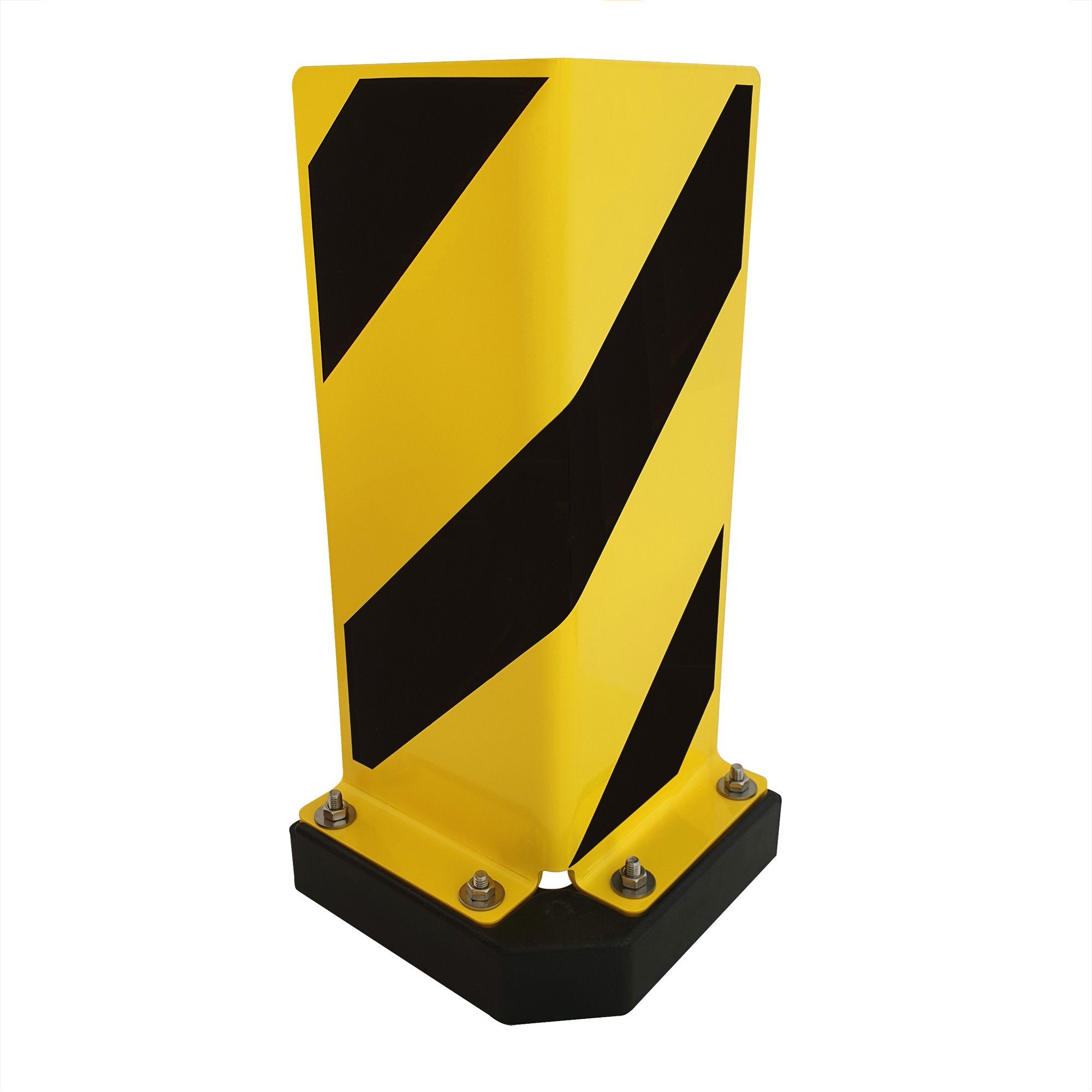
 Black/Yellow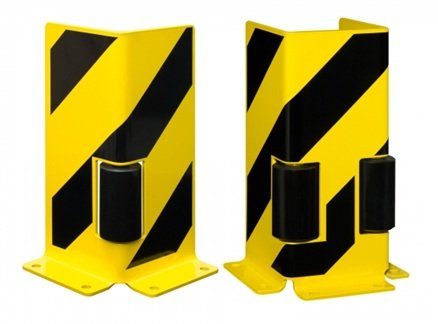
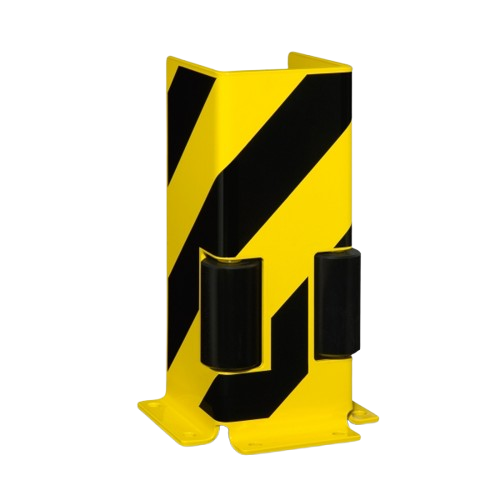 Black/Yellow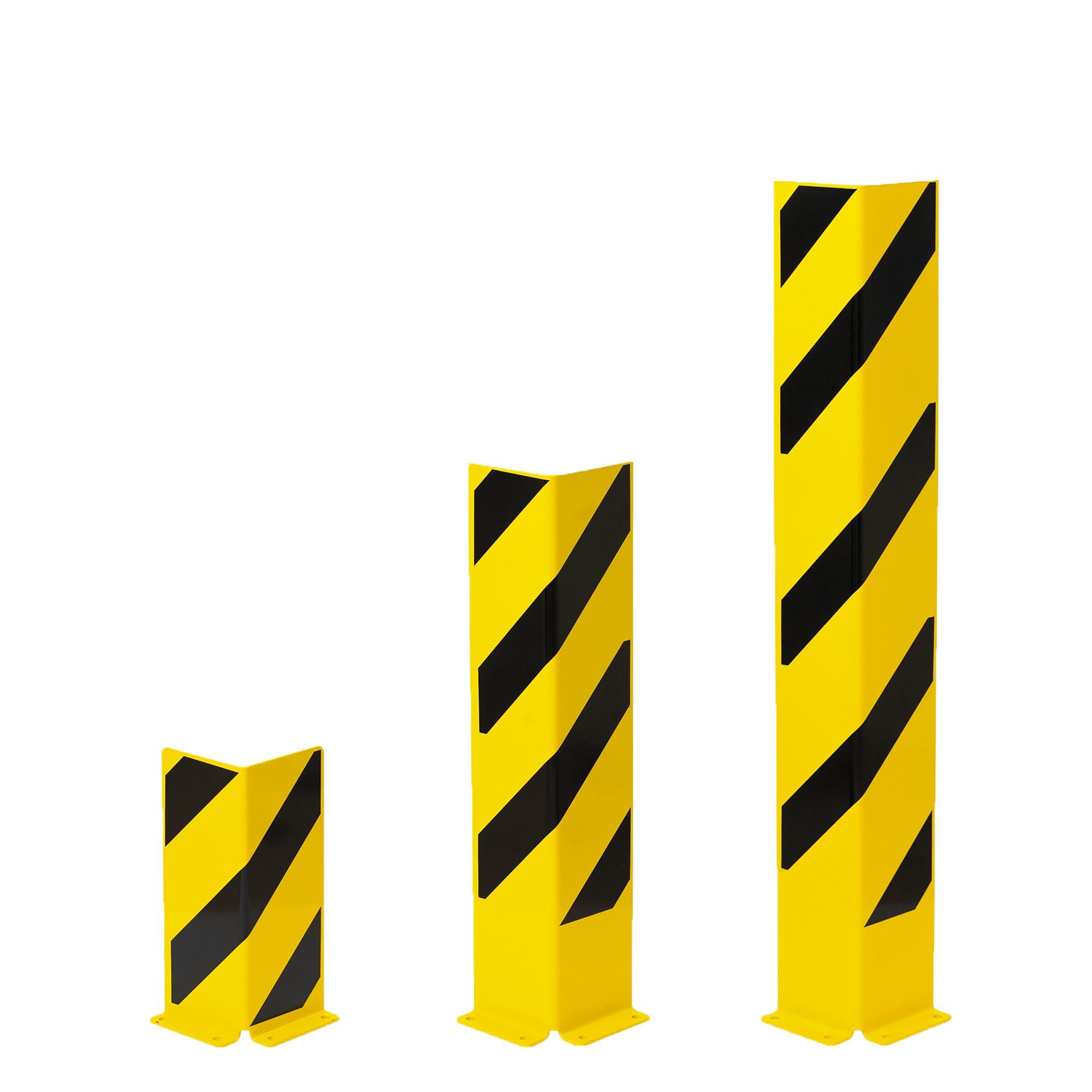
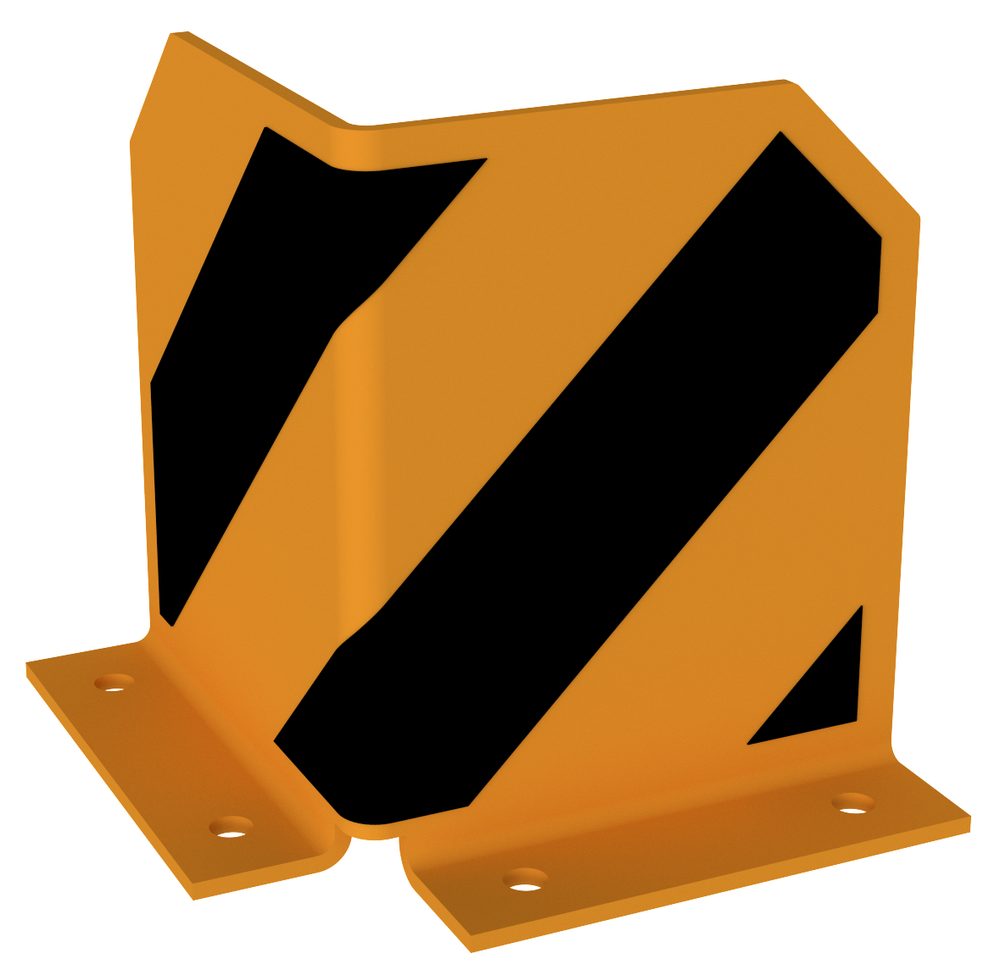 Black/Yellow
How to Choose the Right Material and Type of Impact Protection
Choosing the right pallet rack impact protection is so much more than just bolting a piece of metal or plastic to the floor. Think of it instead as a strategic decision that directly affects safety, your maintenance budget and the entire flow of your warehouse. In the worst case, the wrong choice can create a false sense of security, where the protection causes more damage than it prevents.
The big question comes down to material: should you go with traditional steel or a modern, flexible polymer protector? There’s no simple one-size-fits-all answer, since the best choice depends entirely on your unique warehouse environment.
Think of it this way: steel impact protection is like a stone wall. It’s incredibly robust and stops a heavy, direct impact. But just like a stone wall, it’s completely rigid. In a collision, all the energy is transferred straight into the weakest points – the forklift, the floor anchoring and, not least, the driver.
A polymer protector, on the other hand, works more like a punching bag. It’s designed to absorb and distribute the force of a crash. The material gives, absorbs the energy and then springs back to its original shape. The result is minimal damage to vehicles, racking and floors alike.
Steel Protection – When Brute Strength Is All That Matters
Steel is the classic choice and has long been the industry standard. Its biggest advantage is unbeatable resistance to point loads and abrasion. It’s simply extremely tough.
In certain situations, steel is exactly the right way to go:
- Heavy forklift traffic: In environments dominated by heavy counterbalance forklifts and substantial loads, steel provides reliable, uncompromising protection.
- Low-speed areas: Where the risk is more that forklifts scrape along the protection than drive straight into it, steel withstands wear far better.
- Protection against forks: Steel is extremely effective at deflecting direct hits from forklift forks, which can otherwise easily puncture softer materials.
The challenge with steel is precisely its rigidity. A hard impact can bend the protector permanently, rip the anchoring out of the floor or crack the surrounding concrete. Repairs are often expensive and time-consuming, and frequently end with the entire protector having to be replaced.
Polymer Protection – The Flexible, Forgiving Solution
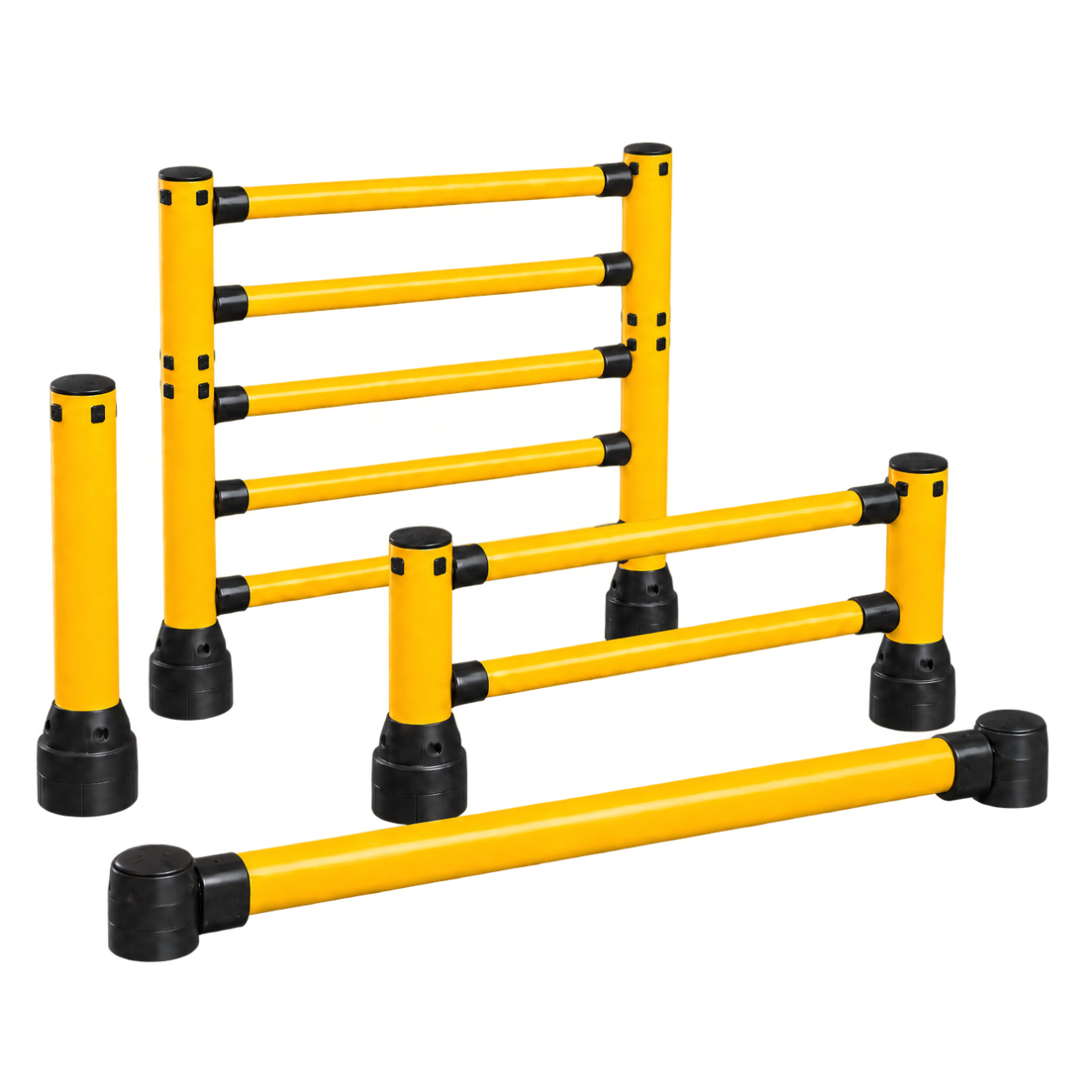
Flexible impact protection made of plastic or composite materials has become increasingly common in modern warehouses, and for good reason. Its ability to absorb energy makes it a smart choice in most situations.
Consider polymer protection when:
- Many different forklift types are in use: Perfect for warehouses with a mix of lighter forklifts, order pickers, reach trucks and articulated forklifts.
- Driver safety is a priority: By cushioning the collision force, it significantly reduces the risk of whiplash and other injuries.
- Lower maintenance costs are a goal: Since the protector springs back after most impacts, you avoid frequent repairs and replacements.
This flexibility is also a lifesaver for your floors. Instead of the force of an impact ripping out the bolts, the energy is absorbed by the protector. The concrete is spared. To dive deeper into the topic, read our guide on choosing materials for impact protection and when to choose plastic, steel or a combination.
This infographic shows a simple decision tree for determining where the law requires protection in your warehouse.
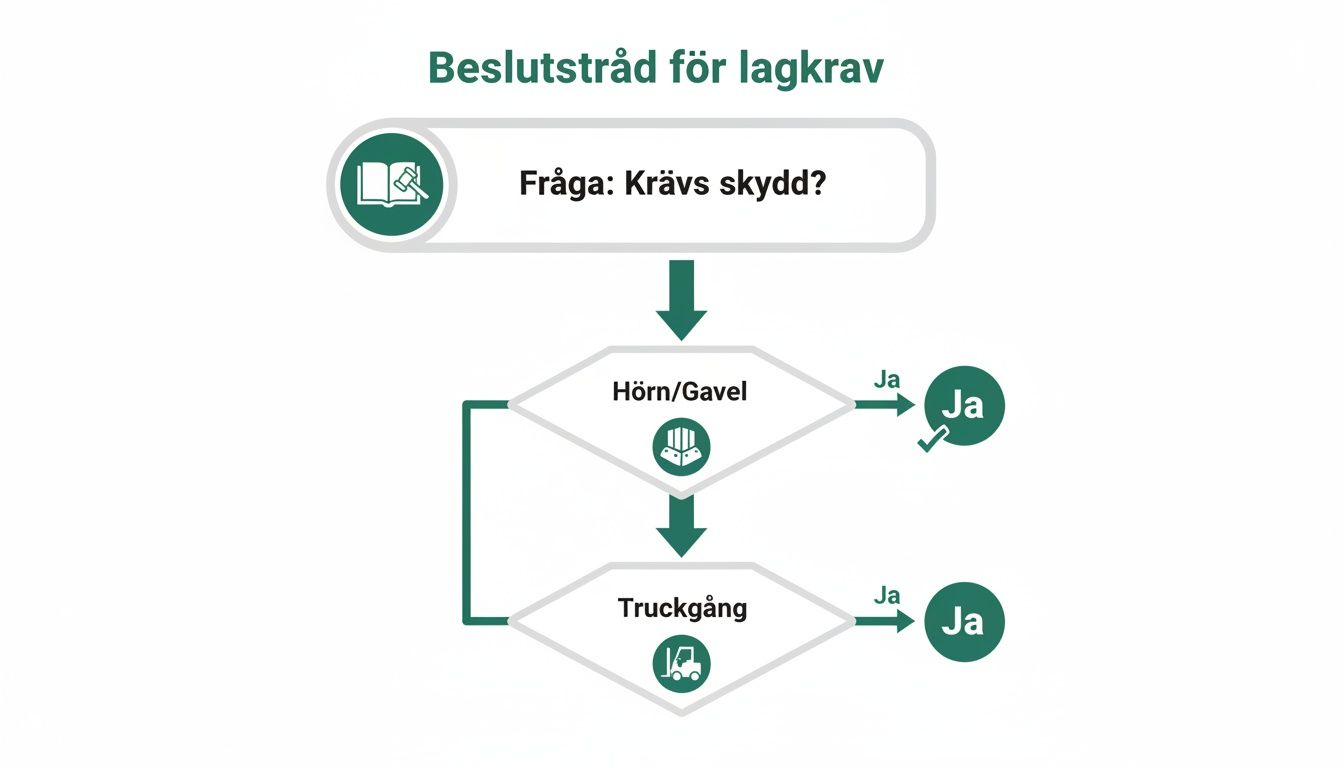
The image makes it clear that protection isn’t optional in critical zones such as corners and along forklift aisles, regardless of which material you ultimately choose.
Comparison of Impact Protection Materials
To make the choice easier, we’ve put together a quick overview of the key differences between steel and polymer/rubber. The table helps you weigh the pros and cons against each other based on your specific needs.
| Property | Steel Protection | Polymer/Rubber Protection |
|---|---|---|
| Collision handling | Stops and deflects the force (rigid) | Absorbs and distributes the force (flexible) |
| Damage to forklift & floor | Higher risk of damage to forklift and anchoring | Minimal damage to forklift and floor |
| Maintenance | Often requires replacement/repair after a hard impact | Springs back, rarely requires maintenance |
| Suitable environment | Heavy industry, high point loads, scraping risk | Mixed traffic, safety focus, reduced maintenance |
| Driver safety | Transfers the impact to the driver | Cushions the impact, reduces risk of injury |
| Lifecycle cost | Lower purchase price, but higher repair costs | Higher purchase price, but lower total cost of ownership |
Ultimately, it’s about choosing the right tool for the job. Steel is a hammer – brutally effective at stopping something. Polymer is a shock absorber – cleverly designed to manage energy. Both have their place.
Choosing a material is about balancing strength against flexibility. Steel stops, while polymer absorbs. Your task is to decide which property matters most for protecting your specific assets and your staff.
Still finding the choice difficult? No problem. At Nordguard, we have the expertise to analyze your workflows, forklift types and risk areas. Contact us for a free consultation, and we’ll help you find a solution that’s optimal for your operation, not just a standard off-the-shelf product.
Get Maximum Effect – Install and Size Your Protection Correctly from the Start
Buying pallet rack impact protection is a smart move, but it’s only half the job. Incorrectly installed protection creates a false sense of security. In the worst case, it can even cause more damage than it prevents. For the protection to do its job when an accident happens, correct installation and sizing are absolutely critical.
Many people think you can just bolt any protector anywhere. The reality is different. Every detail – from height and clearance to the type of bolt you use – must be adapted to your specific warehouse and forklifts.
The Right Height for Maximum Effect
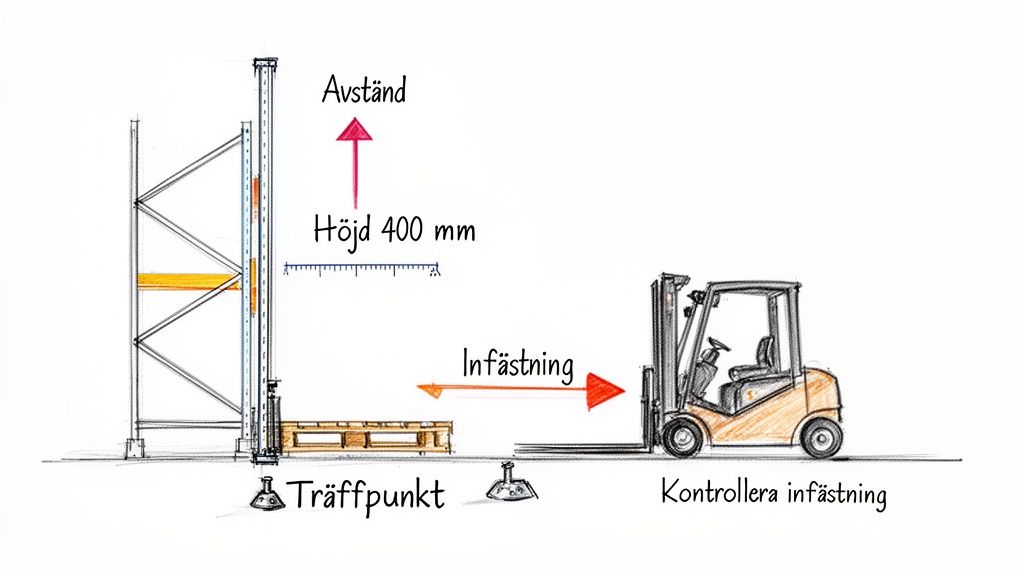
The first, and perhaps most important, question is: how tall should the protection be? You’ll find the answer in your forklift fleet. The protection must be at the right height to meet the most likely point of impact in a collision.
Protection that’s too low is essentially useless. The forklift’s forks or chassis can slide over the edge and hit the rack post directly. A common standard height is 400 mm, which works well for most common forklift types.
But if you operate heavier machines, such as counterbalance forklifts with a higher chassis, you may need protection that’s 500 mm or even taller. Do a quick analysis:
- Which forklift models are most often used in your warehouse?
- Measure the height of their chassis and fork carriages.
- Choose protection that covers these critical points.
It’s a simple measure that ensures the protection is actually what takes the hit.
Clearance Is Your Safety Margin
Another classic mistake is mounting the protection too close to the pallet rack. Even the most heavy-duty protectors, especially flexible polymer ones, are designed to give and deform on impact. That’s exactly the property that absorbs the energy and saves the racking, the floor and the driver.
If the protector sits right up against the post, the entire protective effect is lost. In a collision, it simply gets pushed straight into the rack.
Think of the space between the protector and the pallet rack as a built-in crumple zone. That small air gap is absolutely essential for the protection to do its job – without damaging what it’s meant to protect.
A good rule of thumb is to leave a clearance of 50–100 mm between the inner edge of the protector and the rack post. This gives the protector enough room to flex and absorb the force before it reaches the rack.
Anchoring That Suits Your Floor
Impact protection is never stronger than its anchoring. Skimping on bolts or using the wrong type of anchor is like building a house on a poor foundation. It won’t hold when it really counts.
The choice of anchoring depends entirely on the quality and thickness of your concrete floor. An older, more porous floor requires a completely different type of expansion anchor than a new, reinforced industrial floor. Drilling too deep, or too shallow, can also completely ruin the holding strength.
Common installation mistakes to avoid:
- Incorrect placement: The protector is too far from or too close to the rack post.
- Anchoring that’s too weak: The bolts aren’t rated for the condition of the floor or the force a forklift can generate.
- Ignoring the manual: Every protector comes with specific manufacturer instructions that must be followed for the warranty and function to apply.
Correct installation lays the foundation for a safe workplace over the long term. If you’re even slightly unsure about sizing, placement or anchoring, don’t hesitate to ask for help. We at Nordguard can analyze your warehouse and make sure everything is professionally installed from the start. That way, you can trust that your investment delivers the protection you paid for.
Create a Maintenance and Inspection Routine
Installing pallet rack impact protection is an obvious first step, but the job doesn’t end there. For the protection to actually deliver value over time, you need maintenance and inspection routines. Think of it like the brakes on a car – you assume they work, but they need regular checks so you can rely on them when it really counts.
Damaged protection gives a false sense of security and, in the worst case, can jeopardize the entire rack structure. By building simple but consistent checks into daily work, you ensure the protection always performs as it should.
Daily and Weekly Checks – Cheap Life Insurance
The best inspection is the one that becomes a natural part of everyday warehouse life. Encourage forklift drivers and other staff to keep their eyes open and report any damage they see right away. A small dent may not look like much, but it can be the first sign that the protector’s structure has been weakened.
Supplement daily vigilance with a slightly more structured check every week. It doesn’t have to be complicated. A quick walk-through where you actively look for warning signs goes a long way.
Weekly inspection checklist:
- Visible damage: Are there dents, bent parts or other clear signs of a collision?
- Cracks or fractures: Examine the material carefully. On steel protectors, it’s especially important to check the welds, and on polymer protectors, the mounting points.
- Condition of the anchoring: Are all bolts in place as they should be? Are there signs that the protector has started to come loose from the floor, or that the concrete around the anchors is cracked?
- Rust and wear: Look for rust on steel protectors, since it weakens the material over time.
By systematically checking off these points, you’ll catch problems early, long before they can grow into a serious safety risk.
Repair or Replace – When Is It Time?
Once damage has been found, the question quickly arises: can it be repaired, or does the entire protector need to be replaced? The answer depends on how serious the damage is and what material the protector is made of.
A superficial scratch or small dent on a heavy-duty steel protector is usually nothing to worry about, as long as the load-bearing structure is intact. But if the protector is clearly bent, has deep cracks or the anchoring has given way, it’s time for a replacement. Trying to “hammer out” a deformed steel protector is a dangerous shortcut that may fix the appearance, but certainly won’t restore its strength.
A repaired impact protector may look fine on the surface but hide a weakened structure. Never compromise on safety – if you have the slightest doubt about the protector’s integrity, a complete replacement is the only responsible solution.
Flexible polymer protectors rarely need replacing after a minor impact, since they’re designed to spring back. However, if they develop deep cracks or clear signs of fracture, they must be replaced immediately. Otherwise, they risk shattering in the next collision and losing all of their protective function.
Well-maintained impact protection isn’t just about safety; it’s also a smart financial investment. Studies show that robust, properly maintained protection can extend the service life of pallet racking by up to 50 percent, from an average of 10–15 years to 20 years or more. Without protection, exposed rack ends can be worn out in just 2–3 years. Proactive maintenance can therefore cut total maintenance costs by as much as 30–40 percent.
Integrate Maintenance with the Annual Inspection
A well-documented maintenance routine makes the mandatory annual inspection required under the SS-EN 15635 standard much smoother. When the inspector sees that you have a system in place for finding and fixing damage, it shows that you take safety seriously.
At Nordguard, we know that time is money. That’s why we offer service agreements and always keep spare parts for our protection systems in stock. If an accident happens, we’ll help you quickly replace the damaged parts so you can minimize downtime.
Want help creating a sustainable maintenance plan, or need spare parts fast? Contact us, and we’ll make sure your warehouse remains a safe and efficient workplace.
Black/Yellow
Yellow
Black/Yellow
Black/Yellow
Black/YellowFrequently Asked Questions About Impact Protection
Here we’ve gathered answers to some of the most common questions. The goal is to give you the knowledge you need to make the right decision and ensure your warehouse is both safe and compliant.
How Tall Should Impact Protection Be?
A classic question with a simple answer: the height depends entirely on your forklifts. A good rule of thumb is that the protection should be level with the most likely point of impact. Usually, that’s the forks or the forklift’s chassis.
Many standard solutions are 400 mm, which works well for most forklift models. But if you operate forklifts with a higher chassis, you may need to go up to 500 mm or even more to get adequate protection. A quick look at your forklift fleet will give you the answer.
Do We Need Protection Even If Our Drivers Are Careful?
Yes, absolutely. No matter how skilled and experienced your forklift drivers are, the law and the Swedish Work Environment Authority require technical protection. The human factor is always there – stress, a momentary distraction or a simple mistake can have devastating consequences.
Think of impact protection as a mandatory safety barrier. It’s what saves the day when the unexpected happens. It’s also a basic prerequisite for passing an inspection and, most importantly of all, creating a safe workplace for everyone.
How Much Does It Cost to Install Impact Protection?
The cost naturally varies depending on the size of the warehouse, the type of protection you choose and how many corners and posts need to be secured. A single corner protector can cost from a few thousand kronor and up, while a complete system for a larger warehouse is naturally a bigger investment.
However, it’s crucial to see this as an investment that pays for itself, often very quickly. The cost of a single serious accident – in repairs, production downtime and, in the worst case, personal injury – is almost always many times higher than the cost of installing the protection.
Protecting yourself in advance is simply smarter and cheaper than repairing after the fact.
At Nordguard, we know every warehouse has its own unique challenges. We offer everything from heavy-duty steel impact protection to flexible plastic bollards to match your specific needs. Need help choosing, sizing and installing the right solution? Contact us today, and we’ll put together a proposal that fits your operation.
Ready to take the next step?
We help you develop solutions tailored to your needs. At Nordguard, we strive to make the ordering process as smooth as possible. By offering support and guidance throughout the entire purchasing experience, we make sure you feel confident and satisfied with your choice of protection products.+46 10 153 90 50
[email protected]