
A Complete Guide to Choosing the Right Barrier Fence for Your Project
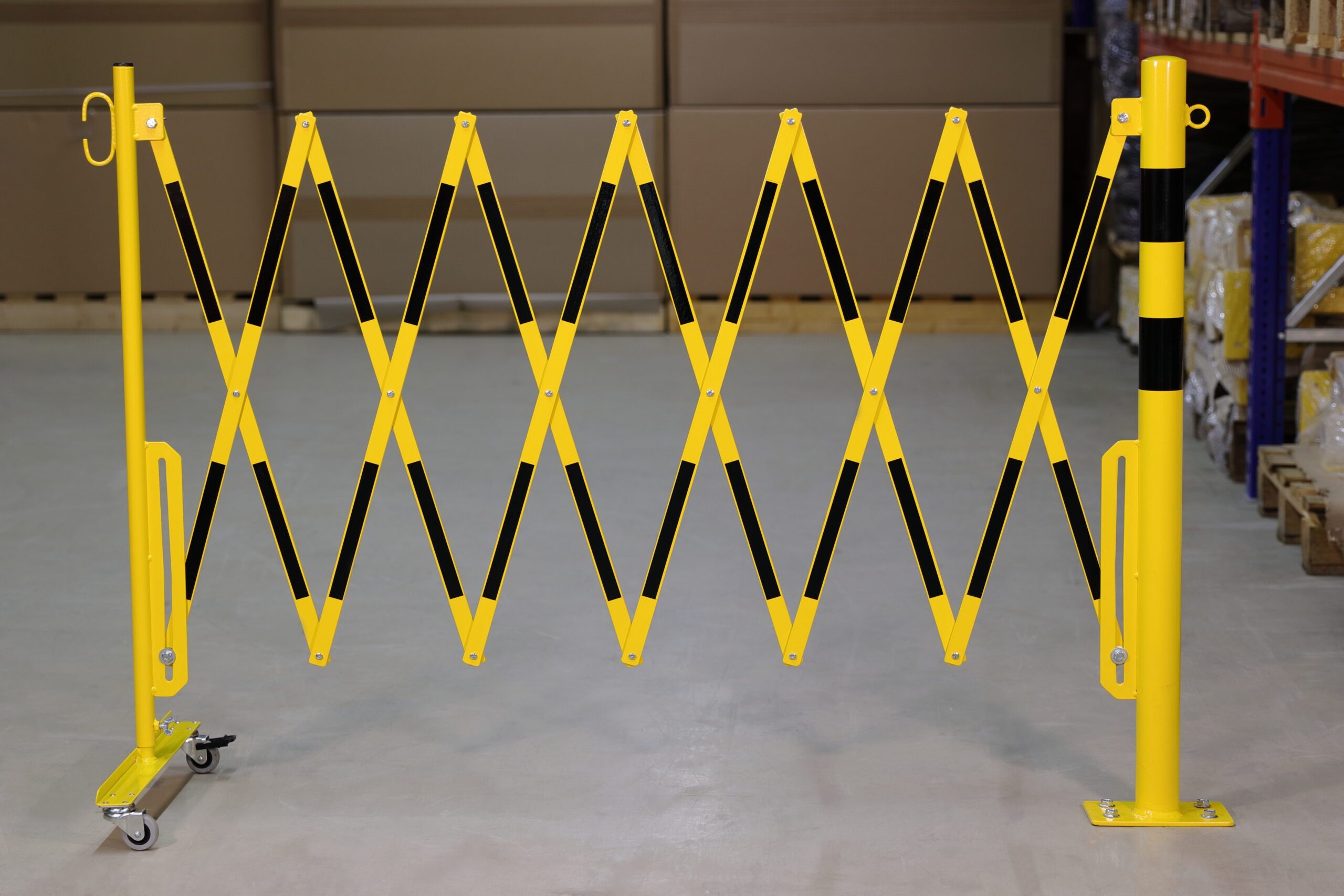
A barrier fence is much more than just a physical barrier. Think of it as a critical tool for creating safety, order and security in busy environments. Whether it’s a chaotic construction site, a road work zone or a packed festival, the right fence acts as a clear guide that protects both people and property.
Why barrier fencing is an essential part of modern safety
Think of a barrier fence as a temporary traffic controller for people. Its main job is to communicate clearly and visually where the boundary is, which often stops accidents before they even happen. On a construction site, it keeps curious onlookers away from heavy machinery, and in a road work zone, it makes sure road users and workers each have their own safe zones.
A well-placed fence solves several critical problems at once:
- Protect: It creates a safe zone and keeps unauthorized people out of hazardous or private areas, just like our heavy-duty construction fences.
- Guide: It directs crowd flow at events, reduces congestion and creates orderly lines efficiently.
- Warn: It acts as a visual warning signal that there is a potential hazard ahead, such as an open trench or work in progress.
This basic function has become increasingly important, not least for public organizations. A good example is Sparbankshallen in Bromölla Municipality, where barrier fences were set up to separate and manage the flow of people at the entrances. It’s part of a broader trend where Swedish municipalities recognize that physical barriers are a necessary tool for managing crowds and improving safety. Read more about how municipalities work with safety in public spaces.
A strategically placed barrier fence is not a cost – it’s an investment in safety. For project managers, municipalities and event organizers, it’s an indispensable tool for minimizing risk and meeting their safety responsibilities.
A well-planned barrier also demonstrates professionalism and care, which builds trust among both the public and employees.
Need help finding the right solution for your project? Here you can see our barriers/crowd control barriers. Our experts can help you assess the risks and choose the most effective fence. Contact us for personalized advice.
Explore our wide range of flexible and heavy-duty barrier solutions.
Choosing the right material and type for your application
Which barrier fence you should choose depends entirely on the job. A fence that needs to withstand wind and weather on a construction site for two years has completely different requirements than one meant to guide visitors at a weekend market. Simply put, the material and design must match the specific need.
To make the choice easier, you can break a fence’s function down into three basic purposes: to protect, guide or warn.
By first identifying what matters most for your particular project – protection, guidance or warning – it becomes much easier to find the right product.
Steel fences – when it has to be heavy-duty
When safety and durability are the top priority, hot-dip galvanized steel is the obvious choice. These fences, often called construction fences, are standard on construction sites for a reason. Their weight and sturdy design are an effective deterrent against unwanted entry, protecting both valuable equipment from theft and the public from on-site hazards.
A steel fence is built to take a beating, year after year. It’s a long-term investment.
Plastic fences – for flexibility and quick jobs
For shorter events, temporary road work or when a barrier needs to be moved quickly, plastic fences are unbeatable. They are easy to carry, transport and set up. They often come in bright high-visibility colors like orange or yellow so they really stand out.
Here the focus is on guiding people and vehicles, not creating an impenetrable barrier.
Crowd control barriers – for managing crowds
At concerts, demonstrations and sporting events, being able to manage large crowds is critical. This is where crowd control barriers come in. They are specially designed steel barriers with smart hooks that lock the sections together and reinforced feet that make them extremely difficult to tip over.
Their primary job is to withstand high pressure and create safe zones where you have full control over crowd flow.
The steel vs. plastic dilemma is common, and not just when it comes to fences. For a deeper comparison of the materials’ features, read our guide on choosing materials for impact protection.
For a quick overview, we’ve put together a comparison table.
Comparison of barrier fence materials
Here is a table comparing the most common materials side by side, so you can quickly see which one best suits your needs.
| Material | Durability | Weight | Visibility | Best for |
|---|---|---|---|---|
| Hot-dip galvanized steel | Very high | High | Medium | Construction sites, long-term barriers, high security |
| Plastic (HDPE) | Medium | Low | Very high | Short-term events, road work, directing pedestrian flow |
| Composite | High | Medium | High | Environmentally sensitive projects, public spaces, reuse |
| Aluminum | High | Low-Medium | Medium | Events that require lower weight but good durability |
The table clearly shows that the choice is a trade-off between different features. A lightweight plastic fence is perfect for a weekend festival, but completely wrong for securing a construction site in winter.
Choosing the right material is about balancing budget, safety requirements and ease of handling. The wrong choice can lead to unnecessary costs or, in the worst case, safety risks.
Not sure which barrier fence best meets the requirements of your project? Our team of experts is ready to help. Contact us for personalized advice and a tailored solution.
Understanding laws and regulations for a safe workplace
Setting up a barrier fence is about more than just common sense – it’s a process governed by clear laws and regulations. Cutting corners here is a bit like building a house without a blueprint; it’s not only risky, but can lead to hefty fines and, in the worst case, serious accidents.
A properly installed barrier is your legal and moral safety net. It shows that you take safety seriously.
The Swedish Work Environment Authority’s regulations in practice
The foundation of all this is the Swedish Work Environment Authority’s regulations (AFS 1999:3) on building and civil engineering work. The law is crystal clear: work sites must be secured so that unauthorized people are not harmed. This means that, as the person responsible, you must always start with a risk assessment.
Ask yourself a few simple questions:
- Is there a risk of objects falling?
- Are there deep excavations or other edges where someone could fall?
- Are heavy vehicles and machinery moving around the area?
The higher the risk, the sturdier your barrier fence needs to be. Simple barrier tape or a lightweight fence is rarely enough to secure an entire construction site. In most cases, a stable, heavy-duty construction fence is required.
According to the Swedish Work Environment Authority, a barrier must be designed to "effectively prevent access to the hazard area". That wording leaves little room for interpretation – the barrier simply has to work.
The principle of using physical barriers to separate and protect is deeply rooted in Swedish safety culture. Research shows that even simple but clear barrier fences can significantly reduce the risk of accidents in environments where people and ongoing work need to be kept apart.
Special requirements when working near roads
If you’re working on or right next to a road, the requirements are raised even further. That’s when the Swedish Traffic Ordinance also comes into play. Here the barrier must serve two important functions: protecting the crew on site, and safely and clearly guiding road users past the work area.
This places completely different demands on visibility. The fences must have approved reflectors, often class RA2, so they are clearly visible in darkness and bad weather. On heavily trafficked roads or in locations with poor visibility, warning lights or other lighting may even be required to stay on the safe side.
A poorly designed barrier along a road can create life-threatening situations and have serious legal consequences. If you want to dig deeper into the regulations, read our article on regulations and standards for impact protection, where many of the principles are the same.
Keeping track of all the laws and regulations can feel complicated. At Nordguard, we know exactly which requirements apply in different situations and make sure you get a solution that is both safe and compliant. Contact us for advice and we’ll help you avoid costly mistakes.
How barrier fences are used across industries
The real value of a barrier fence only becomes clear when it solves practical problems out in the real world. Its function changes completely depending on the situation – from protecting heavy equipment to guiding happy festivalgoers. Let’s look at a few typical scenarios where the right fence makes all the difference.
Construction and civil engineering: safety and theft protection
On a construction site, heavy-duty construction fences are simply indispensable. Their most important job is to create a clear and safe boundary between the work area and the public, which is a basic legal requirement for preventing accidents.
But the fences have another critical function: they act as effective theft protection for expensive machinery and materials after working hours. Here, stability, height and a durable design are essential for creating a controlled zone that can stand up to both weather and external impacts.
Events and festivals: keeping crowds under control
At events, it’s all about managing and directing large crowds safely and smoothly. Crowd control barriers are the go-to solution for securing the area in front of the stage, where crowd pressure can become enormous. Their interlocking design creates a stable barrier that is nearly impossible to tip over.
For other needs, such as creating orderly lines, sectioning off VIP areas or guiding visitors in the right direction, lighter fences or barrier tape are often used. The goal is to create a safe and positive experience for everyone.
Municipal operations: everyday flexibility
Municipalities and public agencies constantly face new challenges in public spaces. It could be anything from quickly cordoning off a hazardous area after a water leak to protecting a newly planted flower bed. It’s just as common to manage traffic and pedestrian flow at markets or public gatherings in town squares.
These kinds of measures are becoming more common as municipalities increase their investments in safety. One example is Vara Municipality, which uses barrier fences to manage flow on Stora Torget, showing how important physical barriers are for maintaining order.
For municipal needs, flexibility is key. Solutions must be easy to handle, easy to transport and quick to set up and take down to meet constantly changing needs.
Industry and warehouses: safety indoors
Safety is just as important indoors in a warehouse or industrial facility. Here, barriers are used to clearly separate pedestrian traffic from forklift aisles – one of the most common measures for preventing collision accidents.
They can also be used to protect sensitive equipment or temporarily block off an area during maintenance work. High visibility and durability are essential for maintaining a safe work environment and preventing costly incidents.
Whatever your industry, there is a tailored solution. Need help finding the right barrier fence for your specific challenges? Contact us at Nordguard for expert help and a customized quote.
A practical checklist for selection and purchasing
Buying the right barrier fence is more about a smart needs assessment than a quick hunt for the lowest price. A bad purchase may seem cheap at the time, but can quickly lead to both safety risks and unexpected costs. Use this checklist to arrive at a solution that is safe, practical and cost-effective for your project.
Define purpose and duration
The first step is to be crystal clear about what the fence actually needs to do and how long it will stay in place. The answers here drive everything from material choice to how heavy-duty the design needs to be.
- Primary function: Does the fence just need to warn and guide people? Or does it have to physically keep someone from getting in? Maybe it even needs to withstand the pressure of a crowd? Each purpose comes with completely different requirements.
- Time period: Is it a few hours for an event, or will the fence protect a construction site for several years? This determines what grade and durability you actually need to invest in.
Analyze the site conditions
Every site has its own unique conditions. Overlooking this is a common mistake that can cause fences to tip over and create an immediate hazard.
- Surface: Will the fences stand on hard asphalt, soft grass or uneven terrain? The surface determines what type of base is needed to ensure stability – a heavy concrete base doesn’t work everywhere, and a flat steel plate can sink into the grass.
- Wind conditions: Will the fences be placed in an open, windy area like a field or a bridge? Then extra bracing may be required, or you may want to choose a barrier fence with mesh that lets the wind through to reduce the risk of it catching the wind and blowing over.
Assess handling and logistics
A good fence shouldn’t just work on site. It should be easy to handle both before and after.
Think about the entire life cycle. A fence that is cumbersome to set up, transport and store will cost significantly more in labor time and wear and tear in the long run.
- Mounting: How quickly and easily do the fences need to be set up? Does it take several people, or maybe even special tools, to get them in place?
- Transport and storage: Are the fences designed to stack efficiently on a pallet? That saves a lot of valuable space, both on the truck and in storage.
Calculate the total cost of ownership
Don’t focus only on the purchase price. The real cost is what the fence costs you over time, including maintenance and how long it lasts. To get a feel for the different options, explore our complete range of crowd control products.
- Buying vs. renting: For a one-off project, renting is often the smartest option. But if you use fences regularly, buying is almost always a better investment in the long run.
- Service life and maintenance: A cheaper fence can quickly become expensive if it rusts through or constantly needs repairs. Think about the total cost over time, not just what’s on the price tag today.
Still not sure which solution is best for you? Our experts at Nordguard are happy to help you analyze your needs and put together a concrete proposal. Contact us today for free advice!
Installation and maintenance – how to make your fences last longer
Investing in a good barrier fence is one thing, but making sure it lasts over time is another. To get the most out of your investment – in terms of both safety and service life – a little care is needed from day one. With proper handling and a few simple routines, you’ll make sure your fences stand firm and are ready for the next job, year after year.
Tips for a safe and stable installation
A fence that tips over isn’t just useless – it’s a direct safety hazard. The foundation of a safe barrier lies in how it’s set up. Don’t forget these three simple but absolutely crucial points:
- Choose the right base for the job: Heavy concrete bases are excellent on hard, level surfaces, but other solutions may be needed on soft ground. Make sure the base is suited to the site conditions.
- Always connect the sections: A single fence section is vulnerable to both wind and tampering. Always use the built-in hooks or clamps to create a continuous, strong barrier.
- Secure against wind: Are the fences standing in an open, windy area? Then extra bracing or anchoring is a must. It’s a small step that makes a huge difference for safety and keeps the entire fence line from giving way.
Smart maintenance routines that actually pay off
Regular maintenance doesn’t have to be complicated. With a few quick and simple habits, you can significantly extend the service life of your fences and make sure they are always in presentable and safe condition.
A quick check after each use can catch minor damage before it grows into big, costly problems. It’s a small effort that saves both time and money in the long run.
- Inspect regularly: Make it a habit to quickly look over the fences after transport or after exposure to harsh conditions. Look for bent tubes or damaged couplers.
- Keep them clean: Hose off mud and dirt. It’s not just about looks – it prevents rust and ensures reflectors and warning colors remain clearly visible.
- Store smart: When the fences aren’t in use, stack them on a storage pallet or in a dry place. This minimizes unnecessary wear and makes handling before the next project much easier.
Nordguard is more than just a supplier
We don’t see ourselves as an ordinary product supplier, but as your partner for site protection and safety. Our job doesn’t end when the fences are delivered; we’re there to make your day-to-day work easier.
That means you get expert help choosing the right product from the start, fast and reliable deliveries, and access to spare parts. Being able to repair a damaged fence instead of scrapping it is smart for both your wallet and the environment.
Let us help you create a safer and more sustainable work environment. Contact us and let’s talk about how we can support your next project, from planning and purchasing to long-term maintenance.
Frequently asked questions about barrier fences
When working with barriers, a number of practical questions often come up. Here we’ve collected some of the most common questions we hear from our customers, with short, straightforward answers.
Do I need a permit to set up fencing?
Yes, usually. If you’re going to block off public land – such as a street, sidewalk or square – you generally need an approved traffic management plan (TA plan) from the municipality. It’s their way of making sure traffic can flow safely around your work area.
However, if the barrier is entirely on private, fenced-in property, such as a construction site, a permit is usually not required. But remember: you are always required to follow the Swedish Work Environment Authority’s rules for a safe workplace, no matter where you are.
How tall should a construction fence be?
The industry standard height is 2 meters. That height is more than enough to keep unauthorized people out while also providing privacy screening.
In some cases, however, such as high-risk areas or where there is a risk of objects being thrown over the fence, it may be worth going taller or adding a safety net.
When does it pay to rent, and when should I buy?
This is a classic question. Think of it this way: for shorter, temporary projects like a one-time event, renting is almost always the smartest option. You avoid tying up capital and don’t have to worry about where to store the fences afterward.
If, on the other hand, you use fences regularly in your business, for example as a building contractor, buying is a much better investment in the long run.
Have more questions, or need a sounding board to find the right solution for your project? Give us a call at Nordguard. Our experts will help you make a choice that is both safe and cost-effective. Visit us at Nordguard.se for more information and personalized advice.
Ready to take the next step?
We help you develop solutions tailored to your needs. At Nordguard, we strive to make the ordering process as smooth as possible. By offering support and guidance throughout the entire purchasing experience, we make sure you feel confident and satisfied with your choice of protection products.+46 10 153 90 50
[email protected]