
Outdoor Cable Protectors for a Safe and Durable Installation
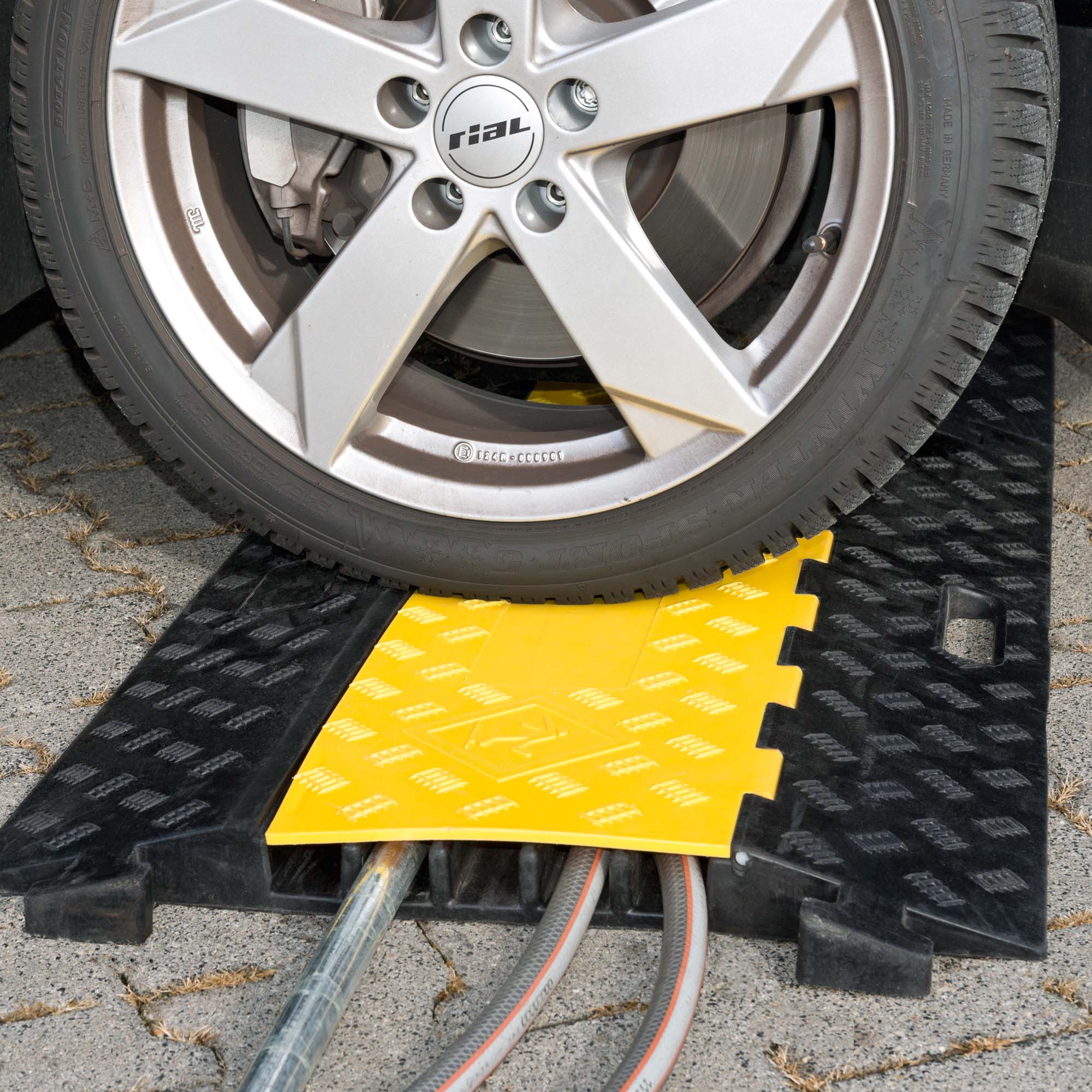
An outdoor cable protector is the obvious solution for protecting loose cables while eliminating trip hazards wherever people or vehicles move. Put simply, it works as a rugged shield that protects power and data cables against wear, crushing and weather.
The result? A safe, tidy and professional environment.
Why unprotected outdoor cables are a ticking time bomb
Picture a construction site, a festival ground or a parking lot with cables running directly across the ground. It may look like a quick and easy fix, but in reality it poses a major risk to both people and expensive equipment. Every unprotected cable is a potential trip accident, a fire hazard and an open invitation to costly downtime.
This guide is about how to avoid exactly that – trip accidents, electrical faults and damage caused by vehicles. A cable protector, like the heavy-duty models in our range, is more than just a plastic cover; it is a strategic investment that keeps your operations running without unnecessary interruptions.
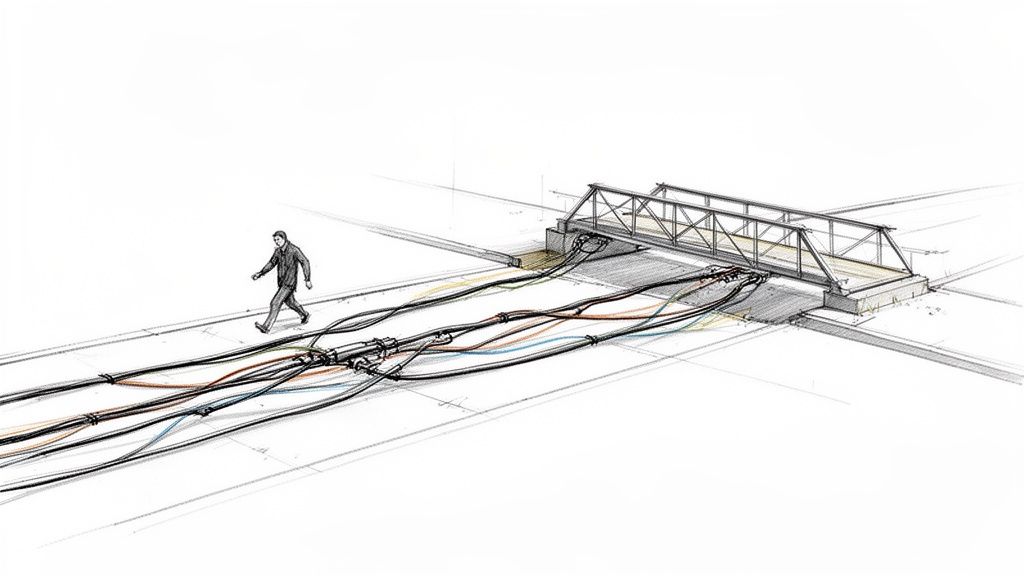
The real costs of “temporary” solutions
Many people try to solve the problem with duct tape or a few old boards. But these shortcuts fall short and often just create new problems. They offer no protection against the weight of a vehicle and shift easily, leaving the cables exposed again in no time. The real risks stay hidden – until an accident happens.
The direct consequences of poor cable protection are easy to list:
- Personal injury: Slips, trips and falls are among the most common causes of workplace injuries.
- Equipment failure: Crushed or torn cables can cause immediate power outages and destroy sensitive equipment.
- Fire risk: Damaged insulation increases the risk of short circuits and fire, especially in damp outdoor environments.
- Lost productivity: Unexpected downtime to repair a cable can cost thousands of kronor in lost working hours.
In Sweden, the use of outdoor cable protectors has increased sharply, particularly in municipal and industrial operations, thanks to stricter safety requirements. In fact, the Swedish National Electrical Safety Board reported over 1,200 incidents related to loose outdoor cables in a single year. Of these, a full 35% were due to inadequate protection, resulting in infrastructure damage of around SEK 150 million. If you want to read more about safety and regulations, you can find more information on Byggfakta’s website.
Investing in the right cable protector is not a cost – it is insurance against these risks. It turns a chaotic and hazardous environment into a safe, organized and professional workplace.
To make it even clearer, we have put together a simple table showing the difference.
Risks of unprotected cables vs. benefits of cable protectors
A quick comparison highlighting the most common problems with unprotected cables and how a cable protector addresses each risk.
| Risk without cable protection | Solution with a cable protector | Who is affected |
|---|---|---|
| Trip hazard for staff and visitors | Creates a smooth, slip-resistant transition | Everyone (events, construction, public spaces) |
| Crush damage from vehicle traffic | Protects cables against heavy loads | Groundwork contractors, industry, logistics |
| Electrical faults and short circuits due to damaged insulation | Insulates and protects against weather and wear | Property owners, housing associations, municipalities |
| Disorganized and unprofessional environment | Gathers cables neatly and safely in one place | Anyone who values order and safety |
By understanding the real problems, you can make a decision that protects your staff, your equipment and your budget.
Not sure which solution best suits your needs? Get in touch and we will help you with free advice and a quote tailored to you.
Choosing the right material for your outdoor environment
The material of an outdoor cable protector is everything. It determines how long it lasts, what it can withstand and where it works best. Think of it as the DNA of the protection – choose wrong and it may crack in the cold, deform under heavy vehicles or simply fail to do its job.
Each material has its own superpowers, suited to everything from temporary festivals to the toughest industrial environments. Our range of cable protection covers all of these needs.
Rubber for flexibility and temporary needs
A rubber cable protector is often the most convenient and forgiving option. The material is perfect when you need to protect cables quickly on uneven surfaces, such as at festivals, markets or construction sites. Thanks to its own weight, it stays firmly in place without you having to bolt it down.
Rubber easily handles heavy foot traffic and lighter vehicles such as cars and service vehicles. It is also easy to roll out when needed and just as easy to pack up when the job is done.
Compare a rubber cable protector to a really good running shoe: it is flexible, provides a secure grip and absorbs impacts. Perfect for dynamic environments with a lot going on.
Polyurethane (PU) for demanding industrial environments
When ordinary rubber is not enough, polyurethane (PU) steps in. A PU cable protector is a real workhorse, built to resist oil, chemicals and the extreme wear found in industrial plants, workshops and logistics centers. Here, forklifts and trucks are part of everyday life, and that calls for a material that can take the pressure.
PU protectors are extremely durable yet lighter than solid rubber, making them easier to handle. They retain their shape and function even under constant, heavy loads.
Aluminum for permanent protection and maximum durability
For permanent installations where nothing can go wrong, aluminum is unbeatable. An aluminum outdoor cable protector withstands everything Swedish weather can throw at it – rust, extreme temperatures and UV radiation – without losing performance.
This makes aluminum the obvious choice for public spaces, loading docks and other crossings with constant traffic all year round. In fact, data from Byggfakta shows that 62% of Sweden’s groundwork contractors choose heavy-duty aluminum cable protectors precisely for their ability to handle frost and sun. They expect an average service life of 15 years. You can read more about material specifications on Byggfakta’s information page.
Understanding these differences is the key to a smart investment. The principles are the same whether you are protecting a cable or a loading dock – feel free to read our guide on choosing materials for impact protection to learn more.
Not sure which material is best for your project? Contact us at Nordguard and we will help you with expert advice and a customized quote.
How to choose the right cable protector for your project
Choosing the right outdoor cable protector is actually quite simple, but it requires asking the right questions from the start. Think of it as a checklist for securing your project – both literally and figuratively. By going through a few key factors, you make sure you get a solution that is both safe and cost-effective in the long run.
It all starts with the load. What is the heaviest traffic the cable protector will face? Is it only pedestrians and bikes, or does it need to handle cars, service vehicles or even a fully loaded 40-ton truck? This is by far the most important question, since the answer points you directly to the right weight class and material. Getting this wrong can, in the worst case, cause the protector to collapse and create an even greater hazard.
Measure and analyze your needs
The next step is to look at the cables. How many are there and what is their diameter? Measure the thickest cable and then count how many channels you need. A good rule of thumb is to choose a cable protector with channels slightly larger than the cables to prevent them from being pinched or overheating.
Then it is time to analyze the environment. Where will the cable protector be placed? Is it a messy, dusty construction site where visibility and toughness are everything? Or will it be placed in a public park or at an entrance where appearance actually matters? A discreet, low-profile model can be perfect for a housing association that wants to protect EV charging cables, while a groundwork contractor needs a high-visibility, extremely durable version.
You can compare it to buying tires for your car. You would never fit summer tires for a winter expedition in the mountains. In the same way, a heavy industrial environment requires a completely different type of cable protector than a temporary installation at a summer concert.
Finally, consider how long it will stay in place. Is it for a weekend, a whole season or several years to come? For temporary events, a heavy rubber model often works perfectly. But for permanent solutions, it is wise to invest in a material such as aluminum and perhaps even bolt it down for maximum safety and stability.
This flowchart provides a simple overview for choosing the right material based on how long and in what environment the protection will be used.
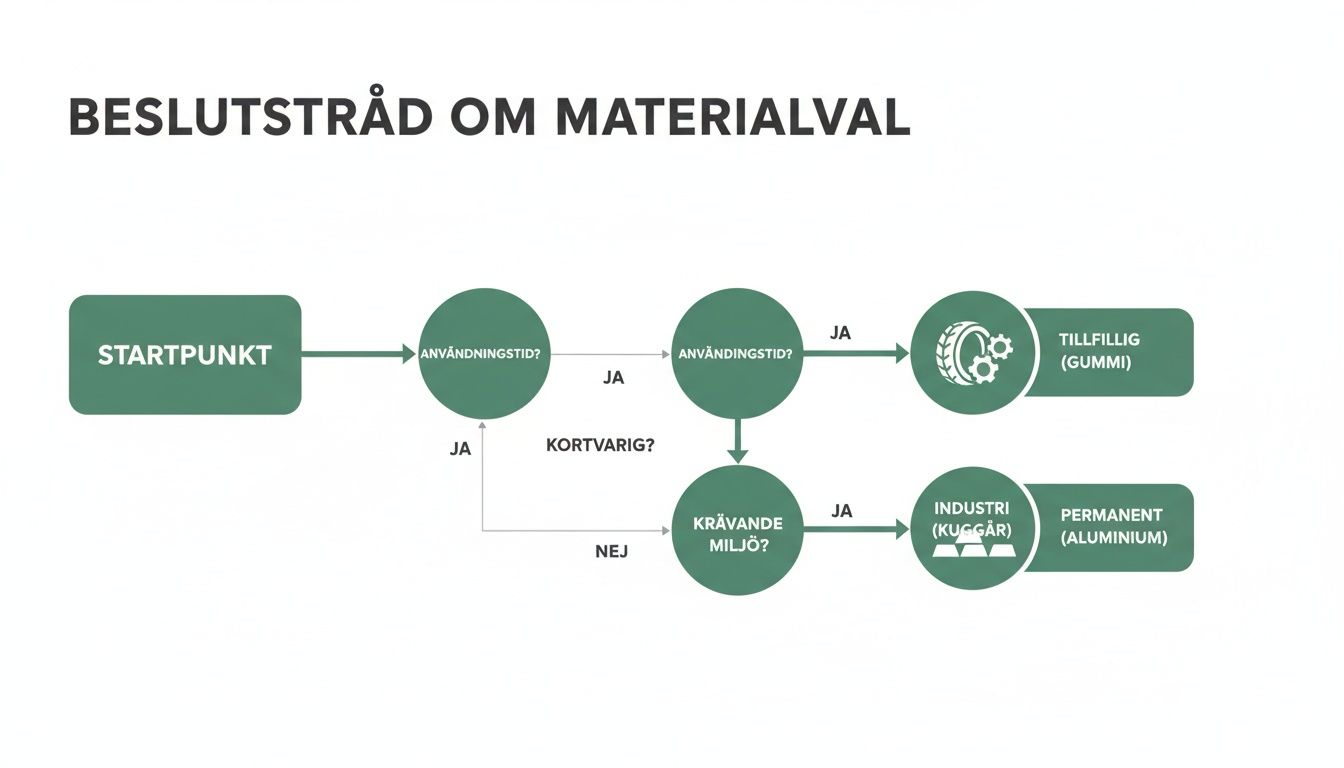
As you can see, the need for temporary, industrial or permanent protection clearly points to different material choices such as rubber or aluminum.
The economics of choosing right from the start
Investing in the right type of cable protection is not just a safety issue – it also makes good financial sense. A property owner or housing association that installs a durable system can reduce maintenance costs by up to 40%. In addition, statistics from 500 Swedish construction sites show that a full 78% of all cable-related incidents could have been avoided with the right cable protector in place.
Still not sure which model suits you best, or just want to see what options are available? Take a look at our complete range of cable protectors.
Feel free to contact us for expert help. We will help you analyze your specific needs and recommend a customized, durable solution for your project.
Practical installation guide for maximum safety
An incorrectly installed outdoor cable protector can, in the worst case, create new problems instead of solving the old ones. It is not enough to just lay out a protector and hope for the best – a stable, well-planned installation is essential for it to do its job, day in and day out.
But don’t worry, it is not complicated. With a few simple steps, you can make sure your solution is both effective and truly durable.
It all starts with the surface. Make sure the area where the cable protector will lie is as level and firm as possible. Whether it is asphalt, concrete or hard-packed gravel, a stable base gives the protector the best conditions to stay in place and work as intended.
Preparation and placement
Before laying out the cable protector, sweep the surface clean. Gravel, leaves and other debris reduce friction against the ground and increase the risk of it sliding.
Also think the exact placement through one more time. A poorly placed cable protector can unintentionally block water runoff and create large puddles when it rains. In winter, it can become a real obstacle for snow removal if it is in the wrong spot. Plan the routing so that it is as straight and short as possible without creating unnecessary obstacles.
A good installation is as much about preparation as about the mounting itself. Ten minutes of planning can save hours of problems down the line, especially when the weather turns.
When and how to anchor your cable protector
For temporary solutions, such as a weekend event, the cable protector’s own weight is often enough. Most rubber models are designed to stay firmly in place on their own under normal foot and car traffic, especially if they have an anti-slip underside.
But for permanent installations, or in environments with heavy and frequent traffic, anchoring is a must. Otherwise, there is a high risk that the protector will slowly but surely shift. The cables are then exposed again and new trip edges appear. This is especially important on sloping surfaces or where vehicles frequently brake and accelerate.
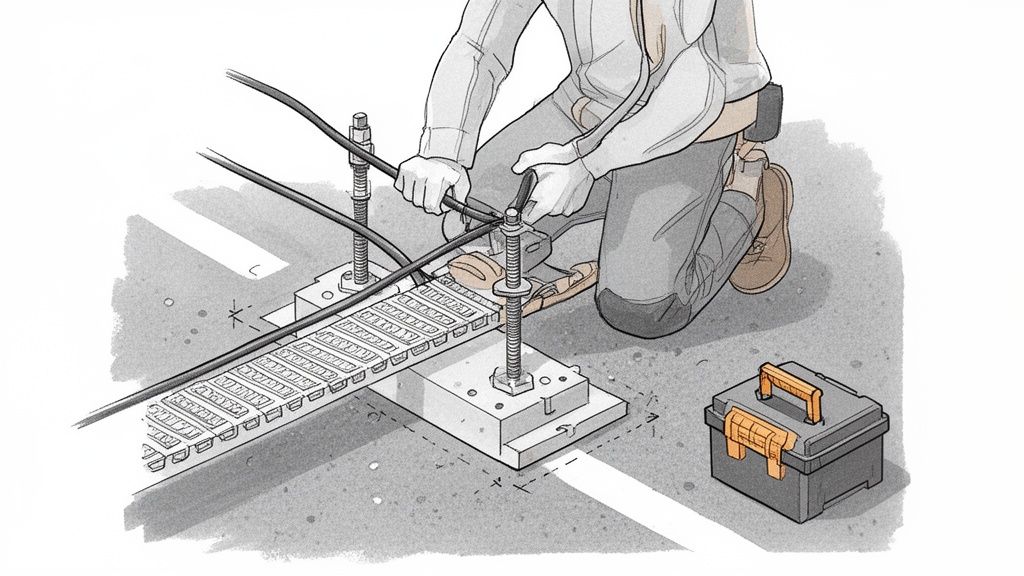
Anchoring is usually done with bolts directly into the surface. The process is simple but requires some care:
- Position the cable protector exactly where it is to be installed.
- Mark where to drill through the pre-molded holes in the protector.
- Drill holes in the asphalt or concrete according to the instructions for the bolts.
- Clean the drill holes thoroughly of dust to get the best possible grip.
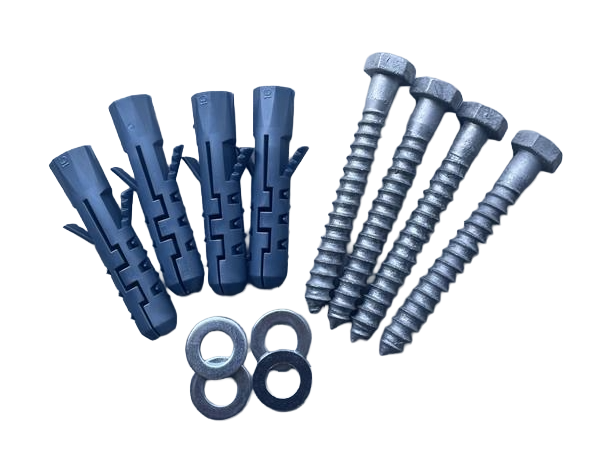
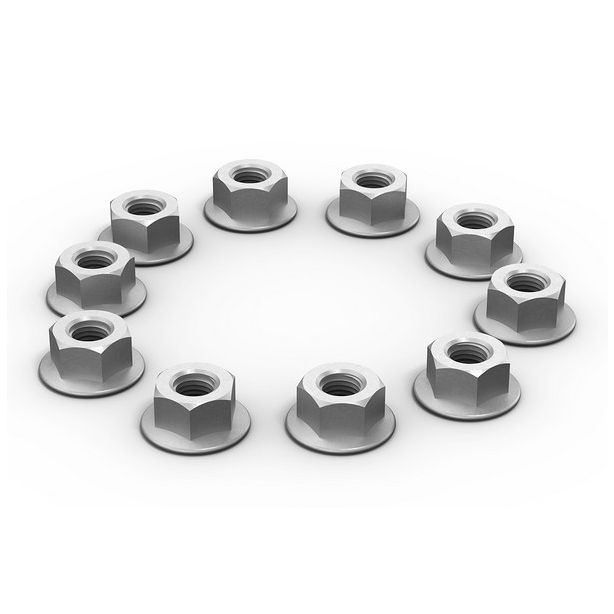
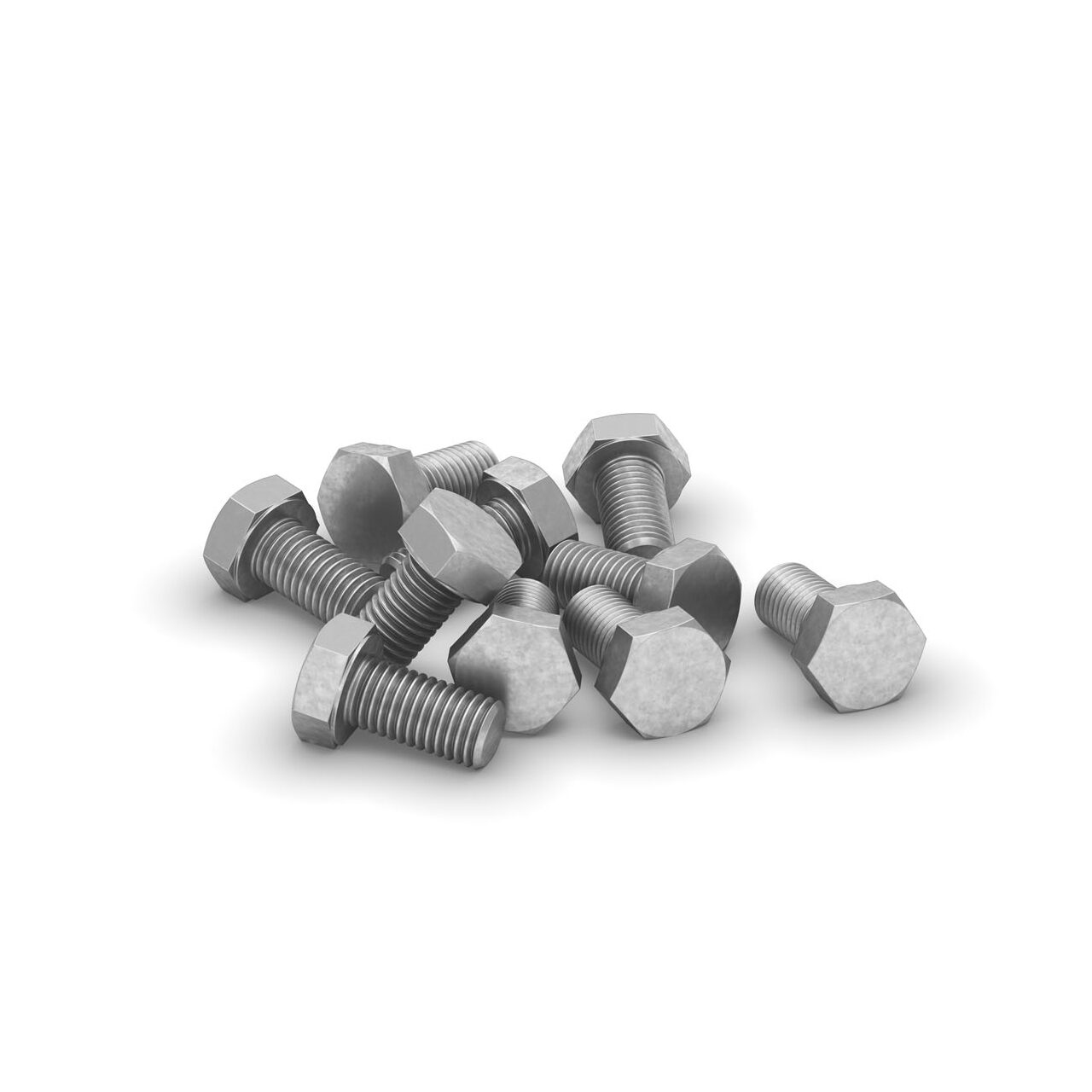
- Secure the cable protector with the recommended bolts, such as heavy-duty road anchors, and tighten them firmly.
By bolting down your cable protector, you get an installation that holds up and provides effective protection for many years to come. It is a small extra effort that gives maximum peace of mind.
Not sure which anchoring method suits your surface, or need help with project planning? Contact our experts at Nordguard for advice and a complete solution.
Maintenance and safety regulations you need to know
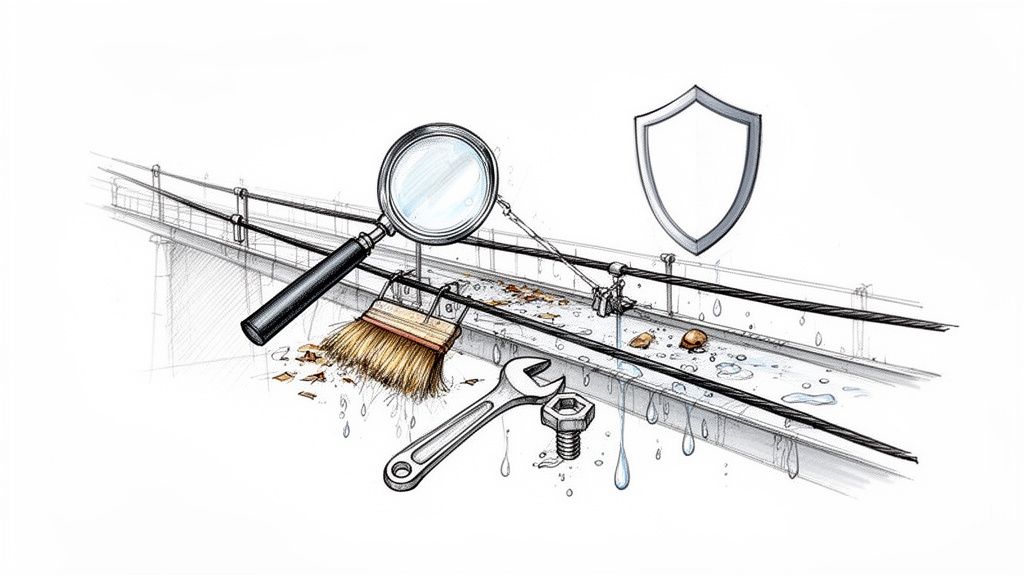
Installing an outdoor cable protector is not a “set it and forget it” solution. Just as a car needs inspections, a cable protector needs care to work safely and last. Regular maintenance is the key to ensuring function and safety, year after year.
One of the most important things to keep an eye on is the CE marking. It is your guarantee that the product has been tested and approved according to the EU’s strict requirements for safety, health and the environment. A CE-marked cable protector meets a basic standard, which is a must in environments governed by the regulations of the Swedish Work Environment Authority.
A simple maintenance plan for a longer service life
By being proactive and taking care of your cable protectors, you significantly extend their service life. It also ensures that they actually do their job.
A simple but effective checklist might look like this:
- Inspect regularly: Take a quick look at your cable protectors at regular intervals. Look for cracks, deep gouges or other signs of wear. Minor damage can quickly grow into a major problem when a heavy truck drives over.
- Keep them clean: Dirt, gravel and mud are not just unsightly – they can hide damage and reduce anti-slip performance. Keep the surface clean so that warning colors are clearly visible and safety stays at its best.
- Check the anchoring: If your cable protector is bolted down, check that all bolts are secure. Vibrations from traffic can cause things to loosen over time.
Neglecting maintenance means accepting an unnecessary risk. A five-minute inspection every month can prevent an accident or costly downtime later on.
With these simple steps, you make sure your outdoor cable protector remains a reliable and safe part of your facility.
Meet legal requirements with the right partner and product
Keeping up with all the regulations can feel overwhelming. But with the right products and a little help along the way, it becomes much easier.
Nordguard’s customized solutions, including anchoring and CO2 offsetting, have helped over 300 municipalities meet the requirements of Chapter 5 of the Swedish National Board of Housing, Building and Planning’s building regulations (BBR), which covers outdoor electrical installations. By delivering directly from the manufacturer, you also avoid waiting times that can otherwise stretch up to six weeks. You can read more about how the right solutions simplify projects on Byggfakta’s information portal.
Need advice on maintenance, or help finding a certified cable protector that meets all requirements? Contact us at Nordguard for expert guidance and a durable solution.
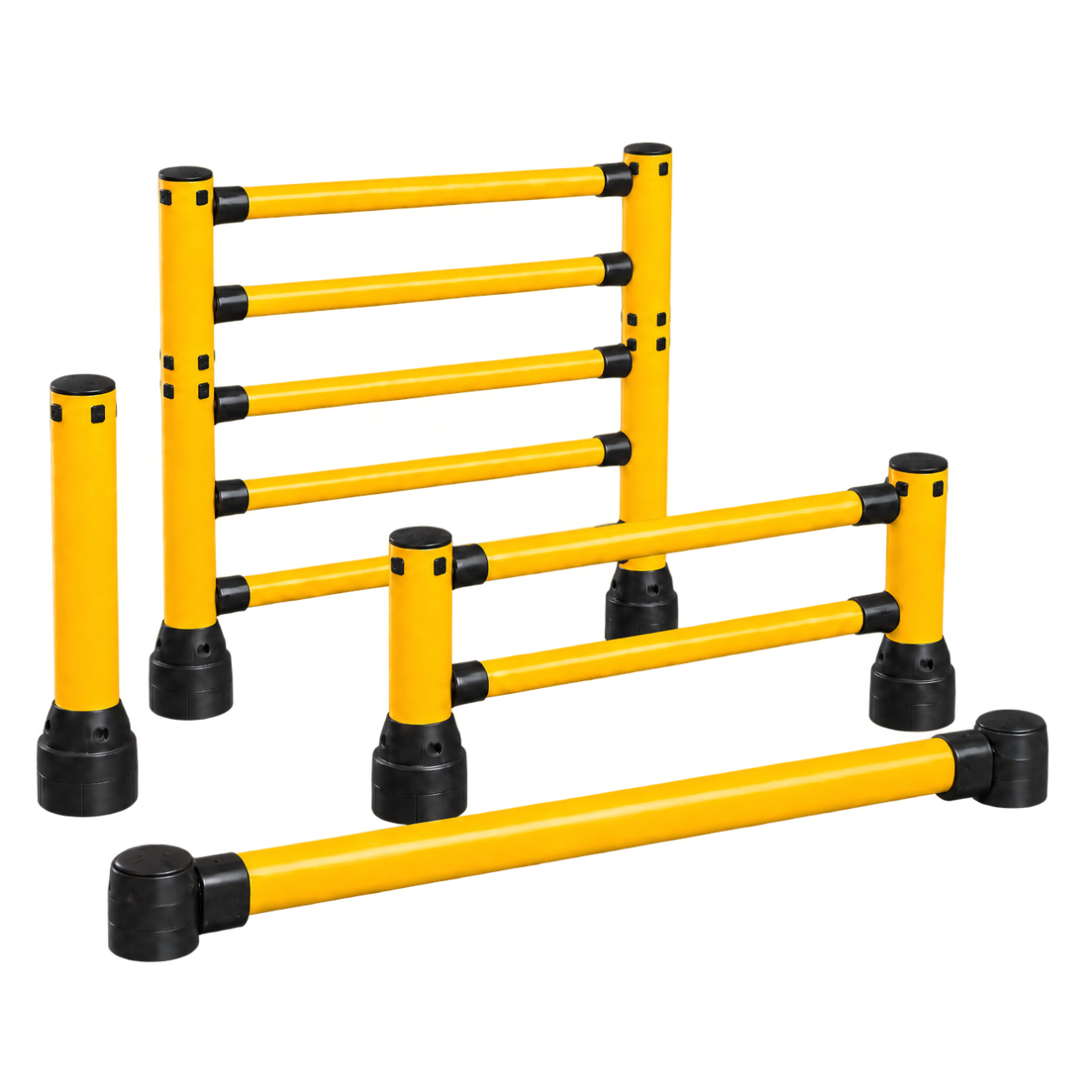
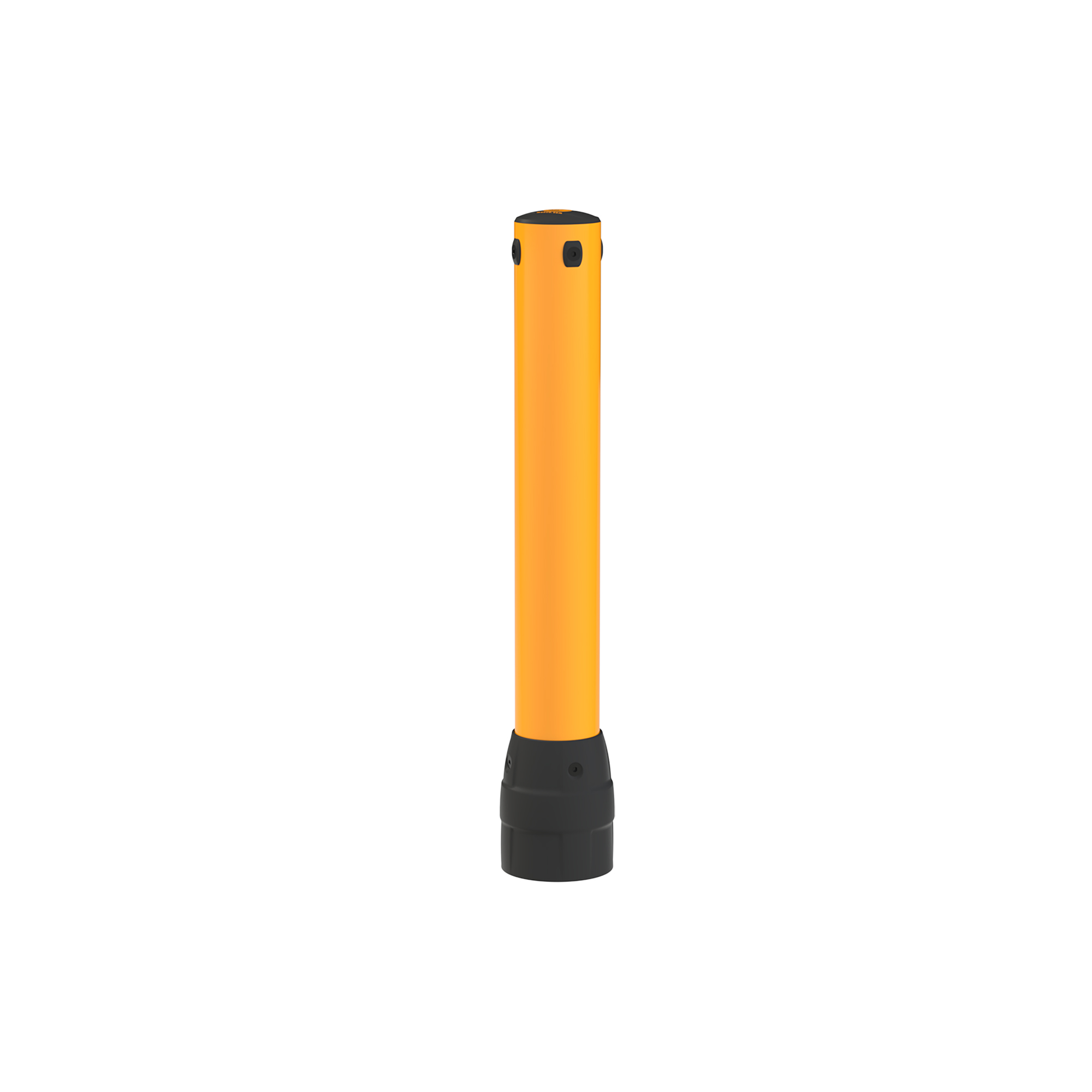
Below you will find a selection of our heavy-duty, certified cable protectors.
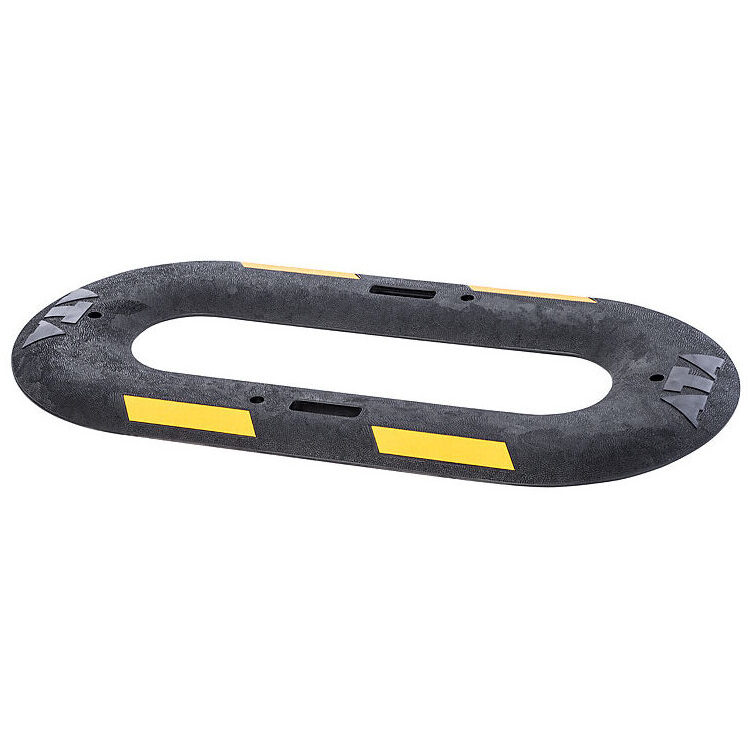
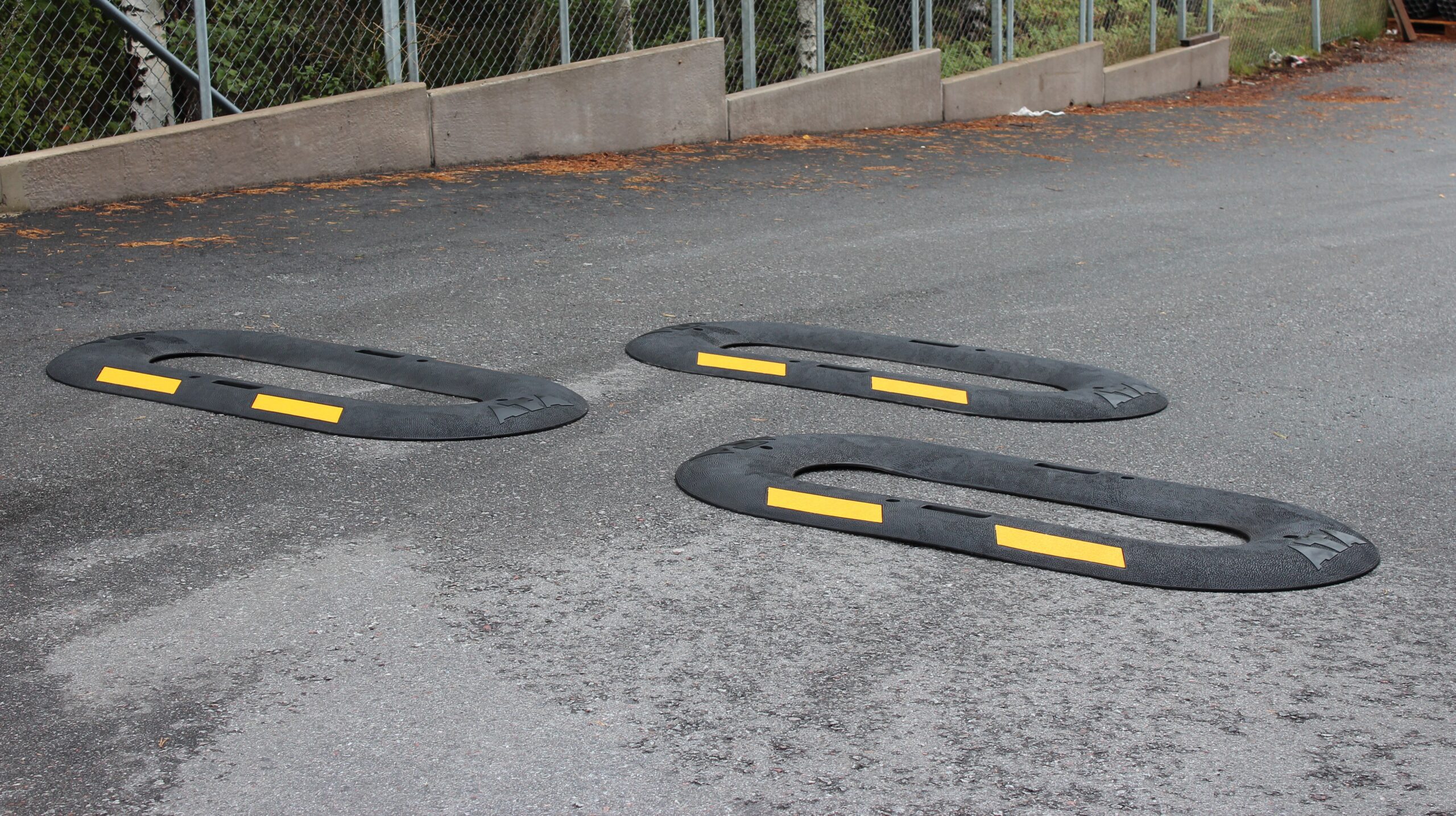


 Black/Yellow
Frequently asked questions about outdoor cable protectors
When choosing a cable protector, a number of questions often come up. Here we have gathered the most common questions we hear, with straightforward, clear answers to help you with your project.
Which cable protector can handle a truck?
It depends entirely on the weight of the truck. For really heavy traffic, go for models in reinforced rubber or polyurethane that are built to handle high axle loads. The most important thing is to always double-check the product’s maximum load specification – it is stated in tons and is your guarantee that it will hold.
Can I use an indoor cable protector outdoors?
It is a bad idea, and we strongly advise against it. An indoor model lacks UV protection, which means sunlight quickly breaks down the material and makes it brittle. They are also not built to handle rain, snow or the temperature swings of our climate. Taking that chance compromises both safety and durability.
How many cables fit in a cable protector?
It varies enormously. It all comes down to the number of channels and their dimensions – that is, width and height. A simple trick is to measure the diameter of your thickest cables, count how many you need to protect, and then choose a model with channels that have a little extra margin. That way you avoid problems.
How do I prevent the cable protector from sliding?
For temporary jobs, such as an event or a construction site, a heavy model with an anti-slip underside is often enough. It stays in place under its own weight. But for permanent installations, or on surfaces with a lot of heavy traffic, there is only one safe method: bolt it into the surface.
The need for heavy-duty outdoor cable protection just keeps growing. In the City of Stockholm alone, 5,200 meters of cable protectors were laid out in public spaces in a single year to protect everything from fiber to power cables – an increase of 28%. If you want to dig deeper into regulations and standards, you can read more on Byggfakta’s knowledge portal.
Have more questions or need help finding the perfect cable protector for your needs? Our experts at Nordguard can help you with everything from analyzing the situation to choosing the right product and anchoring. Give us a call or send us an email for a free consultation. You can find us at https://nordguard.eu.
Ready to take the next step?
We help you develop solutions tailored to your needs. At Nordguard, we strive to make the ordering process as smooth as possible. By offering support and guidance throughout the entire purchasing experience, we make sure you feel confident and satisfied with your choice of protection products.+46 10 153 90 50
[email protected]