
Bike Bollards: A Complete Guide to Urban Environments and Safety
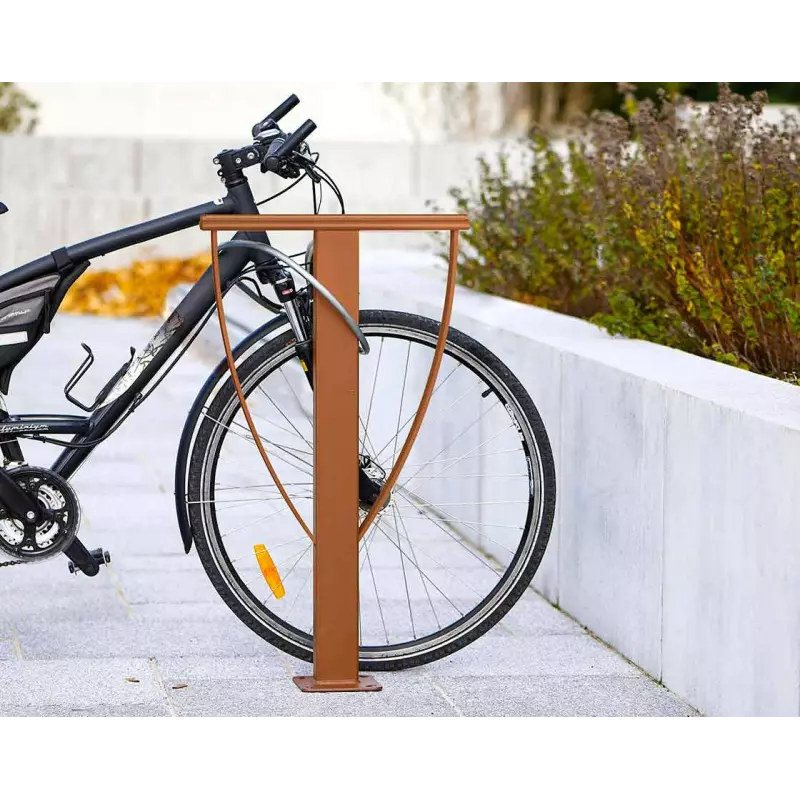
A bike bollard is much more than just a metal post. Think of it instead as a purpose-designed solution that lets you securely lock both the bike’s frame and wheel. Unlike standard bollards or simpler bike racks, it is built to provide a truly robust anchor point that is hard to break. That makes it an essential piece of the puzzle in the fight against bike theft, a real problem that calls for effective solutions.
What is a bike bollard and why is it indispensable?
A well-placed bike bollard is a cornerstone of any safe, functional and well-planned urban environment. Its distinctive design, often with a built-in locking loop or ring, makes it easy for cyclists to use modern U-locks and chains the way they are meant to be used. Simply put, it reduces the risk of a thief lifting the bike away or tampering with the lock.
But its function doesn’t stop at theft prevention. By providing dedicated, attractive parking points, bike bollards help solve the real problem of clutter in public spaces.
- Prevents obstruction: They keep bikes from being left haphazardly, where they can easily block sidewalks, entrances and emergency exits.
- Improves accessibility: Organized bike parking keeps walkways clear, which is critical for pedestrians and people with disabilities.
- Creates safe zones: As a physical barrier, bollards can also help separate bike and pedestrian traffic from vehicle traffic, improving overall safety.
The growing need for secure bike parking
Bike theft is a huge societal problem in Sweden. More than 60,000 thefts were reported in 2021, but experts believe the real figure could be as high as 500,000 per year due to a massive number of unreported cases. With a clearance rate close to zero, preventive measures become absolutely crucial. Read more about the alarming statistics in this report from Cykelcentrum.
Investing in fit-for-purpose bike bollards is not just a service to cyclists; it is a direct measure to reduce crime and increase safety in our cities and residential areas.
This challenge calls for smart, robust solutions. A bike bollard combines security with aesthetics and can be adapted to blend into any type of environment, from modern plazas to historic downtowns. Unlike traditional bollards, which mainly regulate traffic, the bike bollard is specifically designed for secure parking. In our guide, you can learn more about how different types of bollards are used for safety in different environments.
At Nordguard, we understand these challenges. We help municipalities, contractors and property owners plan and implement effective bike parking solutions that meet today’s requirements. Whether you need bollards in durable steel or classic cast iron, we have options that combine function with design.
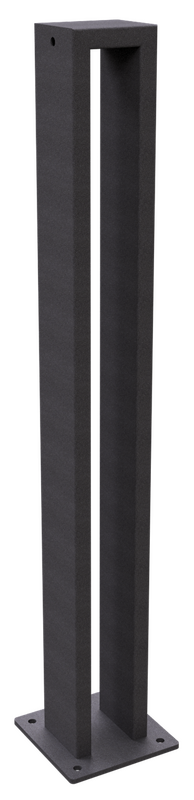
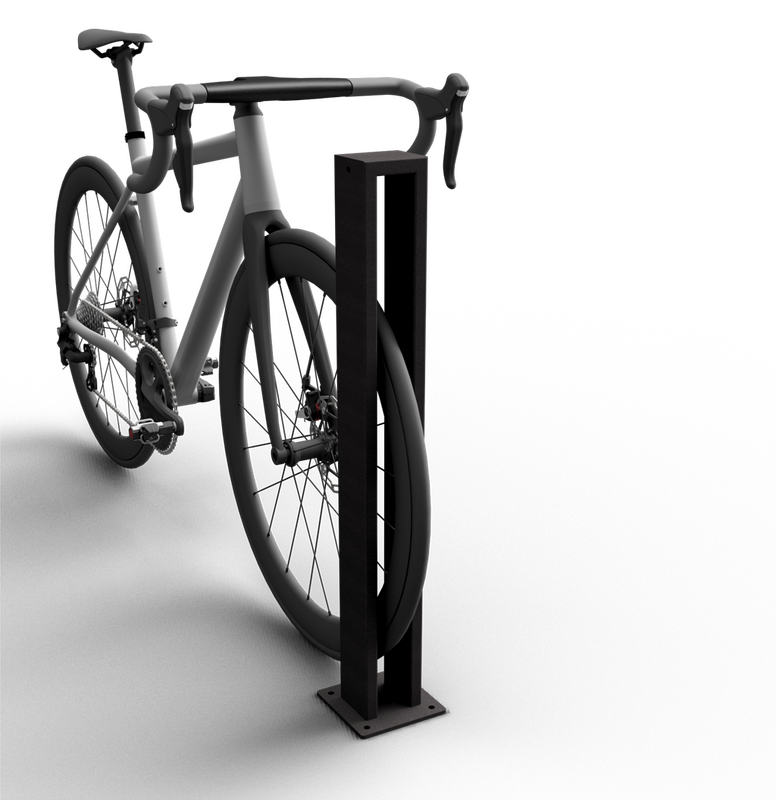
Choosing the right model and placement is key to maximizing the benefits. Need help evaluating your project’s specific needs? Contact us today for personalized advice and expertise. Our experts are ready to guide you to the best and most durable solution.
How to choose the right bike bollard for your project
Choosing the right bike bollard is more than just a product choice – it is a decision that affects the look, function and long-term durability of the site. It’s about finding a solution that blends into the environment, meets safety requirements and actually solves a problem for cyclists. A poorly chosen bollard quickly becomes a source of irritation or, even worse, a costly maintenance problem.
To make a smart choice, start by looking at the conditions on site. Will the bollard stand in a salt-spray coastal environment, a historic downtown or next to a modern office complex? Each scenario places completely different demands on material and design.
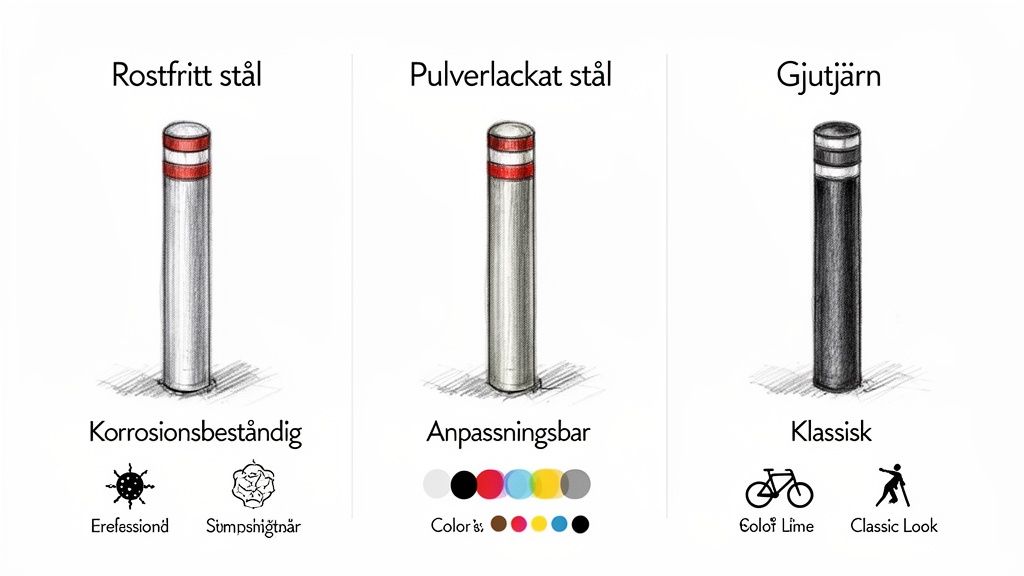
Material choice is the foundation of durability
Material is without doubt the most important factor in a bike bollard’s service life and maintenance needs. Each material has its own strengths and solves different challenges.
-
Stainless steel: This is the premium choice when durability is everything. Its exceptional resistance to rust makes it perfect for coastal cities, salted streets and other highly exposed locations. Although the purchase price is higher, the investment pays off over time thanks to minimal maintenance needs.
-
Hot-dip galvanized and powder-coated steel: An extremely popular and cost-effective solution. Hot-dip galvanizing provides rock-solid base protection against rust, while powder coating adds an extra protective layer and opens up color options from the entire RAL range. This means the bollard can easily be adapted to a specific visual identity or corporate colors. Read more about choosing the right material for impact protection in our detailed guide.
-
Cast iron: With its timeless, robust character, cast iron is the obvious choice for historic settings, parks and plazas. Here you want to preserve a classic feel, and the weight and shape of cast iron contribute perfectly to that. It is extremely durable and can last for decades with proper care.
To give you a quick overview, we’ve put together a simple comparison table.
Comparison of materials for bike bollards
This table helps you quickly compare the most common materials for bike bollards based on durability, maintenance, aesthetics and typical applications.
| Material | Durability & Strength | Maintenance Needs | Aesthetics & Design | Recommended Environment |
|---|---|---|---|---|
| Stainless steel | Very high | Low (cleaning only) | Modern, upscale | Coastal, high-traffic, salted environments |
| Powder-coated steel | High | Low (inspect the coating) | Flexible, customizable | Public spaces, parks, business parks |
| Cast iron | Very high | Medium (painting may be required) | Classic, traditional | Historic downtowns, older properties, parks |
As the table shows, no single material is best at everything – the choice depends entirely on the project’s unique requirements and conditions.
Consider function and ease of use
Don’t forget the cyclist! A good bike bollard isn’t just strong; it also has to be simple and intuitive to use. Otherwise, there’s a risk it won’t be used at all.
One important detail is height. A bollard should be tall enough, usually at least 80 cm, so you can comfortably lean the bike against it and lock the frame without any hassle.
The locking option itself is another critical point. An integrated locking loop or ring is almost always preferable, since it provides a clear and secure anchor point for both U-locks and chains. Make sure the loop is large enough to fit both the lock and the bike frame. These small details are what separate a popular bike parking area from a frustrating one.
Finally, consider whether the site requires extra protection. If the bollard will be placed near a road or loading zone, an impact-protected bike bollard may be absolutely necessary. These models are built to withstand impacts from vehicles and protect both the bikes and the surroundings.
Plan the placement for maximum function and accessibility
Bike parking is only successful if it actually gets used. The whole secret lies in smart planning and placing each bike bollard thoughtfully. It’s about finding the perfect balance between making it easy for cyclists, keeping it safe for pedestrians and making everything blend into the surroundings.
The wrong placement quickly causes problems. If the bollards are too close together, parking becomes a struggle without snagging your neighbor’s bike. If they end up too far from the entrance? Then people take the easy way out and lock their bike to a downspout instead.
The right spacing – the key to smooth parking
Getting the spacing right is essential. These measurements aren’t loose recommendations; they are absolutely critical for the area to work in practice and be safe for everyone moving through it.
-
Spacing between bollards: To avoid crowding and give people room to lock their bikes without rushing, aim for at least 100–120 cm between each bollard. This leaves room for two bikes per bollard, one on each side, without them rubbing against each other.
-
Distance from walls and facades: A bike needs some room to maneuver. Make sure there is at least 70–80 cm of clearance between the bollard and the nearest wall. This prevents scratches from handlebars and pedals and makes it much easier to park the bike.
-
Distance to walkways and roads: Safety always comes first. A bike parking area should be at least 150 cm from a walkway to guarantee clear passage for pedestrians, wheelchairs and strollers. If the parking is close to a road, an even greater safety distance is needed to protect both bikes and cyclists.
If you follow these guidelines, you’ll get bike parking that is both easy to use and works well with the rest of the environment.
How many spaces are actually needed?
This question depends entirely on where the property is located and what type of operation it is. A thorough needs assessment is always best, but here are some rules of thumb to start from:
| Type of Site | Recommended Number of Spaces | Comment |
|---|---|---|
| Residential building | 1.5–2 spaces per apartment | Often higher demand in central locations and new construction. |
| Office | 1 space per 10 employees | May need to be adjusted upward if the company has a strong cycling profile. |
| Train/Bus station | Calculated based on passenger flow | Demand here is often high and requires careful planning. |
| School | 1 space per 2-3 pupils/students | Capacity must handle the rush when everyone arrives at the same time. |
These figures are a good starting point. But remember to always consider local conditions. It is almost always better to build a little too big than a little too small. Adding more bollards afterward is often both more expensive and more complicated.
Strategic placement is everything
Where you put your bike parking directly affects how much it will be used. The best installations follow one simple rule: make it as easy as possible for the cyclist.
Bike parking near the main entrance, ideally sheltered from rain and bad weather, will be used far more than one tucked away out back. Visibility and convenience are absolutely crucial.
Some practical tips for placement:
- Close to the destination: Always place the bollards as close to entrances and hubs as possible.
- Under a roof: If you can, choose a spot under a roof or weather shelter. That makes the parking attractive year-round, not just when the sun is shining.
- Good lighting: A well-lit area feels safer to use, especially in the evenings and early mornings.
By combining the right spacing, the right number of spaces and smart placement, you get bike parking that not only solves a problem but actually encourages more people to ride. If you want to see more solutions and gain a deeper understanding, explore our complete range of bike racks and related products.
Finding it hard to plan the area in the best way? Contact us at Nordguard. Our experts have extensive experience designing functional, durable bike parking and are happy to help you find the best solution for your specific project.
Ensure a long service life with proper mounting
A robust bike bollard is only half the job. Its real strength and service life are determined entirely by how it is mounted. A proper installation ensures the bollard withstands weather, wind and daily wear for years. A carelessly mounted bollard, on the other hand, quickly becomes unstable – a safety risk and an unnecessary, costly headache.
That’s why it is essential to choose the right mounting method for the surface and to do the job carefully. Before you even start digging, it’s wise to plan the placement, the spacing between bollards and how many are actually needed to create bike parking that works in practice.
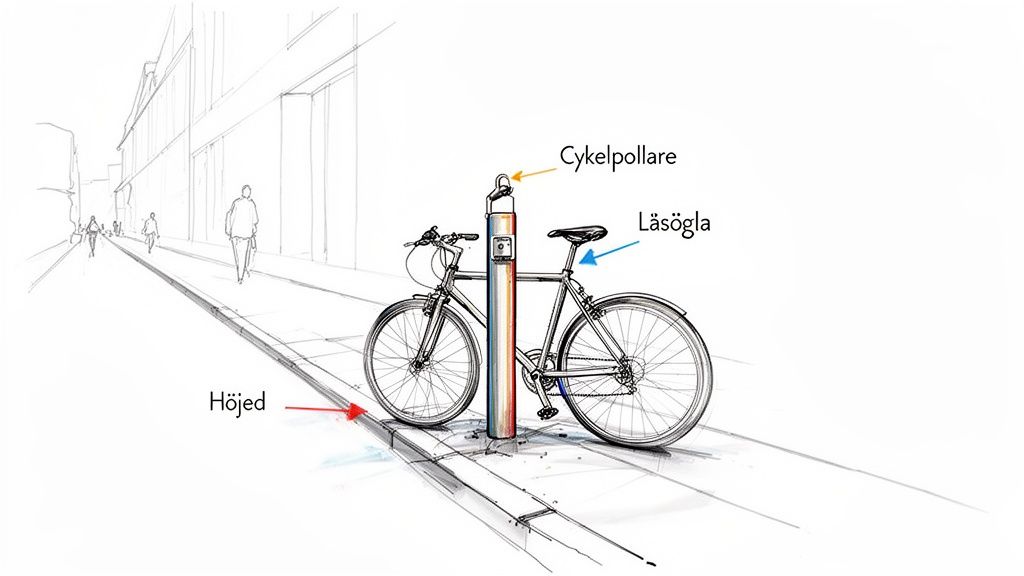
This image gives a simple overview of the basic planning steps.
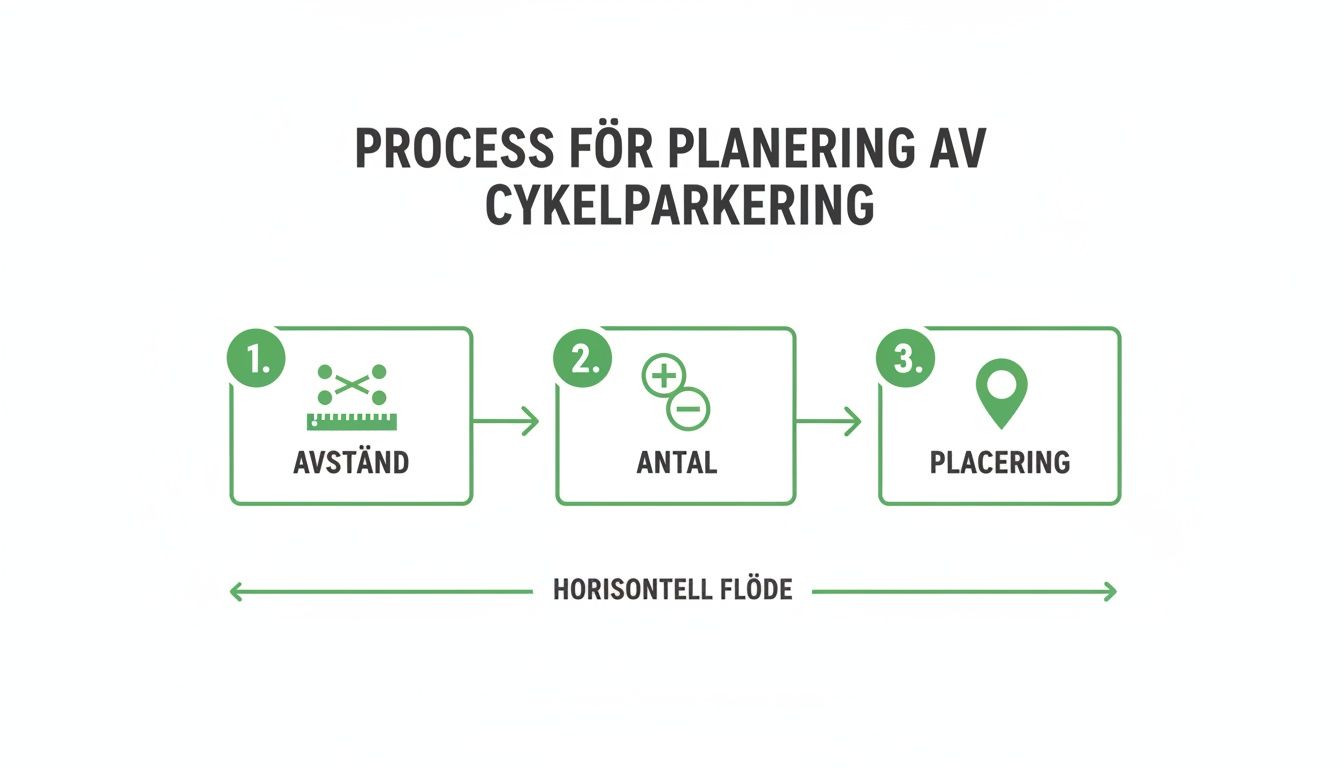
By thinking through spacing, number and placement in advance, you ensure the end result is both practical and durable.
Cast-in-place for maximum stability
When it comes to strength and durability, nothing beats cast-in-place installation. It is the method we recommend wherever there is a risk of vehicle impact or where the ground is somewhat unstable. The method creates a deep, immovable foundation that makes the bollard extremely difficult to dislodge.
The process is actually fairly simple:
- Prepare the ground: First, dig a hole deep and wide enough to hold a substantial concrete foundation. A depth of at least 50 cm is a good rule of thumb, but it may need to be adjusted depending on the bollard’s height and the ground conditions on site.
- Pour the foundation: Fill the hole with concrete. Then place the bollard (or a cast-in sleeve for the bollard) in the wet concrete and carefully adjust it with a spirit level so it stands perfectly plumb.
- Let it cure: The concrete must cure properly, which can take several days. It is extremely important that no load is placed on the bollard during this time.
The result is an installation where the bollard essentially becomes part of the ground. This is the only method that truly guarantees full functionality in exposed, high-load environments.
Base plate mounting – a flexible alternative
Sometimes casting in place simply isn’t possible. This may be on existing concrete surfaces, in parking garages or in courtyards where you don’t want to damage the waterproofing membrane. In those cases, a bike bollard with a base plate is a perfect solution. The method is both faster and less invasive than casting.
Installation involves bolting the base plate directly to the surface. But the choice of bolt is crucial to how well it turns out.
- Expansion bolt: Works excellently in solid concrete and provides a strong, reliable anchorage.
- Chemical anchor: Often used in more porous materials or where extra-high strength is needed, for example in asphalt with good load-bearing capacity.
It is important to first check that the surface is thick and stable enough to handle the load. Incidentally, bringing order to bikes has a long history in Sweden. Between 1894 and 1931, Stockholm had a bike registration system that required license plates on both the front and back. This shows that the need for structure and security around bikes is nothing new, which makes today’s robust solutions even more important. Read more about Stockholm’s early cycling history at Stockholmskällan.
Whichever method you choose, professional installation is always preferable. It not only guarantees a safe and durable result but also ensures the work is carried out in accordance with applicable regulations and standards.
Unsure which method is best for your project? Contact us at Nordguard. Our experts will help you analyze the conditions and recommend the best mounting solution for your bike bollards.
Maintenance that extends the bollard’s service life
Even the most robust bike bollard needs a little care to withstand weather, wind and wear. Choosing a durable material is a good start, but it’s ongoing maintenance that truly ensures the bollard does its job year after year. Neglecting upkeep can lead to unnecessary repairs and a bollard that simply doesn’t last as long.
The key is to be proactive. It’s not about complicated or time-consuming work, but about establishing simple routines for inspection and cleaning. By spotting minor damage early, you avoid big, costly problems down the road.
Regular inspections prevent problems
The most important thing is to check on your bike bollards regularly. A quick visual check is often enough to find damage from vehicle impacts, vandalism or normal wear. This is especially important in areas with lots of people and traffic.
A simple inspection checklist might look like this:
- Stability: Check that the bollard stands firmly and doesn’t wobble. A loose bollard is a safety risk and a sign that something is wrong with the foundation.
- Surface finish: Look for scratches, dents and flaking paint. A small chip in the coating can quickly turn into a rust spot if it isn’t fixed.
- Deformation: Does the bollard look bent or dented? A deformed bollard has lost some of its strength and should be replaced.
- Cleanliness: Is the bollard covered in dirt, graffiti or algae? Dirt can trap moisture and accelerate the breakdown of the material.
By finding and fixing damage early, you don’t just stop rust and deterioration. You also ensure the bike parking remains a safe and pleasant place.
The right care for the right material
Different materials need different kinds of maintenance to stay attractive and functional. Using the right methods is essential to avoid accidentally damaging the surface.
- Stainless steel: Easily cleaned with lukewarm water and a mild, pH-neutral cleaner. Use a soft cloth or sponge to avoid scratches. For tougher stains, there are special cleaners for stainless steel.
- Powder-coated steel: Cleaned the same way. If you find a scratch that has gone through the coating, it’s important to touch it up quickly so rust doesn’t take hold.
- Cast iron: Brush off loose dirt and rust with a wire brush, then wash with water and soap. Cast iron may need repainting every few years to maintain its protection and appearance.
For larger facilities with many bike bollards, a long-term maintenance plan is invaluable. It ensures the work actually gets done and that the entire installation stays in good condition over time.
Maintaining bollards doesn’t have to be difficult. We offer a wide range of bike bollards in durable materials that require minimal upkeep. See our range here.
So you can feel completely confident in your investment, Nordguard also offers service agreements and access to spare parts. Contact us today and our experts will tell you more about how we can help you create a maintenance plan that fits your specific needs.
Frequently asked questions about bike bollards
Here we’ve gathered some of the most common questions we get about bike bollards. The goal is to give you quick, clear answers that make it easier to choose the right solution for your project.
We cover everything from material selection to tricky mounting questions, based on our experience helping municipalities, property owners and contractors create better and safer bike parking.
What is the best material for a bike bollard?
There’s no simple answer – the best material for a bike bollard depends entirely on the environment it will stand in and the requirements for appearance and maintenance. Each material has its own strengths.
- Stainless steel: Unbeatable in harsh, corrosive environments. Think coastal locations or along roads that are heavily salted in winter. It requires almost no maintenance and keeps its modern look year after year.
- Hot-dip galvanized and powder-coated steel: A true workhorse. This is a durable, cost-effective option that offers great flexibility. Powder coating adds an extra protective layer and lets you match the color to a specific design identity in any RAL color.
- Cast iron: Perfect when you want to match a classic aesthetic. Cast iron fits like a glove in historic downtowns, parks and at older properties. It is extremely robust and built to last.
Ultimately, the choice is about balancing function, appearance and budget. A stainless steel bollard may have a higher price tag up front, but it often pays for itself through minimal maintenance in demanding environments.
How many bike spaces are needed at a residential building?
Getting the number of bike spaces right from the start is essential to avoid chaos with badly parked bikes. A good rule of thumb for residential buildings is to aim for 1.5 to 2 bike spaces per apartment.
But this isn’t an exact science. Demand can vary significantly depending on where the property is located, who lives there and how close it is to public transit. In central locations where many people commute by bike, demand can be considerably higher. Always do a thorough needs assessment to be on the safe side.
Can bike bollards be mounted on an existing asphalt surface?
Absolutely – a bike bollard with a base plate can be mounted directly on asphalt, but the surface must be in good condition. The asphalt has to be thick enough, stable and have good load-bearing capacity for the installation to be safe.
Chemical anchors are usually used to secure the bollard, creating a really strong anchorage. But it’s important to remember that this method isn’t as impact-resistant as casting the bollard in place. In environments where there is a risk of vehicle impact, such as near a parking lot or street, we always recommend cast-in-place installation. That way, you know it can withstand almost anything.
Take a look at a selection of our robust bike bollards and other bollards suited to different environments and mounting methods.


Do you have more questions or need to bounce ideas around for your project? Nordguard has the expertise needed to guide you to the best and most durable solution. We help you with everything from needs assessment and product selection to installation advice. Get in touch today for personalized service and expertise at https://nordguard.eu.
Ready to take the next step?
We help you develop solutions tailored to your needs. At Nordguard, we strive to make the ordering process as smooth as possible. By offering support and guidance throughout the entire purchasing experience, we make sure you feel confident and satisfied with your choice of protection products.+46 10 153 90 50
[email protected]