
Vehicle Barriers: A Practical Guide to Safe and Efficient Environments
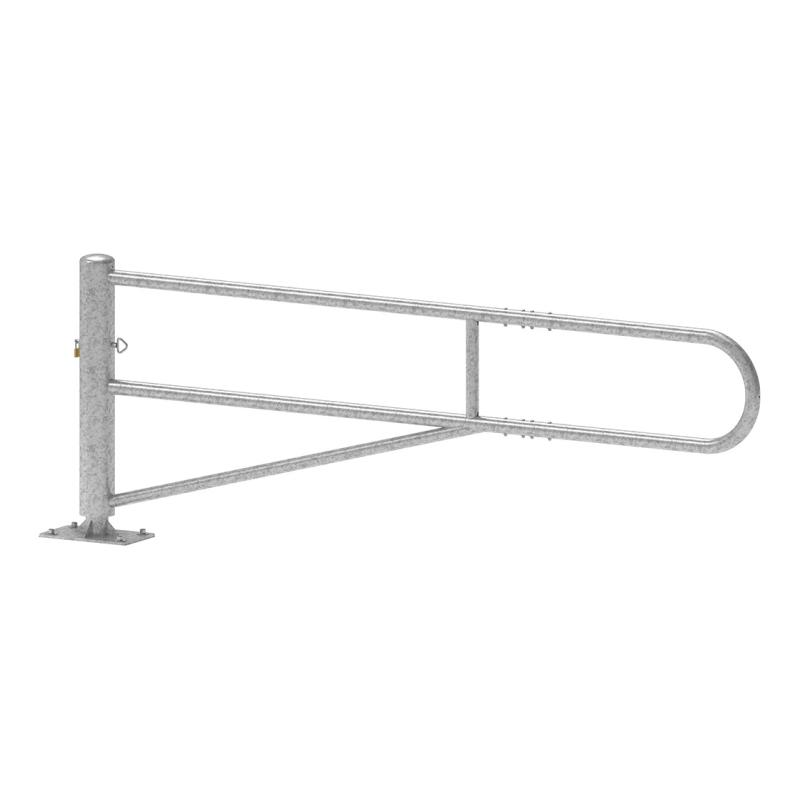
A vehicle barrier is, at its core, a physical device that controls or stops vehicle traffic. But calling it just an obstacle misses the whole point. In practice, it is a strategic solution that protects people, secures property and creates order in environments where cars and people meet.
Why a vehicle barrier is more than just an obstacle
As our cities and residential areas become denser, so does the need to manage traffic flows intelligently. A vehicle barrier is the tool that makes it possible – whether the goal is a safer schoolyard, a calmer pedestrian street or a more secure industrial site. Simply put, it solves the problems that arise when vehicles and vulnerable road users share the same space.
Picture a busy courtyard in a housing cooperative where children play, a pedestrian street full of people or a loading dock where goods are handled at a fast pace. In all of these situations, a well-placed vehicle barrier, such as a sturdy bollard or an effective barrier gate, is absolutely essential for preventing accidents and making sure only authorized traffic gets in.
Common problems that call for a solution
The need for a vehicle barrier almost always arises in response to a real problem. Some of the most common challenges we encounter are:
- Unwanted through traffic: Cars using private roads or residential areas as shortcuts to avoid congestion, creating a sense of insecurity and unnecessary wear and tear.
- Illegal parking: Vehicles left in places where they block emergency routes, loading zones or private parking spaces.
- Protection of sensitive areas: A need to protect facades, equipment, playgrounds or outdoor seating areas from being hit, whether by accident or on purpose. You can read more about how to protect property in our article on the need for impact protection.
- Facility security: Industrial sites and logistics centers that must control the flow of heavy vehicles to protect both staff and materials.
This is no coincidence. The trend is directly linked to the fact that we have more cars than ever. Vehicle barriers have become an increasingly important part of Swedish traffic and safety planning. To put it in perspective: in 2015 there were 474 passenger cars per 1,000 inhabitants, compared with just 306 per 1,000 inhabitants in the early 1970s. If you want to learn more, you can read about the development of car ownership in Sweden at SCB.se.
To make it even clearer, we have put together a table showing how the right vehicle barrier can solve specific, common problems.
Common challenges and effective solutions
| Problem area | Recommended vehicle barrier | Result |
|---|---|---|
| Shortcut through a residential area | Fold-down or lockable bollard | Only authorized users (e.g., residents, emergency services) can pass. The shortcut is effectively closed. |
| Unauthorized parking in a loading zone | Fixed bollard or barrier gate | Keeps the area clear for trucks, reducing wait times and improving flow. |
| Protecting a playground from an adjacent road | Fixed bollards or safety railing | Creates a clear, safe barrier that prevents vehicles from accidentally driving into the play area. |
| Controlling the entrance to an industrial area | Automatic hydraulic bollard | High security and smooth access for authorized personnel via remote control or access control system. |
The table shows that it is not about simply putting up an obstacle, but about choosing the right tool for the job to achieve the desired effect.
A well-planned vehicle barrier doesn’t just solve an isolated problem. It actively contributes to a safer, calmer and more functional environment for everyone who spends time there.
At Nordguard, we are your expert partner in these matters. We help everyone from housing cooperatives to large municipalities analyze their unique needs and find the best solution – from initial idea to fully installed product.
Struggling with unwanted traffic or need to secure an area? Get in touch today for a free consultation, and we’ll help you find the right solution.
Find the right vehicle barrier in our range
Choosing the right vehicle barrier can feel like navigating a jungle, but it doesn’t have to be complicated. Think of it as choosing the right tool for the job – every type of vehicle barrier has its own strengths and specific purpose. Here we guide you through the most common solutions so you can find the one that fits your needs.
The first step is always to identify why you need a barrier. Is it to stop unwanted traffic, protect property from vehicle impact, or perhaps to create a safer environment for pedestrians? The answer to that question points you in the right direction, just as this decision tree shows.
As you can see, the choice depends directly on whether you need a permanent obstacle, a flexible solution or robust protection against accidents.
Fixed and permanent solutions
When the goal is to create permanent, rock-solid protection, fixed bollards and impact protection are often the obvious choice. Think of them as reliable guards that never leave their post. Their only job is to physically block vehicles from entering sensitive areas.
They are perfect for:
- Protecting facades, storefronts or entrances from both accidental collisions and deliberate break-in attempts.
- Separating pedestrian and bike paths from car traffic and creating safe zones.
- Securing valuable equipment such as electrical cabinets, charging stations or machinery on an industrial site.
The advantage of a fixed solution is its tremendous reliability and minimal maintenance. Once in place, it withstands wind, weather and heavy stress for years. The downside, of course, is that it is exactly that – fixed – and offers no flexibility for temporary passage. If you want to see concrete examples, take a closer look at our range of heavy-duty impact protection.
Flexible and dynamic options
In many situations, you need to be able to control the flow – secure when necessary, but open when access is permitted. This is where fold-down and automatic bollards come into the picture.
A fold-down bollard is the perfect solution for reserving an individual parking space. It is easily lowered with a key by an authorized user and then raised again to keep unauthorized drivers from taking the spot. It is a simple, smart and cost-effective solution for housing cooperatives and company parking lots.
Automatic bollards are the more advanced solution. They retract smoothly into the ground via a remote control, keypad or integrated access control system.
Think of an automatic bollard as an invisible gatekeeper. It is only visible when needed and disappears completely when authorized traffic needs to pass. The result is an environment that is both secure and visually clean.
This type of bollard is often seen at entrances to pedestrian streets, public squares or facilities with high security requirements. They control the flow of vehicles without obstructing essential traffic such as deliveries or emergency vehicles.
Barrier gates for wider entrances
When you need to control a wider passage, such as the entrance to an industrial area, a campground or a vacation cabin association, barrier gates are usually the most effective tool. A manual barrier gate is a sturdy, simple choice where traffic is not very heavy. It is unlocked with a key and lifted by hand.
An automatic barrier gate, on the other hand, is built for high-traffic locations. It can be controlled by anything from a remote control or mobile phone to advanced ticketing systems, making it ideal for parking garages and larger corporate sites. Fast opening and closing times keep traffic flowing evenly and smoothly.
Comparison of vehicle barrier types
For a quick overview, we have compiled a table comparing the most common types of vehicle barriers.
| Type of vehicle barrier | Best for | Flexibility | Security level | Maintenance |
|---|---|---|---|---|
| Fixed bollards | Permanent protection of facades, walkways | None | Very high | Minimal |
| Fold-down bollards | Reserving individual parking spaces | High (manual) | Medium | Low |
| Automatic bollards | Controlled access to squares, pedestrian streets | Very high (automatic) | High | Regular (technical) |
| Manual barrier gates | Wide entrances with low traffic frequency | Medium (manual) | Medium | Low |
| Automatic barrier gates | Wide entrances with high traffic frequency | Very high (automatic) | High | Regular (technical) |
Understanding these basic differences is the key to making a good choice. Every project is unique, and the best vehicle barrier is always the one tailored to your specific conditions.
Not sure which solution is the best fit? Contact us at Nordguard for personalized advice. We’ll help you analyze your needs and find the most durable and effective solution for your project.


How to choose the right solution for your project
Choosing the right vehicle barrier is less about the product itself and more about understanding the unique environment it needs to work in. A solution that is perfect for a quiet residential street may be completely inadequate for a busy industrial entrance.
If you are a property manager, project manager or housing cooperative board member, a thorough needs assessment is the key to a successful, long-term investment. It starts with asking the right questions. By systematically going through a few critical points, you can quickly narrow down which options are relevant and which you can rule out right away.
Assess the nature and intensity of the traffic
The single most important factor is traffic. It is not just about how many cars pass each day, but also what type of vehicles are involved and how quickly they need to get through.
Start by answering these questions:
- How many vehicles per day? Is it just a few passages per day, as at a private parking space, or a constant flow, as at a shopping center?
- What type of vehicles? Is it only passenger cars, or do heavy trucks, garbage trucks and other service vehicles also need to get through? The weight and size of the vehicles place very different demands on durability.
- Do emergency vehicles need access? This is a critical point. Fire, police and ambulance services must always have fast, easy access. The solution must either be easy to force open or be operable with a standardized fire department key.
The answers to these questions determine whether a simple manual solution is enough, or whether you need a more advanced automatic vehicle barrier that can handle high frequency and heavy vehicles.
Analyze the physical conditions of the site
Every site has its own unique conditions that affect which type of vehicle barrier can be installed and how it will perform over time. Ignoring these factors risks both functional problems and unnecessary costs.
Consider ground conditions and climate:
- Ground conditions: Is there room to dig for a deep foundation, which many fixed and automatic bollards require? Or is the ground full of cables and pipes, making a surface-mounted solution the only option?
- Local climate: In parts of the country with a lot of snow and ice, you need to think about snow removal. A fold-down bollard can become an obstacle for snowplows if it is not positioned correctly or lowered. Hydraulic systems can also be affected by extreme cold unless they are designed for the Nordic climate.
- Width of the passage: A narrow passage can be secured with a single bollard, while a wide entrance requires several bollards in a row or a barrier gate. If you are considering a wider solution, you can read more about the different options for barrier gates and their applications.
Matching the product to the physical conditions of the site is just as important as matching it to the traffic flow. It ensures not only proper function but also a long, trouble-free service life.
Understand technical requirements and certifications
Once you have a clearer picture of your practical needs, it’s time to look at the technical specifications. Concepts like load classes and certifications may seem complicated, but they are actually your guarantee that the product delivers on its promises.
A CE marking is not just a logo; it is an assurance that the product meets the EU’s essential health, environmental and safety requirements. Choosing a CE-marked vehicle barrier means investing in a product that has been tested and verified for its intended purpose. Think of it as a seal of quality that gives you peace of mind.
Load classes specify the type of stress a product is designed to withstand. A bollard intended to stop a passenger car has a completely different rating than one built to resist a heavy truck. Choosing the right rating is crucial to getting the protection you actually need.
Navigating all these choices can feel overwhelming. You don’t have to do it alone. Our team is ready to help you through the entire process.
Contact us at Nordguard for a free needs assessment. Together, we’ll find the most durable and effective solution for your unique needs, so you can feel completely confident in your decision.
Ensure performance and service life with proper installation and maintenance
A vehicle barrier is a long-term investment, but its real value and service life are determined almost entirely by two things: how it is installed and how it is maintained. Even the sturdiest bollard will give way if it is not properly anchored, and an advanced automatic system will inevitably malfunction without regular inspection.
Understanding the basics of installation and maintenance is therefore essential to getting the most out of your investment – both in performance and in your budget.
The foundation is everything
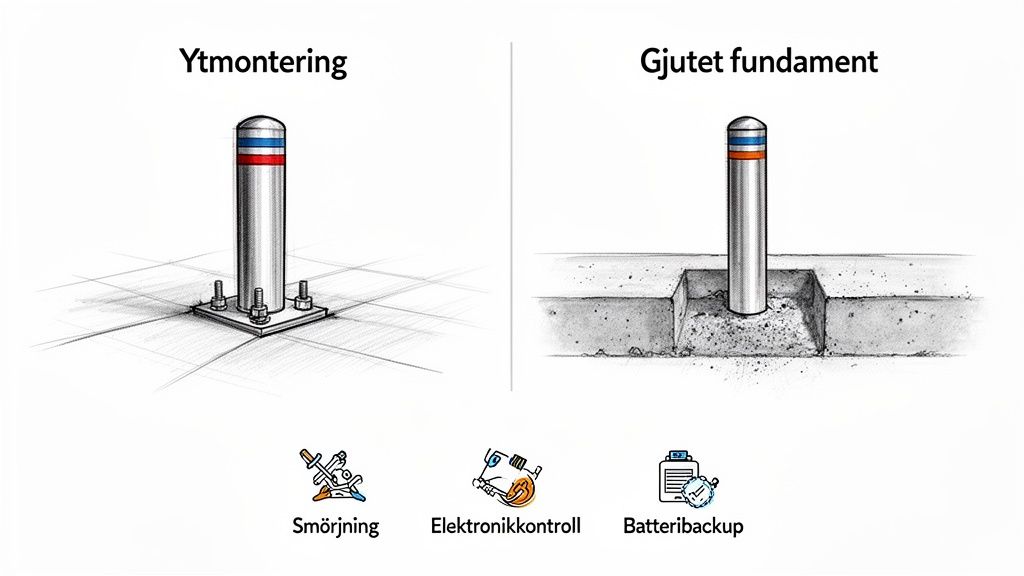
A vehicle barrier is never stronger than its weakest link, and that link is almost always its anchoring in the ground. With a substandard foundation, a bollard or barrier gate simply cannot withstand the forces it is built for. Basically, there are two ways to install, each with clear advantages.
Surface mounting means the product is bolted directly onto an existing hard surface such as asphalt or concrete. It is a quick, cost-effective method that works perfectly for marking zones or preventing illegal parking. However, it is not designed to withstand heavy impacts.
Casting in a foundation is by far the most robust method. A hole is dug, a concrete foundation is poured and the bollard is anchored deep in the ground. This is the only right choice for high-security installations and locations with a high risk of vehicle impact.
Think of the foundation as the roots of a tree. Without deep, strong roots, the tree falls in the first storm, no matter how sturdy the trunk is. The same logic applies to a vehicle barrier.
The choice between methods comes down entirely to purpose. For a fold-down bollard in a private parking space, surface mounting is often sufficient, while a fixed bollard meant to protect a facade requires a deep, well-cast foundation.
Proactive maintenance prevents problems
Once installation is complete, the next important phase begins: maintenance. Just as a car needs regular servicing to run safely, a vehicle barrier requires ongoing inspection to ensure a long, trouble-free service life. Needs vary considerably depending on the type of product, of course.
Here is a simple overview of what different types of vehicle barriers require:
- Fixed bollards: These are virtually maintenance-free. A quick inspection now and then to make sure they haven’t been damaged or come loose, along with cleaning, is usually all that’s needed.
- Manual solutions (fold-down bollards, manual barrier gates): The main task here is keeping moving parts clean and lubricated. The locking mechanism should be checked and lubricated at regular intervals to prevent it from sticking, especially in our Nordic climate.
- Automatic systems (hydraulic bollards, automatic barrier gates): These systems are more complex and need regular technical servicing. This includes checking the hydraulics, electronics, sensors and safety functions. Proactively replacing wear parts can prevent costly breakdowns and downtime.
Ignoring maintenance is asking for trouble. A sticking lock on a fold-down bollard can become a daily annoyance, while a fault in an automatic system can paralyze an entire entrance. By investing in a service agreement, you ensure that your installation always works as it should, maximizing your investment and minimizing your worries.
Below is a selection of products that require different types of anchoring and maintenance.
At Nordguard, we offer complete service agreements covering everything from installation and commissioning to ongoing maintenance and spare parts. We make sure your installation runs trouble-free year after year, so you can focus on your core business.
Need help with installation, or want to sign a service agreement for your existing vehicle barriers? Contact us today for a tailored solution that gives you complete peace of mind.
Rules and standards – get it right from the start
Installing a vehicle barrier involves more than just bolting it to the ground. It’s about responsibility. To ensure the safety of both road users and the public, there are quite a few rules and laws to comply with. Knowing them from the outset is not only reassuring – it’s a must to avoid costly delays, fines or, in the worst case, accidents.
The process may seem complicated, but it exists for a good reason. Standards ensure that the installation is safe, functional and, quite simply, legal. At Nordguard, we see ourselves as your partner in this and help you find your way through the regulations, so everything is done correctly from start to finish.
CE marking – your guarantee of quality
When choosing a vehicle barrier, CE marking is one of the most important things to look for. It is far more than just a sticker; it is the manufacturer’s promise that the product meets the EU’s strict health, environmental and safety requirements.
A CE-marked product has been reviewed and tested to ensure it delivers on its promises. For you as the buyer, this means in concrete terms:
- Tested performance: You can trust that the product withstands the stresses it is built for.
- Safe design: Materials and design have been reviewed to minimize risks.
- Legal security: You are using a product approved for the European market.
Gambling on a product without CE marking to save a few dollars is a risk that rarely pays off. It can lead to both poor performance and legal problems if an accident occurs.
Investing in a CE-marked vehicle barrier is like taking out insurance for your installation. You buy quality, minimize risks and gain peace of mind that extends far beyond the product itself.
When do I need a traffic management plan (TA plan)?
If your installation affects a public area in any way – such as a street, sidewalk or bike path – you will almost certainly need a traffic management plan, or TA plan. It is simply a document describing in detail how the work will be carried out safely and how traffic will be rerouted in the meantime.
The purpose is to protect both the workers and the public. The plan must be approved by the road owner, which is usually the municipality or the Swedish Transport Administration.
The need for proper planning is clearly reflected in how municipalities themselves handle this. In the Municipality of Danderyd, for example, a TA plan is required for all work affecting the traffic environment. For a company, such an application costs 1,500 SEK, while a general plan for an entire year costs 5,000 SEK. The costs reflect how important proper planning is for protecting both the work site and traffic. If you want to learn more, you can read about the Municipality of Danderyd’s requirements for TA plans.
Preparing a TA plan and getting it approved can take time. By starting early and getting help from experts, you avoid unnecessary and costly delays in your project.
Navigating safety standards and permits can feel overwhelming. Our expertise is here to guide you, from choosing the right CE-marked product to making sure all the paperwork is in order.
Contact us at Nordguard for advice. We’ll make sure your vehicle barrier installation is safe, efficient and fully by the book.
Create sustainable, vibrant environments with smart vehicle barriers
A vehicle barrier is so much more than just a safety product. Sure, its basic job is to stop a vehicle, but if we look at the bigger picture, we see something entirely different. A strategically placed bollard or barrier gate is actually an incredibly powerful tool for shaping how our cities and residential areas will look and feel in the future.
At its core, it’s about creating environments that put people first – not cars. By actively managing and restricting car traffic, we can reclaim street space and transform it from a mere transport route into a vibrant place. This sets off a positive spiral for the whole community.
Give the street back to the people
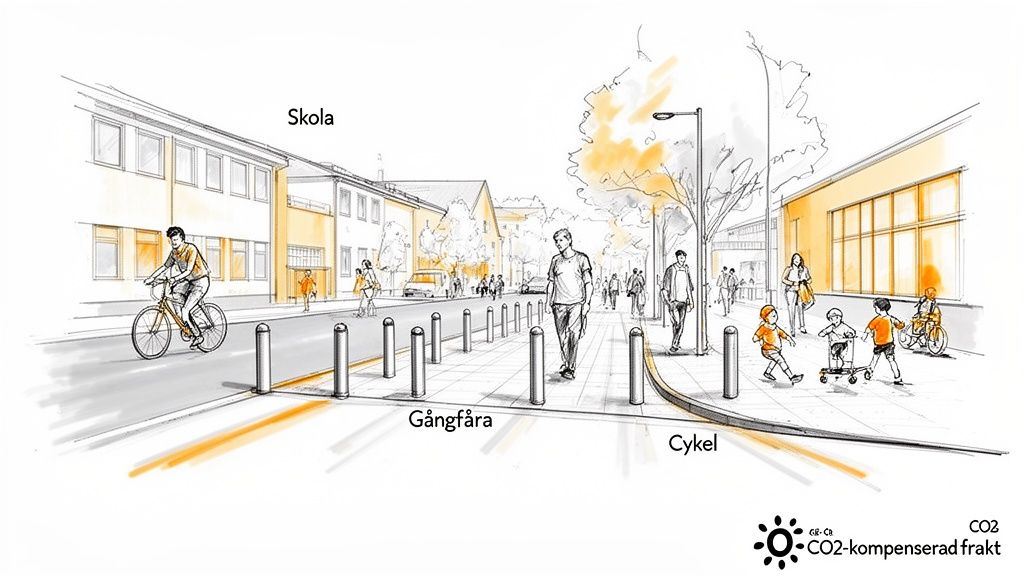
Picture a street outside a school. With a few well-placed bollards, cars can no longer speed past. Suddenly there is a safe zone where children and parents can move around without that constant knot of worry in their stomachs.
Or imagine a downtown area where automatic vehicle barriers close streets to traffic in the evening. The noisy streets are transformed into lively squares with outdoor dining and space for people to meet. These are not pipe dreams, but concrete results of smart urban planning in which the vehicle barrier plays a leading role.
When we restrict vehicle traffic, several things happen:
- More people choose to walk and bike: Safer streets simply make it more pleasant to get around without a car, which is a win for public health.
- Noise and emissions decrease: Less traffic in sensitive areas creates a quieter, healthier local environment.
- Social safety increases: Places designed for people are almost always perceived as safer and more inviting.
Sweden’s focus on sustainable transportation makes the case even stronger. By steering cars away from certain areas, we can prioritize walking, cycling and public transit. For property owners, housing cooperatives and municipalities, properly placed vehicle barriers are a concrete way to contribute to both climate goals and safer local environments. You can read more about how this is applied in practice in the Municipality of Lindesberg’s planning.
Sustainability in every detail
Creating sustainable environments is also about choosing products that actually last. A vehicle barrier is a long-term investment. That’s why materials and construction must be of the highest quality to withstand both wear and a harsh Nordic climate. Products with a long service life reduce the need to constantly buy new ones, which in turn reduces waste.
Sustainability isn’t just about environmental certificates. It’s about creating solutions that work, last and make a positive contribution to their surroundings for many years.
But sustainable thinking doesn’t stop at the product. At Nordguard, we take responsibility for the entire chain. By offering 100% CO2-offset shipping, we ensure that the whole process, from order to delivery, has as small a carbon footprint as possible. It is a natural part of our commitment – delivering a complete and responsible solution.
Below is a selection of products that can help create safer and more sustainable urban environments.
A vehicle barrier is not just an obstacle. It is an enabler of a safer, greener and more vibrant future. Let us help you not only secure a space, but actively make it better.
Do you have a vision for a safer, more sustainable environment? Contact our experts today and let’s talk about how we can help you make it a reality.
Frequently asked questions about vehicle barriers
Here we have collected some of the most common questions we receive. The goal is to give you quick, clear answers that help you move forward and feel confident in your choice.
Which vehicle barrier is best for a housing cooperative?
It depends entirely on what you want to achieve. If the goal is to protect an individual parking space from unauthorized users, a fold-down bollard is usually the simplest and most cost-effective solution. It is easily operated by the resident.
If, on the other hand, you need to control the flow at a shared entrance while making sure emergency services can always get through, a barrier gate or bollard that can be opened with a standardized fire department key is an excellent choice. We are happy to help you figure out which solution best fits your situation.
Do I need a building permit to install a bollard?
A single bollard on your own property rarely requires a building permit. But as soon as the installation involves a public road, sidewalk or bike path, you will almost always need a permit and an approved TA plan (traffic management plan).
Rules can vary between municipalities, so talking to your local building committee is always a smart first step to avoid problems down the road. We have extensive experience with exactly this and can guide you through the process.
An important point here is that even if no building permit is required, you as the property owner are still liable if an accident occurs. In other words, a correct and safe installation is absolutely essential.
What happens to an automatic bollard during a power outage?
This is a common and important question. A high-quality automatic bollard has built-in safety features for exactly this scenario. Most are designed to lower automatically during a power outage. This guarantees free passage so no vehicles get trapped.
Many systems can also be equipped with battery backup for continued operation, or a manual release as an extra safety net. This is a detail we always discuss when developing a solution, to make sure everything works as it should – even when the unexpected happens.
Have more questions, or want to bounce ideas around for your project? Our experts at Nordguard have the answers and will help you find a solution that is safe, durable and budget-friendly. Get in touch today for personalized advice and a free quote. Learn more and contact us at https://nordguard.eu.
Ready to take the next step?
We help you develop solutions tailored to your needs. At Nordguard, we strive to make the ordering process as smooth as possible. By offering support and guidance throughout the entire purchasing experience, we make sure you feel confident and satisfied with your choice of protection products.+46 10 153 90 50
[email protected]