
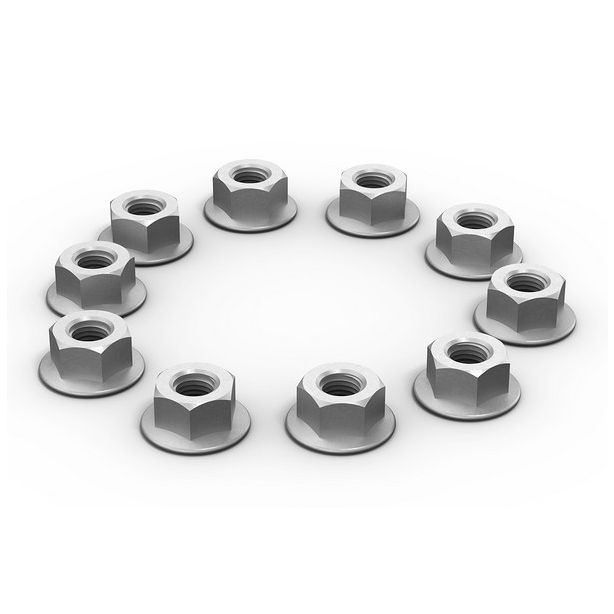
 Nut Set, 10 pcs, M10, Hot-Dip Galvanized
 A Practical Guide to Outdoor Impact Protection for Your Property
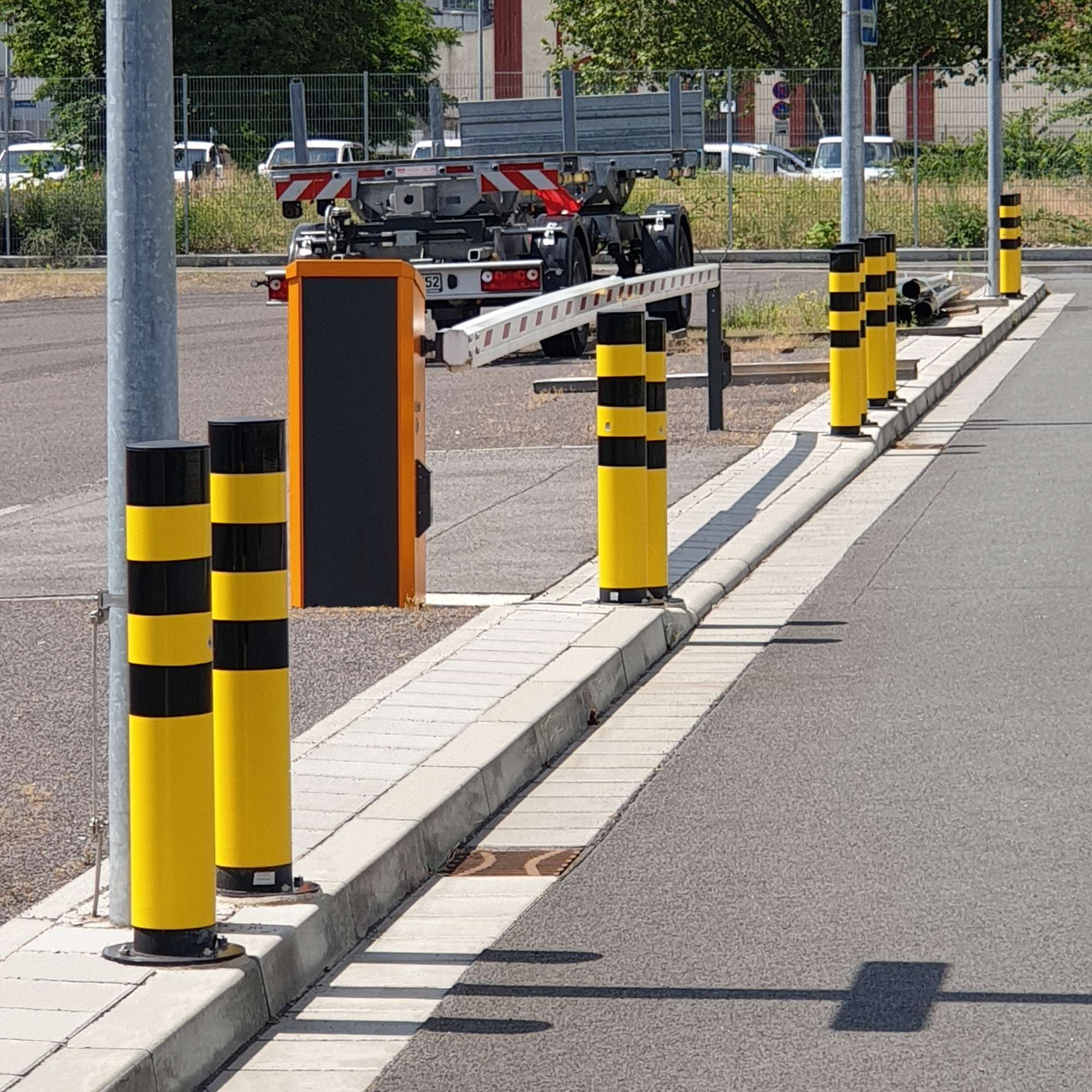
Outdoor impact protection is more than just a piece of steel in the ground. It is a fundamental safety measure that protects everything from property and vehicles to what matters most – people. Whether it is a heavy-duty bollard at an entrance or a simple wheel stop in a parking lot, these products act as a physical barrier and are absolutely essential for creating a safe and functional environment.
Why impact protection is a necessary investment, not a cost
Ignoring the need for impact protection means inviting unnecessary risk. It is not just about checking regulatory boxes – it is about proactively protecting people and safeguarding your business assets. A truck misjudging its approach at a loading dock, a distracted driver in a parking lot, or a vehicle scraping a newly renovated facade – these are scenarios that, unfortunately, happen all too often.
Incidents like these lead to far more than expensive repairs. They can cause serious injuries, costly downtime and, ultimately, higher insurance premiums. By viewing outdoor impact protection as a smart investment rather than a pure expense, you build a safer, more resilient environment for everyone in the area.
More than just physical protection
A well-planned impact protection installation offers benefits that go far beyond simply stopping a vehicle.
- Preventive effect: Clearly marked protection such as bollards and barriers guides traffic and encourages drivers to be more careful. They reduce the risk of an incident before it even happens.
- Peace of mind for staff and visitors: Protected walkways and entrances create a completely different sense of safety, which is extremely important in environments where vehicles and pedestrians mix.
- Protection of critical infrastructure: Sensitive equipment such as electrical cabinets, gas lines or load-bearing columns can be protected from impact, preventing damage with potentially catastrophic consequences.
The numbers speak for themselves. Between 2010 and 2019, road traffic fatalities in Sweden fell by approximately 35 percent. Part of that success is attributed precisely to the installation of fixed protection such as posts and barriers.
A well-placed impact protection acts as a silent sentry, protecting your property around the clock. It is a one-time investment that prevents recurring costs and creates long-term peace of mind.
The first step toward an effective solution is to analyze the risks in your specific environment. Where do heavy vehicles travel? Where is there a risk of cars cutting across sensitive areas? The answers help you choose the right type of protection, whether for a parking lot, an industrial site or a housing cooperative. To dive deeper into the topic, read our article on why impact protection is a crucial investment in workplace safety.
How to choose the right type of impact protection
Choosing the right impact protection for outdoor use may seem complicated, but at its core it is simple: match the solution to the problem. There is no one-size-fits-all solution. The choice comes down entirely to what type of vehicle you need to stop, what needs protecting and what function the protection should serve.
Think of it this way: a sturdy bollard acts as an immovable sentry at a store entrance, while a discreet wheel stop serves mostly as a friendly reminder in a parking lot. Likewise, a heavy-duty barrier can protect an entire facade from heavy trucks, while a flexible post protector mainly absorbs minor bumps in a tight parking garage.
By understanding what each type of protection does best, you can make a decision that delivers exactly the level of safety your environment needs.
Comparison of different types of outdoor impact protection
To give you a quick overview, we have put together a simple comparison of the most common types of protection. The table helps you quickly see what best suits your needs by showing their main purpose, level of protection and typical placement.
| Type of protection | Primary purpose | Protection level (Low/Medium/High) | Typical applications |
|---|---|---|---|
| Bollards | Guide traffic, protect entrances and sensitive points. | Medium/High | Storefronts, public squares, walkways, electrical cabinets. |
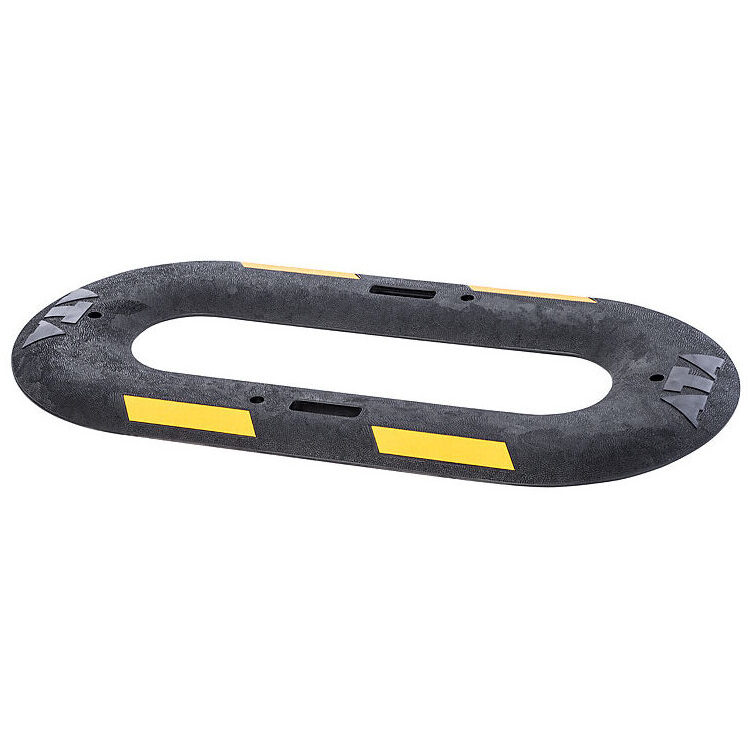
| Wheel stops | Prevent vehicles from rolling too far forward in a parking space. | Low | Parking lots, garages, charging stations. |
| Barriers/Railings | Protect longer stretches, buildings or work zones. | High | Loading docks, industrial sites, facades, machine guarding. |
| Post Protectors | Protect load-bearing columns and posts from impacts and scuff marks. | Low/Medium | Parking garages, warehouses, industrial environments. |
| Hoop guards | Protect specific objects such as downspouts, corners or pumps. | Medium | Gas stations, building corners, warehouse aisles. |
As the table shows, it is all about weighing the level of protection against the application. A wheel stop is perfect for keeping a passenger car from backing into a wall, but it does absolutely nothing against a truck approaching a loading dock.
The picture really says it all: the first step is always to assess the risk. That is what determines whether an investment in safety is needed to protect people and property.
What to consider when choosing a material
Besides the type of protection, the material is absolutely critical for function and service life. Steel is by far the most common choice for outdoor impact protection because it is strong and durable. Always choose a galvanized or powder-coated finish – otherwise rust will set in quickly.
In environments where minor, repeated impacts are common, flexible materials such as rubber or specialty plastic can be the smarter choice. They absorb the energy of an impact and then return to their original shape. This minimizes damage to both the vehicle and the protection itself. To learn more about the pros and cons, read our guide on choosing materials for impact protection.
Choosing the right protection is a proactive step. It is about anticipating potential risks and implementing a solution that neutralizes them before an accident occurs.
Take a look at some of our products in the most popular categories below. Seeing concrete examples can make it easier to visualize how different solutions work in practice.


Making the right choice from the start saves both time and money in the long run. A thorough analysis of your needs ensures you get protection that actually does the job and delivers the safety you expect. Still unsure which solution will best protect your property? Contact us for expert help and advice, and we will help you find the right impact protection for your specific conditions.
Standards and certifications – your guarantee that the protection works
When you buy impact protection for outdoor use, you are not just investing in steel and concrete – you are buying a guarantee. A guarantee that the protection will actually do its job the day an impact happens. This is where standards and certifications, such as CE marking, come in and make all the difference.
Don’t think of it as complicated red tape, but as proof of quality. A certification is the only real evidence that the product has been put through tough, standardized tests and has withstood the force it was built for. Without it, there is no way to know whether a cheaper product just looks good or actually works when it counts.
What do impact class and energy absorption really mean?
To understand the value of a certification, we need to look at two key concepts: impact classes and energy absorption. You can think of it a bit like comparing the strength of different materials.
- Energy absorption (Joules): This measures how much collision energy a product can absorb before it gives way. A higher number simply means it can stop a heavier vehicle, or one traveling at a higher speed.
- Impact classes: These are standardized levels that make it easier to choose correctly. The classes are based on real crash tests, for example what it takes to stop a 1,500 kg passenger car at 30 km/h.
Once you understand these values, the choice becomes much easier. Protection meant to stop a carelessly parked car obviously has completely different requirements than a barrier meant to protect a loading dock from a fully loaded truck. You can learn more in our guide to regulations and standards for impact protection.
CE marking is not just a sticker. It is your assurance that the product meets EU safety requirements and has been tested to perform under pressure. For responsible property owners, municipalities and businesses, that is a decisive factor.
Why you should always require documentation
In a procurement process, it is easy to focus solely on the price tag. But when it comes to safety, the cheapest solution is rarely the best. Uncertified impact protection risks becoming a dangerous illusion of safety.
By always requiring documentation that proves the product’s performance and certifications, you ensure your investment provides real protection. This is especially important for municipalities and larger companies, where liability is paramount.
Ask your supplier for these three things:
- Test reports: Documents showing exactly which tests the product has undergone and the results it achieved.
- Declaration of Performance (DoP): A legal document in which the manufacturer guarantees the product’s properties in black and white.
- CE certificate: The definitive proof that the product meets European safety requirements.
Setting these requirements is not being difficult; it is being responsible. It guarantees that you get a product built for its purpose that truly protects both people and property. It is an investment that pays for itself by preventing costly accidents.
Finding all the standards confusing, or unsure how to interpret technical documentation? Contact us for expert help. We will guide you through the maze and make sure you choose certified, correctly sized impact protection for your specific needs.
Get the most out of your protection – install it correctly
First-class impact protection depends entirely on one thing: being properly anchored to the ground. Think of the anchoring as the roots of a tree. Without a strong root system, it doesn’t matter how thick the trunk is – in a storm, the whole tree falls. In the same way, even the most robust steel bollard can become useless if it gives way in a collision because of a sloppy installation.
Understanding how installation works is therefore essential. It is about ensuring that the protection can actually absorb and handle the force it was designed for when it really matters.
Two paths to a stable installation
The choice of installation method for outdoor impact protection is almost always determined by two things: the surface you have to work with and how permanent the solution needs to be. The two most common methods are embedding in concrete and surface mounting, each with its own clear advantages.
- Embedding for maximum strength: This is by far the strongest and most permanent solution. The protection is cast into a deep concrete foundation directly in the ground. This method is the obvious choice in high-risk areas where the protection must withstand really heavy impacts, such as at loading docks or along facades with heavy traffic.
- Surface mounting for flexibility: Here, the protection is bolted directly to an existing concrete or asphalt surface using a base plate and heavy-duty expansion anchors. It is a faster, simpler method that works perfectly when the surface is already stable, or if you may need to relocate the protection in the future.
Choosing the right method is the first step, but the execution itself is just as important.
Avoid the most common installation pitfalls
A poor installation can undermine the entire investment. Often it is small but critical mistakes that make a huge difference to the end result. By knowing these common pitfalls, you can make sure the installation is done right from the start.
Common mistakes and how to avoid them:
| Mistake | Consequence | Solution |
|---|---|---|
| Wrong type of anchoring | The protection is torn loose on impact because the bolts cannot grip a porous surface. | Analyze the surface. Concrete requires a specific type of bolt, while asphalt almost always requires embedding. |
| Drill holes too shallow | The expansion anchor does not get enough grip and pulls out under load. | Always follow the manufacturer’s instructions for drilling depth and bolt size. Measure twice, drill once. |
| Foundation too weak | The foundation cracks or tips over in a collision, taking the protection with it. | Size the foundation according to the size of the protection and the expected force. Never skimp on concrete. |
| Incorrect placement | The protection is too close to the object and still causes damage when it bends on impact. | Plan with a safety margin. Make sure there is room for the protection to deform without hitting what you want to protect. |
This is exactly where expertise becomes invaluable. An experienced installer recognizes the risks and makes sure every step is carried out to the highest professional standards.
Installing impact protection is not just a technical task – it is a safety-critical process. Every bolt and every centimeter of concrete contributes to the overall protective capacity.
Especially in environments with heavy traffic, such as warehouses and logistics centers, proper installation is absolutely critical for a safe workplace. Forklifts and other equipment cause enormous damage at Swedish workplaces, making impact protection a necessary investment. According to the Swedish Work Environment Authority, forklifts are the work equipment responsible for the most reported workplace accidents. Read more about when impact protection is required by the Swedish Work Environment Authority.
Uncertainty about installation is a common reason people hesitate. Choosing the wrong anchoring, drilling too shallow or placing the protection incorrectly can have serious consequences. Correct installation is essential to guarantee the function of your outdoor impact protection.
Not sure which method is best for your project, or want to make sure the installation is carried out professionally? Contact us for expert help and advice. We support you all the way, from choosing the right product to a finished, safe installation.
Maximize service life with proper maintenance
The job isn’t done just because outdoor impact protection has been installed. On the contrary, this is where the long-term investment begins. For the protection to keep working and looking good year after year, it needs regular, well-planned maintenance. It comes down to fairly simple measures that keep small, inexpensive problems from growing into big, costly ones.
Neglecting maintenance is a bit like buying a new car and never changing the oil. At first everything works fine, but over time wear and tear eats away at the integrity of the protection. A small rust spot can weaken the steel from within, and a loose bolt can be the difference between protection that holds up and protection that gives way on impact.
Create a simple maintenance plan
An effective maintenance plan doesn’t have to be complicated. By scheduling regular inspections, ideally twice a year, you can catch and fix problems in time.
Spring is the perfect time to check for damage from winter snow removal and cold. Fall, in turn, is a good time to prepare the protection for the tough season ahead.
A basic checklist might look like this:
- Inspect anchoring: Check that all bolts and screws are secure. Tighten where needed.
- Check foundations: Look for cracks or damage in the concrete around embedded protection.
- Look for damage: Watch for dents, scratches and signs of rust. Small rust spots should be sanded down and touched up with paint right away so they don’t spread.
- Clean the surfaces: Wash away dirt, road salt and algae. A clean surface isn’t just better looking – it also makes damage much easier to spot.
Material choice affects maintenance
The choice of material plays a big role in how much time and money you need to spend on maintenance. Impact protection made of hot-dip galvanized steel has extremely strong rust protection and requires hardly any care at all, while a painted product may need touching up if the surface gets scratched.
Thinking long-term means making sure the protection is just as reliable five years from now as it is today. Regular maintenance is the key to maximizing the return on your safety investment.
Consider the environment the protection will be in. In areas with a lot of road salt or near the coast, a material with high corrosion resistance, such as galvanized steel, is almost a must. For less exposed locations, powder-coated options can work perfectly well, as long as you are prepared to maintain the surface if it gets damaged.
Proactively maintaining your impact protection is both cost-effective and responsible. It ensures your property stays safe and your investment keeps delivering value, year after year.
Need spare parts, or unsure how best to maintain your existing protection? Contact us for expert help and advice. We will help you create a maintenance plan that maximizes the service life of your impact protection.
Real-world case studies
Technical specifications and theory are one thing, but it is out in the real world that outdoor impact protection truly shows what it can do. Looking at concrete examples makes it crystal clear how the right product in the right place can solve both recurring and costly problems. Here are three common scenarios where a well-planned solution created safety and saved money.
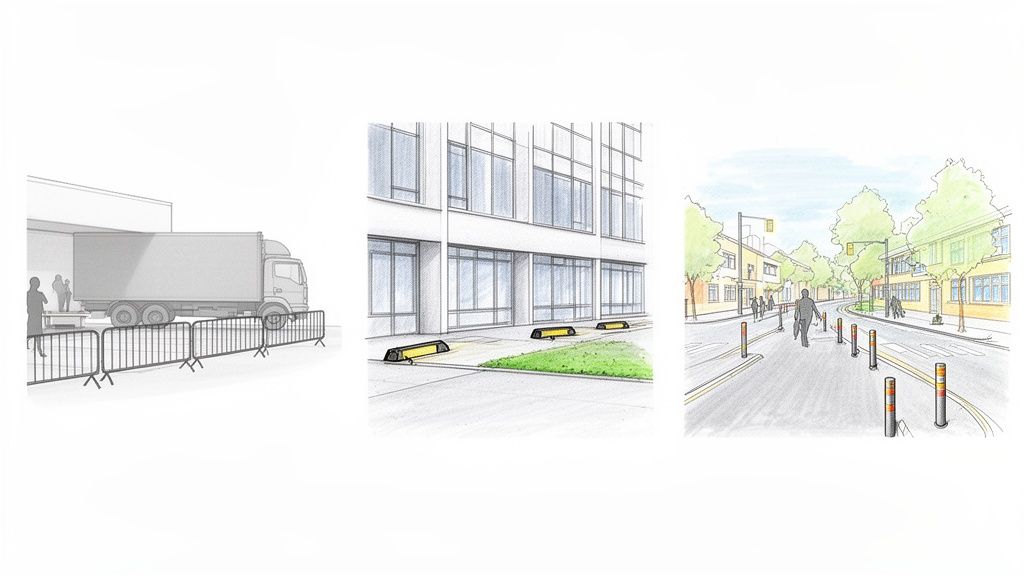
These examples show how we tailor solutions to unique needs to achieve results that make a real difference in everyday life. Each story is proof of how the right protection can transform a high-risk environment into a safe and functional place.
Case 1: The logistics center that stopped the damage
A large logistics center was struggling with constant damage at its loading docks. Rushed drivers and heavy traffic meant trucks regularly backed into concrete edges and building components. The repairs weren’t just expensive – they also caused downtime that affected the entire operation.
The problem was obvious: there were no visual or physical barriers to guide drivers correctly.
The solution was a combination of two types of protection:
- Heavy-duty barriers: Robust barriers were installed along the facade, effectively protecting the building from direct impacts.
- Strategically placed bollards: Embedded bollards were installed at the corners of each loading dock and at the entrances. They served both as a clear visual guide and as rock-solid physical protection.
The results came quickly. The number of impact incidents dropped dramatically, leading to substantial savings in both repair costs and reduced operational disruptions.
Case 2: The housing cooperative that saved its green spaces
A housing cooperative with a shortage of parking spaces was facing an annoying problem. Residents and visitors were cutting across lawns and parking too close to the building facades. The result was torn-up green spaces, damaged downspouts and unsightly marks on the buildings.
The board needed a solution that was effective but wouldn’t spoil the attractive look of the area.
The solution was rolled out in two steps:
- Discreet wheel stops: Wheel stops made of recycled rubber were installed in every parking space. They kept cars from rolling too far forward and damaging the facade, without being visually intrusive.
- Low hoop guards: Low, powder-coated hoop guards were placed along the edges of the most exposed lawns. They blended into the surroundings while creating a clear, impassable boundary for vehicles.
By choosing discreet yet functional protection, the cooperative solved the problem without compromising the pleasant environment. It shows that safety and aesthetics can absolutely go hand in hand.
Case 3: The municipality that created a safe route to school
A municipality had identified a school where the traffic situation at drop-off and pick-up was both chaotic and dangerous. Drivers were speeding and parking haphazardly, creating an unsafe environment for the children.
The goal was clear: reduce speeds, stop illegal parking and separate car traffic from pedestrian and bike paths.
The solution was a package of traffic safety products:
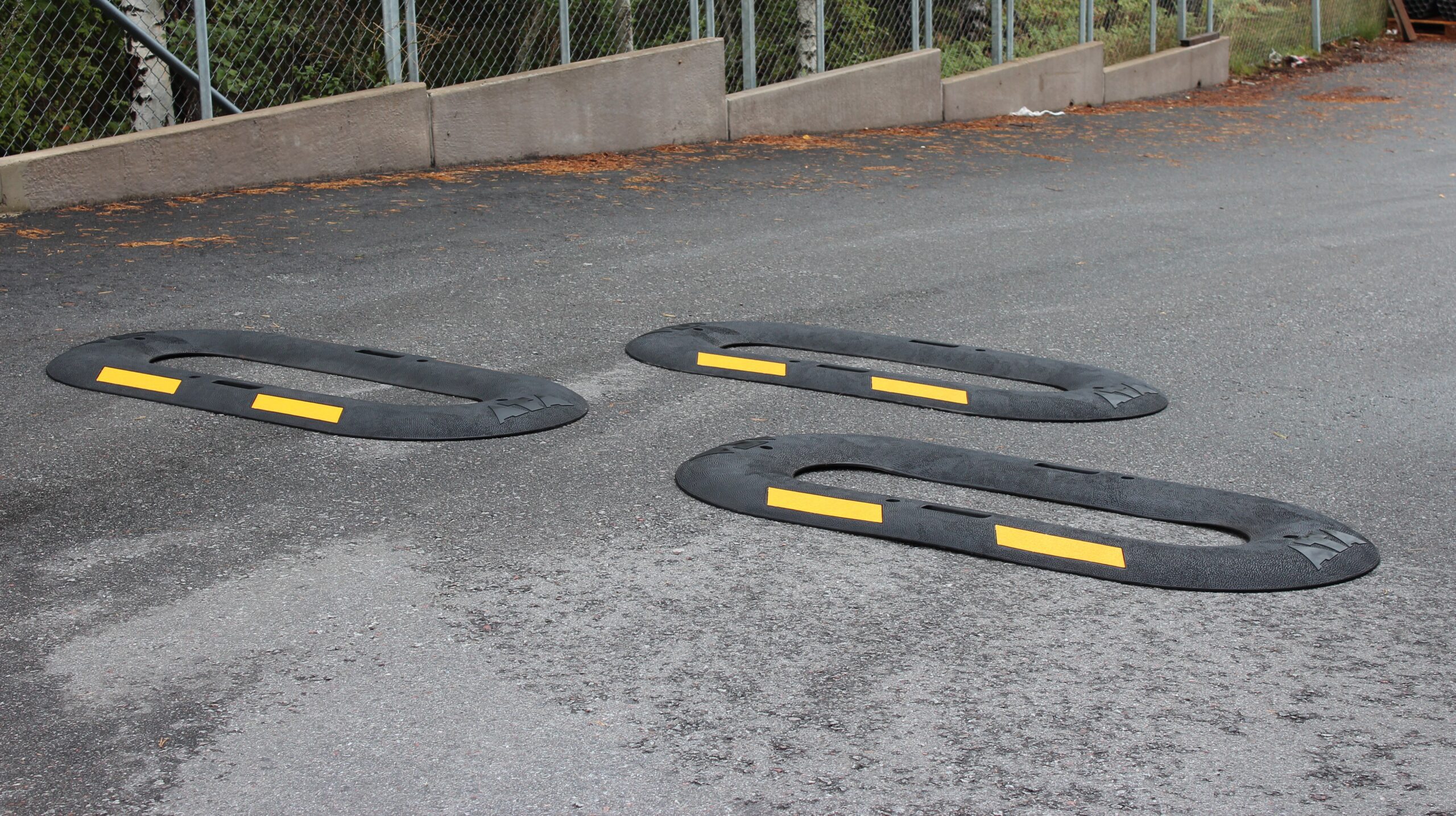
- Speed Bumps: Strategically placed speed bumps forced cars approaching the school grounds to slow down.
- Stanchions: Flexible barrier posts were installed along the sidewalk and at crosswalks. They effectively prevented cars from parking on the sidewalk and created a safe zone for pedestrians.
With these measures, the previously chaotic environment was transformed into a calm and safe route to school.
Facing similar challenges, or do you have a completely different problem that calls for a smart solution? Contact us for expert help and advice. We will analyze your needs and help you find the right outdoor impact protection.
Frequently asked questions about outdoor impact protection
Here we have gathered some of the most common questions we hear when talking with customers. Think of it as a quick guide to clear up your initial questions before you dive deeper into choosing outdoor impact protection.
How tall should a bollard actually be?
It depends entirely on what it needs to protect against. To stop an ordinary passenger car, a standard height of 750-900 mm is usually enough. But if you need protection against heavier vehicles, such as a truck, you will need significantly taller and sturdier solutions.
Can impact protection be installed directly on asphalt?
Absolutely – it is both possible and very common. For protection that truly holds up, we almost always recommend embedding it in a concrete foundation. This provides maximum strength. In some cases, depending on the type of protection and what it is expected to withstand, bolting it directly to the surface can work.
What is the difference between CE-marked protection and protection without it?
CE marking is your best friend when it comes to safety. It guarantees that the product has been put through rigorous testing according to European standards and has proven that it can withstand a specific, documented impact force.
Simply put, it is your assurance that the protection will actually do its job when an accident happens. That is why we always recommend certified products – anything else is a gamble.
Choosing the right impact protection is a major decision that directly affects the safety of both people and property. Have more questions, or want to talk through ideas for your specific needs? Contact us for expert help and advice. Our experts will help you find a solution that is both safe and built to last.
Visit us at https://nordguard.eu to learn more or get personalized advice.
Ready to take the next step?
We help you develop solutions tailored to your needs. At Nordguard, we strive to make the ordering process as smooth as possible. By offering support and guidance throughout the entire purchasing experience, we make sure you feel confident and satisfied with your choice of protection products.+46 10 153 90 50
[email protected]