
A Practical Guide to Machine Guarding for a Safer Workplace
Picture a hockey goalie. The gear isn’t decoration – it’s an active barrier between the player and a puck flying at over 150 km/h. Machine guarding works exactly the same way: a vital physical barrier between people and machines, but in environments where the risks are constant and the consequences devastating.
The critical role of machine guarding in the workplace
A machine guard is so much more than just a fence or a sheet of acrylic. It’s a well-thought-out system designed to physically prevent access to hazardous machine parts and thereby prevent accidents. Without the right guarding, employees are exposed to everything from crush injuries and cuts to life-threatening incidents caused by moving parts, hot surfaces or ejected material.
Unfortunately, the reality in many industries is grim. Statistics from Afa Försring show alarming figures. In Swedish manufacturing and construction, machinery is a common cause of occupational injuries. Young construction workers between 16 and 25 are especially vulnerable, with nearly 15 per 1,000 employees suffering an accident. The report sends a clear signal that better safety awareness and regular inspections of machine guarding in particular are needed.
From legal requirements to higher productivity
Installing the right machine guarding isn’t just a moral responsibility – it’s a strict legal requirement. The Swedish Work Environment Authority is crystal clear that employers must ensure all machinery is safe to use, which in practice almost always means appropriate guarding.
But the benefits don’t stop at legal compliance. A well-planned guarding system, such as our CE-marked mesh walls and safety railings, creates a calmer and more structured work environment. When employees feel safe, they can focus fully on their tasks, leading to both higher efficiency and fewer costly shutdowns caused by accidents. Simply put, it’s about creating a sustainable workplace where people and machines can work side by side, safely.
Effective machine guarding isn’t an expense – it’s a direct investment in employee well-being and business profitability. It prevents accidents, reduces sick leave and builds a strong safety culture.
At Nordguard, we know that every environment is unique. Whether it’s heavy industry, a logistics center or a property with waste compactors, a tailored solution is required. We help you analyze the risks and install CE-marked machine guarding that works in practice, not just on paper.
Does securing your facility feel like a challenge? Contact us today and our experts will help you find the right solution and create a safer environment for you and your employees.
 Black/Yellow
 Yellow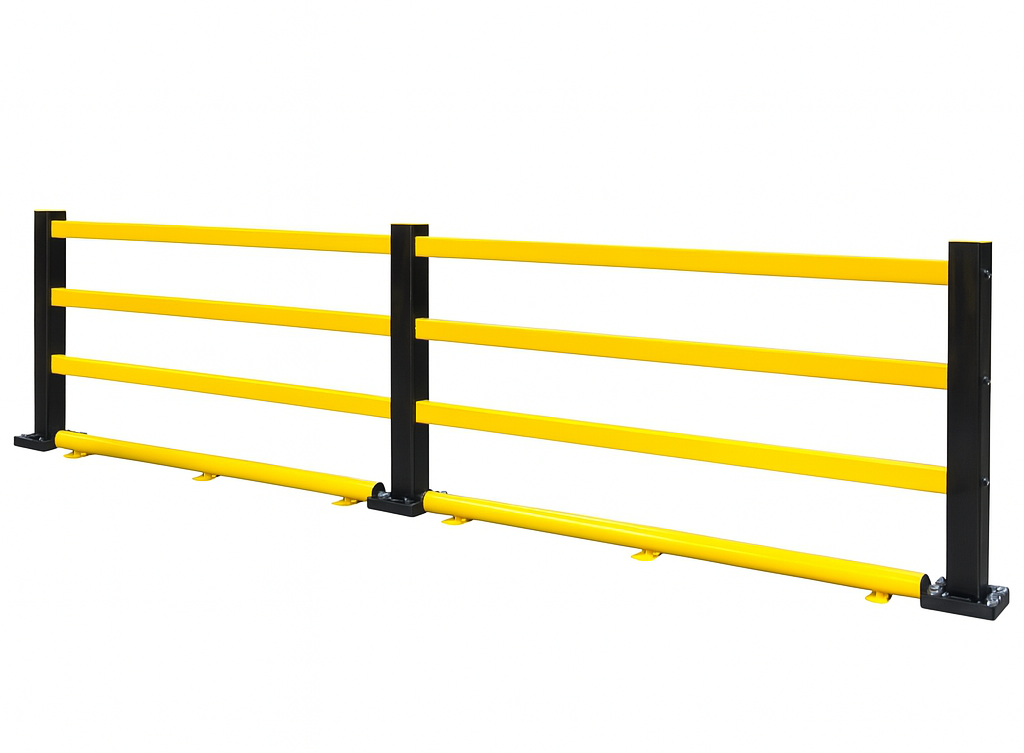
 Black
Black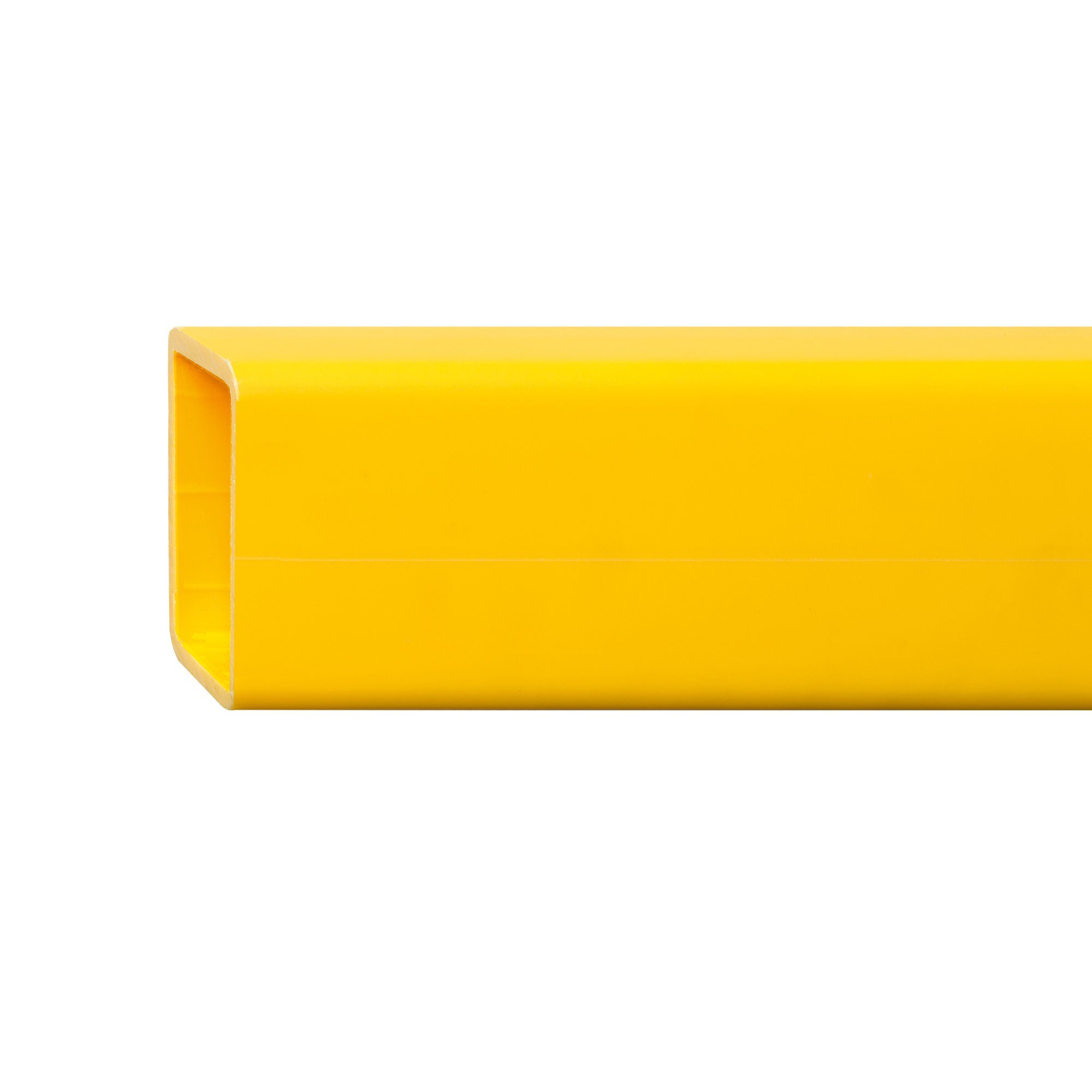 Yellow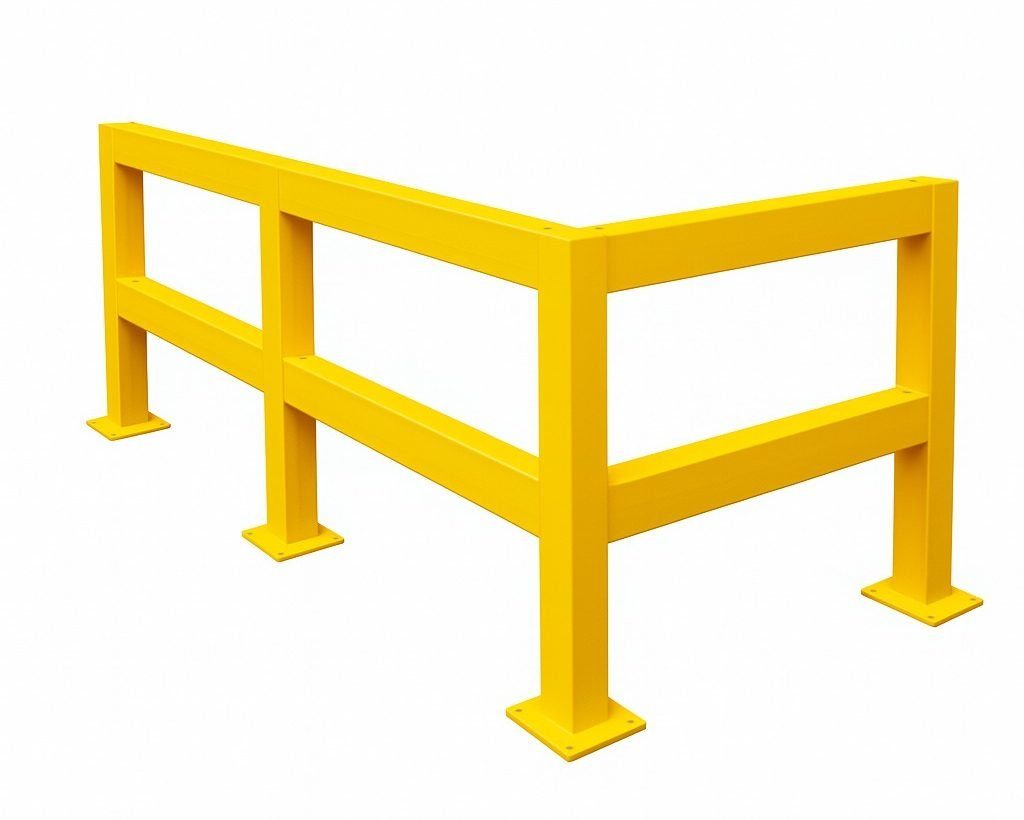
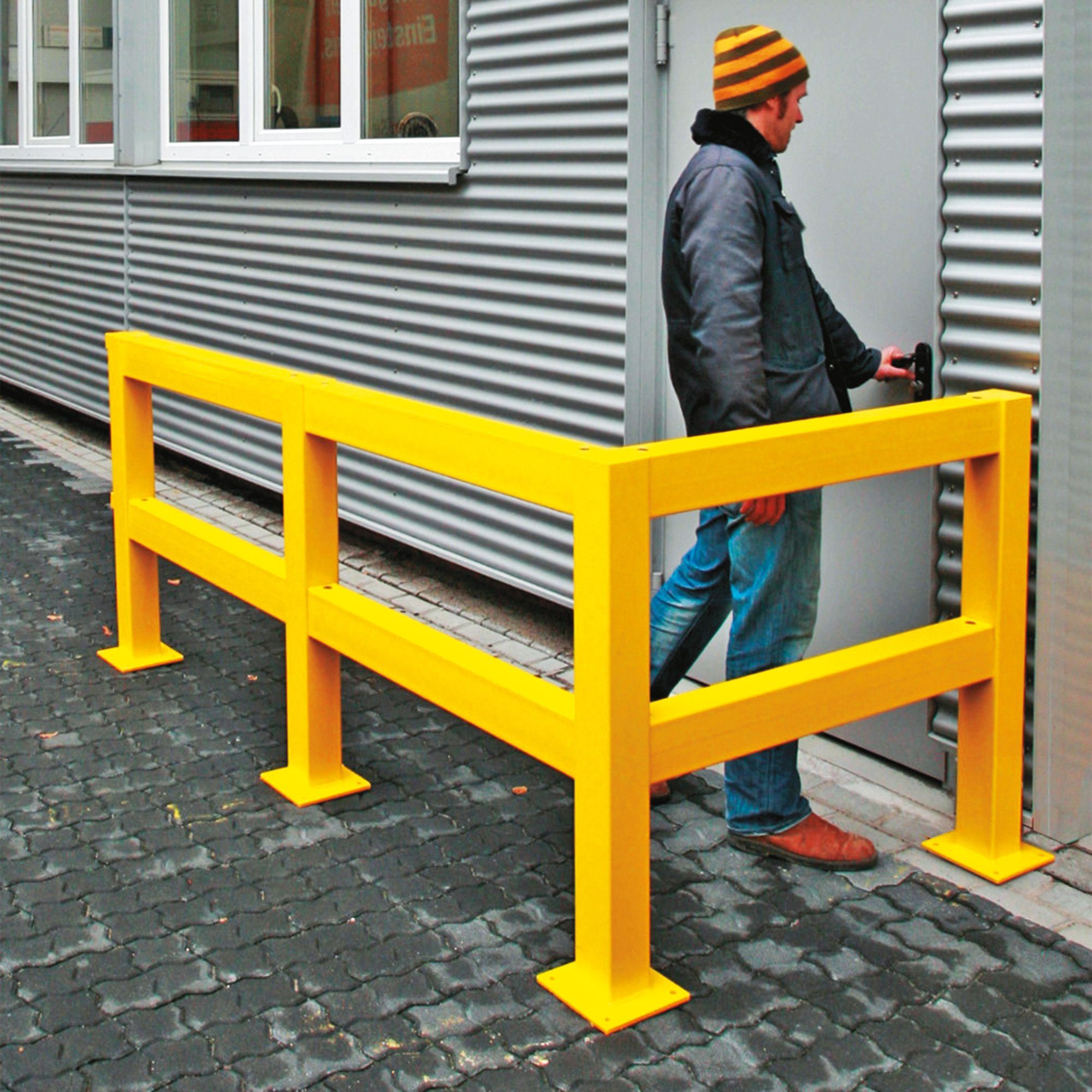 Yellow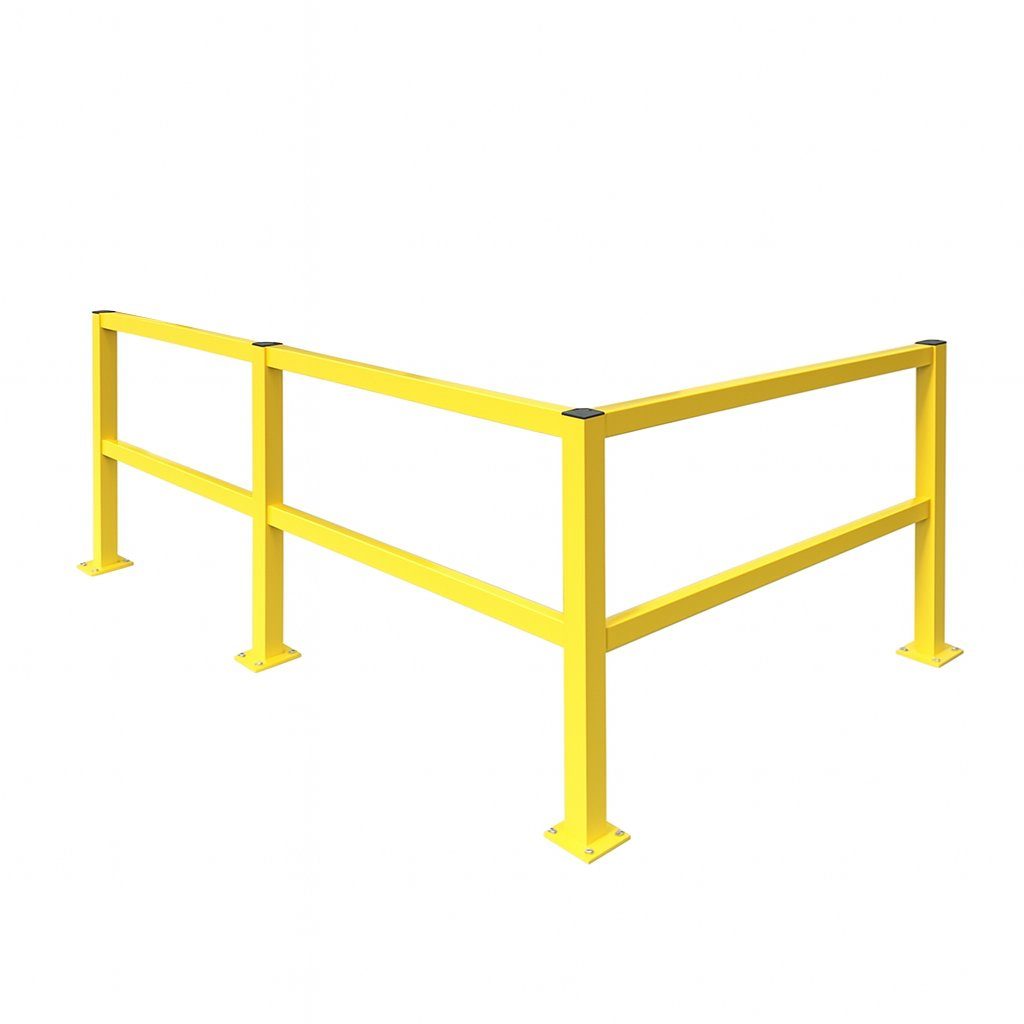
 Yellow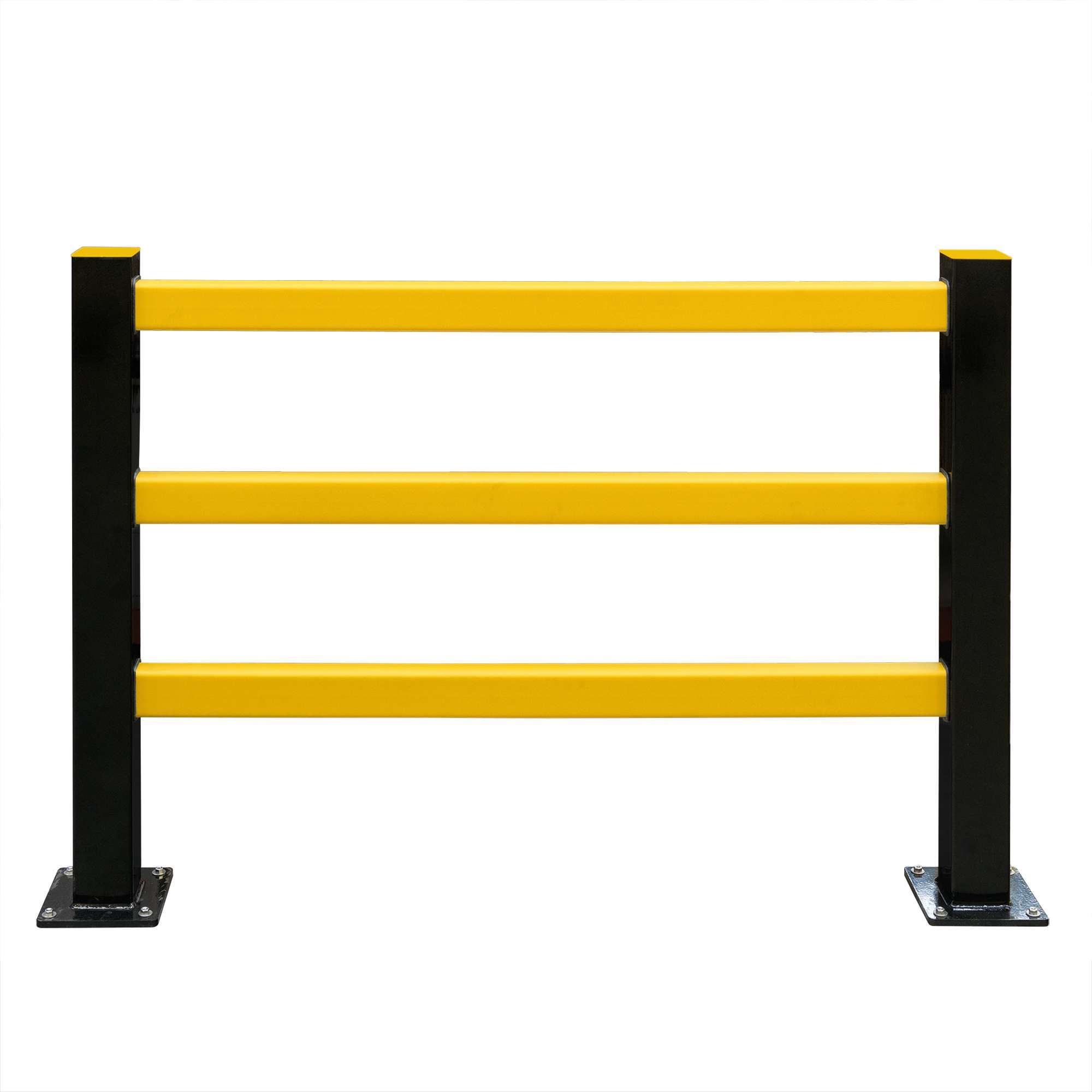
 Yellow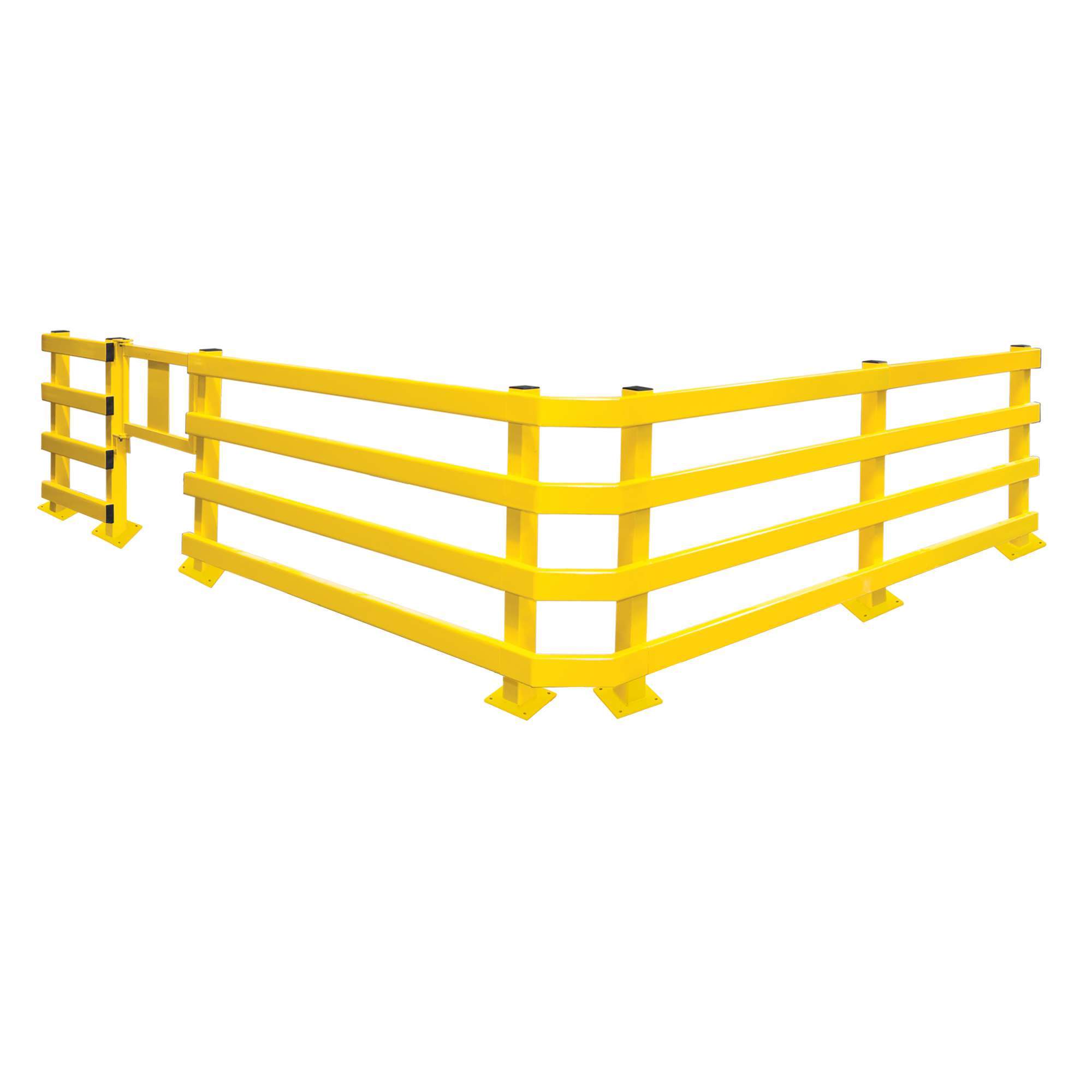
 Yellow
How different types of machine guarding work in practice
Choosing the right machine guarding is a bit like packing a toolbox – different tools simply solve different problems. There’s no one-size-fits-all solution; the choice depends entirely on the machine’s function, how the operator needs to work and the surrounding environment. Let’s go through the most common types to see how they work in the real world.
The basic idea of machine guarding is to create a barrier. This image illustrates the principle very simply: a physical or sensor-based barrier is placed between the person and the potential hazard from the machine.
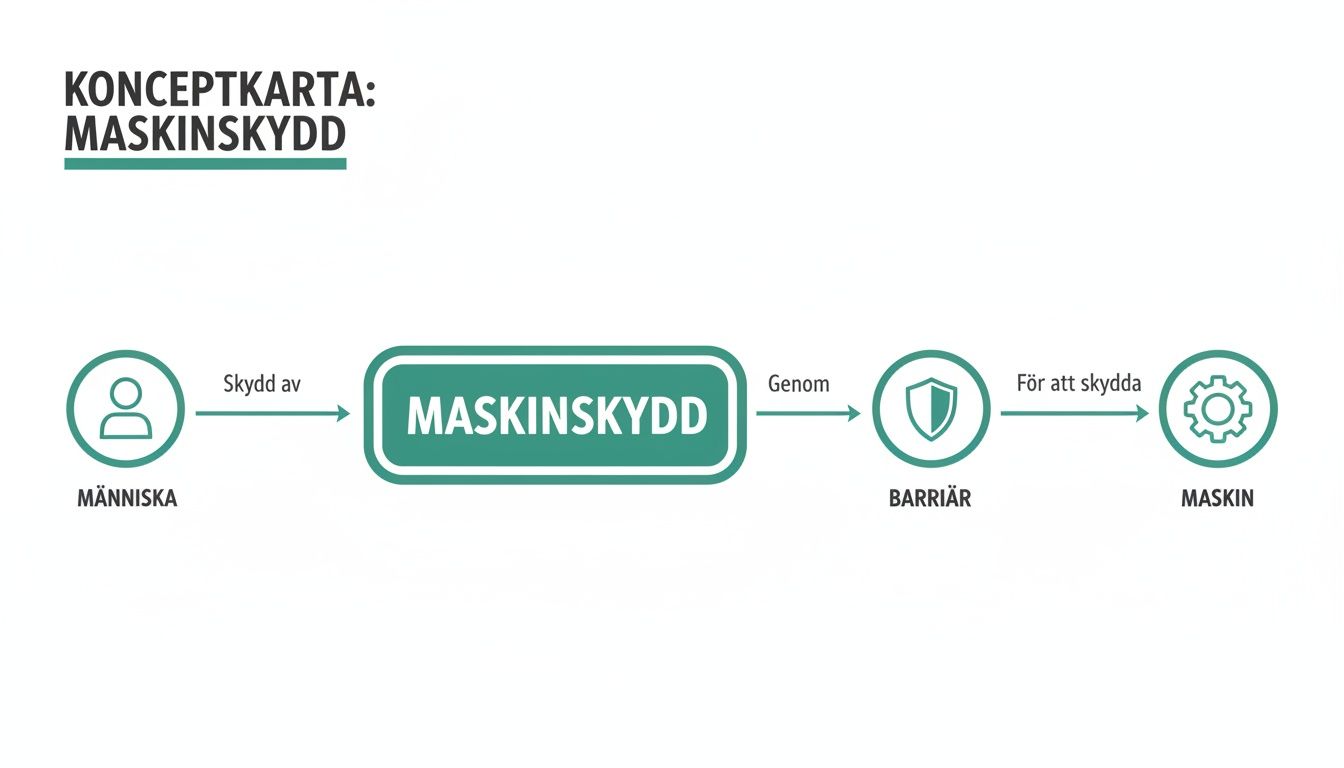
No matter how advanced a guard is, this is exactly what it all comes down to – separating the operator from the danger zone.
Fixed guards – the machine’s permanent armor
Fixed guards are the most common and usually the most robust solution. Think of them as permanent armor that physically blocks access to hazardous parts. They’re bolted in place and require tools to remove, so they can’t be taken off by mistake or carelessness.
Examples of fixed guards you see everywhere:
- Guard fencing: Mesh panels, often called mesh walls, are the standard solution around robot cells or along conveyors. They provide good visibility of the process while effectively keeping anyone from getting too close.
- Enclosures: Think of a modern lathe with a full enclosure of sheet metal and polycarbonate. It protects not only against moving parts but also against splashing cutting fluids or flying chips.
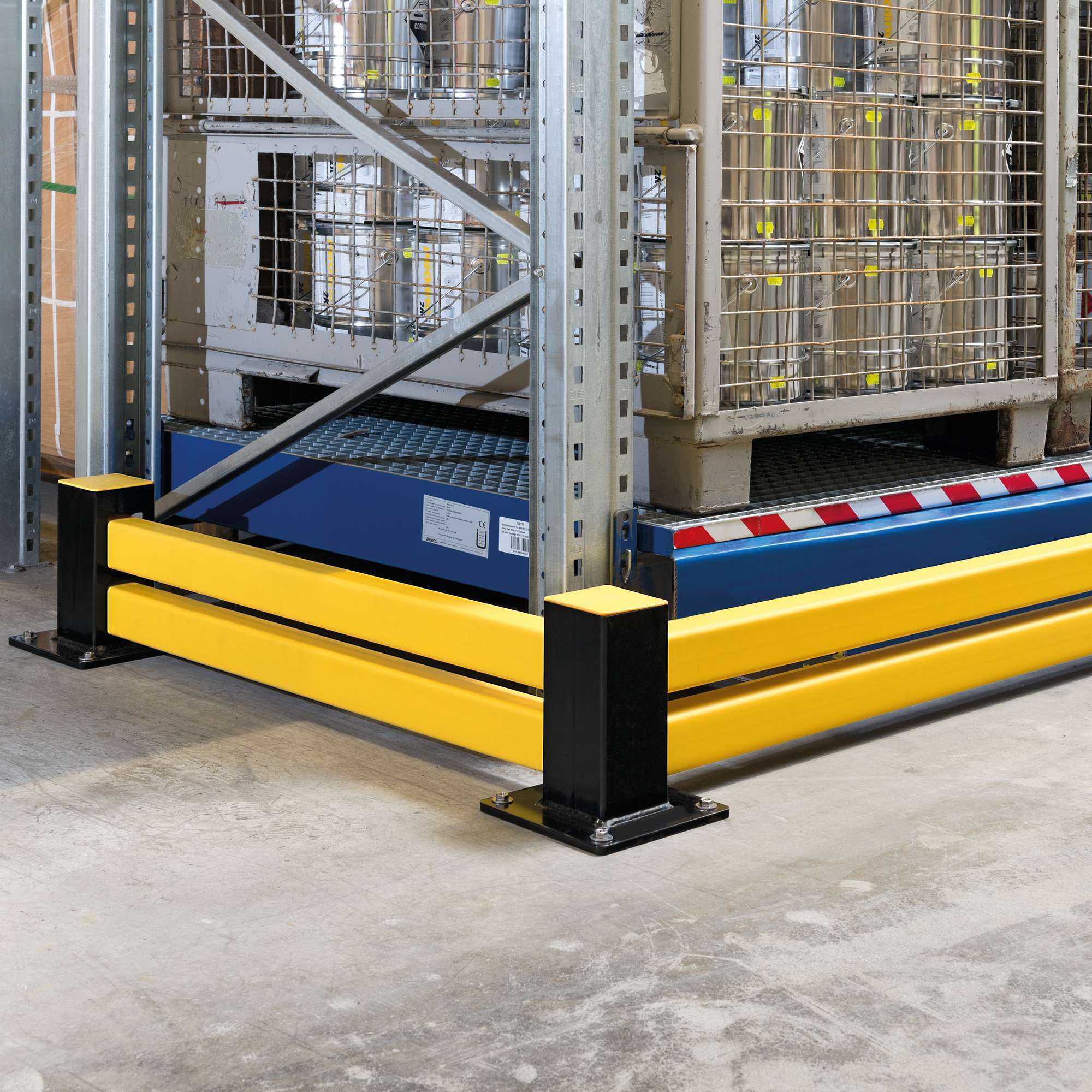
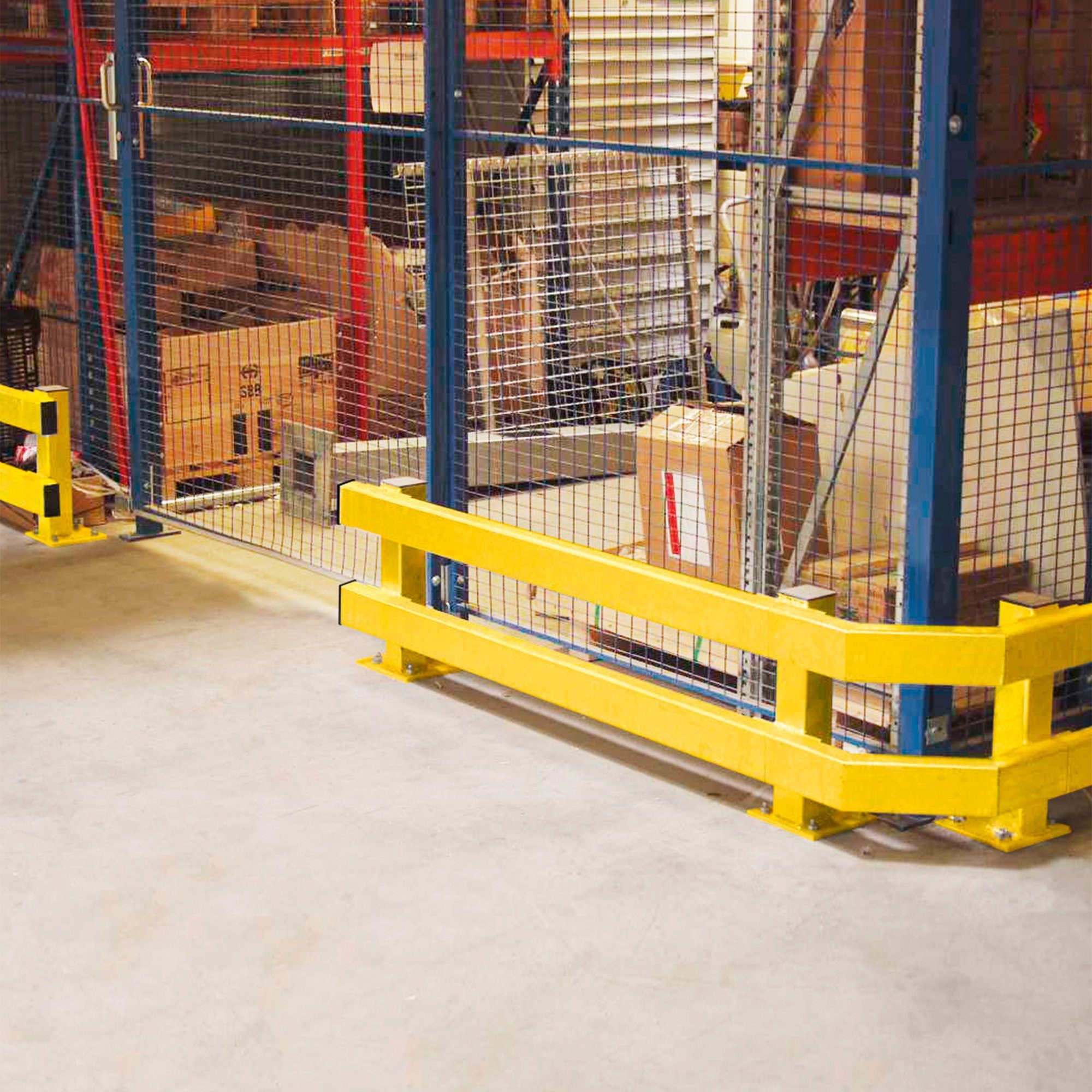
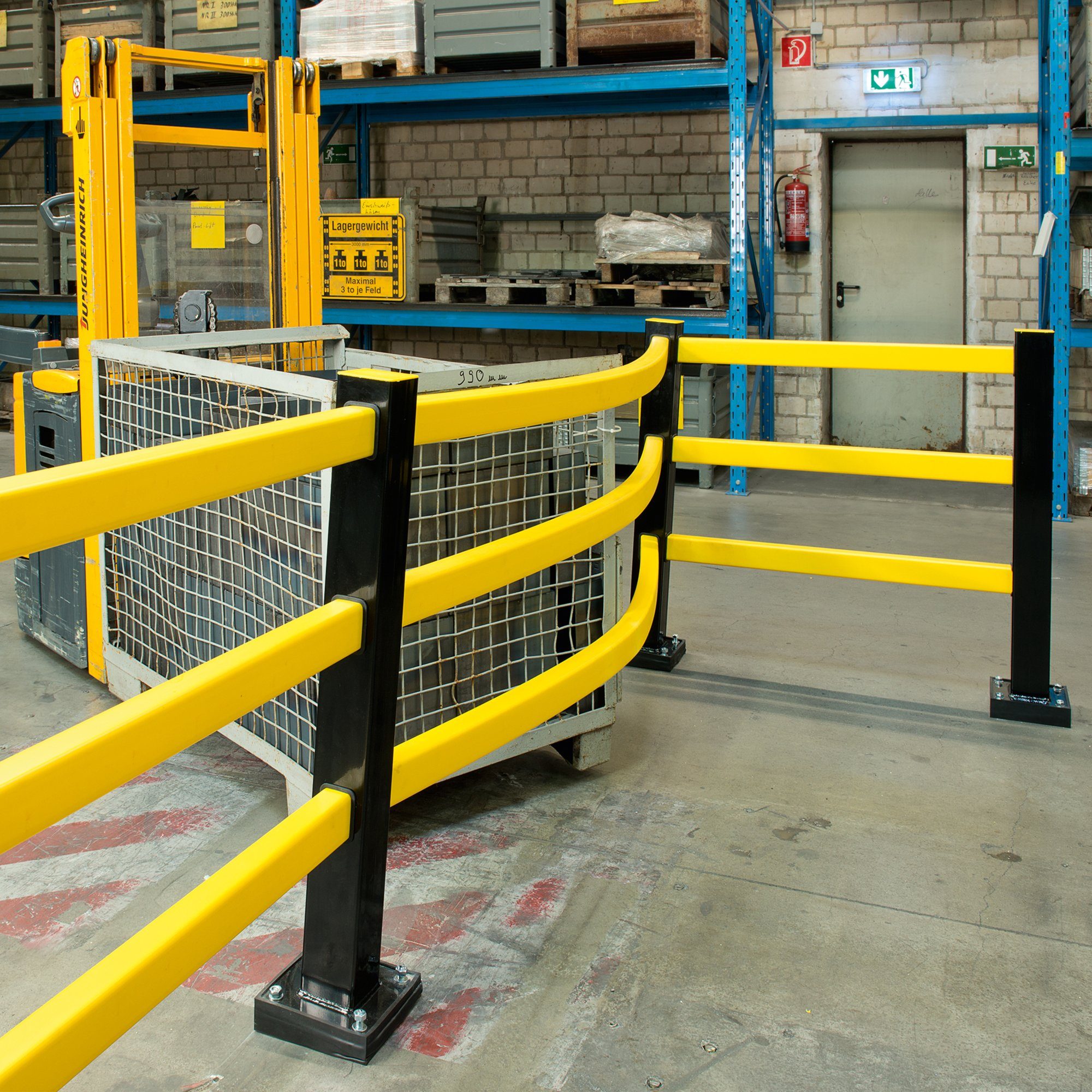
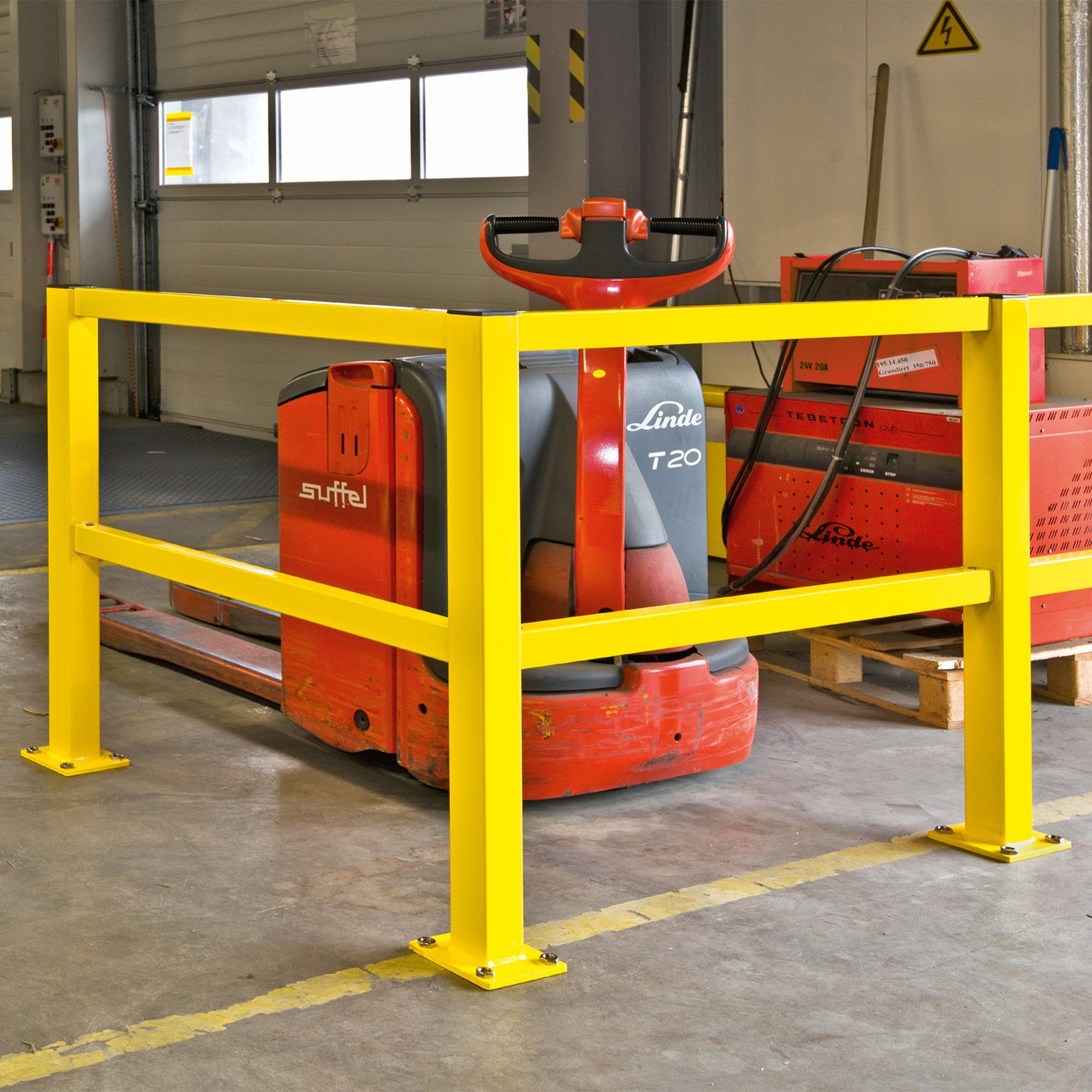
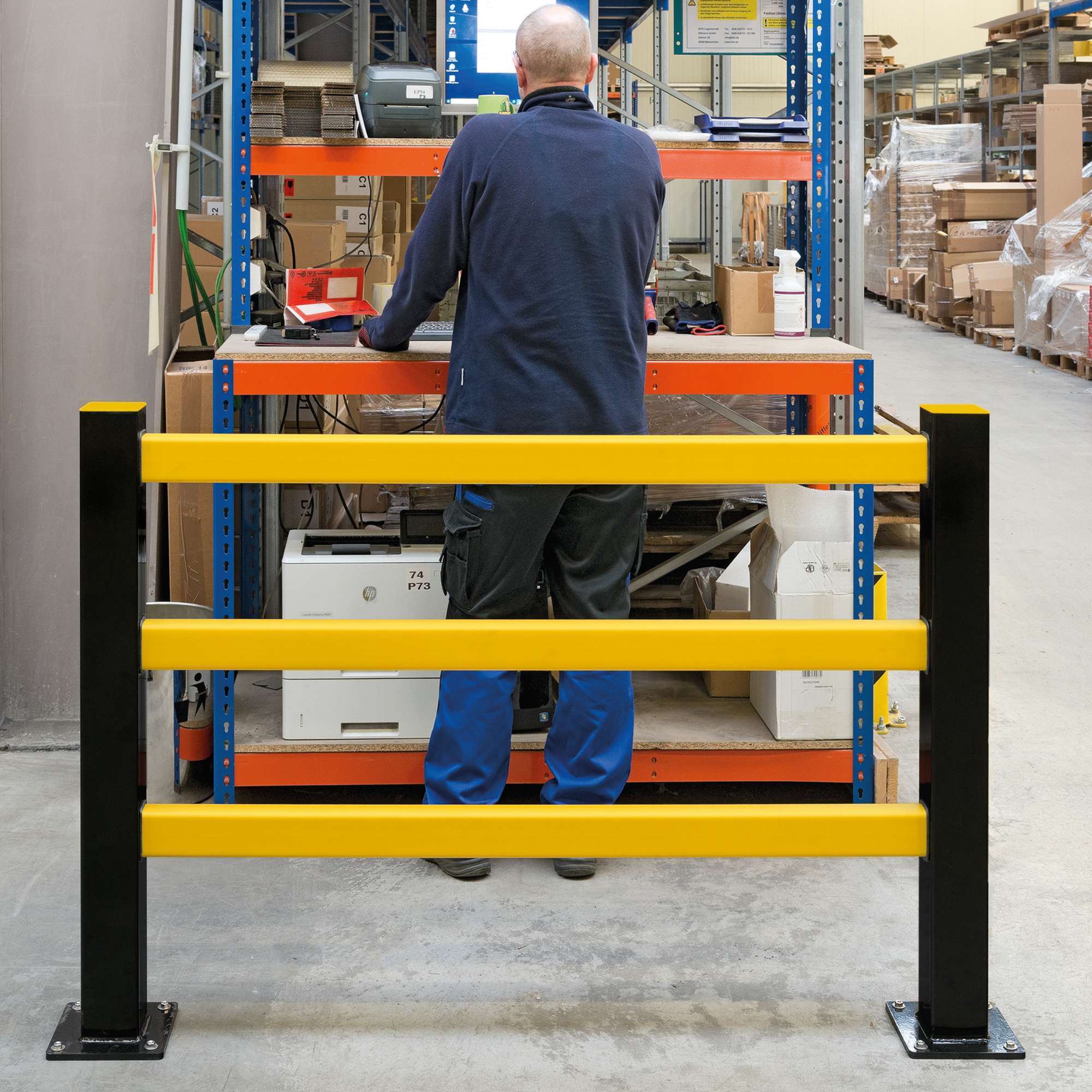
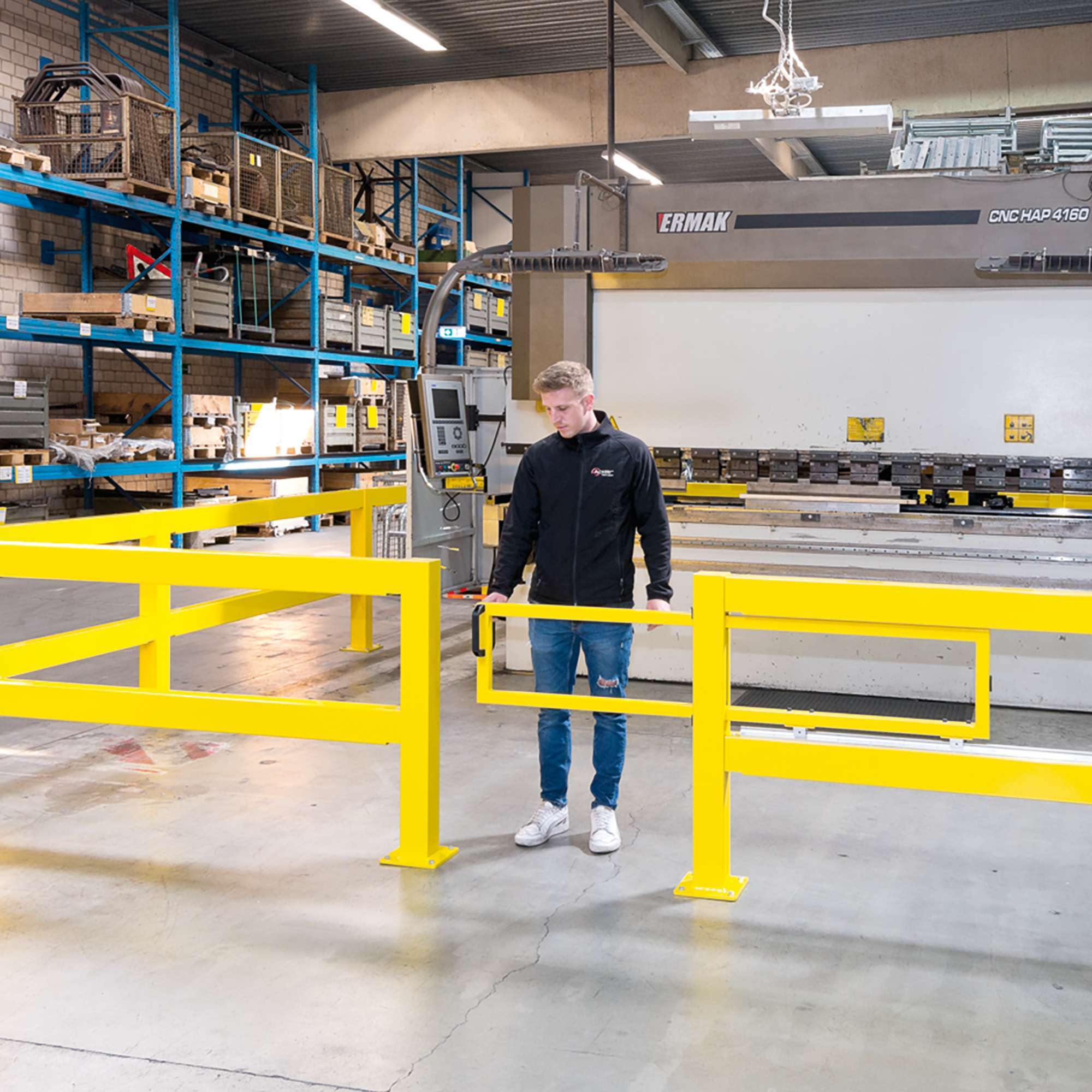
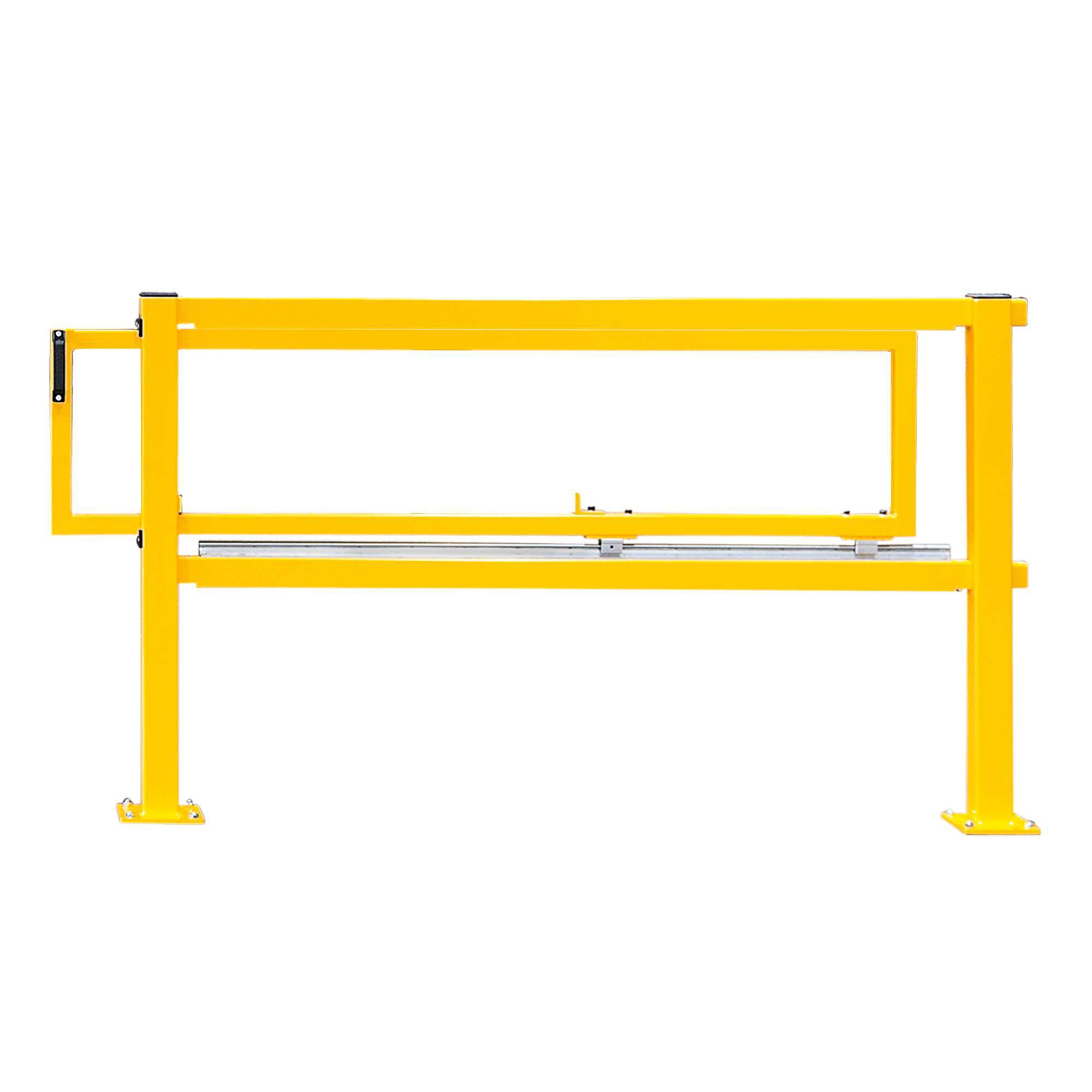
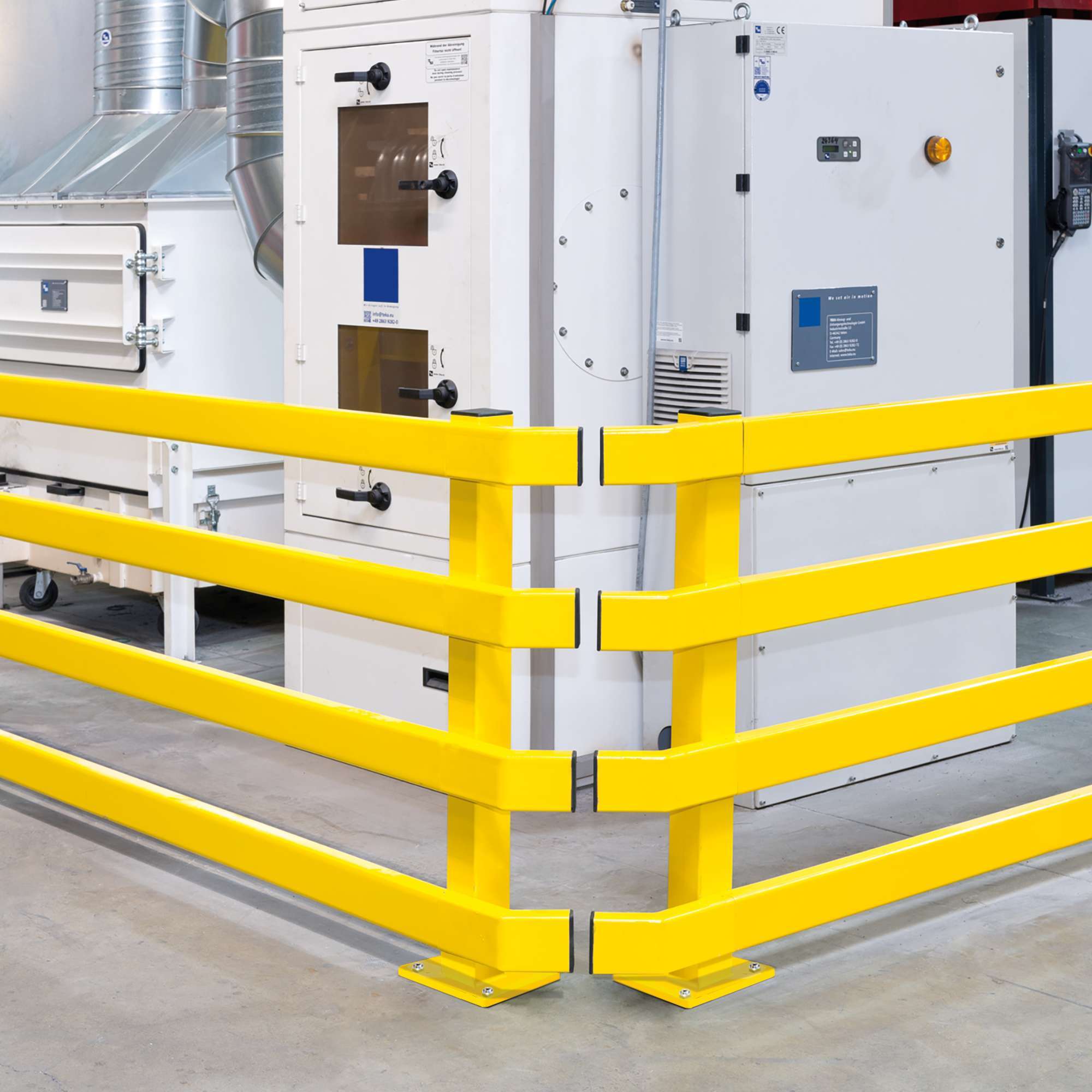
- Safety railings: Heavy-duty railings that create safe walkways and separate machine areas from forklift traffic. Our safety railing systems are indispensable in warehouse and logistics environments.
The advantage is that they’re extremely reliable and virtually maintenance-free. The drawback, of course, is that they don’t work for machines where the operator has to get in and out all the time.
Movable guards – intelligent doors
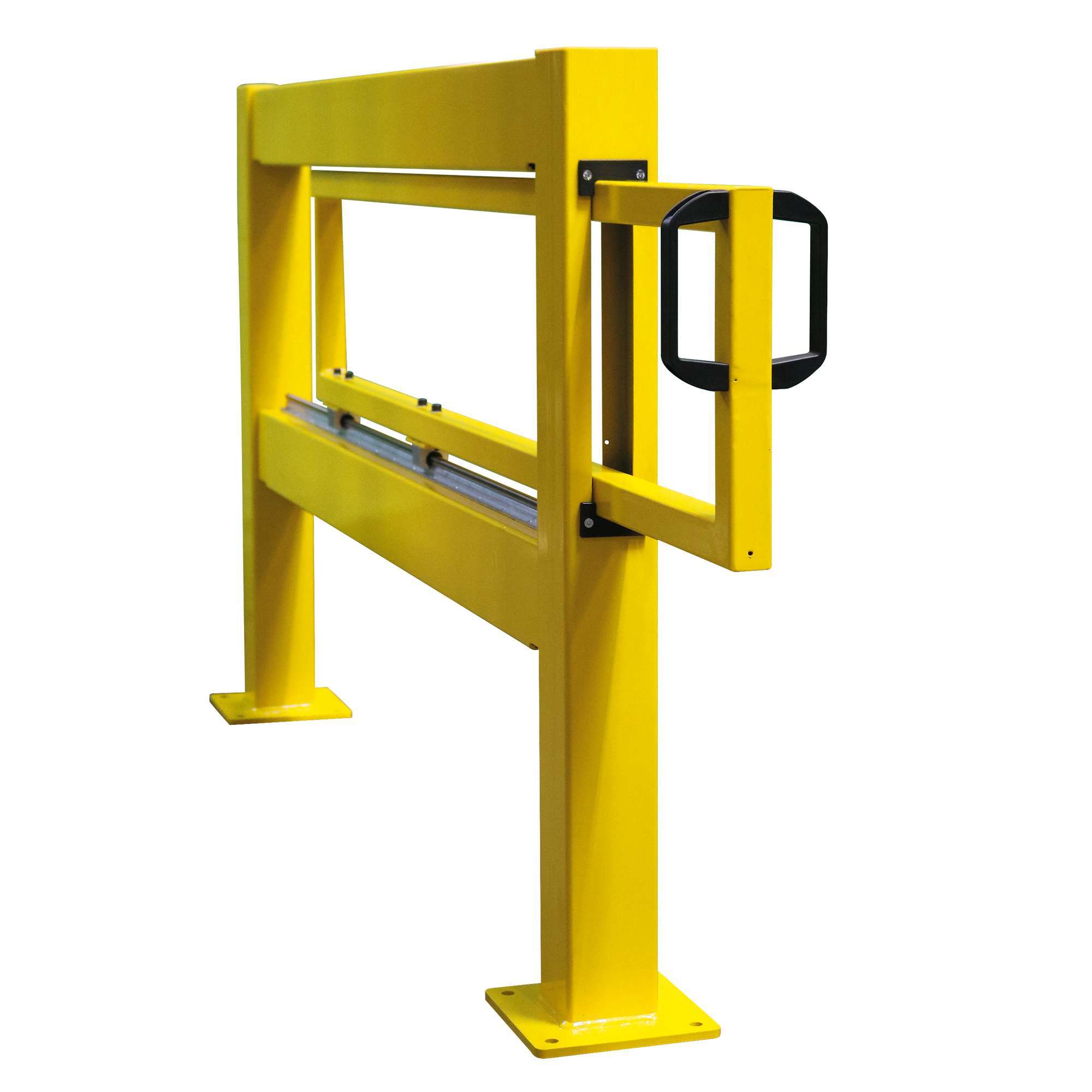
When operators regularly need to access the machine, perhaps to load material or make an adjustment, movable guards are the way to go. They function as smart doors connected directly to the machine’s control system.
A movable guard is always equipped with an interlock. This is a safety switch that instantly stops the machine if the guard – such as a gate or hatch – is opened. This ensures the machine is at a complete standstill whenever someone needs to enter the danger zone.
This is an absolutely critical safety function in today’s automated factories. If an operator opens the gate to a robot cell, the interlock makes the robot stop dead immediately. Our machine guarding systems can of course be equipped with these.
Non-physical guards – invisible safety barriers
Sometimes a physical guard is simply impractical or gets in the way of the workflow. That’s where non-physical guards come in. They use sensors to create invisible protective zones around the machine.
By far the most common type is light curtains (or light barriers). They consist of a transmitter and a receiver that create a dense field of harmless infrared light beams. If a hand, arm or person breaks this field, an immediate stop signal is sent to the machine. Light curtains are perfect for presses and other machines where the operator is constantly feeding in and removing material.
Complementary protection for a complete system
A complete machine guarding system doesn’t stop at the machine itself – it must also include the surrounding environment. This is where impact protection plays a central role, especially in facilities with forklifts and other vehicles.
Heavy-duty impact protection made of steel or flexible plastic protects both the expensive machine from damage and employees from being crushed if a forklift veers off course. The choice of material is important and depends on factors such as traffic intensity and the type of vehicles in use. If you want to dig deeper into the topic, there’s a detailed guide on choosing materials for impact protection that covers the pros and cons.
By smartly combining these different types of guarding – from fixed fencing and intelligent gates to invisible light curtains and robust impact protection – you build a comprehensive safety system tailored to the specific risks in your operations.
Navigating the laws and standards for machine guarding
At first glance, the regulations on machine safety can feel like a jungle. But at heart, it’s all about one thing: systematically preventing accidents. Understanding the key directives and standards is therefore not just a matter of complying with the law, but an essential part of building a safe and sustainable workplace.
The entire European regulatory framework rests on one cornerstone: the Machinery Directive (2006/42/EC). The directive sets out the essential health and safety requirements that all machinery sold within the EU must meet. This is where the responsibilities of both manufacturers and employers are defined, in black and white.
CE marking – your foremost guarantee
So how do you know whether a machine guard or a machine actually measures up under the Machinery Directive? The answer is CE marking.
A CE-marked product is the manufacturer’s promise that it complies with all relevant EU directives. It’s a seal of quality signaling that the product has undergone the necessary inspections and risk assessments. For you as a buyer, it’s the simplest and most important guarantee that you’re investing in a safe, approved solution.
Think of CE marking as a vehicle inspection for machinery. It confirms that the product meets the minimum requirements to be allowed to “drive” on the European market. Choosing a product without this mark is like driving an uninspected car – an unnecessary and dangerous risk.
At Nordguard, we work exclusively with CE-marked products, from our robust bollards to complete machine guarding systems, precisely so we can guarantee this fundamental level of safety.
ISO standards as practical tools
While the Machinery Directive sets the overall requirements, ISO standards provide the practical tools to meet them. They act as detailed guides showing how to achieve safety in practice. For machine guarding, one standard is absolutely central: ISO 12100. This standard covers risk assessment and risk reduction and is the very backbone of all safety work.
Here’s a quick overview of some of the most important standards:
Overview of key standards for machine guarding
A summary of the most important ISO standards, their purpose and practical application to make them easier to understand.
| Standard | Main purpose | Practical example |
|---|---|---|
| ISO 12100 | Principles of risk assessment & risk reduction. | Used to systematically identify, analyze and eliminate hazards at a machine. |
| ISO 13849-1 | Safety of control & monitoring systems (PL). | Specifies the requirements for an emergency stop system to ensure it works reliably. |
| ISO 13857 | Safety distances to prevent access. | Defines how high a fence must be or how large the mesh openings may be. |
| ISO 14120 | Requirements for the design & construction of guards. | Sets requirements for material, strength and mounting of a permanently installed machine guard. |
The Swedish manufacturing sector, which employs over 500,000 people and accounts for more than 20 percent of the country’s GDP, depends entirely on these standards. Innovations such as ergonomic press brakes with built-in light curtains are direct results of how the industry applies the standards to create solutions that are both safer and more efficient.
It’s worth noting that the rules for machine guarding have a lot in common with those for impact protection, where the goal is also to prevent accidents with physical barriers. If you want to learn more about those requirements, read our guide on regulations and standards for impact protection.
Navigating this landscape can feel complicated. Not sure which requirements apply to your operations or how to interpret a particular standard? Get in touch. Our experts will help you set the right requirements and make sure your facility is both safe and compliant.
How to choose the right machine guarding for your operations
Choosing the right machine guarding isn’t something you do on a whim. It’s not like grabbing an off-the-shelf item; it’s a process where every decision must be based on a rigorous analysis of your unique environment. A guard that’s perfect in one workshop can be completely unsuitable in another.
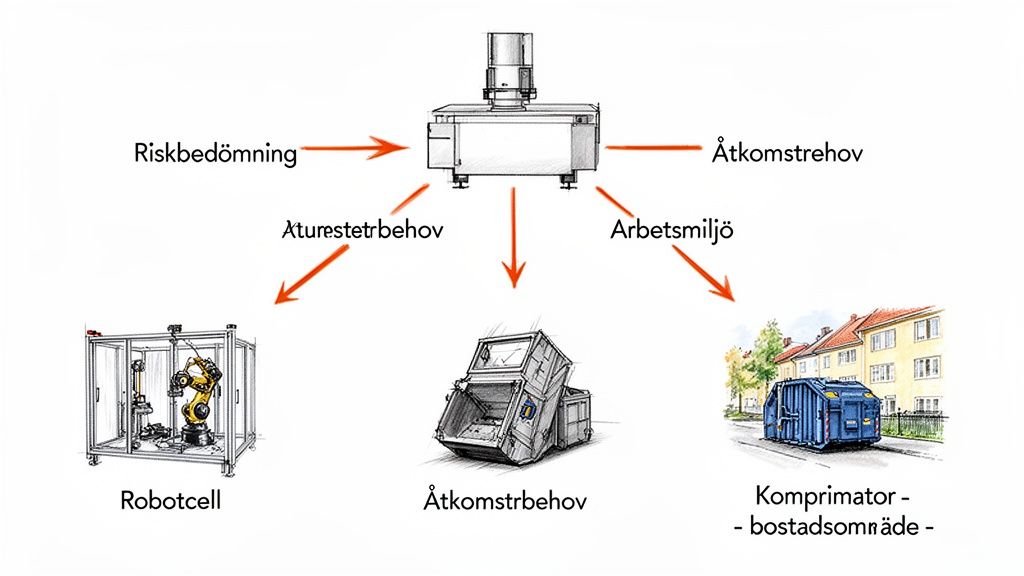
Everything – and I mean everything – starts with the single most important step: a thorough risk assessment. It’s about systematically going through the workplace and asking the uncomfortable questions. Which moving parts could crush someone? Is there a risk of material being ejected? Could an operator accidentally touch a hot surface? Only once you have a crystal-clear picture of the hazards can you start sketching a solution that actually works.
Key factors that guide your choice
Once the risks have been mapped, it’s time to look at the practical conditions. This is where many people stumble – they focus so hard on the machine itself that they forget everything around it.
- The machine’s function: How does the machine work? Is it a lightning-fast, repetitive motion like in a robot cell, or a slow and brutal process like in a waste compactor?
- The operator’s needs: How often does someone need to access the machine? Is it to load material, perform maintenance or just make a small adjustment? The need for access determines whether a fixed mesh guard is enough or whether a smart interlocked gate is required.
- The work environment: The surroundings play a huge role. A dusty industrial site may require tightly sealed guards, while a damp environment places tough demands on corrosion protection.
Choosing machine guarding is about finding the perfect balance. The guard must be 100% safe without becoming a daily annoyance. A guard that’s too cumbersome risks being removed or tampered with – and then it’s completely useless.
Two different worlds, two different solutions
To make it concrete, let’s compare two completely different scenarios. First, imagine you need to secure a fully automated robot cell in a noisy, hectic industrial facility.
Here the requirements are tough:
- Highest safety level: The robot moves with enormous force and speed. The guard must be extremely robust.
- Good visibility: Operators must be able to see what’s happening without stepping inside the guarded area.
- Controlled access: Access is rarely needed, mostly for servicing. A gate with a safety switch that immediately stops everything when opened is an absolute must.
In this case, a combination of heavy-duty guard fencing and an interlocked gate is the only reasonable solution.
Now compare this with securing a waste compactor in a quiet, clean trash room in an ordinary apartment building. Here the playing field looks completely different:
- Safety for the public: The guard should primarily keep unauthorized people – above all curious children – from reaching the machine.
- Ease of use: Residents must be able to dispose of their trash easily and safely.
- Noise level and aesthetics: The solution must not rattle and should blend in neatly with its surroundings.
Here, a full enclosure with a small, secure hatch that can only be opened when the machine is at a complete standstill might be the best way to go.
Custom is often the only right choice
The need for custom solutions is enormous, not least in Swedish manufacturing. Companies like Arion Sweden, for example, process 350 metric tons of sheet metal and 75,000 meters of tubing every year, much of it to build guard fencing around industrial robots. That says a lot about the volumes of material required to meet the safety needs of a sector that accounts for over 20 percent of Sweden’s GDP.
This reality clearly shows that standard solutions are rarely enough. It takes expertise to analyze the needs and develop a solution that is safe, practical and cost-effective at the same time.
Not sure what’s best for your operations? That’s exactly where we at Nordguard come in. Our experts guide you through the entire journey – from analyzing your needs and producing custom-dimensioned drawings to choosing the right materials and mounting. Contact us for a free consultation and we’ll find a solution tailored to you.
Black/Yellow
Yellow
BlackYellow
Yellow
Yellow
Yellow
YellowEnsure long-term performance with proper installation and maintenance
Investing in high-quality machine guarding is a great first step, but it’s only half the job. A guard that’s installed incorrectly, carelessly calibrated or never maintained creates a false sense of security. In the worst case, it can even be more dangerous than having no guard at all.
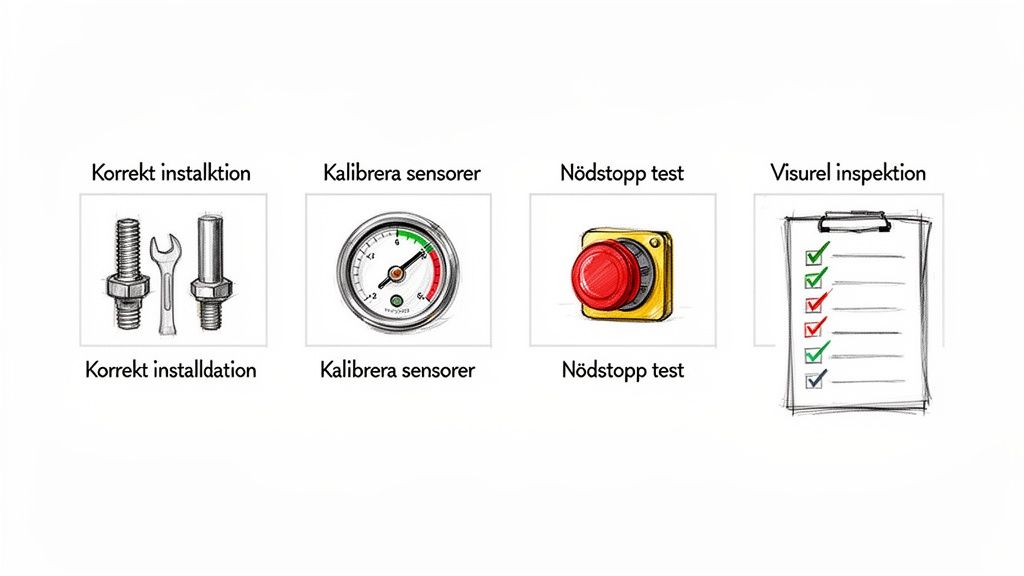
For the safety solution to do its job over time, you need precision from day one and a well-thought-out maintenance plan. A properly executed installation is the very foundation. Everything from how the guard is anchored to the floor to how panels and gates are mounted must follow the manufacturer’s instructions to the letter.
Common installation mistakes
By avoiding the most common pitfalls from the start, you save both time and money – and above all, you reduce the risk of accidents. Some mistakes we often see are:
- Incorrect anchoring: Gambling with the wrong type of bolts for the substrate is a classic. The entire guard can buckle on impact if the anchoring isn’t suited to concrete, asphalt or whatever the surface material is.
- Poorly calibrated sensors: A light curtain that isn’t set up correctly or a safety switch that reacts too slowly means the machine won’t stop in time. Careful calibration and function testing are absolutely essential before the system is put into operation.
- Openings that are too large: Leaving gaps larger than the standard (ISO 13857) allows is an invitation to an accident. Even small openings can pose a serious crushing hazard.
A smart addition, especially in areas with forklift traffic, is to reinforce with a robust barrier. Read more about our impact barrier for machine guarding, which is built to take the hit and protect both people and equipment.
Create a sustainable maintenance plan
Just as a car needs servicing, machine guarding needs regular inspection to work as intended. A simple but systematic maintenance plan is key. By working proactively, you not only minimize the risk of accidents but also extend the life of the equipment and avoid expensive, unplanned shutdowns.
A well-documented maintenance plan isn’t bureaucracy – it’s proof of a strong safety culture and a tool that actively prevents incidents.
Your plan doesn’t have to be complicated. Divide it into daily, weekly and monthly checks, and it becomes easy for everyone to follow.
A practical checklist makes it easy to ensure nothing is overlooked. Here’s a suggestion for what one might look like.
Machine guarding maintenance checklist
A practical checklist for regular inspection of machine guarding, organized by frequency.
| Checkpoint | Daily/Before each shift | Weekly | Monthly/Quarterly |
|---|---|---|---|
| Visual inspection | Check that all parts are in place and appear undamaged. | ✔ | ✔ |
| Emergency stop test | Perform a function test of all emergency stop buttons. | ✔ | ✔ |
| Interlock check | Open gates/hatches and verify that the machine stops immediately. | ✔ | ✔ |
| Sensor cleaning | Wipe dust and dirt off light curtains and other sensors. | ✔ | |
| Stability/Anchoring | Check that posts and panels are firmly secured to the floor. | ||
| Documentation | Record all inspections performed, deviations and corrective actions in a logbook. | ✔ | ✔ |
By following a clear structure, you ensure the guarding remains a reliable part of the work environment. For those who want extra peace of mind, we at Nordguard offer service agreements and always keep spare parts in stock, minimizing any downtime. Get in touch and we’ll help you set up a maintenance plan that suits your facility.
Wrapping it up – your next steps toward a safer workplace
We’ve now covered everything from the basics of machine guarding to legal requirements and all-important maintenance. It’s probably clear to most that a well-designed guarding system isn’t a cost but a pure investment. It’s about preventing accidents, absolutely, but also about building a work environment where people feel safe and can focus on their jobs.
Effective guarding is simply a prerequisite for a sustainable and productive operation. But remember: for it to work in practice, everything rests on three solid pillars. If one falls, everything falls.
The three pillars of a safe workplace
A complete approach to safety requires seeing the big picture. It’s like a chain where every link must be equally strong, from the first drawing to day-to-day operations.
- Start with an honest risk assessment: Everything starts here. Without a thorough analysis of the hazards that actually exist, it’s impossible to choose the right guarding. This is without a doubt the most important step toward a solution that works in reality, not just on paper.
- Follow laws and standards – no shortcuts: Complying with the Machinery Directive and relevant ISO standards isn’t optional. It’s your guarantee that the equipment measures up and protects employees in line with the applicable requirements. CE marking is your best friend and guide.
- Install correctly and maintain continuously: The world’s best guard is useless if it’s installed incorrectly or never inspected. A simple but well-thought-out maintenance plan is what ensures the guarding works just as well five years from now as it does today.
If you see these three parts as one connected process, you build a safety culture that becomes ingrained and permeates the entire company.
Protecting your employees is the most responsible thing an employer can do. Robust machine guarding isn’t just a barrier of steel or mesh – it’s a clear signal that you value your employees’ health and safety above all else.
Ready to take the next step?
Navigating risk assessments, complex standards and hundreds of product options on your own can feel overwhelming. But you don’t have to make the journey alone. At Nordguard, we see it as our job to be a trusted partner who helps you take a holistic approach to safety and turn your challenges into safe, effective solutions.
Our experts are ready to help you with everything from the initial risk assessment to designing and delivering a complete, custom safety solution. We make sure you get the right protection in the right place, tailored to your operations.
Give us a call or send us an email today to talk through your needs, get expert help with a risk assessment or simply request a quote. Together, we’ll create a workplace where your most important asset – your people – can feel safe, every day.

 Black/Yellow


Frequently asked questions about machine guarding
Here we’ve gathered answers to some of the most common questions we come across about machine guarding. The goal is to give you quick, straightforward answers, whether it’s about responsibility, regulations or what actually sets different guards apart.
Who is responsible for ensuring machine guarding is correct?
Responsibility is shared, but in the end it’s always the employer who bears ultimate responsibility for a safe workplace. This means ensuring all machines have the right guarding and that employees know how to use it.
At the same time, the machine manufacturer is responsible for ensuring the machine is safe and CE-marked when sold. But watch out – if an older machine is rebuilt or connected to a new machine line, responsibility for the overall safety can shift to whoever carries out the modification.
What’s the difference between machine guarding and impact protection?
That’s a great question, since they’re often found in the same facilities but solve completely different problems.
- Machine guarding: Its job is to create a physical barrier right around the machine’s hazardous parts, such as moving arms or presses. It’s usually mesh fencing or an enclosure that keeps the operator from coming into contact with the process itself.
- Impact protection: This protection is built to take the hit from a forklift or other vehicle. Its purpose is to protect the machine, the building and the people around it from being struck.
Often both are needed for a complete solution. Machine guarding protects against hazards in the machine, while impact protection protects against hazards around the machine.
Think of it this way: Machine guarding is the bodyguard standing right next to you, protecting against direct threats from the machine itself. Impact protection is like the guardrail along a highway – it handles external threats, such as a forklift that’s veered off course.
Does all machine guarding have to be CE-marked?
Yes, essentially all machine guarding sold as a finished product within the EU must be CE-marked. The marking is the manufacturer’s way of guaranteeing that the guard meets the health and safety requirements of the Machinery Directive (2006/42/EC). Choosing a CE-marked solution is simply the easiest way to know you’re getting a product that has been reviewed and approved to European standards.
If you build a guard on-site or custom-adapt one, the process is a little different, but the finished installation as a whole must still meet the same requirements.
Can we build our own machine guarding?
Technically it’s possible, but it’s a path full of pitfalls. Designing your own guard requires in-depth knowledge of the applicable standards, such as ISO 14120 for guard design and ISO 13857 for correct safety distances.
If you build your own guard, you also take on full responsibility for ensuring it’s correctly designed, manufactured and installed. That means you must carry out a complete risk assessment and be able to show with documentation that your solution meets all requirements. Given how complex it is – and the enormous responsibility involved – choosing ready-made, CE-marked systems from a knowledgeable supplier is a much safer and simpler route.
Not sure which solution suits you best? Get in touch and we’ll help you get it right.
Need help navigating the regulations and finding the right safety solution for your operations? At Nordguard, you get access to experts who help you from analysis to finished installation. Visit us at https://nordguard.eu to see our range of CE-marked safety products and book a free consultation.
Ready to take the next step?
We help you develop solutions tailored to your needs. At Nordguard, we strive to make the ordering process as smooth as possible. By offering support and guidance throughout the entire purchasing experience, we make sure you feel confident and satisfied with your choice of protection products.+46 10 153 90 50
[email protected]