
Bike Shelters for Housing Co-ops and Property Owners: A Complete Guide
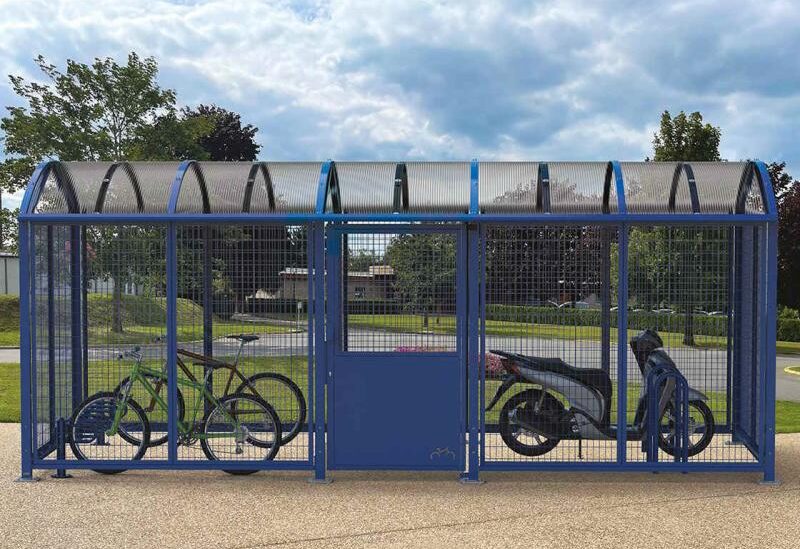
A bike shelter is so much more than just a roof over a few bikes. It is a modern, smart solution that turns disorganized, theft-prone areas into secure, functional and attractive bike parking. It doesn’t just protect against wind and weather – it creates order and raises the value of the entire property.
From cluttered bike racks to safe, organized parking
Sound familiar? Bikes tossed every which way in the courtyard, exposed to rain, snow and constant theft. This is a real and frustrating problem for many housing cooperatives and property owners. The chaos doesn’t just make a poor first impression – it also creates a real sense of insecurity among residents who worry about their valuable bikes, sometimes to the point that they hesitate to use them at all.
As more and more people choose to ride, the demand for smart, secure storage has skyrocketed. What used to be a nice bonus is now a deciding factor for many people when they choose a home or a workplace. A modern bike shelter is the solution that turns this chaos into a safe, functional and attractive asset for the whole property.
Optimize the space and create value
A common mistake is thinking that an upgrade requires a lot of new space. Quite the opposite. Most of the time, it’s about using the existing space far more intelligently. By integrating space-saving solutions, you can significantly maximize capacity without compromising accessibility.
- Two-tier bike racks: By parking bikes vertically, you can almost double the number of spaces on exactly the same floor area – a perfect solution where many bikes are crammed into a small space.
- Wall-mounted bike holders: Ideal for narrow passages or for freeing up the floor completely, which makes both cleaning and maintaining the bike shelter easier.
- Custom solutions: Every property is unique. A well-thought-out plan can combine different types of racks to accommodate everything from regular standard bikes to larger cargo bikes and e-bikes.
Imagine a place where every bike has its own protected spot. No more blocked walkways, no more rusty bikes left to their fate and, above all, a noticeable reduction in theft and vandalism.
Investing in a well-planned bike shelter doesn’t just solve an everyday problem. It also signals that you value residents’ safety and encourage a sustainable lifestyle, which directly increases the property’s appeal and value. Take a look at our wide range of bike shelters and complete bike parking solutions to see what’s possible.
Are you ready to turn your cluttered bike parking into a modern, secure facility? Contact us for a free consultation and we’ll help you find the best solution for your specific needs.
Why a bike shelter is a profitable investment
Installing a bike shelter is so much more than just putting a roof over the bikes. Think of it as a strategic investment in the property’s value and appeal. The benefits are clear, and together they add up to a profitable whole for you as a property owner and for the residents.
The most immediate gain is, of course, security. An open bike rack is unfortunately an open invitation to thieves. A lockable, well-lit bike shelter, on the other hand, acts as a truly effective deterrent. This is not a minor detail but a concrete solution to a growing problem across the country.
Security that actually reduces theft
Bike theft is a costly and annoying reality in Sweden. In 2021 alone, more than 60 000 bike thefts were reported, leading insurance companies to pay out a full 227 million kronor. This constant risk makes many people hesitate to buy a nicer bike, or even stop riding altogether. It really underlines the need for secure parking solutions. If you want to dig deeper into the numbers, you can read more about bike theft statistics in Sweden.
By offering a secure place for bikes, you don’t just drastically reduce the risk of theft. You also give residents invaluable peace of mind in their everyday lives.
A boost for the entire property
A well-designed bike shelter also increases the property’s total value and makes it more attractive on the market. Today, modern and functional bike parking is no longer a luxury but something many people expect – just like access to fiber internet or a fresh laundry room.
Prospective buyers and tenants value amenities that make life easier. An attractive, practical bike shelter signals that the property is well maintained and suited to a modern lifestyle. It may be exactly the factor that makes someone choose your property.
Investing in a bike shelter means investing in the property’s competitiveness. It shows that you listen to residents’ needs and are prepared to modernize to meet the demands of the future.
Strengthen your sustainability profile
Last but not least, a bike shelter is a clear statement in favor of sustainability. When you offer first-class conditions for cyclists, you actively encourage an eco-friendly and healthy lifestyle. This strengthens the property’s green profile and can attract a conscious audience that prioritizes sustainability.
To truly future-proof the investment, the bike shelter can easily be equipped with charging stations for e-bikes. It’s a simple adaptation that meets a fast-growing trend and shows that you are one step ahead. A well-equipped bike shelter, such as our popular and flexible MODUL bike shelter, is designed to meet exactly these needs.
Are you ready to turn an unused area into a profitable and appreciated asset? Contact us today and we’ll help you analyze your needs and develop an expert solution that fits your property perfectly.
How to choose the right bike shelter for your property
Choosing the right bike shelter is a bit like choosing the facade of a building. It affects both the practical, everyday impression and the overall feel of the property. At its core, the decision is about striking a balance between function, design and the environment where the bike shelter will stand – a choice that will shape the property for many years.
The very first and most fundamental thing you need to decide is whether you need a simpler, open weather shelter or a fully enclosed, lockable building. An open shelter is a perfect solution for keeping bikes dry from rain and snow. A fully enclosed bike shelter, on the other hand, provides maximum protection against theft and vandalism, which is a deciding factor in many areas.
Materials and design that reflect your property
The choice of material sets the tone for the entire structure. Each material has its own unique features and conveys different values, allowing you to tailor the bike shelter to match the character of the property perfectly.
- Wood: A wooden bike shelter creates a warm, organic and natural feel. It often blends in beautifully in leafy residential areas or at properties with more traditional architecture, and contributes to a welcoming atmosphere.
- Steel and glass: For a more modern and sleek look, the combination of steel and glass is a popular choice. This design conveys durability and transparency and is a perfect fit for office complexes, new developments or properties with a minimalist profile.
This decision tree can help you visualize which factors matter most for your particular project, whether it’s increased security, added value or a stronger environmental profile.
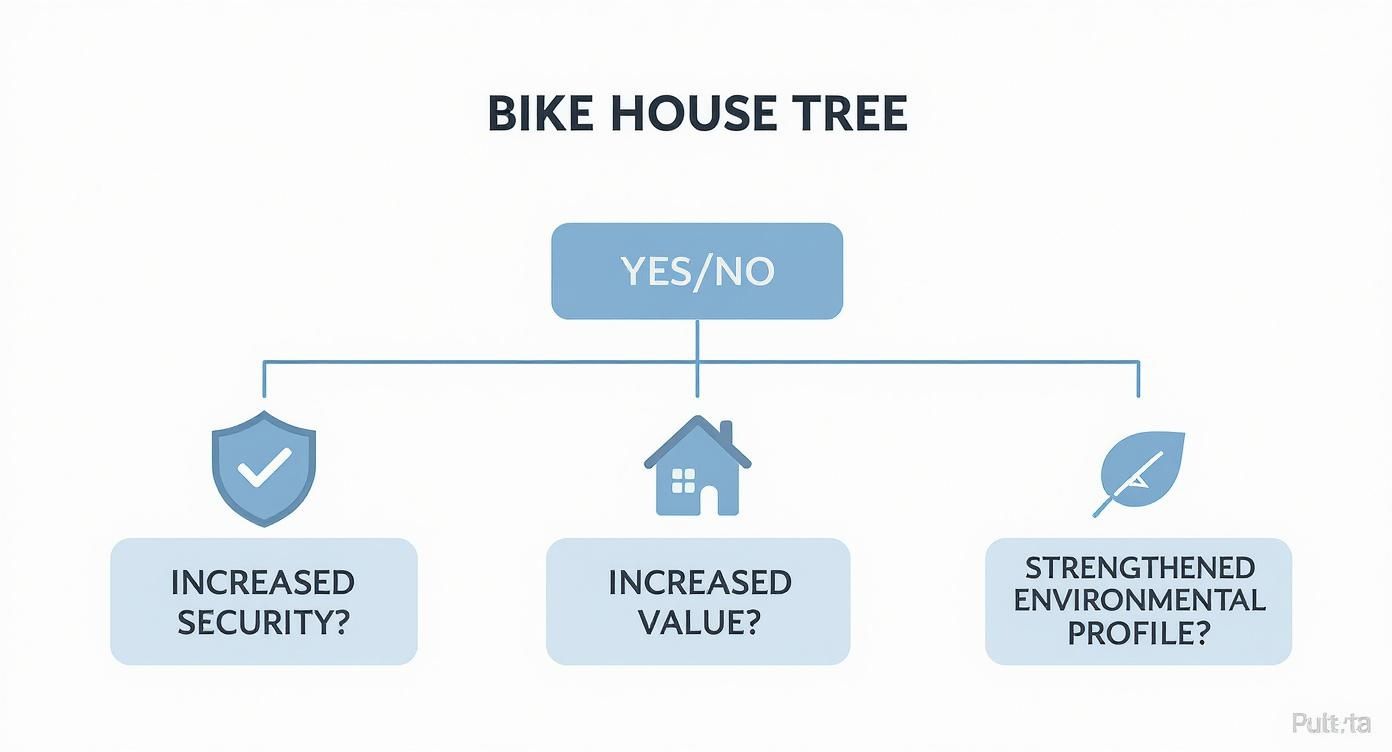
As the infographic shows, the path to the perfect bike shelter often begins with defining your primary goal. That goal then guides all subsequent choices of function and design.
Interior fittings that maximize capacity
The inside is at least as important as the outside. A smart, well-planned interior is essential for fitting as many bikes as possible while making sure the space is easy to use. With the right system, you can in many cases actually double the capacity in a limited area.
Just building a shell isn’t enough. It’s the well-thought-out interior that turns a bike shelter from a simple storage space into a highly efficient and appreciated service facility for all cyclists.
Think beyond traditional ground-mounted racks. Products like the OPTIMA two-tier rack are a real "game-changer" for properties where demand for bike parking is high. By making use of the height, you can create order and free up valuable floor space, making it easier for everyone to get to their bike.
Comparison of materials and designs for bike shelters
To make the choice a little easier, we’ve put together an overview. This table gives a clear picture of how different materials and design choices compare in terms of cost, maintenance and security. An overview comparing different types of bike shelters based on key factors to help you choose the best solution for your property.
| Material/Design | Estimated cost | Maintenance needs | Security level | Best suited for |
|---|---|---|---|---|
| Open weather shelter (Wood) | Low | Medium (regular treatment) | Low | Residential areas with lower theft risk |
| Open weather shelter (Steel) | Low–Medium | Low (hot-dip galvanized) | Low | Public spaces, offices |
| Enclosed bike shelter (Wood) | Medium–High | Medium | High | Housing co-ops that value aesthetics |
| Enclosed bike shelter (Steel/Glass) | High | Low | Very high | Businesses, new construction, high-security areas |
As the table shows, a simpler weather shelter has a lower initial cost, but a fully enclosed, lockable bike shelter offers unbeatable security and minimal maintenance over time – especially if you choose materials such as hot-dip galvanized steel.
Choosing a bike shelter is a long-term investment. By carefully considering your specific needs, your budget and the unique character of the property, you can make a well-informed decision that creates value for many years. Unsure which option is best? Contact us at Nordguard for expert help. We’ll help you analyze your conditions and develop a solution that is perfectly tailored to your property.
Planning and placement for maximum benefit
A bike shelter can be beautifully designed and built from the finest materials, but if it’s in the wrong place, it will never reach its full potential. Smart placement is simply essential for the bike shelter to be used frequently, every day. Think of this chapter as your checklist for finding the perfect spot that makes the investment a success.
Think of placement as a service. The easier and safer it is to park, the more people will choose to ride. The goal is to find a location that is both easily accessible and secure – close to residents’ natural movement patterns without blocking important passages or emergency exits.
Finding the perfect spot
The very best location is almost always near the property’s main entrances. If the bike shelter is too far away, in a dark and secluded part of the lot, it creates a mental barrier. No one wants to take a long detour in the rain or dark to get their bike.
Another critical point is security. A bike shelter should be placed where there is natural social surveillance, for example in full view from windows or along a busy walkway. This significantly reduces the risk of theft and vandalism and makes users feel safe.
Practical checklist for placement and ground surface
Before you settle on a spot for the bike shelter, there are a few practical details to consider. Thinking these points through from the start saves both time and money down the road.
- Ground surface and anchoring: The ground must be level and stable enough to support the weight of both the shelter and all the bikes. A cast concrete slab or a paved surface is usually the best and most durable option for secure anchoring.
- Building permit: Always check with your municipality about the applicable rules. Larger, permanent structures almost always require a building permit, and it’s important to have it in place before the project gets underway.
- Lighting: Good lighting in and around the bike shelter is crucial for safety, especially during the dark months of the year. Plan for it from the start.
- Accessibility: Make sure the door openings are wide enough and that there is plenty of room for different types of bikes, such as cargo bikes or bikes with child seats.
- Access to power: More and more people are getting e-bikes. Having power outlets for charging nearby is a smart way to future-proof the facility.
A common pitfall is underestimating future needs. Cycling is on the rise, and a space that is big enough today may be too small tomorrow. Plan with some margin to avoid outgrowing your new bike shelter too quickly.
As bike traffic in Swedish cities increases, so does the need for secure and accessible bike parking. Research shows that planning a bike shelter should go hand in hand with the development of housing and workplaces, since the number of parked bikes often grows more than initially expected. This underlines the importance of a thorough needs analysis and strategic placement. Read more about these insights in this study from SLU.
Navigating building permits, technical requirements and finding the best location for a bike shelter can feel complicated, especially when developing entire residential areas. Let us at Nordguard help you. We can review your property and develop an expert solution that meets all requirements and makes sure your investment is as appreciated as it deserves to be.
How to ensure quality and long-term durability

A bike shelter is not a disposable product. It is a long-term investment in the property’s value and infrastructure. For that investment to pay off, the choice of materials and a sensible maintenance plan are absolutely crucial. It’s all about building something that can withstand our Nordic climate and daily wear and tear, year after year.
A smart, robust choice of materials is the foundation. By choosing correctly from the start, you avoid unnecessary maintenance costs and can rest assured that your bike shelter will stay attractive and functional throughout its entire service life.
Materials that stand the test of time
When it comes to durability, two materials really stand out. They are superior in terms of resistance and require minimal maintenance. Choosing one of them is a wise move to protect your investment.
- Hot-dip galvanized steel: Extremely resistant to rust and corrosion. The zinc coating creates a protective barrier against rain, snow and road salt. In practice, a virtually maintenance-free option for the frame.
- High-quality treated wood: For those who want a warmer, more natural feel, wood is an excellent choice – but only if it is properly treated. Pressure-treated or thermally modified lumber from sustainable forestry resists rot and insects and retains its strength for many years with proper care.
A bike shelter built with quality materials is more than just a product – it’s a promise of lasting safety and function. It signals that you, as a property owner or housing co-op, prioritize long-term quality over quick, short-term savings.
Simple care for maximum service life
Even the best materials benefit from a little care. A simple maintenance routine ensures that your bike shelter is always in top condition and is perceived as a safe and welcoming place.
- Regular cleaning: Keep it free from dirt, leaves and other debris. A clean environment prevents moisture from building up and reduces unnecessary wear on the surfaces.
- Check the fastenings: Take a look now and then to make sure all screws and bolts are secure, especially after a stormy fall or a snowy winter.
- Function check of locks and lights: Security is essential. Test that the lighting works and that the locks operate smoothly. A reliable locking system is crucial, and upgrading to a smart app-controlled lock for your bike shelter can significantly improve both security and user-friendliness.
By investing in quality from the start and having a simple care plan, your bike shelter becomes an appreciated and durable asset for the property. It’s a clear sign of responsible, quality-conscious property management. Ready to discuss a durable solution? Get in touch with us for expert advice.
Frequently asked questions about bike shelters
When a housing cooperative or property owner starts thinking about a bike shelter, a lot of questions almost always come up. They can be about anything from costs and building permits to how many spaces you actually need and which rules apply.
Here we’ve gathered the most common questions we come across. The answers are straightforward and practical, intended to give you a clearer picture and help you move forward with your project.
How much does a bike shelter cost?
This is often the very first question, and it’s a completely fair one. The answer, however, is that it depends – there’s no standard price tag. The cost of a bike shelter is driven entirely by your choices and needs.
Factors that affect the final cost:
- Size and capacity: How many bikes need to fit?
- Choice of material: A simple wooden weather shelter has a different price tag than a fully enclosed steel and glass structure.
- Design and customization: Will you go for a standard model like the MODUL bike shelter, or a fully custom solution tailored to the property?
- Interior and add-ons: Should the shelter have smart two-tier racks, service stations or perhaps charging points for e-bikes?
A simpler weather shelter can start at around 30 000 SEK, while a larger, fully equipped, lockable bike shelter with advanced interior fittings can come to several hundred thousand. Think of it as a long-term investment that increases the value of the property, not just an expense. The best way to get a clear picture is to request a quote tailored precisely to your conditions.
Do we need a building permit for a bike shelter?
The building permit question is critical and must be sorted out early. The answer, as so often, is that it depends. The municipality’s zoning plan, the size of the bike shelter and exactly where on the lot it will stand are all decisive.
Smaller structures such as simple weather shelters can sometimes be classified as permit-exempt “Attefall” measures. Larger, permanent buildings, however, almost always require a building permit.
Our strongest recommendation is to never take chances. Always contact your municipality’s building committee early in the process to get a clear answer.
We at Nordguard have been through this process many times. We can offer advice and help with the professional drawings and documentation needed for a complete application, which makes the whole process much smoother for you.
How many bike spaces do we need?
Finding the right number of bike spaces is a balancing act. You want to cover today’s needs without building too small for the future. A good rule of thumb for a housing co-op is to aim for 1.5–2 bike spaces per apartment. For office properties, the usual estimate is one space per 5–10 employees.
The most important thing is not to look only at the current situation. Cycling is on the rise, and with it the demand for secure parking. Our space-efficient solutions, such as the OPTIMA two-tier rack, are designed to maximize the number of spaces in a limited area. We’re happy to help you carry out a thorough needs analysis so you end up with an optimal, future-proof solution.
Which rules and standards apply?
When you invest in something new like a bike shelter, you naturally want it to meet all safety and quality requirements. Products sold within the EU should be CE marked. This is a basic mark showing that the product meets EU requirements for health, environment and safety.
In addition, the structure itself must comply with the Swedish National Board of Housing, Building and Planning’s building regulations (BBR). These rules govern everything from accessibility – for example, that door openings are wide enough for cargo bikes – to safety aspects such as lighting and emergency exits. As an experienced supplier, we make sure our solutions, such as the flexible MODUL bike shelter, are built to meet all relevant standards. That gives you the peace of mind that you’re making a safe and durable investment.
Do you have more questions, or would you like to discuss a solution for your property? At Nordguard, we have the expertise needed to guide you all the way, from the first idea to a finished bike shelter.
Contact us today and we’ll help you move forward with your project. Read more and find our contact details at https://nordguard.eu.
Ready to take the next step?
We help you develop solutions tailored to your needs. At Nordguard, we strive to make the ordering process as smooth as possible. By offering support and guidance throughout the entire purchasing experience, we make sure you feel confident and satisfied with your choice of protection products.+46 10 153 90 50
[email protected]