
How to Choose the Right Barrier Gates to Secure Your Site
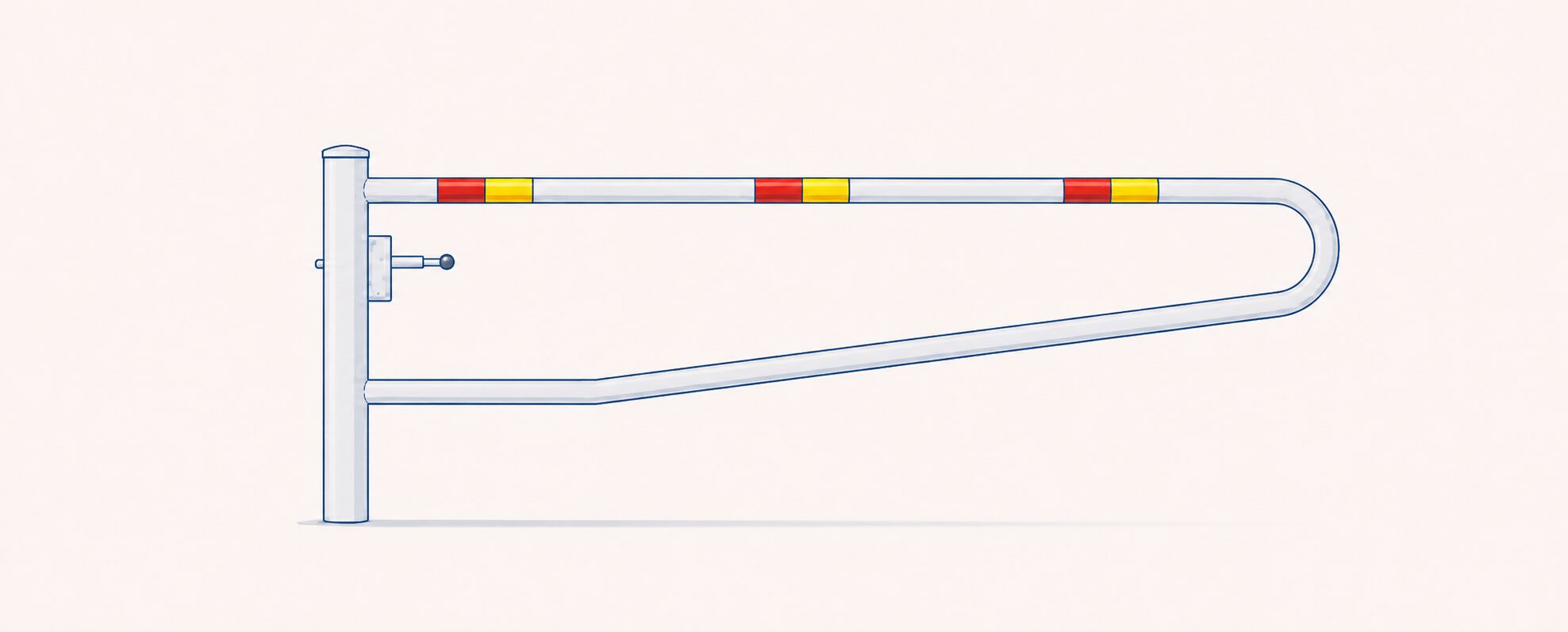
Getting traffic problems and unauthorized parking under control can feel like navigating a tangled jungle. Barrier gates are one of the most straightforward and effective solutions for bringing order, but the key to a good result is choosing the right type for your specific site. This guide helps you find the right fit, from simple manual barrier gates to advanced automatic systems that keep unauthorized vehicles out.
From Chaos to Control with the Right Barrier Gate
Many property owners and housing cooperatives share the same headache: unauthorized traffic wearing down the roads, cars parking where they shouldn’t, and a general feeling of having lost control. A well-placed barrier gate is often the simplest and most direct solution. It creates a clear physical boundary that immediately shows who belongs on the property and who doesn’t.
By installing a barrier gate, you simply take back control. It’s not just about stopping cars—it’s about creating a safer and more functional environment for everyone who uses the area.
More Than Just a Roadblock
A barrier gate is an investment in both security and order. Imagine a housing cooperative where members constantly find their parking spaces taken by outsiders. An automatic barrier gate, controlled with a simple remote or key tag, ensures that only residents get in. It solves a real problem, eliminates unnecessary frustration and conflict, and can actually increase the value of the property.
For an industrial site, the needs are completely different. There, it’s more about protecting expensive equipment and managing the flow of heavy trucks. A heavy-duty automatic barrier gate, like the robust models in our automatic barrier gates category, connected to an access control system then becomes a crucial part of the facility’s perimeter security.
Installing a barrier gate is a concrete step toward turning a disorganized area into a safe, well-regulated zone. It sends a clear signal that order and safety are a priority here.
Find the Right Solution for Your Unique Needs
The choice of barrier gate depends entirely on the situation. A remote forest road with the occasional passing car does perfectly well with a simple, inexpensive manual barrier gate. At the other end of the spectrum is the busy entrance to a logistics center. There, you need a fast and extremely durable automatic barrier gate to keep traffic moving without creating bottlenecks.
Whether you want to protect a private road, manage traffic in a parking garage or secure a company parking lot, there’s a barrier gate built for exactly that purpose. The problem is rarely a lack of options, but knowing which one is right.
Do you have a specific problem but aren’t sure which barrier gate will solve it best? Our experts can help you analyze your needs and find a durable solution that works just as well today as it will ten years from now. Get in touch for a free consultation and we’ll find the right product for you!
Identify Which Barrier Gate Solves Your Problem
Choosing the right barrier gate comes down to one thing: understanding exactly what problem you want to solve. There’s no one-size-fits-all solution—the choice depends entirely on your unique conditions, how traffic flows and what security needs you have.
At best, the wrong barrier gate is simply ineffective. At worst, it creates new problems such as traffic congestion, safety risks or unnecessary hassle for those who actually should get through.
To make the choice easier, start by asking a simple question: Is it about keeping the occasional vehicle off a private road, or do you need to smoothly handle hundreds of cars every day at a parking garage? The answer points you directly toward either manual or automatic systems.
Manual Barrier Gates for Lower Traffic Volumes
A manual barrier gate is the most basic and robust solution available. It’s perfect for low-traffic locations where the gate doesn’t need to be opened and closed all the time. Think of settings such as:
- Forest roads and private roads: Effectively blocks unauthorized traffic without requiring any electrical installation.
- Seasonal parking lots: An easy way to close off an area during the off-season.
- Temporary barriers: A far more durable alternative to plastic tape for construction sites or event areas.
The biggest advantages are reliability and virtually no maintenance. With no motor or electronics, there’s simply very little that can break. The downside, of course, is that it requires manual operation, which makes it completely impractical for locations with regular traffic. Our manual barrier gates are built to withstand rough handling.
Automatic Barrier Gates for Convenience and Control
When traffic is heavier and smooth operation is essential, an automatic barrier gate is the obvious choice. These systems are built to handle high volumes and can be connected to a wide range of control systems to suit your specific needs.
They’re a perfect fit for:
- Housing cooperatives: Give residents easy access with a remote or key tag, while effectively stopping unauthorized parking.
- Industrial sites and logistics centers: Secure the entire site and manage the flow of heavy traffic without staff needing to be on-site.
- Parking garages and commercial facilities: Can be connected directly to payment systems for fully automated entry and exit.
An automatic barrier gate is simply an investment in both security and efficiency. It reduces the need for staff and creates a smooth flow for all authorized vehicles.
The flowchart shows how your primary need—whether it’s security, order or access control—guides you toward the right type of barrier gate.
Comparison of Barrier Gate Types
For a quick overview, we’ve put together a simple comparison table. It helps you quickly see the differences between the most common types of barrier gates.
| Barrier gate type | Best for | Cost level | Security level | Maintenance |
|---|---|---|---|---|
| Manual barrier gate | Low-traffic roads, temporary barriers | Low | Basic | Minimal |
| Automatic barrier gate | Parking garages, industry, housing cooperatives | Medium/High | High (with accessories) | Regular |
| Folding-arm barrier gate | Locations requiring fast opening/closing | High | High | Regular (specialist) |
| Drop-arm barrier gate | Locations without power but needing easy operation | Low/Medium | Basic | Low |
The table clearly shows that there’s no “best” barrier gate—only the one that’s best for your specific situation. It’s all about weighing function, cost and maintenance needs against each other.
Specialized Barrier Gates for Unique Challenges
Sometimes standard solutions aren’t enough. For particularly demanding environments, there are specialized barrier gates built for specific purposes. A high-speed folding-arm barrier gate, for example, can be absolutely crucial for a facility with extremely heavy traffic, where a regular barrier gate would quickly cause lines. Their fast opening and closing times minimize waiting and keep traffic flowing.
Another smart solution is the gas-spring-assisted drop-arm barrier gate, a clever middle ground between manual and automatic. It requires no electricity but is still easy to operate thanks to gas springs that help raise and lower the boom arm. This is an excellent option for locations without a power supply that still need an easy-to-operate barrier gate.
In some cases, bollards can also be a good complement or even a better alternative. Read more in our guide on how to choose the right bollards for a safer and more attractive urban environment.
Analyzing your specific scenario is by far the most important step. A barrier gate for a campground has completely different requirements than one at a high-security facility. Be honest about your needs to find the most durable and effective solution.
Not sure which type of barrier gate best meets your requirements? You’re not alone. There are many factors to consider. Contact us and our experts will help you analyze your situation and recommend a solution that ensures both safety and functionality for many years to come.
Technical Details That Ensure Durability and Performance
Once you’ve narrowed down which type of barrier gate best solves your problem, it’s time to dive into the technical details. This is where, in the specifications, you can really tell a durable quality barrier gate apart from one that will cause problems and costs in the long run.
Focusing on price alone is a common trap. A cheaper barrier gate may have a weaker motor or be made of materials less resistant to our Nordic climate. That can lead to premature wear or frequent repairs, which quickly eats up the initial savings.
Balancing Boom Length and Motor Power
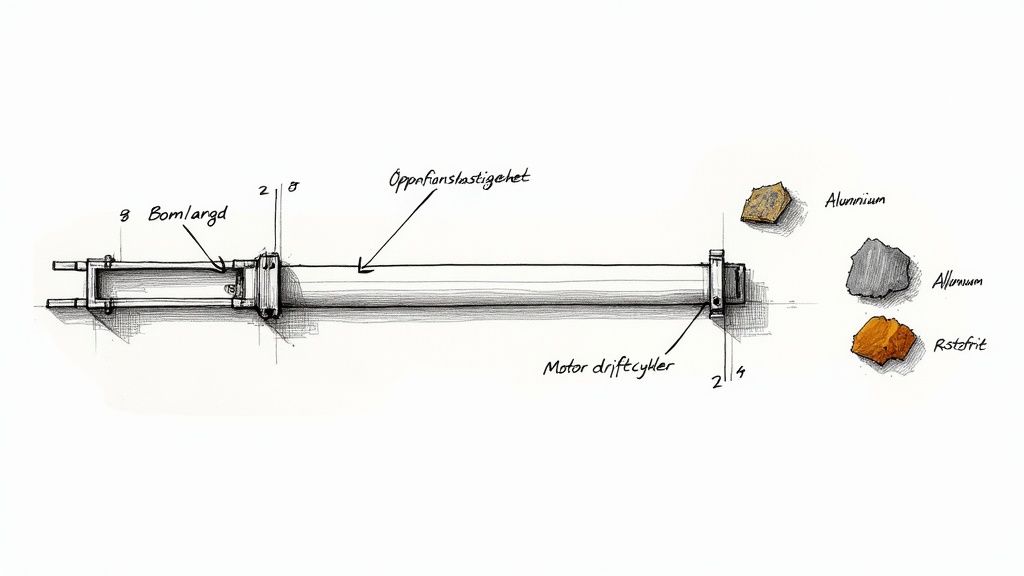
One of the most critical technical aspects is the interplay between the length of the boom arm and the capacity of the motor. A longer boom arm creates more torque, which places much higher demands on the motor. Combining a long, heavy arm with an undersized motor is a recipe for trouble.
The motor is forced to work at its limit with every opening and closing, leading to overheating and abnormally fast wear. It’s like trying to drive up a steep hill in top gear—it works for a while, but the strain becomes unsustainable.
A correctly sized motor is absolutely critical to the barrier gate’s service life and reliability. A more powerful motor can handle a longer boom effortlessly, ensuring smooth and dependable operation year after year.
Understanding Duty Cycles and Opening Speed
Two other important specifications to keep an eye on are duty cycles and opening speed. These reveal a lot about the barrier gate’s design and intended use.
- Duty cycles: This figure indicates how many openings and closings (cycles) the barrier gate is built to handle per day, or in total over its service life. A barrier gate for a private driveway may only need to handle 50 cycles per day, while one for a parking garage may need to handle over 2000 cycles without issue. Choosing a barrier gate with too low a cycle rating for a high-traffic entrance is a guarantee of early breakdowns.
- Opening speed: The time it takes for the barrier gate to go from closed to fully open is crucial for traffic flow. For an industrial entrance with heavy trucks, a fast opening time of perhaps 2-4 seconds is necessary to avoid lines. For a housing cooperative, a somewhat slower opening of 6-8 seconds can be perfectly acceptable and may even feel safer.
Setting the right requirements for these parameters ensures you get a solution tailored to your traffic flow and needs.
Material Choices That Stand the Test of Time
Material and finish directly determine how well your barrier gate will withstand wind, weather and potential vandalism. In the Swedish climate, with its large variations in temperature and humidity, this is a particularly important factor.
Hot-dip galvanized steel is an extremely robust and durable option that provides superior protection against rust. The galvanizing creates a protective barrier that is highly resistant to mechanical wear. Aluminum is a lighter material that doesn’t rust, which can be an advantage for the boom arm, while stainless steel offers the highest level of corrosion resistance and a premium look.
The choice of material affects not only service life but also maintenance needs. A barrier gate with a high-quality finish requires less maintenance and keeps its appearance longer, making it a smarter investment over time.
Understanding these technical details gives you the tools to ask the right questions and evaluate different options properly. If you’re unsure which specifications are right for your project, don’t hesitate to contact us. Our experts will help you analyze your needs and make sure you choose a barrier gate with the right performance and durability.
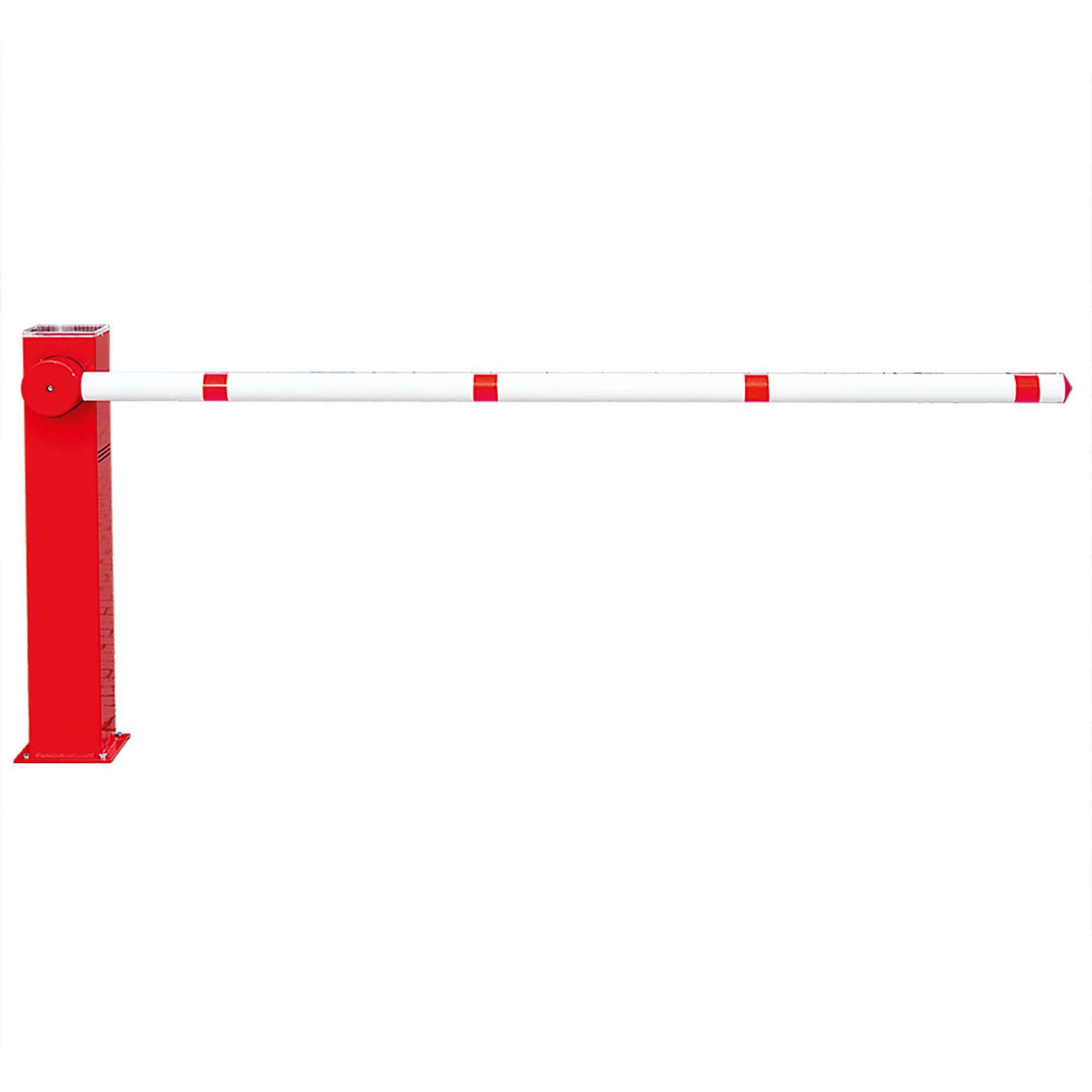
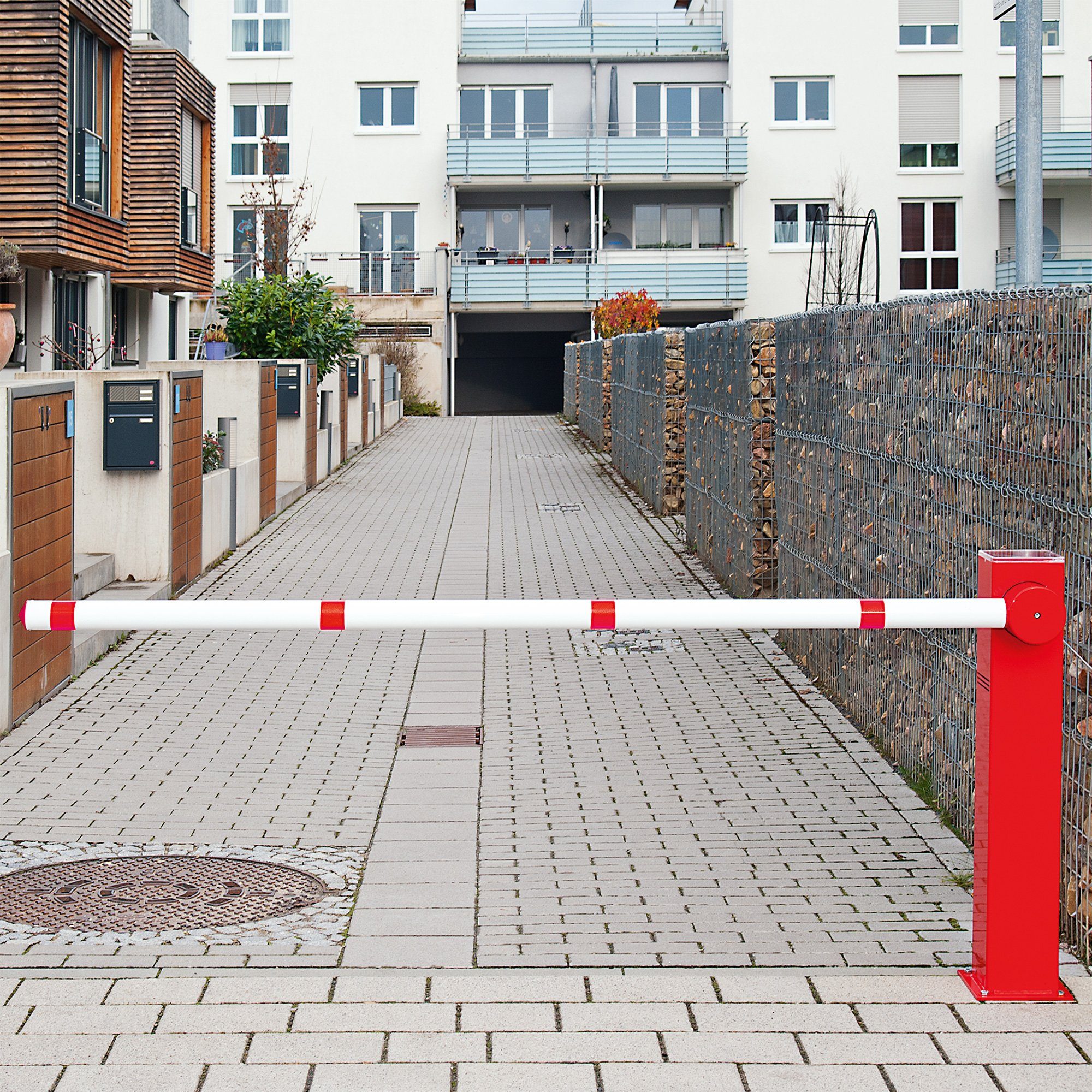
 Red/White
Laws and Safety Requirements for Barrier Gates – What You Need to Know
When you install a barrier gate, especially an automatic one, it’s no longer just a simple product. It becomes a machine. This distinction is crucial, because the entire installation must then comply with strict safety regulations to protect people, vehicles and property. Safety is never optional—it’s a legal requirement that can’t be compromised.
Cutting corners on requirements can lead to terrible accidents, resulting in both personal injury and costly vehicle damage. The responsibility rests heavily on both you as the installer and you as the facility owner to make sure everything is correct and certified from day one.
CE Marking Is Your Guarantee
The single most important thing to look for is the CE marking. It’s not just a sticker, but a declaration from the manufacturer that the barrier gate and its components meet the EU’s essential health and safety requirements under the Machinery Directive. A CE-marked barrier gate has simply undergone rigorous testing and risk assessments to ensure it’s safe to use.
Taking a chance on a product without this marking is a huge risk. It means you’re installing a machine that hasn’t been approved to European standards, which can have serious legal and financial consequences if an accident occurs.
A complete barrier gate installation, including all safety equipment, must be regarded as a single machine. That’s why the entire system must be CE-marked to comply with the law and ensure safe operation.
Vital Safety Equipment That Prevents Accidents
An automatic barrier gate in motion has considerable force. To keep it from causing harm, it must have several layers of safety systems working together. These systems are designed to detect obstacles and immediately stop or reverse the movement of the boom.
Here are the most common and critical components:
- Photocells: They send an invisible infrared beam across the road. If something—a vehicle or a person—breaks the beam while the boom is lowering, an immediate signal is sent to the motor to stop and reverse. They are mounted in pairs and are the first line of defense against crushing injuries.
- Safety edges: This is usually a rubber strip on the underside of the boom arm. Inside the strip is a sensor that detects pressure. If the boom arm hits an obstacle, such as a car roof, the sensor detects the resistance and tells the motor to reverse immediately.
- Loop detectors: An inductive loop is cut into the ground in front of and behind the barrier gate. The loop detects the presence of metal (in other words, a vehicle) and can prevent the boom from closing as long as a vehicle is in the danger zone. Especially important for protecting vehicles with trailers.
These systems are not recommendations—they are essential for a safe and legal installation.
The Installer’s Responsibility and On-Site Risk Assessment
A reputable installer has a legal responsibility to carry out a thorough on-site risk assessment before work begins. This means identifying every conceivable risk and making sure the barrier gate has the right protection for that specific environment. The installer must also document the assessment and be able to show that everything has been done to minimize the risks.
Barrier gates have a long history of securing important crossings, not least on the railways. Level crossings with barrier gates are a central part of traffic safety in Sweden. As early as 2005, there were roughly 10,000 level crossings in the country, of which about 3,000 had protective systems such as barrier gates and warning lights. You can read more about this in the survey by the Swedish Transport Administration (Trafikverket).
More Than Traffic Control – Physical Protection
In addition to managing traffic flow, a sturdy barrier gate can also act as a first line of impact protection. Although a standard barrier gate isn’t designed to stop a vehicle at high speed, it’s a clear physical and psychological barrier that can deter vehicle attacks or accidental intrusions. For areas with higher security requirements, you can add crash-rated bollards for complete protection. If you want to dig deeper into that topic, read our article on legal requirements and responsibilities for impact protection.
Understanding and following safety requirements is the foundation of a successful and lasting barrier gate installation. If you’re unsure which requirements apply to your project, don’t hesitate to get in touch. Our experts will help you navigate the regulations and make sure you get a safe, secure and fully compliant solution.
How to Ensure Trouble-Free Operation with Proper Installation and Maintenance
Even the best and most advanced barrier gate can quickly become a source of headaches if the installation is sloppy. Poor mounting not only compromises function but almost always leads to costly repairs and a shorter service life for the entire system. So the investment lies not only in the product itself, but just as much in the craftsmanship required for everything to work smoothly from day one.
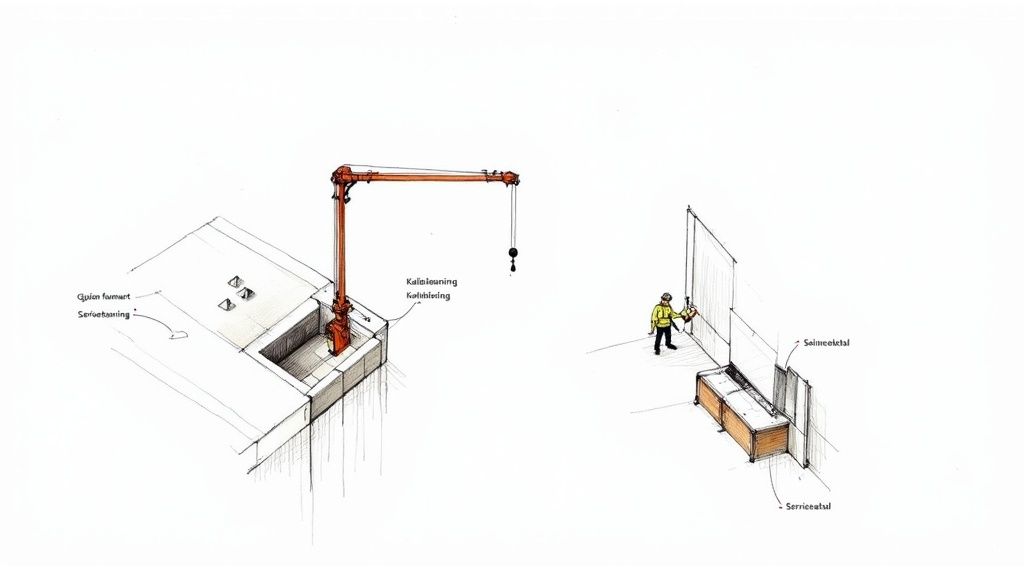
The basis for a stable and durable installation is, quite literally, the foundation. A correctly poured foundation is absolutely crucial, especially in our Nordic climate where ground frost is a real issue. The foundation must be deep enough and properly reinforced to withstand frost heave—the force created when frozen water in the ground expands and can lift and shift the entire structure. Skimping on depth is a classic shortcut taken by inexperienced installers, and it almost guarantees problems within a couple of years.
More Than Just Concrete and Bolts
A professional installation is about precision in every detail. It’s not enough to simply anchor the barrier gate to the ground. All moving parts must be perfectly adjusted and, above all, the safety systems must be calibrated with millimeter precision. This means testing photocells, safety edges and loop detectors under real-world conditions to be completely sure they respond exactly as they should.
A poorly calibrated photocell can either miss an obstacle entirely or, conversely, cause unnecessary stops that only create irritation and disrupt traffic flow.
Preventive Maintenance Maximizes Service Life
Once the installation is complete and everything is up and running, the next important phase begins: maintenance. Just as a car needs regular servicing to run smoothly, an automatic barrier gate needs preventive maintenance to maximize both service life and reliability. By signing a service agreement, you not only secure proper function—you also fulfill your responsibility as the facility owner.
A good service agreement isn’t a cost, it’s insurance. It protects your investment and gives you peace of mind, knowing that your system always works as it should.
A well-designed service agreement should include regular inspections of several key components:
- Mechanical parts: Lubrication of bearings, inspection of bolts and brackets, and adjustment of the boom arm’s balance.
- Electrical systems: Functional check of the motor, control board and all connections.
- Safety equipment: Complete testing and calibration of all safety sensors.
- Cleaning: Removal of dirt, leaves and debris that can interfere with the mechanism.
By being proactive and dealing with small issues before they grow into big ones, you can avoid those unexpected and costly breakdowns.
What You Can Keep an Eye on Yourself
Even with a service agreement in place, there are simple things you can do yourself between service visits. Keep the area around the barrier gate clear of leaves, gravel and snow that could obstruct movement. Listen for unusual sounds from the motor and check that the boom arm moves evenly and smoothly.
For some installations, robust accessories are absolutely essential, such as a post for cast-in mounting in concrete for Compact barrier gates, which provides extra stability where it’s really needed. If you notice anything that seems out of the ordinary, don’t hesitate to contact your service partner right away.
Want to ensure long, trouble-free operation of your barrier gates? Contact us today and let’s talk about a customized service agreement that fits your facility and your needs. We’ll help you protect your investment and ensure safe, efficient operation for many years to come.
Frequently Asked Questions About Barrier Gates
Here we’ve gathered answers to some of the most common questions we hear about barrier gates. Perfect if you want quick answers so you can move forward with your project.
How long does an automatic barrier gate last?
It depends entirely on the quality, how it’s installed and how well it’s maintained. A really good barrier gate, professionally installed and regularly serviced, can easily keep running for 10–15 years, sometimes even longer.
Of course, factors such as the number of openings per day and exposure to wind and weather play a big role. A service agreement is really the best insurance for maximizing service life and ensuring operation you can rely on.
What are the ways to open an automatic barrier gate?
There’s a whole range of solutions for creating a smooth flow, tailored to your specific needs. The most common methods are:
- Remote controls: The classic and most reliable solution for authorized users.
- Keypads or key switches: Simple and robust options when you want controlled access.
- GSM control: Lets you open the barrier gate by calling a phone number—perfect for granting temporary access to visitors or suppliers.
- App control: Modern and flexible operation right from your phone.
- Access control systems with key tags: Ideal for housing cooperatives and businesses where many people need to come and go smoothly.
- Vehicle loops: A loop in the ground that detects when a vehicle approaches. Almost always used to control exits automatically.
What happens if the power goes out?
No need to worry—most automatic barrier gates have a built-in mechanical release. With a special key, you can easily disengage the motor and raise the boom arm by hand. That way, the passage is never completely blocked.
For facilities where operation is absolutely critical, such as industrial sites or emergency services, many systems can be equipped with battery backup. The barrier gate then continues to operate automatically for a while, even after the power has gone out.
Do I need a building permit to install a barrier gate?
The rules can vary somewhat between municipalities and depending on exactly where the barrier gate will be located. For a standard barrier gate on private land that doesn’t affect anyone else, a building permit is usually not required.
However, if the barrier gate connects to a public road or may affect the traffic situation, you may need a permit from the municipality or Trafikverket. Our advice is always to give your municipality’s building committee a call to be one hundred percent sure what applies. That’s the easiest way.
Do you have more questions, or need help finding the perfect solution for your site? At Nordguard, we have both the expertise and the products to create a safe and functional environment. Contact us today and we’ll help you take the next step!
Ready to take the next step?
We help you develop solutions tailored to your needs. At Nordguard, we strive to make the ordering process as smooth as possible. By offering support and guidance throughout the entire purchasing experience, we make sure you feel confident and satisfied with your choice of protection products.+46 10 153 90 50
[email protected]