
Rubber Impact Protection for Loading Docks
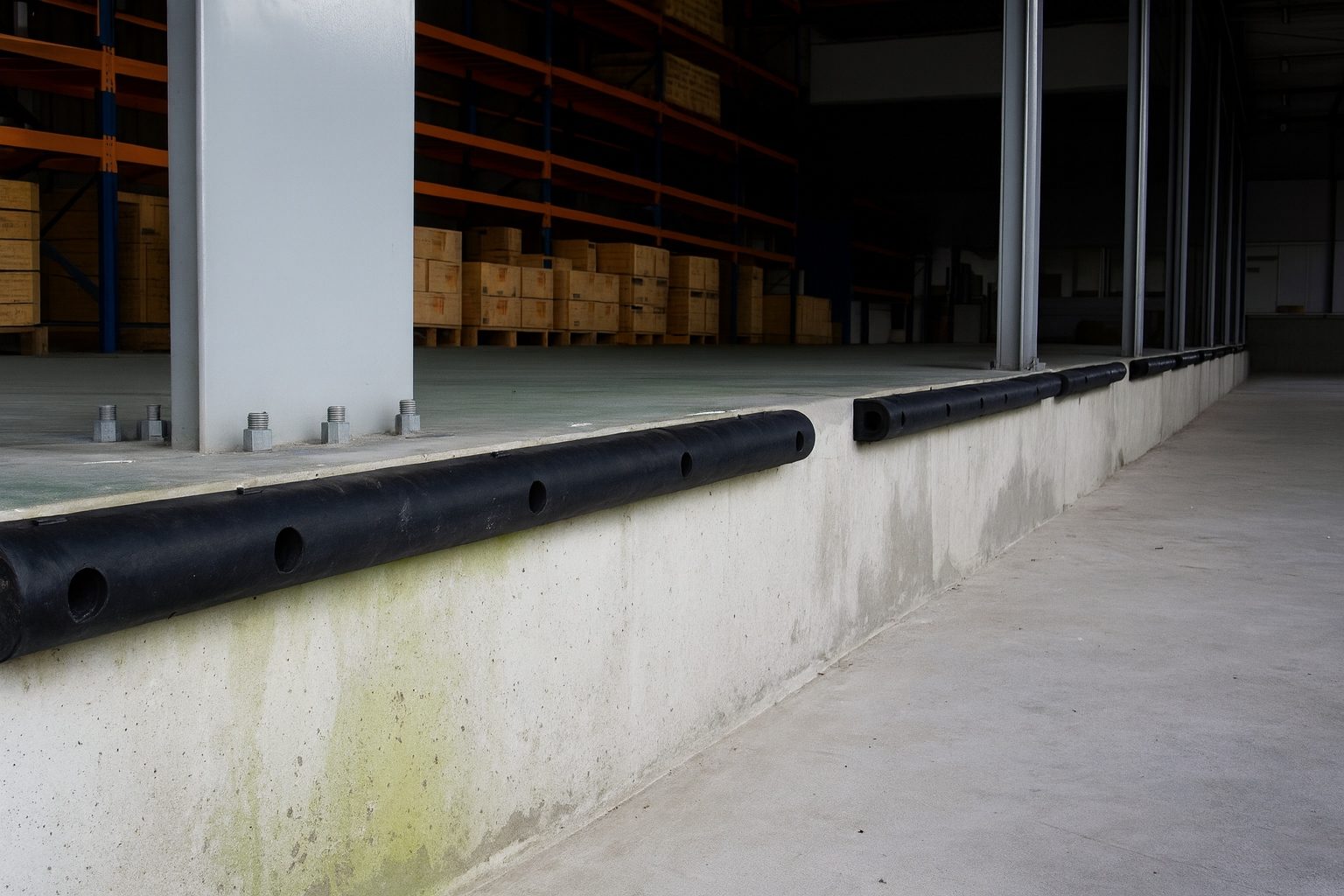
Damage to loading docks is a common problem in logistics and industrial environments. Every year, heavy trucks, trailers and forklifts cause costly repairs, downtime and safety hazards. With loading dock impact protection featuring steel reinforcement, you can protect your building, your staff and your investment. On this page, you will learn how these protectors work, why they are cost-effective and how they are installed and maintained.
What is loading dock impact protection?
Loading dock impact protection is a physical barrier mounted along the edge of the loading dock to absorb and distribute the force of vehicle impacts. By absorbing shocks, it reduces wear and the risk of structural damage to the dock itself and the building.
Function and purpose of impact protection
The purpose is to minimize damage from repeated impacts and thereby extend the service life of the loading dock. The protection also helps reduce downtime and repairs, while creating a safer work environment for staff working near the loading areas.
Common types of impact protection
- Rubber bumpers – A standard solution that cushions impacts but can wear out quickly under heavy traffic.
- Steel-reinforced bumpers – For high-traffic terminals and heavy-load environments. The combination of steel and durable rubber provides a longer service life.
- Modular systems – Customizable solutions that combine different materials depending on traffic volume and risk level.
Benefits of steel-reinforced dock bumpers
Greater durability and service life
Steel-reinforced bumpers are designed to withstand heavy vehicles and daily impacts from forklifts and trailers. This results in a longer service life compared to standard rubber, reducing the need for frequent replacements.
A cost-effective long-term solution
Although the initial investment is slightly higher than for traditional bumpers, the total cost of ownership is lower. Less damage to the building, less downtime and reduced maintenance save both time and money over time.
For businesses with heavy traffic at the loading dock, steel-reinforced impact protection can be one of the most profitable safety investments.
Installing steel-reinforced rubber impact protection for loading docks
Preparing for installation
Before installation, it is important to:
- Make sure the substrate (usually concrete) is stable and level.
- Choose the right height and model based on vehicle type and dock design.
- Plan the installation to minimize disruption to operations.
Step-by-step installation
- Measuring and marking the exact position.
- Drilling and anchoring with bolts into the substrate.
- Mounting the protector and checking that it is securely fastened.
- Final inspection and function check.
Maintenance and inspection of impact protection
Regular maintenance
For best performance, the protection should be inspected regularly, especially in high-traffic environments. Check that bolts are tightened and that no visible cracks or deformations have appeared.
The importance of inspection
Ongoing inspections reduce the risk of accidents and downtime and ensure compliance with work environment requirements under AFS and insurance company guidelines.
Comparison of different types of impact protection
| Type | Service life | Maintenance | Cost over time | Recommended environment |
|---|---|---|---|---|
| Standard rubber | Medium | Higher | Higher due to frequent replacements | Low-traffic loading docks |
| Steel-reinforced bumpers | High | Low | Lower due to fewer replacements | High-traffic docks and heavy industry |
| Modular systems | Varies | Medium | Depends on use | Custom projects |
Customer cases and experiences
Case studies from companies that have implemented the protection
A large logistics company reduced its repair costs by more than 40 % after installing steel-reinforced impact protection. By extending the service life of its loading docks, the company saved both time and resources and was able to reduce unplanned downtime.
Customer feedback and recommendations
Several customers highlight the durable construction and easy installation as key reasons for choosing our protectors. Many also appreciate that the investment quickly pays for itself through lower maintenance costs.
Frequently Asked Questions
The steel reinforcement withstands repeated impacts from heavy vehicles and reduces damage to the dock edge. The result is less downtime and lower maintenance costs over time.
With proper mounting and regular visual inspection, the protectors last for many years, even in high-traffic terminals. Wear parts can be replaced without having to replace the entire protector.
Yes. They can be retrofitted to existing docks or planned in for new construction. We size the brackets and height according to vehicle type and dock design.
Usually good-quality concrete. The substrate must be level and load-bearing. For weak or damaged concrete, reinforcement/renovation is recommended before installation.
Regularly check bolted joints, deformations and wear surfaces. Retighten bolts as needed and replace wear parts when they approach their limit to maintain shock absorption.
Yes, in environments with heavy traffic. Steel-reinforced construction provides longer replacement intervals and a lower total cost of ownership (TCO) thanks to less damage to the building and less downtime.
Summary and conclusion
Loading dock impact protection with steel reinforcement is a long-term investment that reduces damage, maintenance costs and downtime. By choosing the right type of protection, you improve safety for both your building and your staff. Contact us for advice and a quote – we will help you find the best solution for your business.
Ready to take the next step?
We help you develop solutions tailored to your needs. At Nordguard, we strive to make the ordering process as smooth as possible. By offering support and guidance throughout the entire purchasing experience, we make sure you feel confident and satisfied with your choice of protection products.+46 10 153 90 50
[email protected]