
Buying Guide: How to Choose the Right Stanchions with Chain
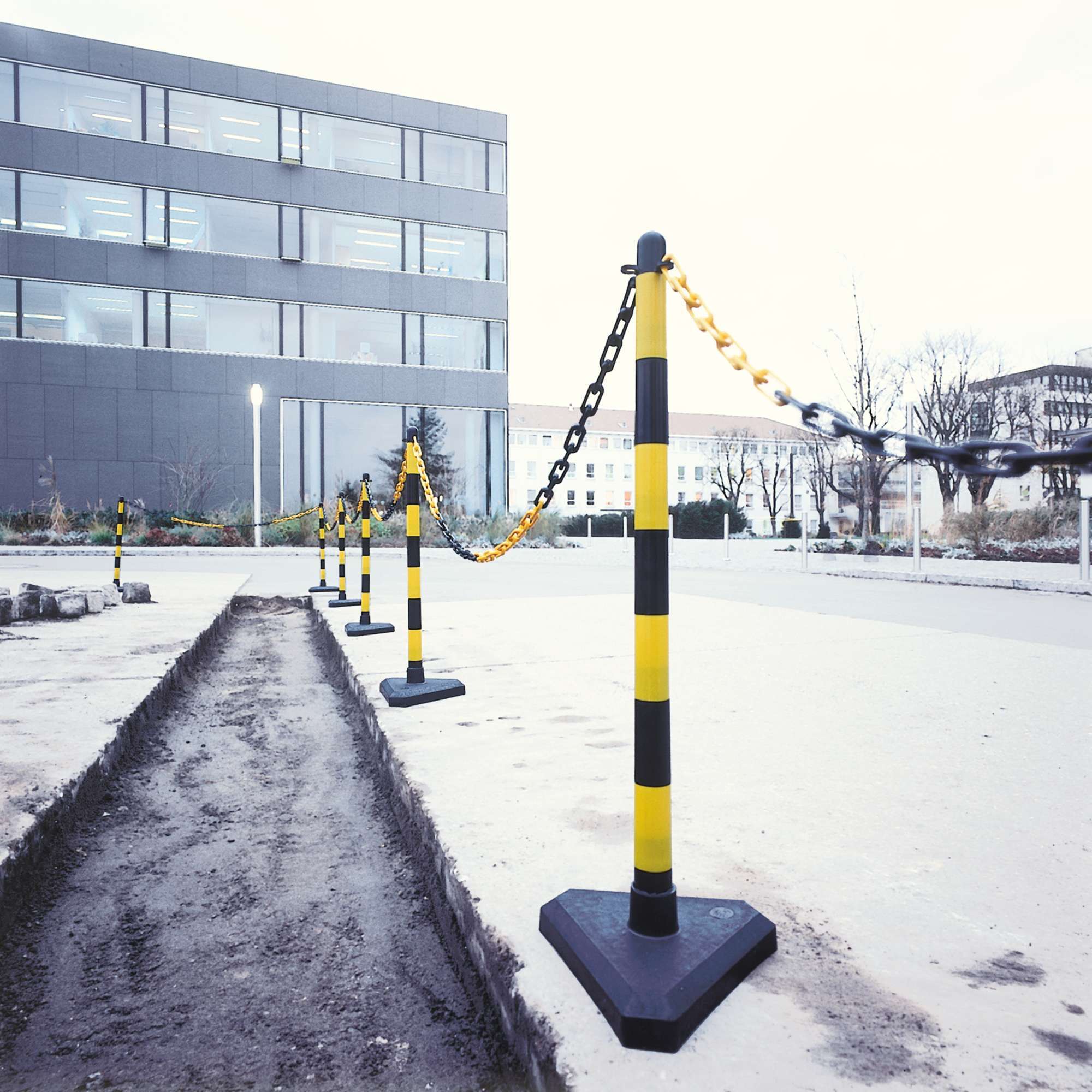
Barrier posts with chain are one of the easiest ways to create clear, flexible boundaries in everything from warehouses and industrial facilities to stores, events and public spaces. The right solution helps you guide traffic flows and improve safety while keeping a neat, professional look. In this guide, we walk you through how to choose the right barrier posts, focusing on the differences between steel/aluminum and plastic, how to calculate the number of posts and the chain length you need, and which details make the biggest difference in practice.
When Are Barrier Posts with Chain the Right Choice?
Barrier posts – sometimes called chain posts or queue stanchions – are mainly used when you want to mark boundaries without building permanent obstacles. They are especially well suited for:
- Queues and waiting areas – such as reception desks, checkout lines, check-in counters and car rental desks.
- Separating hazardous or sensitive zones – such as machine areas, loading zones and walkways in warehouses.
- Temporary barriers – during maintenance work, cleaning, renovations or events.
- Parking areas and courtyards – to mark private areas or walkways.
- Public spaces – museums, lobbies and trade shows where both appearance and function matter.
What they all have in common is the need for a clear visual boundary that can quickly be moved, extended or removed – without tools, groundwork or permanent installation.
Choosing a Material: Steel/Aluminum or Plastic?
The first strategic decision when buying barrier posts is the material. Nordguard offers both steel/aluminum barrier posts and plastic barrier posts. Both options have their strengths – the choice depends on the environment, the load and how the solution will be used over time.
Steel/Aluminum Barrier Posts – When Durability Matters Most
Steel or aluminum posts are the right choice when you need extra durability, high wear resistance and a more “industrial” look. They are especially well suited for:
- Industrial and warehouse facilities where the posts may be exposed to impacts and rougher handling.
- Outdoor environments where weather, wind and UV light place greater demands on the material.
- Heavier chains and longer runs where a stable post provides better alignment and strength.
Steel and aluminum posts are often available in high-visibility color combinations such as yellow/black or red/white, providing a clear visual barrier even from a distance. Models designed for heavy chains let you combine the posts with sturdier steel or heavy-duty plastic chains for more substantial boundaries.
Plastic Barrier Posts – When Flexibility and Cost Matter Most
Plastic posts are lightweight, affordable and highly flexible. They are an excellent choice when you want:
- Quick and easy rearranging – for example in stores, exhibitions and temporary event settings.
- Portable queuing and barrier solutions that staff can easily handle without tools.
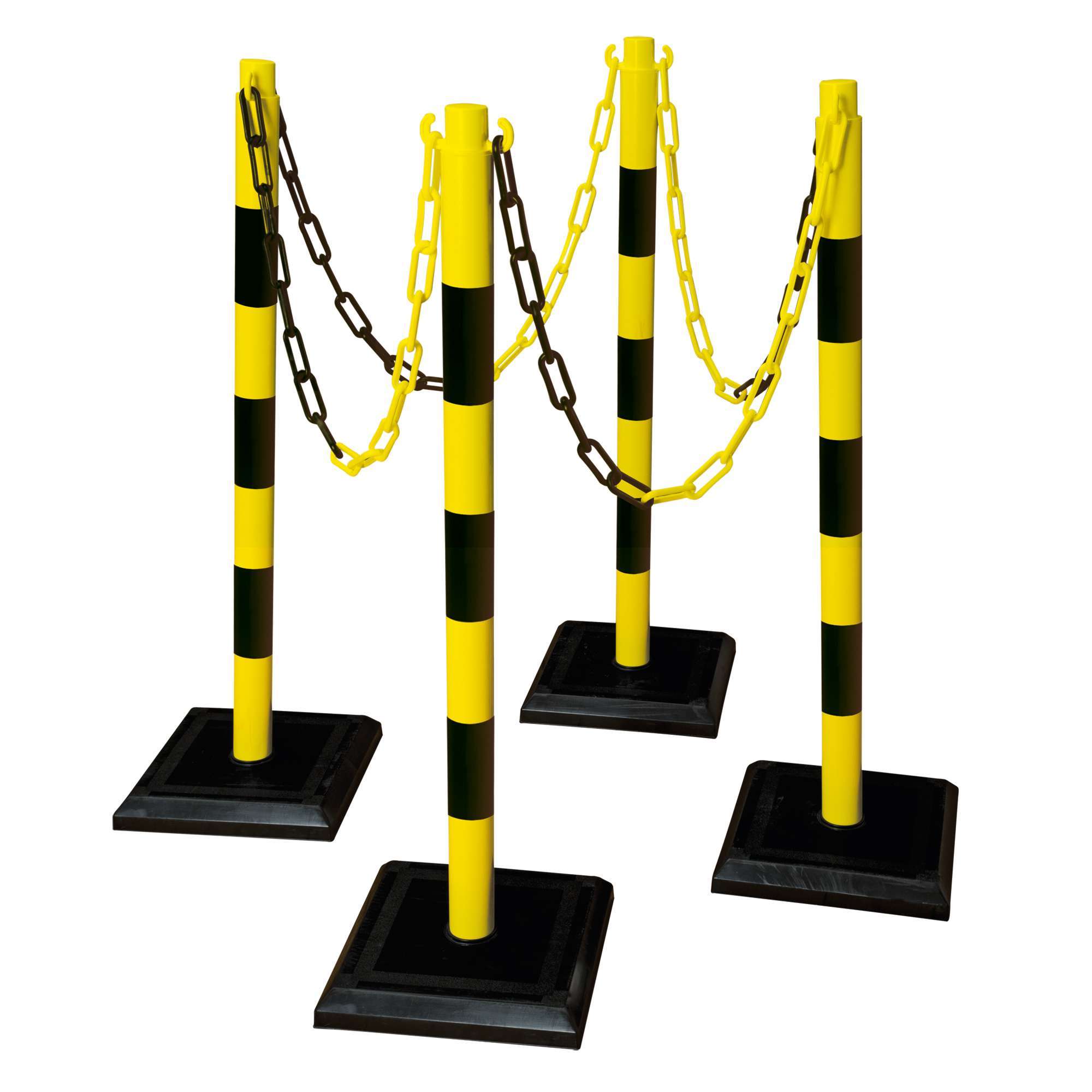
- Cost-effective kits – for example 4-packs with posts, bases and chain.
The base is often stable and pre-filled (for example with concrete), which provides a low center of gravity despite the lower overall weight. The posts are molded in one piece from plastic with integrated chain hooks, making both assembly and disassembly quick – perfect where the barrier is frequently moved or reconfigured.
Browse Our Stanchion Categories
Key Factors to Compare Before You Buy
To choose the right barrier posts with chain, it helps to look at a few key factors. Here is a simple checklist to start from:
- Visibility and color – Yellow/black and red/white provide a strong warning effect. Choose a color based on the environment, the risk level and any color coding you use in your operations.
- Height – Common heights are around 900–1000 mm. In areas with heavy pedestrian and forklift traffic, it is important that the chain sits at a height where it is visible and does not become a tripping hazard.
- Base design – Is the base pre-filled, or does it need to be filled on site? How large is the contact area with the floor/ground? A heavy, wide base provides stability, especially outdoors.
- Number of chain attachments per post – More attachments (e.g. 2–4) give you more options for building corners, T-junctions and multiple parallel barrier lines.
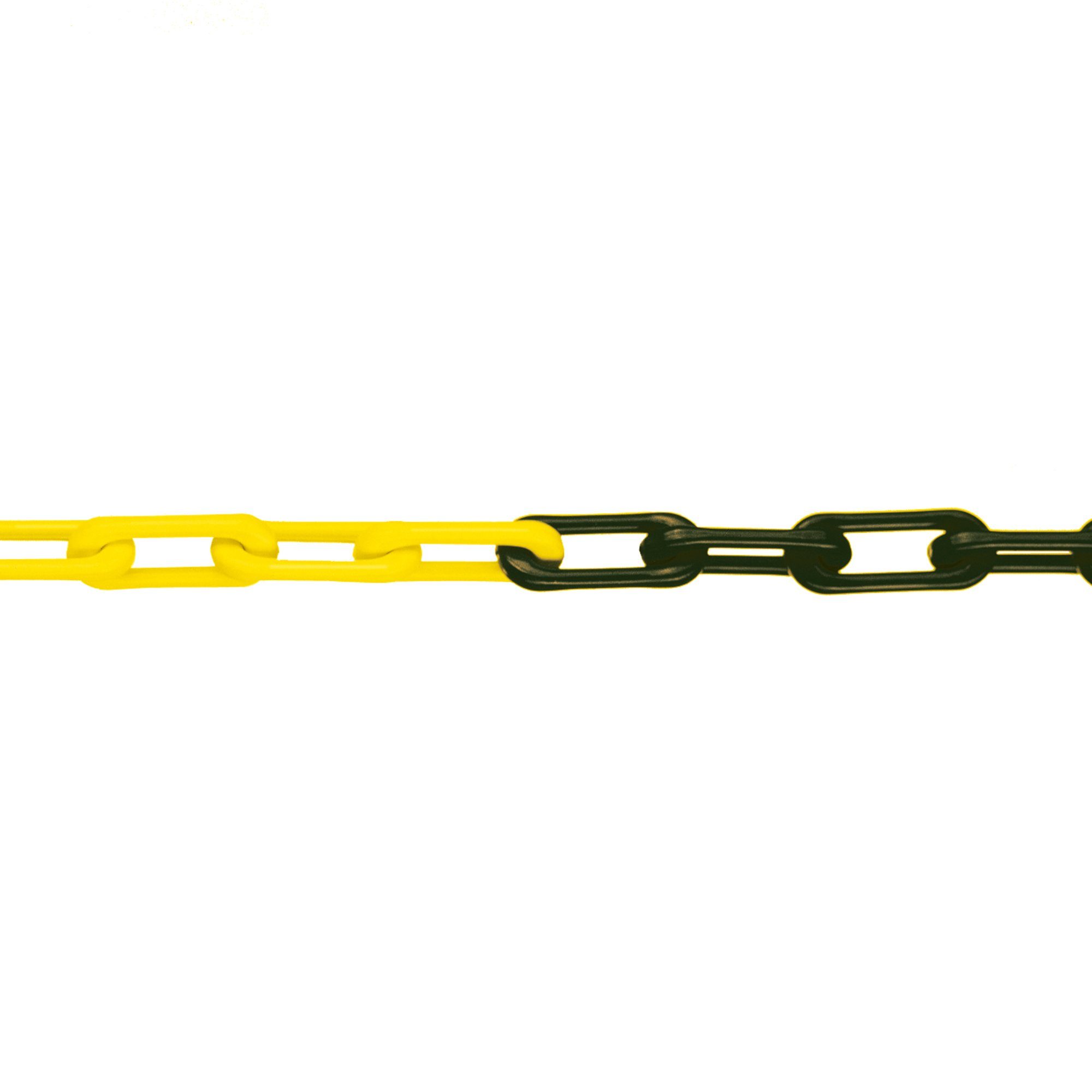
- Chain material and thickness – Plastic chains are lightweight and affordable, while sturdier chains (e.g. heavy-duty chains) provide a more physical barrier.
- Indoor or outdoor – Make sure the post, base and chain are all suitable for outdoor use if they will stay outside for extended periods.
- Expandability – Choose a system you can easily add more posts and chains to as needed, rather than locking yourself into a “closed” kit.
How to Calculate the Number of Posts and Chain Length
To size your solution, you can follow a simple step-by-step approach:
- Measure the distance to be cordoned off (e.g. along a loading zone or around a machine).
- Decide on the spacing between posts. A common guideline is 1.5–2.0 meters between posts. Shorter spacing creates a more “closed” barrier.
- Calculate the number of posts: total length / chosen spacing (rounded up to a whole number) + 1 post to end the line.
- Calculate the chain length by multiplying the spacing between posts by the number of sections (number of gaps between posts). We recommend adding a 5–10% margin.
Example: If you need to cordon off 12 meters and choose 1.5 meters between posts, you get 8 sections (12 / 1.5 = 8). You will then need 9 posts (one at each end) and approx. 12–13 meters of chain. For simpler projects, ready-made kits with “4 posts + chain” can be a convenient starting point that you can expand as needed.
Example Solutions from the Nordguard Range
To make it easier to get started, you can use a few typical scenarios as a starting point:
1. Indoor Queue and Entrance Control
Here, plastic posts with included chain are often the most cost-effective and flexible choice. Kits with multiple posts, stable bases and plastic chain provide a complete solution that staff can quickly set up or take down depending on visitor volume and opening hours. Perfect for reception areas, stores, trade shows and visitor areas.
2. Industrial Environment with Forklift Traffic
In warehouses, production facilities and shipping departments, steel or aluminum posts are preferable. Combine barrier posts designed for heavy chains with sturdier chains to clearly mark hazardous zones, walkways and loading areas. The high visibility of yellow/black or red/white ensures the barrier is noticed in time – even in high-activity environments.
3. Semi-Permanent Outdoor Barrier
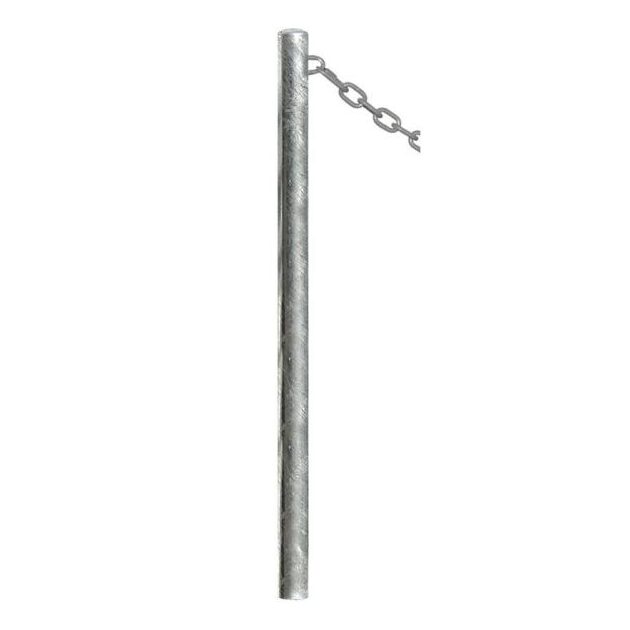
If you need a longer-term chain barrier, for example around a courtyard, parking lot or loading dock, you can supplement barrier posts and chains with ground-mounted bollards with eyelets. This gives you a robust base while still keeping the flexibility of the chain system.
How to Get the Most Out of Your Barrier Posts
To really get the most out of your investment in barrier posts with chain, keep the following in mind:
- Combine with floor marking – tape, painted lines or floor signs reinforce the message and make traffic flows even clearer.
- Use clear signage – supplement the posts with signs explaining why the area is cordoned off (e.g. “Authorized Personnel Only” or “Hazard Area – Keep Clear”).
- Plan for rearranging – choose systems that are easy to move when your operations change, new machines are installed or traffic flows are redesigned.
- Keep up with maintenance – regularly check that chains, hooks and bases are intact and clean. Replace worn chain links or posts in good time to maintain both safety and a neat overall appearance.
Summary – How to Choose the Right Barrier Posts with Chain
Start with the environment (indoor/outdoor), the level of durability you need and how often the barrier will be moved. Choose steel or aluminum posts when wear resistance and stability are critical, and plastic posts when flexibility, easy handling and lower weight matter more. Match the color, height, base and chain type to your safety requirements and how visible the barrier needs to be.
Need help choosing barrier posts and chains for your specific work environment? Contact Nordguard for personalized advice or request a quote directly from the product pages – we will help you design a solution that is safe, clear and cost-effective over time.
Ready to take the next step?
We help you develop solutions tailored to your needs. At Nordguard, we strive to make the ordering process as smooth as possible. By offering support and guidance throughout the entire purchasing experience, we make sure you feel confident and satisfied with your choice of protection products.+46 10 153 90 50
[email protected]