
How to Choose the Right Traffic Mirror for Improved Safety
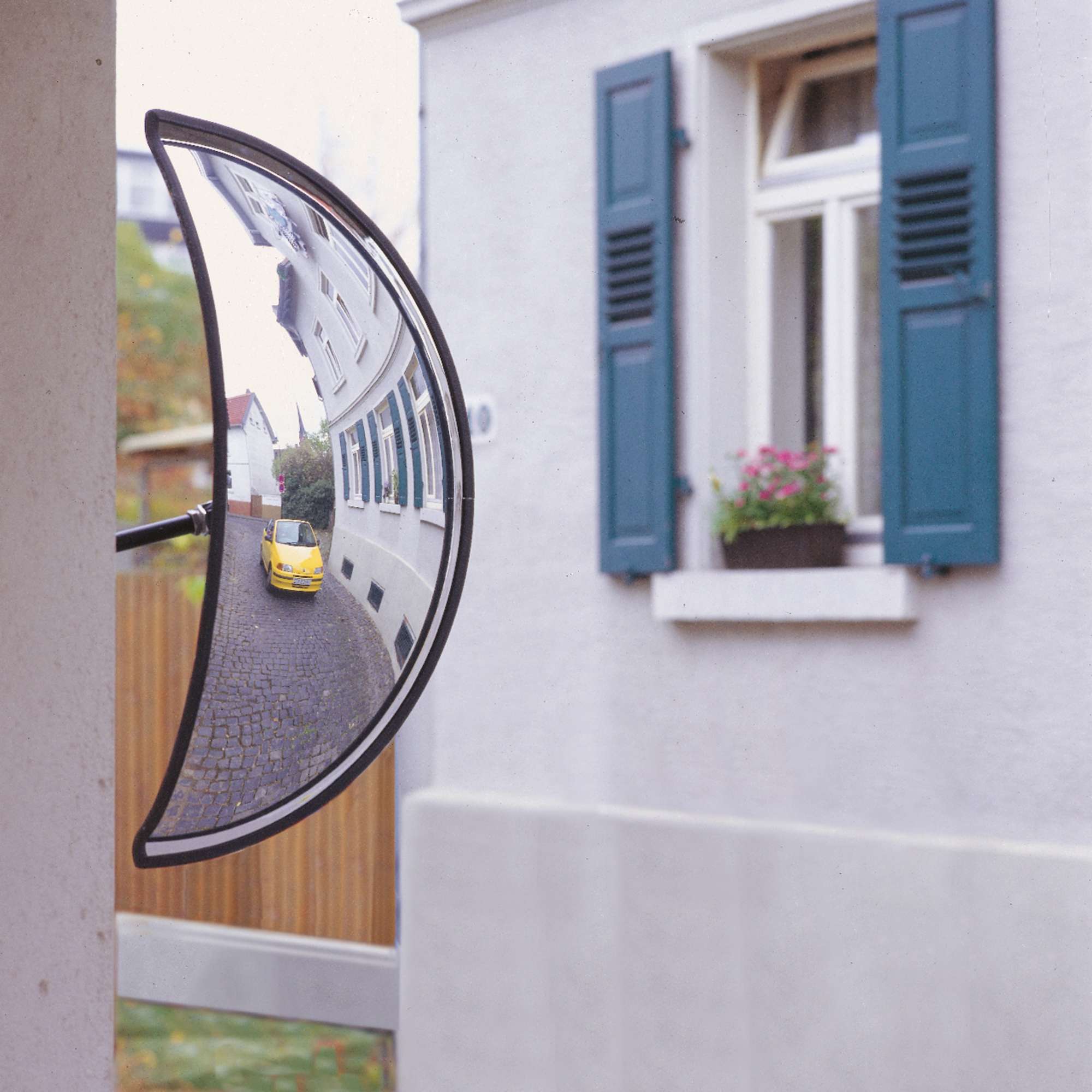
A traffic mirror is more than a piece of glass and plastic mounted on a post. It is a critical safety tool that eliminates dangerous blind spots and gives you that extra second that can prevent an accident at obstructed exits, tricky curves and unclear intersections. Thanks to its convex, or outward-curving, surface, it captures a much wider view than an ordinary mirror – and that is exactly the feature that saves lives.
How a Traffic Mirror Prevents Accidents
An obstructed exit is a daily risk for many people. It might be a residential lot where the neighbor’s dense hedge makes it impossible to see the sidewalk and bike path, or an internal road in an industrial area where parked trucks create life-threatening blind spots. In situations like these, the difference between a near miss and a serious collision is often just a fraction of a second.
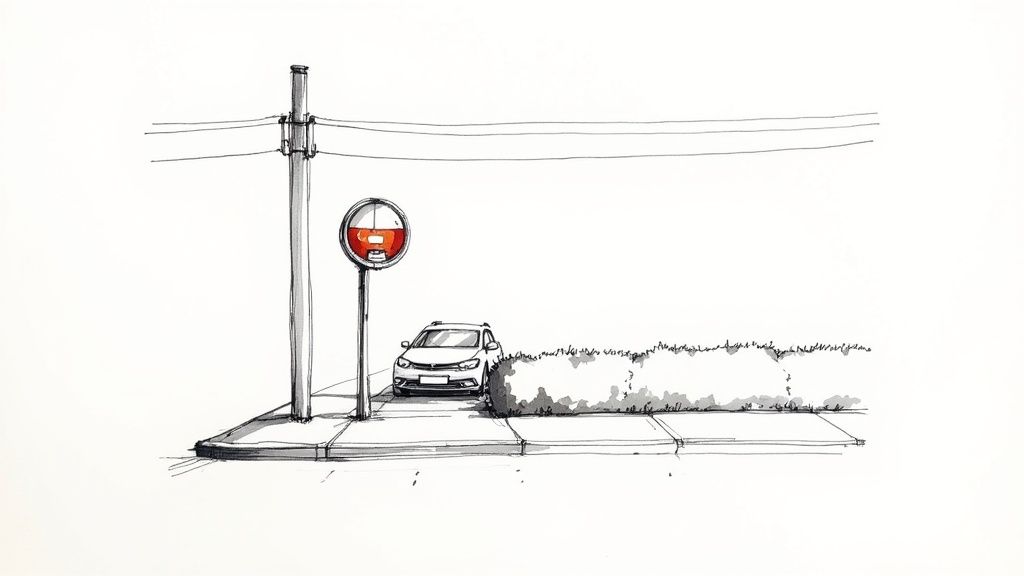
This is exactly where a properly positioned traffic mirror becomes an invaluable lifesaver.
The Smart Function of a Convex Mirror
The principle behind a traffic mirror is actually quite simple, yet ingenious. The convex, outward-curving surface collects light from a much wider angle than an ordinary flat mirror. Imagine swapping a standard camera lens for a wide-angle lens – suddenly you see the whole room instead of just a small part of it.
This wider field of view is presented to the driver as a smaller but complete image. The result is that you can see "around corners" and past obstacles that would otherwise block your view completely.
A traffic mirror is not a replacement for a clear line of sight, but a complement to it. It should be used where it is practically impossible to improve visibility in other ways, such as trimming vegetation or moving obstructing objects.
And its effectiveness is well documented. According to the Swedish Transport Agency, the number of approved traffic mirror installations increased by more than 150 percent between 2010 and 2022. In addition, the mirrors have been shown to reduce side-impact collisions by up to 40 percent at the locations where they have been installed.
Are you facing a safety problem at an exit or intersection? Then a traffic mirror is often the most cost-effective and direct solution. Need expert help assessing your situation? Contact us, and we will help you analyze the risks and find the right product for your specific needs.
Choosing the Right Material for Your Environment
The choice of material is absolutely crucial to a traffic mirror’s performance and service life. It is not just about how long it lasts, but also whether the image quality is good enough when visibility is at its worst. Understanding the differences is the key to a smart and safe investment.
Picture a busy warehouse area with forklifts constantly on the move. The risk of an accidental hit from a pallet or a reversing vehicle is very real. Here, a virtually unbreakable stainless steel mirror is the only sensible choice to ensure performance over time.
Compare that with a quiet exit from a housing cooperative. There, the risk of collision or vandalism is considerably lower, and an affordable acrylic mirror can be an excellent solution. It is simply a matter of matching the material’s properties to the unique requirements of the site.
Comparison of Mirror Materials
The three most common materials for the mirror surface itself are acrylic, polycarbonate and stainless steel. Each material has its own clear advantages and disadvantages that make it suitable for very different situations.
Here is a quick overview to help you understand the differences and choose the right material for your project.
Comparison of Mirror Materials
An overview comparing the most common traffic mirror materials based on impact resistance, weather resistance, image quality and typical applications.
| Material | Impact Resistance | Weather Resistance | Image Sharpness | Best For |
|---|---|---|---|---|
| Acrylic | Medium | Good | Very high | Sheltered environments, housing cooperatives |
| Polycarbonate | Very high | Very good | High | Public spaces, industry |
| Stainless steel | Extremely high | Excellent | Good | Exposed/demanding environments |
Let’s break down what this means in practice.
-
An acrylic mirror (often called Plexiglas) delivers a razor-sharp image, almost on par with an ordinary glass mirror, but is considerably more durable. It is a perfect choice for more sheltered environments without a high risk of vandalism.
-
Polycarbonate is a major step up in durability. The material is extremely impact-resistant and withstands hard knocks without any problems, making it ideal for schoolyards, industrial areas and public spaces where the risk of accidents or vandalism is significant. Feel free to read more about our durable polycarbonate traffic mirrors to see examples of products for exposed locations.
-
At the top of the podium we find stainless steel. These mirrors are virtually indestructible and are the obvious choice for the very toughest environments – construction sites, food processing plants or locations with an extremely high risk of vandalism.
Special Features for the Nordic Climate
Here in the Nordic region, outdoor products face entirely different demands. A traffic mirror that fogs up or gets covered in a layer of frost loses its entire function precisely when it is needed most.
Investing in a mirror with a built-in heating function can be the difference between full visibility and zero visibility on cold, damp mornings. It is a small extra cost for an enormous gain in safety.
Modern mirrors can be equipped with a built-in heating element that automatically keeps the surface free of both fog and ice. This feature is absolutely essential for locations where visibility must be one hundred percent all year round, regardless of the weather. If you are installing a mirror in an area with large temperature swings or high humidity, an anti-fog and anti-frost model is strongly recommended.
Still finding it hard to know which material or features suit you best? Get in touch with us. Our experts will help you analyze your needs and find the optimal solution for your specific environment.
How to Determine the Right Size and Placement
A traffic mirror is only effective if it is correctly sized and positioned. A mirror that is too small or mounted in the wrong place can deceive the eye and create a false sense of security – in the worst case, it increases the risk of accidents instead of reducing it. But getting it right is easier than you might think, as long as you follow a few basic principles.
You can think of a traffic mirror as a camera lens. To get a sharp image of something far away, you need a lens with the right focal length. In the same way, you need a mirror with a larger diameter the farther away you need to see. A larger mirror simply provides a sufficiently large and clear image at longer distances.
Measure and Calculate the Viewing Distance
The very first step is to determine the total viewing distance. It is not just about how far it is to the mirror, but the entire distance your line of sight needs to travel to see what you want to see.
Here is how to make a quick and simple calculation:
- Distance A: Measure from the driver’s position (where you sit in the car or on the forklift) to the spot where the mirror will be mounted.
- Distance B: Then measure from the mirror to the point you want to monitor. This could be the middle of a crossing bike path, a blind curve or a doorway.
- Total distance: Add A and B. The sum is your total viewing distance, and this is the measurement that determines what size you need.
A good rule of thumb is that a mirror with a 600 mm diameter provides good visibility up to about 9 meters. For every 3–4 meters of extra distance, you should go up one size to keep the image clear and usable.
The image below shows the most common materials, whose properties work together with size and placement to deliver the best possible results.
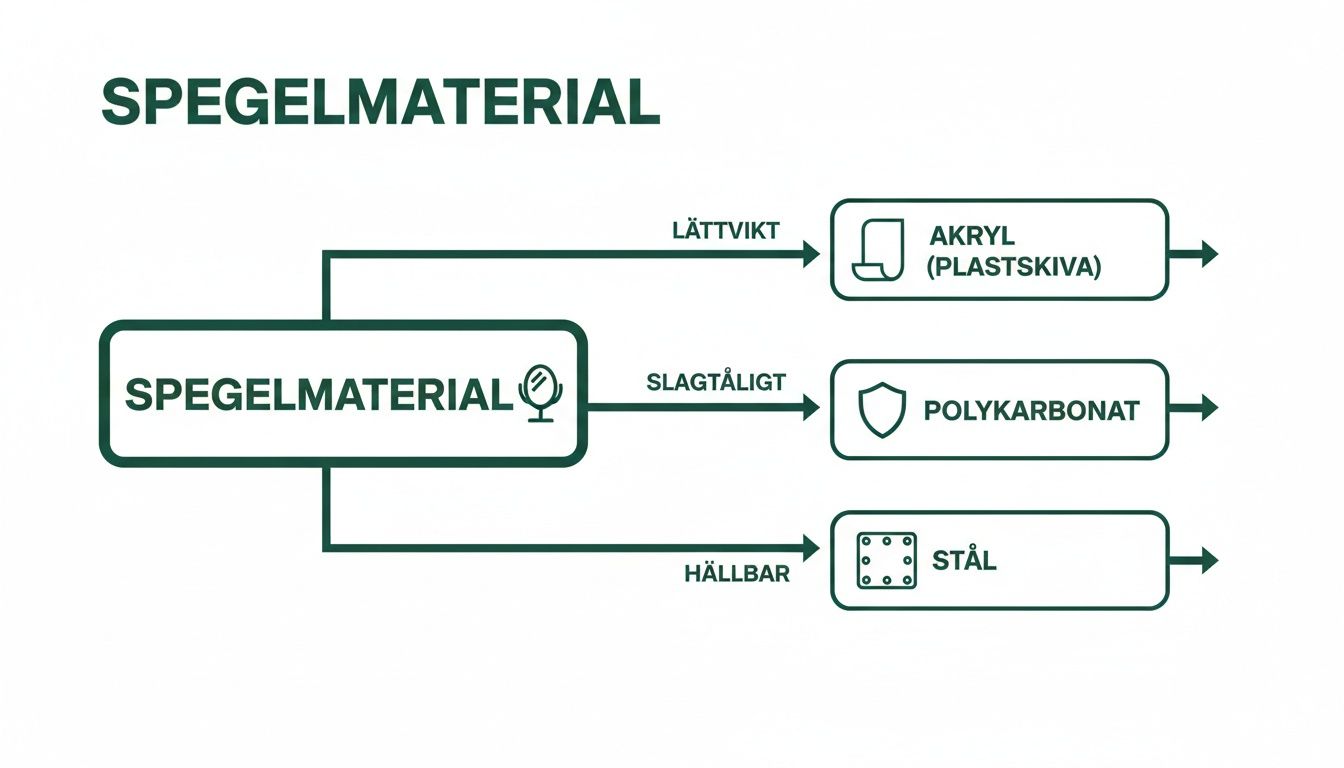
By combining the right size with the right material, you get a safety solution that truly works and lasts over time.
Find the Optimal Mounting Point
Once you know what diameter you need, it is time to find the perfect location. The goal is to eliminate the blind spot completely, without the mirror itself obstructing the view or becoming a distraction for others.
Position the mirror where it provides maximum overview of the hazard area, as seen from the position where a driver normally stops or needs to make a decision.
Traffic safety is a shared responsibility, and the right equipment makes an enormous difference. In 2022 alone, 55 people were killed on municipal roads, and studies show that properly installed traffic mirrors can reduce the risk of accidents by up to 30 percent at exposed intersections and exits. If you want to dig deeper into the subject, you can read more about Sweden’s traffic safety work and history.
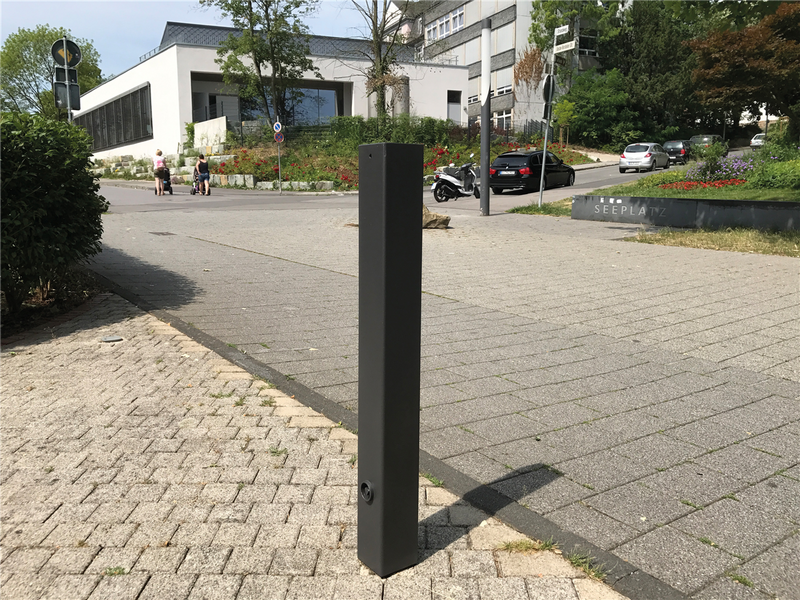
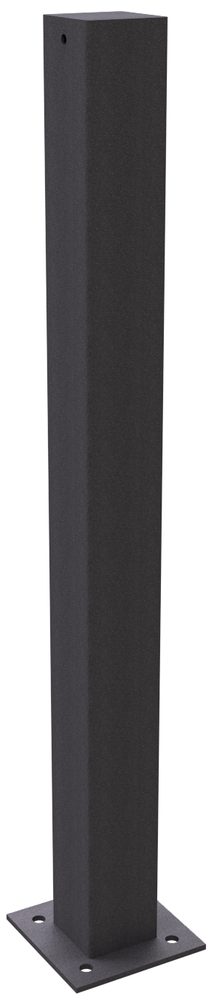
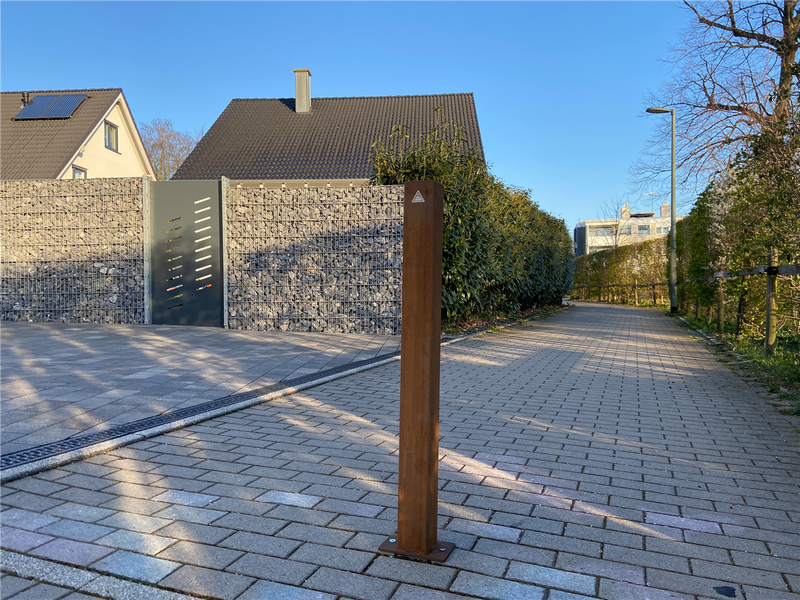
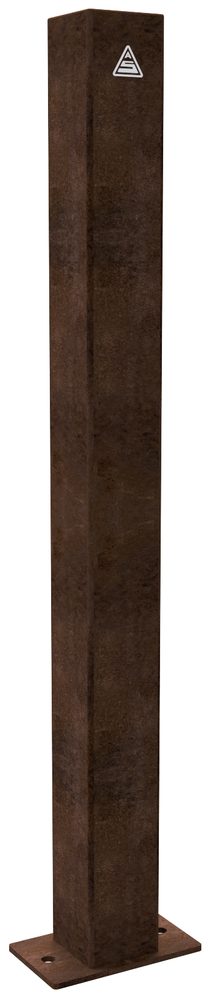
Finding it hard to assess distance or placement on your own? Our experts have extensive experience analyzing complex traffic situations and can help with everything from sizing to mounting. Contact us, and we will help you create a safer environment. A stable installation requires solid foundations, posts and bollards.


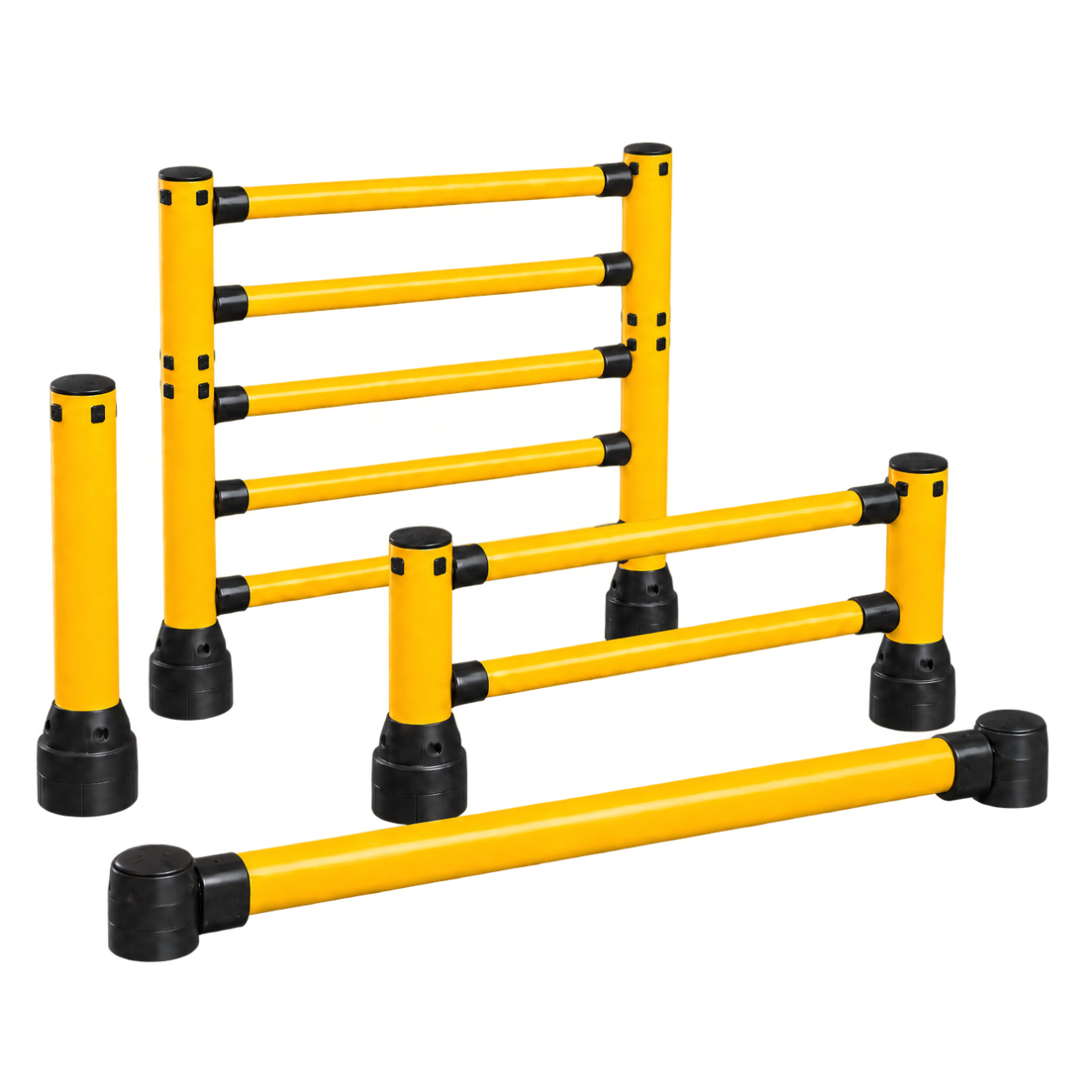
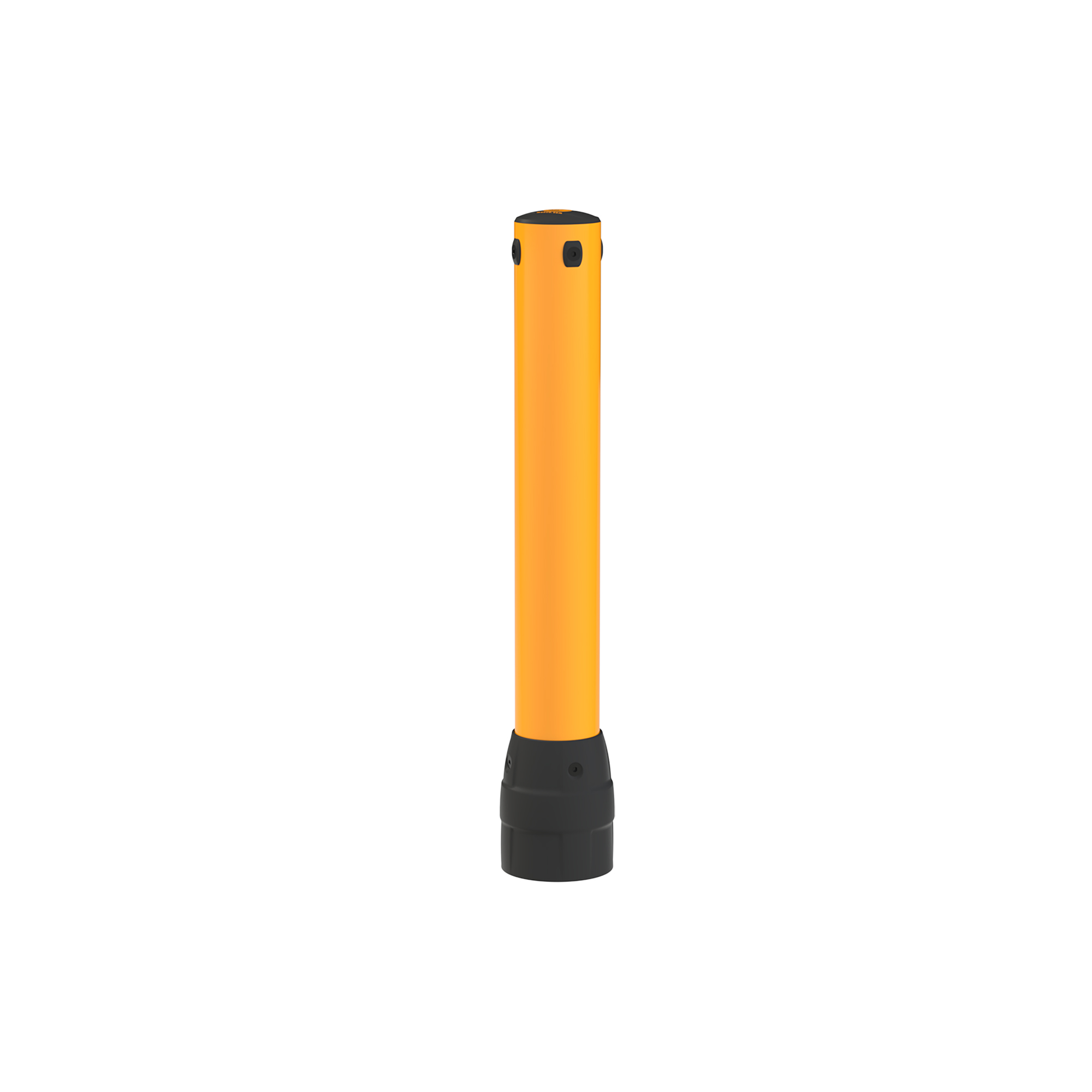 Black/Yellow



Mounting and Maintenance for Maximum Service Life
Choosing the right traffic mirror is only half the job. Incorrect mounting can sabotage even the best product, while regular maintenance ensures your investment keeps delivering safety year after year. It is simply a matter of creating a stable and reliable solution that withstands wind, weather and the test of time.
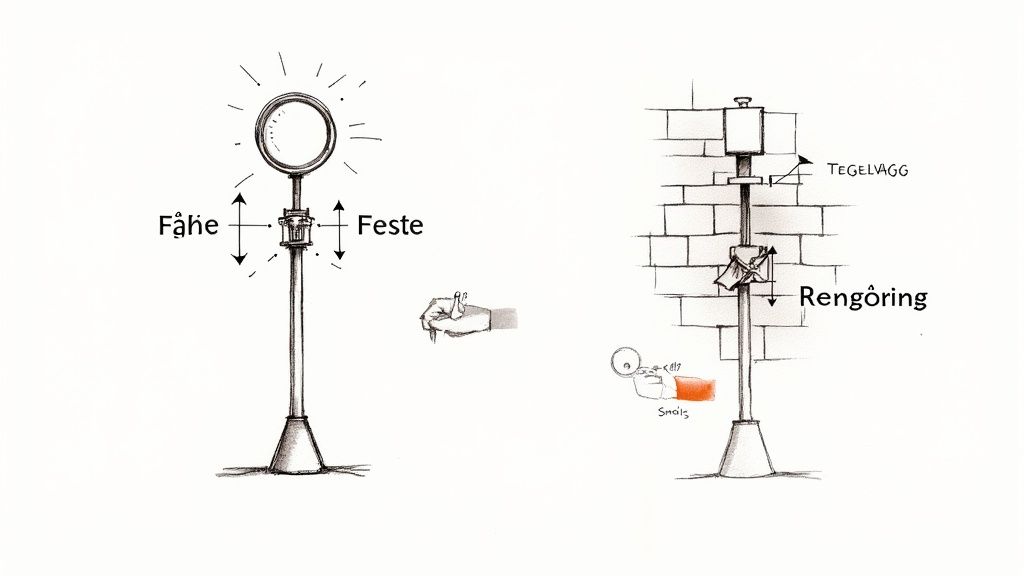
It all starts with the right bracket for the right surface. A standard post requires one type of clamp bracket, while an uneven brick wall or a concrete column needs an entirely different solution to ensure a secure anchoring that holds.
Checklist for a Successful Installation
A careful installation is essential. The focus is on making sure the mirror is rock-solid and angled to give the driver the very best view of the hazard area. A mirror that vibrates in the wind or slowly loses its angle quickly becomes useless.
Here are some critical points to check off:
- Choose the right bracket: Make sure the bracket is designed for the material you will be mounting on. There are special brackets for everything from wooden posts and walls to suspended ceiling mounting. For the latter, a dedicated hanging mounting kit may be necessary.
- Correct height: Mount the mirror at a height that provides the best view for the vehicles that most often use the site, without making it a hazard for pedestrians or cyclists.
- Optimal angle: Adjust the mirror carefully so that it covers the blind spot exactly. A tip is to ask a colleague to act as an observer while you fine-tune it for a perfect result.
- Tighten securely: Double-check that all screws and bolts are properly tightened. This prevents the mirror from moving or losing its angle over time.
Think of a properly installed traffic mirror as a long-term investment, not just a safety measure. A carelessly mounted mirror quickly leads to unnecessary costs for adjustments or, in the worst case, a complete replacement.
A Simple Maintenance Plan for Long Service Life
The job isn’t done just because the mirror is in place. A simple but regular maintenance routine is essential to maintain performance, especially in our Nordic climate. Dirt, snow and ice can quickly render the mirror useless.
Follow this simple plan:
- Cleaning: Wash the mirror surface with a soft cloth, lukewarm water and a mild detergent. Never use abrasive sponges or harsh chemicals – they can scratch the surface and permanently impair visibility.
- Winter maintenance: Remove snow and ice carefully. For mirrors without a heating function, a soft brush works perfectly. Avoid scraping with hard objects that can damage the mirror.
- Inspection: Check brackets and anchoring at least twice a year, ideally in spring and fall. Make sure no screws have come loose and that there are no signs of rust or other damage.
A well-maintained traffic mirror is a reliable partner in traffic safety work. Unsure about installation or choosing brackets? Get in touch with us for expert help, and we will make sure you get a solution that is both safe and durable.
Rules, Permits and CE Marking – What Does the Law Say?
Putting up a traffic mirror is not as simple as just screwing it onto the nearest post. Especially for municipalities, road associations and businesses, understanding the regulations is essential to avoid problems down the road. Navigating the rules can feel complicated, but knowledge is your best guarantee of a safe and legal installation.
Many people think a mirror can be put up anywhere, but if it is to be placed on public land or could affect traffic on a public road, a permit is almost always required. This is purely a safety measure to ensure that the mirror does not create new hazards – such as dazzling drivers or giving a misleading picture of reality.
When Do You Need to Apply for a Permit?
The basic rule is simple: if the installation takes place on land you do not own yourself, or if it affects a road that is open to the public, you must contact the appropriate authority.
Usually this is the municipality for local streets and roads, or the Swedish Transport Administration for larger state roads.
The authority will assess whether a traffic mirror really is the best solution. Sometimes other measures, such as clearing sight lines or redesigning the intersection, may be a better alternative. Having an application rejected is not unusual, since a clear line of sight is almost always prioritized over mirrors.
The Question of Liability and the Importance of CE Marking
Who is responsible if an accident happens even though a traffic mirror is in place? The answer is almost always the party that installed the mirror. That is why it is extremely important that the installation is carried out correctly and that the product itself meets applicable safety requirements.
This is where CE marking comes into the picture. Think of it as a seal of quality – a guarantee that the mirror has been manufactured and tested in accordance with European safety standards. A CE-marked traffic mirror is built to provide as accurate an image as possible and to withstand the stresses of our Nordic climate. Choosing a product without this marking is an unnecessary risk.
Want to learn more? Read more about safety, certification and standards to understand how these systems protect both users and installers.
Installing a traffic mirror without approval or without CE marking may result in you being held legally liable in the event of an accident. Always make sure you have both the right product and the right permit before starting the installation.
Unsure which rules apply to your specific situation? Get in touch. Our experts can guide you through the process and help you choose a CE-marked traffic mirror that meets all requirements for a safe and legal installation.
Checklist Before You Buy Your Traffic Mirror
Choosing the right traffic mirror can feel like navigating a jungle of different sizes, materials and regulations. To make the process a little easier and ensure you don’t miss anything important, we have put together a practical checklist.
Think of it as a tool that guides you all the way, from your first thoughts about where the problem lies to the mirror being securely mounted in place. It helps you analyze the risks, measure correctly and choose a material that can actually handle the Swedish climate.
Step by Step to a Safe Choice
Follow the points below to make sure you make a well-considered and safe purchase.
- Analyze the site: Start by going out and taking a look. Where exactly is the blind spot? Are cars, cyclists or pedestrians the biggest risk? Is there anything else blocking the view, such as a hedge or a fence?
- Measure the viewing distance: This is essential for getting the right size. Measure the distance from where the driver will be sitting to the mirror, and then from the mirror to the point you want to be able to see. Add the two distances together – the sum determines the diameter the mirror needs.
- Choose the right material: Is the site exposed to graffiti, or is there a risk of hard impacts? Then polycarbonate or stainless steel is the obvious choice. In a more sheltered environment, acrylic may be sufficient. Also consider whether you need an anti-fog and anti-frost model to ensure clear visibility all year round.
- Check rules and permits: If the mirror will be placed in a public area or next to a public road, you almost always need to check with the municipality or the Swedish Transport Administration first. Also make sure the mirror is CE-marked. This is your guarantee that it meets basic safety requirements.
- Plan the mounting: Where will the mirror go? On an existing post, directly on a wall, or do you need to pour a foundation for a new post? Make sure you have the right brackets and tools so that the installation is stable and secure from day one.
By systematically going through each point, you minimize the risk of costly mistakes. That way, you can rest assured that your new traffic mirror delivers maximum safety right away.
Still feeling unsure? No problem. Contact our experts, and we will help you find the right solution for your specific needs.
Explore our wide range of high-quality traffic mirrors below:
Frequently Asked Questions About Traffic Mirrors
Here we have gathered some of the most common questions we come across about traffic mirrors. The idea is for you to get quick and easy answers to your questions, whether you are a property owner, work for a municipality or are a groundwork contractor.
Who Is Responsible for Putting Up a Traffic Mirror?
This is a common question, and the answer depends entirely on where the mirror will be placed. For a private exit located entirely on your own property, you as the property owner are responsible.
But as soon as the mirror needs to be placed on municipal land, or if it could affect traffic on a public road, it’s a different matter altogether. In that case, you essentially always need approval from either the municipality or the Swedish Transport Administration.
Our best advice? Always call your municipality first. They can tell you in black and white what applies where you live.
How Do I Know What Size Mirror I Need?
The size of the mirror depends on the total viewing distance. Put simply, it is the distance from you as the driver to the mirror, plus the distance from the mirror to the area you need to keep an eye on.
A good rule of thumb is that a mirror with a 600 mm diameter works well for distances up to about 9 meters. If the distance is longer than that, you need a larger mirror. But always check what the manufacturer recommends – it can vary between models.
Can a Traffic Mirror Replace the Requirement for a Clear Line of Sight?
No, absolutely not. And this is an incredibly important point. A traffic mirror is a visual aid, nothing more. It is a last resort in places where it is completely impossible to create a clear line of sight in other ways, such as trimming a hedge or moving a fence.
A convex mirror distorts the image – both how far away a vehicle is and how fast it is moving. That is why it must be used with great care and common sense. A poorly placed or misused mirror can lull you into a false sense of security and, in the worst case, cause an accident instead of preventing one.
Do you have more questions, or would you like to discuss which safety product is best for your specific environment? Get in touch with us at Nordguard. Our experts will help you find the safest and most durable solution. Read more at https://nordguard.eu.
Ready to take the next step?
We help you develop solutions tailored to your needs. At Nordguard, we strive to make the ordering process as smooth as possible. By offering support and guidance throughout the entire purchasing experience, we make sure you feel confident and satisfied with your choice of protection products.+46 10 153 90 50
[email protected]