
Bollard Impact Protection: A Practical Guide to Safer Sites
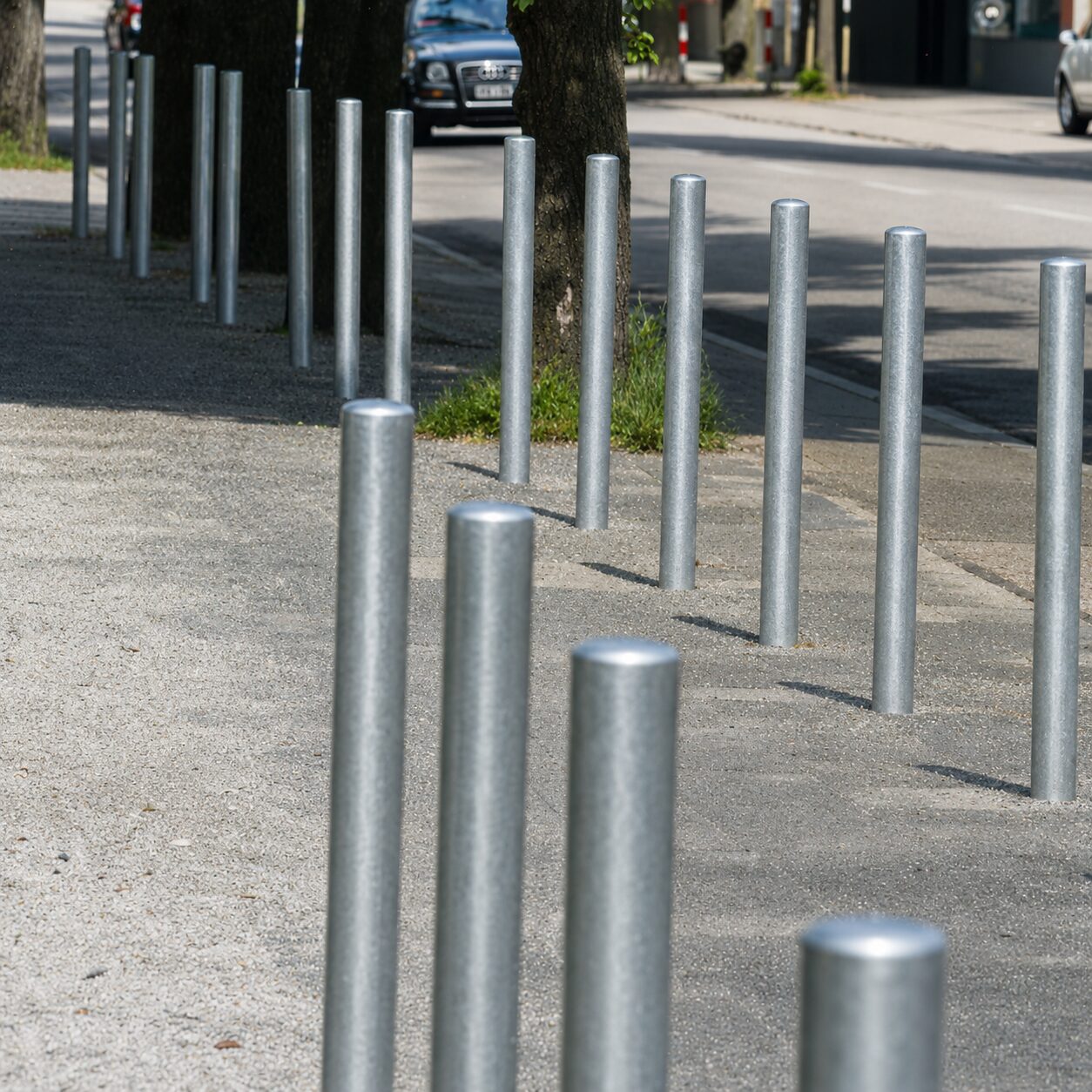
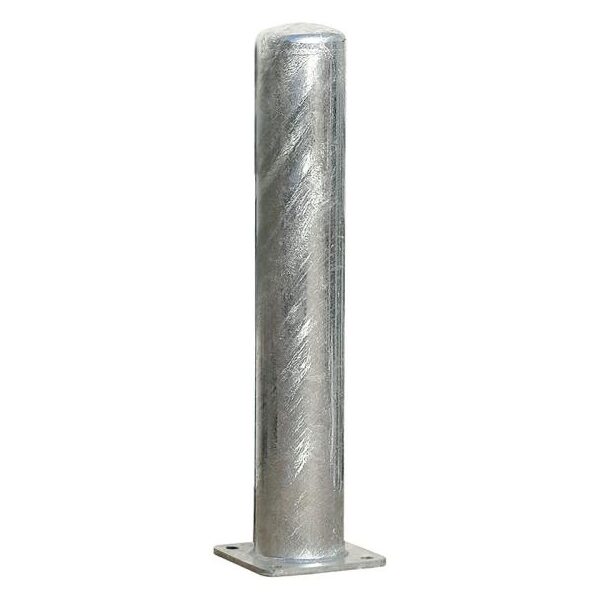
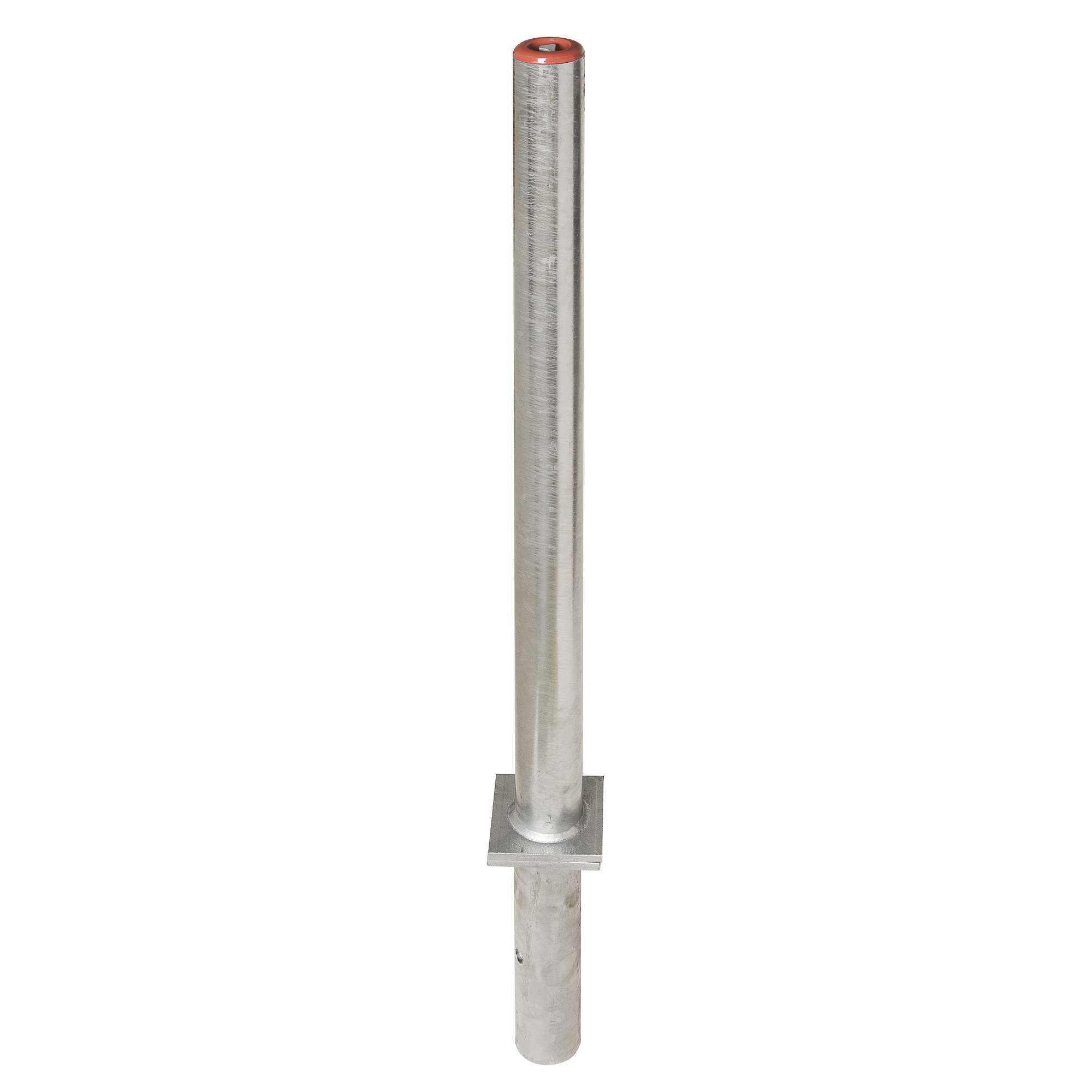
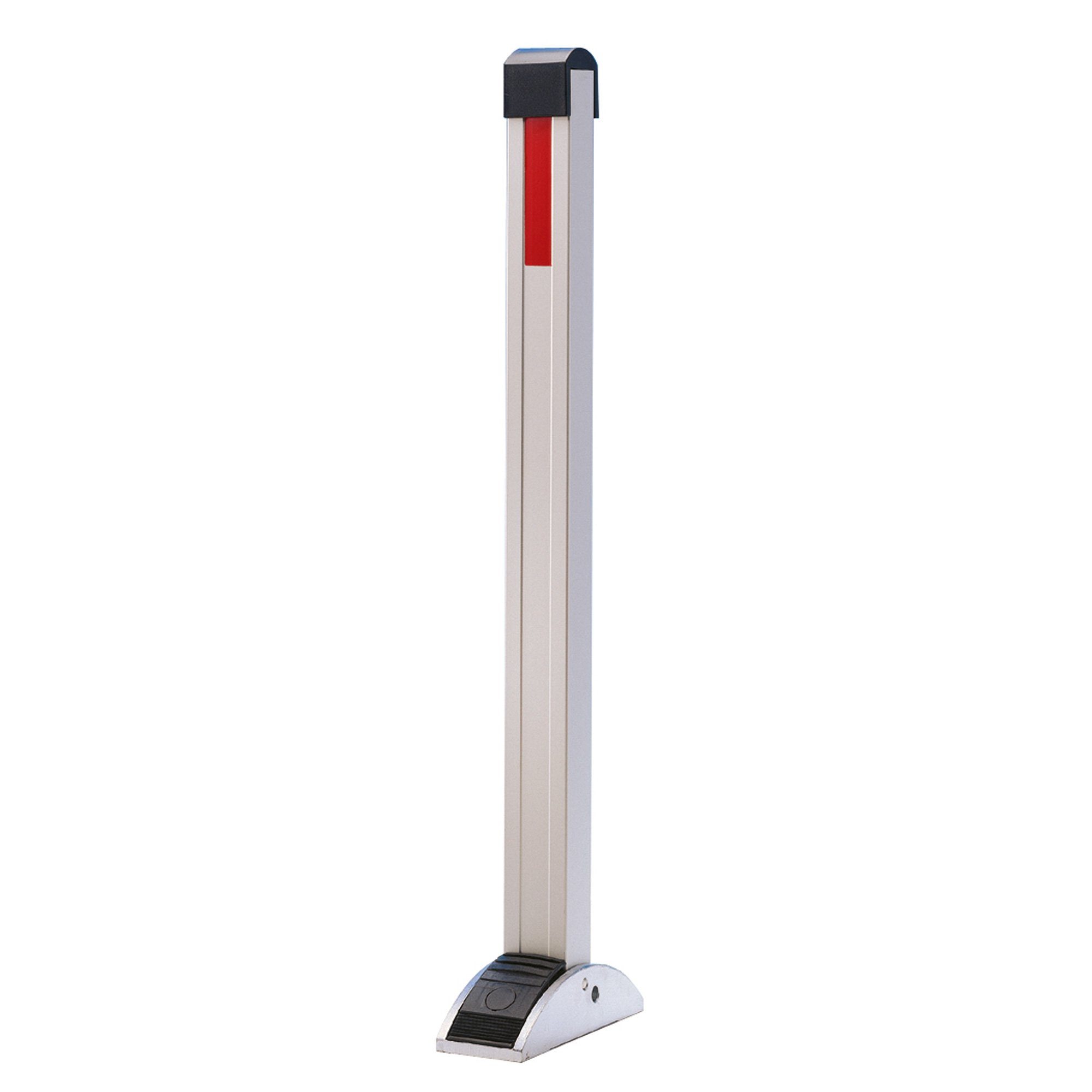
Examples of Our Bollards
A bollard for impact protection is essentially a heavy-duty vertical post. It is placed in strategic locations to protect people, buildings and infrastructure from being struck by vehicles. Think of it as a silent guardian working around the clock to prevent accidents and vandalism, from busy downtown areas to sensitive industrial sites. Our bollards are practical solutions to real-world problems, whether you need to protect a storefront or a schoolyard.
How the Right Bollards Protect Your Property and the People Around You
Wherever cars and people meet, there are always risks. Bollards are a fundamental and effective solution in modern urban and property planning. But their job is about much more than simply standing in the way. They are a proactive investment in safety, creating secure zones where people can move freely without having to look over their shoulder.
Picture a schoolyard full of children at play. A row of our robust steel bollards ensures that no car can accidentally drive onto the grounds. Or a packed outdoor seating area on a sunny day – there, bollards act as a discreet but vital barrier against the traffic rushing past just a few meters away.
From Accident Prevention to Active Protection
The role of the bollard becomes even clearer when the threat is deliberate. For a store owner, a robust bollard can be the difference between a secure display window and a costly smash-and-grab break-in. By making it physically impossible for a car to ram the entrance, you protect your merchandise, your staff and your entire business. A permanently mounted bollard from our range in cast iron or ductile iron is reliable, cost-effective insurance.
Bollards are not just reactive obstacles. They are a well-considered part of the design for creating safe, functional public spaces. They guide traffic, protect pedestrians and secure critical infrastructure.
A Solution for Every Unique Need
Because needs vary so widely, there are several types of bollards, each designed for its specific task:
- Fixed bollards: Permanently installed for maximum, constant protection. Ideal for protecting facades and electrical cabinets or for defining walkways. Our cast iron and steel products offer unmatched strength.
- Removable bollards: Provide flexibility when you need to temporarily open up an area for service vehicles or events. Once the need has passed, the protection is quickly back in place.
- Automatic bollards: Perfect for controlling traffic flow at entrances to parking garages or access-controlled areas. Lowered and raised at the push of a button, by remote control or via an access control system.
This versatility makes bollards an indispensable tool for municipalities, businesses and property owners who want to create safer environments. During the 2010s, a Swedish traffic safety initiative, in which bollards played a part, showed a clear effect. Between 2010 and 2019, the number of traffic fatalities fell from 343 to 221, a reduction of over 35%. Clear proof that physical protection saves lives. You can read more about how impact protection contributes to Vision Zero.
Choosing the right bollard impact protection comes down to understanding the specific risks and needs of your particular environment. Need help finding the right solution? Contact us at Nordguard for a free needs assessment and expert advice tailored to your project.
Explore our wide range of robust, well-designed bollards below.
How to Choose the Right Bollard for Your Unique Needs
Finding the right bollard for impact protection is about more than just putting up a barrier. It is a balance between permanent security, necessary flexibility and how the area should look and function in practice. The right choice affects everything from day-to-day operations to the long-term safety and aesthetics of the site.
Every site has its own conditions. A store entrance on a busy street has completely different requirements than a public square that needs to open up for markets or events. The first step is therefore always to consider what the bollard actually needs to achieve.
Fixed Bollards for Permanent Security
When the need for protection is constant, fixed bollards are the obvious solution. They are permanently set in concrete or bolted to the ground and provide reliable, robust protection around the clock. This type is perfect for protecting vulnerable points such as building facades, electrical cabinets and entrances, or for clearly separating pedestrian and bike paths from vehicle traffic.
Since they become a permanent part of the environment, appearance is just as important as strength. A fixed bollard should not only be strong – it also needs to blend in with and complement the surrounding architecture. Our product categories offer materials such as classic cast iron, modern steel or warm wood, so you can match the look to the site.
Removable and Fold-Down Bollards for Flexible Spaces
Sometimes a protected area needs to be opened up quickly. That is when removable or fold-down bollards are the smartest solution. They provide the same clear demarcation and protection as fixed models but can easily be removed or folded down when vehicles need to pass.
Picture a public square used for weekly markets, or an area that service vehicles occasionally need to access. With our removable bollards, you can transform the space in no time and then just as easily restore the protection. This creates dynamic, multifunctional spaces without compromising on safety.
Choosing between fixed and removable is about anticipating future needs. A flexible solution can save both time and money by avoiding costly modifications down the road.
Automatic Bollards for Controlled Access
For sites with regular but controlled vehicle traffic, nothing beats automatic bollards. They are easily raised and lowered using a remote control, an access control system or from a staffed station. This gives you complete control over which vehicles are allowed through.
These systems, which you will find in our automatic bollards product category, are common at parking garage entrances, pedestrian streets with authorized vehicle access and security zones. They combine rock-solid security with smooth traffic flow management – an investment in both safety and efficiency.
Material Choice Affects Both Function and Aesthetics
Material is not just a question of appearance; it determines the bollard’s durability, maintenance needs and how well it stands up to the elements.
- Steel (including stainless steel): Delivers a modern, sleek look with high strength. Our stainless steel bollards are extremely resistant to rust and require virtually no maintenance.
- Cast iron and ductile iron: Create a classic, timeless feel that is a perfect fit for historic downtown areas or parks. These materials are incredibly robust and durable.
- Wood: Offers a natural, warm feel that blends in beautifully in parks and natural areas.
The choice of material is a central part of planning. For a deeper understanding, we recommend reading our guide on choosing materials for impact protection.
To make comparison easier, we have put together a quick overview.
Comparison of Bollard Types and Their Best Applications
A quick overview to help you identify which bollard best matches your requirements for function, flexibility and security.
| Bollard Type | Primary Function | Flexibility | Typical Application |
|---|---|---|---|
| Fixed bollards | Permanent protection | Low | Facades, walkways, electrical cabinets |
| Removable bollards | Temporary access | High | Public squares, pedestrian streets, events |
| Automatic bollards | Dynamic traffic control | Very high | Entrances, parking garages, security zones |
Choosing the right bollard is crucial for a successful result. Still unsure which type suits you best? Contact us at Nordguard for expert advice, and we will help you analyze your needs and find the optimal solution.
Decoding Protection Ratings and Technical Certifications
Not all bollards are created equal. Some are intended to enhance an urban environment and guide traffic, while others are engineered to withstand enormous forces and actually save lives. The key to understanding the difference lies in being able to decode the technical certifications that guarantee the real-world performance of an impact protection bollard.
Choosing an uncertified bollard for a high-risk area is like putting up an ordinary garden gate to protect a bank vault. A certified bollard, on the other hand, has undergone rigorous testing in which it has proven its ability to stop a vehicle under controlled conditions. This is a guarantee we offer for our high-security products.
What Do PAS 68 and IWA 14-1 Actually Mean?
When you start looking at genuine impact protection, you are guaranteed to come across terms like PAS 68 and IWA 14-1. These are not just random combinations of letters but international standards that define, in black and white, exactly what a bollard can withstand.
- PAS 68: A British standard that was long the industry’s gold standard. It specifies a crash test in which the vehicle type, speed and impact angle are precisely predetermined. The result shows exactly how far the vehicle penetrated past the bollard.
- IWA 14-1: A more modern international standard that builds on and harmonizes older standards such as PAS 68. Today it is the most widely used globally and provides a crystal-clear classification of the protection level.
Certification to either of these standards is your guarantee. It is proof that the product has undergone a real, physical crash test and lives up to its promises.
How to Read a Protection Rating
At first glance, a rating may look like gibberish, but it is actually structured logically to provide fast, precise information. A typical IWA 14-1 rating might look like this: IWA 14-1:2013 V/7200[N2A]/48/90:1.0.
Let’s break it down in plain language:
| Part | Example | Meaning |
|---|---|---|
| Standard | IWA 14-1:2013 | Indicates the test standard and year of publication used. |
| Vehicle Type & Weight | V/7200[N2A] | V stands for Vehicle, 7200 kg is the vehicle’s weight. [N2A] is the vehicle class. |
| Speed | 48 | The vehicle’s speed in km/h at impact. |
| Angle | 90 | The angle in degrees at which the vehicle struck the bollard. |
| Penetration | 1.0 | How far the vehicle traveled past the protection line, measured in meters. |
This detailed information allows you, as the buyer, to compare different impact protection bollards objectively. You can make sure you choose a product with exactly the right level of protection for your threat profile. A thorough understanding of these ratings is essential for setting the right requirements in a procurement, a topic you can explore further in our guide on regulations and standards for impact protection.
From Technical Code to Practical Security
Development has moved at lightning speed, and today’s impact protection products are truly high-tech. The most heavy-duty models deliver almost unbelievable performance and can withstand extreme forces. Imagine a bollard that can stop a 7.4-ton truck traveling at 80 km/h.
Even models designed for urban environments, such as the JS 48 class, are certified to withstand a collision with a 7,500 kg truck at 50 km/h. For operations such as logistics centers, retail stores or warehouses, this certified strength is crucial protection against both accidents and deliberate attacks. Our high-security bollards are tested to meet exactly these tough requirements.
Investing in certified impact protection is not about buying a product. It is about buying a verified promise of security, tested to perform when it really matters.
Navigating technical specifications can feel overwhelming. That is why it is so important to work with a knowledgeable partner who can translate your security needs into concrete product requirements and the right certification.
Need help interpreting protection ratings or choosing the right certified solution for your project? Contact us at Nordguard and our experts will guide you to a safe, correct choice.
Strategic Placement and Sizing for Maximum Effect
A certified impact protection bollard is an impressive product, but its real effectiveness depends entirely on two things: placement and sizing. Installing a heavy-duty bollard in the wrong place is pointless at best and can create a false sense of security. Proper planning is therefore not just a recommendation – it is an absolute prerequisite for the protection to work when it really matters.
It is about thinking like an attacker or trying to anticipate how an accident would unfold. Where are the most vulnerable points? What route would a vehicle take to cause maximum damage? By asking these questions, you can begin sketching out a protection line that is both smart and robust.
Basic Principles for Bollard Spacing
One of the most common questions is how closely bollards should actually be spaced. The goal is to find the perfect balance: close enough to stop a vehicle, but far enough apart not to block the flow of people.
- Standard spacing: A good rule of thumb is a distance of 1.2 to 1.5 meters between bollard centers.
- Vehicle blocking: This gap is too narrow for most passenger cars and light trucks to squeeze through.
- Accessibility: At the same time, it is wide enough for pedestrians, cyclists, strollers and wheelchairs to pass easily, which is essential for a functional and inclusive environment.
This simple basic rule ensures that the protection does not create new obstacles. In higher-risk locations, the spacing may need to be adjusted, but that always requires careful analysis so that accessibility is not compromised.
The Importance of “Stand-off Distance”
Just as important as the distance between bollards is the distance from the bollards to whatever they are protecting. This is called stand-off distance, or protective distance, and it is a critical safety parameter.
The idea is simple: when a bollard stops a vehicle, the car will crumple and debris may be thrown forward. The stand-off distance creates a buffer zone that ensures neither vehicle parts nor other debris reach the protected facade, entrance or crowd. The distance depends entirely on the bollard’s certification and the anticipated threat profile, but ignoring it is a common and dangerous mistake.
A properly planned protection line works as a system. Every bollard, every gap and every foundation is part of a whole, designed to work together to manage and absorb the enormous force of a collision.
Avoid Common Planning Mistakes
Well-thought-out placement is also about seeing the bigger picture and avoiding new, unintended risks. Here are some classic pitfalls to watch out for:
- Blocked sight lines: Poorly placed bollards can obstruct the view of both drivers and pedestrians, especially at intersections and exits. This in turn can increase the risk of entirely different types of accidents.
- Overlooked infrastructure: Before you start digging, you need to know what lies beneath the ground. Placing a deep foundation directly over a water main or fiber optic cable is a mistake that can be extremely costly.
- Poor terrain adaptation: Slopes and changes in grade affect how bollards must be placed to provide continuous protection. A straight line on a drawing rarely works perfectly on sloping ground in the real world.
The image shows how a product goes from a theoretical standard to a live crash test and ultimately to a guaranteed, verified level of protection. Understanding that process makes it clear why placement is so important – that is where you realize the protection you have actually invested in. For more inspiration, read our article on how to use bollards for security in different environments.
Planning placement and sizing requires knowledge and experience. Unsure how best to protect your property? Contact us at Nordguard and we will help you with everything from risk assessment to detailed project planning.
Why Proper Installation and Anchoring Are Everything
A certified impact protection bollard is an incredibly robust product, but all of its strength depends on one thing – the foundation. Think of it like a large, strong oak tree with deep roots. Without a stable root system, the tree falls in the first big storm. In exactly the same way, a bollard without proper anchoring is just a metal post that gives a false sense of security.
Installation is the critical link that ensures all the force of a collision is actually transferred into the ground. Sloppy anchoring means that the bollard, despite an impressive certification, will give way long before it comes anywhere near its theoretical maximum capacity. That is why the choice of installation method and professional workmanship are absolutely crucial for the protection to work as intended.
Three Basic Installation Methods
Depending on the ground conditions, the required level of protection and the practical conditions on site, there are essentially three ways to install a bollard. Each method has its own pros and cons that need to be weighed during project planning.
- Cast-in-place concrete: This is by far the most common and usually the strongest method for permanent, crash-tested bollards. A deep hole is excavated, reinforced and filled with concrete, into which the bollard is then cast. The result is a massive, extremely durable foundation that becomes one with the ground.
- Precast foundations: A faster, more controlled method in which a precast concrete foundation is delivered directly to the job site. This shortens on-site work time and guarantees consistent, high foundation quality, which can be invaluable on projects with tight schedules.
- Surface mounting (bolting): This method is mainly used for simpler bollards and delineators in environments where deep excavation is not possible, such as parking garages or concrete slabs. The bollard is bolted directly into the existing surface with heavy-duty expansion anchors. However, it is important to remember that this method is rarely suitable for high-security bollards – in that case, the strength of the substrate becomes the weakest link.
Foundation Depth and Sizing
So why is depth so important? In a crash, the bollard is subjected to an enormous leverage effect. The depth and width of the foundation act as a counterweight that distributes the extreme forces over a large area of ground. A foundation that is too shallow will simply be torn out of the ground in a heavy impact, no matter how strong the bollard itself is.
The manufacturer’s installation instructions are not recommendations – they are a binding part of the product’s certification. Deviating from them compromises the entire protective function.
The foundation dimensions are determined by the bollard’s protection rating and local ground conditions. A bollard certified to stop a heavy truck requires a significantly larger and deeper foundation than one intended to stop a passenger car. As the buyer or project manager, it is therefore absolutely essential that you make sure your contractor understands and follows these specifications to the letter.
Set the Right Requirements for Reinforcement and Concrete
The reinforcement inside the foundation acts as a skeleton. It gives the concrete its tensile strength and prevents it from cracking under load. The concrete grade, such as its compressive strength class (MPa), is also specified to ensure the foundation can handle the forces it will be subjected to.
With some basic knowledge of these parameters, you can have an informed conversation with your installer and make sure no shortcuts are taken. It is about verifying that the right type and amount of rebar is used and that the concrete ordered actually meets the requirements.
Professional installation is the final, absolutely crucial piece of the puzzle for getting full value from your investment in a certified impact protection bollard. Without it, even the best product in the world is ineffective.
Unsure which installation method is best for your project, or need support to ensure correct installation? Contact us at Nordguard and we will share our expertise and detailed installation guides.
Maintenance and Total Cost of Ownership over Time
Investing in bollard impact protection is about more than the price tag at purchase. To make a smart choice, both financially and in terms of sustainability, you need to look at the total cost of ownership (TCO) over the product’s entire service life. This holistic perspective covers everything from purchase to ongoing maintenance, any repairs and, eventually, replacement.
Thinking long term from the start is key. A cheaper bollard that requires a lot of maintenance can quickly end up costing more than a model that was more expensive up front but is built to last. By understanding the life-cycle cost, you make a decision that is smart for both your budget and the environment.
Material Choice Directly Affects Maintenance
The material you choose has a decisive impact on how much time and money you will need to spend on maintenance. The differences are significant and affect both how the bollard looks and how it performs over time.
- Stainless steel: A premium choice that is extremely resistant to rust and corrosion. It requires virtually no maintenance beyond occasional cleaning and retains its modern look for years, even in harsh urban environments.
- Powder-coated steel: Provides robust protection and a wide choice of colors. The coating protects against the elements, but if the surface is scratched and the steel exposed, there is a risk of rust. Regular inspections are essential to find and repair damage in time.
- Cast iron and ductile iron: Known for their tremendous durability and classic design. They generally require little maintenance but may need a fresh coat of paint every few years to maintain their appearance and rust protection.
By choosing a material suited to the specific environment, such as one of our maintenance-free cast iron bollards, you can dramatically reduce the need for future maintenance work.
A well-thought-out maintenance plan is not a cost – it is insurance. It ensures that your impact protection works as it should and retains its value, year after year.
Proactive Inspections Cost Less Than Expensive Repairs
Preventive maintenance is always more cost-effective than emergency repairs. Introducing a simple but regular inspection routine is the best way to detect wear and damage before it grows into serious, expensive problems.
A good checklist should include:
| Checkpoint | Purpose |
|---|---|
| Visual inspection | Look for dents, scratches, rust or cracks. |
| Foundation & Anchoring | Check that the bollard stands firmly and that no bolts have come loose. |
| Function test | Check that locks and mechanisms on removable or fold-down bollards operate smoothly. |
| Cleaning | Remove dirt, road salt and contaminants that can cause the material to age faster. |
By budgeting for maintenance and having a plan for spare parts, you ensure that the protection is always in top condition. This is not just a financial matter but a fundamental part of the responsibility for the site’s safety.
Choosing the right bollard impact protection is about more than just strength. It is about finding a sustainable solution that performs over time. Contact us at Nordguard for advice on choosing a product with a low life-cycle cost that fits your specific needs.
Here are some of our most durable, low-maintenance bollards.
Frequently Asked Questions About Bollards as Impact Protection
To round off this guide, we have gathered some of the most common and practical questions we receive from customers. These are questions that often come up when you start planning a project with bollards as impact protection. The goal is to give you quick, concrete answers to help you move forward.
How Far Apart Should Bollards Be to Stop a Car?
A good rule of thumb is a distance of 1.2 to 1.5 meters between bollard centers. This is close enough to effectively block most passenger cars while still leaving plenty of room for pedestrians, cyclists and wheelchair users to pass freely.
In high-risk areas where the need for protection is greater, the spacing may need to be adjusted. It is always a good idea to carry out a thorough risk assessment and consult an expert to make sure the placement meets the project’s specific requirements.
Do I Need a Building Permit to Install Bollards?
This is a classic question, and the answer depends entirely on the municipality and where the bollards will be placed.
- On public land: Here you can almost count on needing a permit from the municipality.
- On private land: The rules are often more flexible, but it is still wise to double-check what applies.
To avoid unnecessary delays and problems, our strong recommendation is: always contact your local building department before you break ground. They will give you a definitive answer for your specific installation.
How Deep Does the Foundation for a Security Bollard Need to Be?
Foundation depth is one of the most important factors in making a bollard work as intended. The depth depends entirely on the bollard’s protection rating and the ground conditions on site.
A crash-tested bollard from our high-security range, designed to stop heavy vehicles, may require a foundation of one meter or more to handle the extreme forces of a collision. There are no shortcuts here – always follow the manufacturer’s installation instructions to the letter. They are part of the product’s certification, and deviating from them compromises the entire protective function.
Have more questions, or need help planning your project? Nordguard offers expert advice throughout the entire process, from needs assessment to completed installation. Don’t hesitate to contact us to make sure you get the right impact protection for your unique needs.
Ready to take the next step?
We help you develop solutions tailored to your needs. At Nordguard, we strive to make the ordering process as smooth as possible. By offering support and guidance throughout the entire purchasing experience, we make sure you feel confident and satisfied with your choice of protection products.+46 10 153 90 50
[email protected]