
Barrier Gates: A Complete Guide to Safe Traffic Control
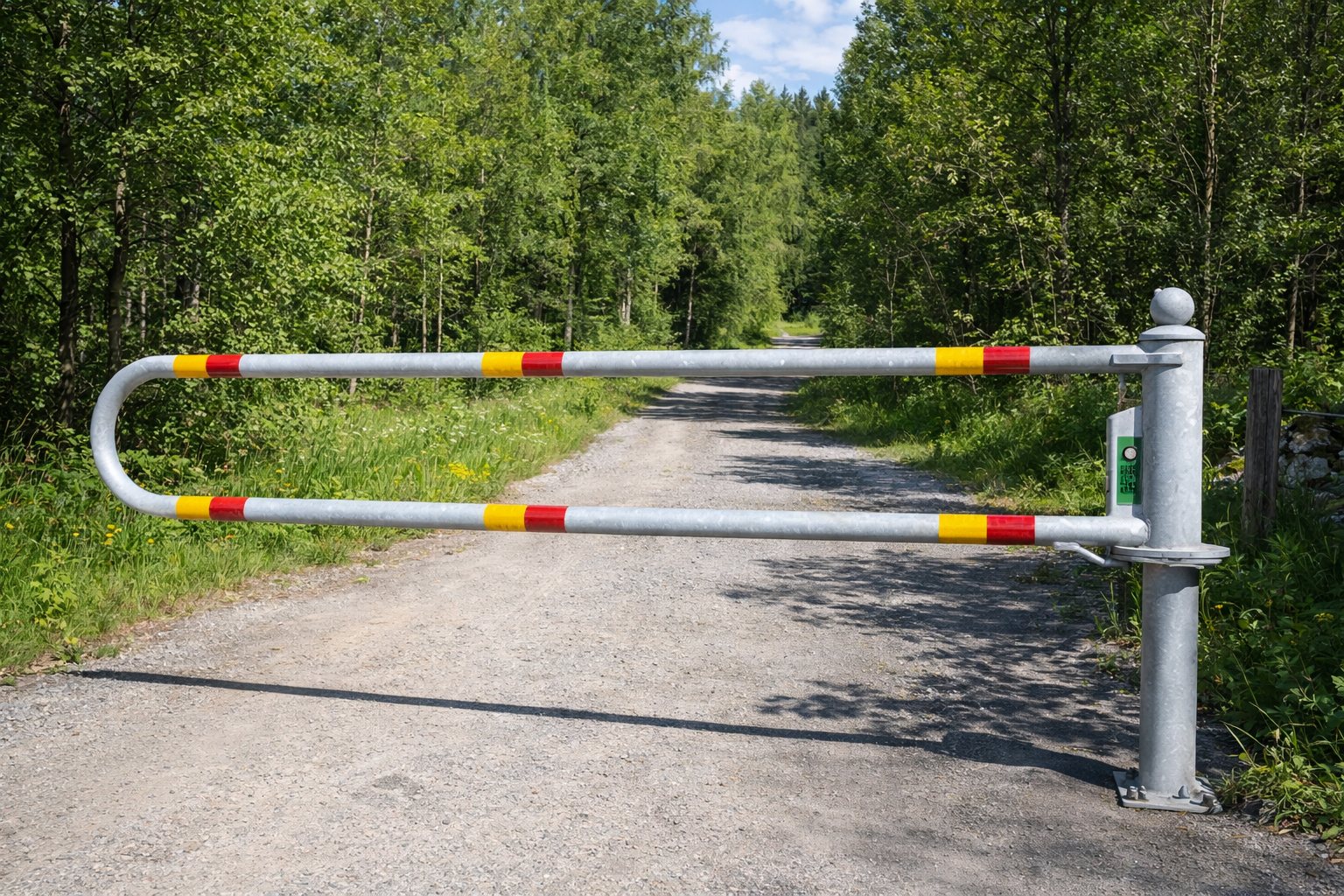
A barrier gate is so much more than just a gate arm. It is at the heart of creating safety, order, and control over vehicle traffic. Whether your goal is to stop unauthorized parking on your association’s property, secure a loading zone in an industrial area, or protect a sensitive pedestrian area, it sends an effective and clear visual signal that stops unwanted traffic in its tracks.
Basic Principles for Effective Area Control
A barrier gate acts as a physical and psychological boundary. Its main purpose is to regulate the flow of vehicles into and out of a specific area. By installing a barrier, you send a clear
A barrier gate is so much more than just a gate arm. It is at the heart of creating safety, order, and control over vehicle traffic. Whether your goal is to stop unauthorized parking on your association’s property, secure a loading zone in an industrial area, or protect a sensitive pedestrian area, it sends an effective and clear visual signal that stops unwanted traffic in its tracks.
Basic Principles for Effective Area Control
A barrier gate acts as a physical and psychological boundary. Its main purpose is to regulate the flow of vehicles into and out of a specific area. By installing a barrier, you send a clear message: “Special rules apply here.” It’s not just about physically stopping cars, but about guiding behavior and creating a safer environment for both people and property.
For a homeowners association (HOA), the problem might be commuters using the guest parking as a free park-and-ride lot. The result? Frustration, a shortage of spaces for residents, and a general sense of insecurity. An automatic barrier gate, controlled by remote controls or a simple GSM call, solves the problem immediately by ensuring that only authorized users get in.
From Simple Barrier to Intelligent Access Control System
Technological advances have transformed the good old barrier gate. Today’s solutions are often smart access control systems that can be adapted to a wide range of needs. Modern barriers can be connected to advanced control systems, such as:
- ANPR cameras: Automatically read license plates and open for approved vehicles. Perfect for logistics centers where trucks need fast, smooth access without hassle.
- Payment systems: Essential for parking garages or campgrounds where access is directly tied to payment.
- Remote control via app: Gives administrators full control over the barrier, wherever they are.
This flexibility means a barrier gate can be adapted for everything from low-traffic entrances at vacation home areas to high-traffic industrial gates that open and close hundreds of times every day.
A well-designed barrier gate solution doesn’t just reduce the risk of break-ins and vandalism. It also contributes to higher property value and a more attractive environment for residents and employees.
Why a Well-Considered Choice Is Crucial
Choosing the right barrier gate is an investment in long-term performance and safety. A common mistake is choosing an undersized barrier for a high-traffic area, which almost guarantees frequent downtime and costly repairs. That’s why it’s crucial to analyze your actual needs:
- Traffic intensity: How many openings and closings per day are we talking about?
- Opening width: How long a boom arm do you need to cover the entire entrance?
- Safety level: Do you need extra protection such as photocells, anti-crush protection, or impact protection?
At Nordguard, we know every entrance is unique. Choosing the right type of barrier – from a robust automatic barrier gate to a simpler manual solution – is the foundation for trouble-free ownership. If you’re unsure which model best suits your particular conditions, our experts will help you analyze your needs and find the optimal solution. Contact us for a free consultation.
Choosing the Right Type of Barrier Gate for Your Needs
Choosing the right barrier gate is one of those critical decisions that directly affects both performance and operational reliability. A poorly chosen barrier can easily become a source of constant downtime, spiraling maintenance costs, and even a safety hazard. That’s why it’s essential to start by analyzing what you actually need on site.
The first and most fundamental question is simple: how often will the barrier be used? For a forest road or a vacation home association with occasional traffic, a manual barrier gate can be a perfectly adequate and very cost-effective solution. It’s simple, robust, and requires almost no maintenance.
But for most other environments, an automatic solution is the obvious choice. It gives you an entirely different level of convenience and control. This is, however, where it’s critical to understand the differences between drive systems so you don’t fall into the most common traps.
Electromechanical or Hydraulic – Which Is Right for You?
The most common choice is between electromechanical and hydraulic barriers, and the decision depends almost entirely on traffic intensity.
An electromechanical barrier gate is often the best and most affordable option for sites with normal traffic. Think of an HOA, an office garage, or a smaller industrial property where the barrier opens and closes a limited number of times per day. These barriers are reliable and offer an excellent balance between performance and cost.
For truly high-traffic areas – such as a large logistics center, a port terminal, or a parking garage with a constant flow of cars – a hydraulic barrier gate is almost always superior. It’s built for intensive operation, sometimes thousands of cycles per day, with minimal wear. The hydraulics provide a smoother, more controlled movement, which significantly extends service life and reduces the risk of unplanned, costly downtime.
Installing an undersized electromechanical barrier in a high-traffic environment is one of the most common and expensive bad investments you can make. It’s a bit like using a passenger car to do a truck’s job; the wear becomes inevitable and costly in the long run.
The Need for Traffic Control Has Historical Roots
The need for effective closure systems like barrier gates is nothing new. Car ownership in Sweden exploded in the 1950s, when the number of passenger cars grew from 250,000 in 1950 to over 1 million by 1959. This dramatic growth placed entirely new demands on road safety, including the need for barrier gates to control traffic at sensitive locations such as parking lots, industrial areas, and railroad crossings. Today, with car ownership still high, barrier gates are essential for property owners, HOAs, and logistics companies to protect their areas from unauthorized traffic.
Comparison of Barrier Types
To make the choice a little easier, we’ve put together a table showing the differences between the most common barrier types. Think of it as a first guide to narrowing down which solution best matches your specific requirements for traffic flow, safety, and budget.
| Barrier type | Best for | Pros | Cons |
|---|---|---|---|
| Manual | Very low traffic frequency (forest roads) | Low cost, minimal maintenance, no power required | Requires manual handling, low security |
| Electromechanical | Normal traffic frequency (HOAs, offices) | Affordable, fast, many control options | Not for continuous operation, higher wear |
| Hydraulic | High & intensive traffic (logistics, parking garages) | Extremely durable, long service life | Higher purchase cost, can be slower |
Once you have a clearer picture, you can explore our range of automatic barrier gates to see specific models and their features. The key to a successful investment is to honestly analyze your unique traffic flow and future needs. If you’re unsure which barrier gate is right for your business, don’t hesitate to get in touch. At Nordguard, we’ll help you find a tailored, durable solution that ensures safety and efficiency for many years to come.
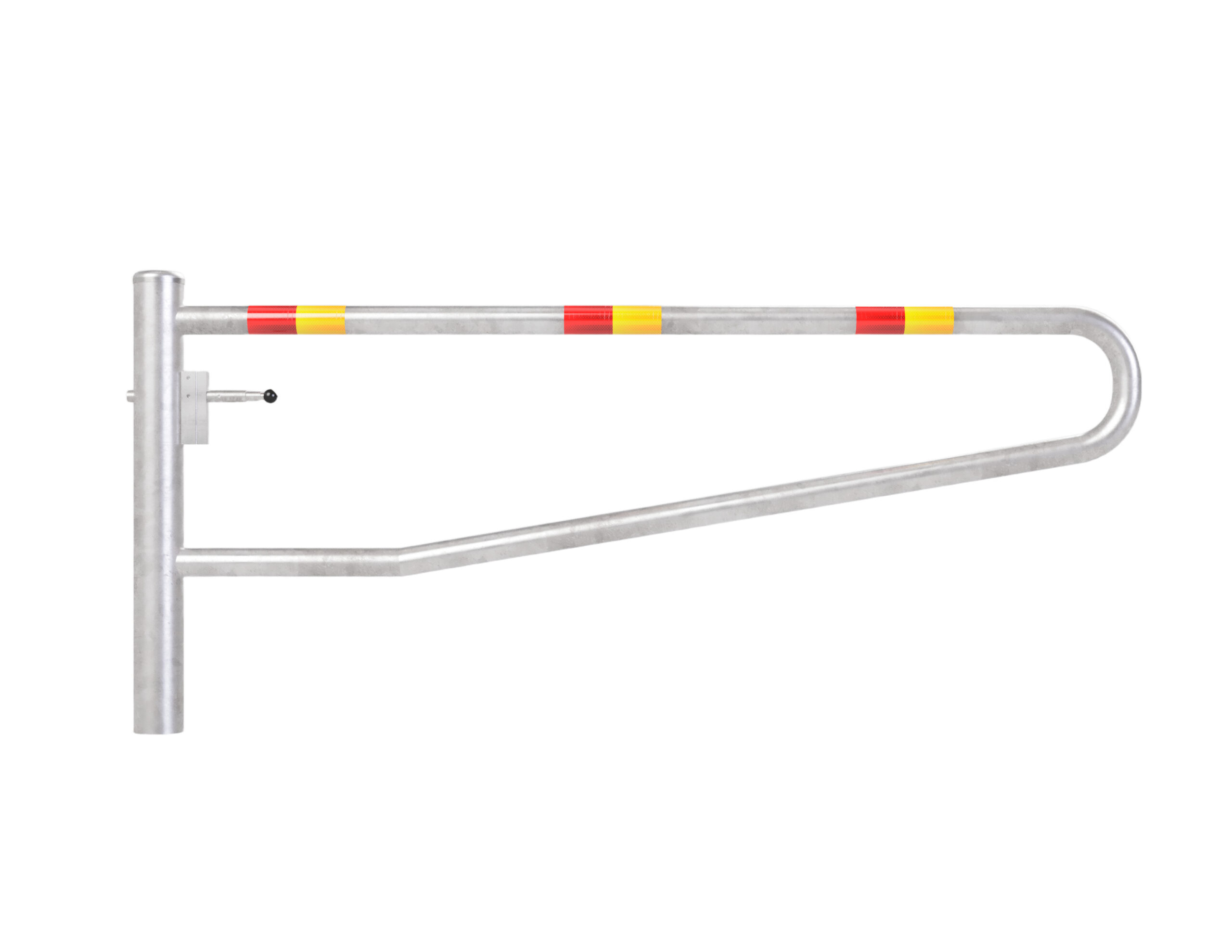
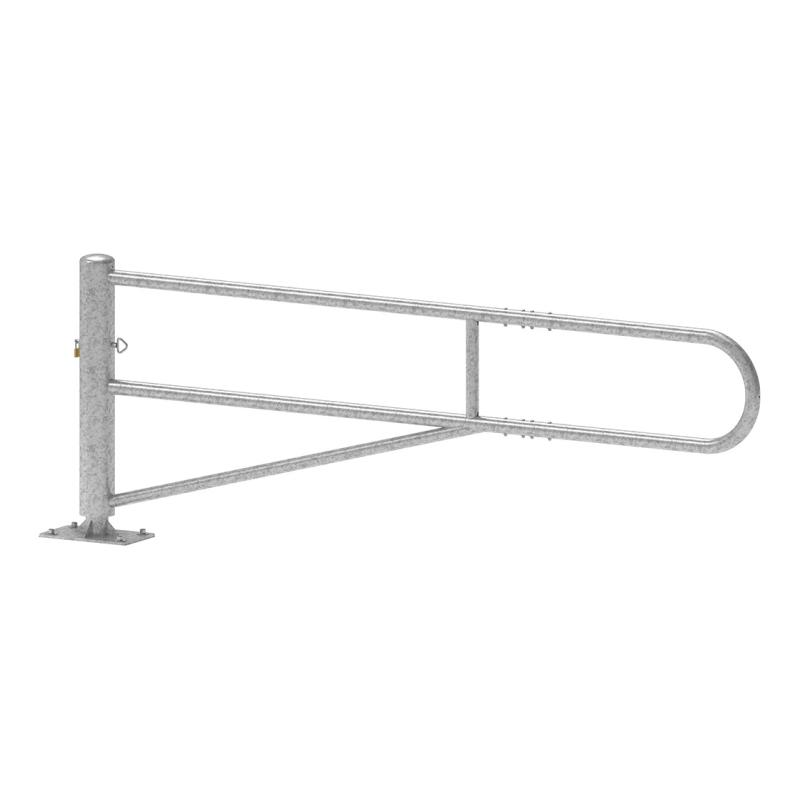
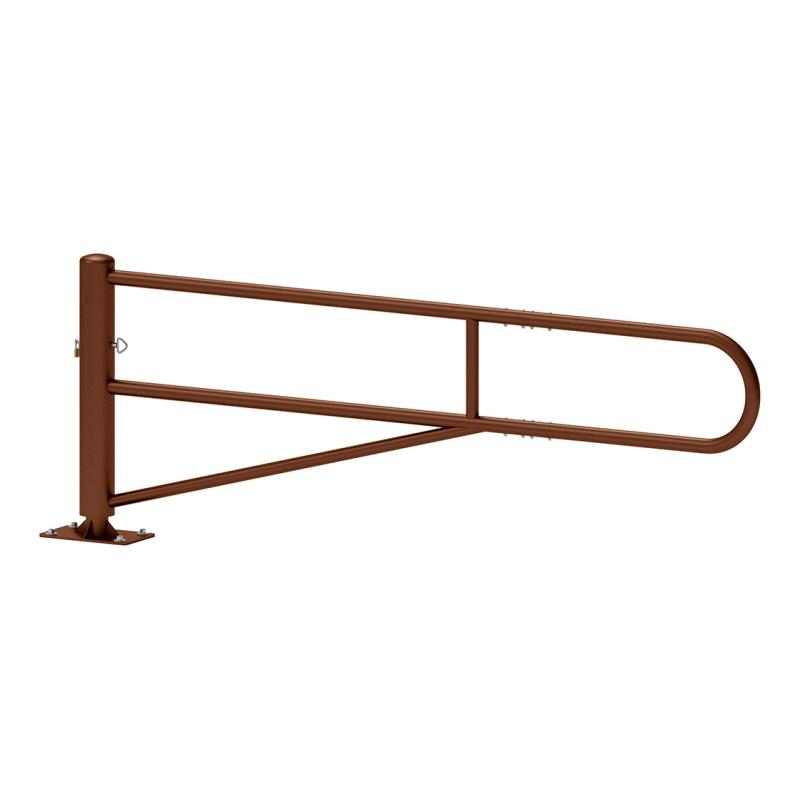 Corten steel
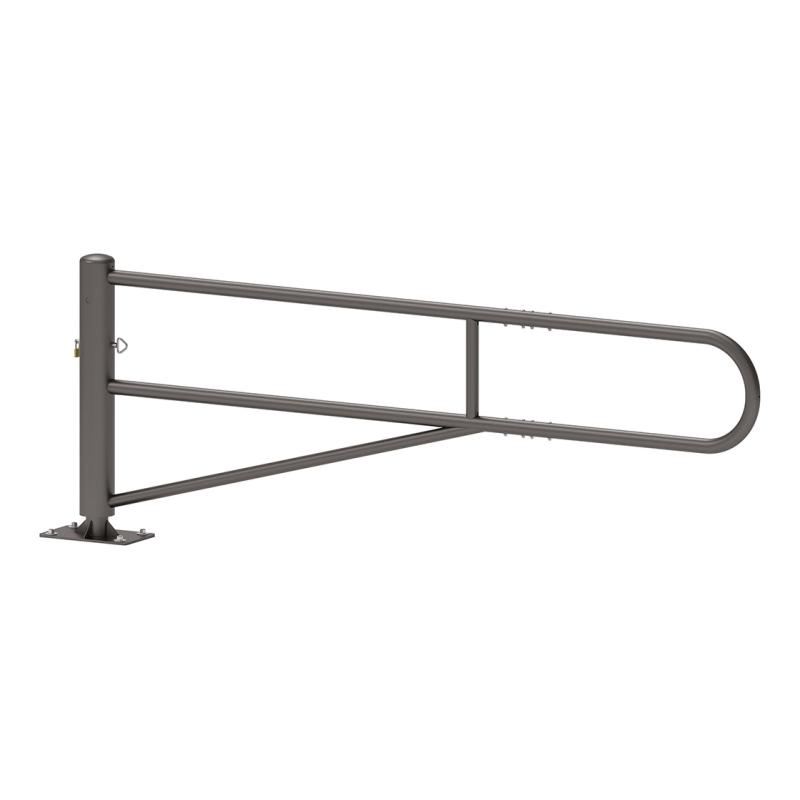 Gray
Gray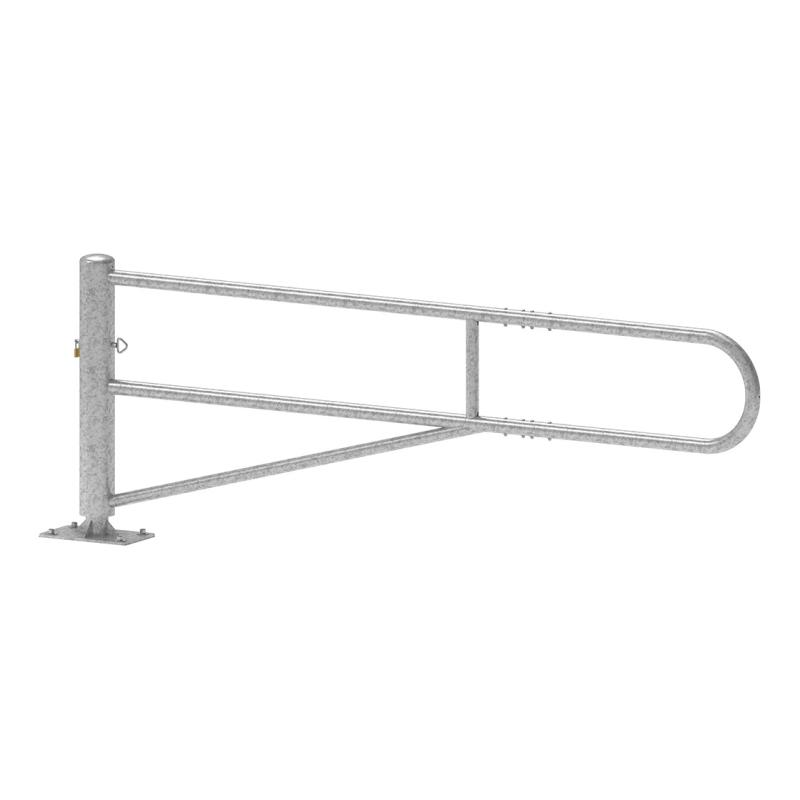 Silver gray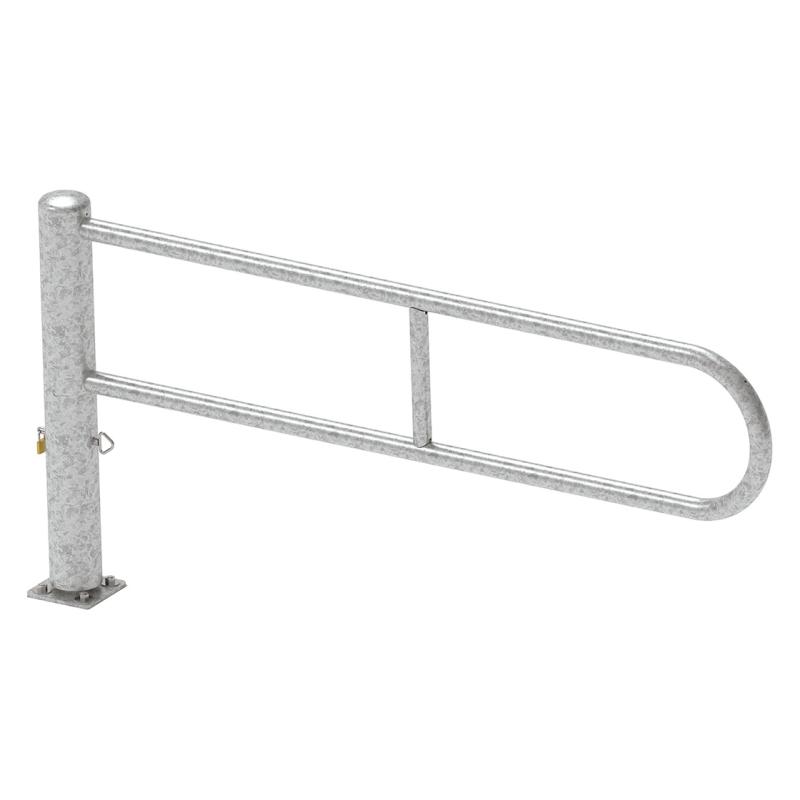
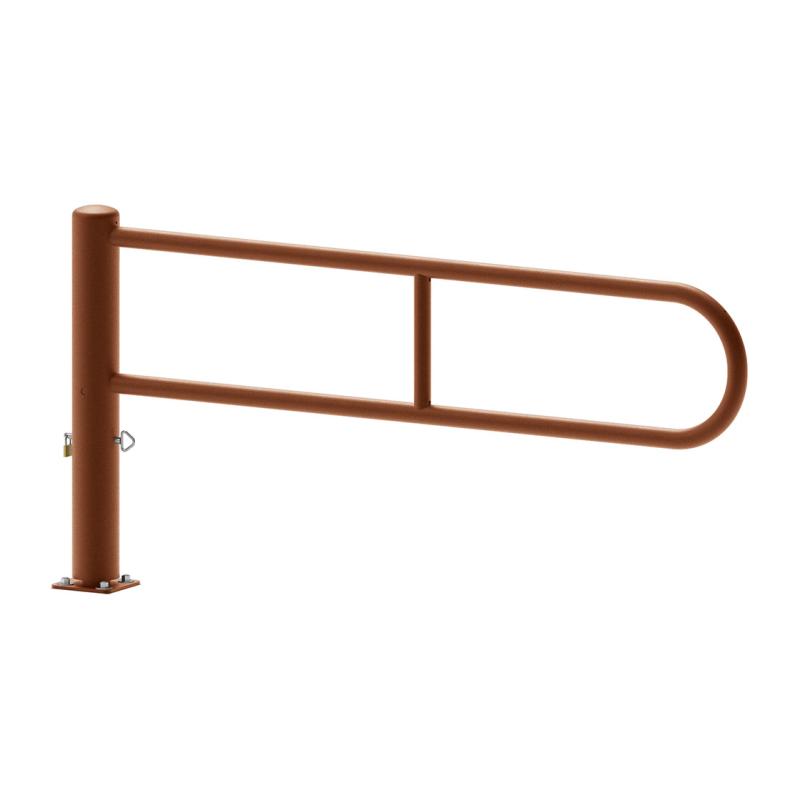 Corten steel
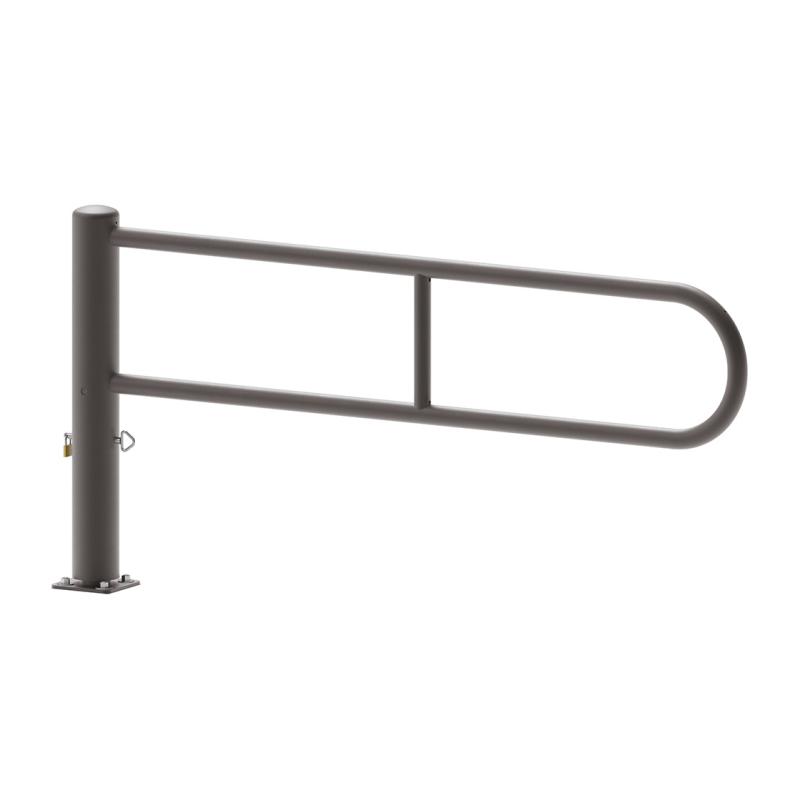 Gray
Gray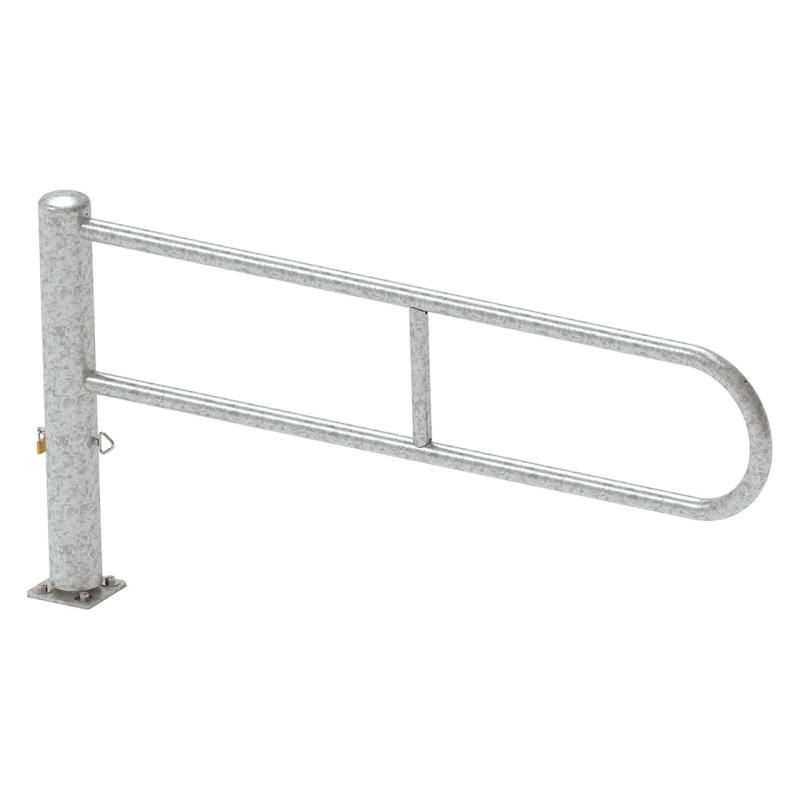 Silver gray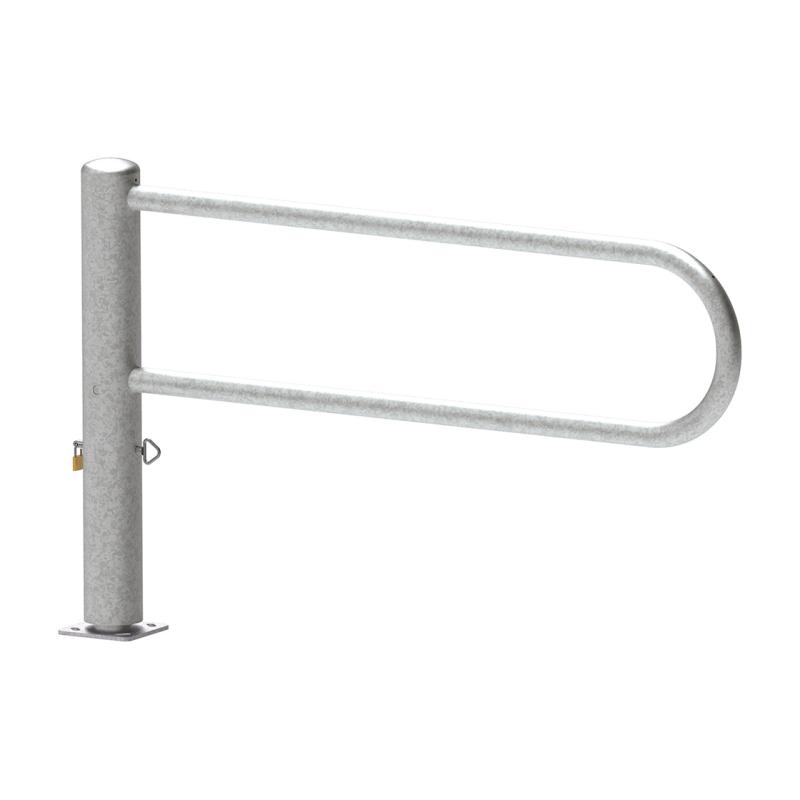
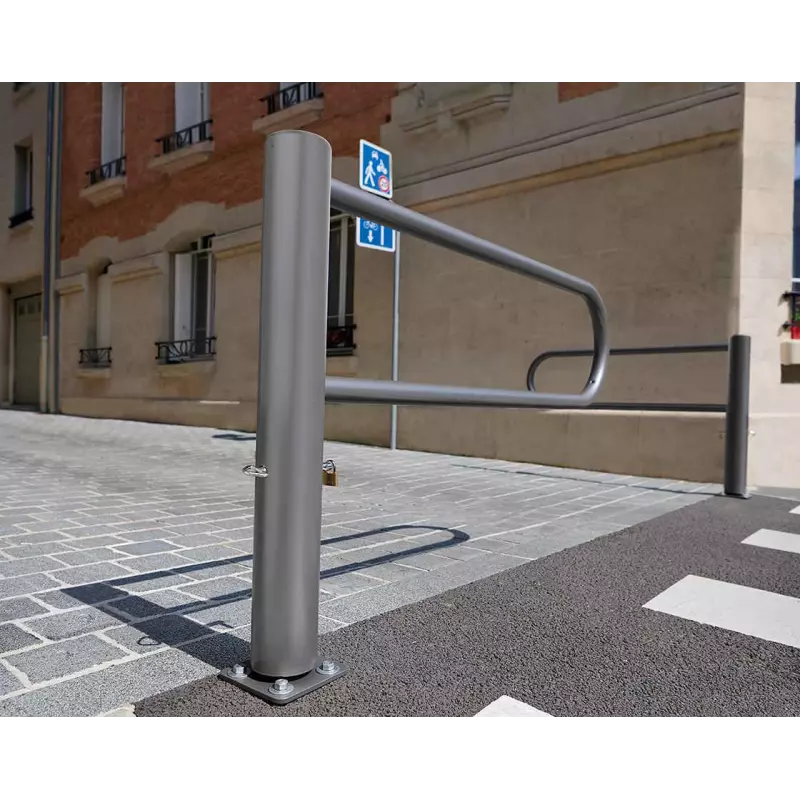
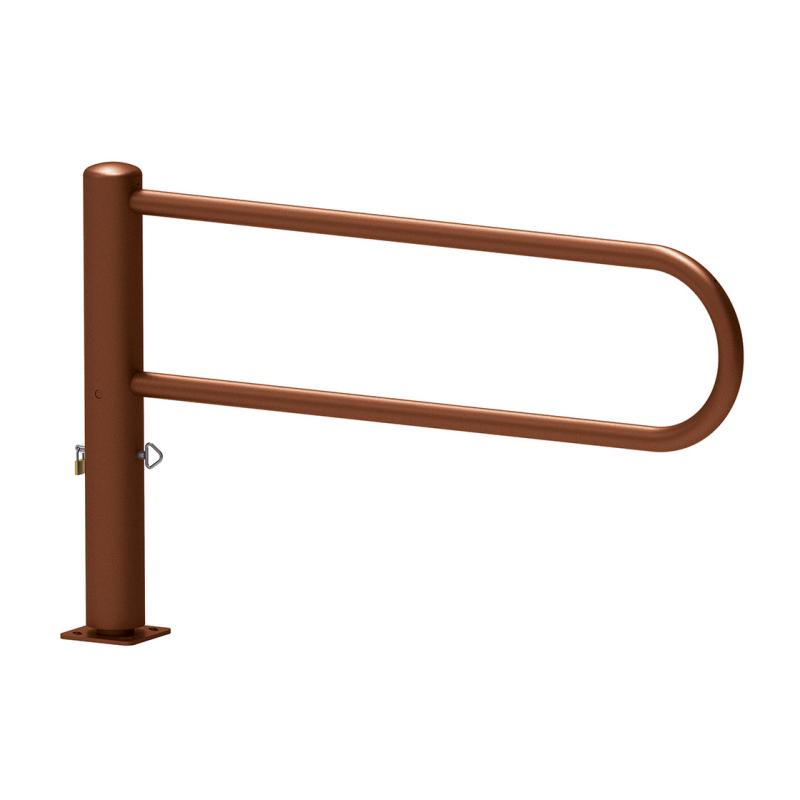 Corten steel
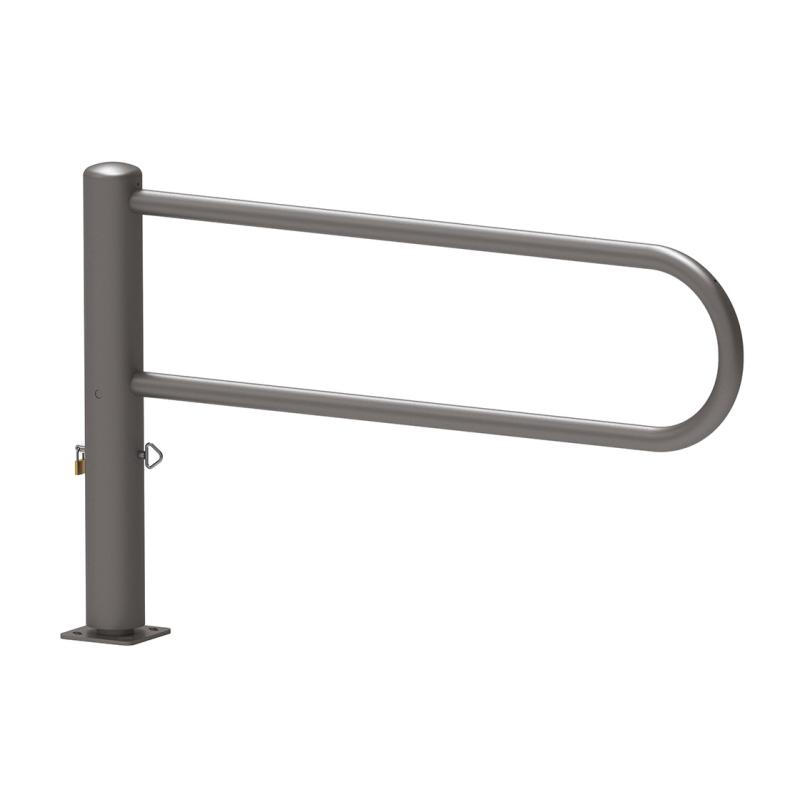 Gray
Gray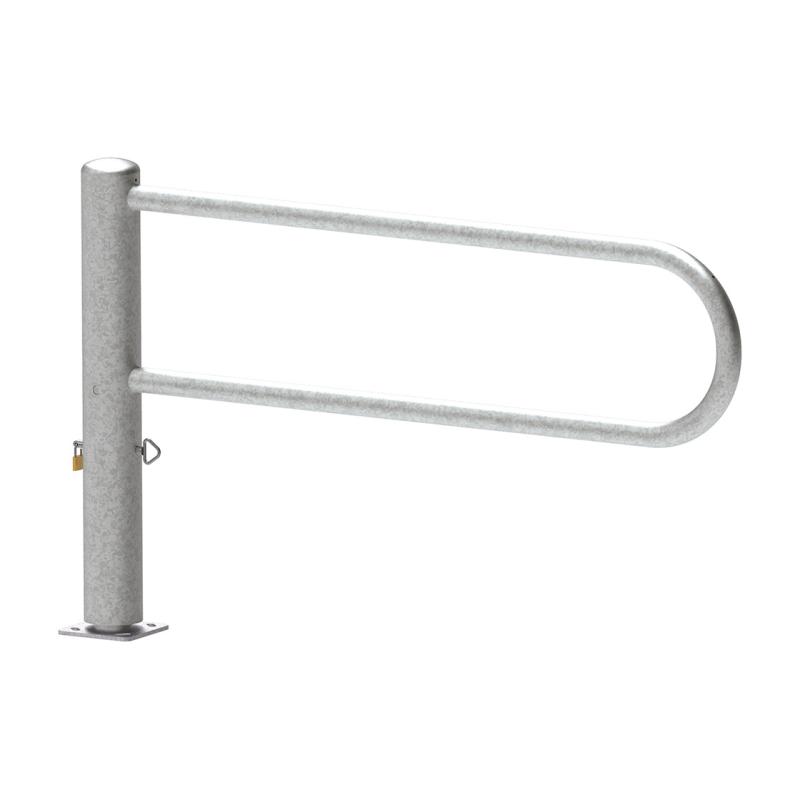 Silver gray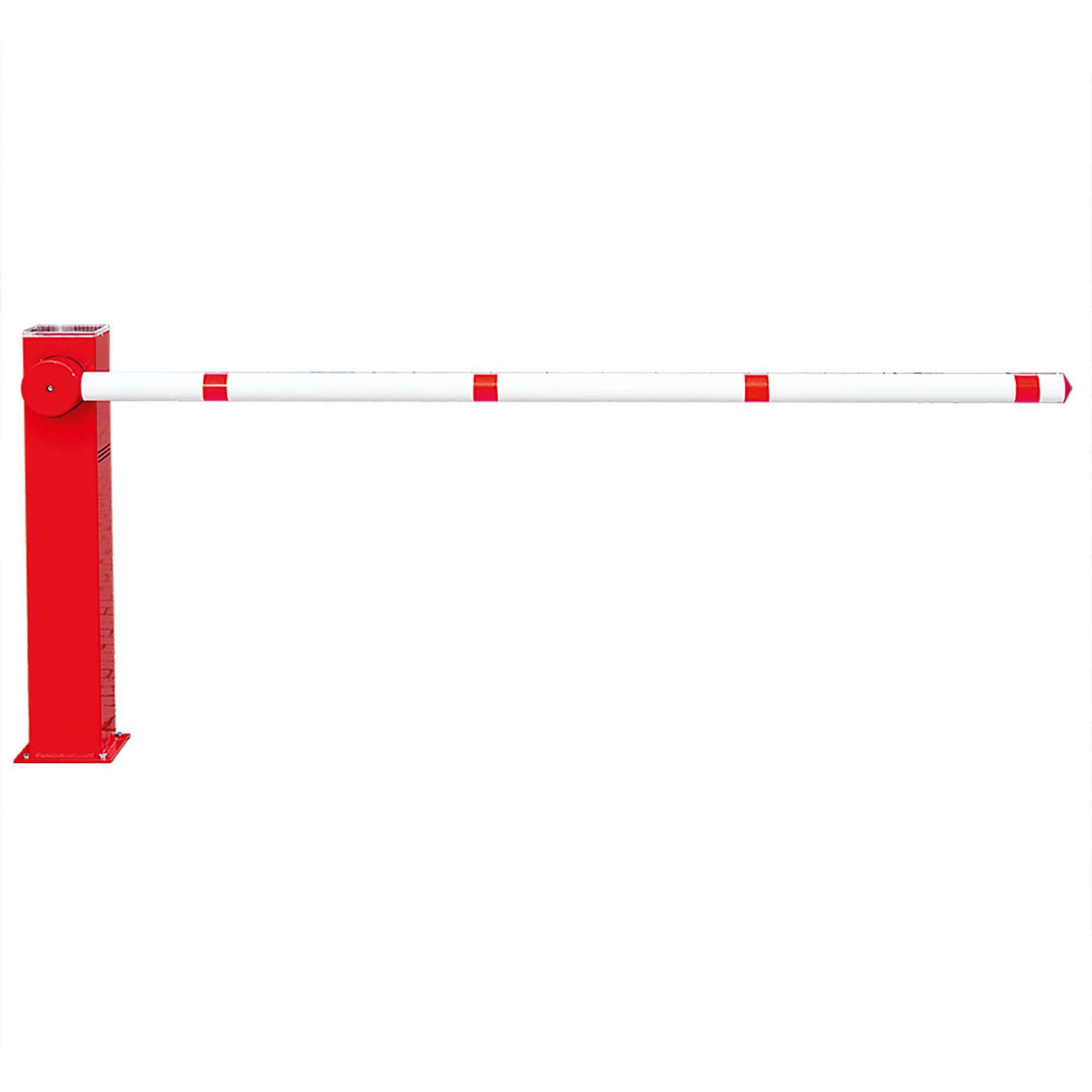
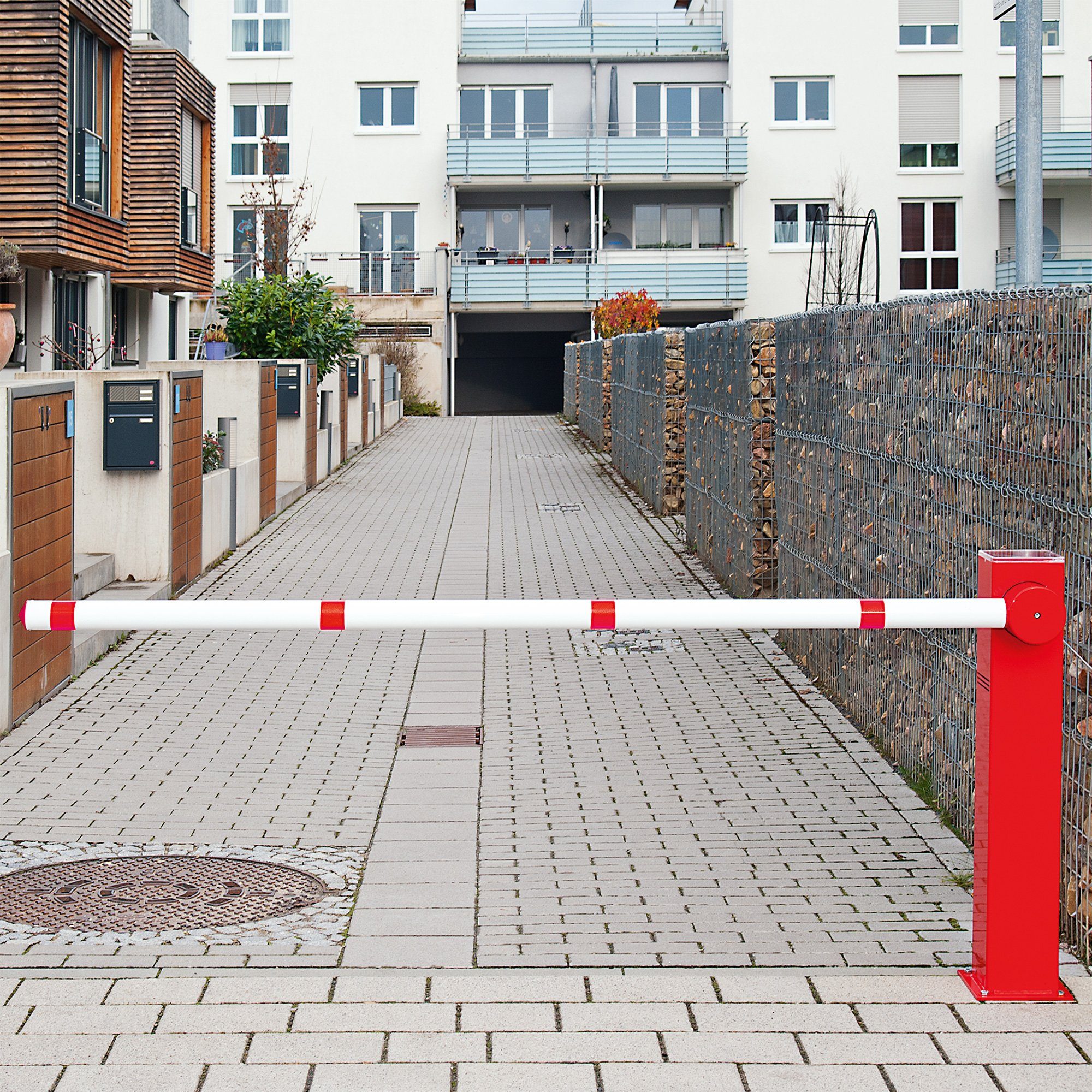
 Red/White
Materials and Boom Lengths Built for the Nordic Climate
A barrier gate’s service life and reliability depend entirely on the choice of material and how it’s sized. In our Nordic climate, with constant shifts between moisture, cold, and not least road salt, these factors become absolutely critical. The wrong choice can lead to premature rust, mechanical problems, and ultimately an unsafe installation that doesn’t do its job.
Investing in the right material from the start is therefore not an unnecessary cost, but rather insurance for the future. When you understand how different materials and dimensions perform in practice, you can be confident you’re getting a solution that withstands wind and weather for many years.
Steel vs. Aluminum – A Choice Based on Needs
The two most common materials for barrier gates are powder-coated steel and aluminum. Both have their advantages, and the choice comes down to what the barrier will actually be used for.
- Aluminum boom: A lightweight aluminum boom is often ideal for high-traffic entrances such as parking garages or logistics terminals. Because it weighs less, it can open and close faster. This minimizes wait times and keeps traffic flowing.
- Steel construction: For wider openings, or in locations that require extra robustness and higher security, a steel construction is usually the obvious choice. Steel is simply stronger and can withstand more physical impact.
Whichever material you choose, the finish is essential. A combination of hot-dip galvanizing and powder coating provides double protection that effectively resists rust and corrosion from both moisture and aggressive road salt.
Correct Boom Length Is Everything
The length of the boom arm is another critical detail that must be measured precisely. An incorrectly sized boom may look sloppy at best, but at worst it can cause serious damage to both vehicles and the barrier itself.
When measuring, measure the clear passage between the foundation and the boom rest post. Don’t forget to also account for the space needed when the boom arm is fully raised. Are there roofs, tree branches, or signs in the way? In windy locations, you also need to calculate the wind load. A long boom arm acts like a large sail and can put unnecessary strain on the mechanism.
Gambling on boom length is a bad idea. A boom that’s too short creates an unsafe passage where vehicles may try to sneak past, while one that’s too long risks hitting its surroundings or being damaged by wind. Always consult an expert if you’re unsure.
Need help measuring and specifying the right barrier for your entrance? Contact us at Nordguard and we’ll make sure you get a solution that’s perfectly tailored and safe.
This graphic gives a simple overview for choosing the right type of barrier based on how much traffic you have.
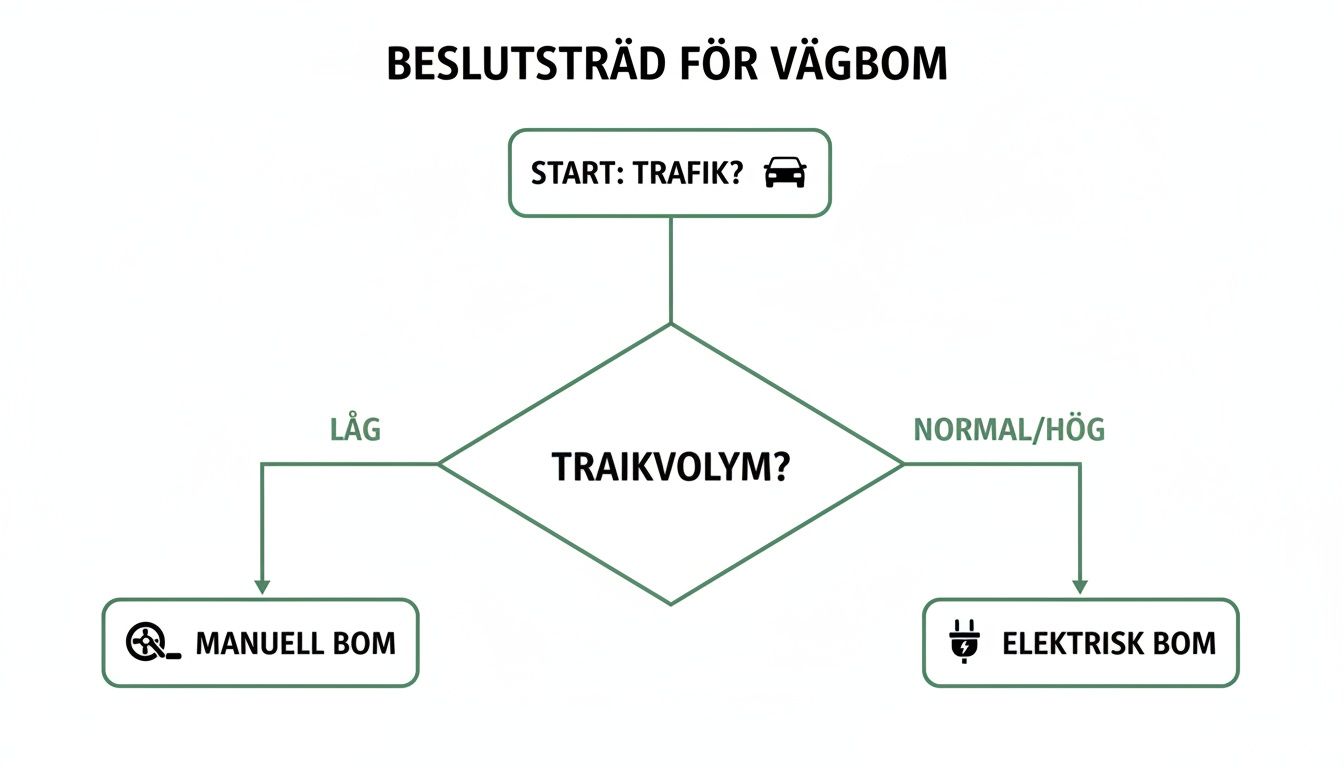
As you can see, an electric automatic barrier gate is the obvious choice for normal or heavy traffic if you want a smooth and efficient solution.
Increasing Loads on Swedish Roads Raise the Bar
The Swedish road network, especially private roads in rural areas, is subject to increasing wear. This is mainly due to more and heavier traffic from forestry and agriculture. As the Swedish Forest Agency’s report shows, wear has increased significantly, creating an urgent need for robust products such as barrier gates to protect bridges and roads from overloading. For our customers in warehousing, industry, and construction, this is directly relevant. The right CE-marked barriers and impact protection provide tailored solutions with the long service life required.
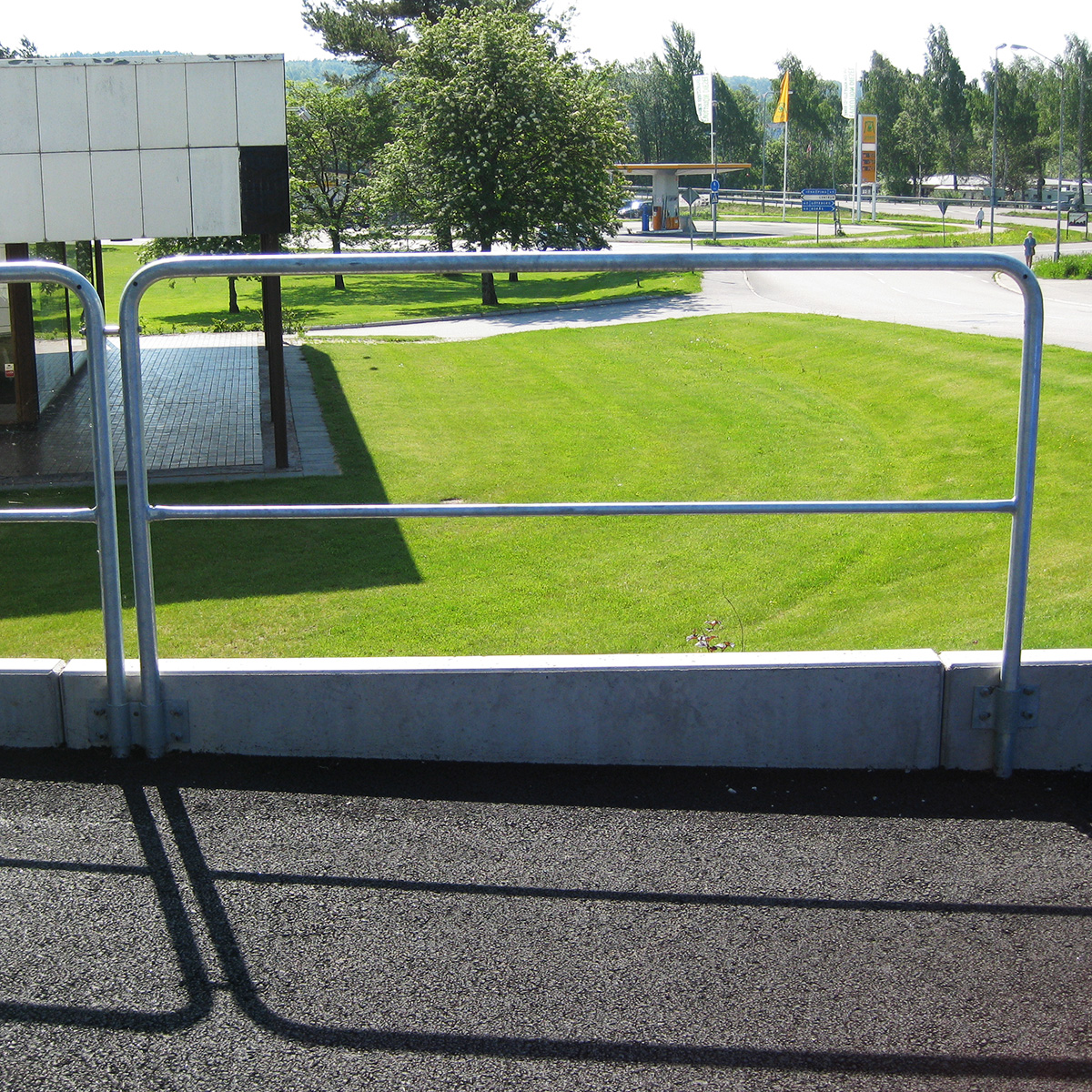
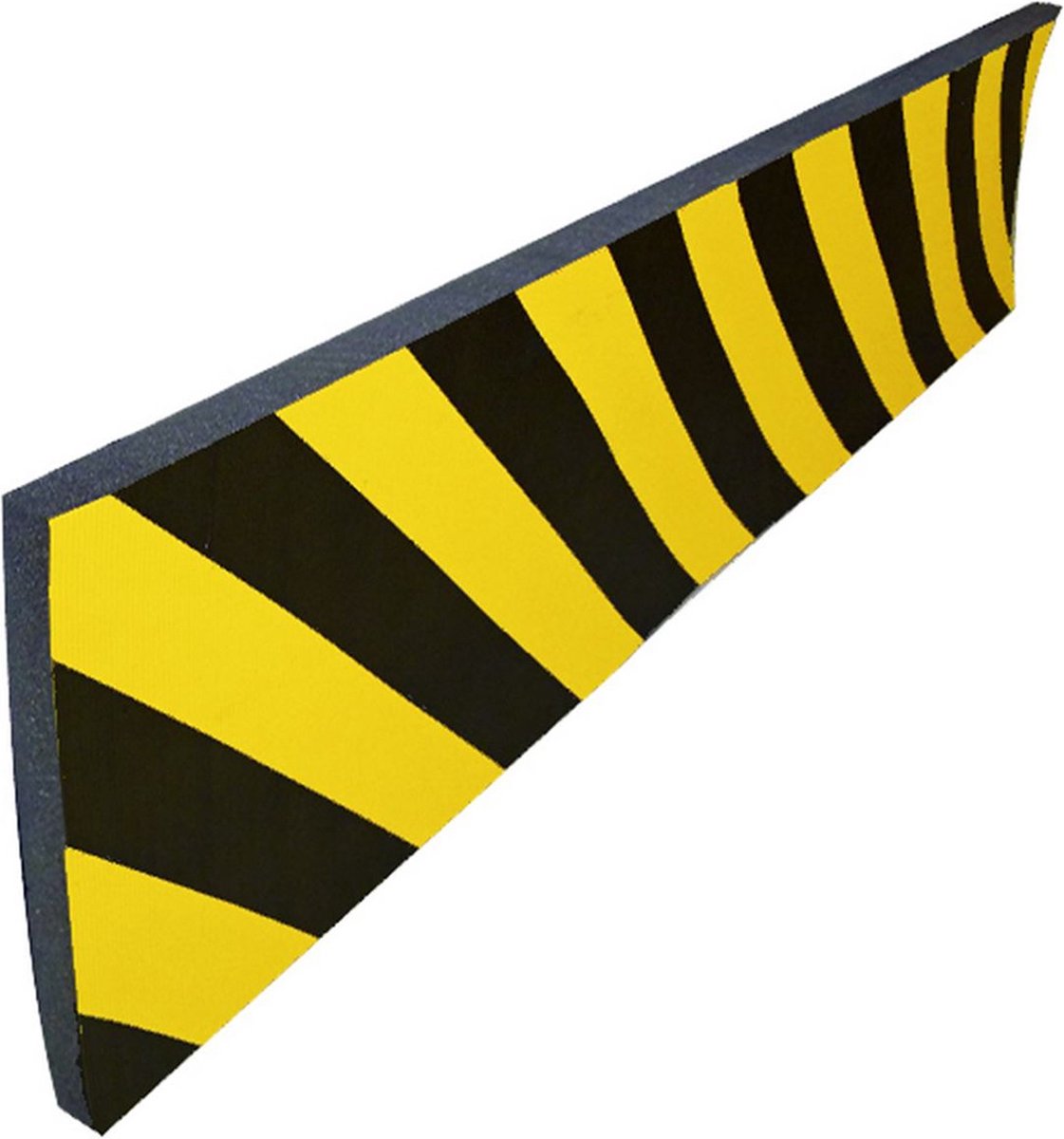
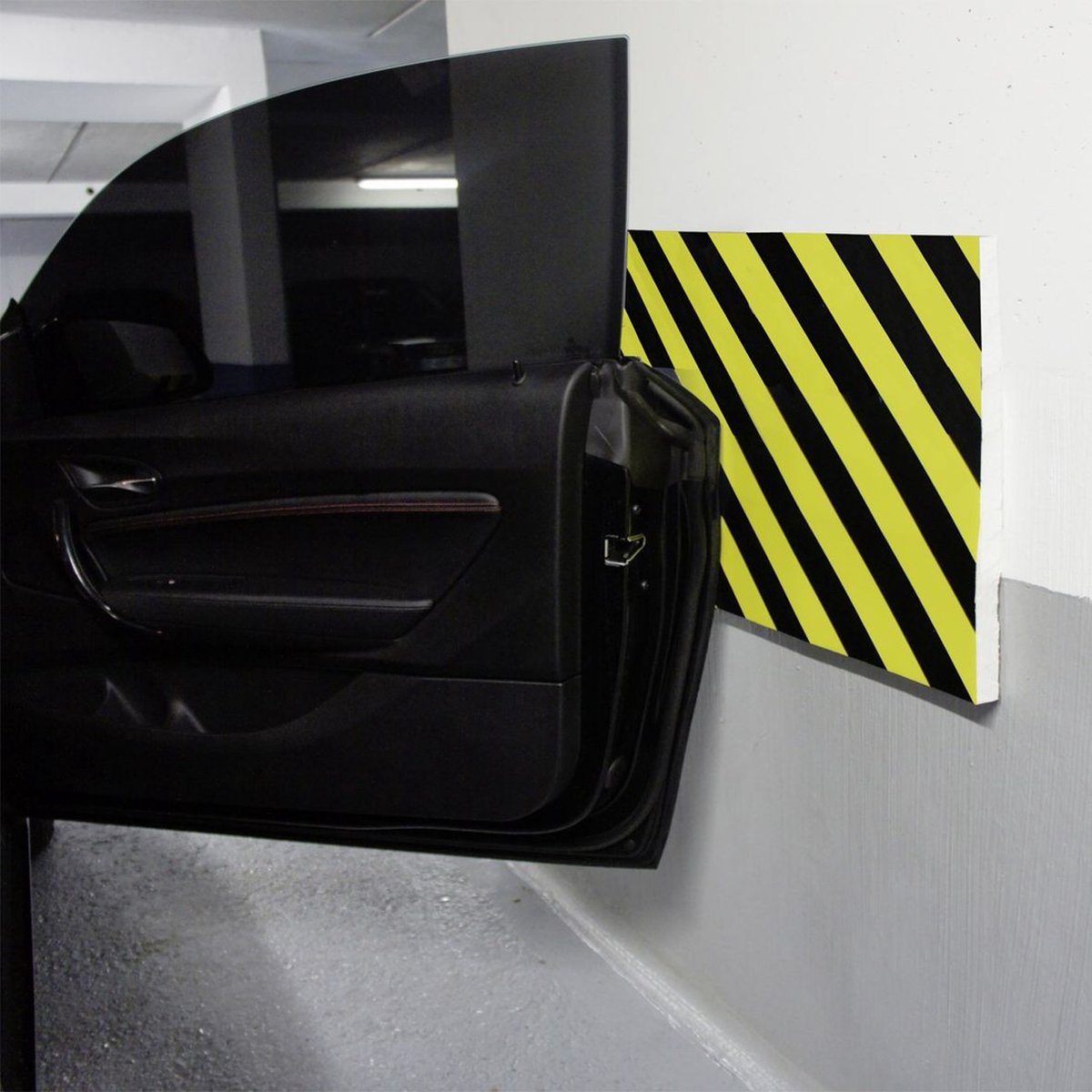
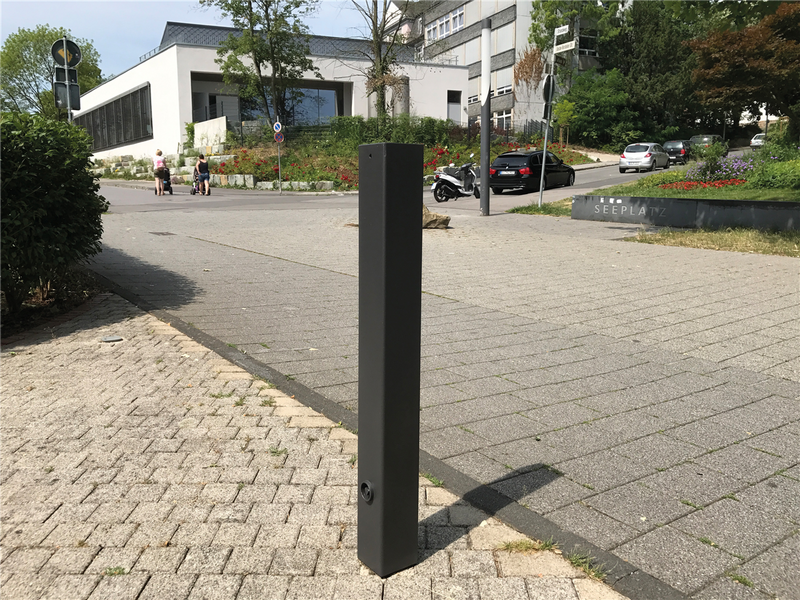
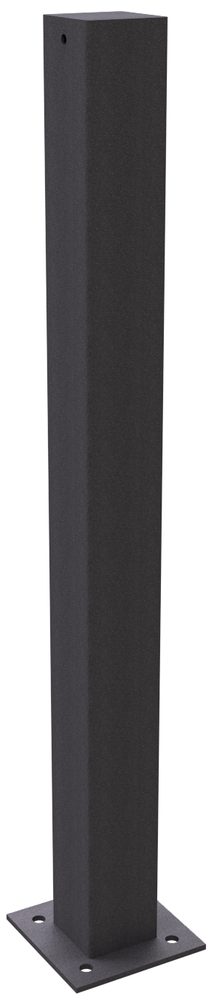
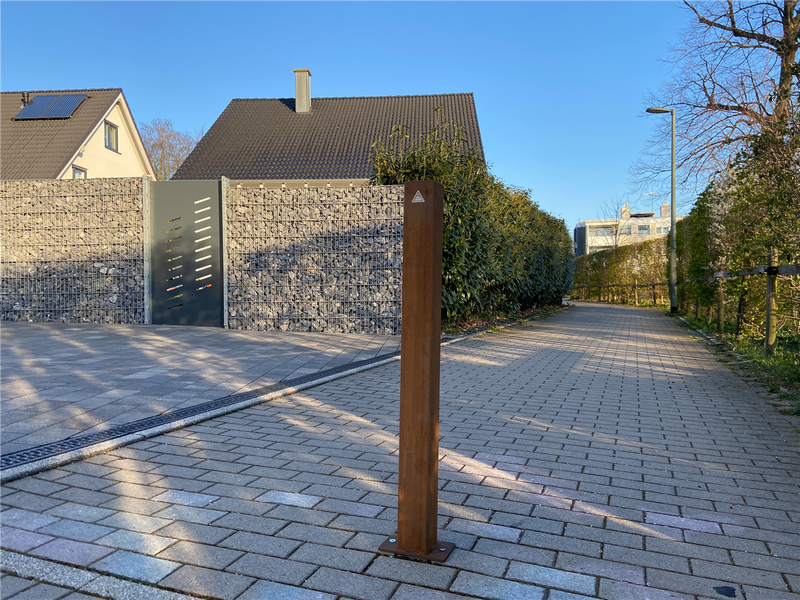
We offer a wide range of impact protection that complements your barrier gate and protects your investment.


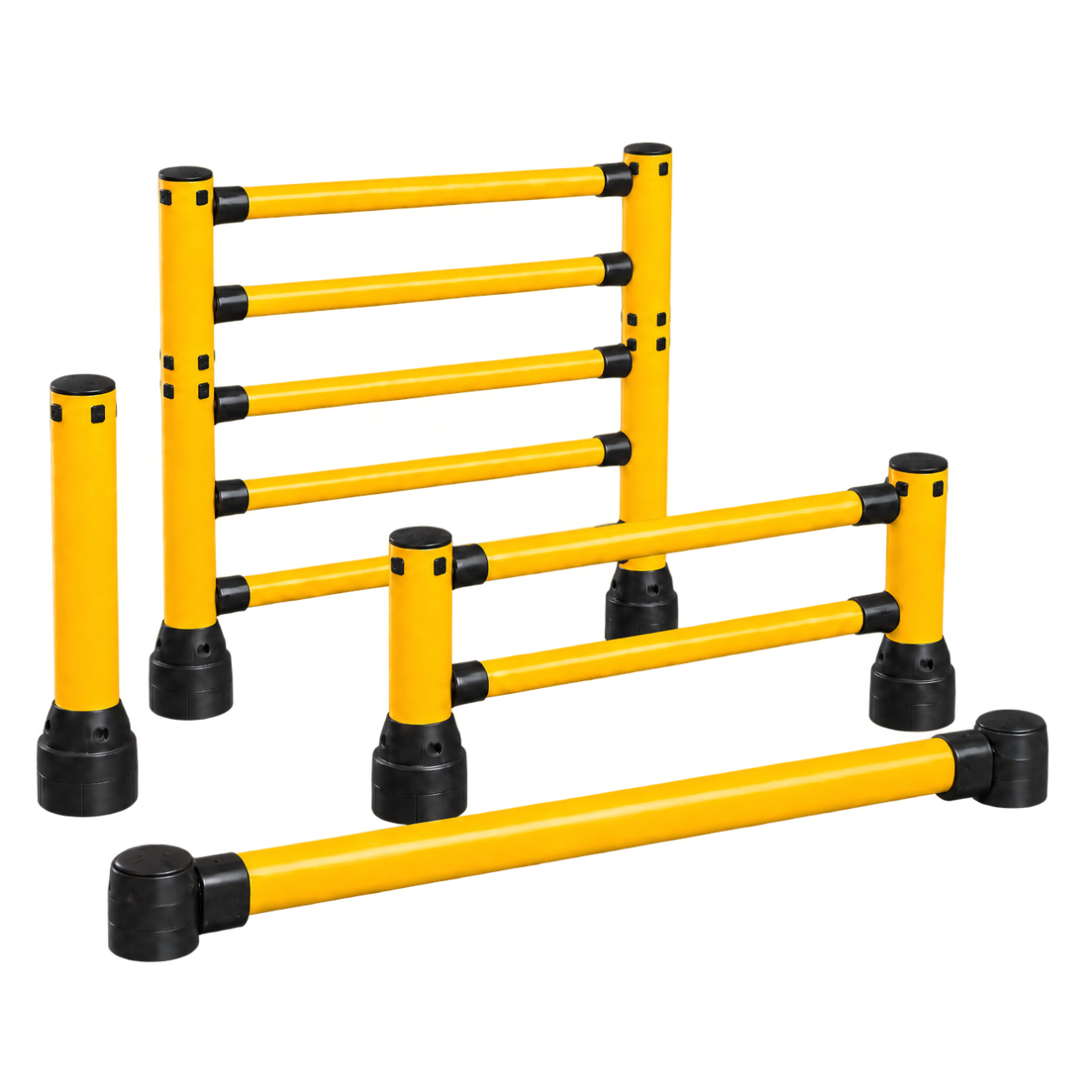
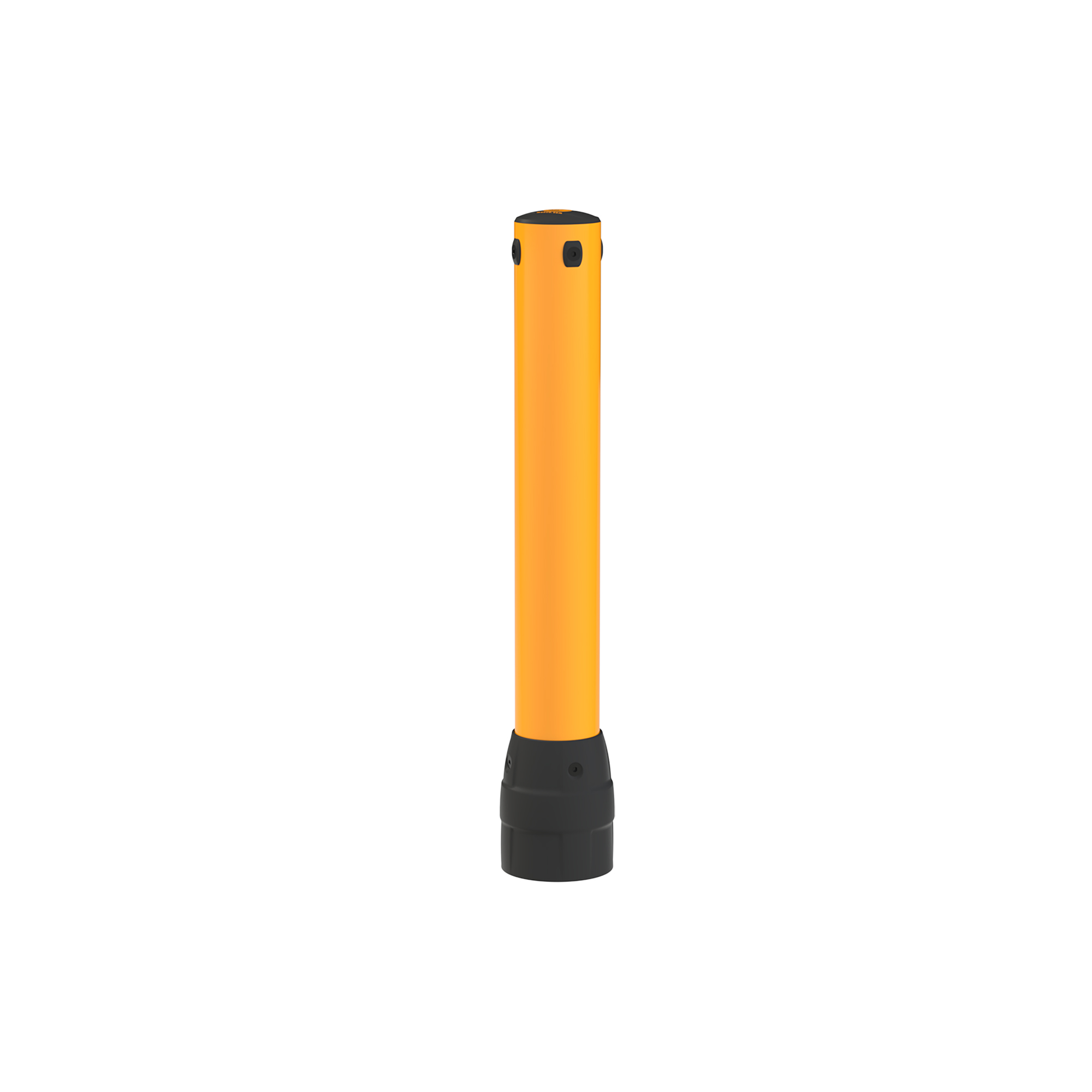 Black/Yellow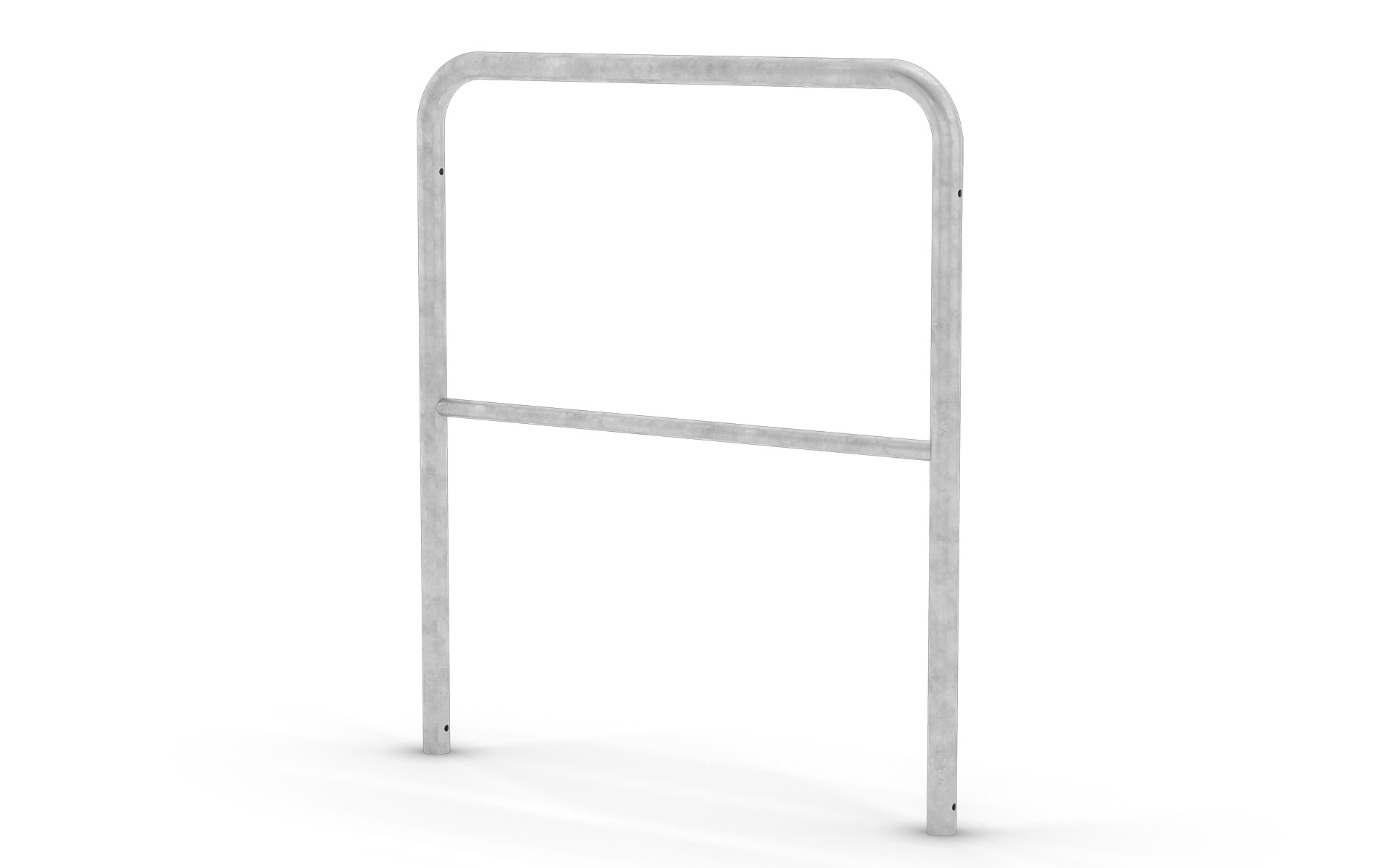



Safety Requirements and CE Marking – What You Need to Know
When it comes to automatic barrier gates, there’s one thing you should never compromise on: safety. A barrier is meant to protect and control, not to create new hazards. That’s why it’s crucial that you, as the one investing in a barrier solution, understand the applicable rules. At the center of it all is CE marking.
The CE mark is much more than just a sticker. It’s your guarantee that the product has been scrutinized down to the smallest detail and meets the EU’s strict health, environmental, and safety requirements. For a barrier gate, this means it falls under the Machinery Directive, legislation that sets extremely tough requirements for how the barrier is designed and which safety features it must have to prevent accidents.
Critical Safety Features You Can’t Do Without
A modern, CE-marked barrier gate has several layers of built-in safety technology that work together to create a safe passage. Without them, the installation isn’t just illegal – it’s downright dangerous. Once you know these features, you’ll also know what to demand from your supplier.
Here are the most important components:
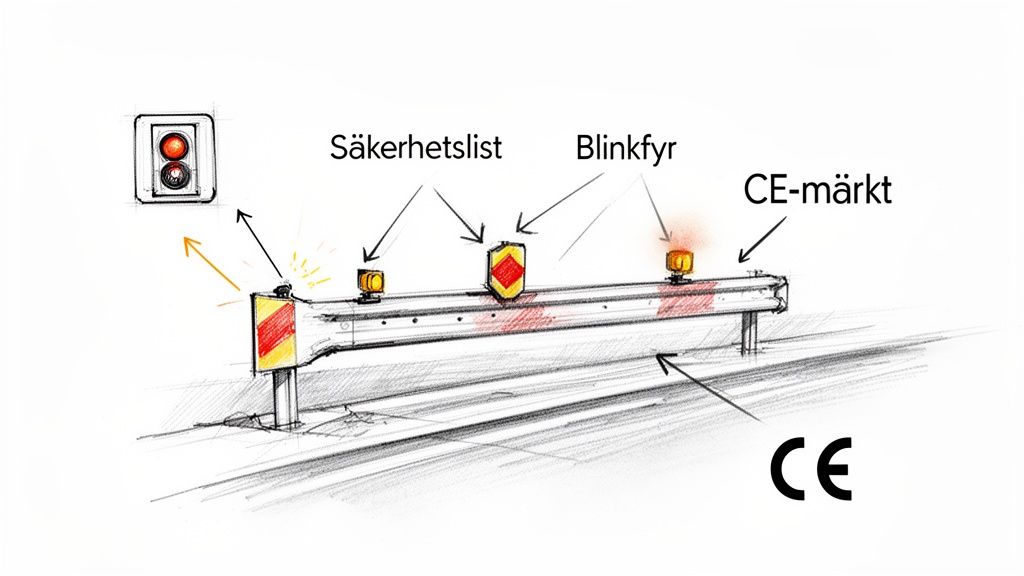
- Photocells (anti-crush protection): Imagine an invisible beam of light projected across the road. If a car, cyclist, or pedestrian breaks the beam while the boom arm is lowering, an immediate signal is sent that makes the barrier reverse. It’s the very first line of defense against crush injuries.
- Safety edge: A pressure-sensitive rubber strip mounted on the underside of the boom arm. If it hits something – say, a car roof – it reacts instantly and sends a stop signal that makes the barrier reverse. It’s an extra safety net, a second lifeline.
- Warning light (flashing beacon): A flashing light that clearly shows the barrier is moving. This visual alert is extremely important for catching road users’ attention and preventing anyone from driving into a barrier that’s closing.
- Emergency stop: A clearly marked, easily accessible button that immediately cuts power and stops everything. A must for being able to intervene quickly if something unexpected happens.
Installing a barrier gate without these basic features is like buying a new car without brakes or airbags. It’s an unacceptable risk that can lead to terrible accidents and costly damage – with you, the site owner, held responsible.
A Lesson from History
The importance of certified, well-maintained barriers is nothing new. The railroad sector has given us clear evidence of this over the years. In December 2005, Sweden had approximately 10,000 railroad crossings, of which about 3,000 had barriers. Between 2001 and 2005, accident statistics remained just under 30 incidents per year, a stagnation directly linked to reduced investment in maintenance and modernization. For municipalities and property owners, it’s an important reminder: safe, modern barriers save lives and property. If you want to dig deeper, there’s an interesting survey of railroad crossings in this report from the Swedish Transport Administration.
Choosing a supplier like Nordguard, which works exclusively with CE-marked products and follows all installation rules to the letter, is the best way to protect your investment and sleep soundly at night. We make sure your installation is safe and compliant from day one. To learn more, we recommend our guide on safety, certification, and standards.
How to Ensure Reliable Operation with Proper Installation and Maintenance
A premium-grade barrier gate can quickly become a problem if the installation is sloppy. No matter how robust or technically advanced the barrier is – without a stable base, it will never work as it should. It all starts with a properly cast and correctly sized concrete foundation. That’s the basis for reliable, long-term operation.
A poor foundation is like a ticking time bomb. Vibrations from traffic and the barrier’s own movements cause a poorly anchored barrier to slowly but surely lose its calibration. This inevitably leads to unnecessary mechanical wear, annoying error messages, and, at worst, costly downtime.
Professional Installation Is an Investment, Not a Cost
Hiring experts for the installation isn’t an expense, but one of the most important investments you can make in the service life of your installation. A professional process ensures every step is handled correctly, from the first shovel in the ground to the final fine-tuning.
Here’s how a professional installation works:
- Thorough groundwork: Proper excavation and ground preparation so the foundation has a stable base to rest on.
- Proper casting: A foundation must be adapted to the barrier’s weight, the boom arm’s length, and local ground conditions. Some models, like our Compact barriers, require specific solutions such as a post for cast-in concrete installation to guarantee perfect stability.
- Safe cable routing: All power and control system wiring must be protected and routed according to industry regulations to avoid future electrical faults.
- Programming and calibration: Fine-tuning control systems, opening speeds, and safety sensors such as photocells and anti-crush protection is essential for safe, fault-free operation.
Service Agreements – Your Insurance Against Costly Surprises
Once the barrier gate is in place, the next important phase begins: regular, preventive maintenance. Many see maintenance as an unnecessary cost, but the truth is that a service agreement is the best insurance you can have against expensive, unplanned repairs and downtime.
Neglecting service on an automatic barrier gate is like never changing the oil in your car. Sure, it’ll run for a while. But sooner or later, a costly breakdown will occur as a direct result of missed maintenance.
With a tailored service agreement from Nordguard, you ensure your installation is always in top condition. Our technicians carry out preventive measures that maximize both service life and operational reliability.
Typical tasks in a service agreement:
- Lubrication of moving parts: Reduces friction and wear on the motor, gearbox, and bearings.
- Mechanical adjustment: Checking and retightening bolts and adjusting the boom arm’s balance and end positions.
- Safety function testing: Systematic testing of photocells, safety edges, and emergency stops.
- Cleaning: We remove dirt and debris that can interfere with electronics and mechanics.
Investing in both professional installation and an ongoing service agreement is the smartest way to protect your investment. It gives you a safe, reliable, and cost-effective solution that works trouble-free, year after year. Ready to secure your site? Contact us at Nordguard to discuss expert installation and tailored service agreements.
Frequently Asked Questions About Barrier Gates
We’ve gathered some of the most common questions we hear. The answers are straightforward and simple, meant to give you a better overview when you’re planning a new barrier gate.
Do You Need a Building Permit to Install a Barrier Gate?
In most cases, the answer is no, as long as the barrier is on private property – such as at a company entrance or for an HOA. Then it’s usually straightforward.
However, if the barrier will connect to a public road or could in any way interfere with traffic, you may need a permit from the municipality or the Swedish Transport Administration. Our advice is simple: give your local building committee a quick call to be on the safe side. If you need technical documentation for an application, we at Nordguard will of course help you with that.
How Long Does an Automatic Barrier Gate Last?
A really good, CE-marked barrier gate that’s installed by professionals and serviced now and then can be expected to last 10–15 years, sometimes even longer.
What matters, of course, is how much it’s used and what weather it’s exposed to. A hydraulic barrier that goes up and down all day at an industrial site generally has a longer service life than a simpler electromechanical model.
Regular service is essential. It’s the absolute best insurance for keeping the barrier running smoothly year after year. Think of a service agreement as an investment in avoiding headaches.
What Are the Different Ways to Open an Automatic Barrier?
There’s a whole host of solutions to suit every conceivable need. It all comes down to who will use the barrier and how convenient it needs to be.
The most common options are usually grouped like this:
- The classic methods: Good old remote controls, keypads, and key switches. Simple, reliable, and they get the job done without frills.
- Modern solutions: For a bit more finesse and control, GSM control is extremely popular. You simply call a number to open the barrier. Quick and easy!
- Full automation: For sites with constant traffic, such as logistics areas, there are ANPR systems. A camera reads the license plate and automatically opens for approved vehicles. Incredibly efficient.
We’ll help you figure out what works best for you, so you can strike a good balance between security, simplicity, and price. The right control system is what makes all the difference in everyday use and ensures your investment truly pays off. Whichever control method you choose, don’t forget to add robust protective products such as bollards to protect the barrier and guide traffic.
Have more questions or want to bounce around an idea for your property? Don’t hesitate to reach out to us at Nordguard for solid advice from people who know this stuff. Let us help you create a safer, smarter environment with the right barrier gates. Visit https://nordguard.eu.
message: "Special rules apply here." It’s not just about physically stopping cars, but about guiding behavior and creating a safer environment for both people and property.
For a homeowners association (HOA), the problem might be commuters using the guest parking as a free park-and-ride lot. The result? Frustration, a shortage of spaces for residents, and a general sense of insecurity. An automatic barrier gate, controlled by remote controls or a simple GSM call, solves the problem immediately by ensuring that only authorized users get in.
From Simple Barrier to Intelligent Access Control System
Technological advances have transformed the good old barrier gate. Today’s solutions are often smart access control systems that can be adapted to a wide range of needs. Modern barriers can be connected to advanced control systems, such as:
- ANPR cameras: Automatically read license plates and open for approved vehicles. Perfect for logistics centers where trucks need fast, smooth access without hassle.
- Payment systems: Essential for parking garages or campgrounds where access is directly tied to payment.
- Remote control via app: Gives administrators full control over the barrier, wherever they are.
This flexibility means a barrier gate can be adapted for everything from low-traffic entrances at vacation home areas to high-traffic industrial gates that open and close hundreds of times every day.
A well-designed barrier gate solution doesn’t just reduce the risk of break-ins and vandalism. It also contributes to higher property value and a more attractive environment for residents and employees.
Why a Well-Considered Choice Is Crucial
Choosing the right barrier gate is an investment in long-term performance and safety. A common mistake is choosing an undersized barrier for a high-traffic area, which almost guarantees frequent downtime and costly repairs. That’s why it’s crucial to analyze your actual needs:
- Traffic intensity: How many openings and closings per day are we talking about?
- Opening width: How long a boom arm do you need to cover the entire entrance?
- Safety level: Do you need extra protection such as photocells, anti-crush protection, or impact protection?
At Nordguard, we know every entrance is unique. Choosing the right type of barrier – from a robust automatic barrier gate to a simpler manual solution – is the foundation for trouble-free ownership. If you’re unsure which model best suits your particular conditions, our experts will help you analyze your needs and find the optimal solution. Contact us for a free consultation.
Choosing the Right Type of Barrier Gate for Your Needs
Choosing the right barrier gate is one of those critical decisions that directly affects both performance and operational reliability. A poorly chosen barrier can easily become a source of constant downtime, spiraling maintenance costs, and even a safety hazard. That’s why it’s essential to start by analyzing what you actually need on site.
The first and most fundamental question is simple: how often will the barrier be used? For a forest road or a vacation home association with occasional traffic, a manual barrier gate can be a perfectly adequate and very cost-effective solution. It’s simple, robust, and requires almost no maintenance.
But for most other environments, an automatic solution is the obvious choice. It gives you an entirely different level of convenience and control. This is, however, where it’s critical to understand the differences between drive systems so you don’t fall into the most common traps.
Electromechanical or Hydraulic – Which Is Right for You?
The most common choice is between electromechanical and hydraulic barriers, and the decision depends almost entirely on traffic intensity.
An electromechanical barrier gate is often the best and most affordable option for sites with normal traffic. Think of an HOA, an office garage, or a smaller industrial property where the barrier opens and closes a limited number of times per day. These barriers are reliable and offer an excellent balance between performance and cost.
For truly high-traffic areas – such as a large logistics center, a port terminal, or a parking garage with a constant flow of cars – a hydraulic barrier gate is almost always superior. It’s built for intensive operation, sometimes thousands of cycles per day, with minimal wear. The hydraulics provide a smoother, more controlled movement, which significantly extends service life and reduces the risk of unplanned, costly downtime.
Installing an undersized electromechanical barrier in a high-traffic environment is one of the most common and expensive bad investments you can make. It’s a bit like using a passenger car to do a truck’s job; the wear becomes inevitable and costly in the long run.
The Need for Traffic Control Has Historical Roots
The need for effective closure systems like barrier gates is nothing new. Car ownership in Sweden exploded in the 1950s, when the number of passenger cars grew from 250,000 in 1950 to over 1 million by 1959. This dramatic growth placed entirely new demands on road safety, including the need for barrier gates to control traffic at sensitive locations such as parking lots, industrial areas, and railroad crossings. Today, with car ownership still high, barrier gates are essential for property owners, HOAs, and logistics companies to protect their areas from unauthorized traffic.
Comparison of Barrier Types
To make the choice a little easier, we’ve put together a table showing the differences between the most common barrier types. Think of it as a first guide to narrowing down which solution best matches your specific requirements for traffic flow, safety, and budget.
| Barrier type | Best for | Pros | Cons |
|---|---|---|---|
| Manual | Very low traffic frequency (forest roads) | Low cost, minimal maintenance, no power required | Requires manual handling, low security |
| Electromechanical | Normal traffic frequency (HOAs, offices) | Affordable, fast, many control options | Not for continuous operation, higher wear |
| Hydraulic | High & intensive traffic (logistics, parking garages) | Extremely durable, long service life | Higher purchase cost, can be slower |
Once you have a clearer picture, you can explore our range of automatic barrier gates to see specific models and their features. The key to a successful investment is to honestly analyze your unique traffic flow and future needs. If you’re unsure which barrier gate is right for your business, don’t hesitate to get in touch. At Nordguard, we’ll help you find a tailored, durable solution that ensures safety and efficiency for many years to come.
Materials and Boom Lengths Built for the Nordic Climate
A barrier gate’s service life and reliability depend entirely on the choice of material and how it’s sized. In our Nordic climate, with constant shifts between moisture, cold, and not least road salt, these factors become absolutely critical. The wrong choice can lead to premature rust, mechanical problems, and ultimately an unsafe installation that doesn’t do its job.
Investing in the right material from the start is therefore not an unnecessary cost, but rather insurance for the future. When you understand how different materials and dimensions perform in practice, you can be confident you’re getting a solution that withstands wind and weather for many years.
Steel vs. Aluminum – A Choice Based on Needs
The two most common materials for barrier gates are powder-coated steel and aluminum. Both have their advantages, and the choice comes down to what the barrier will actually be used for.
- Aluminum boom: A lightweight aluminum boom is often ideal for high-traffic entrances such as parking garages or logistics terminals. Because it weighs less, it can open and close faster. This minimizes wait times and keeps traffic flowing.
- Steel construction: For wider openings, or in locations that require extra robustness and higher security, a steel construction is usually the obvious choice. Steel is simply stronger and can withstand more physical impact.
Whichever material you choose, the finish is essential. A combination of hot-dip galvanizing and powder coating provides double protection that effectively resists rust and corrosion from both moisture and aggressive road salt.
Correct Boom Length Is Everything
The length of the boom arm is another critical detail that must be measured precisely. An incorrectly sized boom may look sloppy at best, but at worst it can cause serious damage to both vehicles and the barrier itself.
When measuring, measure the clear passage between the foundation and the boom rest post. Don’t forget to also account for the space needed when the boom arm is fully raised. Are there roofs, tree branches, or signs in the way? In windy locations, you also need to calculate the wind load. A long boom arm acts like a large sail and can put unnecessary strain on the mechanism.
Gambling on boom length is a bad idea. A boom that’s too short creates an unsafe passage where vehicles may try to sneak past, while one that’s too long risks hitting its surroundings or being damaged by wind. Always consult an expert if you’re unsure.
Need help measuring and specifying the right barrier for your entrance? Contact us at Nordguard and we’ll make sure you get a solution that’s perfectly tailored and safe.
This graphic gives a simple overview for choosing the right type of barrier based on how much traffic you have.
As you can see, an electric automatic barrier gate is the obvious choice for normal or heavy traffic if you want a smooth and efficient solution.
Increasing Loads on Swedish Roads Raise the Bar
The Swedish road network, especially private roads in rural areas, is subject to increasing wear. This is mainly due to more and heavier traffic from forestry and agriculture. As the Swedish Forest Agency’s report shows, wear has increased significantly, creating an urgent need for robust products such as barrier gates to protect bridges and roads from overloading. For our customers in warehousing, industry, and construction, this is directly relevant. The right CE-marked barriers and impact protection provide tailored solutions with the long service life required.
We offer a wide range of impact protection that complements your barrier gate and protects your investment.
Safety Requirements and CE Marking – What You Need to Know
When it comes to automatic barrier gates, there’s one thing you should never compromise on: safety. A barrier is meant to protect and control, not to create new hazards. That’s why it’s crucial that you, as the one investing in a barrier solution, understand the applicable rules. At the center of it all is CE marking.
The CE mark is much more than just a sticker. It’s your guarantee that the product has been scrutinized down to the smallest detail and meets the EU’s strict health, environmental, and safety requirements. For a barrier gate, this means it falls under the Machinery Directive, legislation that sets extremely tough requirements for how the barrier is designed and which safety features it must have to prevent accidents.
Critical Safety Features You Can’t Do Without
A modern, CE-marked barrier gate has several layers of built-in safety technology that work together to create a safe passage. Without them, the installation isn’t just illegal – it’s downright dangerous. Once you know these features, you’ll also know what to demand from your supplier.
Here are the most important components:
- Photocells (anti-crush protection): Imagine an invisible beam of light projected across the road. If a car, cyclist, or pedestrian breaks the beam while the boom arm is lowering, an immediate signal is sent that makes the barrier reverse. It’s the very first line of defense against crush injuries.
- Safety edge: A pressure-sensitive rubber strip mounted on the underside of the boom arm. If it hits something – say, a car roof – it reacts instantly and sends a stop signal that makes the barrier reverse. It’s an extra safety net, a second lifeline.
- Warning light (flashing beacon): A flashing light that clearly shows the barrier is moving. This visual alert is extremely important for catching road users’ attention and preventing anyone from driving into a barrier that’s closing.
- Emergency stop: A clearly marked, easily accessible button that immediately cuts power and stops everything. A must for being able to intervene quickly if something unexpected happens.
Installing a barrier gate without these basic features is like buying a new car without brakes or airbags. It’s an unacceptable risk that can lead to terrible accidents and costly damage – with you, the site owner, held responsible.
A Lesson from History
The importance of certified, well-maintained barriers is nothing new. The railroad sector has given us clear evidence of this over the years. In December 2005, Sweden had approximately 10,000 railroad crossings, of which about 3,000 had barriers. Between 2001 and 2005, accident statistics remained just under 30 incidents per year, a stagnation directly linked to reduced investment in maintenance and modernization. For municipalities and property owners, it’s an important reminder: safe, modern barriers save lives and property. If you want to dig deeper, there’s an interesting survey of railroad crossings in this report from the Swedish Transport Administration.
Choosing a supplier like Nordguard, which works exclusively with CE-marked products and follows all installation rules to the letter, is the best way to protect your investment and sleep soundly at night. We make sure your installation is safe and compliant from day one. To learn more, we recommend our guide on safety, certification, and standards.
How to Ensure Reliable Operation with Proper Installation and Maintenance
A premium-grade barrier gate can quickly become a problem if the installation is sloppy. No matter how robust or technically advanced the barrier is – without a stable base, it will never work as it should. It all starts with a properly cast and correctly sized concrete foundation. That’s the basis for reliable, long-term operation.
A poor foundation is like a ticking time bomb. Vibrations from traffic and the barrier’s own movements cause a poorly anchored barrier to slowly but surely lose its calibration. This inevitably leads to unnecessary mechanical wear, annoying error messages, and, at worst, costly downtime.
Professional Installation Is an Investment, Not a Cost
Hiring experts for the installation isn’t an expense, but one of the most important investments you can make in the service life of your installation. A professional process ensures every step is handled correctly, from the first shovel in the ground to the final fine-tuning.
Here’s how a professional installation works:
- Thorough groundwork: Proper excavation and ground preparation so the foundation has a stable base to rest on.
- Proper casting: A foundation must be adapted to the barrier’s weight, the boom arm’s length, and local ground conditions. Some models, like our Compact barriers, require specific solutions such as a post for cast-in concrete installation to guarantee perfect stability.
- Safe cable routing: All power and control system wiring must be protected and routed according to industry regulations to avoid future electrical faults.
- Programming and calibration: Fine-tuning control systems, opening speeds, and safety sensors such as photocells and anti-crush protection is essential for safe, fault-free operation.
Service Agreements – Your Insurance Against Costly Surprises
Once the barrier gate is in place, the next important phase begins: regular, preventive maintenance. Many see maintenance as an unnecessary cost, but the truth is that a service agreement is the best insurance you can have against expensive, unplanned repairs and downtime.
Neglecting service on an automatic barrier gate is like never changing the oil in your car. Sure, it’ll run for a while. But sooner or later, a costly breakdown will occur as a direct result of missed maintenance.
With a tailored service agreement from Nordguard, you ensure your installation is always in top condition. Our technicians carry out preventive measures that maximize both service life and operational reliability.
Typical tasks in a service agreement:
- Lubrication of moving parts: Reduces friction and wear on the motor, gearbox, and bearings.
- Mechanical adjustment: Checking and retightening bolts and adjusting the boom arm’s balance and end positions.
- Safety function testing: Systematic testing of photocells, safety edges, and emergency stops.
- Cleaning: We remove dirt and debris that can interfere with electronics and mechanics.
Investing in both professional installation and an ongoing service agreement is the smartest way to protect your investment. It gives you a safe, reliable, and cost-effective solution that works trouble-free, year after year. Ready to secure your site? Contact us at Nordguard to discuss expert installation and tailored service agreements.
Frequently Asked Questions About Barrier Gates
We’ve gathered some of the most common questions we hear. The answers are straightforward and simple, meant to give you a better overview when you’re planning a new barrier gate.
Do You Need a Building Permit to Install a Barrier Gate?
In most cases, the answer is no, as long as the barrier is on private property – such as at a company entrance or for an HOA. Then it’s usually straightforward.
However, if the barrier will connect to a public road or could in any way interfere with traffic, you may need a permit from the municipality or the Swedish Transport Administration. Our advice is simple: give your local building committee a quick call to be on the safe side. If you need technical documentation for an application, we at Nordguard will of course help you with that.
How Long Does an Automatic Barrier Gate Last?
A really good, CE-marked barrier gate that’s installed by professionals and serviced now and then can be expected to last 10–15 years, sometimes even longer.
What matters, of course, is how much it’s used and what weather it’s exposed to. A hydraulic barrier that goes up and down all day at an industrial site generally has a longer service life than a simpler electromechanical model.
Regular service is essential. It’s the absolute best insurance for keeping the barrier running smoothly year after year. Think of a service agreement as an investment in avoiding headaches.
What Are the Different Ways to Open an Automatic Barrier?
There’s a whole host of solutions to suit every conceivable need. It all comes down to who will use the barrier and how convenient it needs to be.
The most common options are usually grouped like this:
- The classic methods: Good old remote controls, keypads, and key switches. Simple, reliable, and they get the job done without frills.
- Modern solutions: For a bit more finesse and control, GSM control is extremely popular. You simply call a number to open the barrier. Quick and easy!
- Full automation: For sites with constant traffic, such as logistics areas, there are ANPR systems. A camera reads the license plate and automatically opens for approved vehicles. Incredibly efficient.
We’ll help you figure out what works best for you, so you can strike a good balance between security, simplicity, and price. The right control system is what makes all the difference in everyday use and ensures your investment truly pays off. Whichever control method you choose, don’t forget to add robust protective products such as bollards to protect the barrier and guide traffic.
Have more questions or want to bounce around an idea for your property? Don’t hesitate to reach out to us at Nordguard for solid advice from people who know this stuff. Let us help you create a safer, smarter environment with the right barrier gates. Visit https://nordguard.eu.
Ready to take the next step?
We help you develop solutions tailored to your needs. At Nordguard, we strive to make the ordering process as smooth as possible. By offering support and guidance throughout the entire purchasing experience, we make sure you feel confident and satisfied with your choice of protection products.+46 10 153 90 50
[email protected]