
-
×
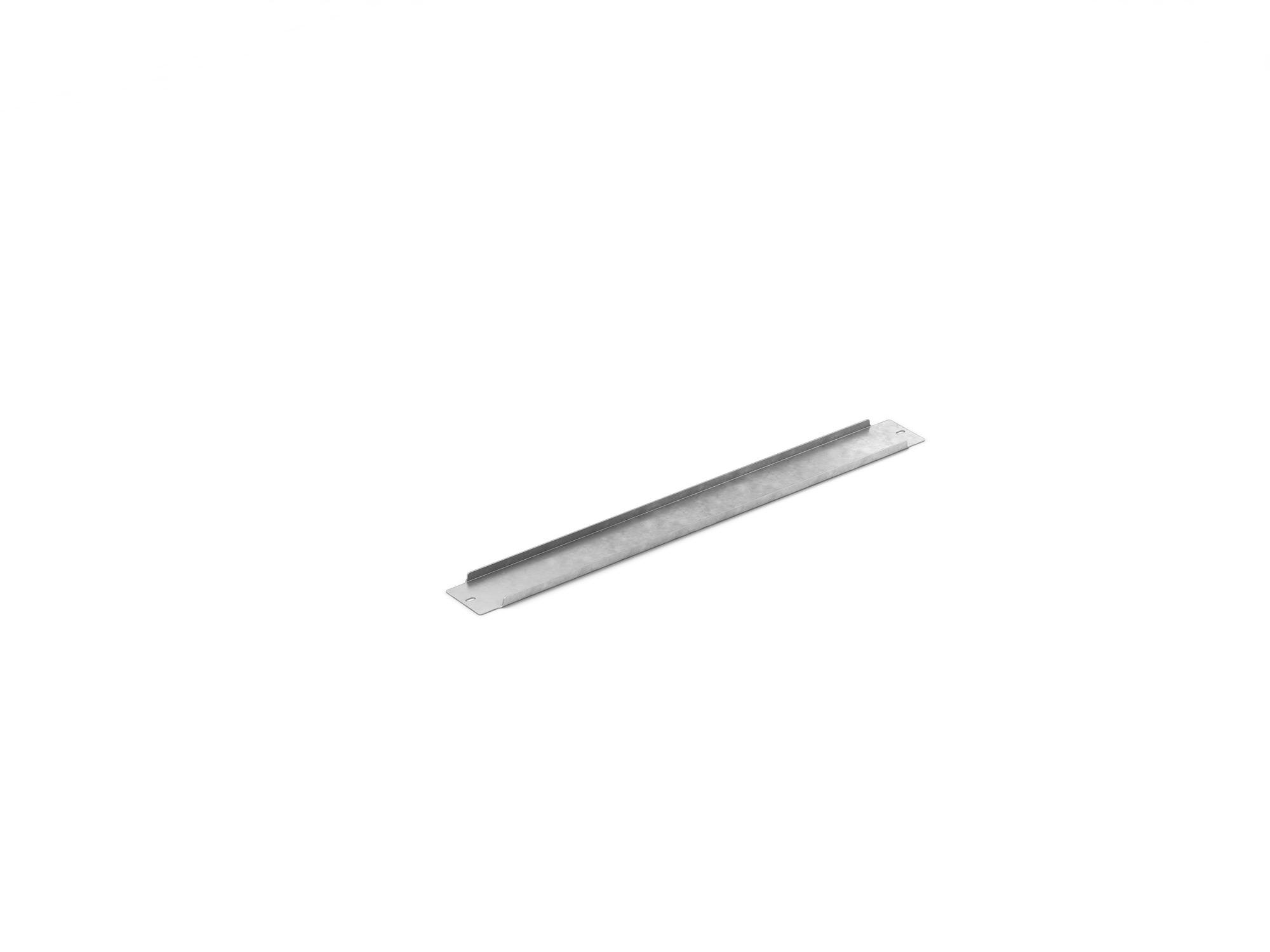 Railing Kick Plate 1000x100mm zm
70 €
Railing Kick Plate 1000x100mm zm
70 € -
×
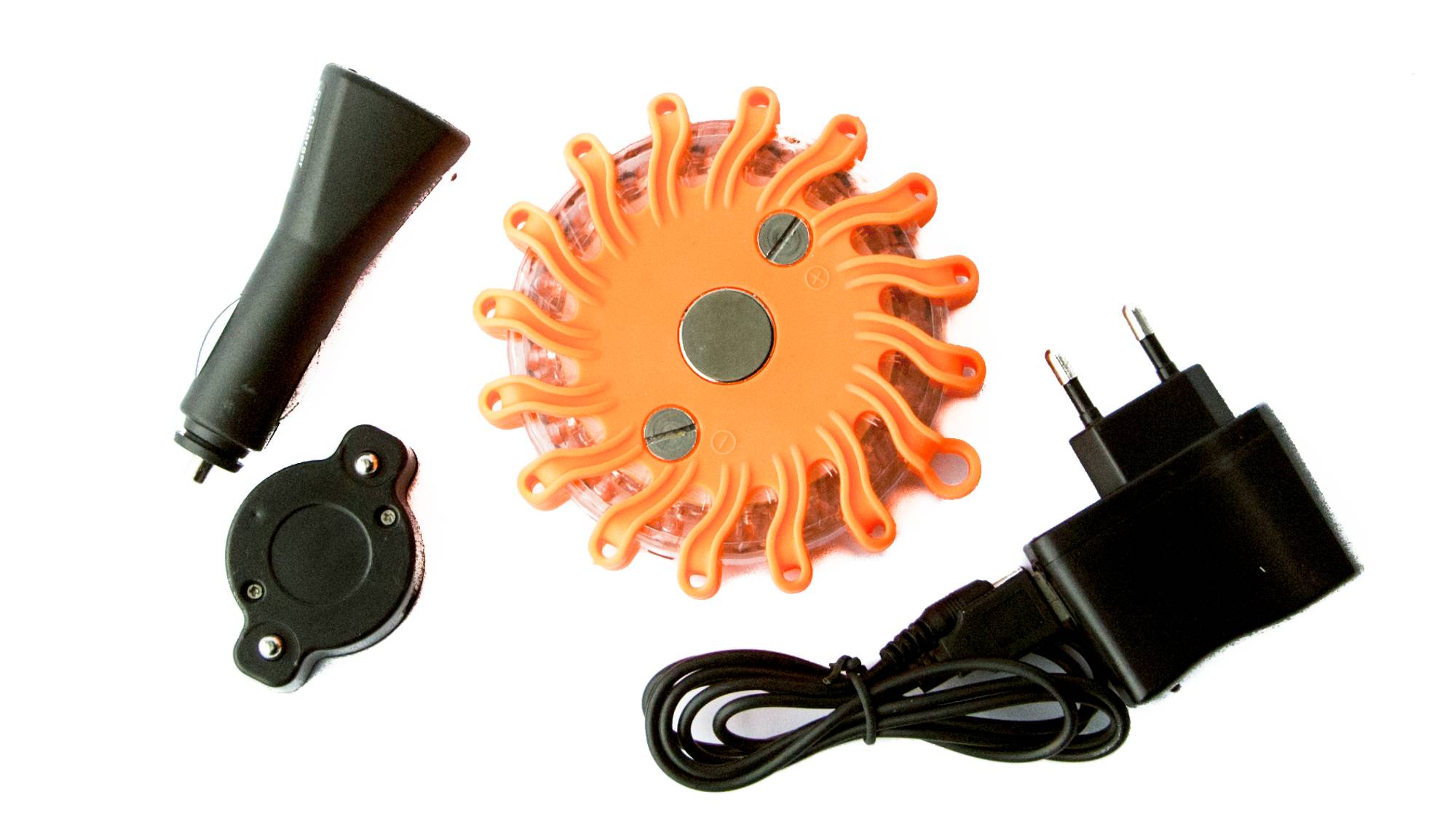 LED Warning Light, Amber - Compact 105 x 35 mm
100 €
LED Warning Light, Amber - Compact 105 x 35 mm
100 € -
×
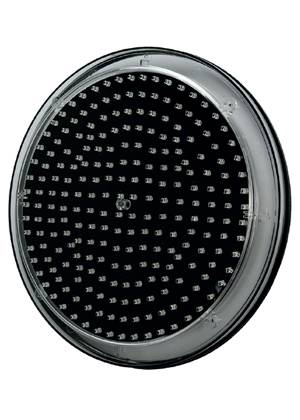 LED Warning Light - Diameter 300 mm
300 €
LED Warning Light - Diameter 300 mm
300 € -
×
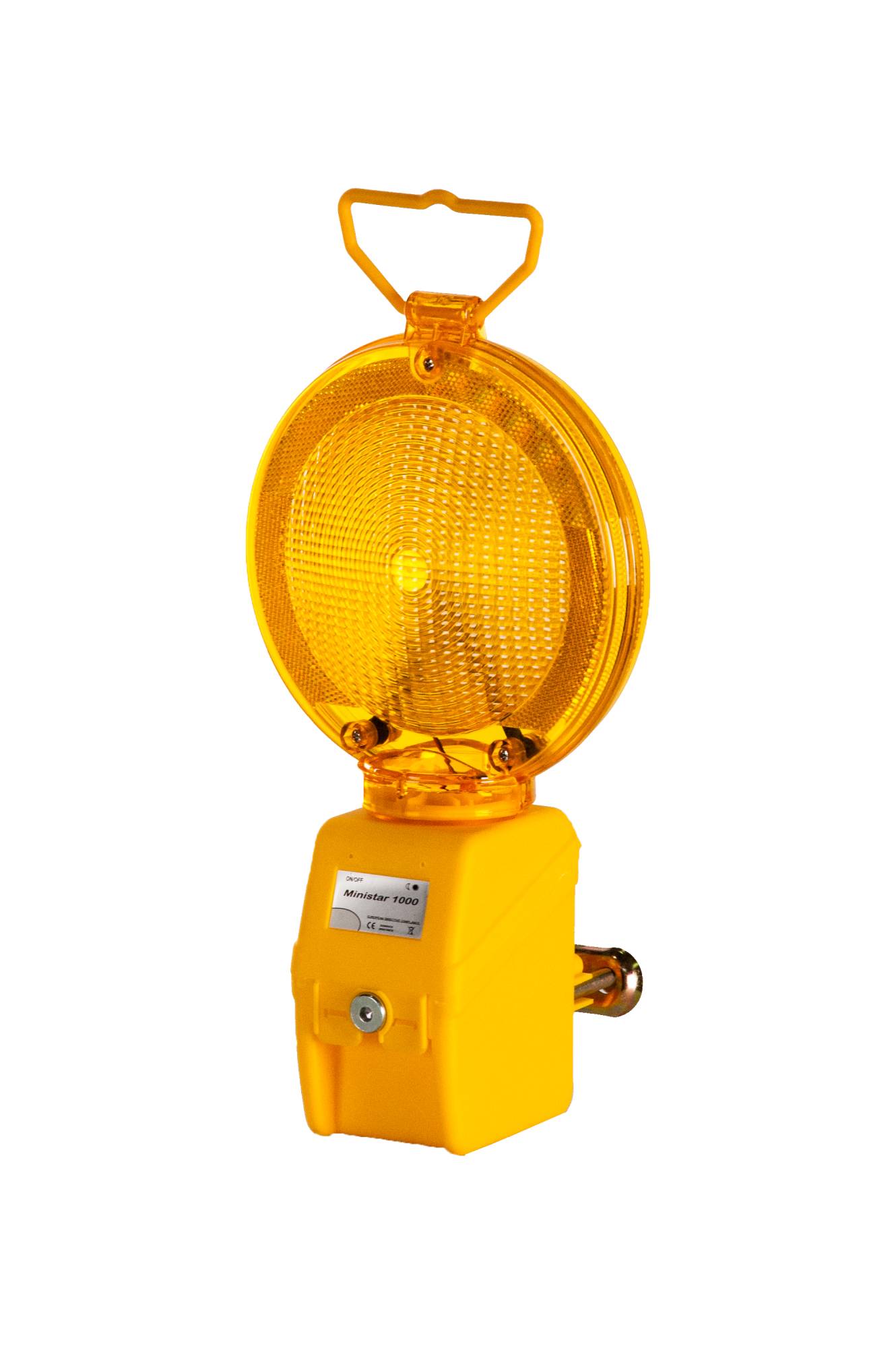 Yellow Road Work Warning Light 200 mm
88 €
Yellow Road Work Warning Light 200 mm
88 € -
×
 Warning Light Yellow - 200 mm
200 €
Warning Light Yellow - 200 mm
200 € -
×
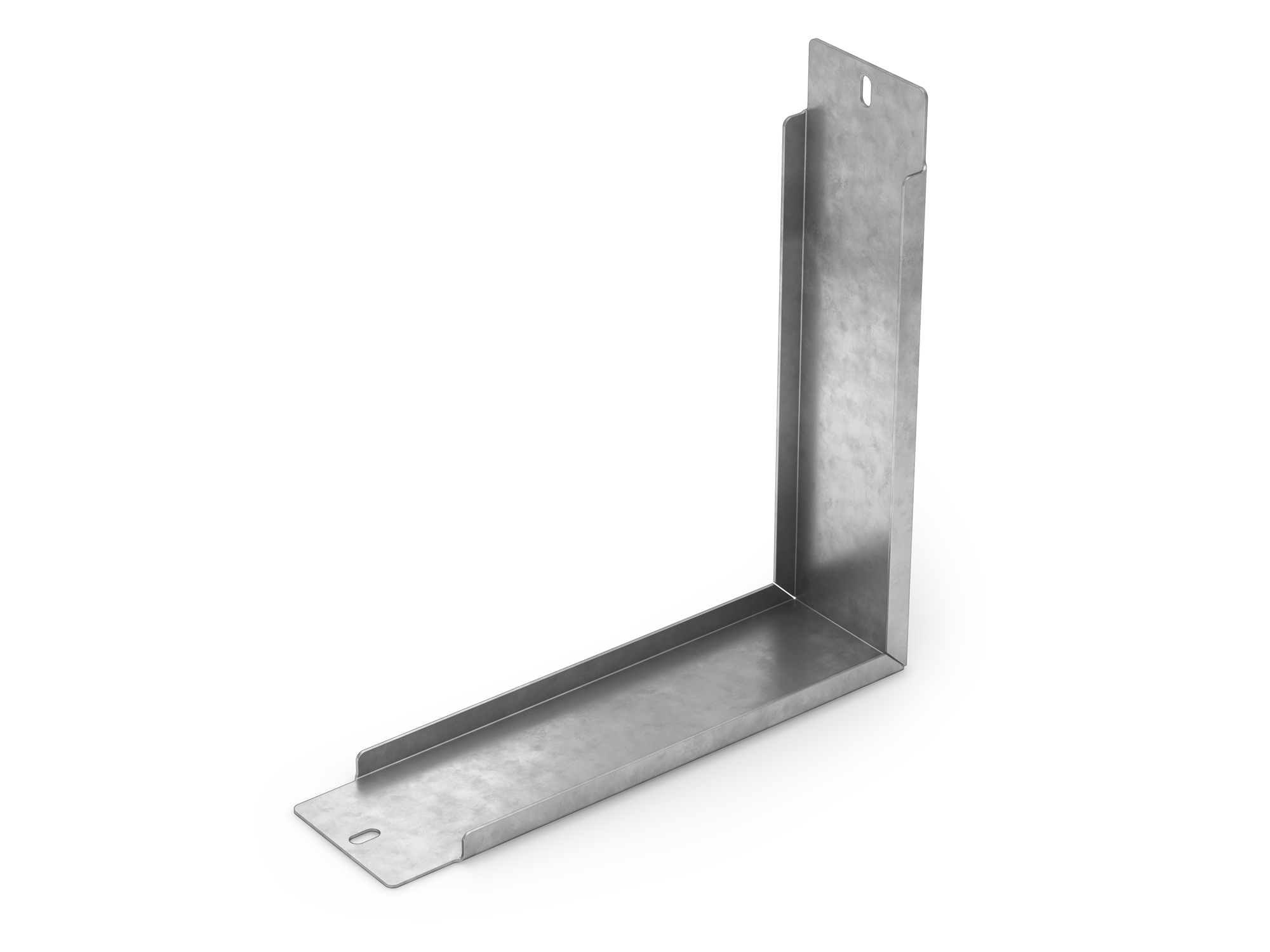 Kick Plate Inside Corner 400x400mm zm
52 €
Kick Plate Inside Corner 400x400mm zm
52 € -
×
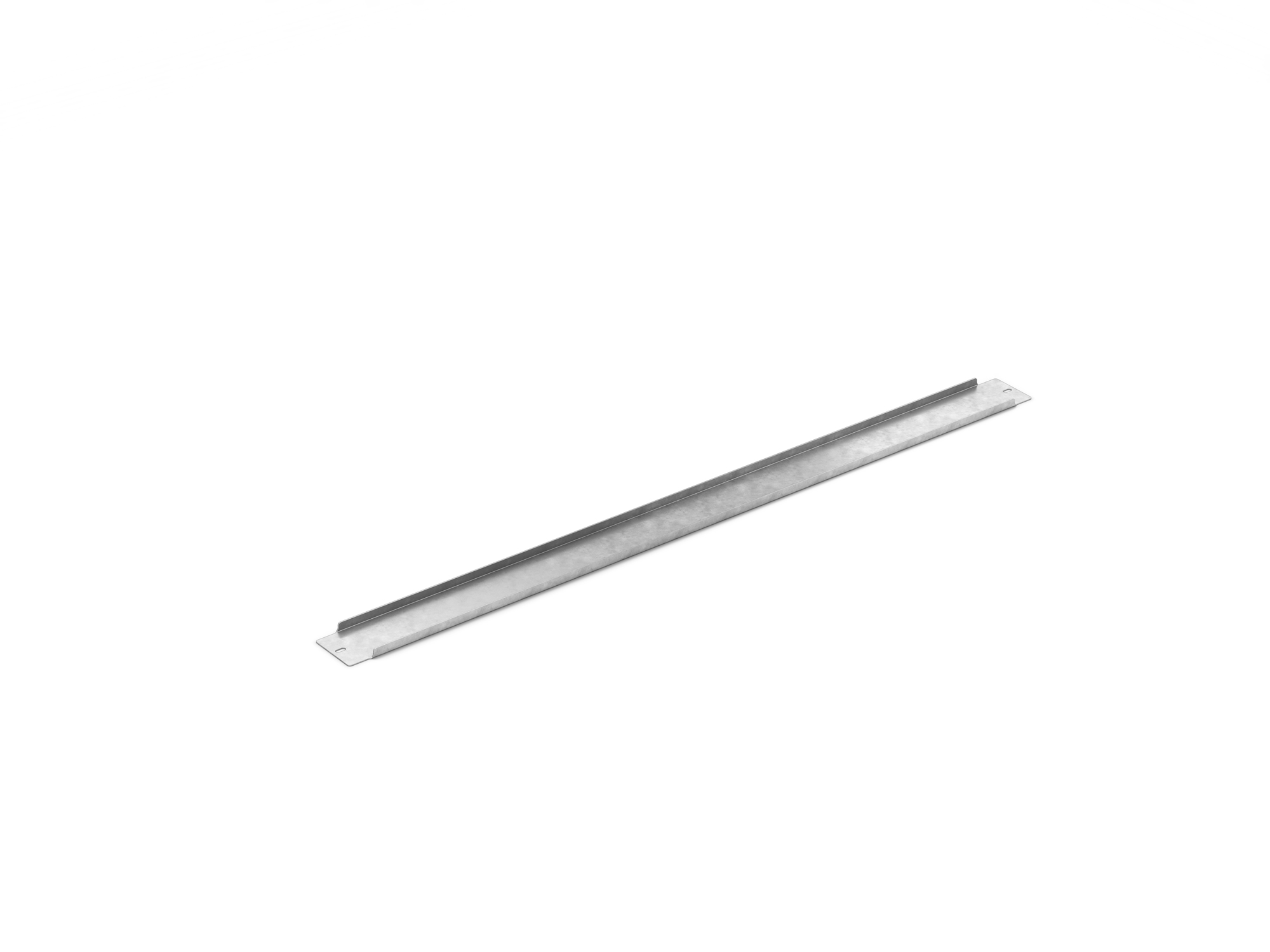 Railing Kick Plate 1500x100mm zm
44 €
Railing Kick Plate 1500x100mm zm
44 € -
×
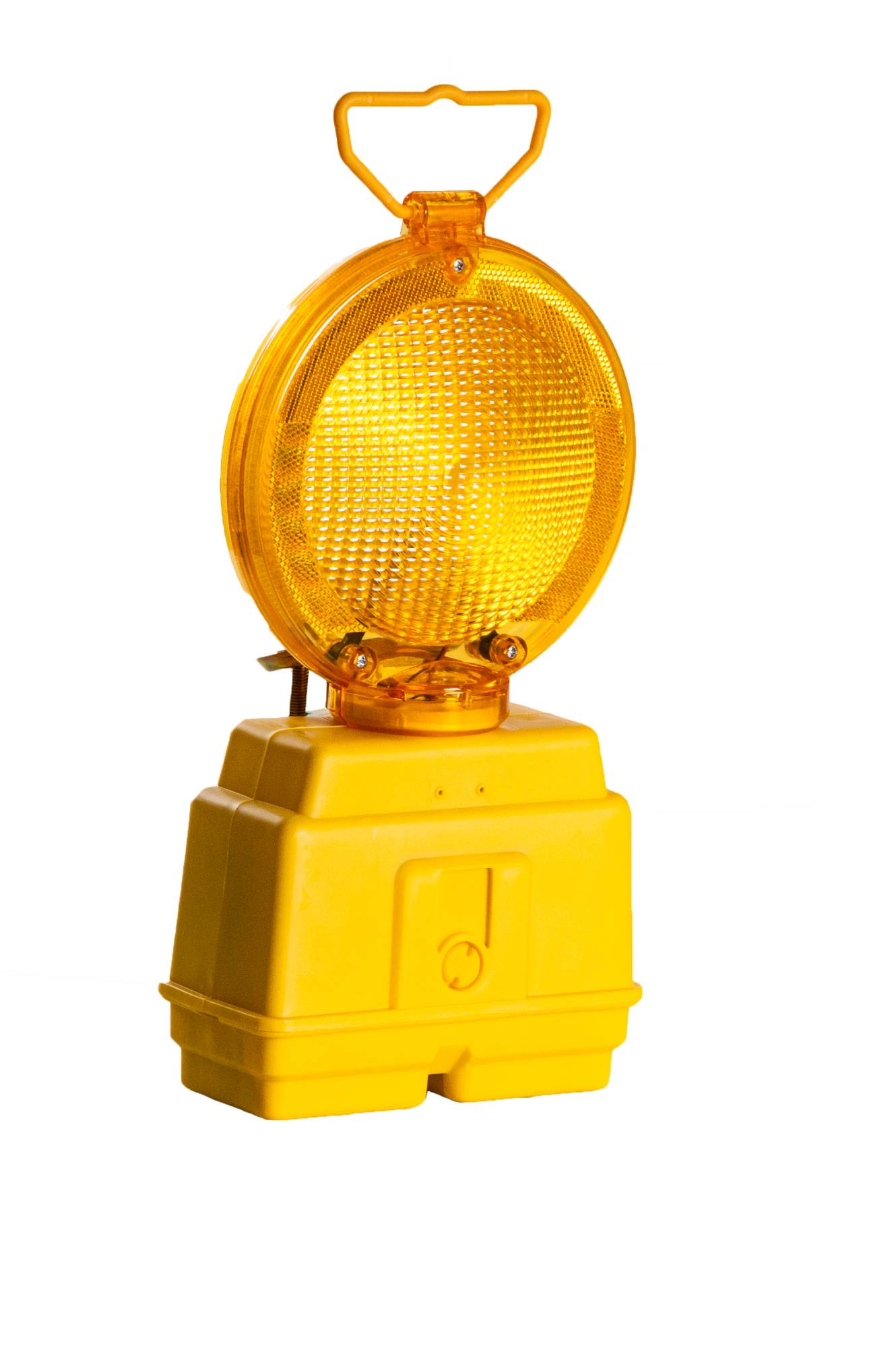 Warning Light Yellow - Diameter 200 mm
110 €
Warning Light Yellow - Diameter 200 mm
110 € -
×
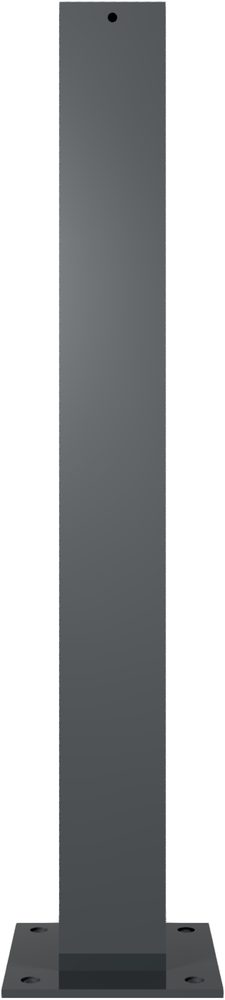 Bollard - 100 x 100 mm - Bolt-Down
240 €
Bollard - 100 x 100 mm - Bolt-Down
240 € -
×
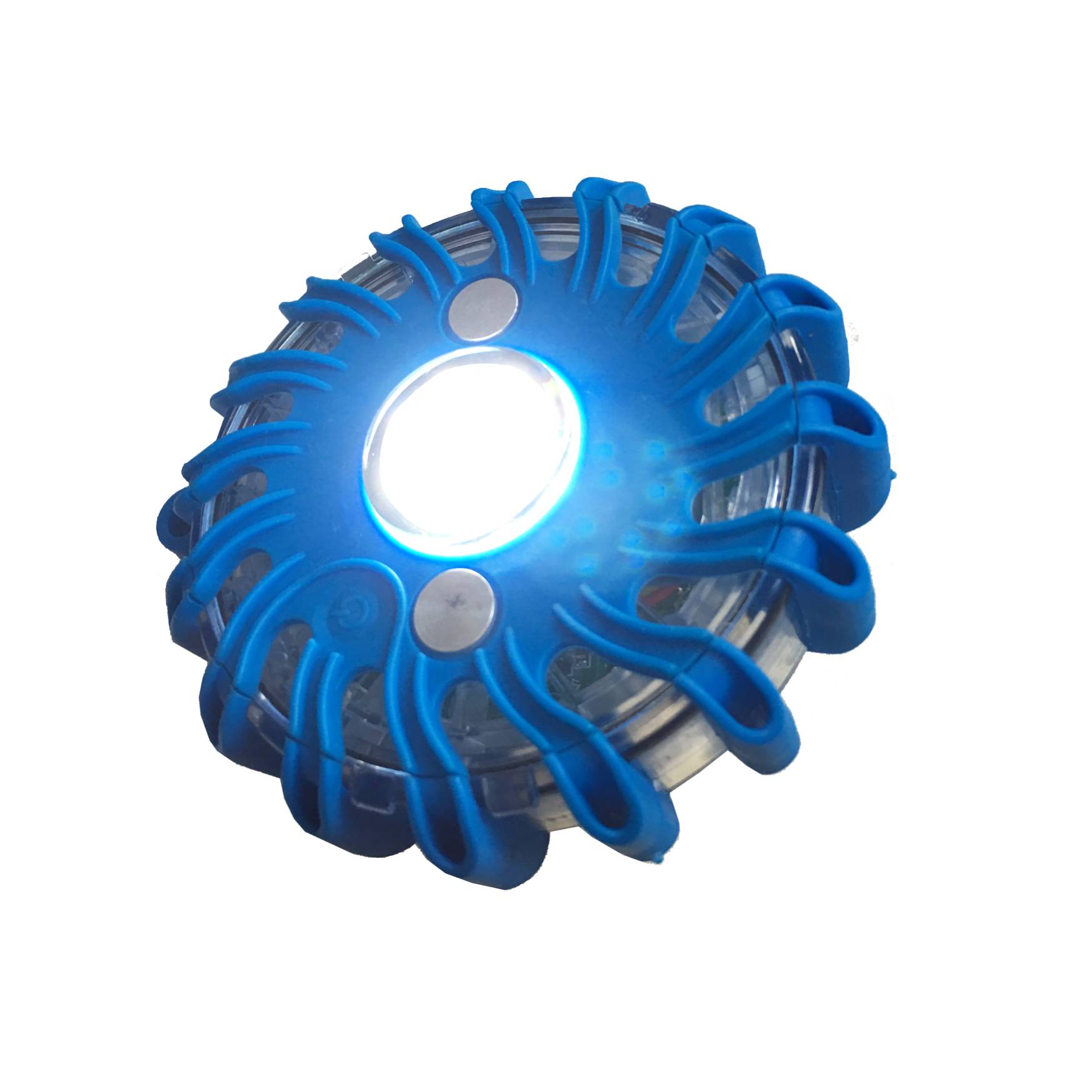 LED Strobe Light Blue - 105 x 35 mm
100 €
LED Strobe Light Blue - 105 x 35 mm
100 € -
×
 Bolt Kit, 10 pcs, M10x20mm
13 €
Bolt Kit, 10 pcs, M10x20mm
13 € -
×
 Bollard - 70 x 70 mm - Galvanized
130 €
Bollard - 70 x 70 mm - Galvanized
130 € -
×
 Mobile Pallet Rack Protector (Rack End Protector)
330 €
Mobile Pallet Rack Protector (Rack End Protector)
330 € -
×
 Bollard - 80 x 80 mm - Removable with Lock - Concrete-In
350 €
Bollard - 80 x 80 mm - Removable with Lock - Concrete-In
350 € -
×
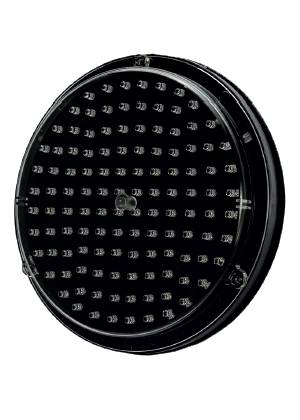 LED Warning Light 200 mm
200 €
LED Warning Light 200 mm
200 € -
×
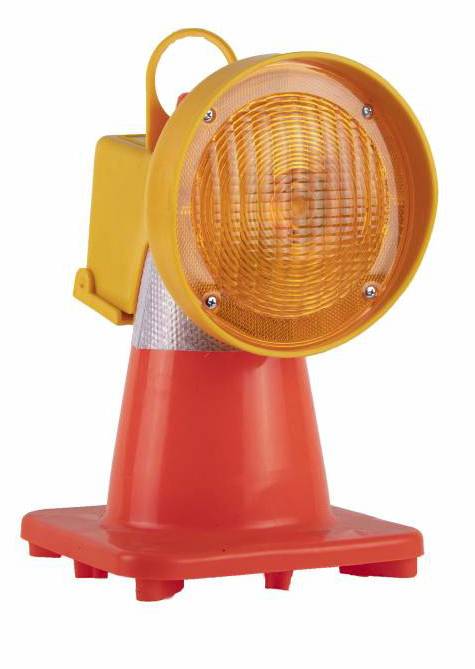 Warning Light Yellow - Diameter 200 mm
100 €
Warning Light Yellow - Diameter 200 mm
100 € -
×
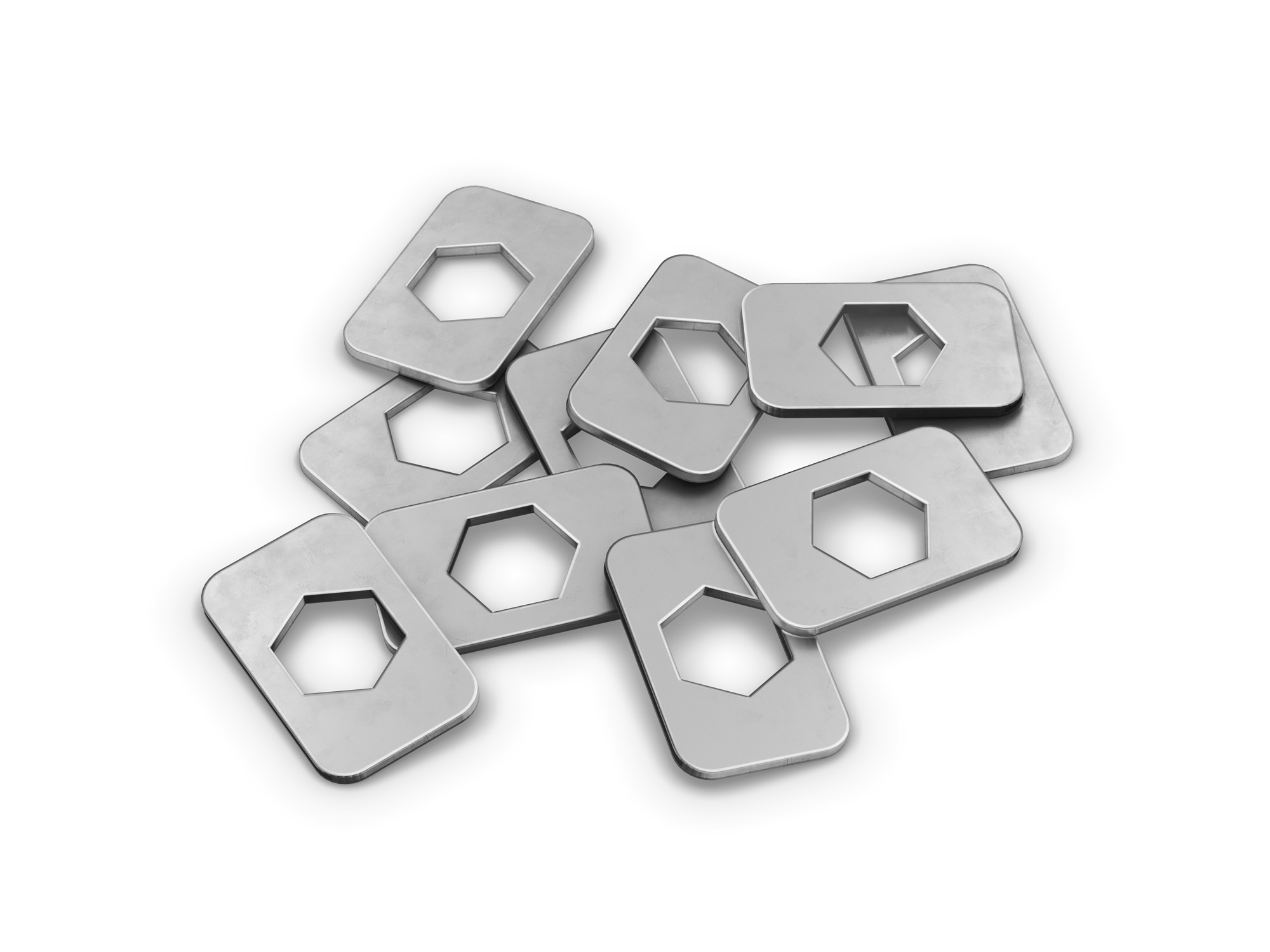 Lock Washer Bracket for Railing 10 pcs zm
20 €
Lock Washer Bracket for Railing 10 pcs zm
20 € -
×
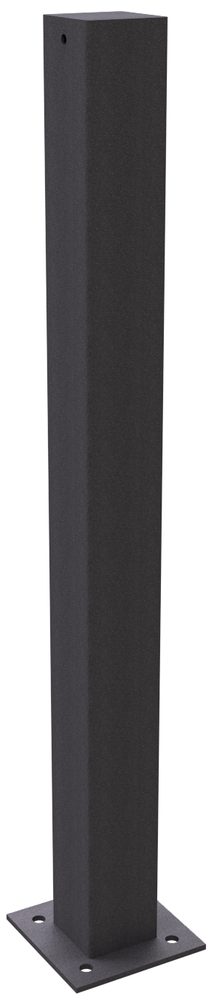 Bollard - 80 x 80 mm - Bolt-Down
220 €
Bollard - 80 x 80 mm - Bolt-Down
220 € -
×
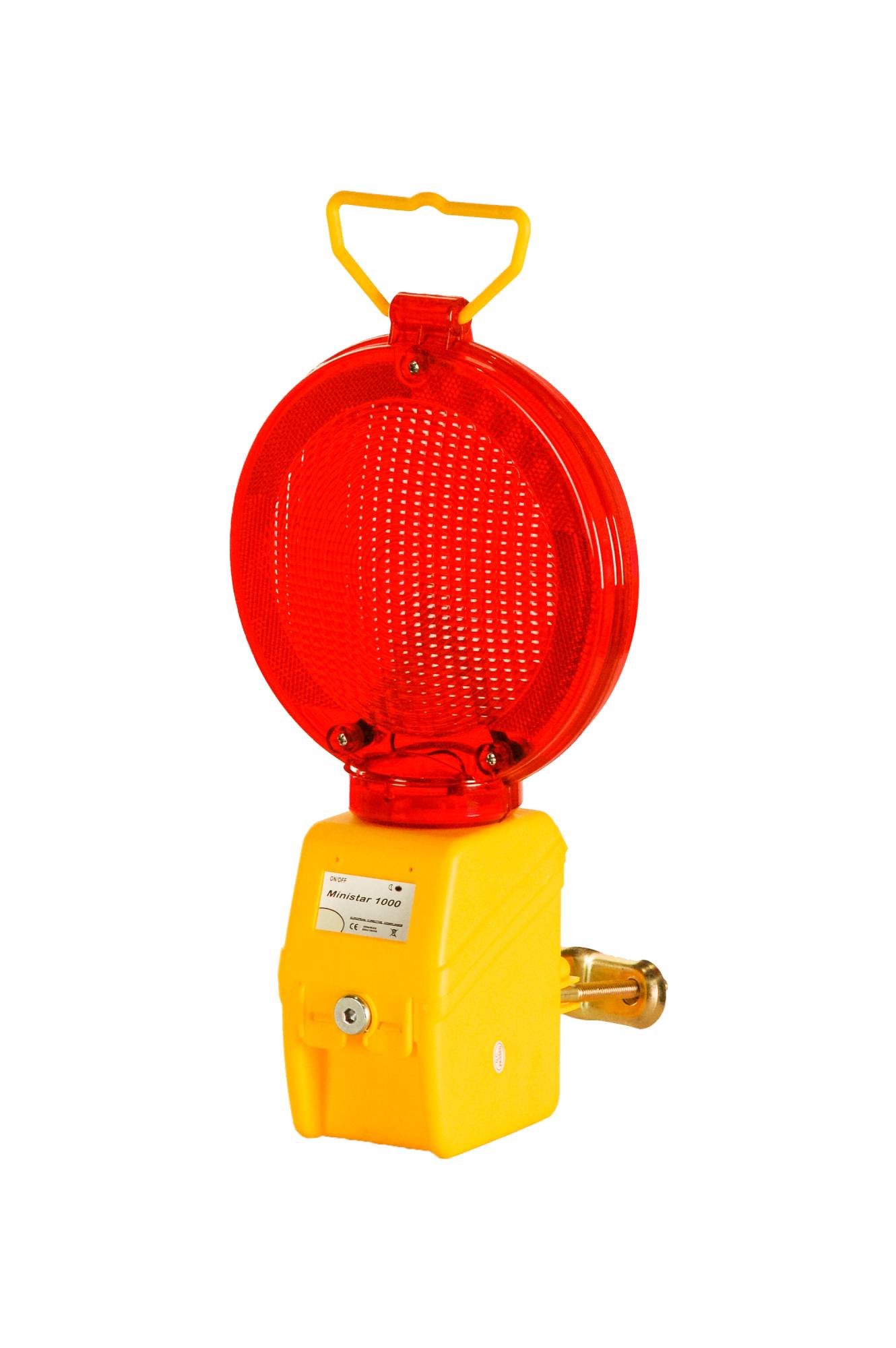 Warning Light Red 200 mm
88 €
Warning Light Red 200 mm
88 € -
×
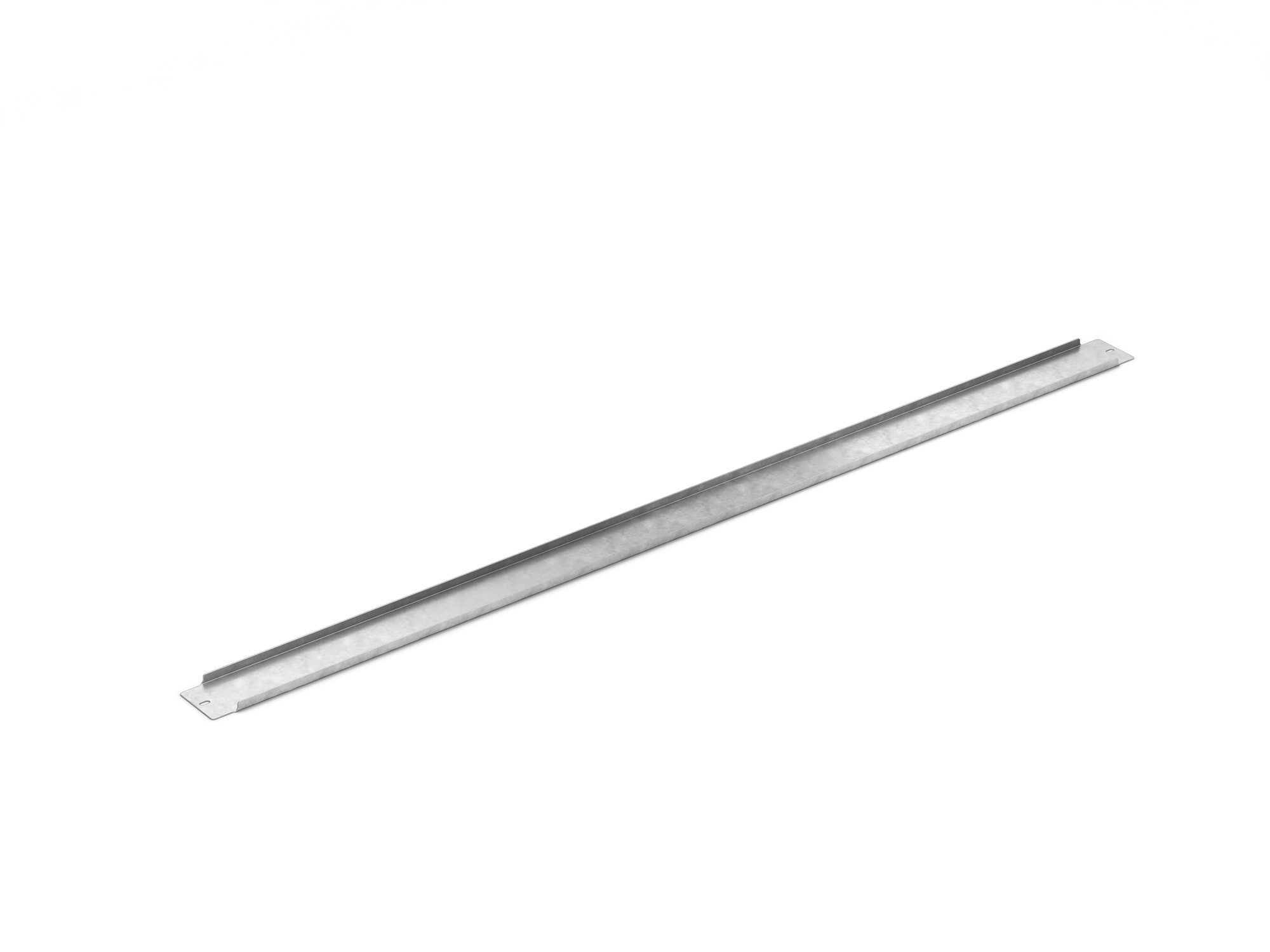 Railing Kick Plate 2000x100mm zm
98 €
Railing Kick Plate 2000x100mm zm
98 € -
×
 Warning Light Red 200 mm
88 €
Warning Light Red 200 mm
88 € -
×
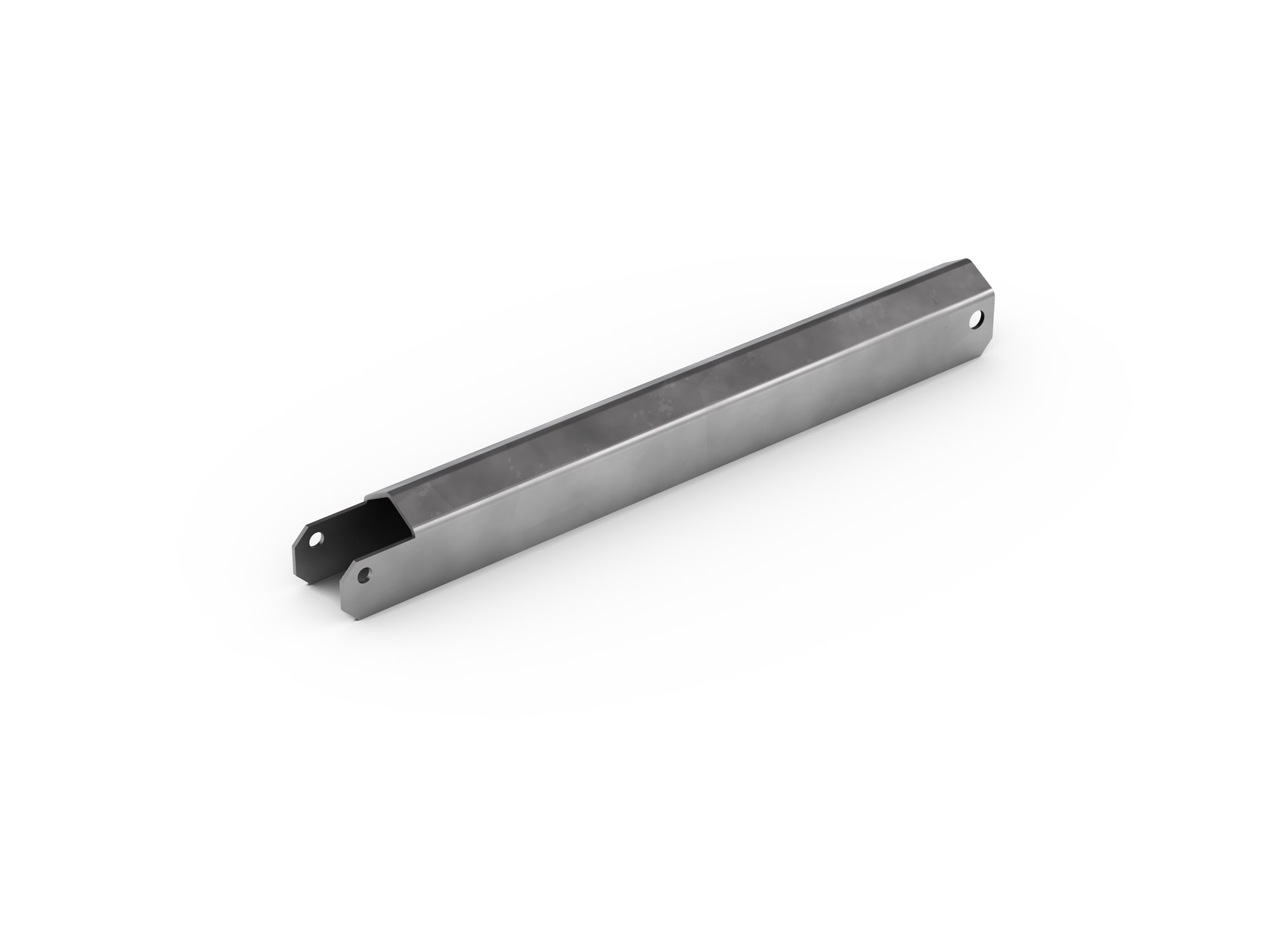 Drop Bar Lock, Complete, 42mm Tube, HDG
90 €
Drop Bar Lock, Complete, 42mm Tube, HDG
90 € -
×
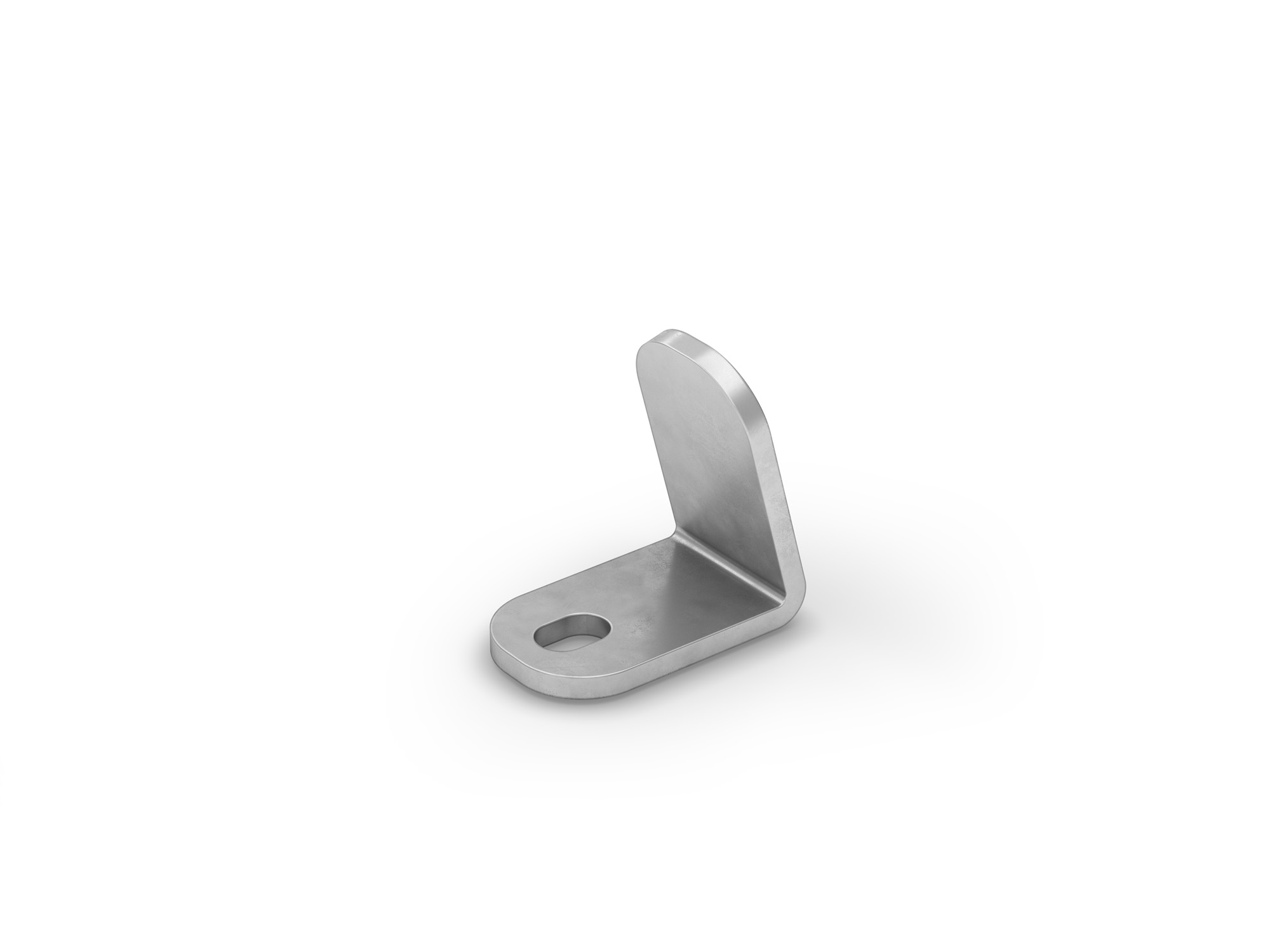 Wall Bracket for Railing Tube 42mm HDG
20 €
Wall Bracket for Railing Tube 42mm HDG
20 € -
×
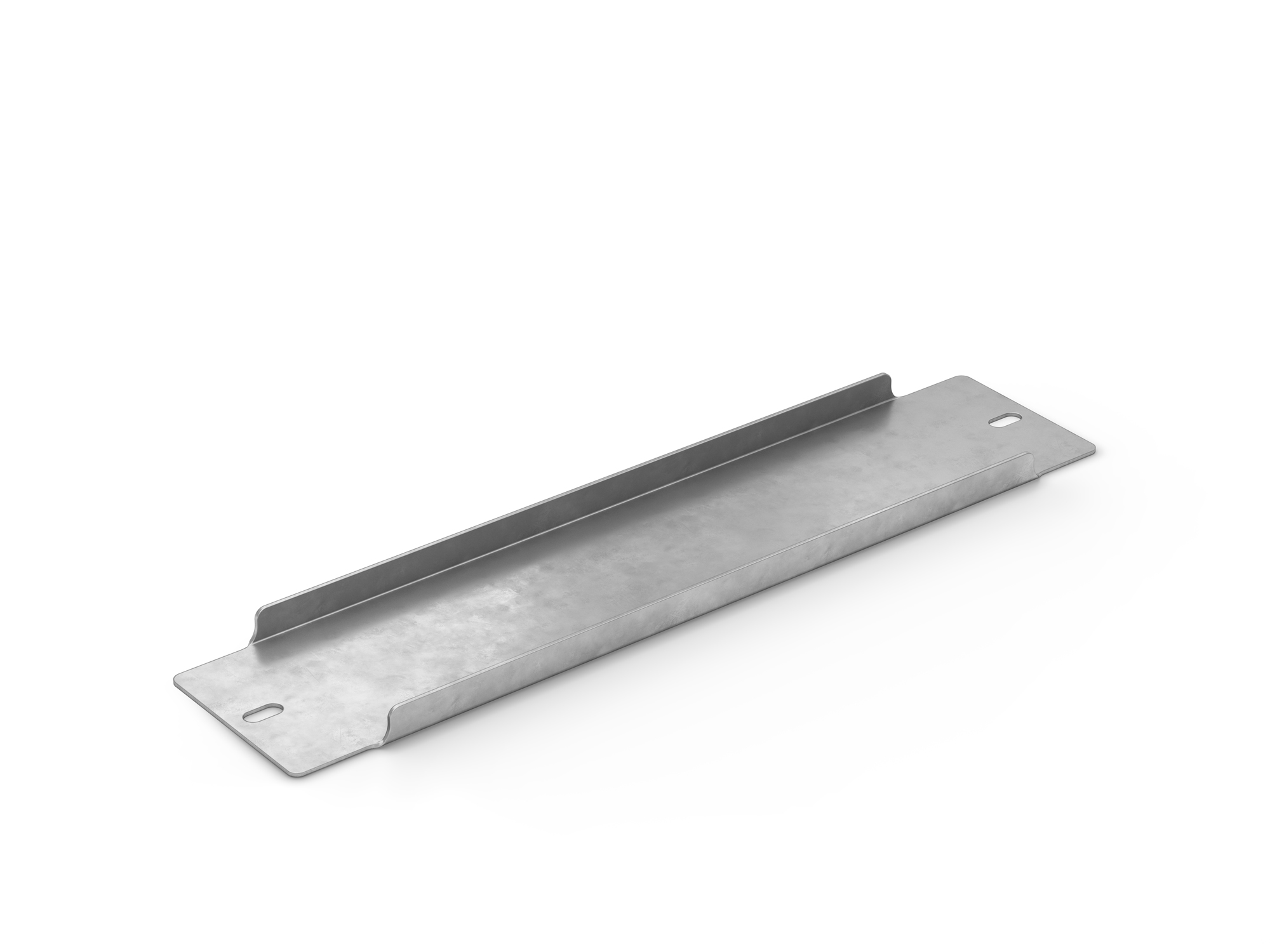 Railing kick plate 500x100mm zm
28 €
Railing kick plate 500x100mm zm
28 € -
×
 Corten Steel Bollard - Bolt-Down
300 €
Corten Steel Bollard - Bolt-Down
300 €
A Complete Guide to Wheel Stops for Safer Environments
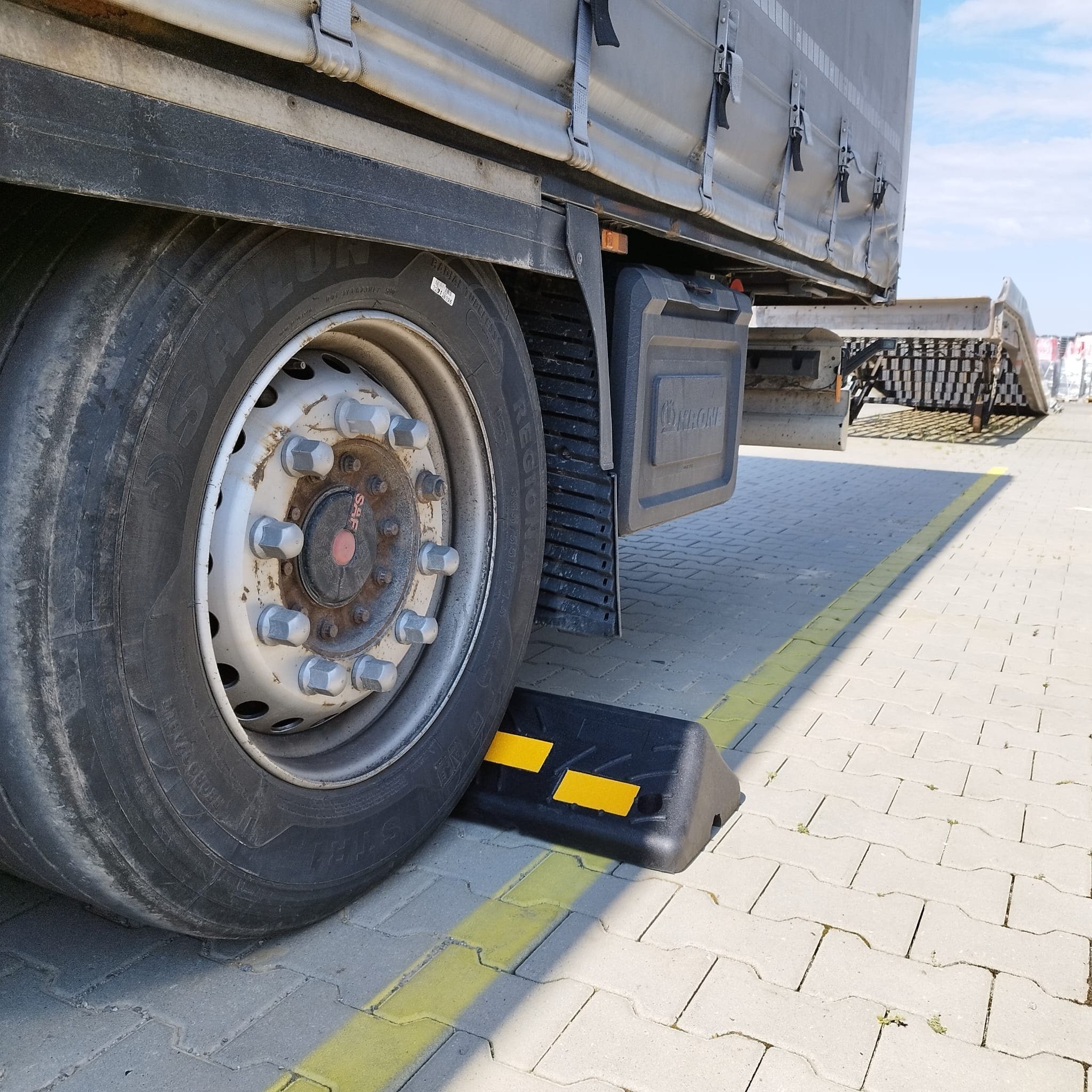
A wheel stop is much more than just a piece of rubber or concrete on the ground. Think of it as a silent attendant that guides drivers into the right position and prevents the small but oh-so-costly mistakes that happen every day in parking lots and industrial areas. A poorly parked car rolling into a building facade isn’t just a repair bill; it’s a safety risk that is easily avoided.
Why wheel stops are a smart investment for your property
Without a clear stop for vehicles, damage to facades, curbs and landscaped areas becomes an all-too-common sight. For a property owner, housing cooperative or business, these minor incidents can quickly add up to a major line item of repair costs and time-consuming paperwork. Have you ever received an invoice for repairing a damaged stucco facade or restoring a flattened planting bed? Then you know how quickly costs can spiral.
In that context, a simple wheel stop is a negligible expense. It protects both buildings and vehicles while creating a safer, more orderly environment for everyone.
Parking damage is hardly a new problem, but it has grown worse as Sweden’s vehicle fleet has expanded and space has become scarcer. According to Statistics Sweden (SCB), the number of cars per 1,000 residents rose from 306 in 1970 to 474 in 2015, putting enormous pressure on our parking areas. More cars in the same space simply increases the risk of vehicles rolling too far – damage that could easily have been avoided.
Protect your assets and create order
A well-planned wheel stop installation immediately raises the standard of your facility. It’s about taking control of the parking environment and minimizing risks before they even arise.
By physically marking where each parking space ends, you ensure that:
- Facades and walls are protected from unsightly marks and costly collisions.
- Walkways and sidewalks stay clear, which is essential for safety and accessibility, not least for pedestrians and people with disabilities.
- Plantings and landscaped areas are preserved instead of being driven over.
- All vehicles are parked neatly and uniformly, creating a professional, well-maintained impression.
A wheel stop is a fundamental part of a broader safety mindset, just as other impact protection safeguards staff and infrastructure inside a warehouse. To understand how different types of protection work together, read our guide on impact protection as a crucial investment in safety.
Here is a quick overview of the most common problems that occur without wheel stops and the direct benefits of installing them.
Common risks and how wheel stops solve them
| Problem area | Risk without wheel stops | Solution with wheel stops |
|---|---|---|
| Buildings & facades | Scrape marks and cracks from vehicles rolling too far. | Creates a safe distance and protects the facade. |
| Pedestrian safety | Cars block sidewalks and create dangerous situations. | Ensures walkways remain clear and safe. |
| Green spaces | Rutted lawns and ruined plantings. | Acts as a clear barrier that protects landscaped areas. |
| Parking efficiency | Uneven parking and poor use of space. | Ensures all cars park uniformly. |
Putting wheel stops in place is therefore a simple way to tackle several common and costly problems all at once.
Investing in wheel stops means replacing reactive repair costs with a proactive investment in safety. It’s a simple step that pays for itself through less damage, less administration and higher property value.
Need help choosing the right solution for your property? Whether you represent a housing cooperative, a logistics company or a municipality, we have the expertise to guide you. Contact us and we’ll help you create a safer, more functional environment.
How to choose the right material for your wheel stops
The choice of material is absolutely crucial to a wheel stop’s function, service life and appearance. The right material gives you a solution that withstands weather, stress and wear for many years. It’s simply a matter of matching the material’s features to the environment and the vehicles that operate there.
Choosing wrong can lead to unnecessary wear, damage to cars, or a wheel stop that doesn’t do its job at all. Think of it like tires on a car – you don’t drive on summer tires in a snowstorm. In the same way, a heavily trafficked loading dock requires a completely different material than an ordinary parking lot for passenger cars.
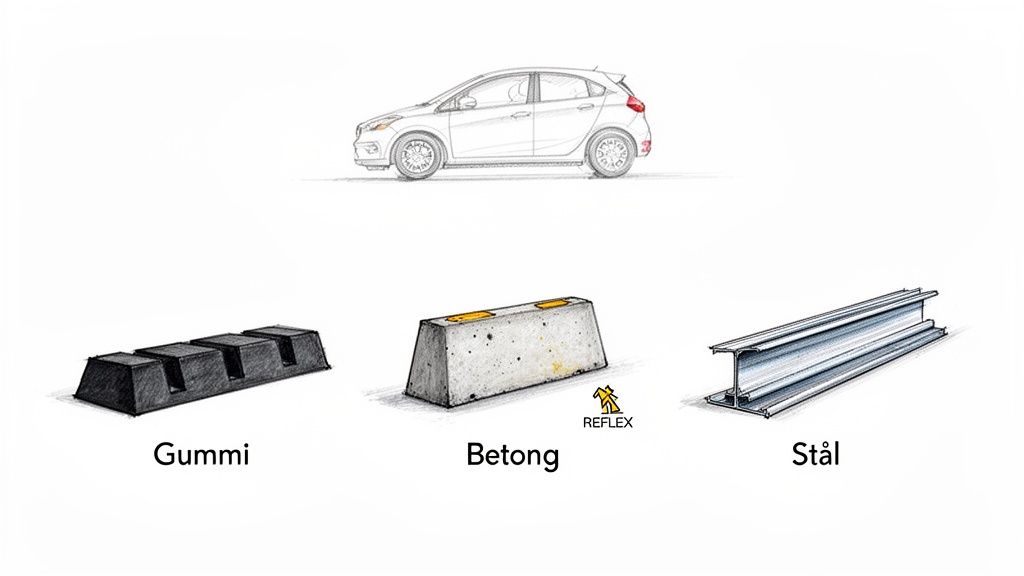
Rubber wheel stops for flexibility and gentle contact
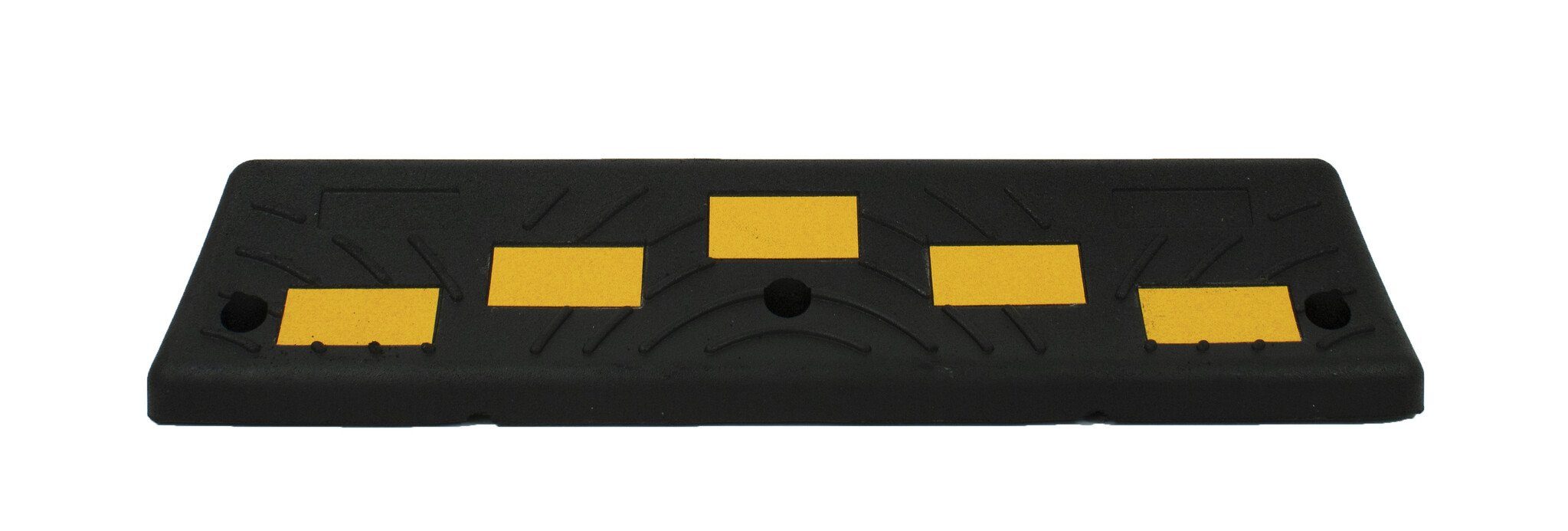
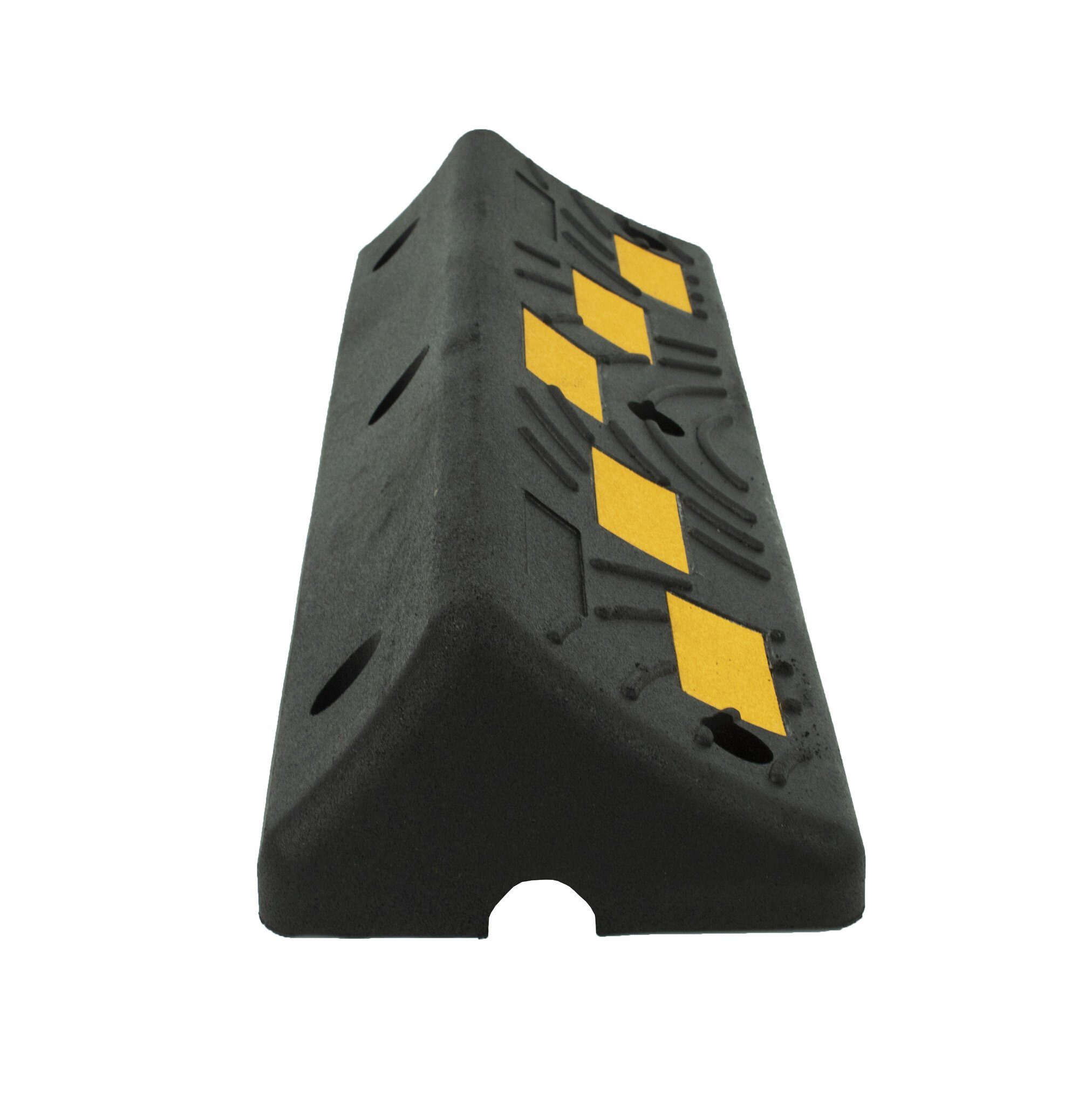
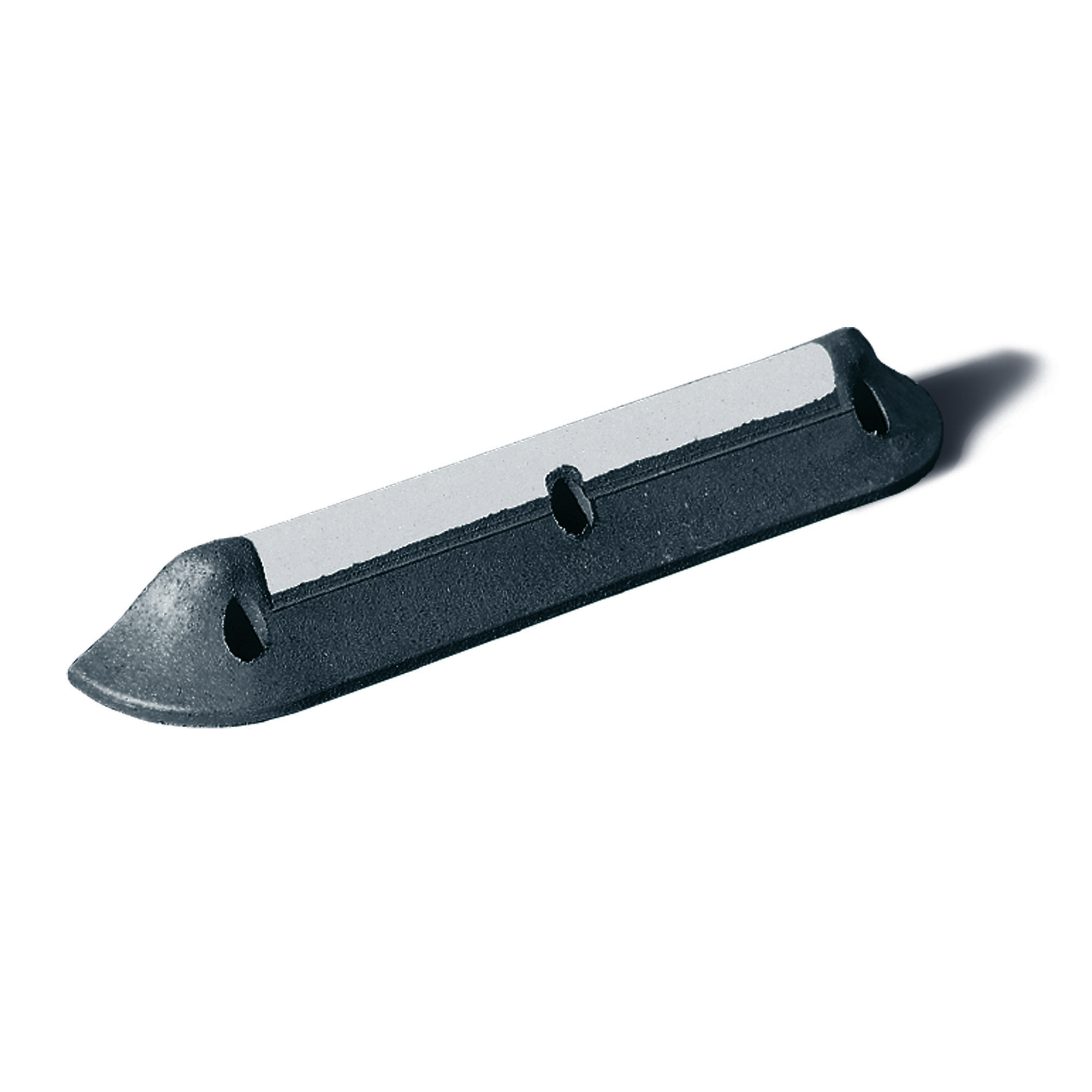
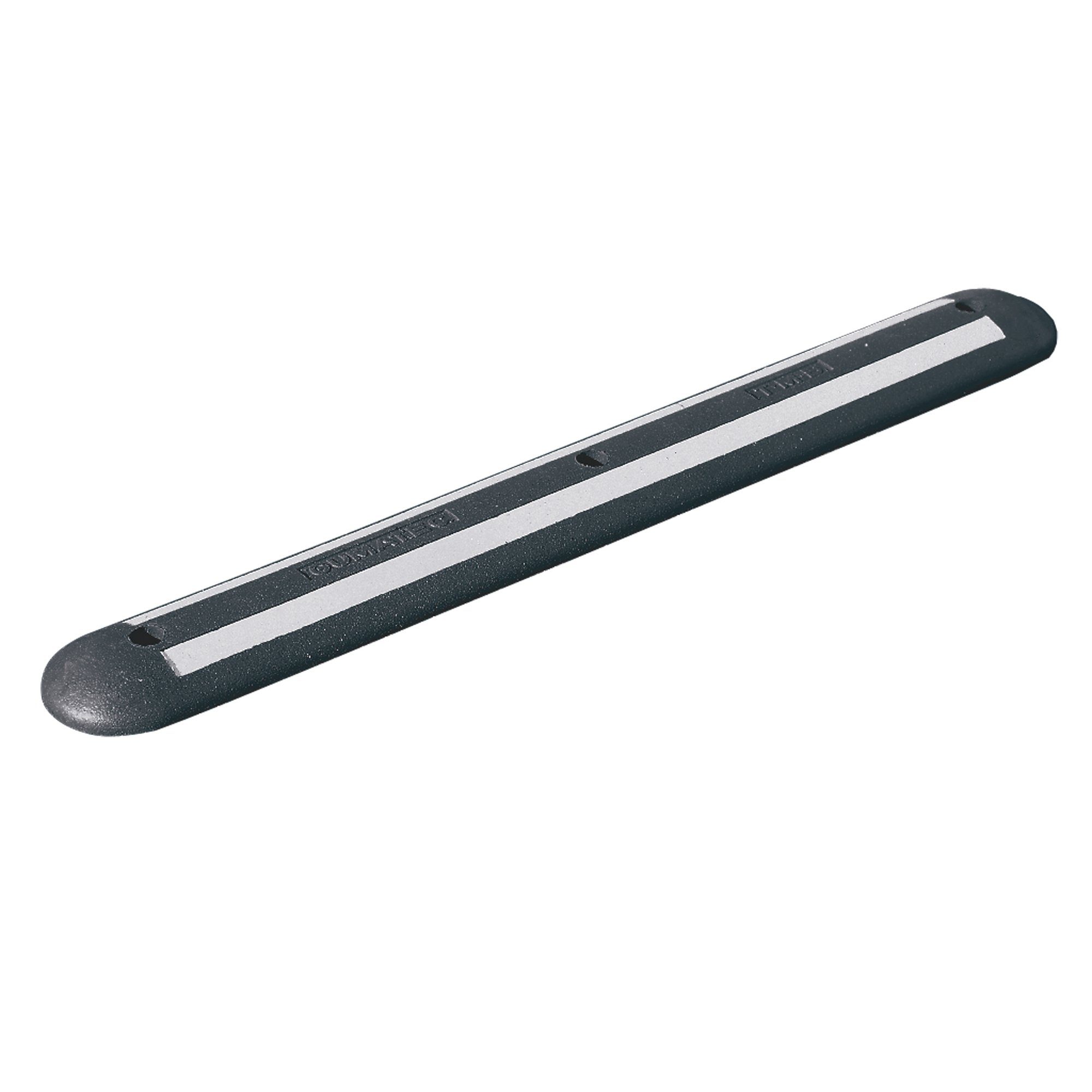
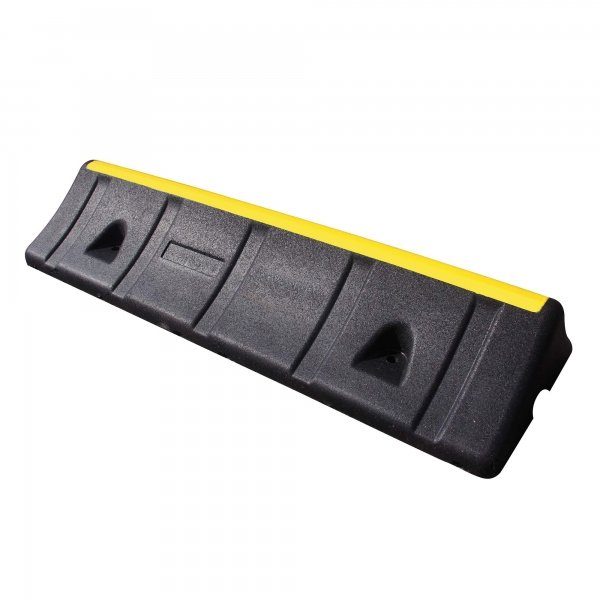
Rubber wheel stops, often made from recycled material, are by far the most common and versatile choice on the market. Their big advantage is flexibility. Rubber is gentle on vehicle tires and rims, reducing the risk of unsightly marks and damage if someone happens to bump into it a little too hard.
They are also easy to install on both asphalt and concrete. Thanks to their lower weight and flexibility, they are perfect for:
- Parking garages and carports where space is limited.
- Public parking lots at shopping centers and stores.
- Housing cooperatives looking for a durable, virtually maintenance-free solution.
Many models also feature built-in reflector strips, which dramatically increase visibility in darkness and bad weather. It’s an incredibly important safety detail that helps drivers park correctly and avoid accidents.
Concrete wheel stops for maximum robustness
When unbeatable strength and a permanent solution are required, concrete is the obvious choice. A concrete wheel stop is extremely heavy and robust, making it nearly impossible to dislodge.
This material is made for environments with heavy traffic where the risk of hard impacts is high. However, concrete is less forgiving toward vehicles and can cause damage in a collision. Installation is also more demanding and often requires lifting equipment.
Concrete is the solution when you need a barrier that is guaranteed to stay in place and can handle the toughest conditions, such as industrial areas and loading zones.
Steel wheel stops for design and industrial strength
In environments where both appearance and extreme durability matter, steel offers a combination that’s hard to beat. Steel wheel stops give a modern, sleek look while being incredibly durable. They are almost always hot-dip galvanized or powder-coated to resist rust and corrosion.
Steel is a perfect choice for design-conscious projects, such as modern office buildings or newly built residential areas. It is also a popular material in industry, where it needs to withstand impacts from forklifts and other heavy equipment. The same principle applies to other types of protection, which you can read more about in our guide to choosing materials for impact protection.
Material comparison
To make the choice a little easier, we’ve put together a table showing the key differences between the most common materials.
| Feature | Rubber | Concrete | Steel |
|---|---|---|---|
| Durability | Very good | Excellent | Excellent |
| Gentleness on vehicles | Very gentle | Not gentle | Less gentle |
| Weight | Low | Very high | Medium |
| Installation | Easy | Demanding | Moderate |
| Best suited for | Parking garages, housing cooperatives | Heavy industry, loading docks | Design-focused settings, industry |
| Visibility | Often with reflectors | Can be painted | Can be coated in a safety color |
The right wheel stop depends entirely on your specific needs. Are you a property manager who needs a cost-effective solution for a large parking garage? Then rubber is probably the best choice. Are you responsible for a warehouse and need to protect a loading dock from heavy trucks? Then concrete or steel is the way to go.
Still unsure which material is best for your project? Our team at Nordguard has extensive experience helping customers find the optimal solution. Get in touch and we’ll guide you to a safe and durable choice.
130 €
130 € excl. VAT
130 €
130 € incl. VAT
2 Variations
 Black
Black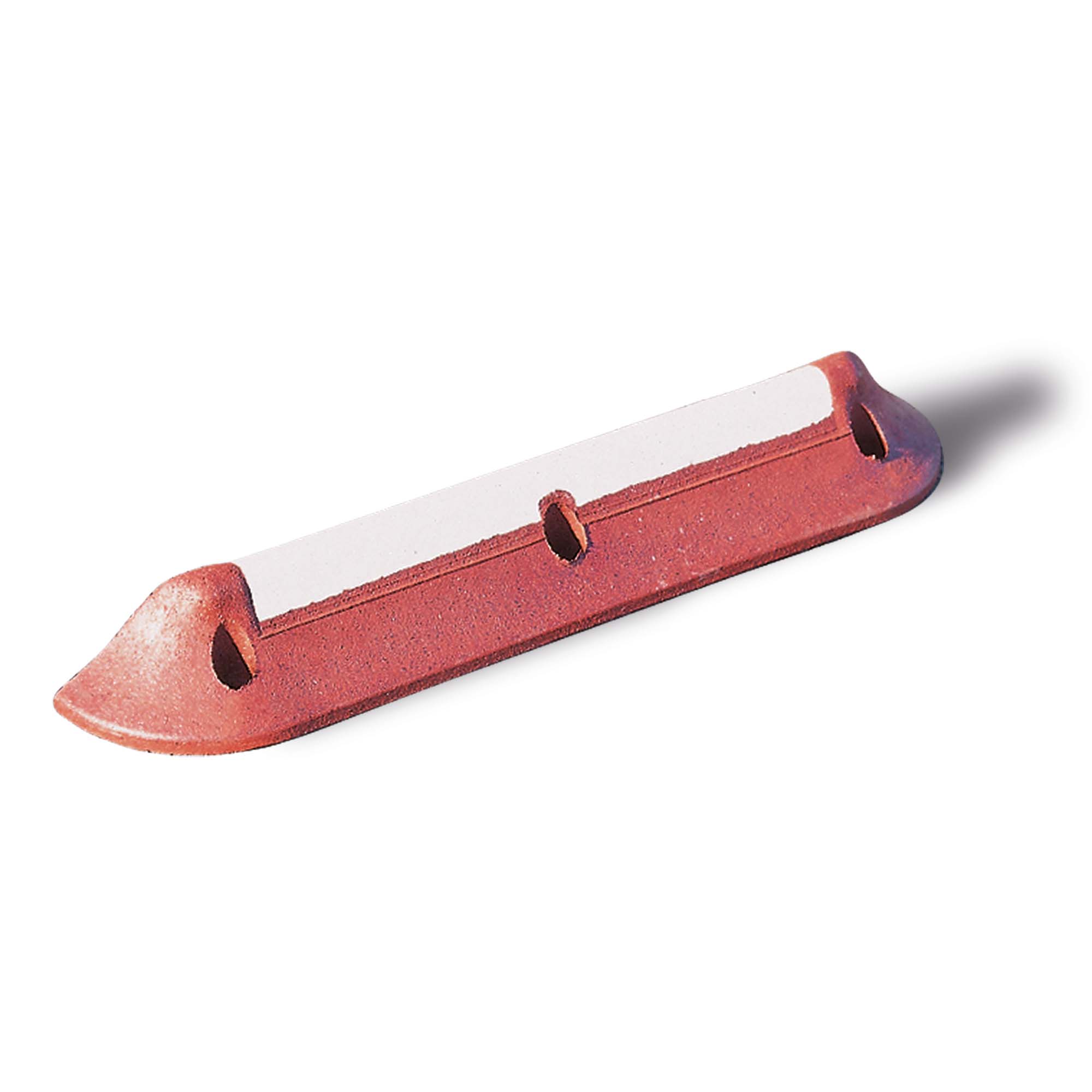 Red
Red
100 €
100 € excl. VAT
100 €
100 € incl. VAT
Popular
11 Variations
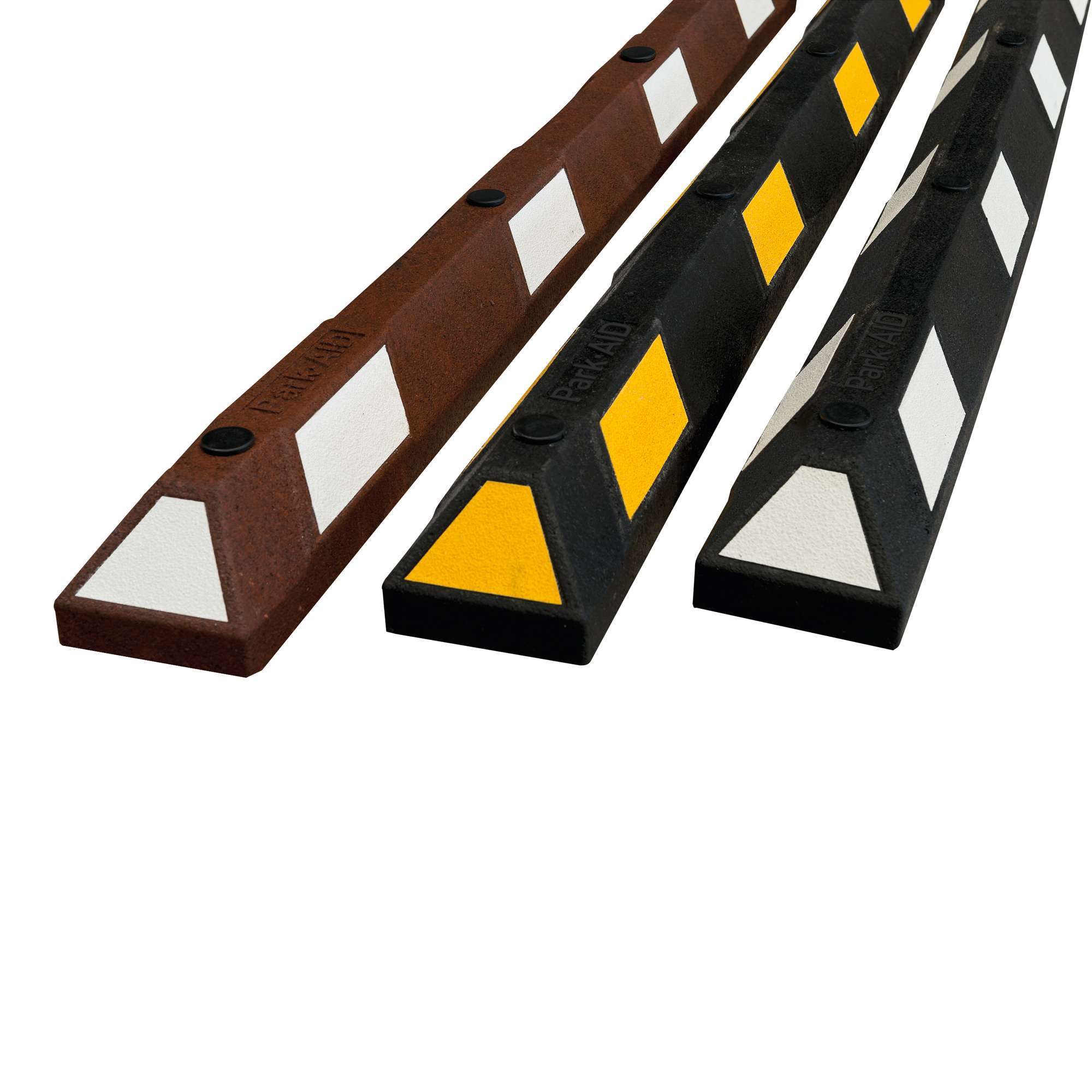
 Black
Black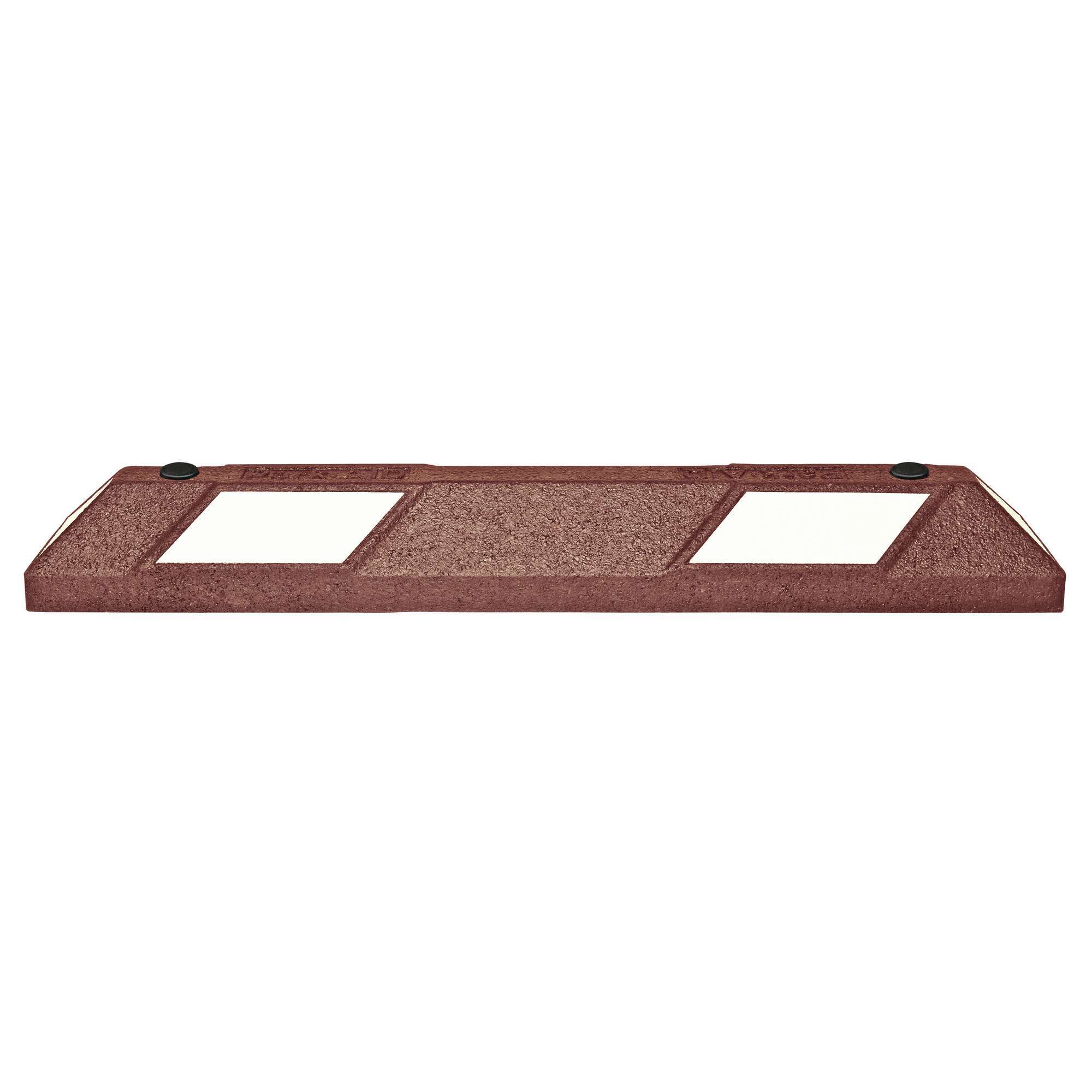 Red
Red
From: 47 €
100 € excl. VAT
From: 47 €
100 € incl. VAT
2 Variations
 Black
Black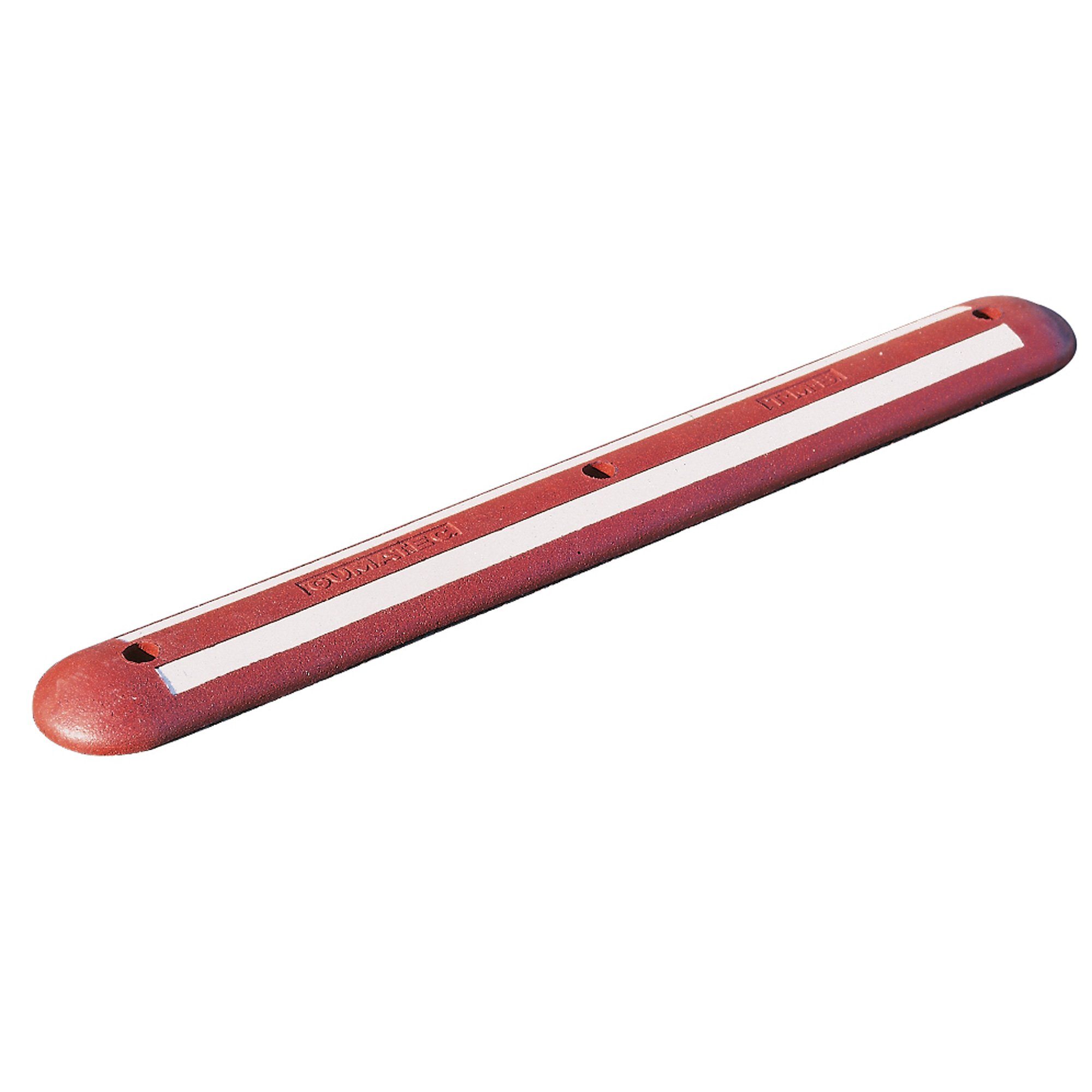 Red
Red
81 €
81 € excl. VAT
81 €
81 € incl. VAT
190 €
190 € excl. VAT
190 €
190 € incl. VAT
How to plan dimensions and placement for maximum safety
A wheel stop’s effectiveness depends entirely on being in the right place with the right dimensions. The margins are small. In the worst case, a poorly placed barrier can create new risks instead of solving the old ones.
It’s about understanding how vehicles behave. A solution with the wrong dimensions can lead to anything from a torn-off spoiler on a low car to a truck simply rolling over the stop as if it weren’t there. Planning is therefore the most important step in making your investment pay off.
Key dimensions for standard passenger cars
For most parking areas where passenger cars are the norm, there are well-proven standard dimensions that serve as an excellent starting point. These dimensions are designed to stop the car smoothly and effectively without damaging it.
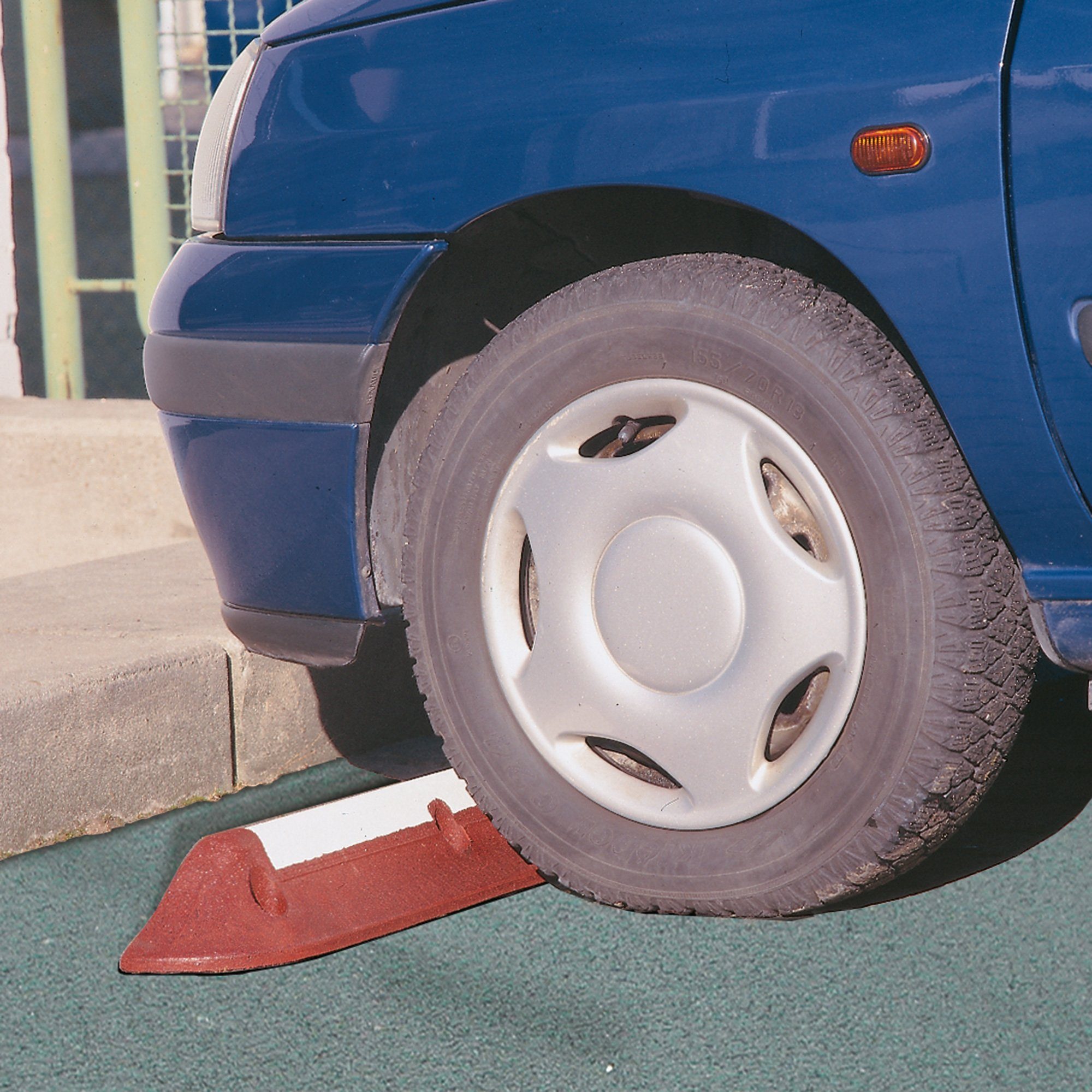
- Height: A wheel stop for passenger cars should be around 10 cm. That’s high enough for the tire to make solid contact, yet low enough for the spoilers and bumpers of most modern cars to clear it.
- Length: The length is matched to the width of the parking space. A good rule of thumb is to choose a wheel stop slightly narrower than the car’s track width. Lengths between 165 cm and 180 cm are common and cover both front wheels well.
- Setback placement: This is perhaps the most critical measurement. The wheel stop should be positioned so that the car’s overhang – the front ahead of the wheels – can pass over the stop without hitting a wall or curb. A recommended distance is approximately 80-90 cm from the surface you want to protect.
By following these guidelines, you get a solution that is safe for both vehicles and property. The same principle of safe distances applies whether you’re protecting a loading dock with impact protection or a walkway with bollards.
3 Variations


From: 320 €
320 € excl. VAT
From: 320 €
320 € incl. VAT
Popular
19 Variations
 Black/Yellow
From: 400 €
1 000 € excl. VAT
From: 400 €
1 000 € incl. VAT
Popular
7 Variations
From: 100 €
100 € excl. VAT
From: 100 €
100 € incl. VAT
300 €
300 € excl. VAT
300 €
300 € incl. VAT
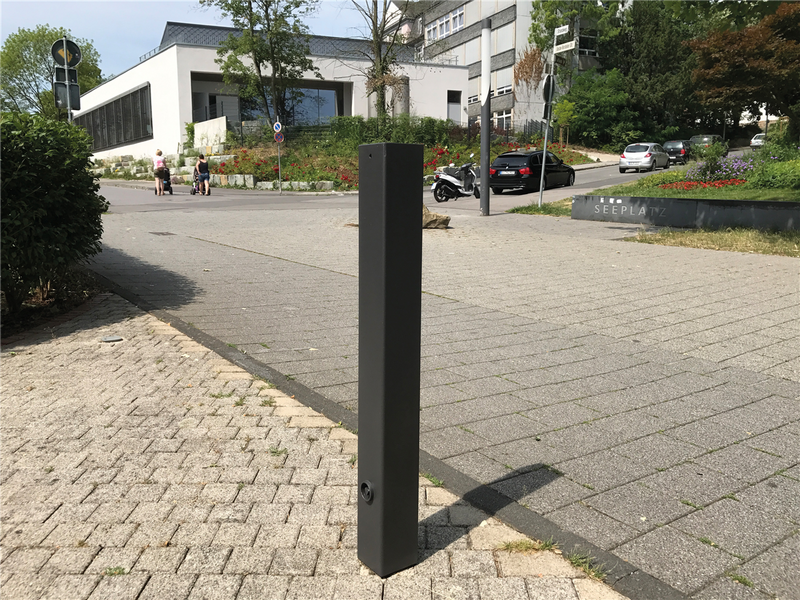
350 €
350 € excl. VAT
350 €
350 € incl. VAT
220 €
220 € excl. VAT
220 €
220 € incl. VAT

200 €
200 € excl. VAT
200 €
200 € incl. VAT

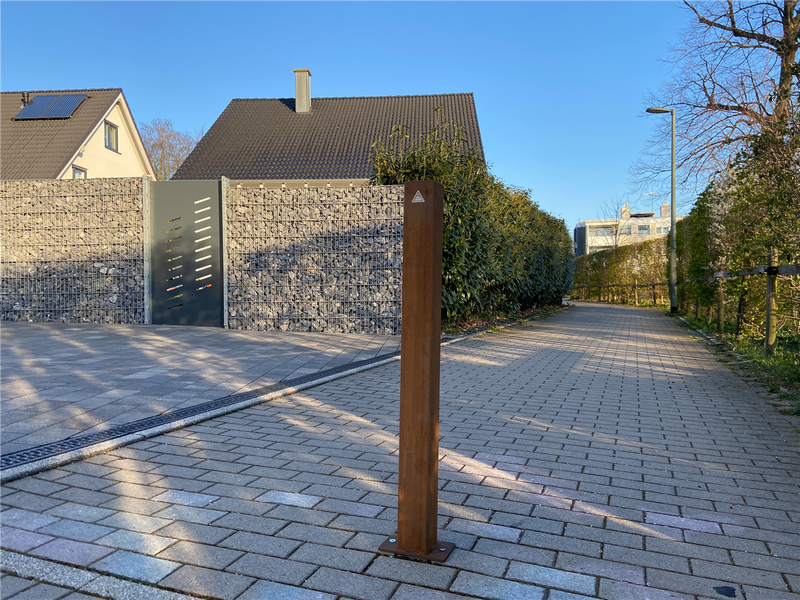
400 €
400 € excl. VAT
400 €
400 € incl. VAT
Adaptations for heavy vehicles and specialized environments
When it comes to trucks, buses and other heavy equipment in warehouse and logistics areas, standard dimensions simply aren’t enough. Much heavier-duty equipment and completely different planning are required.
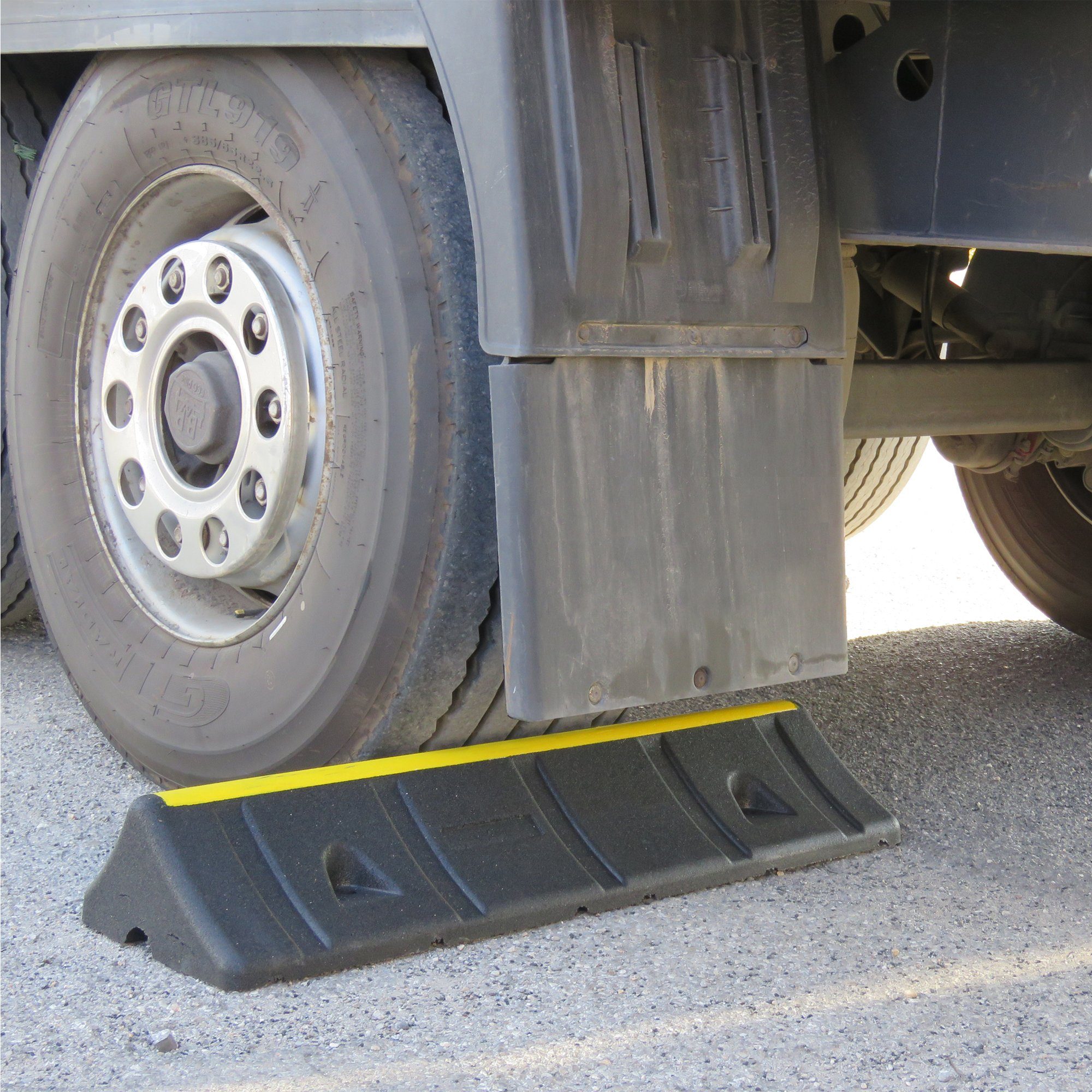
For heavy vehicles, the wheel stop’s function is more about guiding and acting as a final, clear barrier at low speed, such as at a loading dock. The height must be considerably greater, often between 15-25 cm, and the material must withstand extreme stress – such as steel or reinforced concrete.
Here it’s also essential to take the vehicle’s turning radius and wheelbase into account to position the stops correctly. A poorly placed barrier can instead become an obstacle that makes maneuvering more difficult.
Historically, safety products such as wheel stops have emerged as a direct result of Sweden’s growing reliance on cars. While Vision Zero, introduced in 1997, successfully reduced the number of serious traffic injuries, accidents in parking lots and warehouses have ended up in a statistical blind spot. This is a problem that directly affects groundwork contractors, where an estimated 20 percent of construction projects suffer delays due to incidents related to impact protection. Nordguard’s end-to-end solution, ranging from expertise in the planning phase to delivery of the right products, has reduced such incidents by up to 50 percent in municipal projects. Read more about Sweden’s progress toward safer environments at Riksgälden.
Checklist: planning for a safe installation
Use this checklist as support when planning the placement of your wheel stops. That way, you won’t miss any important details.
- What type of vehicle? Is it mostly passenger cars, only trucks, or a wide mix? The answer determines the choice of height, length and material.
- Measure the parking space. Double-check width and depth to choose the right wheel stop length and get the placement right.
- What needs protecting? Measure the distance to the wall, sidewalk or lawn you want to keep cars away from.
- Calculate the overhang. Make sure there’s enough room for the front or rear of the car. The standard measurement of 80-90 cm is a good starting point.
- Check accessibility. Wheel stops must not block walkways or emergency exits or create obstacles for people with reduced mobility.
Planning dimensions and placement can feel tricky, and every facility has its own unique challenges. If you feel unsure or are facing a larger project where safety is paramount, don’t hesitate to contact us at Nordguard. Our experts can help with everything from assessing your needs to drawing up a detailed plan for a guaranteed safe and functional installation.
How to install wheel stops on asphalt and concrete
Proper installation is essential for a wheel stop to stay securely in place, year after year. The method and choice of anchoring must be fully adapted to the surface – otherwise you risk the entire investment coming loose and, in the worst case, becoming a safety hazard. It’s a crucial detail that separates a professional, durable solution from one that only creates future problems.
The difference between asphalt and concrete is fundamental. Asphalt is a softer, more dynamic material that moves with temperature, while concrete is rock-hard, rigid and brittle. Using the wrong anchoring is like trying to drive a screw into water. It will never hold.
Installation in asphalt – length and grip are key
Anchoring something heavy in asphalt requires a method that can handle the material’s soft nature. Ordinary screws or short bolts are the wrong way to go, because asphalt simply doesn’t provide enough resistance for the threads to grip. Instead, you have to go deep to create stability.
For this job, long asphalt spikes or rebar are by far the best solution. These are driven through the wheel stop, through the asphalt and deep into the gravel base course beneath.
- Length: Aim for anchors at least 30–50 cm long. That way, they reach the stable material below the asphalt layer itself.
- Grip: The ribbed surface of rebar creates an excellent mechanical grip that prevents the spike from slowly but surely working its way back up.
- Technique: Holes are almost always pre-drilled to make installation easier and ensure the spike goes straight down without damaging the wheel stop.
A classic mistake is using anchors that are too short and only hold in the asphalt itself. When the summer sun heats the surface, it softens, and pressure from a vehicle can easily cause the entire wheel stop to start rocking and come loose. A specially developed composite anchor for asphalt is a perfect example of a product designed to counter exactly this problem.
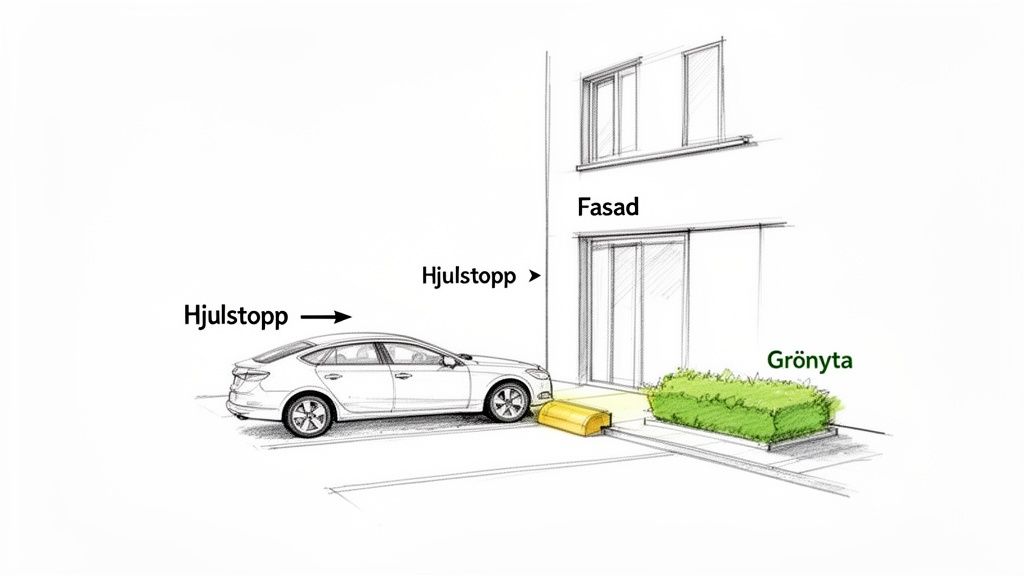
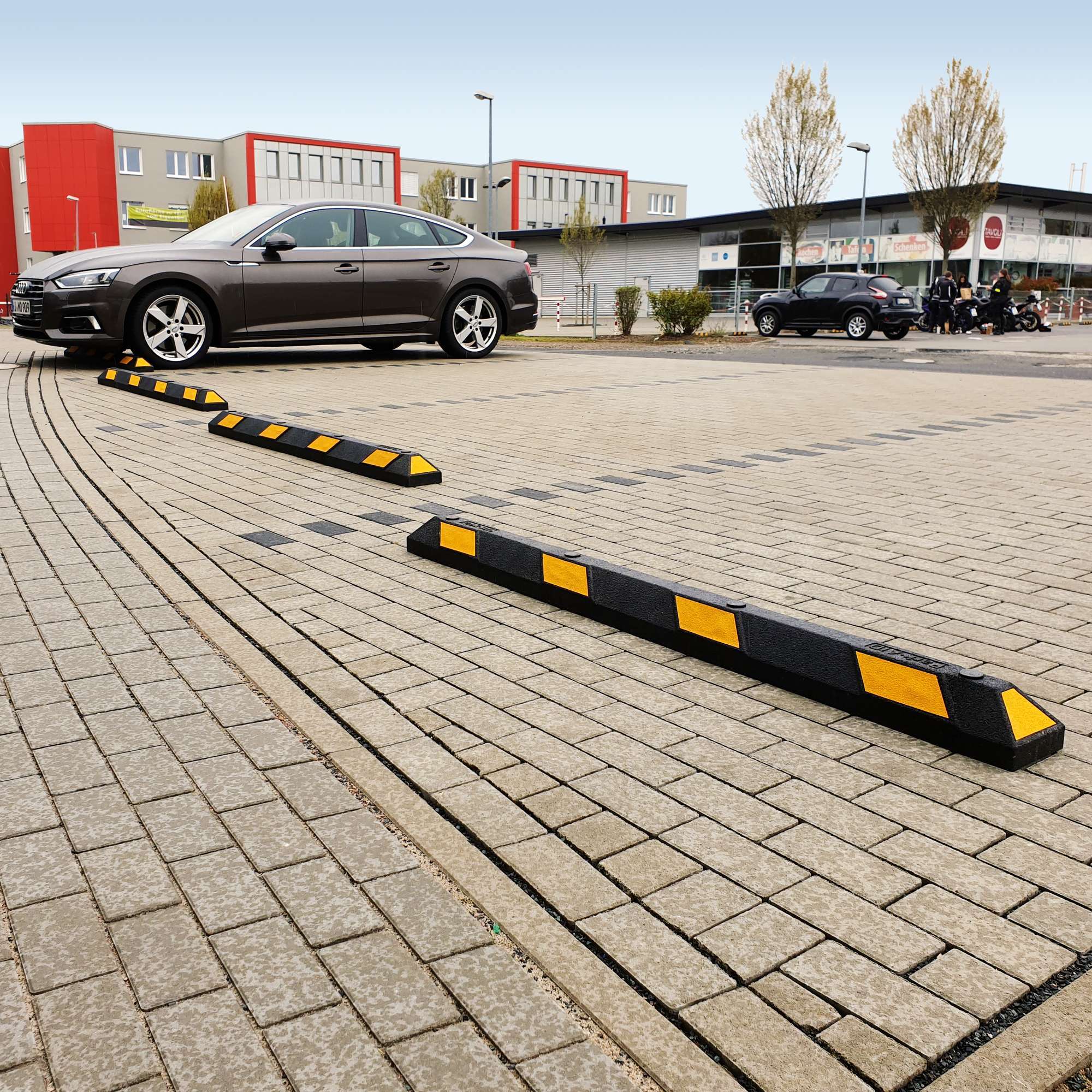
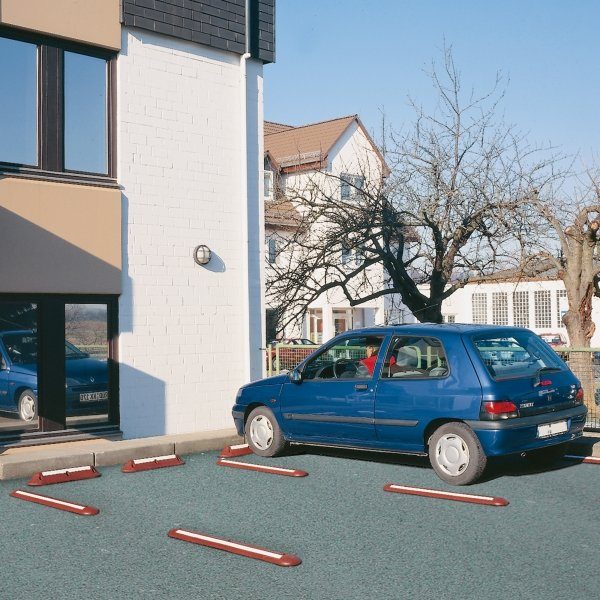
But placement is just as important as the anchoring itself, as the image below illustrates.

The image clearly shows how height, length and distance are three pieces of the puzzle that must fit together for the installation to be both successful and safe.
Installation in concrete – for uncompromising strength
Concrete is a much easier material to anchor into, as long as you use the right hardware. Here, it’s all about creating a rock-solid, permanent anchoring that can withstand serious forces. By far the most common and reliable method is to use expansion bolts.
The process is fairly straightforward but requires precision. You drill a hole in the concrete that matches the size of the bolt. When the bolt is then tightened, a sleeve at the bottom of the hole expands and locks the entire assembly in place with tremendous force.
A critical step is to clean all dust thoroughly from the drill hole before installing the bolt. Remaining concrete dust can reduce the anchor’s friction and lower its holding capacity by up to 50%, which is a serious safety risk.
To ensure a concrete installation that lasts, follow these steps:
- Measure and mark: Place the wheel stop exactly where it should go and clearly mark the drill holes.
- Drill: Use a drill bit of the correct size and drill to the depth recommended for the bolt.
- Clean: Blow out the hole with compressed air and use a brush to remove all dust. No shortcuts here.
- Install: Drive in the expansion bolt and tighten the nut to the recommended torque with a torque wrench.
If you’re a groundwork contractor or property maintenance professional, this knowledge is invaluable for getting the job right the first time. But every project is unique, and sometimes the surface can hold surprises.
Not sure which method is best for your surface, or simply want to ensure a professional installation from start to finish? Contact us at Nordguard. We offer complete service, from expert advice and planning to delivery of the right wheel stops and anchoring hardware for a successful and safe installation.
From housing cooperatives to logistics terminals
A wheel stop is more than just a piece of rubber on the asphalt. Its real value lies in its ability to solve specific, and often expensive, problems in very different environments. From bringing order to a housing cooperative’s parking lot to securing critical flows at a logistics terminal, the wheel stop is a surprisingly versatile problem solver.
The solution rarely needs to be complicated to be effective. By understanding the unique challenges of each environment, a simple wheel stop can prevent damage, lower costs and create a much safer everyday environment for both people and property.
Wheel stops for housing cooperatives and community associations
For many housing cooperatives and community associations, the parking lot and garage are a constant source of irritation and unnecessary expense. Cars parked carelessly, rolling into garage walls or driving over newly planted flower beds are classic problems. The result? Friction between neighbors and expensive repair bills for the association.
A well-placed wheel stop solves these problems right away:
- Protects the property: No more unsightly scrape marks on walls or damage to the facade. The wheel stop makes sure cars stop at a safe distance.
- Preserves green spaces: Plantings, hedges and lawns are protected from being driven over, preserving the area’s appeal and value.
- Creates order: When all cars park uniformly and within their spaces, space is maximized and it’s easier for everyone to get around.
For a housing cooperative, it’s fundamentally about creating a safe, well-kept living environment. A relatively small investment in wheel stops quickly pays for itself through reduced maintenance costs and happier members.
Wheel stops in municipal and public environments
For municipalities and other public entities, traffic safety and accessibility are paramount. Parking lots at schools, sports facilities, libraries and parks must be safe for everyone – not least for vulnerable road users such as children and pedestrians.
Here, wheel stops fill a critical function by:
- Clearly defining parking spaces: This prevents cars from being parked in ways that block pedestrian and bike paths.
- Protecting walkways: By ensuring a distance between parked cars and the sidewalk, a safer passage is created for pedestrians.
- Securing vulnerable areas: At schools and preschools, wheel stops reduce the risk of cars rolling into areas where children play and move around.
It’s easy to overlook the hidden danger of low-speed collisions. According to statistics from Svensk Försäkring, incidents involving sudden stops, such as hitting obstacles, can contribute to the up to 25 percent of traffic injuries that are whiplash-related. For municipalities and property owners, this is an important insight. In pilot projects, our CE-marked impact protection and bollards have been shown to reduce such incidents by up to 40 percent in public areas. It’s not just about lowering damage costs, but about building sustainable and safe urban environments.
3 Variations
From: 320 €
320 € excl. VAT
From: 320 €
320 € incl. VAT
Popular
19 Variations
Black/Yellow
From: 400 €
1 000 € excl. VAT
From: 400 €
1 000 € incl. VAT
220 €
220 € excl. VAT
220 €
220 € incl. VAT
200 €
200 € excl. VAT
200 €
200 € incl. VAT

270 €
270 € excl. VAT
270 €
270 € incl. VAT
300 €
300 € excl. VAT
300 €
300 € incl. VAT
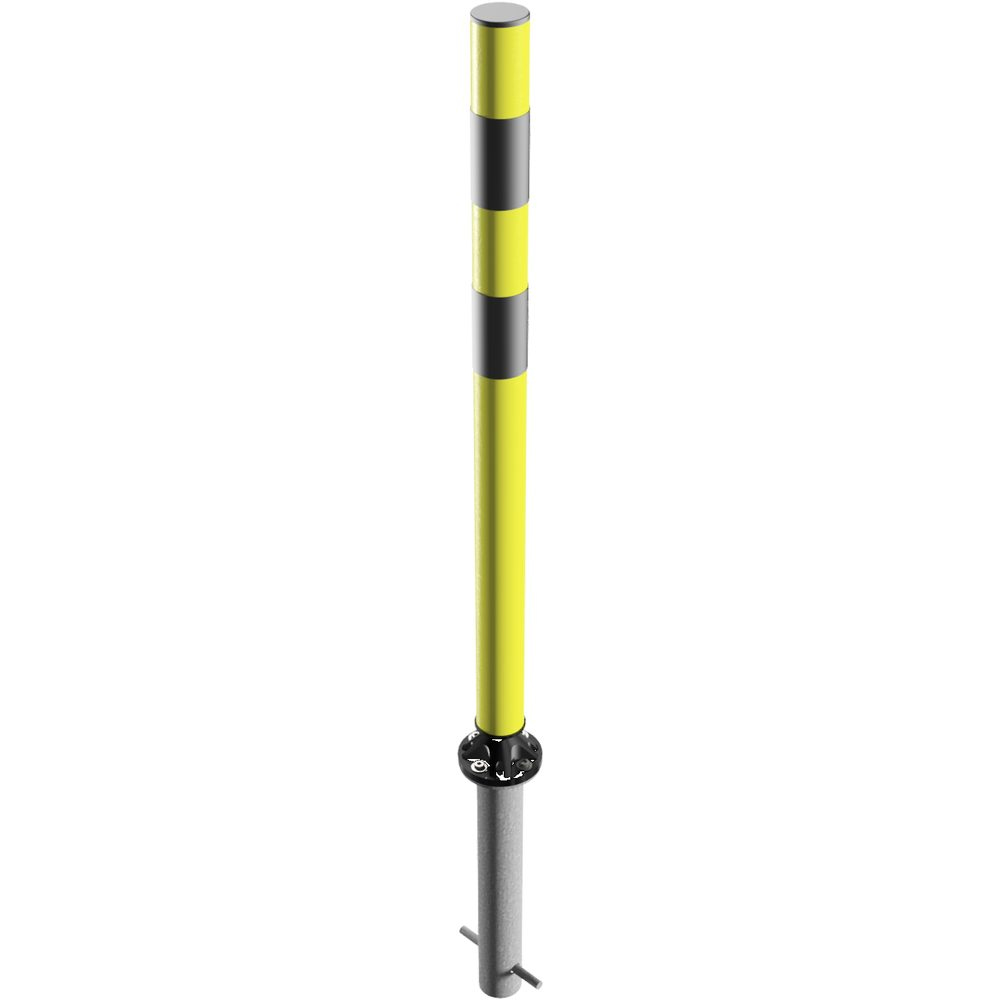
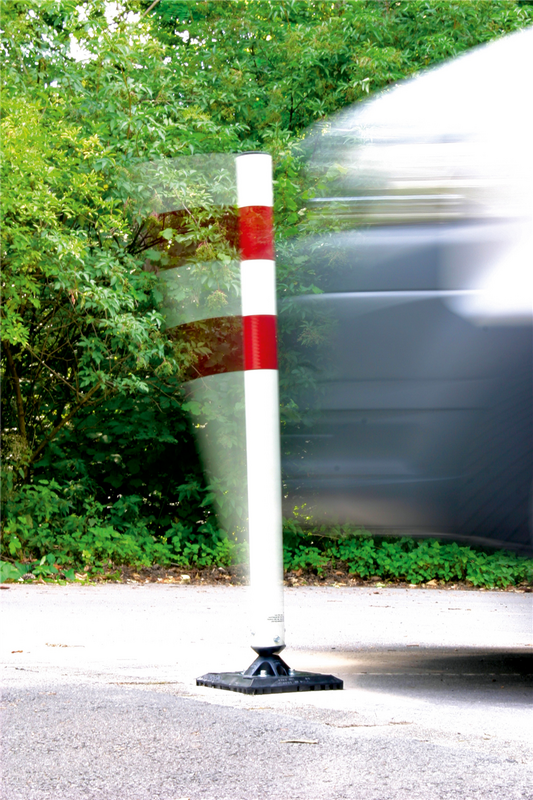
250 €
250 € excl. VAT
250 €
250 € incl. VAT
Out of stock
450 €
450 € excl. VAT
450 €
450 € incl. VAT
Wheel stops in warehouses and logistics terminals
In warehousing, logistics and industry, a wheel stop isn’t just a matter of order – it’s a business-critical safety component. Heavy trucks and forklifts operate right next to expensive equipment, loading docks and staff. A collision can have catastrophic consequences, from personal injury to costly downtime that paralyzes the entire operation.
In a logistics environment, a wheel stop is insurance against lost production. It protects dock doors, machinery and storage racks from damage that can bring the entire operation to a standstill.
The robust construction of heavy-duty wheel stops is designed to effectively stop even trucks and forklifts. They are used strategically to:
- Protect loading docks and doors: By guiding trucks correctly when backing up, damage to both vehicles and buildings is prevented.
- Secure parking areas: Wheel stops clearly mark where forklifts and other equipment should be parked so they don’t block key transport routes.
- Prevent accidents: They act as a final physical barrier to protect staff and sensitive equipment from accidental impacts.
Whether you’re responsible for a small housing cooperative or a large logistics terminal, there’s a wheel stop solution that meets your specific needs. Understanding the problems in your particular environment is the first step toward a safer, more functional facility.
Need help finding the right solution for your unique situation? Contact us at Nordguard. We’ll help you assess your needs and put together a proposal that protects your assets and creates peace of mind.
130 €
130 € excl. VAT
130 €
130 € incl. VAT
2 Variations
BlackRed
100 €
100 € excl. VAT
100 €
100 € incl. VAT
Popular
11 Variations
BlackRed
From: 47 €
100 € excl. VAT
From: 47 €
100 € incl. VAT
2 Variations
BlackRed
81 €
81 € excl. VAT
81 €
81 € incl. VAT
190 €
190 € excl. VAT
190 €
190 € incl. VAT
Maintenance that extends the life of your investment
To get maximum value and safety from your wheel stops, they need a little care. Even the most robust products benefit from regular inspection to ensure they work as intended, year after year. Think of it as a small investment in safety – especially important if you have long-term property management responsibility.
A quick check every now and then keeps small problems from growing into big, expensive ones. A loose bolt can eventually damage both the asphalt and the wheel stop itself, while a dirty reflector loses its purpose entirely once darkness falls.
Practical checklist for ongoing maintenance
With a simple checklist, you can make sure your wheel stops stay safe and functional. We recommend an inspection at least twice a year – once in spring after the wear and tear of winter, and once in fall ahead of the dark season.
- Check the anchoring: Give each wheel stop a gentle push. Is it rock-solid? Good. Check that no bolts or spikes have loosened or started creeping up out of the ground.
- Look for damage: Check for cracks, deep gouges or other signs of material fatigue. Concrete in particular can be susceptible to frost damage after a harsh winter.
- Clean and check the reflectors: Dirt, road salt and exhaust quickly form a film over reflective surfaces. A quick wipe with water and a brush can make an enormous difference in visibility.
How the material affects maintenance
The choice of material plays a big role in how much time you need to spend on maintenance. Some are virtually maintenance-free, while others may need a little extra care over time.
- Rubber: Requires virtually no maintenance. Just keep the reflectors clean and check the anchoring occasionally.
- Steel: Hot-dip galvanized or powder-coated steel has extremely strong rust protection. Keep an eye out for deep scratches that may have penetrated the surface coating.
- Concrete: May need repair if small pieces have been knocked off by impacts or frost. Keep an eye on the surface to catch cracking early.
A well-maintained wheel stop is more than just a safety product. It signals responsible, well-run property management – showing that you care about both property and people.
At Nordguard, we see ourselves as a long-term partner. Our job doesn’t end when the products are delivered. We’re here with service, advice and spare parts to make sure your investment lasts. If you discover damage or are unsure about maintenance, don’t hesitate to contact us. We’ll help you find the right solution, whether it’s a new bolt or a complete replacement.
Frequently asked questions about wheel stops
We’ve gathered some of the most common questions we hear about wheel stops. The goal is to give you quick, clear answers that help you make the right decision for your facility.
Which wheel stop is best for my parking lot?
For an ordinary outdoor parking lot used mostly by passenger cars, recycled rubber wheel stops are almost always the smartest and most cost-effective choice. They are durable, forgiving and – above all – gentle on cars if someone happens to roll into them a little too hard.
But do you need to protect a loading dock, a warehouse or an area with heavy traffic? Then robust concrete or steel wheel stops are the way to go. They have the strength needed to safely guide and stop heavier vehicles. If you’re unsure, don’t hesitate to ask us – we’re happy to provide a recommendation tailored to your environment.
Do I need a building permit to install wheel stops?
In the vast majority of cases, no building permit is required to install wheel stops on private property. They are considered a minor installation that doesn’t require formal approval.
However, we recommend always checking with your municipality to be on the safe side. This is especially important if the installation will take place in a public or historically sensitive environment, where special regulations may apply.
Can wheel stops be installed in winter?
Technically yes, but it’s far from ideal. Trying to install in asphalt during winter is really tricky. The cold makes asphalt hard and brittle, making it difficult to achieve anchoring that truly holds.
Installation in concrete usually works better, but only if the drill holes are completely free of ice and moisture. To be sure of a durable result that stands the test of time, we recommend scheduling the installation for the snow-free season. That way, you get a solution that performs at its best from day one.
Need expertise to choose and install the right protection for your property? Nordguard offers a complete range of wheel stops and other safety products for all types of environments. Contact us to find the best solution for your needs at https://nordguard.eu.
Ready to take the next step?
We help you develop solutions tailored to your needs. At Nordguard, we strive to make the ordering process as smooth as possible. By offering support and guidance throughout the entire purchasing experience, we make sure you feel confident and satisfied with your choice of protection products.+46 10 153 90 50
[email protected]